21 Nov 2014 | Azerbaijan News, News, Politics and Society
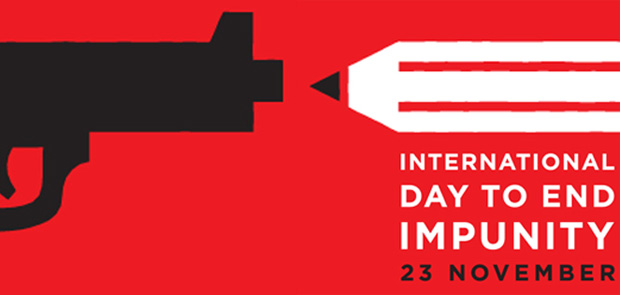
Impunity is a festering sore on freedom of the press. Harassment, violence and murder of journalists are problems around the world — even in Europe, as Index’s project mapping media violations has shown. The numbers speak for themselves: of the 370 media workers murdered in connection with their job over the past ten years, 90% have been murdered without their killers being punished. Many of these crimes aren’t even investigated.
Ahead of the International Day to End Impunity, journalists from across the world told Index why impunity is such a danger to free expression and a free press.
Kostas Vaxevanis, Greek investigative journalist, HOT DOC, and 2013 Index award winner
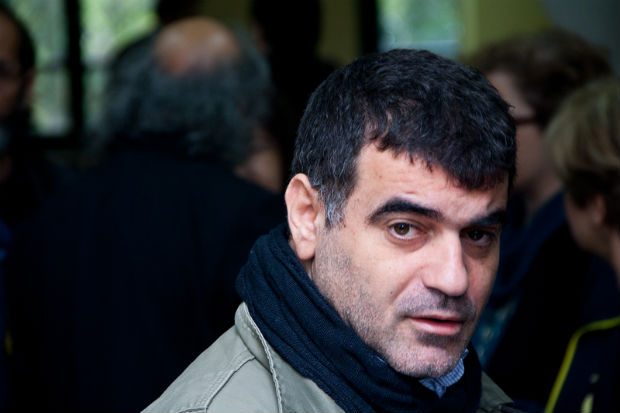
Impunity generates corruption and its enemy is the one thing that exposes and threatens it: the freedom of the press.
The HOT DOC is currently facing 40 lawsuits mainly from ministers and politicians in an attempt to shut us down as journalists. We reveal scandals like one with the minister of justice, a former judge who committed an “error” that granted amnesty to officials who had abused public funds, and instead of answering in public as required as politicians, we are being sued. We pester the courts and despite winning lawsuits, we need more than 80,000 euro per year for court expenses.
Heather Brooke, British-American journalist and 2010 Index award winner
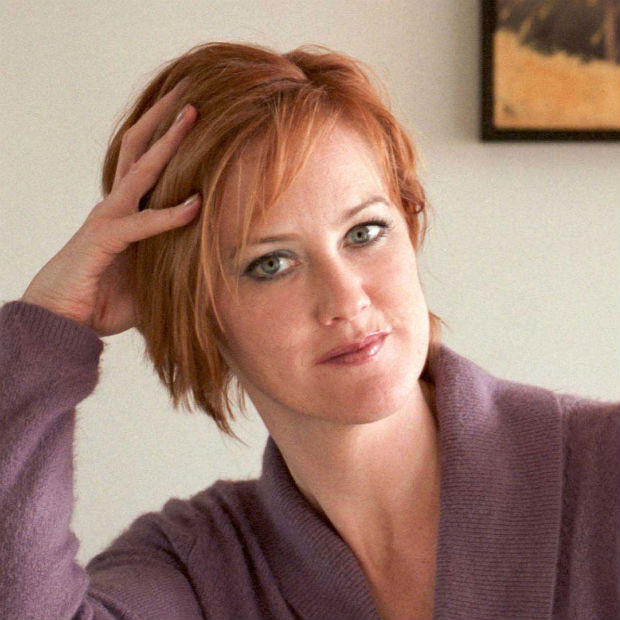
It is a problem that journalists around the world get threatened, intimidated and killed just for doing their job.
These crimes, like any other crime, need to be investigated. If not, it sends a message that this is okay; that the law is only for certain people. It is an implicit acceptance of this behaviour.
If we want to have a strong press, threats, intimidation and murder of journalists can’t be seen to be implicitly condoned by the state. It’s a dangerous message. It makes people frightened to ask tough questions, and if that happens, you are on the way to shutting down a robust press.
Kareem Amer, Egyptian blogger and 2007 Index award winner
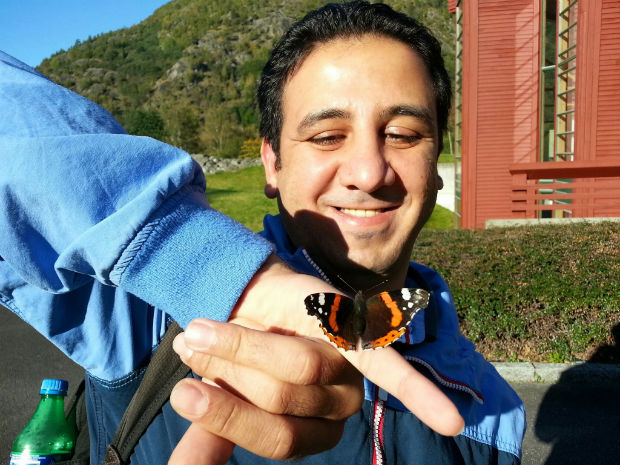
I come from a country where we have a lack of justice. The executive power controls the parliament and the justice system. People feel that if they get mistreated or oppressed by those in power nothing will protect them or bring them justice.
Not only people who express their opinions suffer from a lack of justice. People from different backgrounds who have a different way of thinking and different interests also don’t trust the justice system. Those who have more power can easily avoid punishment and take revenge against victims who tried to get their rights through judiciary system.
Officially, police officers don’t have any kind of formal immunity. According to the law they can be questioned if they violate the rights of people by torturing or murdering. But, in fact, all those accused of killing protesters and torturing prisoners managed to avoid being punished, with a few exceptions.
I feel that it’s not safe to express your opinions freely in a country where people can easily avoid punishment.
I have been sentenced to four years in jail for writing two articles and publishing them on the internet, and during that time I have been through physical violence and mistreatment committed by security forces. I reported it but no one has been questioned or punished. That made me feel that there is no justice in my country and that it is easy to be humiliated and tortured and you will not get protected, since the judiciary system is practically part of the executive power and the judges do what the authorities want them to do.
Rahim Haciyev, Azerbajiani journalist and acting editor of 2014 Index award winner Azadliq
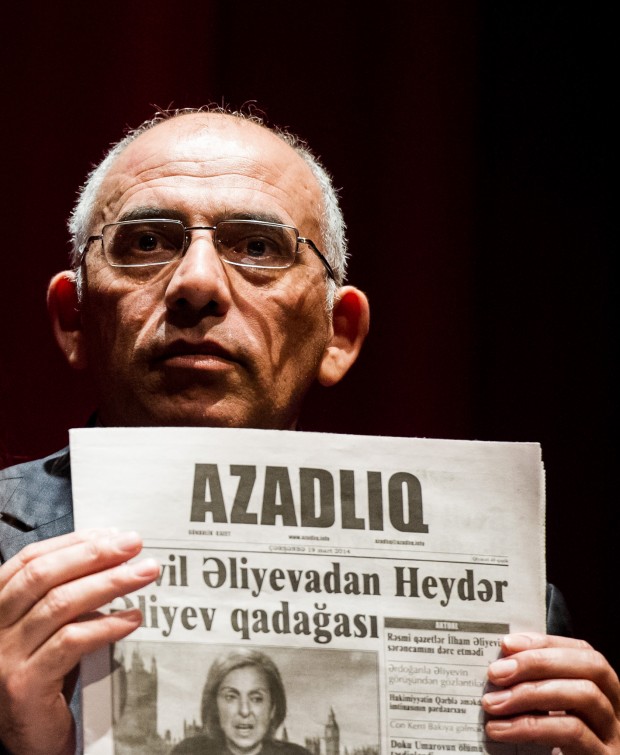
Rahim Haciyev, deputy editor-in-chief of Azerbaijani newspaper Azadliq (Photo: Alex Brenner for Index on Censorship)
Freedom of expression is the basis of all other rights and freedoms. Free speech is something all authoritarian regimes are worried about as it threatens their existence. That is why freedom of expression is specifically targeted by authoritarian regimes. If there are no free people, there is no freedom of expression. Free speech is a precondition for journalists to be able to work in full strength and thus fulfill their functions in society. Authoritarian regimes organise permanent attacks on journalists with impunity. A free journalist armed with freedom of expression is a threat to an authoritarian regime, this is why perpetrators receive awards, not punishment for oppressing journalists’ rights. This process leads to self-censorship, and journalists stop being carriers of truthful information, which in the end affects society.
Nazeeha Saeed, award-winning Bahraini journalist, who was tortured in police custody
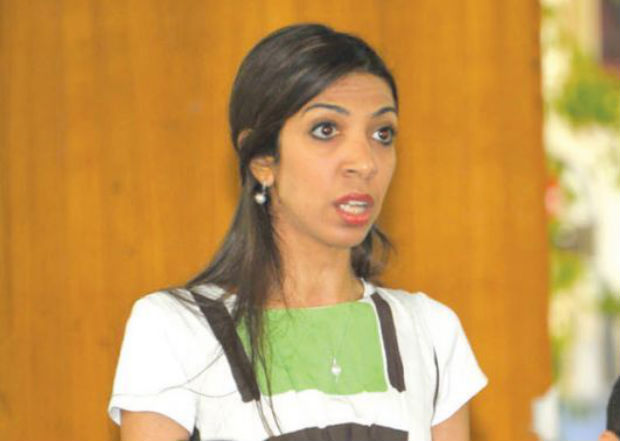
Impunity is a threat to free expression because journalists and people who report the facts on the ground will feel danger, and if no one gets punished for crimes against journalists or others it establishes a systematic impunity culture. Feeling insecure is something bad, it stops people from having a normal life, functioning and expressing themselves.
Endalk Chala, Ethiopian blogger and co-founder of the Zone9 blogging collective (of which six members are currently imprisoned for their writing)
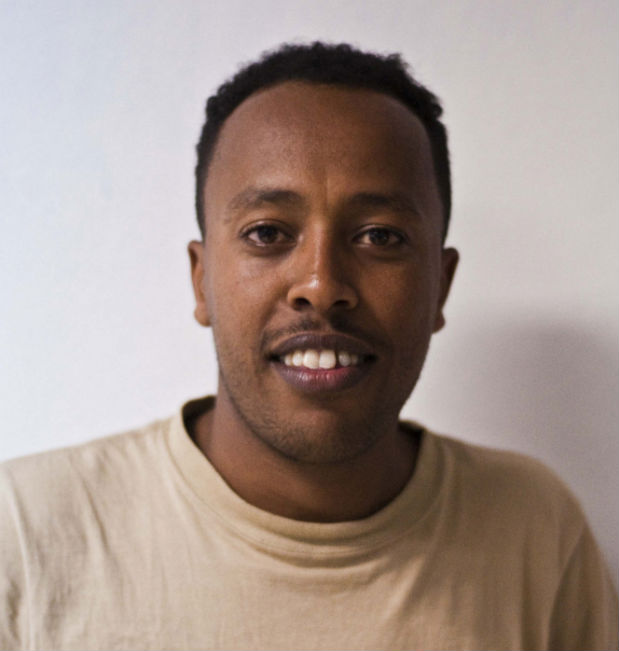
Impunity is a threat for free expression on many levels. In my experience I have seen impunity when it cultivates self-censorship. Let’s take the case of Zone9 bloggers. Since their arrest there are a lot of people who tried to visit them in prison, take a picture of them, attend their trial and tweet about their hearings but all of these have invited very bad reactions from the Ethiopian police.
Some were arrested briefly, others were beaten and it has become impossible to attend the “trial” of the bloggers and journalists. No action was taken by the Ethiopian courts against the bad actions of the police even though the bloggers have contentiously reported the kinds of harassment. As a result, people have stopped tweeting, taking pictures and writing about the bloggers. Apparently, the volume of the tweets and Facebook status updates which comes from Ethiopia has dwindled significantly. People don’t want to risk harassment because of a single tweet or a picture. This self-censorship could be attributed to impunity, which is pervasive in Ethiopia.
Impunity also causes a lack of trust in the Ethiopian judicial system. I don’t trust the independence of the Ethiopian justice system. I have never seen a police man/woman or a government authority being prosecuted for their bad actions against journalists. The Ethiopian government has been prosecuting hundreds of journalists for criminal defamation, terrorism and inciting violence but not a single government person for violating journalists’ rights. This tells you a lot about the compromised justice system of the country.
Andrei Soldatov, Russian investigative journalist and co-founder and editor of Agentura.Ru
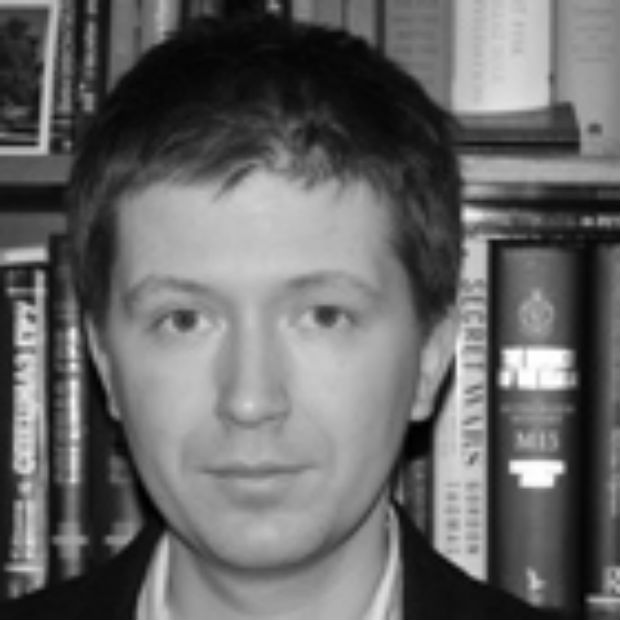
Russia is known for its traditions of self-censorship. Despite what the laws say, the rules are explained in a quiet voice in some unmarked cabinets. Sometimes the rules are even not explained, and journalists, editors and owners of media have to constantly guess what is allowed at that moment. Not everyone is allowed to ask directly, so we are all in the game about signals sent by the authorities.
Journalists are beaten and killed in Russia, and this provides plenty of room to send such signals to the journalistic community. You don’t need to explain that investigative reporting in the North Caucasus is not allowed anymore: you just need to turn the investigation of Anna Politkovskaya’s assassination in 2006 into a show trial, where the assassins are duly found guilty, but the question of masterminds is never answered. You could be sure, the signal would be taken correctly.
Fergal Keane, Irish journalist, BBC foreign correspondent and 2003 Index award winner
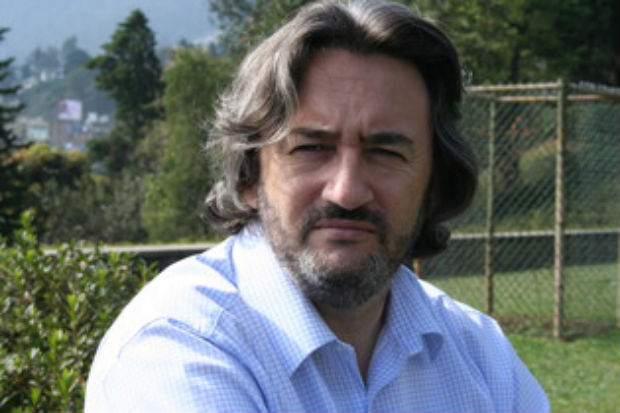
Impunity allows the enemies of free speech to threaten, torture and kill journalists secure in the knowledge they will never be called to account. I can’t think of a greater threat.
Veran Matic, B92 board of directors chairman and B92 news editor-in-chief
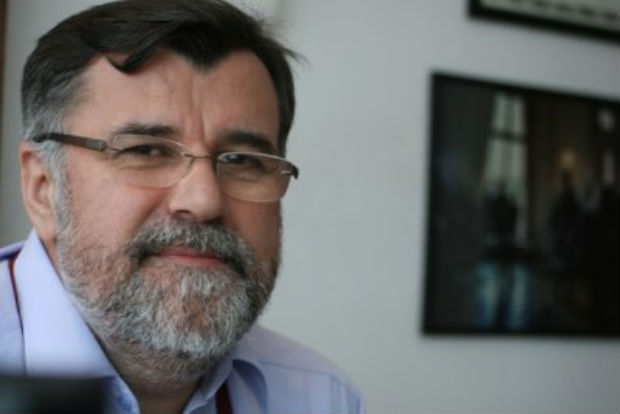
In my 25 years of experience in Serbia, I have been editor-in-chief of a media outlet that was banned on several occasions and I have been arrested.
Impunity directly encourages and expands violence towards journalists. The culture of producing fear is the most efficient form of censorship. One unsolved murder creates space for implementing the next one without any threat for the executioners. In the meantime, the media gets killed/eliminated in the process.
The lack of discontinuity with Slobodan Milosevic’s authoritarian regime had left room for impunity to remain intact.
Less than two years ago, I decided to make a kind of a breakthrough when it comes to impunity. I proposed the establishment of a mixed commission composed of journalists, members of the police and members of the security information agency. We managed to bring the 1999 murder of Slavko Curuvija to a phase where official indictment was brought, along with arrest of all suspects in this murder case. The 2001 murder of our colleague Milan Pantic is also in the final stage of investigation. A 1994 assassination — of Dada Vujasinovic — is being reviewed by the National Forensic Institute from The Hague because local institutions have compromised themselves in this case.
In the same way as impunity restricts freedom of speech, solving of these cases, at least 20 years later, will surely contribute to journalists being encouraged to do their job in the best possible way. Of course, I am not counting here on the new problems with which journalists and media face, and that call for finding new models of financing high quality journalism for the sake of public interest, worldwide.
The team behind Pao-Pao, a Chinese website focusing on internet freedom issues
This year, we have seen a rising number of Chinese journalists, academics and human rights lawyers detained, threatened and arrested simply for speaking out online. While Chinese regulations on freedom of speech need to be closely examined, tech companies also play an important role in the deterioration of freedom of speech in China.
While Chinese tech companies are under the tight control of the Chinese authorities, there exists a culture of impunity in the western tech companies, especially when they are doing business in China. When we worked with our partner GreatFire to launch a FreeWeibo iOS application last year (an app to deliver uncensored content from Weibo, the largest social media platform in China), Apple decided to remove the app from their Chinese iTunes store. The only reason given was that Apple received a request from the Chinese authorities. This June, LinkedIn censored user posts deemed sensitive by the Chinese government on the global level, far beyond Beijing’s censorship requirement, even though LinkedIn does not have servers in China.
It would be the start of the end if these global tech companies start removing content simply because they do not want to upset their business relationships with China. It is crucial to hold these companies accountable for their behaviour. Otherwise it will further erode freedom of expression, not only for China, but also for the whole world.
The International Day to End Impunity was set up in 2011 by free speech network IFEX, of which Index on Censorship is a member, with the aim of demanding accountability and justice on behalf of those “targeted for exercising their right to freedom of expression”.
This article was originally posted on 21 November 2014 at indexoncensorship.org. It was updated at 14:09, 24 November to include the response from Pao-Pao.
13 Nov 2014 | Europe and Central Asia, News, Politics and Society, Russia, United Kingdom
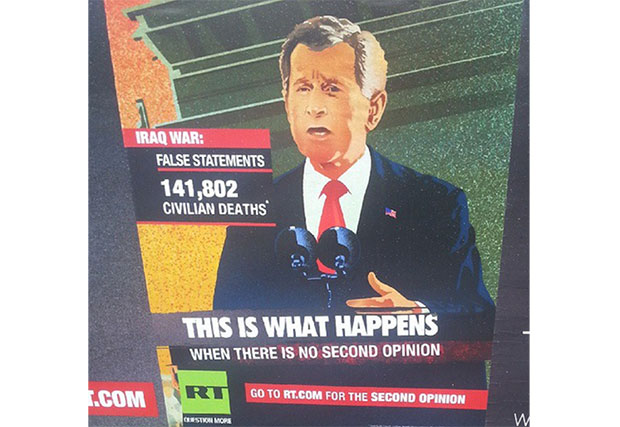
(Photo: Padraig Reidy)
There’s a poster near my house in London. It shows a poorly illustrated George W. Bush, aboard the USS Abraham Lincoln early in the Iraq war, with the now infamous “Mission Accomplished” banner behind him. To his side, the tally of dead in the Iraq War (at least according to Iraq Body Count). Underneath is emblazoned the slogan: “This is what happens when there is no second opinion.” It is an advert for Russian propaganda channel RT (formerly Russia Today).
It’s a slightly muddled poster, but the signal is clear: did you feel lied to about the Iraq war? Watch RT.
Curiously, RT, which launched a UK channel on 30 October, seems to believe the poster doesn’t exist. A “report” on the RT website, dated 9 October, claims that the campaign of which this poster is part was “rejected for outdoor displays in London because of their ‘political overtones’”. The story goes on to claim that the “rejected” posters were replaced by ones that simply say “redacted”, before urging readers to download an RT app to view the ads on their phones.
But I have seen the poster. I even took a picture. Yet RT insists it has been banned, saying that outdoor advertising companies cited the Communications Act 2003, which “prohibits political advertising”. This prohibition is indeed to be found in the act, but only applies to broadcast advertisements, not billboard advertisements for broadcasters.
This is a fairly crude illustration of RT’s attitude to the truth. It is simply not an issue. What’s important is something that might sound true, something just about plausible, to suit the agenda (in this case, the agenda is threefold: one, to get people to download the app; two, to sow the belief that “they” are scared of RT; and three, to introduce the notion that political advertising is subject to a blanket ban in the UK).
Fair enough, you might say. But have you seen Fox News? Don’t all sorts of news organisations bend the truth to fit their agenda? There’s a case to be made, but there’s also a crucial difference. RT is funded and controlled by the Kremlin and is on a mission; a mission outlined in a new report by The Interpreter, part of the Institute of Modern Russia (disclosure: Index on Censorship has on occassion crossposted content from The Interpreter).
“The Menace of Unreality: How the Kremlin Weaponizes Information, Culture and Money” elucidates what we had already long suspected: the Soviet Union may be dead, but Soviet tactics remain. And while the west may not want to believe it is in conflict with Russia, the Russians are already acting like it is (witness reports of heightened Russian air force activity in and near Nato airspace).
The report’s authors, Michael Weiss and Peter Pomerantsev, describe disinformation techniques dating back to the Soviet era: straight propaganda, certainly, but also Dezinformatsiya — the planting of false stories to undermine confidence in western governments. These include alleged coup plots, the bizarre theory that AIDS was created by the CIA, even the suggestion that the assassination of Kennedy was an inside job.
The suggestion is that democracy is a sham, and that democratic governments are at best hypocrites and at worst constantly, deliberately acting against the interests of their own populations.
The best false stories always have a ring of truth and a ring of empathy. Many politicians are hypocrites, some politicians act against the interests of those they should represent. If this much is true, is it that much of a leap to imagine that the entire system is a crock? That democracy and human rights are empty terms? We’re just asking legitimate questions, as every conspiracy theorist ever has said at some point.
Conspiracy theorists find a home at RT. Presenter Abby Martin, for example, who briefly won praise for apparently criticising Russia’s actions in Ukraine, says she still has “many questions” (just asking questions!) about the September 2001 attacks on the World Trade Center, and has used her show to expound on “false flag” attacks, alleged Israeli eugenics, and every US conspiracy theorists’ favourite, the massacre in Waco, Texas of David Koresh’s Branch Davidian cult in 1993.
All this would mean nothing if RT didn’t have a willing audience in the UK, the US and beyond. But a combination of a large budget, photogenic presenters and a certain way with a YouTube clip makes RT a serious player. It never quite veers into the straight out lunacy of Iran’s Press TV, which is quite open about its conspiracist contributors, and it looks like a serious operation. Furthermore, its positioning as an “alternative news source”, albeit one controlled by an increasingly authoritarian, paranoid and erratic Russian state, finds it fans among people who would rail against their own liberal states and societies (on the two occasions I visited the Occupy St Paul’s encampment in London, Russia Today was playing on a large screen there). All the while, the autocratic Putin is strengthened as democracy in undermined worldwide (witness how easily Putin was able to put the kibosh on effective intervention against Syria’s Assad through the relentless repetition of the line that helping the opposition would mean helping jihadist terrorists).
So what, as Lenin himself once asked, is to be done? After reports of UK broadcast regulator Ofcom’s recent investigations into RT for bias earlier this week, some people saw a chance to get RT taken off the air just weeks after it had begun. But this impulse is too close to political censorship in principle, and in practice, an ineffective sanction against a force that has huge power online, with millions upon millions of YouTube hits.
Decent democrats that they are, Weiss and Pomerantsev suggest eternal vigilance is required: we must be able to combat RT’s half truths and insinuations effectively, with hard facts and hard arguments, in order to stop them spreading. As ever, when arguments for counterspeech as the best defence against poison is suggested, one remembers Yeats’s lines: “The best lack all conviction, while the worst/Are full of passionate intensity.”
But this time 25 years ago, as East and West Germans embraced on top of the Berlin Wall, the world showed that the right argument can win even against the very worst. The Kremlin is playing the same games now as it did in its darkest days. Democrats should be ready to fight back.
This article was posted on 13 November 2014 at indexoncensorship.org
12 Nov 2014 | Azerbaijan, Azerbaijan News, Azerbaijan Statements, Campaigns, Statements
Mr Ilham Aliyev
President of the Republic of Azerbaijan
Azerbaijan Avenue 7
1005 Baku
Republic of Azerbaijan
Fax: +994124923543 and +994124920625
Email: [email protected]
Mr President,
As the Chairmanship of the Council of Europe by the Republic of Azerbaijan draws to a close, we, the undersigned members and partners of the Human Rights House Network (HRHN) and the South Caucasus Network of Human Rights Defenders, call upon the Azerbaijani authorities, through you, Mr President, to put an end to the unprecedented repression against civil society. We call upon you to immediately and unconditionally release all civil society actors currently detained due to their engagement in human rights work and for raising critiques against Azerbaijan’s authorities, including and especially human rights defenders Leyla Yunus and her husband Arif Yunus, Rasul Jafarov, and Intigam Aliyev. Anar Mammadli and Bashir Suleymanli must also be released, as their detention is solely due to their monitoring of elections in the country, including the latest Presidential election of 9 October 2013.
This summer, one after the other, the main leaders of civil society were arrested. Many others decided to flee the country, rather than facing court hearings, of which the outcome is well known in advance. Few others have been forced into hiding in the country.
Leader of the Legal Education Society, human rights lawyer Intigam Aliyev was sentenced on 8 August 2014 to pre-trial detention for 3 months on the same charges as those held against human rights defenders Rasul Jafarov, who was arrested on 2 August 2014 for tax evasion, illegal business and abuse of authority. On similar charges, Leyla Yunus, and her husband, Arif Yunus, were arrested on 30 July and 5 August 2014 respectively. Charges of State treason are additionally held against Leyla Yunus. Furthermore, the lawyers of Leyla Yunus and Intigam Aliyev were called as witnesses against their clients and hence bared from being their defendants. Very few lawyers agree to take up politically charged cases in Azerbaijan, a country in which the Bar Association is controlled by the Ministry of Justice and has disbarred lawyers such as Intigam Aliyev himself.[1] On 6 November 2014, the lawyer of Leyla Yunus, Alaif Hasanov, was sentenced to 240 hours of community service due to his public statements about the detention conditions of his client. Leyla Yunus has indeed faced psychological and physical abuses in detention, from detainees and from prison officials.
Earlier this year, the regional civil society leader Hasan Huseynli was sentenced to 6-years imprisonment[2] and the leaders of the only independent election monitoring organisation in the country, Anar Mammadli and Bashir Suleymanli, were sentenced to respectively 5 years and 6 months and 3 years and 6 months imprisonment.
Facing investigations and charges, many other human rights defenders fled the country or are in hiding from authorities, as they know they will not enjoy a fair hearing in court.
The authorities have also targeted other respected human rights voices in the country, such as the Institute for Reporters’ Freedom and Safety (IRFS), a leading media rights NGO in the country. IRFS’ leader, Emin Huseynov, is well known and an internationally recognised human rights defender, facing similar charges as the other human rights defenders. On 5 November 2014, the 67-year old mother of human rights defender Gulnara Akhundova was summoned to the Office of the General Prosecutor. She was extensively interrogated about her daughter’s human rights activities. Following this interrogation, the Office conducted a search in the apartment registered as Gulnara Akhundova official address in Baku, which is her mother’s apartment. The few other independent voices left are also facing investigations and can be arrested at any given time.
On 10 November 2014, the blogger Mehman Huseynov, brother of Emin Huseynov and also an IRFS employee, was stopped and interrogated at the Baku Airport and later released. He was arrested in relation to an on going investigation against him, based on which he was issued a travel ban.[3] He is still not allowed to leave the country.
On 5 November 2014, the Nakhchivan City Court decided to end the investigation into Ilgar Nasibov. On 21 August 2014, Ilgar Nasibov was beaten in the office of the Democracy and NGO’s Development Resource Center in Nakhchivan. He suffered multiple fractures and injuries and to date remains in dire need of treatment. In an often-used strategy against critical voices, the police filed a lawsuit against him on charges of deliberately inflicting serious damage to health (article 127.1 of the Criminal Code of the Republic of Azerbaijan). We believe Ilgar Nasibov should be compensated for the pain he suffered and immediately provided with adequate medical support.
Politically motivated detentions of activists of the youth opposition movement NIDA must also end, as well as those of inter alia journalists Rauf Mirkadirov and Hilal Mammadov[4] and political activist Tofiq Yaqublu. On 30 October, the opposition journalist Khalid Garayev was sentenced to 25 days in detention on charges of hooliganism and disobedience to the police.
All of those human rights defenders are respected internationally and received various recognitions. Those do not protect them from the repression, just as the worrying health condition of a few does not deserve any special treatment in the eyes of the authorities. We are also extremely worried to hear that the heath conditions of Leyla Yunus and Intigam Aliyev have greatly deteriorated. We believe that the conditions of their detention have had a detrimental effect on their health, as it appears that both have still not been provided adequate health care to address their respective illnesses. Intigam Aliyev has recently complained of increasing pain and Leyla Yunus is suffering a severe diabetics.
Repression of civil society: systemic problem remaining unaddressed
Unlike claims made internationally, Azerbaijan is not “on a journey towards human rights, to which it is committed.”[5] For a few years, Azerbaijan has repeatedly and by various international mechanisms been called upon to reform its legislation to prevent any crackdown on civil society.
In 2009 already, the United Nations Human Rights Committee expressed its concern over the “extensive limitations to the right to freedom of expression of the media, the closure of independent newspapers, and the removal of licences to broadcast locally for a number of foreign radio stations. It also remains concerned at reports of a pattern of harassment and criminal libel suits or hooliganism charges against journalists.”[6] The Committee was indeed shedding light on a wave of repression against media workers in the country, which included also the banning of foreign media, such as Voice of America and the Azerbaijani coverage of the British Broadcasting Corporation.
Another wave of repression then touched upon the presence of international non-governmental organisations in Azerbaijan. In July 2009, the Azerbaijani authorities made amendments to the Azerbaijani NGO Law, which state that registration of foreign NGOs in Azerbaijan “is processed based on the agreement signed with the organisations”. It followed with the adoption of the new decree of 2011, with the aim to set criteria for concluding such agreements. Based on that legislative evolution, on 10 March 2011, authorities ordered the Human Rights House Azerbaijan (HRH Azerbaijan) to cease all activities in Azerbaijan until concluding an agreement with the authorities. In an opinion on the legislation, the European Commission for Democracy through Law (Venice Commission) comes to the conclusion that the 2009 amendments to the Azerbaijani NGO law and the 2011 decree setting new requirements for foreign NGOs overturn the efforts to meet international standards and mentioned the registration of foreign NGOs among the most problematic aspects.[7]
Instead of committing to the Venice Commission’s findings, and to the execution of so many judgements of the European Court of Human Rights on freedom of expression and association, Azerbaijan continued to adapt its legislation affecting human rights defenders and their NGOs. As the Human Rights House Foundation (HRHF) highlighted in its intervention at the United Nations Human Rights Council on 10 September 2014, several United Nations independent experts have repeatedly called for a revision of Azerbaijan’s legislation regulating the registration and funding of non-governmental organisations, declaring them as contrary to international human rights law and the standards in regard to the right to freedom of association.
The legislation became the pretext to arrest independent human rights defenders and to freeze the bank accounts of dozens of other NGOs.[8] When repeatedly questioned on Azerbaijan’s record at the Parliamentary Assembly of the Council of Europe (PACE) on 24 June 2014, you have argued, Mr President, that the country has no political prisoners, basically aiming at saying that actions are taken within national legislation by an independent judiciary. The notion of “arbitrary detention” lato sensu can however also arise from the law itself or from the particular conduct of government officials. A detention, even if it is authorized by law, may still be considered arbitrary if it is premised upon an arbitrary piece of legislation or is inherently unjust, relying for instance on discriminatory grounds. United Nations and Council of Europe mechanisms and experts have repeatedly underlined that Azerbaijani legislation violates the country’s international obligations and standards, and hence the practices of authorities in applying such law is in violation to international human rights law, to which Azerbaijan says it is committed to.
It is in the backdrop of these repressive policies that you, Mr President, accepted to reestablish a working group on political prisoners under the auspices of the Council of Europe. The composition of the group discussing the issue is of great concern, given the fact that many of those independent human rights defenders who in the past worked on the issue of political prisoners are now behind bars, especially Leyla Yunus and Rasul Jafarov, who from prison on 8 August consolidated a list of 98 people detained on politically motivated charges.
Council of Europe chairmanship and reprisal against human rights defenders
The interrogation and search that took place following Gulnara Akhundova’s participation in a hearing of PACE’s Committee of Legal Affairs is a clear example of reprisal against human rights defenders perpretrated by Azerbaijani authorities. Another case of reprisal against those participating in events of international organisations is the harassment of investigative journalist Khadija Ismayilova.[9] Most recently, she was recently arrested on charges of criminal defamation but later released. Leyla Yunus, Intigam Aliyev, Rasul Jafarov and Emin Huseynov are also well known names to the Council of Europe. They cooperate with its institutions, met the Secretary General at various occasions and provide information to the office of the Commissioner for Human Rights and to PACE rapporteurs. In June 2014, when you, Mr President, addressed PACE, Emin Huseynov, Rasul Jafarov and Intigam Aliyev together organised a side-event in Strasbourg, critical of the Azerbaijani human rights record. Previously already Azerbaijani authorities proved using reprisal against those raising human rights violations in Strasbourg: the order to HRH Azerbaijan to seize all activities followed the side-event organised at the January 2011 session of PACE by HRH Azerbaijan.
The rotating chairmanship of the Council of Europe, which Azerbaijan assumed for six months, is thought of as an occasion given to each of the Council’s 47 members to act as a role model in the implementation of European human rights law. It is a unique chance to prove a country’s commitment to the very spirit of the Council of Europe, its “devotion to the spiritual and moral values which are the common heritage of [Europe’s] peoples and the true source of individual freedom, political liberty and the rule of law, principles which form the basis of all genuine democracy” as stated in the Statute of the Council of Europe of 5 May 1949, to which Azerbaijan adhered. Instead, during the chairmanship of the Council of Europe, Azerbaijan embarked on an unprecedented repression of civil society.
Any country chairing the world’s strongest regional human rights protection mechanism has a duty to show good faith in the implementation of the its judicial mechanism; Azerbaijan has instead appealed one of the strongest judgements issued by the European Court of Human Rights on the pre-trial detention of Ilgar Mammadov, Chairman of the Republican Alternative Movement (REAL). In its judgement of 22 May 2014, the Court found that the criminal procedure against him is retaliation to critical public statements he made. In a rare move by the Court, it found a violation of Article 18 of the Convention for the Protection of Human Rights and Fundamental Freedoms, which obliges States to act in good faith and prohibits them from restricting rights for purposes other than those prescribed in the Convention. The Court’s Grand Chamber rejected Azerbaijan’s appeal, but Ilgar Mammadov remains in detention. The pre-trial detention of Ilgar Mammadov had the same justification as the one against Leyla Yunus, Arif Yunus, Rasul Jafarov and Intigam Aliyev. Recently, their pre-trial detentions were extended. Azerbaijan should instead review its policies in regard to the excessive use of pre-trial, in accordance with the Ilgar Mammadov judgement.
On 24 June 2014, you, Mr President, told PACE that “[the authorities of Azerbaijan] respect the decisions of the European Court of Human Rights.” The chairmanship of the Council of Europe by the Republic of Azerbaijan will instead remain stained with the lack of execution of the Court judgements and the mark of repression since July 2014 against Azerbaijan’s civil society.
The detention of Intigam Aliyev is a grave sign of non-cooperation with the Court. Intigam Aliyev is a prominent human rights lawyer engaged in the defense of human rights by providing legal defense, initiating strategic litigation, and training lawyers and providing human rights education. The work of Intigam Aliyev is essential in the promotion of human rights and democracy-building in Azerbaijan. He has strived for legal protection of victims of human rights violations for more than 15 years and has to date represented them in proceedings before the Court in more than 200 cases (around 40 cases are currently awaiting decision). He has succeeded in a number of cases concerning voting rights, freedom of assembly, freedom of speech and the right to a fair trial and has served as a trainer in nearly 100 training courses for judges, lawyers, journalists, and representatives of non-governmental organisations. The Committee of Ministers recently requested “detailed information on all criminal charges pending against [Intigam Aliyev],” which is indeed a sign of its dismay over this detention.[10]
As Azerbaijan’s Chairmanship of the Council of Europe draws to a close, we call upon the Azerbaijani authorities, through you, Mr President, to put an end to the unprecedented repression against civil society.
We specifically call upon you to immediately and unconditionally release all civil society actors currently detained due to their engagement in human rights activities and for raising critiques against Azerbaijan’s authorities, especially human rights defenders Leyla Yunus and her husband Arif Yunus, Rasul Jafarov and Intigam Aliyev. Anar Mammadli and Bashir Suleymanli must also be released.
We further call upon you to put an end to the harassment and attacks against human rights defenders, journalists and activists, and lift all potential charges against them, including Emin Huseynov, Mehman Huseynov and Khadija Ismayilova.
Yours sincerely,
Due to the risk of retaliation against Azerbaijani human rights defenders, we decided not to indicate the names of the Azerbaijani NGOs who worked on preparing the present letter.
Barys Zvozskau Belarusian Human Rights House in exile, Vilnius (on behalf of the following NGOs):
- Belarusian Association of Journalists
- Belarusian Helsinki Committee
- City Public Association “Centar Supolnaść”
- Human Rights Centre “Viasna”
Human Rights House Belgrade (on behalf of the following NGOs):
- Belgrade Centre for Human Rights
- Lawyers Committee for Human Rights YUCOM
- Civic Initiatives
- Helsinki Committee for Human Rights in Serbia
- Policy Centre
Human Rights House Kiev (on behalf of the following NGOs):
- Human Rights Information Centre
- Center for Civil Liberties
- Kharkiv Human Rights Protection Group
- Social Action Centre
- Ukrainian Legal Aid Foundation
Human Rights House London (on behalf of the following NGOs):
- Article 19
- Index on Censorship
- Vivarta
Human Rights House Tbilisi (on behalf of the following NGOs):
- Article 42 of the Constitution
- Caucasian Centre for Human Rights and Conflict Studies
- Georgian Centre for Psychosocial and Medical Rehabilitation of Torture Victims
- Human Rights Centre
- Union Sapari – Family without Violence
Human Rights House Oslo (on behalf of the following NGOs):
- Health and Human Rights Info
- Human Rights House Foundation
Human Rights House Voronezh (on behalf of the following NGOs):
- Charitable Foundation
- Civic Initiatives Development Centre
- Confederation of Free Labor
- For Ecological and Social Justice
- Free University
- Golos
- Interregional Trade Union of Literary Men
- Lawyers for labor rights
- Memorial
- Ms. Olga Gnezdilova
- Soldiers Mothers of Russia
- Voronezh Journalist Club
- Voronezh-Chernozemie
- Youth Human Rights Movement
Human Rights House Zagreb (on behalf of the following NGOs):
- APEO/UPIM Association for Promotion of Equal Opportunities for People with Disabilities
- B.a.B.e.
- CMS – Centre for Peace Studies
- Documenta – Centre for Dealing with the Past
- GOLJP – Civic Committee for Human Rights
- Svitanje – Association for Protection and Promotion of Mental Health
The Rafto House in Bergen, Norway (on behalf of the following NGOs):
The House of the Helsinki Foundation For Human Rights, Poland (on behalf of the following NGOs):
- Helsinki Foundation for Human Rights
About the Human Rights House Network (www.humanrightshouse.org)
The Human Rights House Network (HRHN) unites 90 human rights NGOs joining forces in 18 independent Human Rights Houses in 13 countries in Western Balkans, Eastern Europe and South Caucasus, East and Horn of Africa, and Western Europe. HRHN’s aim is to protect, empower and support human rights organisations locally and unite them in an international network of Human Rights Houses.
The Human Rights House Azerbaijan is one of the members of HRHN and served as an independent meeting place, a resource centre, and a coordinator for human rights organisations in Azerbaijan. In 2010, 6’000 human rights defenders, youth activists, independent journalists, and lawyers, used the facilities of the Human Rights House Azerbaijan, which has become a focal point for promotion and protection of human rights in Azerbaijan. The Human Rights House Azerbaijan ceased all its activities following an order of the Ministry of Justice of the Republic of Azerbaijan on 10 March 2011.
The Human Rights House Foundation (HRHF), based in Oslo (Norway) with an office in Geneva (Switzerland), is HRHN’s secretariat. HRHF is international partner of the South Caucasus Network of Human Rights Defenders and the Balkan Network of Human Rights Defenders.
HRHF has consultative status with the United Nations and HRHN has participatory status with th
[1] In 2005, Intigam Aliyev was rejected in his application for membership to the Azerbaijan Bar Association despite being completely eligible to be accepted to the Bar under the national laws. Intigam Aliyev challenged this unlawful refusal by applying to the national courts, which, however, ruled against him.
[2] We welcome the release of Hasan Huseynli following the presidential pardon of 17 October 2014 for 80 prisoners in Azerbaijan, among which were also the members of the NIDA movement, Shahin Novruzlu, Elsever Mursalli and Bakhtiyar Guliyev.
[3] Mehman Huseynov was awarded in 2013 with the Press Prize Award from Fritt Ord Foundation and the Zeit Foundation. His travel ban was issued days before he was to travel to Oslo to receive his prize. More information available at http://humanrightshouse.org/Articles/19355.html.
[4] In its opinion delivered on 27 March 2014 on the detention of Hilal Mammadov, the United Nations Working Group on Arbitrary Detention found that the charges are “based on Hilal Mammadov’s legitimate exercise of the right of freedom of expression (…) and that the violations of international law relating to the right to a fair trial are of such gravity as to give the deprivation of liberty of Hilal Mammadov an arbitrary character” (decision available in the Working Group’s report A/HRC/WGAD/2013/59). He was arrested on 21 June 2012 and sentenced to five years in prison with the accusation of “illegal selling of drugs”, “high treason”, and “incitement to national, racial, social and religious hatred and hostility”.
[5] Ambassador of the Republic of Azerbaijan to the United Kingdom Tahir Taghizadeh, in The Guardian, 6 November 2014, available at http://www.theguardian.com/world/2014/nov/06/azerbaijan-journey-towards-human-rights-committed.
[6] Concluding Observations of the United Nations Human Rights Committee to the review of the Republic of Azerbaijan, 13 August 2009, paragraph 15, UN doc. CCPR/C/AZE/CO/3.
[7] Opinion no. 636 / 2011 of 19 October 2011. More information available at http://humanrightshouse.org/Articles/17215.html.
[8] In its interim resolution CM/ResDH(2014)183 of 25 September 2014, the Committee of Ministers of the Council of Europe reiterated its concern over the arbitrary application of criminal legislation to limit freedom of expression, stating that “the present situation raises serious concerns, in particular on account of the reported recent use of different criminal laws […] against journalists, bloggers, lawyers and members of NGOs”, available at https://wcd.coe.int/ViewDoc.jsp?id=2239635&Site=CM.
[9] Most recently, harassement against Khadija Ismayilova increased, including a travel ban imposed on her. She was also excessively searched and obstructed at the airport in Baku, upon her return from a PACE session in Strasbourg, where she spoke at a side-event on 2 October 2014. More information available at http://humanrightshouse.org/Articles/20515.html.
[10] Interim resolution CM/ResDH(2014)183 of 25 September 2014, available at https://wcd.coe.int/ViewDoc.jsp?id=2239635&Site=CM.