EU and Belarus: Applying the “goat principle”
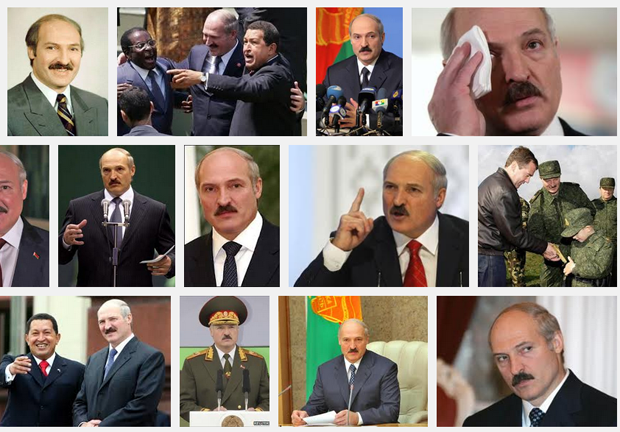
An old Belarusian joke suggests a simple way of improving one’s life. If you feel unhappy, just allow a goat in your house, live with it for some time, and then take the goat away. In principle, nothing changes – but you feel real relief and happiness! This is exactly the way the foreign policy of Belarus operates.
Close the Swedish embassy in Minsk, and then allow its re-opening. Arrest Vladislav Baumgertner, the CEO of the Russian potash giant Uralkaliy, and then set him free. In principle nothing changed, but each story ended with something like “an improvement in the situation” – or at least with an impression of such.
Last year EU-Belarus relations, already on the rocks, were further damaged by the infamous teddy-bear parachuting and subsequent diplomatic scandal with Sweden. In comparison with that period of “cold war” 2013 looks relatively moderate. For instance, the Belarusian foreign minister Uladzimir Makey was temporarily dropped from the EU travel ban list. Nonetheless, the overall temperature of relations is frosty.
Political prisoners remain jail in Belarus. The fact two of them were released recently had nothing to do with the authorities’ good will; it happened just because their prison terms expired. The decision to suspend the travel ban for Makey was also purely technical. The position of Foreign Minister from the very beginning wasn’t on the EU travel ban list in order to leave a channel for direct communication with Belarusian authorities. Makey, personally, is still on the black list and will not be allowed to enter the EU if he leaves his minister position.
NGOs and opposition excluded from talks?
Since the beginning of 2013 the number of contacts between the EU and the Belarusian Foreign Ministry has increased. EU diplomats call this process “consultations with the Belarusian government”. But it’s hard to say exactly what the content of these consultations is. It is known that the Belarusian side propose to re-organise the European Dialogue on Modernisation. This EU initiative would establish intergovernmental relations between the European Commission and the Belarusian authorities, including an annual meeting of presidents Lukashenka and Barroso. But they have also suggested excluding representatives of civil society and political opposition from the Dialogue.
According to Belarusian authorities’ rhetoric, any relations with the EU within the framework of the Dialogue on Modernisation or the Eastern Partnership should be built “on equal basis and should focus on mutually beneficial projects.” In translation from diplomatic to real language this is nothing but a request to lift all the conditions related to democracy, rule of law and human rights, and simply invest in Belarus’ economic and infrastructure development.
It comes as no surprise that the EU is not ready to fully support these proposals right now. That they’re ready to talk about it, however, does. The next phase of the European Dialogue on Modernisation is going to be limited to experts with a focus on the themes that only the Belarusian government is interested in. In fact, civil society has not been granted the status of full participants in the Dialogue – despite numerous statements and appeals about the vital necessity of this.
Opposition fractured, weakened and ineffectual
In 2014, the European Commission and the European External Action Service (EEAS) will change their staff, so they should be interested in showing some progress with regards to Belarus. In the absence of real progress, renewal of official contacts with the Belarusian authorities could be presented as an achievement.
It is not worth blaming the EU for such behaviour, though, all the while Belarusians themselves have not done much to change the situation. Neither autocrats or democrats have undertaken significant steps to resolve the current deadlock. The latter manage to disunite – without ever forming a real unity in the first place. Political opposition was formally divided into two parts; the “People’s Referendum” campaign and the “For free and fair elections” coalition. Real differences between the two are hard to explain. Both of them pray to the old God of “communication with ordinary people”. This is a noble task in any sense, but actions proposed are not significantly different from previous unsuccessful attempts to respond to the people’s needs. The oppositions’ slogans are not easy to understand even for their closest civil society allies. Sometimes it feels like these activities are implemented just for the sake of keeping political activists busy, gaining some media attention and getting some resources from donors in the process.
The main aim for the opposition forces is to remain on the political scene until the next presidential elections. Independent civil society organisations are also divided in different camps and have lost their positive dynamics of previous years; still they have much more potential than the weakened political opposition. As a result of disunity among democrats they cannot respond properly to the EU proposals or the challenges of the internal political situation. The EU is listening to the contradictory voices of various Belarusian activists without the possibility to coordinate with them on the main course of action.
Challenges in encouraging change
Thus, the EU policy faces a clear choice: either to wait for internal changes in Belarus or try to actively facilitate them. The recommendations of the European Parliament on the EU policy towards Belarus (the so-called Paleckis’ report), adopted on 12 September 2013, make step in the latter direction. The central idea of strengthening pro-European attitudes among different groups of actors from the civil society to open-minded civil servants via closer engagement in cooperation with the EU looks good. Civil society is seen as one of the key actors in political dialogue with the EU. It is also mentioned that “the National Platform of the Civil Society Forum of the Eastern Partnership is an important and reliable partner and a unique communication channel to the Belarusian people for the EU”. Actions aiming at communicating European policies to the Belarusian citizens, expanding education programs, development of scientific cooperation are also recommended.
The European Parliament doesn’t propose significant changes in the current EU policy, but the EU needs to go much deeper into the Belarusian political situation to insure even these slight changes. The new way lies between facilitation of public dialogue between the Belarusian authorities and civil society on the one hand, and playing the engagement game with nomenklatura on the other hand.
This is not an easy task, it needs a lot of reflectivity, good understanding of the field, strong diplomacy and coordination between various actors’ – civil society organizations, political opposition forces, donor structures, EU member states, and international organizations like Council of Europe, OSCE, UN.
While playing this complicated game in some cases the EU will have to back one internal actor and its strategies against others. And this is what the EU is not ready to do. The overall approach demands to support all the actors who proclaim pro-democratic and pro-EU values. As a result the EU policy creates a plurality and centrifugal trends within the civil society and political opposition that is the main obstacle for consolidation among democrats. Attempts of strategic unification immediately run into charges of “monopolization” and “privatization” of civil society voice. The EU needs a strong internal counterpart in Belarus, which never appears without civil society consolidation, but it is not ready to let this consolidation happen. This vicious circle must be broken to proceed with the Belarus situation.
Of course, there is another way: impose travel ban on Minister Makey, then lift it – and, according to the famous “goat principle”, feel relief…
This article was originally published on 16 Oct 2013 at indexoncensorship.org
 The Arctic Sunrise scandal began on 18 September, when Greenpeace activists reached Russia’s state gas giant Gazprom oil rig Prirazlomnaya. The Arctic Sunrise crew consisted of 28 activists from 18 different countries, including New Zealand, Australia, United Kingdom, Russia, France, Italy, Canada and Argentina, and two journalists – Russian photographer Denis Sinyakov and British videographer Kieron Bryan. Captain Peter Willcox was skipper of Greenpeace’s legendary “Rainbow Warrior” – a ship on which Greenpeace activists protested against testing nuclear weapons in late 1980s.