5 Aug 2013 | Digital Freedom, News, Russia
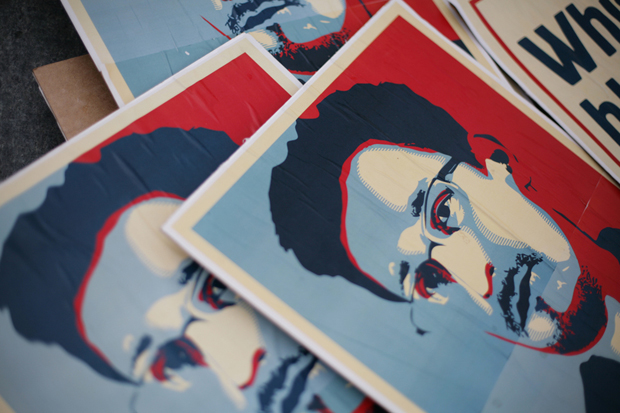
(Photo: David von Blohn / Demotix)
Открытое письмо Эдварду Сноудену
Dear Ed,
Yesterday I learned that you have managed to gain temporary asylum in Russia. Congratulations on behalf of progressive people everywhere. At last, you are safe.
Here in Russia no one would dream of harassing you for exposing the security services when they listen to telephone conversations and read others letters without a warrant. Russia, thank God, is a law-abiding State and ever since 2008 our security services have had a quite legal right to listen to whatever people are talking about on the phone and to read their e-mails.
Everyone is aware of this, and there is nothing here in Russia to expose.
While you are only just beginning to get acquainted, however, with the aspects of liberty in our society, let me give you some modest advice. Russia, It goes without saying, has its own way of doing things and it would be better if you knew about this in advance.
One, feel free to take up whatever activity you like.
This is not the USA, Ed, where exposing the activities of the government carries unpleasant consequences. There is nothing of the kind here. On the contrary, people who expose the American government are given all kinds of rewards and can enjoy a fine career, which I wish for you. I would just remind you not to forget which government you are fighting against. For were you, in the heat of the moment, to get confused about this you would have to return to a little room again (and this time, most likely, it would not be at the airport).
Two, it would be best, old chap, if you grasp from the beginning that Russia is a spiritual country.
Perhaps in the USA they taught you that Russia’s wealth lies in its oil and its timber. Well, that has long ceased to be the case. All the oil was stolen back in 2004 by Mikhail Khodorkovsky and all our forest reserves will soon have been stolen by Alexei Navalny. So today our spiritual wealth can best be expressed as “Orthodoxy, Autocracy and Populism”. Orthodoxy is a very liberal religion. You may drink alcohol, eat pork, or, like Abbot Timothy, drive your BMW roadster while under the influence – in short, do whatever you like. You mustn’t dance, that’s the main thing. Dancing is a crime. But you’re no dancer, Ed, so it’s not a problem as far as you’re concerned. Autocracy is Russia’s form of democracy. It’s very spiritual and you’ll like it. Every few years we re-elect Vladimir Putin. Putin recently caught the biggest catfish in the world. The very biggest was caught by Lukashenko. That’s all you need to know about politics in the Commonwealth of Independent States – if you don’t want to return, that is, to a little room in a hotel somewhere like Krasnokamsk. Populism: that means the national spirit and you can get acquainted with it by listening to the songs of Stas Mikhailov, though my advice to you would be, Don’t.
Three, please don’t imagine I have any objections, it’s a matter of indifference to me, but it would be better if you’re not gay. If you are, well, don’t leave the hotel. If you’re Jewish then you won’t be able to work as a rural schoolteacher. Does that strike you as silly advice? Ed, I know what I’m talking about. Take my word for it.
I hear that your defence lawyer Kucherena has given you Crime and Punishment. It’s an excellent book. Do read it, and do so BEFORE you encounter a certain middle-aged lady called Yelena Mizulina. Don’t do anything you might come to repent of later! No matter how noble the idea that guided your actions.
Lastly, a couple of practical suggestions.
Do not commit any offences when you’re out driving until you have been elected deputy of one assembly or another. Don’t waste your money buying a flat – all you have to do is become friendly with Ramzan Kadyrov. Learn to play badminton and if someone offers to help you run for Mayor of Moscow, do not agree. It’s a trap! There are three simple rules you must remember: Do not wear white, at least not when you’re near Bolotnaya Square; Don’t walk about in tight-fitting garments anywhere within sight of the State Duma; and Don’t Dance within the vicinity of a church.
Please don’t imagine that I am trying to scare you. On the contrary. You can do everything else that I haven’t mentioned above. If you want to tell lies, go ahead; if you want to steal, be my guest, thirteen years in a row: and no problem. Just remember my advice and, to be safe, don’t leave the hotel. I can’t explain – and anyway, you wouldn’t understand. It’s just better if you stay inside,
Roman Dobrokhotov / @Dobrokhotov
Note
It would take at least as many words as the author uses to decipher the allusions in this short letter. Here it’s worth noting the following.
In 2008 the various Russian security services were allowed by law to use a “technical system to support investigative activities” (its acronym is SORM) which gave them access to communication networks without seeking prior permission. Such access is now a condition of registration for any new website, and providers must foot the bill themselves for installing the necessary equipment and software. For an account of SORM in action see this link.
Why Duma deputy Yelena Mizulina, singer Stanislav Mikhailov, rural schoolteacher Ilya Faber and Abbot (higumenos) Timothy have become famous or notorious can be learned from the Internet.
The author of the letter Roman Dobrokhotov is a Moscow-based blogger, and a journalist with the internet news-site slon.ru.
In 2012 he was described by Al Jazeera in the following terms: “Roman has been arrested 120 times. His actions – part performance art, part comedy and part political statement – are daring and entertaining but his cause is deadly serious.” Dobrokhotov’s targets, according to the TV broadcaster, are “Putin, the Orthodox church and ultra-nationalists”.
— John Crowfoot is a translator and writer
5 Aug 2013 | In the News
#DONTSPYONME
Tell Europe’s leaders to stop mass surveillance #dontspyonme
Index on Censorship launches a petition calling on European Union Heads of Government to stop the US, UK and other governments from carrying out mass surveillance. We want to use public pressure to ensure Europe’s leaders put on the record their opposition to mass surveillance. They must place this issue firmly on the agenda for the next European Council Summit in October so action can be taken to stop this attack on the basic human right of free speech and privacy.
(Index on Censorship)
CHILE
Chilean Director Patricio Guzmán Slams TVN Censorship
Chilean television station TVN recently broadcast the Patricio Guzmán documentary “Nostalgia de la Luz”, which takes as main scenery the Atacama desert, shows the testimony of the relatives of some victims of the Pinochet regime and their quest for finding the missing corpses of those victims.
(I Love Chile)
CHINA
Wall Street Journal Hits the Great Chinese Firewall
Another major international website has hit the Great Chinese Firewall—this time it’s the Wall Street Journal’s Chinese language edition, and it’s a mystery as to why the site has been blocked.
(Epoch Times)
Wiki reboot: Chinese Wikipedia makes comeback after early censorship
A censorship blackout lost Chinese Wikipedia many of its users. Now a new generation of mainland volunteers is resuscitating the site
(South China Morning Post)
EUROPEAN UNION
The Last of Us European censorship confirmed
Naughty Dog has confirmed that the PAL territory version of The Last of Us is missing some elements found in the American release.
(VG 24/7)
PAKISTAN
Internet censorship in Pakistan
He is a devout Muslim. He prays five times a day. He observes fasting during the holy month of Ramazan. He recites the Holy Quran in the morning and evening. His very name is Mohammad Islam.
(The Nation)
RUSSIA
6 Human Rights Violations in Russia Where Snowden Has Asylum
To the chagrin, and the anger, of the U.S., Russia — quite likely with the direct approval of President Vladimir Putin — has granted temporary asylum to Edward Snowden. The former NSA contractor who exposed extraordinary government surveillance of metadata for cell phone calls and online communication has spent over a month in the transit area of Moscow’s Sheremetyevo Airport after leaving Hong Kong, where he had first gone public about the leaked files back in June.
(Care 2)
SINGAPORE
Singapore Media and Censorship
After working for three years as sub-editor in a leading Singapore newspaper, Mark Fenn explains how censorship is enforced in the country
(Global Voices)
SOUTH AFRICA
Net censorship won’t stop child porn
Local legislators should not follow the UK prime minister’s ill-advised plan, says Andrew Verrijdt.
(Mail & Guardian)
SRI LANKA
Freedom of Expression
A number of fallacies are common in the blogosphere. A lot of people cannot cope with, or even understand, disagreement. Americans bloggers are fond of citing the First Amendment to the US Constitution. If someone disagrees with them, they complain that they are being silenced. Genuine disagreement is often described as “whining”.
(The Nation)
TURKEY
Facebook facing accusations of censoring citizen journalism
With its mysterious management team for countries, Facebook continues to be a difficult place for people to engage in citizen journalism. The latest case is Ötekilerin Postası (The Others’ Post), whose site has been closed twice in the last month for no clear reason by Facebook management
(Hurriyet Daily News)
UNITED KINGDOM
Christian rights group wants Scotland Yard to protect street preachers
A Christian legal rights group has asked Scotland Yard to inform its police officers that street preachers have free speech rights.
(Deseret News)
Why banning online porn is not the solution to society’s problem
I find it difficult not to be disturbed by the normalisation of pornography. I talk to a group of 14-year-olds and they openly boast about ‘their porn’. When I raise concerns about the pornification of life with a couple of colleagues they look at me as if to say ‘get real and just enjoy it’.
(YourCanterbury)
Twitter UK Chief Apologizes to Female Victims of Online Abuse
The general manager of Twitter UK, Tony Wang, sent a series of tweets Saturday, apologizing to women who have experienced abuse on its site.
(Legal Insurrection)
UNITED STATES
Obama’s Downward Spiral
Four freedoms have always formed the bedrock of American liberty. The freedom of speech, the freedom of assembly, the rights to privacy and to a fair trial, largely covered in the first, fourth, and sixth Amendments. It is astonishing that a single president has so thoroughly undermined all four.
(Dissident Voice)
How We Can Balance Freedom Of Speech And The Rights Of College Athletes
The Ninth Circuit Court of Appeals ruled yesterday that video game manufacturer EA Sports could not use the First Amendment to toss out a lawsuit against its use of the names, images, and likenesses of college athletes without compensation when it produced its line of NCAA football video games.
(Think Progress)
ACLU Accuses Union of “Extortion” for Using its Free Speech to Criticize It
Everyone supports free speech, until it’s free speech aimed at them. And suddenly the ACLU, an organization that is perfectly okay with turning over classified information to terrorists that can get Americans killed, draws the line at… being embarrassed in the press.
(Frontpage Mag)
For Twitter, Free Speech Is a High-Wire Act
Twitter likes to carry a free-speech banner, but as the micro-blogging site expands globally, freewheeling tweets are clashing with divergent laws and standards in markets.
(Wall Street Journal)
New mural painted at site of art, free speech debate
Original piece at art store was peeling, so owners had artists put up a new one
(San Luis Obispo Tribune)
Free speech doesn’t exist everywhere
Americans excel at one thing for sure: speaking their minds. Everyone has an opinion, and most are eager to share them. We live in a country where it’s not uncommon to hear criticisms of any elected official, from President Obama right on down the line.
(Yuma Sun)
Previous Free Expression in the News posts
Aug 2 | Aug 1 | July 31 | July 30 | July 29 | July 26 | July 25 | July 24 | July 23 | July 22 | July 19 | July 18 | July 17 | July 16
2 Aug 2013 | Digital Freedom, News, Politics and Society, Religion and Culture
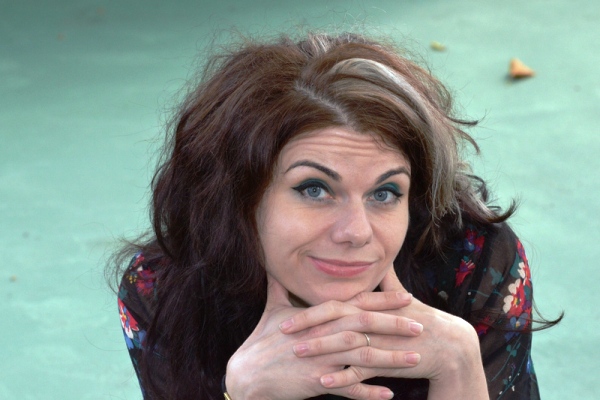
Writer Caitlin Moran (Image Demotix/Ken Jack)
Times columnist Caitlin Moran’s blog post on Twitter, threats and free speech this morning has gone viral. As I type, the page has crashed due to traffic overload, and apparently taken the entire Random House website with it.
The past week, online at least, has been dominated by discussions of misogynist abuse and threats on Twitter. I’m fighting a losing battle here in trying not to refer to this behaviour as “trolling”, but I think it’s still important to call abuse and threats what they are, rather than giving them a whole new category because they occur online. Calling it “trolling” undermines both trolling itself, in some ways a noble tradition, and what’s actually happening, which is women being threatened with rape by strangers.
Moran explains the exhausting and scary feeling of being attacked on Twitter, and the despair of being told that nothing can be done about it.
She goes on to quote Telegraph tech blogger Mic Wright, who earlier this week suggested that “This isn’t a technology issue – this is a societal issue”, suggesting he was simply dismissive of the idea that something should be done about misogyny online. Mic’s a friend, and a thoughtful writer. I don’t think he’s nearly as off-hand as Moran suggests, but I’ll leave it to you to read what he actually wrote. (While you’re at the Telegraph site, read Marta Cooper’s excellent piece as well)
Moran suggests “a fairly infallible rule: that anyone who says ‘Hey, guys – what about freedom of speech!’ hasn’t the faintest idea what ‘freedom of speech’ actually means.”
This, I’m afraid, is where it gets personal. As someone who may as well change his name by deed poll to “Hey, guys – what about freedom of speech!”, I can’t help feel Moran’s talking about me. And I think I’ve been a bit more considered, even while shouting about free speech.
Moran says:
“There is no such thing as ‘freedom of speech’ in this country. Since 1998, we’ve had Article 10 of the European Convention on “freedom of expression”, but that still outlaws – amongst many things – obscenity, sedition, glorifying terrorism, incitement of racial hatred, sending articles which are indecent or grossly offensive with an intent to cause anxiety or distress, and threatening, abusive or insulting words like to cause harassment, alarm or distress.”
Well, kind of. Article 10 of the European Convention on Human Rights says this:
1. Everyone has the right to freedom of expression. This right shall include freedom to hold opinions and to receive and impart information and ideas without interference by public authority and regardless of frontiers. This article shall not prevent States from requiring the licensing of broadcasting, television or cinema enterprises.
2. The exercise of these freedoms, since it carries with it duties and responsibilities, may be subject to such formalities, conditions, restrictions or penalties as are prescribed by law and are necessary in a democratic society, in the interests of national security, territorial integrity or public safety, for the prevention of disorder or crime, for the protection of health or morals, for the protection of the reputation or rights of others, for preventing the disclosure of information received in confidence, or for maintaining the authority and impartiality of the judiciary.
(Part 2 is kind of depressing, isn’t it?)
What Moran categorises as being outlawed by Article 10 are in fact various other laws, most of which have been around in some form or other long before the 1998 Human Rights Act which established the ECHR in UK law. Laws such as the Communications Act and the Public Order Act which, Lord knows, have their problems, not least for social media users. Ask Paul Chambers.
Moran then says:
“As you can see, if you are suggesting that you are allowed to threaten someone on Twitter with rape or death under “freedom of speech”, then you do not – as predicted – have any idea what “freedom of speech” means. Because it’s prosecutable.”
Two things: One, I’m not sure anyone really has been shouting “free speech for rape threats”. Two, it is possible to shout “freedom of speech” even when things are prosecutable. In fact, it’s what free speech campaigners such as Index, English PEN and Article 19 spend most of our time doing. All governments protect free speech “within the law”. Usually, the law is the problem, as we’ve seen with issues from England’s libel laws right up to Russia’s brand new anti “gay propaganda” law.
Moran identifies a certain cynicism in people who say abuse and threats are simply part and parcel of the web (“NOTHING CAN CHANGE. THE INTERNET JUST IS WHAT IT IS!”) saying what they really mean is that they don’t want things to change.
This strand certainly exists. The old-style keyboard warrior who thinks the web is strictly for arguing and not cat videos and getting strangers to help you with the crossword, or generally doing nice things and learning more about other people and places. The internet, for them is SERIOUS BUSINESS, and girls and pansies who can’t take the heat should get out of the kitchen. Or go back to the kitchen. Definitely something about kitchens.
But there is also a good reason to be wary, or at least hesitant, about calls for changing the web. A lot of time spent defending free speech is not actually about defending what people say, but defending the space in which they can say it (I’ll refrain from misquoting Voltaire here). It may be idealistic, but we genuinely believe that given the space and the opportunity to discuss ideas openly, without fear of retribution, we’ll figure out how to do things better. Censorship holds society back. In fact, it’s the litmus test of a society being held back.
When the cry goes up that “something must be done”, it’s normally exactly the right time to put the brakes on and think very hard about what we actually want to happen. The web is wonderful, and possibly the greatest manifestation of the free speech space we’ve ever had, but it’s also susceptible to control. Governments such as those in China and Iran spend massive resources on controlling the web, and do quite a good job of it. Other states simply slow the connection, making the web a frustrating rather than liberating experience. Some governments simply pull the plug. The whole of YouTube has been blocked in Pakistan for almost a year now, because something had to be done about blasphemous videos. Last month David Cameron announced his plans to take all the bad things away, after the Daily Mail ran a classic something-must-be-done campaign against online porn.
There are, as Moran rightly points out, laws against threatening people with rape. Perhaps the police and the CPS should take these threats more seriously (I only say “perhaps” because I don’t know exactly what the various police forces have been doing about the various threats in the past week, not because I think it’s arguable that the police and CPS should take rape threats less seriously), but I’m wary of demanding more action on things that are already illegal. Some of the proposed Twitter fixes are interesting, but their implications need to be thought through, particularly how they could be used against people we like as well as people we don’t like.
After outlining her support for a boycott of Twitter on Sunday 4 August, Moran concludes:
“The main compass to steer by, as this whole thing rages on, doubtless for some months to come, is this: to maintain the spirit that the internet was conceived and born in – one of absolute optimism that the future will be better than the past. And that the future will be better than the past because internet is the best shot we’ve had yet for billions of people to communicate equally, and peacefully, and with the additional ability to post pictures of thatched houses that look ‘surprised.’”
On this, I agree absolutely. In fact, I pretty much wrote the same thing last week:
The current debate in the UK portrays the web overwhelmingly as the habitat of trolls, predators, bullies and pornmongers. And that, plus the police are watching too, ready to arrest you for saying the wrong thing.
I can’t help feeling that all this doom-mongering could be self fulfilling. If we keep thinking of the web as the badlands, that’s how it will be, like a child beset by endless criticism and low expectations. We need to talk more about the positive side of life online – the conversations, the friendships, the opportunities – if we’re going to get the most out of it.
We do need to protect and promote the good parts of life online. But we should be very careful of the idea that we can simply block out the negative aspects without having a knock-on effect. We’re in uncharted territory. The wrong turn could be very, very costly.
2 Aug 2013 | In the News
#DONTSPYONME
Tell Europe’s leaders to stop mass surveillance #dontspyonme
Index on Censorship launches a petition calling on European Union Heads of Government to stop the US, UK and other governments from carrying out mass surveillance. We want to use public pressure to ensure Europe’s leaders put on the record their opposition to mass surveillance. They must place this issue firmly on the agenda for the next European Council Summit in October so action can be taken to stop this attack on the basic human right of free speech and privacy.
(Index on Censorship)
Groups call for EU action against mass surveillance
Recent revelations of American and British mass surveillance of digital communications have triggered an intense mobilization of European free speech and civil liberties organizations, which have launched an online petition calling on leaders of the European Union to halt the practice.
(CPJ)
FRANCE
As France Legalizes Insulting the President, Remember the Censorship Laws That Spurred Online Free Speech Culture
As noted at Reason 24/7, France just legalized insulting the head of state, rescinding a stricture on free speech that dates to 1881 and continued to be enforced within recent years (though it was finally overruled in March by the European Court of Human Rights).
(Reason)
EGYPT
You’ve been warned! Egypt censorship body out to get “Adult Only” Ramadan dramas
To avoid issues with Egypt’s censorship board, producers of Ramadan’s televised drama series dubbed their work “Adult Only,” intended for those over the age of 18. However, Egypt’s censorship board maintains that the drama industry does not have special regulations regarding age, and as such the airing of series under an “Adult Only” label is itself a violation, censorship board head Abdel-Sattar Fathy told Al-Ahram’s Arabic website.
(Al Bawaba)
INDIA
Freedom of speech curbed amidst ‘strange’ BJP atmosphere
Congress leader Rajeev Shukla has asked people of the country to be wary of the Bharatiya Janata Party (BJP) by suggesting that the opposition party’s recent behavior is a threat to the fundamental right to freedom of speech.
(Business Standard)
Limiting access to social media can limit an individual’s freedom of speech: Facebook
In its counter-affidavit to the PIL in the Delhi high court, Facebook has argued that limiting access to social media can limit an individual’s freedom of speech and expression. The PIL, among other things, deals with the issue of minors accessing Facebook services, arguing that under the Indian Contract Act 1872, minors can’t enter into a contract. The PIL will be heard next on Friday.
(Times of India)
RUSSIA
If Snowden really wants to learn Russian…
Edward Snowden’s Russian lawyer says his clientwants to start learning Russian. Now that the American whistleblower has finally left Sheremetyevo airport for “temporary asylum” in Russia, he might find himselfiz ognya da v polymya –out of the frying pan and into the fire.
(Human Rights Watch)
RWANDA
Rwanda adopts anti-genocide law
Rwanda’s upper house on Wednesday unanimously passed a bill amending a law against “genocide ideology” that had been criticised as muzzling free speech and suppressing opposition.
(ENCA)
TUNISIA
Tunisia political quake: Protest-hit rulers struggle to save what they can
Presidency and Islamist-led government start talks with opposition and civil society representatives to try to defuse country’s political crisis.
(Middle East Online)
UNITED KINGDOM
UK govt sidles towards censorship
The UK government, under the leadership of David Cameron, is on the brink of mandating nationwide censorship, requiring Internet service providers to filter, block and report on all citizens’ browsing habits, starting with pornography. The UK will join a growing number of countries which actively censor the Internet, including most Arab states, China, and Australia.
(IT Web)
Model Rhian Sugden blasts plan to cover up sexy lads’ mags covers
MODEL Rhian Sugden has spoken out about proposals to ban “lads’ mags” from supermarket shelves. Rhian, from Radcliffe, says the country is going “censorship crazy” adding: “If you don’t like it, don’t look at it.”
(The Bolton News)
UK and China Not Such Strange Bedfellows in War on Porn
Not long after David Cameron announced the UK’s remarkable proposals to block and ban online pornography, commentators were quick to point out similarities with what has been common practice in China. One Twitter user even came up with the term “Hadrian’s Firewall,” echoing the metaphor of the “Great Firewall” so often employed in media reports about China.
(Huffington Post)
Twitter trolls drive internet free speech debate in Britain
If Twitter is the chirping chatterbox of the Internet, trolls are its dark underground denizens.
(AP via Newsday)
UNITED STATES
New Proposal Could Singlehandedly Cripple Free Speech Online
The Internet has evolved into a true marketplace for every idea – if you can think of it, you can find it on the web. That the online world has blossomed into this virtual town square teeming with diverse content is no accident. It is largely a creation of federal law – specifically, Section 230 of the Communications Decency Act of 1998. Section 230 is directly responsible for the free, messy, uncensored, and often brilliant culture of online speech.
(ACLU)
Ninth Circuit Rules That Celebrity “Rights” Trump Free Speech
Should a minor celebrity’s right to wring every drop he can from his fame trump the right to create a realistic work? The Ninth Circuit Court of Appeals put its thumb on the scales today, issuing a terrible decision holding that a celebrity’s right of publicity is more important than any First Amendment right to depict real people in a video game. This ruling follows closely on the heels of a similar decision from the Third Circuit and threatens a wide range of speech—such as biographies and documentaries—which seeks to realistically depict famous people.
(EFF)
Free Speech is Not Only About Common Good
The Supreme Court was widely criticized for ruling in Citizens United that political spending by corporations is indeed a form of protected speech under the First Amendment.
(Northwestern University)
Thanks to NSA Surveillance, Americans Are More Worried About Civil Liberties Than Terrorism
Last week’s narrow House vote against the Amash Amendment, which was aimed at stopping the National Security Agency’s mass collection of Americans’ phone records, reflects a narrow split among the general public.
(Reason)
Google Pressure Cookers and Backpacks, Get a Visit from the Feds
Michele Catalano was looking for information online about pressure cookers. Her husband, in the same time frame, was Googling backpacks. Wednesday morning, six men from a joint terrorism task force showed up at their house to see if they were terrorists. Which prompts the question: How’d the government know what they were Googling?
(The Atlantic)
UMass Chancellor: Campus Leaders Must Encourage Debate, Not Censorship
Far too often, college administrators fail to recognize the value of free speech in education and instead take action to censor students’ protected expression. However, Kumble Subbaswamy, Chancellor at University of Massachusetts, Amherst, commendably advocated for free speech in a recent article for The Huffington Post.
(FIRE)
Training Camp Day 8: Free speech is not free
Just dropped my alto saxophone player off at band camp and was listening to guys on Sirius XM NFL radio.
They were talking about Philadelphia Eagles wide receiver Riley Cooper getting fined for making a racial slur at the Kenny Chesney concert.
(Atlanta Journal Constitution)
VIETNAM
GOVERNMENT WANTS TO BAN INTERNET USERS FROM DISCUSSING THE NEWS
Reporters Without Borders regards a new law on blogs and social networks – announced on July 31st and due to take effect in september – as a gross violation of the right to inform and be informed. Known as Decree 72, the law restricts the use of blogs and social networks to “providing or exchanging personal information” and bans using them to share information from news sources.
(RSF)
Previous Free Expression in the News posts
Aug 1 | July 31 | July 30 | July 29 | July 26 | July 25 | July 24 | July 23 | July 22 | July 19 | July 18 | July 17 | July 16 | July 15 | July 12