7 Feb 2013 | News, Uncategorized
A woman in Timbuktu says she was lashed by Islamist militants for talking to a man who wasn’t her husband. Salaka Djicke was caught talking to her lover on 31 December last year and was then sentenced to 95 lashings by a Islamic tribunal on 3 January. Djicke fell in love with the married man after he accidentally called when dialling a wrong number more than a year ago, and their relationship quickly blossomed. When Islamic extremists occupied Northern Mali in April 2012, Shariah law was quickly implemented, forbidding women from communicating with men. Her punishment was captured on film by local residents. The man — who Dijcke didn’t name in fear of rebel fighters returning — remains in Mali’s capital after fleeing the night they were discovered. Prior to France’s intervention in Northern Mali earlier this year, Islamist militants introduced strict Shariah law, issuing punishments such as flogging and stoning for perpetrators.

— Is this how you remember Michelangelo’s David? A town in Japan want to preserve the statue’s modesty
On 6 February, a radio station owner was murdered in Paraguay. Marcelino Vázquez was shot by unknown assailants as he left work at Sin Fronteras 98.5 FM in the city of Pedro Juan Caballero. He was on his way from the radio station to a local night club he also owned, but was stopped by two men on a motorcycle and shot several times. While Sin Fronteras is predominately music-focused, it features a regular news show covering a variety of issues. A parliamentary coup in June 2012 and the subsequent removal of President Fernando Lugo has had a negative impact on freedom of information and expression in Paraguay.
Lawyers for three members of Russian punk band Pussy Riot are appealing their convictions at the European Court of Human Rights. Representatives for Maria Alekhina, Yekaterina Samutsevich and Natalia Tolokonnikova are in Strasbourg today (7 February), after they filed a complaint on 6 February against their two year prison sentences. They said the convictions violated four articles of the European Convention on Human Rights: the right to free speech, fair trial, liberty and security and the prohibition of torture.The trio was first sentenced following their “punk-prayer” performed at Moscow’s main cathedral in February 2012 protesting Vladimir Putin’s return to power.
A radio journalist was shot on his way to work in Peru on 6 February. At the time of the attack, Juan Carlos Yaya Salcedo was driving to the Radio Max station where he worked, in the town of Imperial. He was shot in the leg by an unknown assailant and is expected to make a full recovery and return to work soon. Yaya, who hosts radio show Sin Escape (Without Escape), has never faced threats in the past but police said the attack was likely the result of his journalistic work, as the perpetrators didn’t attempt to steal anything. Yaya said the attack could have resulted from his reporting on the poor construction of a community building in the nearby town of Nuevo Imperial.
Residents of a town in Japan have complained about the erection of replica statues of Michelangelo’s David, requesting that he wear underpants. Okuizumo citizens told town officials that the 16-foot renaissance sculpture’s exposed penis could frighten their children, as some of the replicas, funded by a local business man, were installed in a local park where children often play. Most of the town’s 15,000 residents approved the Renaissance art tributes, and no plans have been made to clothe the statue. Japan has stringent laws regarding nudity. While watching and distributing porn is legal in the country, the country’s authorities request that genitalia be pixelated.
2 Feb 2013 | Middle East and North Africa, News, United Kingdom
Today at the Houses of Parliament, Maryam al-Khawaja asked MPs to put pressure on Bahrain to commit to reforms and free politcal prisoners, including her father and sister. Here, the prominent human rights defender denounces Britain’s indifference (more…)
30 Jan 2013 | Uncategorized
A former CIA officer was sentenced on 25 January to more than two years in prison for leaking official information to the media. John Kiriakou had released the name of a covert officer to a reporter in 2007 in media interviews which were among the first to confirm the waterboarding of detainees, including al-Qaida terrorist Abu Zubaydah. Defenders say the former officer acted as a whistleblower to the CIA’s use of torture to interrogate detained terrorists, whilst prosecutors said his intention was purely to gain fame and status. He pleaded guilty to violating the Intelligence Identities Protection Act in 2012, the first conviction under the law in 27 years. Kiriakou was initially charged under the World War I-era Espionage Act but swapped charges in a plea deal. The deal meant US district judge Leonie Brinkema was restricted to imposing a two and a half year sentence — which she said she would have extended if she could.

Poster for the play Behzti – Gurpreet Bhatti has faced censorship of another play by the BBC
Human rights defender Alaa Abdel Fattah was arrested in Egypt on 29 January for allegedly defaming a judge. The political activist and 2012 Index on Censorship awards nominee was released on bail by Judge Tharwat Hammad on Tuesday, as part of a wider investigation into allegations against private satellite channels. Charges have been filed by 1,164 judges, who complained that TV station workers had invited guests on air who had criticised the judiciary. Abdel Fattah was charged with incitement against the military in October 2011 during the Maspero demonstrations in which 27 protestors were killed.
Playwright Gurpreet Bhatti said that her play scheduled for broadcast on BBC Radio 4 on 1 February has had lines removed from the script. During Index on Censorship’s arts conference Taking the Offensive at the Southbank Centre on 29 January, Bhatti told attendees that her play Heart of Darkness had been altered by broadcasters. The episode, due to be played on the Afternoon Drama slot, followed the investigation into the honour killing of a 16 year old Asian girl – a case investigators are told to handle sensitively because of her Muslim heritage. Bhatti’s play Behzti was axed from a Birmingham theatre in 2004 following protests from the Sikh community. The playwright denied the BBC’s compliance department accusations that lines were offensive in Heart of Darkness, saying “we live in a fear-ridden culture.”
Germany’s foreign minister said on 28 January that Russia’s draft bill banning “homosexual propaganda” could harm Russia’s ties with Europe. In a meeting on Monday evening, Guido Westerwelle told Russia’s ambassador in Berlin, Vladimir Grinin, that the law violated the European human rights convention and will harm Russia’s image and relationships within Europe. The draft legislation was passed by the State Duma, Russia’s lower house of parliament, on 25 January and prompted protests by the gay community, including a kiss-in protest by activists which was broken up by police on Friday. The law will ban the promotion of homosexuality amongst children and is alleged to intend consolidation of public support for President Vladimir Putin.
On 28 January, Twitter began censoring porn related searches on its video sharing app Vine yesterday, after a six-second porn clip was accidentally made editor’s pick. Searching for terms such as #sex and #porn came up with no results, but users could still access pornographic content if it had been posted under a different hashtag. The social networking site apologised for circulating the video of a graphic sex act on the app launched last week, blaming the slip-up on a “human error”. Vine was introduced to Twitter as a video programme similar to Instagram, where users can upload six second video loops, some of which proving to appeal to a more adult audience. Last week, Apple banned 500px, a photography app with a section dedicated to nudity, from its app store.
29 Jan 2013 | Uncategorized
Indian intellectual Ashis Nandy is facing a police investigation after remarks about underprivileged people made at the Jaipur Literary Festival. Nandy was quoted as saying that “Most corrupt people come from Other Backward Classes, scheduled castes and scheduled tribes.” Nandy later claimed that he had meant that most people prosecuted for corruption were from the lower castes, as they did not have the means to defend themselves. But complaints have reportedly been made to police.
Writers including novelist Hari Kunzru were threatened with prosecution at the Jaipur festival last year after they read extracts from the work of Salman Rushdie, who had been forced to withdraw from appearing at the event following threats.
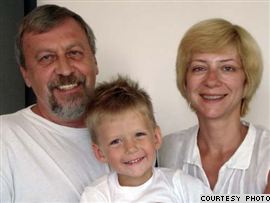
Irina Khalip with husband Andrei Sannikov and son Danil
Belarusian journalist Irina Khalip is to apply to leave the country to visit the UK and Russia. Khalip, who is married to former presidential candidate Andrei Sannikov, is currently subject to a two-year suspended sentence, handed down after a crackdown on opposition journalists and activists in the wake of Belarus’s 2010 presidential election. Her husband has been granted asylum in the UK.
Egypt’s Prosecutor General has ordered the arrest of all members of alleged anarchist group “Black Bloc”.
The newly-emerged Black Bloc, adopting tactics from international anarchist protest movements, and wearing distinctive black hoodies and balaclavas, has been denounced as “barbaric” by Muslim Brotherhood-aligned media. But some commentators have likened the crackdown on the tiny grouping to a panic over heavy metal fans during the Mubarak era.
Philippines Solicitor-General Francis Jardeleza has said that “liking” a libelous post on Facebook could lead to criminal prosecution.
Jardazela’s addmission, during a discussion on the Philippines cybercrime law, prompted one Supreme Court judge to admit that he would now be “reluctant to express [his] view on the web.
