5 Mar 2012 | Europe and Central Asia, Index Index, minipost
Local access to Facebook and two Russian-language websites has been blocked in Tajikistan, following articles critical of the country’s long serving president. Users attempting to access Facebook, tjknews.com or zvezda.ru are automatically re-directed to the home page of their provider. The shutdown was ordered by the state-run communications service after the two websites published articles critical of President Imomali Rakhmon. Several Facebook groups openly discuss politics and some users have been critical of the authorities.
5 Mar 2012 | Russia
Vladimir Putin has regained his position as president of Russia after Sunday’s election. According to the Central Election Committee, Putin got 63.82 per cent votes confirming him as winner without the need for a second round of voting. The second highest result was achieved by communist leader Gennady Zyuganov with 17.8 per cent of the votes. The other candidates, oligarch Mikhail Prokhorov, LDPR party leader Vladimir Zhirinovsky and former Duma speaker Sergey Mironov, all had less than 8 per cent of votes.
Zuganov described the election results as “illegitimate and unfair”, while Mironov, Zhirinovsky and Prokhorov accepted their defeat and recognised Putin’s victory.
Vladimir Putin made a speech in front of his supporters in Moscow’s Manezh Square saying his victory was “clean” and the elections were “a test” that showed “Russian people didn’t let anyone impose their will” to destabilise the country. This statement is in line with Putin’s previous allegations against the opposition. President Dmitry Medvedev said they “won’t give this victory away to anyone”.
Opposition and journalists reported numerous fraud allegations, along with the suggestion that Putin’s supporters were paid to appear at central squares on 4 March for money and were bussed in.
Watchdogs from the League of Voters reported over 3,000 election law violations. The same number was reported by GOLOS association, another independent monitor.
Most violations include ballot-box stuffing and “carousels’ — when a group of the same people vote several times at different poll stations. Carousels often included police officers, plant workers and the military.
Mikhail Gorbachev has said he doubts that “election results reflect real public mood”.
Russian citizens held mass protests against Putin’s third presidential campaign run, and plan to continue protesting. Putin became president in 2000, 2004 and in 2008 he supported Dmitry Medvedev, who made Putin prime minister.
A sanctioned rally against Putin and for fair elections will be held on 5 March on Pushkinskaya Square in the centre of Moscow.
1 Mar 2012 | Uncategorized
Reproduced with kind permission of The Times
The perils of opposing orthodoxy are a constant of history. As Voltaire wrote to Diderot in 1758: “We are compelled to lie, and then we are still persecuted for not having lied enough.” There is, however, a voice prepared to insist on the right of free expression for heretics. It is Index on Censorship, a pressure group that marks its 40th anniversary this year and whose founding was assisted by The Times.
In 1967 this newspaper published a long appeal by Pavel Litvinov, a Soviet dissident. His article drew attention to the plight of three Russians on trial for supporting the free speech of a samizdat literary magazine. Litvinov, the grandson of Stalin’s foreign minister, had been told by the Soviet security services that he would be held “criminally responsible” if his account of the trial was published. [The Times] published it. Litvinov’s plea gained support from prominent British writers, artists and intellectuals, including W. H. Auden, A. J. Ayer, Henry Moore, Iris Murdoch and Stephen Spender.
That campaign was the origin of Index. The group has lobbied for writers throughout the world whose words are suppressed, and it has recorded instances of political censorship. The roster of contributors to the magazine is of extraordinary quality. It includes Solzhenitsyn, Václav Havel, Nadine Gordimer, Doris Lessing and Salman Rushdie. And while, like any campaigning organisation comprising independent minds and wills, it has had the occasional internal political argument, it remains an essential part of the cultural and political landscape.
Litvinov will be speaking at an event at the London School of Economics this evening alongside Michael Scammell, Index’s founding editor and the biographer of Solzhenitsyn and Arthur Koestler. They will have much history to reflect on.
The inspiration for Index, the treatment by the Soviet Union of political dissent as criminal or insane, has been superseded by history. In his celebrated columns in The Times in the 1970s and 1980s, Bernard Levin gave support to Index’s campaigning and, with remarkable prescience, predicted the fall of the Soviet Union.
But with new forms of communication have come increased powers for autocratic governments to control dissent. And some regimes bear a striking similarity to autocracies of an earlier age. Index has made a point of defending the rights of free expression in Belarus, where Alexander Lukashenko, the last dictator in Europe, is resorting to familiar Stalinist methods of police violence and trumped-up charges against his opponents.
Threats to free speech come not only from malevolent regimes. The phenomenon of “libel tourism” in the UK and the creeping censorship of criticism of religion are newer issues that occupy free-speech campaigners. Their work is never complete; but what has been done merits recognition and admiration.
29 Feb 2012 | Awards
Recognising artists, filmmakers and writers whose work asserts artistic freedom and battles against repression and injustice
Voina, performance artists, Russia
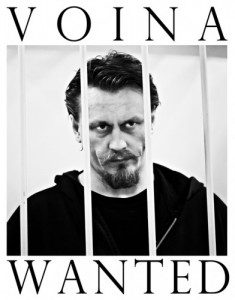 Voina, meaning “War”, is a collective of radical Russian anarchist artists who combine political protest and performance art.
Voina’s carries out actions directed against the authorities. In June 2010, members painted a 65-metre phallus on a drawbridge in St Petersburg which, when raised, faced the city headquarters of the federal security service.
Voina members Vorotnikov and Leonid Nikolayev were imprisoned from November 2010 to February 2011 in connection with an anti-corruption protest and, in July 2011, Russian police issued an international arrest warrant for Vorotnikov. A warrant for the arrest of fellow artist Natalia Sokol was issued in December 2011.
Ai Weiwei, artist, China
 AiWeiwei is a Chinese artist and activist whose work incorporates social and political activism. He has investigated corruption and cover-ups and openly criticised the Chinese government’s record on human rights.
Ai’s 81-day detention in 2011 caused international uproar. He was arrested in April, alongside several of his friends and colleagues. Since the Chinese authorities released him on bail in June 2011, he has been fined $2.4 million in back taxes and penalties. Though officials arrested Ai for alleged economic crimes, supporters say he was punished for his activism and vocal critiques of the government. He paid a $1.3 million bond with loans from supporters, who contributed online and in person and even throwing cash over the walls of his studio in Beijing.
In November 2011, after Ai announced that authorities were investigating his cameraman for pornography in connection with photos that featured the artist and four women naked, internet users responded tweeting nude photos of themselves in support.
Ali Ferzat, cartoonist, Syria
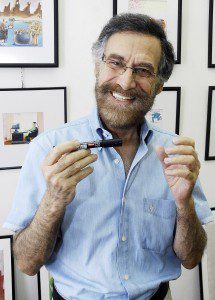 Syrian cartoonist Ali Ferzat has been called “an icon of freedom in the Arab world”. He has spent decades ridiculing dictators in more than 15,000 caricatures. His depictions of President Assad and the police state have helped galvanise revolt in Syria.
In August 2011, Ferzat was wrenched from his vehicle in central Damascus by pro-Assad masked gunmen who beat him badly and broke his hands. Passers-by found Ferzat dumped at the side of a road; his briefcase and the drawings inside it had been confiscated by his attackers.
Ferzat earned regional and international recognition in the 1980s with stinging cartoons of officials, autocrats and dictators including Saddam Hussein and Muammar Gaddafi. Saddam Hussein called for Ferzat’s death in 1989 after an unfavourable portrait of him was exhibited in Paris and Ferzat’s cartoons have been banned in numerous Arabic countries.
Min Htin Ko Ko Gyi, poet, Burma
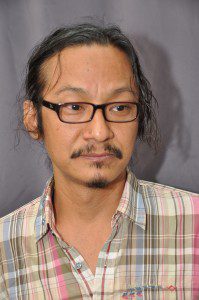 Min Htin Ko Ko Gyi, a poet, filmmaker and screenwriter, co-founded Burma’s inaugural Arts of Freedom Film Festival, which took place in early January 2012.
Burmese citizens were invited to create a short film on the theme of freedom. Despite the state media’s refusal to cover the announcement, Ko Ko Gyi and his organisers received 188 submissions. Thousands gathered in Rangoon under the banner “Free Art, free thought, freedom”, to watch the selected films. More than 7,000 attendees voted for Cut This Scene to win one of five awards. The film is a satire of a government censorship committee struggling to set the criteria by which to censor films.