13 Apr 2016 | Awards, mobile, Music in Exile, News
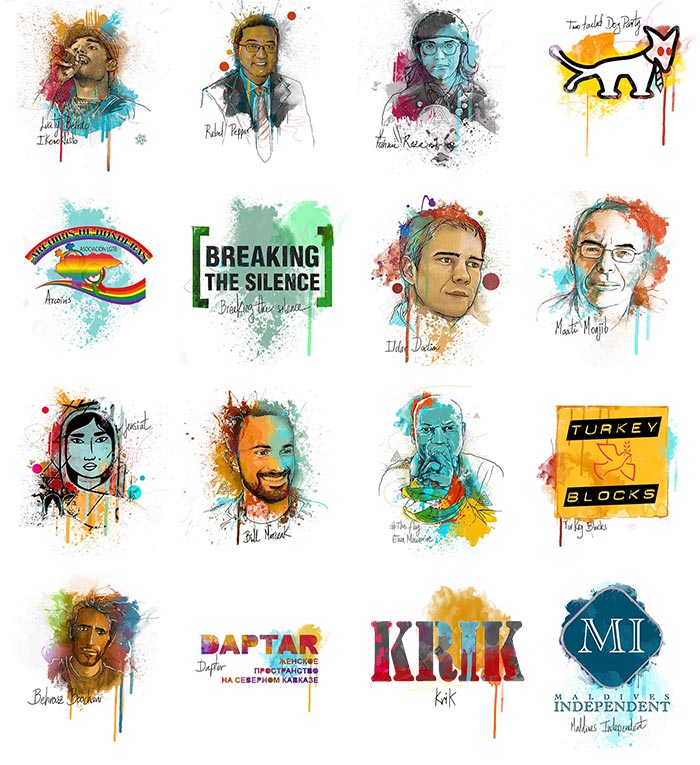
Each year, the Index on Censorship Freedom of Expression Awards gala honours courageous champions who fight for free speech around the world.
Drawn from more than 400 crowdsourced nominations, this year’s nominees include artists, journalists, campaigners and digital activists tackling censorship and fighting for freedom of expression. Many of the 16 shortlisted are regularly targeted by authorities or by criminal and extremist groups for their work: some face regular death threats, others criminal prosecution.
The gala takes place Wednesday 19 April at the Unicorn Theatre in London and will be hosted by comedian, actor and writer Katy Brand. If you aren’t lucky enough to be attending, you can catch the night’s events by tuning into coverage and a live Periscope stream @IndexCensorship beginning at 7:30PM BST.
We will be live tweeting throughout the evening on @IndexCensorship. Get involved in the conversation using the hashtag #IndexAwards2017.
Index on Censorship Freedom of Expression Awards nominees 2017
Arts
Luaty Beirão, Angola
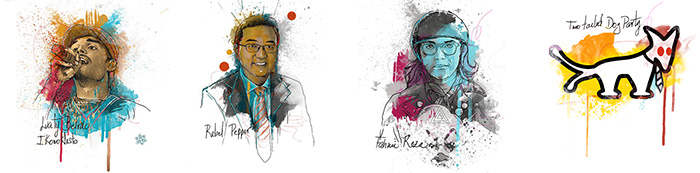
Rapper Luaty Beirão, also known as Ikonoklasta, has been instrumental in showing the world the hidden face of Angolan President José Eduardo dos Santos’s rule. For his activism Beirão has been beaten up, had drugs planted on him and, in June 2015, was arrested alongside 14 other people planning to attend a meeting to discuss a book on non-violent resistance. Since being released in 2016, Beirão has been undeterred attempting to stage concerts that the authorities have refused to license and publishing a book about his captivity entitled “I Was Freer Then”, claiming “I would rather be in jail than in a state of fake freedom where I have to self-censor”.
Rebel Pepper, China
Wang Liming, better known under the pseudonym Rebel Pepper, is one of China’s most notorious political cartoonists. For satirising Chinese Premier Xi Jinping and lampooning the ruling Communist Party, Rebel Pepper has been repeatedly persecuted. In 2014, he was forced to remain in Japan, where he was on holiday, after serious threats against him were posted on government-sanctioned forums. The Chinese state has since disconnected him from his fan base by repeatedly deleting his social media accounts, he alleges his conversations with friends and family are under state surveillance, and self-imposed exile has made him isolated, bringing significant financial struggles. Nonetheless, Rebel Pepper keeps drawing, ferociously criticising the Chinese regime.
Fahmi Reza, Malaysia
On 30 January 2016, Malaysian graphic designer Fahmi Reza posted an image online of Prime Minister Najib Razak in evil clown make-up. From T-shirts to protest placards, and graffiti on streets to a sizeable public sticker campaign, the image and its accompanying anti-sedition law slogan #KitaSemuaPenghasut (“we are all seditious”) rapidly evolved into a powerful symbol of resistance against a government seen as increasingly corrupt and authoritarian. Despite the authorities’ attempts to silence Reza, who was banned from travel and has since been detained and charged on two separate counts under Malaysia’s Communications and Multimedia Act, he has refused to back down.
Two-tailed Dog Party, Hungary
A group of satirists and pranksters who parody political discourse in Hungary with artistic stunts and creative campaigns, the Two-tailed Dog Party have become a vital alternative voice following the rise of the national conservative government led by Viktor Orban. When Orban introduced a national consultation on immigration and terrorism in 2015, and plastered cities with anti-immigrant billboards, the party launched their own mock questionnaires and a popular satirical billboard campaign denouncing the government’s fear-mongering tactics. Relentlessly attempting to reinvigorate public debate and draw attention to under-covered or taboo topics, the party’s efforts include recently painting broken pavement to draw attention to a lack of public funding.
Campaigning
 Arcoiris, Honduras
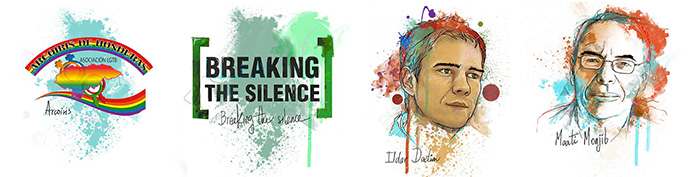
Established in 2003, LGBT organisation Arcoiris, meaning ‘rainbow’, works on all levels of Honduran society to advance LGBT rights. Honduras has seen an explosion in levels of homophobic violence since a military coup in 2009. Working against this tide, Arcoiris provide support to LGBT victims of violence, run awareness initiatives, promote HIV prevention programmes and directly lobby the Honduran government and police force. From public marches to alternative awards ceremonies, their tactics are diverse and often inventive. Between June 2015 and March 2016, six members of Arcoiris were killed for this work. Many others have faced intimidation, harassment and physical attacks. Some have had to leave the country because of threats they were receiving.
Breaking the Silence, Israel
Breaking the Silence, an Israeli organisation consisting of ex-Israeli military conscripts, aims to collect and share testimonies about the realities of military operations in the Occupied Territories. Since 2004, the group has collected over 1,000 (mainly anonymous) statements from Israelis who have served their military duty in the West Bank and Gaza. For publishing these frank accounts the organisation has repeatedly come under fire from the Israeli government. In 2016 the pressure on the organisation became particularly pointed and personal, with state-sponsored legal challenges, denunciations from the Israeli cabinet, physical attacks on staff members and damages to property. Led by Israeli politicians including the prime minister, and defence minister, there have been persistent attempts to force the organisation to identify a soldier whose anonymous testimony was part of a publication raising suspicions of war crimes in Gaza. Losing the case would set a precedent that would make it almost impossible for Breaking the Silence to operate in the future. The government has also recently enacted a law that would bar the organisation’s widely acclaimed high school education programme.
Ildar Dadin, Russia
A Russian opposition and LGBT rights activist, Ildar Dadin was the first, and remains the only, person to be convicted under a notorious 2014 public assembly law. Aimed at punishing anyone who breaks strict rules on protest, the law was enacted to silence dissent after a wave of demonstrations following Putin’s last election victory. Dadin’s crime was to stage a series of one-man pickets, often standing silently with a billboard, attempting to duck the cynical law and push for free expression. For his solo enterprise, Dadin was arrested and sentenced to three years imprisonment in December 2015. In November 2016, website Meduza published a letter smuggled from Dadin to his wife, exposing torture he claimed he was suffering alongside fellow prisoners. The letter, a brave move for a serving prisoner, was widely reported. A government investigation was prompted, and Dadin was transferred – against his will – to an undisclosed new location. A wave of public protest led to Dadin’s new location in a Siberian prison colony being revealed in January 2017. In February 2017, Russia’s constitutional and Supreme Courts suddenly quashed Dadin’s conviction, ruling he should be released and afforded opportunity for rehabilitation.
Maati Monjib, Morocco
A well-known academic who teaches African studies and political history at the University of Rabat since returning from exile, Maati Monjib co-founded Freedom Now, a coalition of Moroccan human rights defenders who seek to promote the rights of Moroccan activists and journalists in a country ranked 131 out of 180 on the Reporters Without Borders Press Freedom Index. His work campaigning for press freedom – including teaching investigative journalism workshops and using of a smartphone app called Story Maker designed to support citizen journalism – has made him a target for the authorities who insist that this work is the exclusive domain of state police. For his persistent efforts, Monjib is currently on trial for “undermining state security” and “receiving foreign funds.”
Digital Activism
 Jensiat, Iran
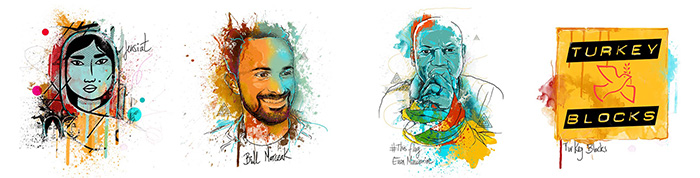
Despite growing public knowledge of global digital surveillance capabilities and practices, it has often proved hard to attract mainstream public interest in the issue. This continues to be the case in Iran where even with widespread VPN usage, there is little real awareness of digital security threats. With public sexual health awareness equally low, the three people behind Jensiat, an online graphic novel, saw an an opportunity to marry these challenges. Dealing with issues linked to sexuality and cyber security in a way that any Iranian can easily relate to, the webcomic also offers direct access to verified digital security resources. Launched in March 2016, Jensiat has had around 1.2 million unique readers and was rapidly censored by the Iranian government.
Bill Marczak, United States
A schoolboy resident of Bahrain and PhD candidate in computer science at the University of California, Berkeley, Bill Marczak co-founded Bahrain Watch in 2013. Seeking to promote effective, accountable and transparent governance, Bahrain Watch works by launching investigations and running campaigns in direct response to social media posts coming from activists on the front line. In this context, Marczak’s personal research has proved highly effective, often identifying new surveillance technologies and targeting new types of information controls that governments are employing to exert control online, both in Bahrain and across the region. In 2016 Marczak investigated several government attempts to track dissidents and journalists, notably identifying a previously unknown weakness in iPhones that had global ramifications.
#ThisFlag and Evan Mawarire, Zimbabwe
In May 2016, Baptist pastor Evan Mawarire unwittingly began the most important protest movement in Zimbabwe’s recent history when he posted a video of himself draped in the Zimbabwean flag, expressing his frustration at the state of the nation. A subsequent series of YouTube videos and the hashtag Mawarire used, #ThisFlag, went viral, sparking protests and a boycott called by Mawarire, which he estimates was attended by over eight million people. A scale of public protest previously inconceivable, the impact was so strong that private possession of Zimbabwe’s national flag has since been banned. The pastor temporarily left the country following death threats and was arrested in early February as he returned to his homeland.
Turkey Blocks, Turkey
In a country marked by increasing authoritarianism, a strident crackdown on press and social media as well as numerous human rights violations, Turkish-British technologist Alp Toker brought together a small team to investigate internet restrictions. Using Raspberry Pi technology they built an open source tool able to reliably monitor and report both internet shut downs and power blackouts in real time. Using their tool, Turkey Blocks have since broken news of 14 mass-censorship incidents during several politically significant events in 2016. The tool has proved so successful that it has begun to be implemented elsewhere globally.
Journalism
Behrouz Boochani, Manus Island, Papua New Guinea/Australia
Iranian Kurdish journalist Behrouz Boochani fled the city of Ilam in Iran in May 2013 after the police raided the Kurdish cultural heritage magazine he had co-founded, arresting 11 of his colleagues. He travelled to Australia by boat, intending to claim asylum, but less than a month after arriving he was forcibly relocated to a “refugee processing centre” in Papua New Guinea that had been newly opened. Imprisoned alongside nearly 1000 men who have been ordered to claim asylum in Papua New Guinea or return home, Boochani has been passionately documenting their life in detention ever since. Publicly advertised by the Australian Government as a refugee deterrent, life in the detention centre is harsh. For the first 2 years, Boochani wrote under a pseudonym. Until 2016 he circumvented a ban on mobile phones by trading personal items including his shoes with local residents. And while outside journalists are barred, Boochani has refused to be silent, writing numerous stories via Whatsapp and even shooting a feature film with his phone.
Daptar, Dagestan, Russia
In a Russian republic marked by a clash between the rule of law, the weight of traditions, and the growing influence of Islamic fundamentalism, Daptar, a website run by journalists Zakir Magomedov and Svetlana Anokhina, writes about issues affecting women, which are little reported on by other local media. Meaning “diary”, Daptar seeks to promote debate and in 2016 they ran a landmark story about female genital mutilation in Dagestan, which broke the silence surrounding that practice and began a regional and national conversation about FGM. The small team of journalists, working alongside a volunteer lawyer and psychologist, also tries to provide help to the women they are in touch with.
KRIK, Serbia
Crime and Corruption Reporting Network (KRIK) is a new independent investigative website which was founded by a team of young Serbian journalists intent on exposing organised crime and extortion in their country which is ranked as having widespread corruption by Transparency International. In their first year they have published several high-impact investigations, including forcing Serbia’s prime minister to admit that senior officials had been behind nocturnal demolitions in a Belgrade neighbourhood and revealing meetings between drug barons, the ministry of police and the minister of foreign affairs. KRIK have repeatedly come under attack online and offline for their work –threatened and allegedly under surveillance by state officials, defamed in the pages of local tabloids, and suffering abuse including numerous death threats on social media.
Maldives Independent, Maldives
Website Maldives Independent, which provides news in English, is one of the few remaining independent media outlets in a country that ranks 112 out of 180 countries on the Reporters Without Borders Press Freedom Index. In August 2016 the Maldives passed a law criminalising defamation and empowering the state to impose heavy fines and shut down media outlets for “defamatory” content. In September, Maldives Independent’s office was violently attacked and later raided by the police, after the release of an Al Jazeera documentary exposing government corruption that contained interviews with editor Zaheena Rasheed, who had to flee for her safety. Despite the pressure, the outlet continues to hold the government to account.
4 Apr 2016 | Magazine, mobile, Volume 45.01 Spring 2016
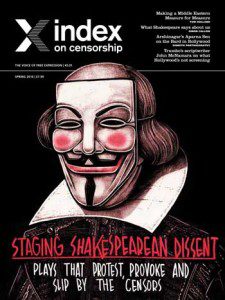
Spring 2016 cover
Index on Censorship magazine editor Rachael Jolley introduces our Shakespeare special issue, which, as the 400th anniversary of his death approaches, explores how his plays have been used to circumvent censorship and tackle difficult issues around the world, from Bollywood adaptions to Othello in apartheid-era South Africa and a ground-breaking recent performance of Romeo and Juliet between Kosovan and Serbian theatres
Theatre, in whatever form it takes, tells us something about society. Sometimes the stories are uncomfortable, but they need to be explored.
Telling stories that challenge societal realities requires performers to negotiate their way around obstacles. In authoritarian countries performing works of “established” or “historic” playwrights can give actors the chance to tackle significant themes that would otherwise never be allowed.
Poet Robert Frost said writing free verse was like playing tennis with the net down. But where nets are still up, performances of Chekhov, Shakespeare, and Cicero may squeeze over a few shots, where a new and unknown writer’s work would face far more rigorous opposition from the authorities. On the occasion of the 400th anniversary of Shakespeare’s death, in this issue we take a look at the words of the son of Stratford and why they are still performed around the world.
One of theatre’s challenges is that it must continue to make sense to all audiences, the young, the old and everyone in between. Shakespeare’s plays can be ballsy, straightforward and about the ordinary. This is no doubt why his words have had influence for so long, while other playwrights have been forgotten.
This appeal, and relevance, remains a challenge for writers and directors. After university, I worked for a few months in the legendary Hull Truck theatre in the north-east of England, led by artistic director and playwright John Godber. What Godber did in a working-class city where few people would think, “Hey, let’s go see a play tonight”, was to write and stage plays that sounded like they were about normal people and normal things.
The most famous, Bouncers, is about the people who do door security in nightclubs. A tale of ordinary life, it was funny, and lots of people came to see it in the little theatre in the untarted-up bit of Hull, around the corner from where millions of milk floats loaded up. And people who didn’t normally go to the theatre thought it was alright for them and told their families and their friends it was a laugh, and so more and more of them came to see more Godber plays. I re-read Bouncers a month ago, and I realised (I guess, I had forgotten), it was more than just funny. There’s real stuff in there about how people live and what they dream and how they find a compromise with life, and what needs to change. Hard stuff. Important stuff. Social comment. Hidden in there among the jokes.
That’s how theatre informs us of lives beyond our own. And that’s why, sometimes, governments fear it. And that’s why in another place, and under another type of government, a play like Bouncers might slip its social messages by those hard-line censors who might not think it’s about anything but some fat bald guys who work on the door at a dodgy nightclub having a chat.
But the other role of stories, plays and art is that they also have the power to goad, protest and say stuff that normally can’t be said. Sometimes stories make what had been outrageous or out-of-the-ordinary feel more acceptable. Sometimes fiction can go places where newspapers can’t, but still deal with the real.
Arthur Miller’s 1952 play The Crucible used the Salem Witch Trials to take a poke at the power of accusation and public panic happening in McCarthyite trials, with their accusations of “communism” which left thousands of people blacklisted and unemployed. People from postmen to Hollywood producers were called to give evidence to the House of Un-American Activities Committee, which aimed to “out” those with left wing or pro-Communist views as dangerous. Despite the horrifically charged climate of the “reds under the bed” era, which meant former stars such as Charlie Chaplin and Orson Welles were forced into exile, Miller was still able to get his play produced. It remains a classic, still relevant after all these years.
The similarities between Salem and the McCarthy trials were obvious to those that thought about it. But sometimes those who are appointed as censors are not the thinking types. So ideas slip by them. And that can be useful.
Shakespeare, of course, has plenty of controversy, inspiration and power within his plays. It’s just less obvious to those who aren’t paying attention. There’s nothing mousy and out-of-date about the speech of roaring rhetoric of Henry V to his rag-taggle followers, to raise spirits and to go forth against a much larger army: “We few, we happy few, we band of brothers, for he today that sheds his blood with me shall be my brother.”
Henry V’s speech could still be used to rally the troops. They still feel pointed, and relevant. Yet because Shakespeare is Shakespeare, his words and ideas escape the red pen of the brutal censor more than others do. “Centuries out of date”, the censors and government red-penners must think. “Can’t do any harm.”
So in some countries, Zimbabwe among them, Shakespeare is used to smuggle ideas of protest past those who veto that kind of thing. Playwright Elizabeth Zaza Muchemwa says in her country, where there are so many restrictions on theatre companies, Shakespeare appears to slip through the net, raising storylines of senility of a king (King Lear) and of overthrowing of a leader (Julius Caesar), which feel important to Zimbabwean citizens dealing with the long last days of an elderly ruler. Shakespeare’s writing continues to inspire, she says, in her piece.
But the badge of Shakespeare doesn’t always mean productions will escape the long reach of the law. In 1981, a Turkish production of A Midsummer Night’s Dream came to the stage as a military government stepped up its power. As Index’s Turkey editor Kaya Genç outlines in the magazine any public event, newspaper article, poem or artistic production carrying even the slightest trace of dissent against the military authority was certain to be punished. This production was felt to have highlighted the relationship between the elite and the rest (the rude mechanicals) and how status was used for power. Eight members of the cast ended up shaven-headed in prison in the next few months. The play did not squeeze by. It was noticed.
Leading Turkish theatre director Kemal Aydoğan, who produced the latest version of the play in Turkey, tells Index magazine that the Dream has a strong relevance to troubles in his nation today. He sees a parallel between the struggle between desire and the law, and the dream of the forest, a place where desire and equality dominates.
Don’t miss another gem in the latest magazine, Jan Fox’s long-form essay on the love/hate relationship the USA has, and has had, with Shakespeare (page 12). The Puritan founders felt all theatre was beyond the pale, and looked frowningly on its ribaldry. So this is a nation with a core of censorship at odds with its commitment to its First Amendment freedom of expression. LA-based Fox covers why Shakespeare still upsets parents because of its drama around everything from teenage suicide to under-age sex. “Shakespeare is telling us about our secret self and that’s what people are afraid of,” Gail Kern Paster, editor of the US-based journal Shakespeare Quarterly tells Fox.
While plays by established writers can smuggle through dissent and protest in countries with strict reins of performance exist, as nations move towards greater democracy then the public must expect and demand far more provocative, outrageous and openly challenging material from its theatre as well as welcoming the established gems. We should all look forward to the signs of those times.
Order your full-colour print copy of our Shakespeare magazine special here, or take out a digital subscription from anywhere in the world via Exact Editions (just £18* for the year). Each magazine sale helps Index on Censorship fight for free expression worldwide.
*Will be charged at local exchange rate outside the UK.
Magazines are also on sale in bookshops, including at the BFI and MagCulture in London as well as on Amazon and iTunes. MagCulture will ship to anywhere in the world.
Related:
Award-winning cartoonist discusses his design of the latest Index on Censorship magazine cover
Table of contents
Subscriptions
24 Mar 2016 | Magazine, mobile, Volume 45.01 Spring 2016
[vc_row][vc_column][vc_custom_heading text=”This year brings the 400th anniversary of William Shakespeare’s death and Index on Censorship is marking it with a special issue of our award-winning magazine, looking at how his plays have been used around the world to sneak past censors or take on the authorities – often without them realising.”][vc_row_inner][vc_column_inner width=”1/2″][vc_column_text]
Our special report explores how different countries use different plays to tackle difficult themes. Hungarian author György Spiró writes about how Richard III was used to taunt eastern European dictators during the 1980s. Dame Janet Suzman remembers how staging Othello with a black lead during apartheid in South Africa caused people to walk out of the theatre.
[/vc_column_text][/vc_column_inner][vc_column_inner width=”1/2″][vc_single_image image=”74261″ img_size=”full”][/vc_column_inner][/vc_row_inner][vc_column_text]
Kaya Genç tells of a 1981 production of A Midsummer’s Night Dream in Turkey that landed most of the cast in jail. And Brazilian director Roberto Alvim recounts his recent staging of Julius Caesar, which was inspired by the country’s current political tumult. The issue also includes contributions from Simon Callow, Tom Holland, Preti Taneja and Kathleen E McLuskie. Plus we explore Shakespeare’s ability to provoke and protest in India, Zimbabwe and the USA. Currently Shakespeare is very much in favour in China and our contributing editor Jemimah Steinfeld explores why.
Shakespeare aside, we have Hollywood screenwriter John McNamara on why his film on blacklisted screenwriter Dalton Trumbo nearly didn’t make it to the big screen. There are interviews with US academic Steven Salaita and Syrian playwright Liwaa Yazji. We look at how one man from New Zealand has been hacking North Korea for years. And we explore Index’s archives on Argentina’s dictatorship, 40 years after the coup, with interviews from former prisoners and descendants of the disappeared.
The issue also includes new fiction from Akram Aylisli, one of Azerbaijan’s leading, and persecuted, writers. Plus lyrics from Egyptian musician Ramy Essam, famed for his performances in the Tahrir Square revolution, and Basque protest singer Fermin Muguruza. And there are illustrations and cartoons by Martin Rowson, Ben Jennings, Eva Bee and Brian John Spencer.
Order your copy here, or take out a digital subscription via Exact Editions (just £18 for the year, with a free trial). Copies are also available in excellent bookshops including at the BFI and Serpentine Gallery (London), News from Nowhere (Liverpool), Home (Manchester) and on Amazon. Each magazine sale helps Index on Censorship fight for free expression worldwide.
[/vc_column_text][/vc_column][/vc_row][vc_row][vc_column][vc_custom_heading text=”SPECIAL REPORT: STAGING SHAKESPEREAN DISSENT” css=”.vc_custom_1483446641352{margin-right: 0px !important;margin-left: 0px !important;border-bottom-width: 1px !important;padding-top: 15px !important;padding-bottom: 15px !important;border-bottom-color: #455560 !important;border-bottom-style: solid !important;}”][vc_column_text]
Plays that protest, provoke and slip by the censors
Rising star – Jemimah Steinfeld on how China has embraced Shakespeare, with performances spanning from brash pro-government productions to a Tibetan Hamlet
When the show doesn’t go on – Jan Fox reports on why school and community theatre productions in the US are under increasing pressure to curb “controversial” themes
The Bard meets Bollywood – Suhrith Pathasarathy looks at how India’s films use Shakespeare to tackle controversy
Lifting the curtain on Zimbabwe – While Shakespeare’s tales of power play and ageing rulers get the go-ahead, local playwrights struggle to be heard, says playwright Elizabeth Zaza Muchemwa
Lend me your ears – Claire Rigby interviews leading Brazilian director Roberto Alvim about tackling his country’s current political turmoil through Julius Caesar
The play’s the thing – Kathleen E McLuskie on how the Bard kept out of trouble with the censors of his day, despite some close calls
Morals made to measure – Tom Holland suggests that Measure for Measure could be reworked for our times
Stripsearch – Martin Rowson’s cartoon on how the history plays would be staged in the Pious People’s Hereditary Democractic Republic of Kryxygistan
The writer of our discontent – György Spiró remembers when a Hungarian staging of Richard III became a way to take on eastern Europe’s dictators
Star-crossed actors – Preti Taneja visits a dual production of Romeo and Juliet staged by theatres in Kosovo and Serbia
When the Dream upset the regime – Kaya Genç on the enduring legacy of a subversive 1981 performance of A Midsummer Night’s Dream in Turkey
Say no moor – Dame Janet Suzman tells Natasha Joseph why South Africa’s apartheid-era censors wouldn’t dare touch Othello
[/vc_column_text][/vc_column][/vc_row][vc_row][vc_column][vc_custom_heading text=”IN FOCUS” css=”.vc_custom_1481731813613{margin-right: 0px !important;margin-left: 0px !important;border-bottom-width: 1px !important;padding-top: 15px !important;padding-bottom: 15px !important;border-bottom-color: #455560 !important;border-bottom-style: solid !important;}”][vc_column_text]
Theatre of war – Charlotte Bailey interviews Syrian playwright Liwaa Yazji
Beyond belief – Ryan McChrystal looks at whether Ireland’s new government will finally phase out the country’s blasphemy law
Exposing history’s faultlines – Vicky Baker explores the Index archives for stories of Argentina’s dictatorship 40 years on, and talks to those who were affected
Rainbow warriors – Duncan Tucker reports on the attacks and killings of LGBT activists in Honduras
Hack job – Sybil Jones interviews Frank Feinstein, who monitors the North Korean propaganda machine
“They worried I’m dangerous. I’m absolutely harmless” – Nan Levinson speaks to US academic Steven Salaita who lost his job after posting controversial tweets
Tools and tricks for truthseekers – Alastair Reid and Peter Sands on why people need to learn verification techniques to combat hoaxes and misinformation on social media
Your television is watching you – Jason DaPonte explains how information stored by internet-connected home devices could be used against us
Tackling Trumbo – Hollywood screenwriter John McNamara on how his story about blacklisted writer Dalton Trumbo almost didn’t make it to screens
[/vc_column_text][/vc_column][/vc_row][vc_row][vc_column][vc_custom_heading text=”CULTURE” css=”.vc_custom_1481731777861{margin-right: 0px !important;margin-left: 0px !important;border-bottom-width: 1px !important;padding-top: 15px !important;padding-bottom: 15px !important;border-bottom-color: #455560 !important;border-bottom-style: solid !important;}”][vc_column_text]
Know your enemy – John Angliss introduces his translation of a new short story by one of Azerbaijan’s leading, persecuted writers, Akram Aylisli
Borderless bard – Josie Timms interviews poet Edin Suljic who fled war in Yugoslavia and found inspiration in Shakespeare
Singing for Tahrir – Musician Ramy Essam who roused crowds during the Egyptian revolution shares his lyrics and future plans
Notes of discord – Rachael Jolley speaks to the Basque singer Fermin Muguruza about having his concerts banned in Madrid
[/vc_column_text][/vc_column][/vc_row][vc_row][vc_column][vc_custom_heading text=”COLUMNS” css=”.vc_custom_1481732124093{margin-right: 0px !important;margin-left: 0px !important;border-bottom-width: 1px !important;padding-top: 15px !important;padding-bottom: 15px !important;border-bottom-color: #455560 !important;border-bottom-style: solid !important;}”][vc_column_text]
Global view – Index on Censorship CEO Jodie Ginsberg debunks the argument that powerful voices should be silenced to promote the free speech of others
Index around the world – Josie Timms runs through the latest news on Index on Censorship’s global work, including a Magna Carta-inspired youth project
[/vc_column_text][/vc_column][/vc_row][vc_row][vc_column][vc_custom_heading text=”END NOTE” css=”.vc_custom_1481880278935{margin-right: 0px !important;margin-left: 0px !important;border-bottom-width: 1px !important;padding-top: 15px !important;padding-bottom: 15px !important;border-bottom-color: #455560 !important;border-bottom-style: solid !important;}”][vc_column_text]
T-shirted turmoil – Vicky Baker looks at the power of the slogan T-shirt and how one can land you in trouble with the law
[/vc_column_text][/vc_column][/vc_row][vc_row][vc_column][vc_custom_heading text=”SUBSCRIBE” css=”.vc_custom_1481736449684{margin-right: 0px !important;margin-left: 0px !important;border-bottom-width: 1px !important;padding-bottom: 15px !important;border-bottom-color: #455560 !important;border-bottom-style: solid !important;}”][vc_column_text]Index on Censorship magazine was started in 1972 and remains the only global magazine dedicated to free expression. Past contributors include Samuel Beckett, Gabriel García Marquéz, Nadine Gordimer, Arthur Miller, Salman Rushdie, Margaret Atwood, and many more.[/vc_column_text][vc_row_inner][vc_column_inner width=”1/2″][vc_single_image image=”76572″ img_size=”full”][/vc_column_inner][vc_column_inner width=”1/2″][vc_column_text]In print or online. Order a print edition here or take out a digital subscription via Exact Editions.
Copies are also available at the BFI, the Serpentine Gallery, MagCulture, (London), News from Nowhere (Liverpool), Home (Manchester), Calton Books (Glasgow) and on Amazon. Each magazine sale helps Index on Censorship continue its fight for free expression worldwide.
 SUBSCRIBE NOW[/vc_column_text][/vc_column_inner][/vc_row_inner][/vc_column][/vc_row]
24 Mar 2016 | About Index, Europe and Central Asia, Mapping Media Freedom, News
Each week, Index on Censorship’s Mapping Media Freedom project verifies threats, violations and limitations faced by the media throughout the European Union and neighbouring countries. Here are just five reports from 15-22 March that give us cause for concern.
Serbia: B92 journalists receive several death threats
Several death threats have been sent to journalists at the investigative journalism portal insajder.net which is owned by broadcaster B92. The threats were sent via email to several reporters between 14 and 22 March.
Insajder’s editor-in-chief Brankica Stankovic and B92’s editor-in-chief Veran Matic have also received threats. Both have been under police protection for years due to severe threats.
Interior Minister Nebojsa Stefanovic announced on 23 March that a person had been arrested for threatening Stankovic and Matic. Due to a pending police investigation no details of the threats have been revealed, Veran Matic told Index on Censorship.
Kosovo: Investigative journalist claims prime minister threatened him
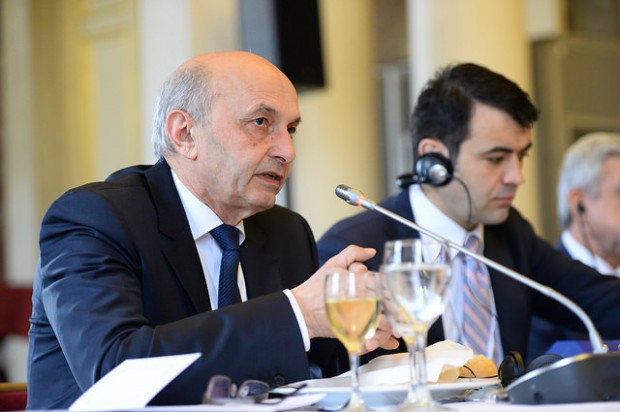
Isa Mustafa, European People’s Party Summit, March 2015, Brussels. Credit: Flickr / EPP
Vehbi Kajtaz, a journalist for the investigative reporting portal insajderi.com claims he received a threatening phone call from Kosovo’s prime minister, Isa Mustafa, on 20 March.
Kajtazi had published an in which he criticised Kosovo’s healthcare system, stating it is so poor that even Mustafa’s brother has to seek asylum in the EU for treatment for his throat cancer. Mustafa has denied threatening the journalist.
On 21 March, Kajtaz wrote on his Facebook page that Mustafa had called him on his mobile phone on the day previous. Kajtazi claims that Mustafa was angry about an article mentioning his brother and said that the journalist would “pay heavily”.
Serbia: Investigative portal claims to be monitored by pro-government tabloid
The Serbian Crime and Corruption Reporting Network (KRIK) has condemned the “lynch campaign” against it by Informer, a Serbian pro-government tabloid. KRIK claims Informer has been following its editor-in-chief Stevan Dojcinovic, monitoring its work and putting his life at risk.
On 18 March, Informer published a photo of Dojcinovic on the front page with an article stating that KRIK is working with “drug dealers, criminals, corrupt cops, but also agents of some of the foreign intelligence services” in order to force prime minister Aleksandar Vucic to give up his position.
“Besides the fact that KRIK’s editor was followed and photographed on the street, we are most concerned about the details presented in the article about specifics of our current journalistic research on the assets of politicians,” Jelena Vasic from KRIK told Index on Censorship. “This raises a serious question about who is monitoring KRIK and how they know the details of our unpublished stories.”
Russia: Local editor and deputy knifed by two assailants
Two unidentified individuals attacked Igor Rudnikov, the founder and editor of the newspaper Novaye kolyosa and deputy of the Kaliningrad district parliament, on 17 March. The attack took place at a café in the city centre where Rudnikov often frequents.
The assailants reportedly waited for him outside the café and when the editor left, they slashed him with a knife. Rudnikov was taken to hospital where he was operated on. The editor’s contacts claim the attack is related to his journalism activities.
He has published a number of articles on crime and corruption in the Kaliningrad region. He was previously assaulted in 1998 when he was Rudnikov was severely beaten in the entrance to his home.
Macedonia: Constitutional court ban journalists from session
The constitutional court in Macedonia announced on 16 March that a session on whether the president will regain the right to pardon persons convicted of electoral fraud would be closed to journalists and the public.
A heavy police presence kept protesters and critics 100 metres away from the court building, while a group of government supporters had set up camp protesting “in defence of the judges”. In a statement, the Association of Journalists in Macedoni (ZNM) and condemned the decision to hold such an important session behind closed doors and have.
Until 2009, the president had right to pardon people accused of convicted of electoral fraud. The court has now ruled that the president can pardon alleged election-riggers.
