28 Oct 2013 | Magazine, News
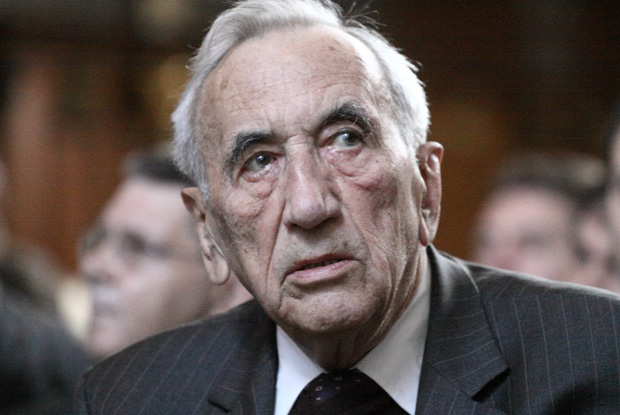
Tadeusz Mazowiecki, Poland’s first post-Communist Prime Minister, died today. In 1995, he spoke to Index on Censorship magazine about his decision to resign as Special Rapporteur of the UN Commission on Human Rights in former Yugoslavia, in protest of the inaction of the international community in the face of the conflict
—
In 1989 Tadeusz Mazowiecki, a founding member of Solidarity, was elected the first non-Communist premier of Poland. Two years later, after resigning his premiership, he became Special Rapporteur of the United Nation’s Commission on Human Rights in former Yugoslavia. In July this year, in his letter of resignation, he said, ‘One cannot speak about the protection of human rights with credibility when one is confronted with the lack of consistency and courage displayed by the international community and its leaders. Dawid Warsawski talked to him for Index
Following your resignation in the wake of the fall of Srebrenica, you have become a symbol of resistance for critics of the UN mission in Bosnia. Are you comfortable in this role?
I don’t know if it’s possible to feel comfortable as a symbol. The response to my resignation proved that it was a necessary protest. The world had come to accept war crimes as a fact of life. But there were those who found it difficult to understand why rhetoric about human rights and morality wasn’t being reflected in political action. There was a need for some kind of gesture on their behalf.
In an open letter published in La Stampa a few days after your resignation, the Croatian writer Slavenka Drakulic, though respecting your decision, accuses you if betraying the hopes of people in former Yugoslavia who wanted you to be their voice.
I saw this as a serious problem when I was weighing up the options. But I do intend to go on speaking out, and I believe that, for these people too, it was more important to protest than to pretend that nothing had happened. For me, Srebrenica was the last straw. Once again promises had been broken and values betrayed. It is hard to be the voice of hope when one is forced into a posture of complete helplessness.
What powers did the UN mandate give you?
I had the right to analyse and report on all abuses of human rights and humanitarian law. But the recommendations I made in connection with the war touched upon issues that came under the exclusive competence of the Security Council. That was the mandate’s weakness.
Only the Human Rights Commission, which appointed me to this post, was obliged to take account of my recommendations. Extraordinary meetings apart, the Commission meets barely once a year to make a survey of the human rights situation throughout the world. There is little time for detailed examination.
The Security Council drew on my reports, but had no obligation to take account of my recommendations. In the course of my three years at the UN, I was invited to a meeting of the Security Council just once, and allowed to make a brief address. My invitation, as Human Rights Commission rapporteur, drew protest from the representatives of China and Zimbabwe. Within the UN structure, the Human Rights Commission is subordinate to the Economic and Social Council – which is far less important than the Security Council. My invitation set a bureaucratic precedent and it must have stirred anxieties. A discussion on human rights in the former Yugoslavia today could mean a debate on China tomorrow.
Did you feel that the UN was giving you firm help and support?
I didn’t; yet people I met on the ground were convinced that the UN was fully behind me and that I could do a great deal within it. This wasn’t exactly the case and made my own position more difficult.
What sort of budget and personnel did you have at your disposal?
Compared to rapporteurs in other countries I managed to secure a considerable amount. I won the right to appoint personnel on the ground, though I didn’t have any influence on their selection. We have representation in Zagreb, Sarajevo, Skopje and most recently in Mostar. But we failed to gain representation in Belgrade because of the attitude taken by the Serbian authorities. My colleagues were able to intervene over some issues (in Croatia, for example). In other cases they were unable to do so because they weren’t permitted to go in by the Serbian side in Bosnia, Croatia, Serbia itself and Montenegro.
What were the financial arrangements?
The appointment of ground personnel overstepped the normal UN budget. The costs were covered by additional funds from state sources, particularly the US government, and by private funds, especially the Soros Foundation. We didn’t know at the end of one year whether funding for the following year would be available.
How do you assess your co-operation with the Bosnian, Croat and Serb authorities on the ground?
Everyone expected me to report on crimes committed by the other sides and preferred me not to note their own human rights abuses. After two visits the Serb authorities began to register great dissatisfaction with my mission – probably because I wrote full and harsh reports about the position of Albanians in Kosovo.
In my dealings with the Bosnian Serbs there were serious problems from the start. During my first visit, when we looked at the explosive issue of the concentration camps, I went to Manjaca. There I had an extraordinary and unforgettable interview with the camp commandant. He addressed me with a mixture of flattery and threats, and the purpose of it all was to prevent me from seeing the prisoners. Later the Bosnian Serb authorities apologised. The fact that I had concluded that the Bosnian Serbs were chiefly responsible for carrying out ethnic cleansing policies must have played a part in this episode, as well as my view that their human rights abuses were the most glaring. The Croatian authorities were ‘generally co-operative’, as they say. But the military authorities did not, for example, put a stop to the expulsion of Serbian families from homes on military property, despite promises to the contrary.
The Bosnian authorities were co-operative, but at the end of my mission I discovered that in Tarcino there has for years been a camp maintained by the Bosnian authorities, with over one hundred prisoners held hostage by local people.
How useful was your own experience as a political prisoner in Communist Poland? I remember an incident in Zenica where prisoners were saying that when the commandant goes home, the guards set about ill-treating them. The commandant denied the allegations, to which you responded that you too had been a prisoner once and fully understood what it meant. His jaw dropped. I imagine he’d never met a former prisoner turned dignitary.
The experience was just as useful when I was formulating my criticisms of the London Conference. Watching its political dynamic I saw a failure to understand who we were dealing with.
For some, it was a political problem, faintly exotic and rather marginal on the world scale. They were working on it without the experience that, at times, there is nothing real about ‘realpolitik’. They showed a lack of readiness to tread the edge of the impossible in politics. In Eastern Europe we have learnt all about this, but it still doesn’t fit into the categories of Western European political thought – even despite the fall of Communism.
What were your relations with the various agencies of the UN?
There was a serious lack of co-ordination between the different agencies of the UN and others – such as the London International Conference on former Yugoslavia – of which the UN forms a significant part. I also had to get used to the fact that UN staff, especially the civilian staff of UNPROFOR were under no obligation to pass on documentation relating to human rights abuses. There was one occasion when vital information concerning a serious war crime (the mass graves at Ovcara near Vukovar) was not communicated to us. I discovered that UNPROFOR personnel had been aware of it, while I found out only at a later stage. Information as important as that should have been passed on.
In general I have the impression that UN structures are not geared to monitoring or counteracting human rights abuses. In my view the UNPROFOR mandate was essentially sick. It was assumed that it was possible to go into a war situation with a peacekeeping mandate. Moreover, the international community made a series of concessions to the Serbs; it was prepared to accept what they had done as a fait accompli. And the Serbs became increasingly less inclined to take account of the possibility that their actions might provoke a strong response. UNPROFOR came to be treated like a hostage, initially in a metaphorical sense and, later, literally. The UNPROFOR mandate was wholly inadequate in these conditions.
What preventive facilities does the UN have? It seems to act adequately In the wake of disasters, but apparently can’t do anything to prevent them.
I agree, but at present the UN has become a convenient whipping boy. Decisions are taken not by the UN but by its member states. The question is do we really want an organisation which would have greater powers? Personally, I was unable to accept the lack of will to action. The UN lacks a clear vision of itself as an organisation and the single- mindedness to realise it the one hand pledges were being made in the name of the UN and on the other the will wasn’t there to fulfil them.
Who lacks the will? Where does the blockage arise?
In my view the UN lacks a clear vision of itself as an organisation and the single-mindedness to realise it. Secondly, the states involved in decision taking have no common political will; there is a conflict of interests. It’s a problem which reaches beyond the Yugoslav conflict. What are the guidelines by which the world is to order itself following the collapse of the geo-political model drawn up at Yalta? The UN was created as an integral part of that model. Do we now want to strengthen and equip it with effective means of action? Or is it to be a political International Red Cross which, though perhaps necessary, cannot promise people any kind o f resolution?
What are your plans now?
I don’t propose to wash my hands of the former Yugoslavia . These three years have been very important to me personally. Elementary human solidarity is also a factor: it’s very hard for me to agree with the view that the Balkans are a traditionally violent region which should be left well alone. Moreover, I firmly believe that we have underestimated the consequences of this conflict and of Europe’s ineffectual response to it for the whole international order.
Dawid Warsawski is the pen name of Konstanty Gebert, a former under- ground activist and journalist involved in Jewish cultural life
Click here to subscribe to Index on Censorship magazine, or download the app here
This article was originally published in the autumn 1995 edition of Index on Censorship magazine.
24 Oct 2013 | Europe and Central Asia, Montenegro, News
Montenegro is first in line after Croatia to enter the EU, according to some European politicians and parliamentarians; a leader in the Balkan region. But the country’s press is under attack, with Prime Minister Milo Djukanovic leading the line in cracking down on the region’s media.
In the latest Reporters Without Borders Press Freedom Index, Montenegro placed 113th out of 179 countries – a ranking that has deteriorated year on year. Slovenia, a neighbour and EU member, is ranked 35th, and Serbia and Croatia are also far ahead. Even Bosnia and Herzegovina, which by many other parameters unfortunately is behind all of the Balkans, rates well ahead of Montenegro at 68th.
This situation is easily explainable. Only in Montenegro has the rule not changed since the fall of the Berlin Wall. For 24 years the power has been held by the same man – Djukanovic. He is the only one from the generation of ex-Yugoslavian war leaders who is still active in politics. He perceives the media as the greatest threat to his absolute rule.
Over the past few years alone, the founder and editor of a daily newspaper has been killed and seven editors and journalists have been physically assaulted. A number of cars belonging to Vijesti, the independent daily newspaper I co-founded, have been set on fire.
Not only have none of these criminal acts been properly investigated, but the authorities and their institutions have done everything in their power to render the investigations meaningless and to ensure that real culprits are not touched. This has increased self-censorship among journalists; many of them are very concerned by the fact that those who commission the attacks seem untouchable, hidden at the very top the government and the mafia circles close to it.
On 1 September 2012, the fifteenth anniversary of the founding of Vijesti, a director, editor, journalist and photographer from the paper were all attacked. This was a warning to their colleagues not to see what they see and write about what is obvious.
Journalism should be a simple and responsible profession that protects the public interest and defends the society from abuses of the powerful and privileged. But in light of the state of media freedom in Montenegro, practicing journalism has been described by representatives from the Council of Europe as ‘a heroic feat’.
When physical assaults have not delivered the expected results, Djukanovic and his regime have switched to financial ones. He forbade the government, state institutions, municipalities and public companies to advertise in Vijesti. A number of private companies that are close to the prime minister, or whom he can intimidate through tax inspections, were “advised” to avoid us. This has caused millions of Euros worth of financial damage to the paper.
On the other hand, he has relentlessly poured state money into the low-circulation national newspaper Pobjeda, which would otherwise have gone bankrupt a long time ago. He has also launched a TV station with cheap programmes in order to compromise the sustainability of the independent TV station.
Napoleon once remarked: “Four hostile newspapers are more to be feared than a thousand bayonets.” Our newspaper does not consider anyone to be its enemy. However, the all-powerful politicians whose irresponsibility and corruption we report on, perceive us as such. To that we tell them the problem is not on our side – if you do not want to have bad things published on the front page, then don’t do bad things!
Europe has a role to play in this situation. We know that freedom of speech is one of the key conditions for progressing in the European integration, because without free media there is no democratic society. For years, the European administration has been seeking concrete results from Montenegro in the fight against organised crime and corruption. Prime Minister Djukanovic has developed a system that is tantamount to a political trade-off. He is completely cooperative and obedient to Brussels and Washington when it comes to regional issues, such as the recognition of Kosovo, support of the Bosnian state as envisioned in the Dayton Agreement and cooperation with the International Criminal Tribunal for the former Yugoslavia.
In exchange, the US and EU turn a blind eye while the government harangues civil society and independent media.
It is time for an end to this cynical policy. European officials, whether they are in Brussels or Paris, Berlin and London, should start taking stock of the real situation and status of democracy and human rights in Montenegro. Otherwise, Djukanovic will succeed in a what should be an impossible mission – obtaining full EU membership for Montenegro, while simultaneously extinguishing independent media in this new state.
This article was originally posted on 24 Oct 2013 at indexoncensorship.org
25 Jul 2013 | Turkey, Turkey Uncensored, Volume 42.02 Summer 2013
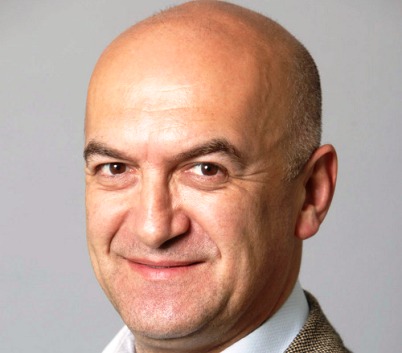
Journalist Yavuz Baydar has been fired by Turkish daily newspaper Sabah, after articles he wrote criticising the government were censored
In the latest report, Freedom in the World 2013, Freedom House defines Turkey as ‘partly free’.
Authorities in Ankara – both the government and bureaucrats – refute these claims, although the Ministry of Justice openly admits that there are serious shortcomings when it comes to providing for freedom of expression, both in law and implementation.
Some international organisations, such as the Organization for Security and Co-operation in Europe (OSCE) and the European Federation of Journalists (EFJ), meanwhile, help build the myth that Turkey tops the world rankings for one of the worst ‘oppressive’ states because of the number of jailed journalists there. The Committee to Protect Journalists reports that there are 49 journalists in prison, while Reporters Sans Frontières put the number at 72, if the number of people includes all jailed media professionals. But claims that the country is entirely free or grossly oppressive are both wrong. These extreme views must be taken with a pinch of salt; the truth is somewhere in between.
The complexities of Turkey today make it a unique case, demanding careful examination so that clichés can be dispersed, particularly those deriving from the perception that the country remains a police state, as it was prior to the late 1990s.
Turkey today is exactly as Freedom House says it is: not ‘free’, nor ‘not free’, but ‘partly free’.
In this context, Turkey’s problems are already out in the open.
Thousands of Kurdish activists connected to the Koma Civakên Kurdistan network – affiliated with the Kurdistan Workers’ Party (PKK) – as well as around 200 students and 72 other journalists and activists (mainly Kurdish) are in detention.
According to the monitoring site engelliweb.com, internet access is blocked to approximately 9000 websites, mostly on an arbitrary, non-transparent basis.
Prime Minister Recep Tayyip Erdog˘an regularly files libel charges against journalists and cartoonists, a move that singles him out because other powerful figures do not engage in similar practices. He has developed a habit of lashing out at the media in public, which has had dire consequences.
The so-called ‘mainstream media’, in other words, the 85 per cent of it controlled by proprietors who are for the most part engaged in vast business activities other than media (and therefore dependent on the government for economic interests), is suffocated and distinctly lacking in freedom and editorial independence.
In big media outlets, fierce censorship and self-censorship are practised on a daily basis.
They are severely crippled in their pursuit of journalism, unable or unwilling to cover corruption and abuse of power or to allow critical voices and dissent to be heard. When it comes to particular topics, such as criticism of the government, corruption or abuse of power, news stories are either filtered or unpublished; direct censorship – the actual blacking out of text – is exercised when material is found to be ‘too sensitive’ for the government’s or newspaper owners’ interests. But at the same time, there is little problem with pluralism and diversity, as opposed to countries like Iran, China, Azerbaijan or Belarus. With more than 40 national dailies (including a few independent newspapers and a vital partisan, antigovernment press), 2500 local papers, 250 private TV channels (of which 18 broadcast news seven days a week, 24 hours a day), 1300 radio stations and more than 150 news websites and online portals, Turkey has a big, competitive sector. Internet access is increasing at a huge rate, with access passing the 50 per cent mark recently. Because of the internet, despite attempts to command control, this is a milieu in which no story or comment is missed.
Anti-terror law and Ergenekon
The state of Turkey’s media freedom has been oversimplified, looking only at the number of journalists incarcerated without distinction, without looking closely at the specifics for those detentions. It’s a remnant of Cold War mentality. ‘Turkey is an undemocratic country’ has become almost like a slogan, concealing far deeper problems that extend throughout many sectors and structures within Turkish society.
This article is from the current edition of Index on Censorship Magazine. | Subscribe
It is true that people are in jail for voicing dissent, among them journalists. Almost all of them are Kurds who, because of the very nature of the Kurdish cause they pursue, combine publishing and self-expression with activism. This means their activity falls inside the boundaries of the utterly problematic Anti-Terror Law, which makes it extremely difficult to distinguish between those who
are members of terrorist groups that commit acts of violence or praise acts of terrorism and those who are simply exercising their right to express opinion. Dissidents, including journalists, have faced detention and prosecution because the law makes it practically impossible to make these important distinctions. The Anti-Terror Law must, at the very least, be revised so that it conforms to the European Convention on Human Rights (ECHR) or, better still, abolished altogether.
Around 10 per cent or so of those jailed are Turkish journalists whose imprisonment relates to the Ergenekon case – a clandestine, undemocratic, politically motivated mafiastyle network that, among other acts over a number of years, plotted a series of coups to oust the government and parliament. Since 2008, dozens of journalists have been arrested in connection with Ergenekon plots, together with hundreds of military officers.
Yet, in these cases, the most obvious clash with ECHR directives has to do with the extremely lengthy detention periods and trial procedure (take, for example, the case of Özkan vs Turkey). Needless to say, Turkey should have determined these periods of incarceration in line with international standards, including EU human rights legislation, releasing journalists while they awaited their trials. But apart from these cases, the European Court of Human Rights has rejected many appeals lodged by the accused, undercutting the assumption held by many that journalists should enjoy immunity even when charged with serious crimes such as conspiracy.
In addition to anti-terror laws, there are dozens of articles – in the Penal Code, in Turkey’s Internet Law, the Press Law and Turkish Radio and Television Law – that restrict freedom of expression and freedom
of the press. Some are implemented on a regular basis and some remain dormant, though still on the books. These punitive measures threaten freedom in Turkey, applying not only to media but also to academia, NGOs, political parties and ordinary citizens across the country.
The rise of independent media and the threat to public interest
Paradoxically, Turkish ‘glasnost’ under the ruling Justice and Development Party (AKP) over the past decade, with the immense help of the EU accession process, has meant, for the most part, that there are no longer many taboo subjects. National mass hypnosis is over. Tiny but independent news outlets – like the dailies Taraf and Zaman or the weekly Nokta – have helped broaden debate about the country’s murky past, untangle myths about the army being the guardian of the system and expose crimes against humanity.
In a pluralist and hugely diverse environment such as Turkey’s, it would be a lie to claim that news dissemination has been fully blocked. Take the case of the Uludere bombing in 2011, when a group of Kurdish villagers were attacked by Turkish fighter jets as they travelled from Iraq along a well-known smugglers’ route, resulting in 34 deaths. Main media group outlets failed to report on the killings for almost a day, but minor papers and those using social media began reporting on the incident
within minutes of it happening.
It could be argued that Turkey has one of the most independent medias in the world – it is truly a phenomenon.
Many countries in democratic transition after the end of the Cold War have had complex changes in their media environment, particularly in southeastern Europe, the Black Sea region and the North Caucasus. From the late 1980s on, this environment has been marked by the emergence of a new type of media proprietor who often – as in some Balkan countries as well as in Russia – entered the media sector with other businesses in tow, with mafia-like habits and connections, with the aim of money laundering, or with enormous greed. For the most part, these players aimed to use media outlets as a tool for keeping government and bureaucracy in check because they became fearful of what might be reported in this new, thriving media landscape, but these people and companies only had personal business gains in mind. Turkey has been part of this reality, and those coming to it from wellestablished, high-standard media environments in the West either do not understand or do not consider the considerable threats to media freedom to be important.
In some countries, for example, Albania, Serbia and Ukraine, media conglomerate proprietors operate in alliance with the ruling powers, establishing politics-media cooperation in the service of their mutual interests, rather than allowing media to serve the public interests.
This addictive system is the primary source of censorship and self-censorship in the wider region, and the blame for destroying the prospects of good journalism must be shared equally between politicians and media owners. In Turkey, in most cases, proper coverage of corruption and any investigative journalism are completely dead. Because this proprietor prototype is in essence non-transparent, Turkey’s media has never bothered to or been in a position to demand transparency or accountability from those in control of the news. In this context, nowhere in the world is the self-destructive role of media proprietors more visible, more irrational or more aggressive than in Turkey
On 19 October 2011, Prime Minister Erdog˘an assembled media proprietors in Ankara to ask for ‘help’ regarding ‘terror coverage’. It’s a call the media should have rejected, but instead they went beyond even what the prime minister had desired: they openly begged him to tell them exactly how long he thought TV dispatches on funerals connected with terrorism should be and shamelessly offered to set up a ‘censorship committee’ by themselves! If created, it would be tasked with ‘filtering’ news prior to publication, particularly when it pertained to clashes between the military and the PKK and political statements issued by them and other Kurdish activists.
In a more recent case, on 18 March 2013, there were reports that the proprietor of the daily newspaper Milliyet, Erdog˘an Demirören, forced veteran pundit Hasan Cemal to resign after he wrote a column defending the right to publish accurate stories, no matter how ‘disturbing’ they would be for the government or media owners. The article was never published, a breach of the journalist’s contract with his employer. Accused of causing the departure of Cemal, Prime Minister Erdog˘an, in his blunt manner some days later, explained that the very same proprietor had visited him to ask whom he should appoint as editor-in-chief for the newspaper.
The uphill struggle: how to solve Turkey’s media dilemmas?
These episodes speak volumes about how polluted Turkey’s media corporate culture is today. Media professionals – by which I mean real, decent journalists, and not those who either defend the government no matter what, or those who condemn it outright under the false belief that all journalism must be oppositional and not critical – face two rather hopeless challenges.
The first frontline for journalists is the political executive and the legislature. Unless the current government amends all laws in favour of freedom of expression and the press, these problems will keep reappearing. In general, the current parliament is a forum of intolerance for freedom of the press, opinion and dissent. In the mindset of the current parliament, the ‘old Turkey’ still rules.
Secondly, media proprietors represent a real challenge to free speech: most of them have no clue about the role and nature of good journalism.
I have long argued that unless these media owners are challenged, one cannot simply go on blaming everything on the political powers. But how do we challenge media owners? Because this is the key to enhancing freedom and independence in Turkey.
It is an uphill struggle. Journalists in Turkey have been forced to live under the ‘unholy alliance’ between governments and big media owners. It is a vicious cycle and very tough to break. We must persuade owners not to interfere in editorial decisions and let us be; we must encourage them to ct transparently in their businesses. Currently, none of them has the civil courage or the wisdom to be on the side of journalists’ fight for freedom.
We could try to persuade the government to ban media owners from entering public tenders, restrict cross-ownership, support local media and allow high share investments for foreign capital owners, with the aim of giving much more autonomy to the national broadcaster, Turkish Radio and Television.
And, of course, we can pressure the government to ensure union activities and memberships in all media outlets are protected by law.
Although their cases are of course the most urgent, problems regarding media freedom in Turkey will not cease to exist when all the journalists in jail – detained or sentenced – are released and pardoned. Turkey can never be part of the democratic league as long as it insists on suppressing and punishing dissent and free speech. But if we limit our professional struggle to these cases only, and introduce minimal amendments to some of the worst laws, we will continue to affect only the tip of the iceberg. If we do only this, held back by a sector that is bleeding spiritually, ruled by owners who are insensitive to the profession, operating without independence, we will continue to operate in appalling conditions, where newsrooms resemble open air prisons.
Freedom must be coupled with true professional independence.
©Yavuz Baydar
Yavuz Baydar is a columnist for Today’s Zaman and was, until he published a piece criticising media ownership in The New York Times, the news ombudsman for the daily newspaper SABAH
This article is from the current edition of Index on Censorship Magazine. | Subscribe
Turkey Uncensored is an Index on Censorship project to publish a series of articles from censored Turkish writers, artists and translators.