2 Oct 2020 | Argentina, China, Japan, News, South Korea
“When old people speak it is not because of the sweetness of words in our mouths; it is because we see something which you do not see.”
– Chinua Achebe, Nigerian novelist
When populist governments rise, or when free speech is threatened, it so often falls to the steely wisdom of older generations to fight for justice.
Every age group has its heroes and, so often, older generations are the champions of the young.
Index has covered a range of groups since its inception in 1972 and elderly protesters have often featured. Here is a look at some of the most significant.
Belarus
Across the country, Belarusians are mass protesting current president Aleksander Lukashenko after elections in August appeared to be rigged.
At the forefront of the ongoing protests is 73-year-old Nina Bahinskaya.
The former geologist has certainly become identifiable with the demonstrations. Index’s Mark Frary spoke to her.
“I decided they [the authorities] would not be so harsh to an old lady, that’s why I decided to organise some activities myself,” said Nina.
Bahinskaya began her protesting after the Chernobyl disaster in 1986, distributing leaflets critical of the Soviet regime, so has experience demonstrating against oppressive governments.
“I don’t want it to continue because I have children, grandchildren and even a great-grandchild.”
President Lukashenko recently met with Vladimir Putin. In a showing of support, Putin agreed to give the Lukashenko government a sizeable loan. It has furthered concern in the country about the increase of Russian influence.
Bahinskaya echoed this worry, she said: “This is quite obvious that some kind of new annexation is happening.”
See Index’s most recent coverage and Bahinskaya’s interview with Mark Frary here.
Argentina
In 1976 the National Reorganization Process seized control of Argentina. The military junta were responsible for a number of atrocities. Backed by the United States as part of a ‘dirty war’, the Argentinian government committed acts of state terrorism upon its own citizens, including the forced disappearances of close to 30,000 people.
A higher value was placed upon young children and babies due to a waiting list for trafficked children. Those hopeful of adopting the trafficked children were military families and supporters of the new regime.
Lucia He spoke to one of Argentina’s ‘famous grandmothers’ for Index in 2017. Buscarita Roa, part of Grandmothers of the Plaza de Mayo, has campaigned since 1977 for disappeared victims to be identified.
She told Index: “Even if you’ve found your own grandchild, you stay because you think of the grandmother who is sick in bed and still hasn’t found hers. To us, the grandchildren we are searching for are all ours.”
The group began protesting at the height of the fear spread by the junta. One of the two founding members of the organisation was disappeared. Its high profile led to infiltration. In 1986, an extract from the book Mothers and Shadows by Marta Traba was published in Index. It spoke of the ‘notorious’ Captain Alfredo Astiz, whose access to the group led to 13 further disappearances.
Despite its reputation, Roa insisted there was little glory in being part of the organisation.
“Being a Grandmother of Plaza de Mayo is not something to be proud of, because having a disappeared grandchild is not something to be proud of.”
Japan
In 2018, Annemarie Luck covered one of Japan’s forgotten scandals: the South Korean ‘comfort women’ or, more accurately, sex slaves.
It took until 1992 for survivors to tell their story
Luck reported that some members of the survivors’ group still meet at the same spot every Wednesday outside the Japanese embassy in Seoul.
They were first issued with a signed apology in 1994 by then Prime Minister Tomiichi Murayama and in 2015, an agreement was reached between Japan and South Korea for the equivalent of $9 million.
Victims, as well as South Korean state officials, viewed the agreement as inadequate and protests have since continued.
239 women had registered with the South Korean government by 2016 as survivors of sexual slavery.
The House of Sharing in the city of Gwanju is home to many of the survivors. Team leader at the facility, Ho-Cheol Jeong, told Index of the impact the women he calls the ‘grandmothers’ have had.
Ho-Cheol said: “In a way, these women could be thought of as the original pioneers of the movement against sexual abuse and harassment that’s spreading throughout the world right now.”
Ukraine & Russia
In 2014, Index reported on the Russian government covering up its own soldiers’ deaths from the conflict in eastern Ukraine. Bereaved families were ‘discouraged’ from talking to media organisations.
Since the conflict broke out in February 2014, an estimated 5,665 soldiers have been killed
73-year-old activist and grandmother Lyudmila Bogatenkova faced a retributive accusation of fraud in response to drawing up a list of military casualties.
Bogatenkova was at the time head of a Soldiers’ Mothers branch in the city of Stavropol. The organisation provides legal advice to soldiers, as well as education programmes.
The allegation threatened Bogatenkova with up to six years in jail, before Russia’s human rights council intervened.
At the time, the BBC reported that local journalists were unable to meet the families of perished soldiers due to threats from ‘groups of aggressive men’.
China
Not all grannies are equally ready to stand up in the face of repression.
In 2013, after Chinese media frequently drew attention to stories of neglected pensioners, a new law was introduced.
The legislation stipulates that adults can face jail time or be sued if they do not visit their parents regularly.
Though brought in to Chinese law, it faced derision from across China and the globe and was not expected to be widely enforced. Many believed it was introduced to serve as an ‘educational message’.
However shortly after it was introduced a 77-year-old woman sued her daughter, who was subsequently ordered to provide financial support as well as bi-monthly visits.
The country struggles with the problem of an ageing population that, as numbers continue to reduce could cause economic growth in the region to fall.
19 Jun 2020 | Volume 49.02 Summer 2020, Volume 49.02 Summer 2020 Extras
[vc_row][vc_column][vc_custom_heading text=”Why don’t we learn that censorship and lack of trust in society puts us all at risk, particularly in times of crisis, asks Rachael Jolley in the summer 2020 issue of Index on Censorship magazine”][vc_column_text]
 The coronavirus outbreak began with censorship. Censorship of doctors in Wuhan to stop them telling citizens what was going on and what the risks were.
Censorship by the Chinese state that stopped the rest of the world finding out what was happening as early as it could have.
Surely this is one of the most compelling arguments against censorship that we have seen in our lifetimes. Showing that if we know about a risk, we are able to discuss, to explore, to research, to prepare, and to take measures to avoid it.
As Covid-19 spread through the world, the parallels with World War I and the Spanish Flu were obvious. Here was a dangerous disease that many countries refused to acknowledge, that doctors were prevented from speaking about and that, for a time, the public had no knowledge of.
In 2014, I asked leading public health professor Alan Maryon-Davis to write about World War I and the flu epidemic for this magazine, a lesson from history for today. He wrote: “We also know that it was the deadliest affliction ever visited upon humanity, killing at least 50 million people world- wide, probably nearer 100 million, several times more than [the] 15-20 million killed by the war itself – and more in a single year than the Black Death killed in a century.”
Maryon-Davis identified three weak links that could have incredibly dangerous consequences in the reaction to a pandemic.
One was that health workers on early cases might worry about reporting it (self- censorship); the second was that governments would worry about political/cultural consequences (political censorship); and the third was that a cloak of secrecy might be thrown over it (pure censorship). Check, check, check. It’s happened again.
Lessons learned from history? Practically nil.
As we move through the tracking phase of this pandemic, we need to recognise that public trust is an essential part of any response, and that public will comes from a belief in society – and a belief that it will act for the public good. Trust also comes from a belief that your government will not collect private information about you and use it without permission, or to your detriment.
Historically, those who fought for freedom of expression and speech also fought for the right to privacy: your right to keep information private – such as your religion or sexual orientation – and the right for you not to have an illegal search of your private papers or your home. Those rights came together in the US constitution because those who wrote it knew what it was like to be in a minority or a protester in a country which oppressed those who did not conform.
They fled those countries to find more freedom, and they sought to create legislation that would mean others could choose to be different, or to express offensive or difficult ideas. That might sound ridiculously ideal- istic, and of course it was – there are plenty of holes people can pick in the reality of US society – but those ideas are strong, and valid for today.
[/vc_column_text][/vc_column][/vc_row][vc_row][vc_column width=”1/4″][vc_icon icon_fontawesome=”fas fa-quote-left” color=”custom” custom_color=”#dd3333″][/vc_column][vc_column width=”3/4″][vc_custom_heading text=”In Turkey there are independent thinkers who believed that home was the last refuge where they could criticise the government”][/vc_column][/vc_row][vc_row][vc_column][vc_column_text]
The right to privacy (and with it the right to express a minority opinion) is often endangered by legislation that is introduced without due process during times of war or crisis.
And it is against this backdrop that activists, journalists, academics and others began to worry that during this pandemic we are, with- out really considering the consequences, giving away our privacy.
Governments around the world have often responded to the Covid-19 situation with diktats that remove an element of democratic governance, or threaten hard-fought-for freedoms, with very little opportunity for public debate.
India’s Justice H.R. Khanna, among others, famously warned that governments use a crisis to ignore the rule of law. “Eternal vigilance is the price of liberty.”
This feels like wisdom that’s fitting for the current fractured moment.
In Turkey, there are independent thinkers who believed that home was the last refuge where they could criticise the government or talk about a difference of opinion from the mainstream. The introduction of the Life Fits Home app could mean a severe erosion of that private space, as once they have input their ID numbers, the government will know exactly who is where, and with whom.
As Kaya Genç outlines in his article on p50, the question is: can they trust an autocratic state which could save their lives via contact-tracing not to come after them later for political reasons?
This is similar to the question being asked in Hong Kong by those who protest against the ongoing erosion of the freedom which ensured it was a very different place to live from China in the last two decades.
During the pandemic, there have been discussions about the dangers of sharing personal information with the government, and one Hong Kong citizen we interviewed for this issue outlined why.
“Of course, we’re willing to do what we can as a collective to stop the spread of Covid-19,” she said. “But the point is, we have no trust in the government now. That’s why I don’t want to trade my information with the government in return for a few face masks.”
Another said people were worried about an app that they were required to download if they left the city and wanted to return, asking: “Who knows what they’ll do with our data?”
Some governments have put in place legal checks and balances to give people more confidence, and to offer assurances that data will not be used for other means.
In South Korea, a law was amended after the 2015 Mers outbreak to give authorities extensive powers to demand phone location data, police CCTV footage and the records of corporations and individuals to trace contacts and track infections.
As Timandra Harkness outlines on p11, that same law specifies that “no information shall be used for any purpose other than conducting tasks related to infectious diseases under this act, and all the information shall be destroyed without delay when the relevant tasks are completed”.
In Australia, legislation restricts who may access data gathered by a Covid-19 app, how it may be used and how long it may be kept.
Other countries have done much less to offer legitimacy and transparency to the data- gathering processes in which they are asking the public to participate.
In the UK, for instance, there has been no sign of legislation outlining any restrictions on how data captured by its track and trace system, or expected Covid-19 app, will be restricted from other use, or even stopped from being sold on to third parties.
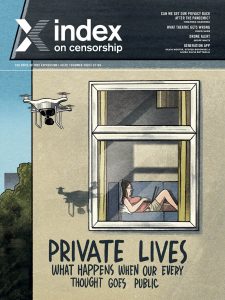
Requests to ask the public to add apps such as these come at the same time as we see rising numbers of drones being used to invade our private spaces, and potentially to track our movements or actions.
We also see a dramatic, mostly unregulated, increase in the use of facial recognition around the world, again taking a hammer to our rights to privacy, and ramping up surveillance.
US Supreme Court Justice Louis Brandeis wrote in the 1920s of those who wrote the early laws of his land: “They knew that order cannot be secured merely through fear of punishment for its infraction; that it is hazardous to discourage thought, hope and imagination; that fear breeds repression; that repression breeds hate; that hate menaces stable government; that the path of safety lies in the opportunity to discuss freely supposed grievances and proposed remedies, and that the fitting remedy for evil counsels is good ones.”
Those who fear their privacy is under threat, and who worry about other consequences of being tracked and traced, are unlikely to feel confident in a society that takes away basic freedoms during times of crisis and does not put dramatic changes into place via a parliamentary process. Governments should take note that this threatens pathways to safety.
[/vc_column_text][/vc_column][/vc_row][vc_row][vc_column][vc_column_text]
Rachael Jolley is editor-in-chief of Index on Censorship magazine. She tweets @londoninsider. This article is part of the latest edition of Index on Censorship magazine, with its special report on macho male leaders
Index on Censorship’s summer 2020 issue is entitled Private Lives: What happens when our every thought goes public
Look out for the new edition in bookshops, and don’t miss our Index on Censorship podcast, with special guests, on Soundcloud.
[/vc_column_text][/vc_column][/vc_row][vc_row][vc_column width=”1/2″][vc_custom_heading text=”Listen”][vc_column_text]The summer 2020 magazine podcast featuring the world premiere of a lockdown playlet written and acted out exclusively for Index on Censorship by Katherine Parkinson
LISTEN HERE[/vc_column_text][/vc_column][vc_column width=”1/2″][vc_custom_heading text=”Subscribe”][vc_column_text]In print, online. In your mailbox, on your iPad.
Subscription options from £18 or just £1.49 in the App Store for a digital issue.
Every subscriber helps support Index on Censorship’s projects around the world.
 SUBSCRIBE NOW[/vc_column_text][/vc_column][/vc_row]
19 Jun 2020 | Volume 49.02 Summer 2020
CREDIT: Donna Grethen/Ikon
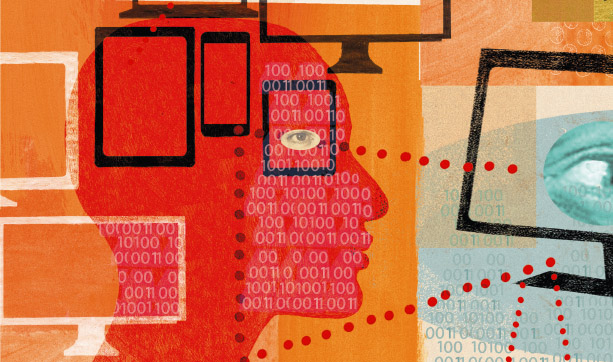
In some ways, it’s a good thing there are no parties at the moment, I would be the person trapping you in the corner, explaining the difference between centralised and decentralised Bluetooth contact-tracing apps, and why de-centralised is better for your privacy, and why some governments are so keen to use the other kind to get more data.
If you’re lucky, we might move the conversation on to how weird it is that Google and Apple are co-operating to design their own, decentralised, privacy-protecting, software for contact-tracing apps – and how it’s even weirder that the two tech giants are effectively forcing governments around the world to use that system.
They want their app to work properly on Apple or Android phones (i.e. most smartphones), because an effective app needs about 80% of smartphone users to run it.
I mean, Silicon Valley protecting our privacy against our own governments? Unprecedented times, indeed.
At this point, let’s suppose that I pause to sip my beer and you make your escape. If we were both using a contact-tracing app, the fact we’d been close together would already have been logged.
We might never have to share that information, especially if neither of us is diagnosed with Covid-19 in the near future, but our social connections have become fodder for state surveillance in a way that would be anathema in normal circumstances.
In South Korea, contact tracing has been very effective at containing Covid-19, but it also publicised the locations of Seoul nightclubs where recent infections took place, which led to the stigmatising of the gay community.
While I have reservations about particular uses of technologies, I accept that our social connections have become the vector for a nasty virus.
I would welcome an efficient system of contact tracing, which means one run by humans even though that makes it even more intrusive.
Coronavirus is a shared problem that needs shared solutions, and I have voluntarily signed up for other apps that request much more personal information to help researchers under-stand and track the pandemic.
But remember the wise words of former Chicago mayor Rahm Emmanuel (and Winston Churchill, and Niccolo Machiavelli): “Never let a good crisis go to waste.”
More importantly, remember that those in power have already remembered that. Measures being taken now to fight a deadly virus might turn out to be handy for other purposes later. Further research that could be useful for future pandemics- who could object to that?
You can read the whole of this article in our Summer 2020 issue, available by print subscription here and by digital subscription here.
17 Jun 2020 | Magazine, Magazine Contents, Volume 49.02 Summer 2020
[vc_row][vc_column][vc_custom_heading text=”With contributions from Katherine Parkinson, David Hare, Marina Lalovic, Geoff White and Timandra Harkness”][/vc_column][/vc_row][vc_row][vc_column][vc_column_text]
The Summer 2020 issue of Index on Censorship magazine looks at just how much of our privacy we are giving away right now. Covid-19 has occurred at a time when tech giants and autocrats have already been chipping away at our freedoms. Just how much privacy is left and how much will we now lose? This is a question people in Turkey are really concerned about, as many feel the home was the last refuge for them for privacy, but now contact tracing apps might rid them of that. It’s a similar case for those in China, and the journalist Tianyu M Fang speaks about his own, haphazard experience of using a contact tracing app there. We also have an article from Uganda on the government spies that are everywhere, plus tech experts talking about just how much power apps like Zoom and tech like drones have.
In our In Focus section, we interview journalists in Serbia, Hungary and Kashmir who are trying to report the truth in places where the truth can be as dangerous, if not more, than Covid-19. And we have an interview with and poet from the playwright David Hare.
We have a very special culture section in this issue. Three playwrights have written short plays for the magazine around the theme of pandemics. V (formerly Eve Ensler), the author of The Vagina Monologues, takes you to the aftermath of a nuclear disaster; Katherine Parkinson of The IT Crowd writes about online dating during quarantine; Lebanese playwright Lucien Bourjeily is inspired by recent events in his country in his chilling look at protest right now.
[/vc_column_text][/vc_column][/vc_row][vc_row][vc_column][vc_custom_heading text=”Special Report”][vc_column_text]
Back-up plan by Timandra Harkness: Don’t blindly give away more freedoms than you sign up for in the name of tackling the epidemic. They’re hard to reclaim
The eyes of the storm by Issa Sikiti da Silva: Spies are on the streets of Uganda making sure everyone abides by Covid-19 rules. They’re spying on political opposition too. A dispatch from Kampala
Zooming in on privacy concerns by Adam Aiken: Video app Zoom is surging in popularity. In our rush to stay connected, we need to make security checks and not reveal more than we think
Seeing what’s around the corner by Richard Wingfield: Facial recognition technology may be used to create immunity “passports” and other ways of tracking our health status. Are we watching?
Don’t just drone on by Geoff White: If drones are being used to spy on people breaking quarantine rules, what else could they be used for? We investigate
Sending a red signal by Tianyu M Fang: When a contact tracing app went wrong a journalist was forced to stay in their home in China
The not so secret garden by Tom Hodgkinson: Better think twice before bathing naked in the backyard. It’s not just your neighbours that might be watching you. Where next for privacy?
Hackers paradise by Stephen Woodman: Hackers across Latin America are taking advantage of the current crisis to access people’s personal data. If not protected it could spell disaster
Italy’s bad internet connection by Alessio Perrone: Italians have one of the lowest levels of digital skills in Europe and are struggling to understand implications of the new pandemic world
Less than social media by Stefano Pozzebon: El Salvador’s new leader takes a leaf out of the Trump playbook to use Twitter to crush freedoms
Nowhere left to hide by Kaya Genç: Privacy has been eroded in Turkey for many years now. People fear that tackling Covid-19 might take away their last private free space
Open book? by Somak Ghoshal: In India, where people are forced to download a tracking app to get paid, journalists are worried about it also being used to access their contacts
[/vc_column_text][/vc_column][/vc_row][vc_row][vc_column][vc_custom_heading text=”In Focus”][vc_column_text]
Knife-edge politics by Marina Lalovic: An interview with Serbian journalist Ana Lalic, who forced the Serbian government to do a U-Turn
Stage right (and wrong) by Jemimah Steinfeld: The playwright David Hare talks to Index about a very 21st century form of censorship on the stage. Plus a poem of Hare’s published for the first time
Inside story: Hungary’s media silence by Viktória Serdült: What’s it like working as a journalist under the new rules introduced by Hungary’s Viktor Orbán? How hard is it to report?
Life under lockdown: A Kashmiri Journalist by Bilal Hussain: A Kashmiri journalist speaks about the difficulties – personal and professional – of living in the state with an internet shutdown during lockdown
The truth will out by John Lloyd: Journalists need to challenge themselves and fight for media freedoms that are being eroded by autocrats and tech companies
Extremists use virus to curb opposition by Laura Silvia Battaglia: Covid-19 is being used by religious militia as a recruitment tool in Yemen and Iraq. Speaking out as a secular voice is even more challenging
[/vc_column_text][/vc_column][/vc_row][vc_row][vc_column][vc_custom_heading text=”Culture”][vc_column_text]
Masking the truth by V: The writer of The Vagina Monologues (formerly known as Eve Ensler) speaks to Index about attacks on the truth. Plus a new version of her play about living in a nuclear wasteland
Time out by Katherine Parkinson: The star of The IT Crowd discusses online dating and introduces her new play, written for Index, that looks at love and deception online
Life in action by Lucien Bourjeily: The Lebanese director talks to Index about how police brutality has increased in his country and how that informed the story of his new play, published here for the first time
[/vc_column_text][/vc_column][/vc_row][vc_row][vc_column][vc_custom_heading text=”Index around the world”][vc_column_text]
Putting abuse on the map by Orna Herr: The coronavirus crisis has seen a huge rise in media attacks. Index has launched a map to track these
[/vc_column_text][/vc_column][/vc_row][vc_row][vc_column][vc_custom_heading text=”Endnote”][vc_column_text]
Forced out of the closet by Jemimah Steinfeld: As people live out more of their lives online right now, our report highlights how LGBTQ dating apps can put people’s lives at risk
[/vc_column_text][/vc_column][/vc_row][vc_row][vc_column width=”1/3″][vc_custom_heading text=”Subscribe”][vc_column_text]In print, online, in your mailbox, on your iPad.
Subscription options from £18 or just £1.49 in the App Store for a digital issue.
Every subscriber helps support Index on Censorship’s projects around the world.
SUBSCRIBE NOW[/vc_column_text][/vc_column][vc_column width=”1/3″][vc_custom_heading text=”Read”][vc_column_text]The playwright Arthur Miller wrote an essay for Index in 1978 entitled The Sin of Power. We reproduce it for the first time on our website and theatre director Nicholas Hytner responds to it in the magazine
READ HERE[/vc_column_text][/vc_column][vc_column width=”1/3″][vc_custom_heading text=”Listen”][vc_column_text]In the Index on Censorship autumn 2019 podcast, we focus on how travel restrictions at borders are limiting the flow of free thought and ideas. Lewis Jennings and Sally Gimson talk to trans woman and activist Peppermint; San Diego photojournalist Ariana Drehsler and Index’s South Korean correspondent Steven Borowiec
LISTEN HERE[/vc_column_text][/vc_column][/vc_row]
