3 May 2018 | Journalism Toolbox Spanish
[vc_row][vc_column][vc_custom_heading text=”La estrechez de miras de los gobiernos y la industria están poniendo en jaque a la libertad de expresión, asegura Ian Brown
“][vc_row_inner][vc_column_inner][vc_column_text]
Yuri Samoilov/Flickr
[/vc_column_text][/vc_column_inner][/vc_row_inner][/vc_column][/vc_row][vc_row][vc_column][vc_column_text]
Una de las protecciones clave de la libertad de expresión en redes es la capacidad que tienen los proveedores de servicios de Internet (ISP) de permitir el acceso de sus usuarios a contenido de todas partes del mundo. En Estados Unidos, la Unión Europea y muchos otros países, las ISP están exentas de responsabilidad por transmitir páginas web desde sitios remotos a sus usuarios. Como «meros conductos», no necesitan instaurar los exhaustivos controles por difamación o infracción de copyright que se exigen a los medios impresos. Incluso cuando actúan como servidores para sitios web, las ISP están exentas de responsabilidad sobre el contenido de los usuarios siempre y cuando el material ilegal se retire cuando se les notifique. Esta es una de las razones de la explosiva proliferación de contenido accesible en las redes en los últimos diez años.
Últimamente, sin embargo, los gobiernos han estado buscando la manera de hacer que las ISP desempeñen una función más firme como reguladoras del ciberespacio. Concretamente, están animando a las ISP a tomar medidas con respecto a las infracciones de copyright online, el intercambio de imágenes de abuso de menores y el uso de internet para promover el terrorismo.
Estas medidas podrían perjudicar gravemente la libertad de comunicación de todos los individuos. Si bien los usuarios de internet más experimentados suelen saber esquivar los bloqueos que introducen las ISP, la mayoría de la gente no está muy familiarizada con estas herramientas de sorteo de obstáculos, como pueden ser los proxys o la encriptación. Los gobiernos democráticos están debatiendo la restricción de una amplia gama de material, como información sobre la eutanasia y el suicidio, pornografía «extrema» y la «glorificación» del terrorismo.
Los gobiernos están animando a las ISP a tomar medidas de autorregulación del tipo «amable», con métodos de decisión administrativos, no judiciales, de sancionar a usuarios y páginas web. Algunas ISP han introducido cláusulas en sus contratos que les permitan desconectar a ciertos usuarios una vez se dé un número concreto de alegaciones de infracción de copyright contra ellos. La Unión Europea está alentando el desarrollo de líneas telefónicas directas financiadas por la industria que permitan al público denunciar imágenes de abuso infantil, siguiendo el ejemplo de la Internet Watch Foundation británica, según el cual algunas ISP deniegan automáticamente el acceso a webs que hayan sido denunciadas. El gobierno neerlandés ha aprobado un código de conducta que promueve la eliminación de material «indeseable» y «dañino» entre las ISP.
Si bien es cierto que estos planes son más flexibles y menos pesados que una regulación legislativa, lo más habitual es que prescindan de la imparcialidad procesal y la protección de los derechos fundamentales que se promueven desde el escrutinio independiente, tanto judicial como parlamentario. Pocos planes incluyen una protección substancial de los derechos individuales de expresión, asociación o intimidad. A menudo se introducen bajo amenaza de legislación o litigios, decididos y realizados a puerta cerrada «al amparo de la ley», sin consideración por la ciudadanía ni participación por parte de esta.
La aplicación del copyright
Las industrias musical y cinematográfica han pasado gran parte de la última década aterrorizadas por el nivel de infracciones de copyright existente en internet. En general, su reacción ha sido un alud de pleitos contra personas que comparten archivos. Los casos ascienden actualmente a 60.000 solo en Estados Unidos. Sin embargo, parece haber afectado más bien poco al volumen de archivos que se comparten, generando al mismo tiempo una decente cantidad de mala prensa. «Grupo de música demanda a sus fans» no es el tipo de cobertura mediática que a los artistas les gusta ver.
Las industrias del contenido intentan ahora encontrar modos más sencillos de desconectar a usuarios y páginas acusadas de infracción. Desde 2007, han estado alentando a las ISP a filtrar el acceso a internet de sus usuarios, bloquear el acceso a software P2P e implementar planes de «tres strikes», según los cuales se bloquea a los usuarios después de tres alegaciones (sin verificar) de infracción de copyright (http://www. eff.org/ les/ lenode/effeurope/ifpi_ ltering_memo.pdf). Las ISP que se han negado han recibido acusaciones de estar robándoles las ganancias a los músicos, e incluso se las ha animado (como hizo Bono, líder de U2, en un artículo de opinión para el New York Times) a liderar el rastreo de malhechores pertenecientes al gobierno Chino.
En el caso irlandés de EMI contra Eircom (2008), ciertos sellos musicales emprendieron acciones legales para exigir a una importante ISP que filtrase el intercambio de archivos por P2P. De haber ganado, no hay duda de que habría supuesto el bloqueo masivo de intercambios legítimos de archivos, pues las ISP no están facultadas para decidir si un uso específico de una obra protegida está autorizado o no. Se desestimó el caso cuando Eircom accedió a modificar los contratos con sus clientes para permitir que se desconecte a los usuarios que ignoren las advertencias de una presunta infracción de copyright.
La ISP británica Virgin Media accedió en 2008 a enviar cartas de advertencia a clientes que la Industria Fonográfica Británica identificaba compartiendo música ilegalmente. Sin embargo, ninguna de las partes ha publicado datos sobre si estas acciones han reducido el nivel de infracciones del copyright en la red de Virgin. Otras ISP británicas, como Carphone Warehouse, se han negado a participar en esta campaña «educativa».
Los titulares del copyright han estado ejerciendo presión sobre los políticos para que algunas medidas autorreguladoras sean obligatorias, con éxito parcial. Francia fue la primera en introducir la ley de los «tres strikes», con su loi favorisant la diffusion et la protection de la création sur internet de 2009. Tras recibir tres alegaciones de infracción de un usuario en un periodo de 18 meses, una agencia del gobierno podría exigir a las ISP que suspendan la conexión de ese individuo de dos a 12 meses. La primera versión de la ley violaba la presunción de inocencia y los derechos a la libertad de comunicación y expresión, según el gabinete constitucional. La ley ha sido revisada y requiere de la presencia de un juez que decida sobre la suspensión del acceso al usuario en cuestión.
La Digital Economy Bill presentada actualmente en el parlamento británico permitiría al gobierno exigir a las ISP que introduzcan «medidas técnicas» para reducir la velocidad de conexión de un usuario, bloquearle el acceso a ciertas webs o suspender la conexión sin necesidad de supervisión judicial. No obstante, el proyecto de ley ha recibido críticas incluso de la industria musical por «no ser […] una ley racional o bien planteada», que están «intentando pasar a toda prisa en los últimos meses de un gobierno impopular» (http://newsblog. thecmuwebsite.com/post/Pure-Mint-boss-resigns-BPI-committee-over- Digital-Economy-Bill.aspx). El gobierno español ha introducido un proyecto de ley que permitiría al cuerpo administrativo exigir a las ISP que bloqueen webs comerciales que estén poniendo a disposición del público obras infractoras de copyright. Por otro lado, la coalición del gobierno alemán declaró recientemente: «No aceptaremos iniciativas que ofrezcan posibles modos jurídicos de bloquear el acceso a internet en casos de infracciones de copyright».
A nivel europeo, Viviane Reding —a punto de ser comisaria de justicia, derechos fundamentales y ciudadanía— ha advertido a los países de la Unión que no desconecten a quienes están presuntamente compartiendo contenido. En noviembre de 2009, Reding avisó a la autoridad reguladora de telecomunicaciones en España que «la represión no resolverá por sí sola el problema de la piratería en internet; puede que en muchos aspectos incluso vaya en contra de los derechos y libertades que han sido parte de los valores europeos desde la Revolución Francesa».
No obstante, al mismo tiempo, la Comisión Europea está negociando en secreto un nuevo tratado contra las falsificaciones junto a EE.UU., Japón y otras naciones desarrolladas que exigiría una política de tres strikes. El texto del borrador es tan polémico que, el verano pasado, el representante comercial de Estados Unidos se negó a compartir una versión escrita con la comisión, que informaba en un memorándum filtrado de que «estos debates internos fueron delicados, dados los diferentes puntos de vista concernientes al capítulo de internet, tanto dentro de la Administración, con el Congreso y entre los accionistas (proveedores de contenido por un lado, partidarios de la «libertad» en internet por el otro)».
[/vc_column_text][/vc_column][/vc_row][vc_row][vc_column width=”1/4″][/vc_column][vc_column width=”3/4″][/vc_column][/vc_row][vc_row][vc_column][vc_column_text]
Imágenes de abuso infantil
El uso de internet para la distribución de imágenes de abusos sexuales a niños es claramente abominable, igual que lo es fuera de las redes. Las ISP han estado bajo gran presión desde mediados de los 90 para intentar bloquear este contenido. La policía metropolitana de Londres amenazó en 1996 con incautarse de los servidores de las ISP británicas a menos que bloqueasen algunos foros de Usenet. Además de acceder a la petición, las ISP formaron la Internet Watch Foundation (IWF) para establecer unos parámetros de rastreabilidad de sus usuarios y operar un número de teléfono desde el que recibir avisos de individuos que hubieran encontrado imágenes ilegales de abusos.
Los propios analistas de la IWF deciden si las imágenes son ilegales de acuerdo con la ley británica. Después se pasan los informes a las ISP de Reino Unido, que retiran el contenido ilegal de sus servidores, y a la policía de otros países, por medio del Organismo contra la Delincuencia Organizada Grave, para ISP extranjeras.
A consecuencia de la enorme presión ejercida por el gobierno, la mayoría de las ISP de consumo en Reino Unido utilizan hoy día un sistema «Cleanfeed», desarrollado por la empresa British Telecom, para bloquear el acceso de clientes a páginas web en la lista negra de la IWF. El ministro británico de Interior, Vernon Coaker, dijo a la Cámara de los Comunes en marzo de 2009 que «el gobierno se ha comprometido a alcanzar un 100% de bloqueo en redes comerciales… Si ese enfoque no funciona, estamos considerando varias opciones alternativas, incluida la vía legislativa si es necesario». Sin embargo, en octubre de 2009 decidieron que la tasa de bloqueo «voluntario» del 98,6% hacía la legislación innecesaria.
El modelo británico de autorregulación se ha imitado ampliamente. Los números de teléfono existen en Australia, Canadá, Taiwán, Japón, Rusia, Sudáfrica, Corea del Sur, Estados Unidos y por toda Europa, aunque las listas de contenido ilegal están en control policial, en lugar de mediante organizaciones independientes. La Comisión Europea ha financiado la Asociación Internacional de Líneas Directas de Internet desde 1999 al amparo del programa «sobre la seguridad en internet».
La Comisión Europea también financia la red policial CIRCAMP, que ha desarrollado un sistema de bloqueo para ISP llamado Child Sexual Abuse Anti-Distribution Filter. Lo utilizan ISP de Dinamarca, Finlandia, Italia, Malta, Noruega y Suecia. Solo el gobierno alemán ha optado por reevaluar el plan, con un periodo de prueba de 12 meses enfocado en la retirada de material en el origen en lugar de exigir bloqueos a las ISP.
El hecho de que las ISP bloqueen automáticamente, sin decisión judicial, el acceso a contenido web que figure en listas negras secretas supone un importante problema de libertad de expresión. En Reino Unido, a los usuarios que intenten acceder a páginas bloqueadas —incluidas las de webs como la Wikipedia o el Internet Archive— normalmente solo se les informa de que la página no existe. A los sitios web extranjeros no se les suele notificar, ni se les da la oportunidad de protestar contra la decisión de bloquearlos. La situación deja mucho que desear según los estándares estadounidenses de libertad de expresión, sobre los cuales el Tribunal Supremo de Estados Unidos, en el caso de 1965 Freedman contra Maryland, dictaminó: «Solo un fallo judicial en un procedimiento contencioso asegura la sensibilidad necesaria para con la libertad de expresión, solo un procedimiento que requiera un fallo judicial valdrá para imponer una restricción final válida».
Se han filtrado varias listas negras de distintos países, y al parecer incluyen contenido legal, si bien en ocasiones de mal gusto. Se han publicado supuestas listas de bloqueo de Australia, Dinamarca, Finlandia, Noruega y Tailandia. La lista de Australia al parecer incluía «portales de póker online, enlaces de YouTube, webs de porno gay y heterosexual, páginas sobre la eutanasia, páginas de religiones periféricas además de algunas concernientes al cristianismo y las páginas de inicio de empresas y médicos privados». La lista finlandesa incluía una web que criticaba el sistema finlandés de bloqueo y la lista de dominios bloqueados. Según el responsable del sitio, Matti Nikki, la policía nacional se ha negado a retirar la web de la lista negra, y un tribunal administrativo ha rechazado recibir su queja incluso después de que un fiscal rehusase presentar cargos contra Nikki por falta de pruebas (http://lapsiporno.info/english-2008–02–15.html).
Recientemente, el gobierno belga ha criticado los procesos judiciales de bloqueo de sitios web por ser demasiado pesados. Su Unidad Federal de Crimen Informático detecta de 800 a 1.000 páginas con imágenes de abuso infantil cada año, pero raras veces recurre a los tribunales para hacer que las bloqueen. El ministro de empresa, Vicent Van Quickenborne, ha propuesto en su lugar un protocolo de autorregulación según el cual las ISP podrían bloquear contenido ilegal, incluidas páginas racistas, de odio y de fraude por internet, sin necesitar de una decisión judicial.
La Comisión Europea ha propuesto extender sistemas de bloqueo por toda la UE, por mucho que se estén acumulando las pruebas de que el impacto es mínimo sobre la distribución de imágenes de abuso infantil. Graham Watson, eurodiputado y antiguo presidente del comité de las libertades civiles del Parlamento Europeo, afirmaba en octubre de 2009 que «la protección de los niños es una cuestión de extrema importancia, pero esto no quiere decir que la comisión pueda proponer medidas que, además de ser totalmente inútiles, acarreen duraderas consecuencias para el derecho a la libertad de comunicación en Europa».
La lucha contra el terrorismo y la expresión «extremista»
Muchos estados europeos ven en internet un frente propagandístico en su «guerra contra el terror», y han prohibido la «glorificación», «apología» o «promoción pública» del terrorismo. Es muy difícil para los tribunales, por no mencionar los cuerpos de policía y las agencias administrativas, interpretar lenguaje tan vago en un área tan polémica, al mismo tiempo que protegen la libertad de expresión.
Desde 2007, Europol ha coordinado el programa «Check the Web» para monitorizar páginas web de extremismo islámico, y mantiene una lista de direcciones web y comunicados realizados por organizaciones terroristas. La propuesta inicial del proyecto sugería que «deben monitorizarse numerosas páginas web en una amplia variedad de idiomas, evaluándolas y, de ser necesario, bloqueándolas u obligándolas a cerrar»; no obstante, aún no es el caso. Los gobiernos alemán, neerlandés, checo y británico están investigando los aspectos prácticos en un programa de investigación que «aborde la prevención de contenido terrorista en internet». En su plan para los próximos cinco años, la Comisión Europea ha propuesto que, para reducir la amenaza terrorista, «han de facilitarse medios técnicos adecuados y debe mejorar la cooperación entre los sectores privado y público. El objetivo es restringir la diseminación de propaganda terrorista y el apoyo práctico a operaciones terroristas».
Varios estados miembros ya están hablando del uso de poderes para exigir a las ISP que bloqueen páginas extremistas. La Asamblea Nacional Francesa está debatiendo la loi d’orientation et de programmation pour la performance de la sécurité intérieure, que obligaría a las ISP a bloquear «sin demora» el acceso a páginas de una lista secreta en poder del ministerio del interior. El gobierno neerlandés ha aprobado un código de conducta que promueve que las ISP desarrollen criterios para eliminar material «indeseable» y «dañino». El gobierno británico no ha pronunciado palabra al respecto últimamente, pero en 2008 la por entonces ministra del interior Jacqui Smith declaró al canal Radio 4 de la BBC: «Tenemos que trabajar con los proveedores de servicios de internet, tenemos que usar de una vez por todas las lecciones que hemos aprendido sobre cómo proteger a nuestros hijos de los pedófilos y del acoso sexual en internet, para dar forma al modo en el que lo usaremos para prevenir el extremismo violento y hacer frente al terrorismo también».
Es relativamente sencillo definir qué es una imagen de abuso infantil. A la comunidad internacional le está costando encontrar una definición sólida de «terrorismo», por no hablar de su exaltación o fomento. Hasta la respetada abogada de derechos humanos Cherie Booth, consejera de la reina, llegó a ser acusada de fomentar el terrorismo por sus declaraciones de 2002 a la BBC: «Mientras los jóvenes sientan que su única esperanza es hacerse volar por los aires, nunca avanzaremos».
Los intentos por bloquear el acceso a material «extremista» en internet, por lo tanto, probablemente interfieran en gran medida con la capacidad de los usuarios para hablar sobre la situación en Afganistán, Irak y los territorios Palestinos, entre otros. El bloqueo sería de proporcionalidad cuestionable, dado su impacto limitado en ciertos usuarios. La reducción de la radicalización es un objetivo totalmente legítimo, pero en un estudio reciente de estrategias posibles, Tim Stevens y Peter R. Neumann llegaron a la conclusión de que bloquear páginas es «rudimentario, costoso y contraproducente».
Es fácil entender el atractivo que tienen las soluciones «autorreguladoras» para el gobierno y la industria frente a problemas sociales complejos, como lo son la infracción del copyright, las imágenes de abuso infantil y la radicalización de terroristas. Con ellas, podría creerse que los gobiernos están «haciendo algo», que a corto plazo podría resultar razonablemente efectivo, mientras reducen los costes policiales y el escrutinio de tribunales y cuerpos legislativos. Las ISP se llevan los aplausos por su «responsabilidad social» mientras eluden el peso de una regulación potencialmente más intensa.
El escrutinio parlamentario no es garantía automática de la calidad de una ley, especialmente cuando gobiernos como el del nuevo laborismo en Reino Unido se sirven de ella para «enviar mensajes» en lugar de tomar medidas efectivas y proporcionadas. El sistema judicial es de lenta reacción por necesidad frente a una tecnología y ambiente político que avanzan vertiginosamente, con casos clave que el Tribunal Europeo por los Derechos Humanos a menudo tarda una década en cerrar. Organismos intergubernamentales como la Unión Europea y el Consejo de Europa han actuado más rápidamente proponiendo nuevas medidas contra la distribución de archivos, imágenes de abuso infantil y discursos extremistas que para proteger los derechos fundamentales en la era de la información.
Con todo, son las mejores instituciones con las que contamos para proteger la libertad de expresión y los derechos vinculados a esta contra las acciones de gobiernos e industrias cortas de miras. El Consejo de Europa ha recomendado, tarde, que el bloqueo solo debería darse si «concierne a contenido específico y claramente identificable, si una autoridad nacional competente ha tomado una decisión sobre su ilegalidad y si la decisión puede revisarse por un tribunal u organismo regulador independiente e imparcial». Tras una batalla formidable entre varios estados miembros y el Parlamento Europeo, el paquete de Telecomunicaciones de la UE incluye protección específica para los derechos de los usuarios, según la cual:
Las medidas que tomen los Estados Miembros sobre el acceso o uso de los usuarios a servicios y aplicaciones a través de redes de comunicación electrónica respetarán los derechos y libertades fundamentales de las personas naturales […] estas medidas […] solo podrán imponerse si son apropiadas, proporcionadas y necesarias en una sociedad democrática, y su implementación estará sujeta a garantías procesales adecuadas […] incluidas la protección judicial efectiva y un juicio justo.
Está ahora en manos de aquellos que se preocupan por los derechos humanos asegurarse de que estas protecciones fundamentales se hacen respetar. Legisladores, jueces y ciudadanos por igual pueden cumplir su papel para asegurarse de que internet apoya «el caos y la cacofonía» de la democracia. La alternativa sería permitir que la libertad de expresión en internet termine cayendo en un olvido autorregulado.
Gracias a Joe McNamee y Chris Marsden por conversar conmigo sobre la autorregulación en internet.
[/vc_column_text][/vc_column][/vc_row][vc_row][vc_column][vc_column_text]
Ian Brown es investigador senior en el Oxford Internet Institute (parte de la Universidad de Oxford). Desde 1998 ha sido consejero de diversas organizaciones: Privacy International, el Open Rights Group y FIPR y ha asesorado a Greenpeace y el Departamento de Seguridad Nacional de los Estados Unidos
This article originally appeared in the spring 2010 issue of Index on Censorship magazine
Traducción de Arrate Hidalgo
[/vc_column_text][/vc_column][/vc_row][vc_row content_placement=”top”][vc_column width=”1/3″][vc_custom_heading text=”Brave new worlds” font_container=”tag:p|font_size:24|text_align:left” link=”url:https%3A%2F%2Fwww.indexoncensorship.org%2F2010%2F03%2Fbrave-new-words-2%2F|||”][vc_column_text]Our special report explores how the internet not only makes it possible for authoritarian regimes to monitor citizens’ activities as never before, but also makes censorship acceptable, and even respectable, in democracies.
With: Rebecca MacKinnon, Rafal Rohozinski, Andrei Soldatov[/vc_column_text][/vc_column][vc_column width=”1/3″][vc_single_image image=”89164″ img_size=”medium” alignment=”center” onclick=”custom_link” link=”https://www.indexoncensorship.org/2010/03/brave-new-words-2/”][/vc_column][vc_column width=”1/3″ css=”.vc_custom_1481888488328{padding-bottom: 50px !important;}”][vc_custom_heading text=”Subscribe” font_container=”tag:p|font_size:24|text_align:left” link=”url:https%3A%2F%2Fwww.indexoncensorship.org%2Fsubscribe%2F|||”][vc_column_text]In print, online. In your mailbox, on your iPad.
Subscription options from £18 or just £1.49 in the App Store for a digital issue.
Every subscriber helps support Index on Censorship’s projects around the world.
 SUBSCRIBE NOW[/vc_column_text][/vc_column][/vc_row]
4 Dec 2017 | About Index, History, Magazine, News
[vc_row][vc_column][vc_custom_heading text=”The first editor of Index on Censorship magazine reflects on the driving forces behind its founding in 1972″ google_fonts=”font_family:Libre%20Baskerville%3Aregular%2Citalic%2C700|font_style:400%20italic%3A400%3Aitalic”][vc_column_text][/vc_column_text][vc_row_inner][vc_column_inner][vc_column_text]A version of this article first appeared in Index on Censorship magazine in December 1981. [/vc_column_text][/vc_column_inner][/vc_row_inner][/vc_column][/vc_row][vc_row][vc_column][vc_column_text]
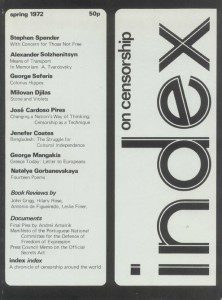
The first issue of Index on Censorship Magazine, 1972
Starting a magazine is as haphazard and uncertain a business as starting a book-who knows what combination of external events and subjective ideas has triggered the mind to move in a particular direction? And who knows, when starting, whether the thing will work or not and what relation the finished object will bear to one’s initial concept? That, at least, was my experience with Index, which seemed almost to invent itself at the time and was certainly not ‘planned’ in any rational way. Yet looking back, it is easy enough to trace the various influences that brought it into existence.
It all began in January 1968 when Pavel Litvinov, grandson of the former Soviet Foreign Minister, Maxim Litvinov, and his Englis wife, Ivy, and Larisa Bogoraz, the former wife of the writer, Yuli Daniel, addressed an appeal to world public opinion to condemn the rigged trial of two young writers and their typists on charges of ‘anti-Soviet agitation and propaganda’ (one of the writers, Alexander Ginzburg, was released from the camps in 1979 and now lives in Paris: the other, Yuri Galanskov, died in a camp in 1972). The appeal was published in The Times on 13 January 1968 and evoked an answering telegram of support and sympathy from sixteen English and American luminaries, including W H Auden, A J Ayer, Maurice Bowra, Julian Huxley, Mary McCarthy, Bertrand Russell and Igor Stravinsky.
The telegram had been organised and dispatched by Stephen Spender and was answered, after taking eight months to reach its addressees, by a further letter from Litvinov, who said in part: ‘You write that you are ready to help us “by any method open to you”. We immediately accepted this not as a purely rhetorical phrase, but as a genuine wish to help….’ And went on to indicate the kind oh help he had in mind:
My friends and I think it would be very important to create an international committee or council that would make it its purpose to support the democratic movement in the USSR. This committee could be composed of universally respected progressive writers, scholars, artists and public personalities from England, the United States, France, Germany and other western countries, and also from Latin America, Asia, Africa and, in the future, even from Eastern Europe…. Of course, this committee should not have an anti-communist or anti-Soviet character. It would even be good if it contained people persecuted in their own countries for pro-communist or independent views…. The point is not that this or that ideology is not correct, but that it must not use force to demonstrate its correctness.
Stephen Spender took up this idea first with Stuart Hampshire (the Oxford philosopher), a co-signatory of the telegram, and with David Astor (then editor of the Observer), who joined them in setting up a committee along the lines suggested by Litvinov (among its other members were Louis Blom-Cooper, Edward Crankshaw, Lord Gardiner, Elizabeth Longford and Sir Roland Penrose, and its patrons included Dame Peggy Ashcroft, Sir Peter Medawar, Henry Moore, Iris Murdoch, Sir Michael Tippett and Angus Wilson). It was not, admittedly, as international as Litvinov had suggested, but it was thought more practical to begin locally, so to speak, and to see whether or not there was something in it before expanding further. Nevertheless, the chosen name for the new organisation, Writers and Scholars International, was an earnest of its intentions, while its deliberate echo of Amnesty International (then relatively modest in size) indicated a feeling that not only literature but also human rights would be at issue.
By now it was 1971 and in the spring of that year the committee advertised for a director, held a series of interviews and offered me the job. There was no programme, other than Litvinov’s letter, there were no premises or staff, and there was very little money, but there were high hopes and enthusiasm.
It was at this point that some of the subjective factors I mentioned earlier began to come into play. Litvinov’s letter had indicated two possible forms of action. One was the launching of protests to ‘support and defend’ people who were being persecuted for their civic and literary activities in the USSR. The other was to ‘provide information to world public opinion’ about this state of affairs and to operate with ‘some sort of publishing house’. The temptation was to go for the first, particularly since Amnesty was setting such a powerful example, but precisely because Amnesty (and the International PEN Club) were doing such a good job already, I felt that the second option would be the more original and interesting to try. Furthermore, I knew that two of our most active members, Stephen Spender and Stuart Hampshire, on the rebound from Encounter after disclosures of CIA funding, had attempted unsuccessfully to start a new magazine, and I felt that they would support something in the publishing line. And finally, my own interests lay mainly in that direction. My experience had been in teaching, writing, translating and broadcasting. Psychologically I was too much of a shrinking violet to enjoy kicking up a fuss in public. I preferred argument and debate to categorical statements and protest, the printed page to the soapbox; I needed to know much more about censorship and human rights before having strong views of my own.
At that stage I was thinking in terms of trying to start some sort of alternative or ‘underground’ (as the term was misleadingly used) newspaper – Oz and the International Times were setting the pace were setting the pace in those days, with Time Out just in its infancy. But a series of happy accidents began to put other sorts of material into my hands. I had been working recently on Solzhenitzin and suddenly acquired a tape-recording with some unpublished poems in prose on it. On a visit to Yugoslavia, I called on Milovan Djilas and was unexpectedly offered some of his short stories. A Portuguese writer living in London, Jose Cardoso Pires, had just written a first-rate essay on censorship that fell into my hands. My friend, Daniel Weissbort, editor of Modern Poetry in Translation, was working on some fine lyrical poems by the Soviet poet, Natalya Gorbanevskaya, then in a mental hospital. And above all I stumbled across the magnificent ‘Letter to Europeans’ by the Greek law professor, George Mangakis, written in one of the colonels’ jails (which I still consider to be one of the best things I have ever published). It was clear that these things wouldn’t fit very easily into an Oz or International Times, yet it was even clearer that they reflected my true tastes and were the kind of writing, for better or worse, that aroused my enthusiasm. At the same time I discovered that from the point of view of production and editorial expenses, it would be far easier to produce a magazine appearing at infrequent intervals, albeit a fat one, than to produce even the same amount of material in weekly or fortnightly instalments in the form of a newspaper. And I also discovered, as Anthony Howard put it in an article about the New Statesman, that whereas opinions come cheap, facts come dear, and facts were essential in an explosive field like human rights. Somewhat thankfully, therefore, my one assistant and I settled for a quarterly magazine.
There is no point, I think, in detailing our sometimes farcical discussions of a possible title. We settled on Index (my suggestion) for what seemed like several good reasons: it was short; it recalled the Catholic Index Librorum Prohibitorum; it was to be an index of violations of intellectual freedom; and lastly, so help me an index finger pointing accusingly at the guilty oppressors – we even introduced a graphic of a pointing finger into our early issues. Alas, when we printed our first covers bearing the bold name of Index (vertically to attract attention nobody got the point (pun unintended). Panicking, we hastily added the ‘on censorship’ as a subtitle – Censorship had been the title of an earlier magazine, by then defunct – and this it has remained ever since, nagging me with its ungrammatically (index of censorship, surely) and a standing apology for the opacity of its title. I have since come to the conclusion that it is a thoroughly bad title – Americans, in particular, invariably associate it with the cost of living and librarians with, well indexes. But it is too late to change now.
Our first issue duly appeared in May 1972, with a programmatic article by Stephen Spender (printed also in the TLS) and some cautious ‘Notes’ by myself. Stephen summarised some of the events leading up to the foundation of the magazine (not naming Litvinov, who was then in exile in Siberia) and took freedom and tyranny as his theme:
Obviously there is a risk of a magazine of this kind becoming a bulletin of frustration. However, the material by writers which is censored in Eastern Europe, Greece, South Africa and other countries is among the most exciting that is being written today. Moreover, the question of censorship has become a matter of impassioned debate; and it is one which does not only concern totalitarian societies.
I contented myself with explaining why there would be no formal programme and emphasised that we would be feeling our way step by step. ‘We are naturally of the opinion that a definite need {for us} exists….But only time can tell whether the need is temporary or permanent—and whether or not we shall be capable of satisfying it. Meanwhile our aims and intentions are best judged…by our contents, rather than by editorials.’
[/vc_column_text][/vc_column][/vc_row][vc_row][vc_column width=”1/4″][vc_icon icon_fontawesome=”fa fa-quote-left” color=”custom” align=”right” custom_color=”#dd3333″][/vc_column][vc_column width=”3/4″][vc_custom_heading text=”My friends and I think it would be very important to create an international committee or council that would make it its purpose to support the democratic movement in the USSR.” google_fonts=”font_family:Libre%20Baskerville%3Aregular%2Citalic%2C700|font_style:400%20italic%3A400%3Aitalic”][/vc_column][/vc_row][vc_row][vc_column][vc_column_text]
In the course of the next few years it became clear that the need for such a magazine was, if anything, greater than I had foreseen. The censorship, banning and exile of writers and journalists (not to speak of imprisonment, torture and murder) had become commonplace, and it seemed at times that if we hadn’t started Index, someone else would have, or at least something like it. And once the demand for censored literature and information about censorship was made explicit, the supply turned out to be copious and inexhaustible.
One result of being inundated with so much material was that I quickly learned the geography of censorship. Of course, in the years since Index began, there have been many changes. Greece, Spain, and Portugal are no longer the dictatorships they were then. There have been major upheavals in Poland, Turkey, Iran, the Lebanon, Pakistan, Nigeria, Ghana and Zimbabwe. Vietnam, Cambodia and Afghanistan have been silenced, whereas Chinese writers have begun to find their voices again. In Latin America, Brazil has attained a measure of freedom, but the southern cone countries of Chile, Argentina, Uruguay and Bolivia have improved only marginally and Central America has been plunged into bloodshed and violence.
Despite the changes, however, it became possible to discern enduring patterns. The Soviet empire, for instance, continued to maltreat its writers throughout the period of my editorship. Not only was the censorship there highly organised and rigidly enforced, but writers were arrested, tried and sent to jail or labour camps with monotonous regularity. At the same time, many of the better ones, starting with Solzhenitsyn, were forced or pushed into exile, so that the roll-call of Russian writers outside the Soviet Union (Solzhenitsyn, Sinyavksy, Brodsky, Zinoviev, Maximov, Voinovich, Aksyonov, to name but a few) now more than rivals, in talent and achievement, those left at home. Moreover, a whole array of literary magazines, newspapers and publishing houses has come into existence abroad to serve them and their readers.
In another main black spot, Latin America, the censorship tended to be somewhat looser and ill-defined, though backed by a campaign of physical violence and terror that had no parallel anywhere else. Perhaps the worst were Argentina and Uruguay, where dozens of writers were arrested and ill-treated or simply disappeared without trace. Chile, despite its notoriety, had a marginally better record with writers, as did Brazil, though the latter had been very bad during the early years of Index.
In other parts of the world, the picture naturally varies. In Africa, dissident writers are often helped by being part of an Anglophone or Francophone culture. Thus Wole Soyinka was able to leave Nigeria for England, Kofi Awoonor to go from Ghana to the United States (though both were temporarily jailed on their return), and French-speaking Camara Laye to move from Guinea to neighbouring Senegal. But the situation can be more complicated when African writers turn to the vernacular. Ngugi wa Thiong’o, who has written some impressive novels in English, was jailed in Kenya only after he had written and produced a play in his native Gikuyu.
In Asia the options also tend to be restricted. A mainland Chinese writer might take refuge in Hong Kong or Taiwan, but where is a Taiwanese to go? In Vietnam, Cambodia, Laos, the possibilities for exile are strictly limited, though many have gone to the former colonising country, France, which they still regard as a spiritual home, and others to the USA. Similarly, Indonesian writers still tend to turn to Holland, Malaysians to Britain, and Filipinos to the USA.
In documenting these changes and movements, Index was able to play its small part. It was one of the very first magazines to denounce the Shah’s Iran, publishing as early as 1974 an article by Sadeq Qotbzadeh, later to become Foreign Minister in Ayatollah Khomeini’s first administration. In 1976 we publicised the case of the tortured Iranian poet, Reza Baraheni, whose testimony subsequently appeared on the op-ed page of the New York Times. (Reza Baraheni was arrested, together with many other writers, by the Khomeini regime on 19 October 1981.) One year later, Index became the publisher of the unofficial and banned Polish journal, Zapis, mouthpiece of the writers and intellectuals who paved the way for the present liberalisation in Poland. And not long after that it started putting out the Czech unofficial journal, Spektrum, with a similar intellectual programme. We also published the distinguished Nicaraguan poet, Ernesto Cardenal, before he became Minister of Education in the revolutionary government, and the South Korean poet, Kim Chi-ha, before he became an international cause célèbre.
[/vc_column_text][/vc_column][/vc_row][vc_row][vc_column width=”1/4″][vc_icon icon_fontawesome=”fa fa-quote-left” color=”custom” align=”right” custom_color=”#dd3333″][/vc_column][vc_column width=”3/4″][vc_custom_heading text=”Looking back, not only over the thirty years since Index was started, but much further, over the history of our civilisation, one cannot help but realise that censorship is by no means a recent phenomenon.” google_fonts=”font_family:Libre%20Baskerville%3Aregular%2Citalic%2C700|font_style:400%20italic%3A400%3Aitalic”][/vc_column][/vc_row][vc_row][vc_column][vc_column_text]
One of the bonuses of doing this type of work has been the contact, and in some cases friendship, established with outstanding writers who have been in trouble: Solzhenitsyn, Djilas, Havel, Baranczak, Soyinka, Galeano, Onetti, and with the many distinguished writers from other parts of the world who have gone out of their way to help: Heinrich Böll, Mario Vargas Llosa, Stephen Spender, Tom Stoppard, Philip Roth—and many other too numerous to mention. There is a kind of global consciousness coming into existence, which Index has helped to foster and which is especially noticeable among writers. Fewer and fewer are prepared to stand aside and remain silent while their fellows are persecuted. If they have taught us nothing else, the Holocaust and the Gulag have rubbed in the fact that silence can also be a crime.
The chief beneficiaries of this new awareness have not been just the celebrated victims mentioned above. There is, after all, an aristocracy of talent that somehow succeeds in jumping all the barriers. More difficult to help, because unassisted by fame, are writers perhaps of the second or third rank, or young writers still on their way up. It is precisely here that Index has been at its best.
Such writers are customarily picked on, since governments dislike the opprobrium that attends the persecution of famous names, yet even this is growing more difficult for them. As the Lithuanian theatre director, Jonas Jurasas, once wrote to me after the publication of his open letter in Index, such publicity ‘deprives the oppressors of free thought of the opportunity of settling accounts with dissenters in secret’ and ‘bears witness to the solidarity of artists throughout the world’.
Looking back, not only over the years since Index was started, but much further, over the history of our civilisation, one cannot help but realise that censorship is by no means a recent phenomenon. On the contrary, literature and censorship have been inseparable pretty well since earliest times. Plato was the first prominent thinker to make out a respectable case for it, recommending that undesirable poets be turned away from the city gates, and we may suppose that the minstrels and minnesingers of yore stood to be driven from the castle if their songs displeased their masters. The examples of Ovid and Dante remind us that another old way of dealing with bad news was exile: if you didn’t wish to stop the poet’s mouth or cover your ears, the simplest solution was to place the source out of hearing. Later came the Inquisition, after which imprisonment, torture and execution became almost an occupational hazard for writers, and it is only in comparatively recent times—since the eighteenth century—that scribblers have fought back and demanded an unconditional right to say what they please. Needless to say, their demands have rarely and in few places been met, but their rebellion has resulted in a new psychological relationship between rulers and ruled.
Index, of course, ranged itself from the very first on the side of the scribblers, seeking at all times to defend their rights and their interests. And I would like to think that its struggles and campaigns have borne some fruit. But this is something that can never be proved or disproved, and perhaps it is as well, for complacency and self-congratulation are the last things required of a journal on human rights. The time when the gates of Plato’s city will be open to all is still a long way off. There are certainly many struggles and defeats still to come—as well, I hope, as occasional victories. When I look at the fragility of Index‘s a financial situation and the tiny resources at its disposal I feel surprised that it has managed to hold out for so long. No one quite expected it when it started. But when I look at the strength and ambitiousness of the forces ranged against it, I am more than ever convinced that we were right to begin Index in the first place, and that the need for it is as strong as ever. The next ten years, I feel, will prove even more eventful than the ten that have gone before.
[/vc_column_text][/vc_column][/vc_row][vc_row][vc_column][vc_column_text]
Michael Scammell was the editor of Index on Censorship from 1972 to August 1980.
[/vc_column_text][/vc_column][/vc_row][vc_row content_placement=”top”][vc_column width=”1/3″][vc_custom_heading text=”Free to air” font_container=”tag:p|font_size:24|text_align:left” link=”url:%20https%3A%2F%2Fwww.indexoncensorship.org%2F2017%2F09%2Ffree-to-air%2F|||”][vc_column_text]Through a range of in-depth reporting, interviews and illustrations, the autumn 2017 issue of Index on Censorship magazine explores how radio has been reborn and is innovating ways to deliver news in war zones, developing countries and online
With: Ismail Einashe, Peter Bazalgette, Wana Udobang[/vc_column_text][/vc_column][vc_column width=”1/3″][vc_single_image image=”95458″ img_size=”medium” alignment=”center” onclick=”custom_link” link=”https://www.indexoncensorship.org/2017/09/free-to-air/”][/vc_column][vc_column width=”1/3″ css=”.vc_custom_1481888488328{padding-bottom: 50px !important;}”][vc_custom_heading text=”Subscribe” font_container=”tag:p|font_size:24|text_align:left” link=”url:https%3A%2F%2Fwww.indexoncensorship.org%2Fsubscribe%2F|||”][vc_column_text]In print, online. In your mailbox, on your iPad.
Subscription options from £18 or just £1.49 in the App Store for a digital issue.
Every subscriber helps support Index on Censorship’s projects around the world.
SUBSCRIBE NOW[/vc_column_text][/vc_column][/vc_row]
26 Sep 2017 | Artistic Freedom, News
[vc_row][vc_column][vc_column_text]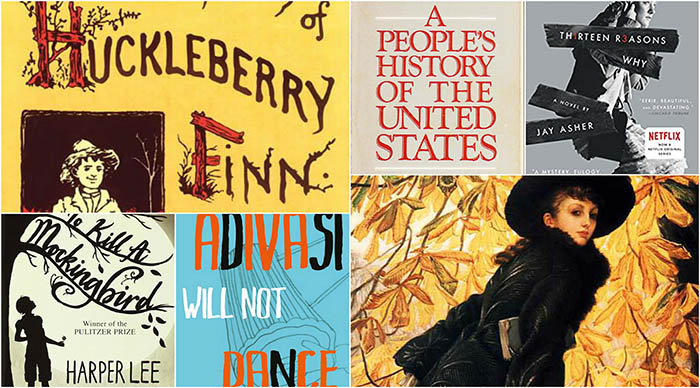
An annual celebration of the freedom to read, Banned Books Week was launched in 1982 in response to a surge in book censorship in schools, bookshops and libraries in the USA.
Since then, over 11,300 books have been banned. Thankfully, there have always been those committed to challenging censorship, including authors, librarians, teachers and students.
But what are the censors so afraid of? Here are 10 books banned in some way over the last year to give us an idea.
13 Reasons Why – Jay Asher
The Netflix adaption of Jay Asher’s young adult novel 13 Reasons Why has been causing controversy over its exploration of teenage suicide ever since its release in March 2017. So much so that New Zealand’s classifications body created a whole new category of censorship, RP18, to restrict the showing of the series to anyone under the age of 18.
Naturally, the treatment of the book itself has followed suit, with many calling for the book to be banned over its perceived irresponsible or unrealistic handling of issues of mental health.
An official Mesa County Valley School District in Colorado, USA, briefly ordered librarians to pull 13 Reasons Why from school bookshelves in April 2017. However, after the intervention of a number of librarians, the curriculum director for the district reversed her decision.
The works of Howard Zinn fall foul of US Republican lawmakers
In May 2017, US Republican senator Kim Hendren of Arkansas introduced a bill to ban the works of the late social activists and Boston University professor Howard Zinn from public schools.
Zinn’s A People’s History of the United States, which is part of many school and college curriculums across the country, is an attempt to bring to light parts of US history that aren’t covered in-depth elsewhere, including equality movements throughout the 20th century.
Many US conservatives argue that there is already too much focus on race and class, including slavery and the genocide of Native Americans, in school curriculums. Bills such as Hendren’s — and that of an Oklahoma lawmaker in 2015 which sought to correct the fact that the USA was not portrayed in a positive enough light in history curriculums — are intended to redress the situation.
However, Hendren’s bill has only increased demand for the works of Zinn. Some 700 copies of A People’s History of the United States were sent free to teachers and librarians throughout Arkansas thanks to the controversy and thanks to a flood of donations copies are being given away to any middle or high school teacher or librarian in Arkansas who asks.
To Kill a Mockingbird – Harper Lee
The Adventures of Huckleberry Finn – Mark Twain
In December 2016, a US school district has banned To Kill a Mockingbird and The Adventures of Huckleberry Finn after a parent complained about use of racist language. The books were removed from classrooms and school libraries in Accomack County, Virginia.
It came after one parent told a school board meeting: “I’m not disputing this is great literature, but there is so much racial slurs in there and offensive wording that you can’t get past that, and right now we are a nation divided as it is.”
Racism is a central theme in Mark Twain’s classic work, which explores the oppression of black slaves in pre-Civil War America. It includes the word “nigger” over 200 times. But it is a satire which tackles racism with irony and many fans of the book would agree that is, in fact, a great anti-racist novel. Which is why so many were dismayed in 2011 when a new edition of Huckleberry Finn was released with all uses of the offending word removed.
Likewise, the treatment of To Kill a Mockingbird seemed to be more motivated by the words characters use rather than its critique of racism.
The Adivasi Will Not Dance – Hansda Sowvendra Shekhar
Along with thinking of the children, protecting the dignity of women has always been a mainstay of the moralists. In 1928 all of Chicago’s public libraries removed the Wizard of Oz for “depicting women in strong leadership roles”. Such attitudes are not a thing of the past.
In August of this year, the Jharkhand government in eastern India banned The Adivasi Will Not Dance, a collection of short stories by the award-winning Indian writer Hansda Sowvendra Shekhar, for daring to depict women from the Santhal tribe in a sexual way.
Authorities, claiming that the content of the book may disturb law and order situation in Jharkhand, began seizing copies and the author, a government doctor, was suspended from his position.
Shekhar vowed not to edit a single word and advised all who have a problem with it to take the time to actually read it.
Fanny Hill – John Cleland
Sexual content has been the number one reason for the banning of books this century, and just because a book wasn’t written in this century, doesn’t mean it escapes the censor’s pen.
Memoirs of a Woman of Pleasure, more widely known as Fanny Hill, an erotic novel first published in London in 1748, has been peeving off puritans since it was first printed. While it doesn’t contain a single rude word, John Cleland’s work is about a sex worker who enjoys her work.
For this, the author was prosecuted for “corrupting the king’s subjects”. The book is one of the most banned in history, and in August 2017, a professor at Royal Holloway, University of London, Judith Hawley, said she would worry about upsetting students by teaching the work. Many in the media have accused Hawley of banning the book outright, some saying she removed it from a reading list, but she claims she hasn’t as it was never on the course in the first place. But when is a ban a ban? Speaking on BBC Radio 4, Hawley said of the book: “I use it less than I used to. In the 1980s I both protested against the opening of a sex shop in Cambridge and taught Fanny Hill. Nowadays I’d be afraid of causing offence to my students.” She also raised concerns that her “students would slap me with a trigger warning”. Not teaching something for fear of offending students or to avoid becoming a trigger warning does amount to a ban.
“We shouldn’t assume that pornography is really speaking about sex, or that the only way to speak about sex is pornography,” she later added, but then expressed her worry at the “pornification of modern culture”.
LGBT books banned at Honk Kong book fair
Unless a book contains strictly conventional values and conduct, it has probably irked someone in a position of power somewhere along the way. Unfortunately, this means if you write a book called Gay Soldier’s Diary, you’re likely to to face trouble.
This was the case at the Hong Kong Book fair in July, where several titles, including Gay Soldier’s Diary, were banned on the grounds that they were “indecent”. The books depict no violence or nudity, so don’t actually breach the fair’s rules on indecency, but this didn’t stop organisers removing nine of 15 titles at the Taiwan Indie Publishers Alliance stall, including A Gentleman’s Wedding and Crying Girls.
Winnie the Pooh – AA Milne
In 1988, when official censorship ceased in the Soviet Union, banned publications suddenly became easily accessible to the general public. Works by Aleksandr Solzhenitsyn, Leon Trotsky and even Henry Kissinger, which were critical of the Soviet Union or deemed in some way to be subversive.
Whenever the vaults in China finally open, Chinese citizens will find curiosities like Winnie the Pooh, English writer AA Milne’s children’s series.
Pooh Bear’s only crime was to resemble China’s current president Xi Jinping, which some Chinese dissidents were only too eager to point out. Memes that went viral included a 2013 photo of a meeting between Xi and then-US president Barack Obama alongside a picture of Winnie the Pooh and his friend Tigger. As a result, the Chinese name for Winnie the Pooh (Little Bear Winnie) is blocked on Chinese social media sites and those who write”Little Bear Winnie” on the site Weibo are met with an error message.
Breaking the Silence – G25
G25 is a group of 25 Malay-Muslim leaders whose goal is to preserve the basic rights of freedom of expression and worship in Malaysia, where Islam is the official religion.
A book by the group, Breaking the Silence: Voices of Moderation – Islam in a Constitutional Democracy, has been banned after the Malaysian government deemed it to be “prejudicial to public order”. According to G25’s Noor Griffin, “it is meant to encourage debates about the Islamic religion”.
Deputy prime minister Ahmad Zahid Hamidi authorised the ban on the book on 14 June.
In 2014, a comic called Ultraman was banned in the country because it referred to the hero as “Allah”.
Little Bill – Bill Cosby
Challenges to Bill Cosby’s Little Bill children’s book series followed allegations of sexual assault were made against the comedian by a number of women, reaching back over many years. The censoring of Little Bill books is believed to the first time a title has been targeted solely for its author and not its content, ALA Office for Intellectual Freedom Director James LaRue said.
This article was updated on 28 September to add more context to Judith Hawley’s views on Fanny Hill.[/vc_column_text][/vc_column][/vc_row][vc_row][vc_column][vc_basic_grid post_type=”post” max_items=”2″ element_width=”6″ grid_id=”vc_gid:1506589920727-40713b18-3658-2″ taxonomies=”8820, 6696″][/vc_column][/vc_row]
16 Jun 2017 | Magazine, Magazine Contents, Volume 46.02 Summer 2017
[vc_row][vc_column][vc_custom_heading text=”Contributors include Nina Khrushcheva, David Aaronovitch, BG Muhn, Andrei Arkhangelsky, Rafael Marques de Morais and Bernard Gwertzman”][vc_row_inner][vc_column_inner width=”1/2″][vc_column_text]
The Summer 2017 issue of Index on Censorship magazine looks at how the consequences of the 1917 Russian Revolution still affect freedoms today, in Russia and around the world. Andrei Arkhangelsky argues that the Soviet impulse to censor never left Russia, and Nina Khrushcheva, a great-granddaughter of Nikita Khrushchev, reflects on the Soviet echoes in Trump’s use of the phrase “enemies of the people”.
[/vc_column_text][/vc_column_inner][vc_column_inner width=”1/2″][vc_single_image image=”91220″ img_size=”full”][/vc_column_inner][/vc_row_inner][vc_column_text]
Hamid Ismailov, a writer who fled Uzbekistan in 1992, also reflects on how the superficial removal of the symbols of Soviet rule did little to change the mentality of the country or its government.
BG Muhn explores the legacy of socialist realism art in North Korea, arguably the only remaining totalitarian communist country, where painters work in government-run studios to produce artwork inspired by Soviet ideals and Korean pride. Also examining propaganda in art, David Aaronovitch looks back at the famous Soviet films he grew up watching, and asks whether their distortion of true events is any more sinister than that of Hollywood.
Jan Fox also interviews Luis Lago Diaz, a Cuban filmmaker, showing the global reach of Soviet influence, and Rafael Marques de Morais dissects the Stalin-inspired cult of personality surrounding the president of Angola.
Meanwhile, with eyes on history, Kaya Genç examines the complex relationship between Russia and Turkey, Bernard Gwertzman reflects on his time as the New York Times’ Moscow correspondent during the 1960s, and Duncan Tucker investigates how Leon Trotsky’s journey from founding Soviet leader to dissident non-person saw him become a champion of free speech during his exile in Mexico.
Outside of the special report, Laura Silvia Battaglia interviews a Yemeni journalist about his ordeal reporting on his country’s war, which has included being kidnapped, tortured and shot, and Eliza Vitri Handayani explains how a small rural community in Indonesia has found innovative ways of standing up to big industry, including encasing their feet in cement.
Plus Jemimah Steinfeld asks the author Margaret Atwood about current threats to free speech, the South African cartoonist Zapiro discusses the time President Jacob Zuma sued him and in the culture section award-winning writer Jonathan Tel presents a surreal, original short story about China’s ban on time-travelling television.
[/vc_column_text][/vc_column][/vc_row][vc_row][vc_column][vc_custom_heading text=”SPECIAL REPORT: 100 years on” css=”.vc_custom_1497355747157{margin-right: 0px !important;margin-left: 0px !important;border-bottom-width: 1px !important;padding-top: 15px !important;padding-bottom: 15px !important;border-bottom-color: #455560 !important;border-bottom-style: solid !important;}”][vc_column_text]
What difference Russia’s revolution makes to our freedom today
Mexico’s unlikely visitor, by Duncan Tucker: Leon Trotsky might have arrived in Mexico with blood on his hands, but he quickly became a free speech fighter
Land of milk and honey, by Lahav Harkov: Israel’s kibbutz movement walks a fine line between being harmonious and restrictive
Friends reunited, by Kaya Genç: For most of the 20th century, Turkey and Russia were hostile neighbours. Now as both clamp down on free speech, they’re finding common ground
The enemies of those people, by Nina Khrushcheva: Nikita Khrushchev’s great-grandchild considers life in Trump’s USA compared to her Soviet upbringing
Airbrushing history, by Jeffery Wasserstrom & Yidi Wu: With China’s Communist Party still in power, the way 1917 is remembered must follow the party line. One man learnt the hard way
Being the big man, by Rafael Marques de Morais: Angola’s long-ruling president has constructed an image of himself straight out of Stalin’s playbook
The big chill, by Bernard Gwertzman: Staged press conferences and tapped phones were two obstacles to reporting from Moscow during the Cold War for The New York Times’ correspondent
Help! I’m a Taiwanese communist, by Michael Gold: Taiwan went through a mass killing of its communists. Today the country is opening up about this dark past and communists face a freer environment
Shot in Havana, by Jan Fox: The state still controls Cuba’s film industry, but a Cuban producer is hopeful about changes ahead
[/vc_column_text][/vc_column][/vc_row][vc_row][vc_column][vc_custom_heading text=”IN FOCUS” css=”.vc_custom_1481731813613{margin-right: 0px !important;margin-left: 0px !important;border-bottom-width: 1px !important;padding-top: 15px !important;padding-bottom: 15px !important;border-bottom-color: #455560 !important;border-bottom-style: solid !important;}”][vc_column_text]
Provoking the president, by Raymond Joseph: South African cartoonist Zapiro talks censorship and drawing in an exclusive interview
Novel lines, by Jemimah Steinfeld: An interview with Margaret Atwood on current threats to free speech and why scientists need defending
No country for free speech? by Daniel Leisegang: An old libel law and a new one aimed at social media are two threats to free expression in Germany
Read all about it, by Julia Farrington: Somaliland’s hugely successful festival is marking 10 years of extending access to books
See no evil: A Chechen journalist on the current climate of fear and intimidation that is stopping real news getting out
No laughing matter, by Silvia Nortes: Making jokes about Franco and ETA is off the table in Spain if you want to avoid trouble with the law
Cementing dissatisfaction, by Eliza Vitri Handayani: Indonesians experimenting with creative forms of protest are grabbing attention and sparking new movements
[/vc_column_text][/vc_column][/vc_row][vc_row][vc_column][vc_custom_heading text=”CULTURE” css=”.vc_custom_1481731777861{margin-right: 0px !important;margin-left: 0px !important;border-bottom-width: 1px !important;padding-top: 15px !important;padding-bottom: 15px !important;border-bottom-color: #455560 !important;border-bottom-style: solid !important;}”][vc_column_text]
Frenemies, by Kaya Genç: A mysterious man arrives at the White House. What does he want? A short story written exclusively for Index
Stitched in time, by Jonathan Tel: The award-winning writer on why the Chinese government controls historical narratives and an original story based on their ban of time travel shows
A tale of two Peters, by Alexei Tolstoy: First-time English translation of a story about Peter the Great by Russia’s Comrade Count, Alexei Tolstoy
[/vc_column_text][/vc_column][/vc_row][vc_row][vc_column][vc_custom_heading text=”COLUMNS” css=”.vc_custom_1481732124093{margin-right: 0px !important;margin-left: 0px !important;border-bottom-width: 1px !important;padding-top: 15px !important;padding-bottom: 15px !important;border-bottom-color: #455560 !important;border-bottom-style: solid !important;}”][vc_column_text]
Global view, by Jodie Ginsberg: Freedoms are being curtailed across the globe in the name of “national security”
[/vc_column_text][/vc_column][/vc_row][vc_row][vc_column][vc_custom_heading text=”END NOTE” css=”.vc_custom_1481880278935{margin-right: 0px !important;margin-left: 0px !important;border-bottom-width: 1px !important;padding-top: 15px !important;padding-bottom: 15px !important;border-bottom-color: #455560 !important;border-bottom-style: solid !important;}”][vc_column_text]
[/vc_column_text][/vc_column][/vc_row][vc_row][vc_column][vc_custom_heading text=”SUBSCRIBE” css=”.vc_custom_1481736449684{margin-right: 0px !important;margin-left: 0px !important;border-bottom-width: 1px !important;padding-bottom: 15px !important;border-bottom-color: #455560 !important;border-bottom-style: solid !important;}”][vc_column_text]Index on Censorship magazine was started in 1972 and remains the only global magazine dedicated to free expression. Past contributors include Samuel Beckett, Gabriel García Marquéz, Nadine Gordimer, Arthur Miller, Salman Rushdie, Margaret Atwood, and many more.[/vc_column_text][vc_row_inner][vc_column_inner width=”1/2″][vc_single_image image=”76572″ img_size=”full”][/vc_column_inner][vc_column_inner width=”1/2″][vc_column_text]In print or online. Order a print edition here or take out a digital subscription via Exact Editions.
Copies are also available at the BFI, the Serpentine Gallery, MagCulture, (London), News from Nowhere (Liverpool), Home (Manchester) and on Amazon. Each magazine sale helps Index on Censorship continue its fight for free expression worldwide.
SUBSCRIBE NOW[/vc_column_text][/vc_column_inner][/vc_row_inner][/vc_column][/vc_row][vc_row full_width=”stretch_row_content_no_spaces” content_placement=”middle”][vc_column][vc_single_image image=”91122″ img_size=”full” alignment=”center” onclick=”custom_link” link=”https://www.indexoncensorship.org/2017/05/stand-up-for-satire/”][/vc_column][/vc_row]
