14 Jul 2014 | Draw the Line, Young Writers / Artists Programme, Youth Board
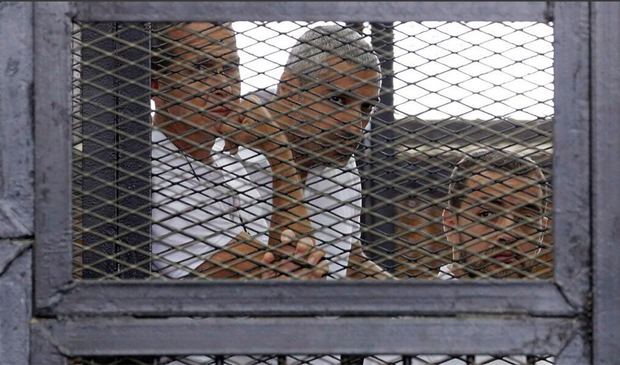
Three Al Jazeera journalists were among those sentenced to prison on terrorism charges.
In 1997, British journalist Robert Fisk interviewed Bin Laden. Fisk was not accused of being a terrorist, he was only doing his job. For decades, journalists have been interviewing terrorists, criminals and drug lords, because this is their job; to give a voice to everybody, whether they agree with them or not.
Last month, Egypt sentenced three Al Jazeera journalists to seven years in prison under the country’s anti-terrorism laws; they were accused of spreading false information, as well as supporting the now banned Muslim Brotherhood. In an extremely polarised political climate, giving a voice to the Muslim Brotherhood was deemed inciteful and inflammatory.
Art has been a means of stretching the boundaries, but can art sometimes be a public safety risk?
A series of cartoons, some of which depicted Prophet Mohammed, published by a Danish newspaper in 2005 sparked angry and violent protests across the Arab world. The same happened again when a 13 minute trailer of a movie called Innocence of Muslims appeared on Youtube two years ago. Earlier this year, French comic and political activist Dieudonné M’bala M’bala was banned from performing after his shows were found to incite racial hatred and anti-semitic sentiment by French courts. The comedian was also banned from entering the United Kingdom.
These cases raise a very important question: When does giving a platform to extremist views through art or journalism become an act of terrorism? Should artists or journalists be exempt from terrorism laws or should inflammatory works be banned?
Get involved the discussion using the hashtag #IndexDrawtheLine and tell us — where do you draw the line?
7 Jul 2014 | About Index
Index on Censorship is now recruiting for its next Youth Advisory Board for a six month term (December 2014 to May 2015). The board is open to 16-25 year old volunteers from around the world.
To apply to be on our youth board please send your CV and a covering letter to [email protected], stating what you think is the most pressing free speech issue of the moment.
Deadline for applications is 7th November 2014 at 5pm.
Find more information about the role of Index’s Youth Advisory Board and current board members below.
What is the youth board?
The youth board is a specially selected group of young people aged 16-25 who will advise and inform Index on Censorship’s work, supporting our ambition to fight for free expression all around the world and ensuring our engagement with issues relevant to tomorrow’s leaders.
Why has Index started a youth board?
Index on Censorship is committed to fighting censorship not only now, but also in future generations, and we want to ensure that the realities and challenges experienced by young people in today’s world are properly reflected in our work.
Index is also aware that there are many who would like to commit some or all of their professional lives to fighting for human rights and the youth board is our way of supporting the broadest range of young people to develop their voice, find paths to freely expressing it and potential future employment in the human rights/media/arts sectors.
What does the youth board do?
Board members meet once a month via Google Hangout to discuss the most pressing freedom of expression issues of the moment and to set a monthly question for our project, Draw the Line. You will be expected to write a minimum of 1 blog post introducing/concluding the question of the month and to help us spread the word about Index.
There is also the opportunity to get involved with events such as debates and workshops for our work with young people and also events such as our annual Index Freedom of Expression Awards and Index magazine launches.
How do people get on the youth board?
Each youth board will sit for a term of 6 months.
Current board members are invited to reapply up to one time.
The board will be selected by Index on Censorship in an open and transparent manner and in accordance with our commitment to promoting diversity.
Why join the Index on Censorship youth board?
You get the chance to be associated with a prestigious media and human rights organisation and have the opportunity to discuss issues you feel strongly about with Index and with other amazing young people (internationally). At each Board meeting we will also give you the chance to speak to someone senior within Index or the media/human rights/arts sectors, helping you to develop your knowledge and extend your personal networks and you’ll be featured on our website.
Index on Censorship Youth Advisory Board
Alice Olsson
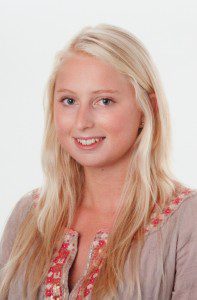
Alice is a student journalist and human rights advocate. Originally from Stockholm, Sweden, she is currently reading English and related literature at the University of York. Her main research interest is contemporary freedom and resistance writing, particularly the function of different media channels in modern revolution narratives.
Daniel Rey
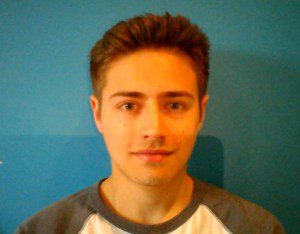
Daniel is an eighteen-year-old student about to begin his studies at St Andrews University. Daniel thinks that freedom of expression and freedom of speech are important primarily due to their central role in the functioning of a democratic state and a civic society.
Farah Wael
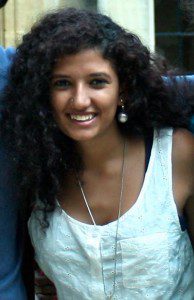
Farah is an Egyptian who has been working on freedom of expression issues, with a special focus on press freedom in the Middle East and Arab world. She now lives somewhere between Cairo, Paris and Beirut.
Margot Tudor
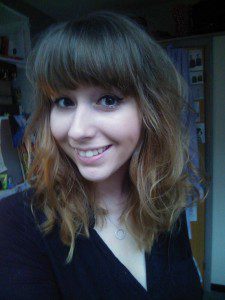
Margot is studying history at the University of Bristol. She became interested in free expression issues thanks to the Libel Reform movement in 2010. Since then Margot has developed her involvement in current affairs by being a reporter for Epigram Newspaper and becoming deputy head of news for UBTV.
Morgan Meaker
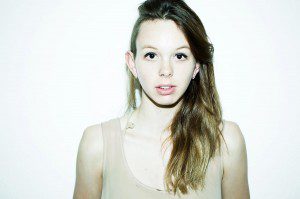
Morgan is a human rights and arts journalist based in London. Morgan has been published by The Young Greens, Dazed & Confused, Time Out, The Huffington Post and London Calling. While living in Berlin, she set up political art magazine The Illuminator and she is currently working on the launch of SOUF – a platform dedicated to South London.
Priyanka Mogul

Priyanka is manager of the International Political Forum and studies journalism with human rights at Kingston University. She is also communications intern for the United Nations Association and has just been re-elected for her third term as president of the Kingston University Journalism Society. Priyanka recently founded the Spread The Word Campaign, which aims to open libraries in homeless shelters across London.
Sheema Ghani
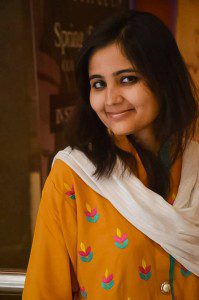
Sheema studied to become an engineer from NED University of Engineering and Technology, Karachi. Sheema’s desire to be an agent for a positive change in her society has allowed her to play an important role in the rehabilitation of victims of bomb blasts and natural calamities. Being a supporter of interfaith harmony, minority rights and free media, she is proud to represent Pakistan on the youth board at Index on Censorship.
Sophie Armour
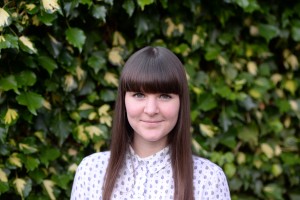
Sophie is an editor at a media analysis company, as well as a freelance writer and active member of the Green Party. A journalism graduate originally from Manchester, she spent five years as a freelance music journalist, going on to run London nightlife blog and digital magazine, Standard London Evening.
25 Jun 2014 | News, Russia, Ukraine
Wrestling for the rights to define the Ukrainian conflict, both Russia and Ukraine have utilised a range of tactics to control and limit media coverage in the region. This, alongside, the constant to and fro between media freedom and the skewed official lines has politicised the role of the media and manipulated perceptions of the conflict, further distancing coverage from reality.
Every fact is a battle to be fought and won. Who made up the Ukrainian protest movement? Activists and other members of civil society, or thugs, neo-Nazis or far-right extremists? What are Russia’s motivations? Geo-political revisionism, a nationalistic desire to rebuild empire or for the protection of a persecuted minority? There is not one answer to questions like these; indeed the answers appear to changes depending on where they come from.
A sure-fire tactic to control the number of answers on offer is to limit the number of journalists able to cover the story. There have been a number of cases across the region where journalists have either been detained or refused entry to key areas of the conflict. In May, it was reported that three journalists, including a writer for Russia Today, had been detained by Ukraine’s Security Services (SBU), with a further three refused entry at the border. With no clarification of the grounds for their detention, as well as refusing them access to legal representation, the legality of such acts is dubious at best; as Human Rights Watch (HRW) states: “Failure to provide information on the whereabouts and fate of anyone deprived of their liberty by agents of the state, or those acting with its acquiescence, may constitute an enforced disappearance.”
This however, is not a tactic employed exclusively by Ukraine. According to the Committee to Protect Journalists (CPJ), Russian authorities and pro-Russian separatists detained five journalists in Crimea and mainland Ukraine. On 2 June in Donetsk, unidentified armed men in camouflage raided the offices of regional newspapers Donbass and Vecherny Donetsk, detaining senior editorial staff, and accusing the publications of “incorrect reporting”. It is reported that the captor’s demands included the stipulations that the editors, “change the papers’ editorial policy”.
This proved to be effective. The deputy editor of Donbass stated that both his paper and Vecherny Donetsk were “discussing the separatists’ demands and were considering shutting down the outlets for fear of future retaliation”.
Beyond limiting the freedom of journalists covering the conflict, state-led censorship and propaganda is creating media vacuums in key areas, promoting narrow and strictly controlled interpretations of the conflict.
Attacks on the media in Russia have ramped up significantly following Putin’s return to the presidency and have taken on a distinct urgency with the continuation of the Ukraine conflict. One example is the legislation pushed through the Duma banning the publication of negative information about the Russian government and military. This positions Russian activities in Ukraine at the heart of controlling perceptions of Russia in the media. Quoting the official explanatory note to the legislation, HRW reports: “’The event in Ukraine in late 2013-early 2014 evidenced…an information war’, and demonstrated the necessity to protect the younger generation from ‘forming a negative opinion of [their] Fatherland.’”
Another key piece of legislation at play in this context is the “Lugovoi Law”, which allows Roskomnadzor, the Russia state body for media oversight, to block online sources without any court approval. One publication that was blocked was Grani.Ru due in part to its criticism of the state’s handling of the Bolotnaya Square protests. Grani.Ru have unsuccessfully appealed the ruling, but Yulia Berezovskaya, director-general of Grani-Ru is not surprised.
Roskomnadzor has not lost a single case against the media. The Office of the Prosecutor General and Roskomnadzor refused to indicate the “offensive” materials that should have been removed from the website so that access could be restored.
Berezovskaya continues to see this as part of a larger shift in the state’s relationship to the media in the light of the Ukrainian crisis: “The Ukrainian crisis is a major part of Russian TV news while domestic issues are not covered.”
Rolling out robust limitations against opposition or independent media outlets in Russia, at times irrespective of the events in Ukraine, guarantees in a large part the allegiances of media bodies covering the crisis. Indeed with many voices absent from the debate, the state can be confident the official line is being towed, at times, irrespective of fact.
The manipulation of fact has come to define a large part of pro-Russia content. Moscow Times reports “when Vesti.Ru described clashes between pro-Russian and pro-Kiev protesters in Simferopol…it showed footage of earlier protests in Kiev, which were more violent.” Channel One, when alleging that violence in Ukraine has sent a flood of refugees heading for Russia’s Belgorod region, used footage, not of the Ukrainian-Russian border, but of the Ukrainian-Polish border.
By restricting who can report on the Ukrainian crisis through access or censorship, the state can identify which untruths should be accepted as “truth” and which truths should not be seen. But as the conflict endures, the battle to shape perceptions, both home and abroad will continue. As it does, how can we identify the true actions, motivations and responsibilities, before untruths take hold and become something more, something resembling and assumed to be fact?
This article was published on 25 June 2014 at indexoncensorship.org
24 Jun 2014 | News, Politics and Society
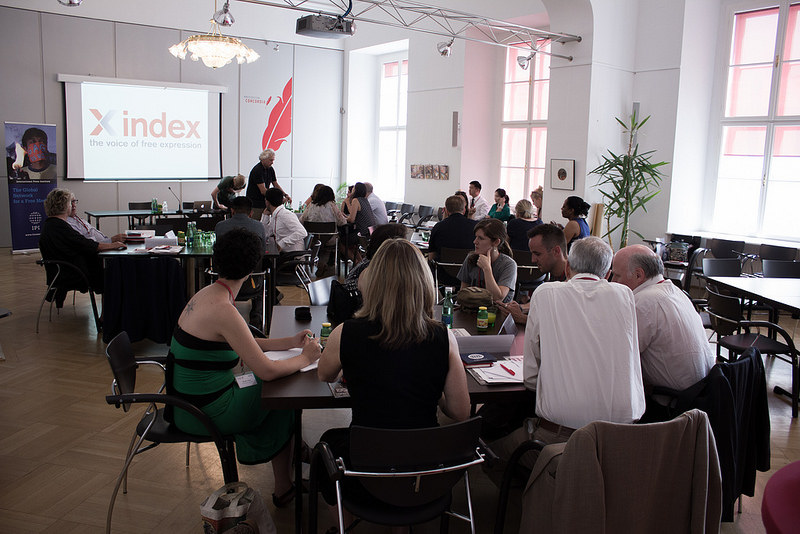
Index speaks at the IAPC meet 2014, Vienna
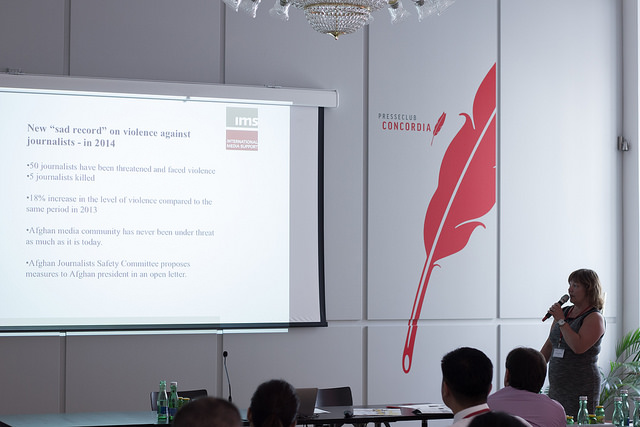
There has been an 18% rise in violence towards journalists compared to the same period last year, International Media Support, an organisation that works in many of the world’s biggest danger zones, told an international journalism conference.
News from Egypt – as three journalists from Al-Jazeera are sentenced to seven years in prison – demonstrates the huge threats that journalists can face. The subject was covered in detail at this year’s International Association of Press Clubs annual conference in Vienna, which Index on Censorship attended this month.
“Some countries we just can’t work in,” said John Barker from Media Legal Defence Initiative, who help represent journalists facing legal charges for reporting and presented on their work. “Every time we work in Vietnam, for example, the lawyers are arrested. In many places, we can’t transfer money to them.” Nonetheless, they are currently working on 102 cases in 39 countries.
Other topics for discussion included:
- The increasing number of freelancers working in danger zones – and with little training
- How to protect fixers, translators and local journalists
- Possible methods for funding legal representation (Crowdfunding worked as a recent experiment in Ethiopia, said MLDI)
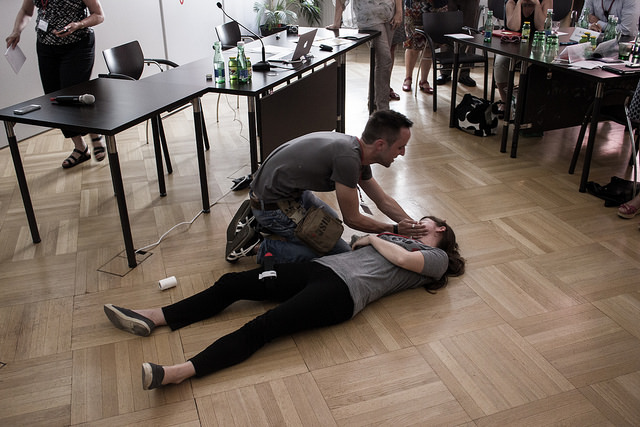
The event was hosted by Austria’s PresseClub Concordia – said to be the oldest press club in the world (founded in 1859 – reformed in 1946, after having its assets seized by Nazis). It was attended by press clubs from around the world, including Poland, Belarus, Syria, the Czech Republic, the US, India, Ukraine, Mongolia, Germany, and Switzerland. Other NGOs – alongside Index, International Media Support and Media Legal Defence Initiative – included the International Press Institute and RISC (Reporters Instructed in Saving Colleagues).
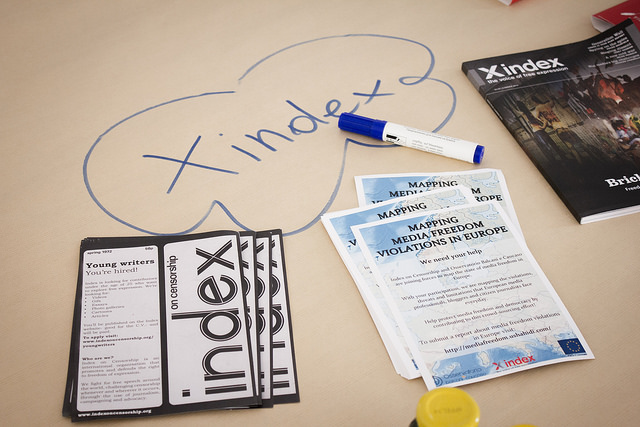
Index was invited to present on the work the organisation is doing around the world, which included sharing the stories of our Freedom of Expression Awards winners and nominees, and news of our current work, including a crowdsourcing project to map media freedom violations across the EU. Plus we also shared stories from our quarterly magazine – including a report on violent threats to journalists in Tanzania and how news stories are getting out of Syria via citizen reports.
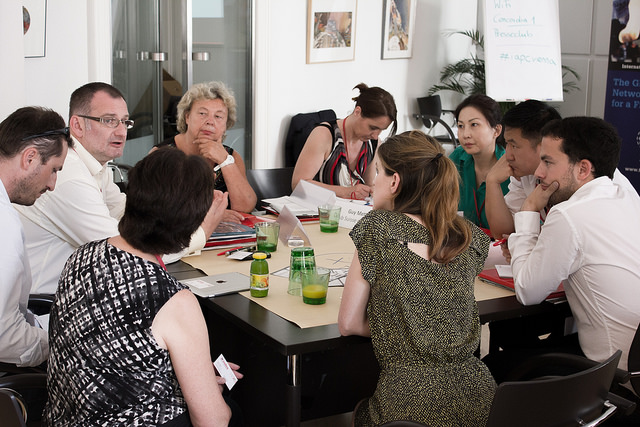
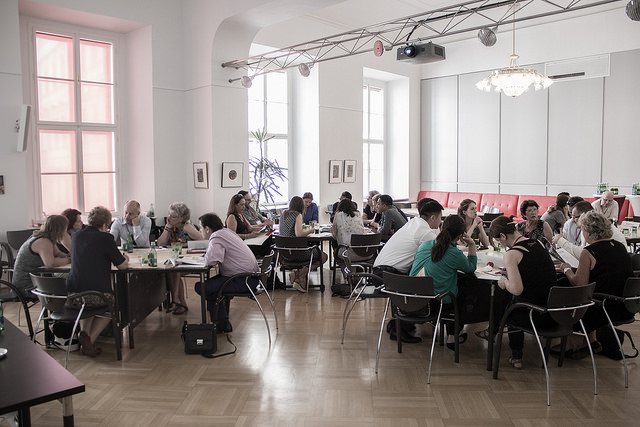
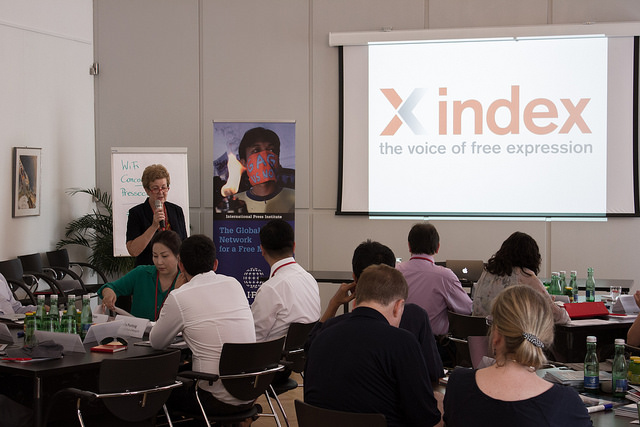
Index also hosted round-table discussion on censorship, which provoked an impassioned debate. One of the most interesting topics covered was on contracts that some journalists are being made to sign on what they can and can’t write. We heard of cases in Mongolia and Germany. We also discussed self-censorship and censorship by complying to advertisers’ will. One attendee from the Berlin Press Club said: “There is no censorship in Germany, but journalists feel like they have scissors in their heads. You have to self-censor before you write.” This is an area that we are researching, so please get in touch if you have experiences and examples.
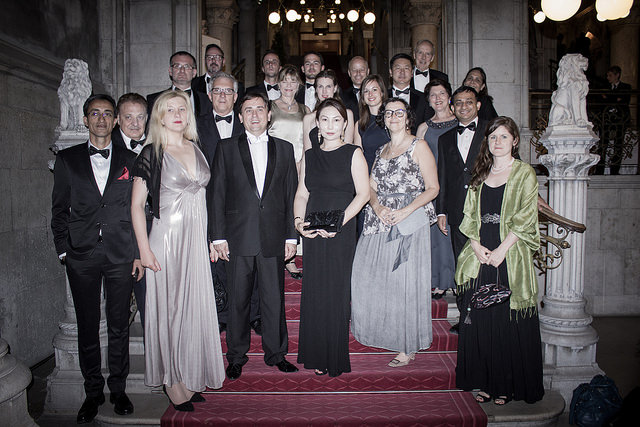
The meeting also visited a new exhibition on censorship during WW1 and ended with the Concordia Press Club’s annual ball, which is a key fundraiser for the club and attended by over 2,000 guests. See photos from the event below.
This article was posted on June 24, 2014 at indexoncensorship.org
