29 Jun 2012 | Egypt, Middle East and North Africa, Opinion
Cairo’s Tahrir Square exploded in joyous revelry and fanfare on Sunday afternoon after Counsellor Farouk Sultan, the Head of the Elections Commission announced the results of the presidential run-off vote in a nationwide televised address. Counsellor Sultan named Muslim Brotherhood candidate Mohamed Morsi the winner with 51.73 per cent of the vote and by a slim margin of 800,000 votes. The announcement ended days of speculation over the results of a vote that has polarised Egypt and accentuated a decades-old secularist/Islamist divide.
Supporters of Morsi’s opponent Ahmed Shafik meanwhile expressed their anger and shock at his defeat. Some insisted that “the result was incorrect” while others said they would pack and leave Egypt altogether. Most people in Shafik’s camp were secularists who had voted for the former regime man (the last prime minister under Mubarak) out of fear that Islamist rule would mean intolerance and the stifling of freedoms.
The victory of a conservative Islamist and long-time Muslim Brotherhood member has fuelled concerns about the rights of minorities and women, freedom of expression and possible restrictions on art and creativity.
The secularists’ fears are not totally baseless: In recent months, several lawsuits filed by Muslim hardliners against artists and a Coptic businessman have threatened to curtail free expression. Coptic business tycoon Naguib Sawiris was twice accused by ultra- conservative Islamists of “blasphemy and insulting Islam “after he posted a cartoon on Twitter of a bearded Mickey Mouse and a veiled Minnie. The courts dismissed the charges on both occasions on grounds that “the plaintiffs lacked legal standing”.
Meanwhile, comedian Adel Imam and several other artists who worked with him were charged with “showing contempt of religion” in three films made in the early nineties, including the 1994 film “The Terrorist” (in which Imam played the role of a Muslim fundamentalist). The ultra conservative lawyer who filed the lawsuit accused Imam of mocking Muslim symbols like the beard and the white robe or “gallabeya” traditionally worn by devout Muslims.
While the case against Imam was later dismissed, it did trigger an outpouring of anger from liberals and intellectuals who expressed fears that such conservatism could drag Egypt “back to the dark ages”. Many intellectuals, writers and artists worry that the sweeping tide of Islamism may lead to greater censorship of their work and curb creativity and free expression.
They have demanded that Egypt’s newly elected president make clear his position on freedom of speech and creativity.
“We want a promise from him that creativity won’t be judged on religious principles,” said secular writer Ahmed Al Khamisi. “We want him to pledge not to censor artists nor stifle their freedom to create.”
Activist Dalia Ziada has also expressed her concern that Morsi would “try to take actions against human rights and freedoms, by orders from God.”
While Morsi has not denied his intention to implement Islamic Sharia Law, reiterating in his campaign speeches that the “Qur’an is my constitution”, he has sought to allay the concerns of Egypt’s liberals by promising to protect freedoms and the rights of minorities and women. He has also withdrawn from the Muslim Brotherhood and pledged to appoint a Christian woman as Vice-President.
In his first televised speech after winning the election, he said. “Egypt is for all Egyptians; all of us are equals in terms of rights.”
He has also promised to fulfil the goals of the revolution including freedom, democracy and social justice.
Egypt’s military rulers have meanwhile declared themselves “the guardians of the revolution and protectors of a secular, democratic state council”. They recently introduced supplementary constitutional amendments that consolidate their grip on power. The amendments give the army sweeping legislative and budgetary powers including control over the drafting of the country’s new constitution. All this, while limiting the powers of the newly elected President dramatically.
With tight control from the military and all eyes closely watching him, Morsi is in for a tough time to prove his mettle. Revolutionary activists are monitoring his performance in his first 100 days in office through a new internet application dubbed “The Morsimeter”. They have also been piling pressure on him through continued protests in Tahrir, demanding that he wrest more powers from the military. Satisfying all political forces — the youth revolutionaries, the military authority and the Islamist groups who want Sharia law implemented, may be a near- impossible task. One thing is certain though: divorcing religion from politics will have to be a vital concession for Morsi to make if he wishes to win the support of the secularists who initiated the revolution.
Journalist Shahira Amin resigned from her post as deputy head of state-run Nile TV in February 2011. Read why she resigned from the “propaganda machine” here.
27 Jun 2012 | Africa, Index Index, minipost
Sudanese security forces have brutally cracked down on protests against government austerity measures, arresting scores of people, including several journalists. Tear gas and rubber bullets were used as police to break up the protests, which have been ongoing since 16 June. Both local and international journalists have been arrested during their coverage of the protests, including Simon Martelli from Agence France Presse and Egyptian journalist Salma al-Wardany, from Bloomberg. Citizen journalist Nagla Sid Ahmed was summoned for questioning by security services on several consecutive days to prevent her from attending and covering the protests.
25 Jun 2012 | Middle East and North Africa
PRESS RELEASE
The International Freedom of Expression Exchange Tunisia Monitoring Group (IFEX-TMG), a coalition of 21 IFEX members [including Index on Censorship], is alarmed by the recent attacks in Tunisia on freedom of expression, in particular against artistic expression, in the name of religion.
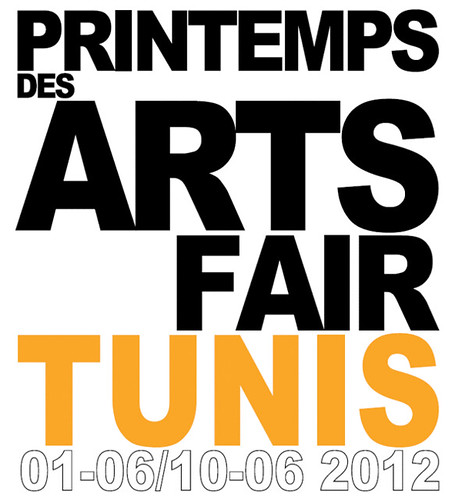
On 10 June 2012, three ultra-conservative Islamists (reportedly two men and a woman), who were accompanied by a bailiff and a lawyer, toured the Palais El-Abdellia, an art gallery in Tunis, taking part in the Printemps des Arts modern contemporary art fair. The group demanded that the organisers take down two artworks which they claimed were offensive to Islam.
When their request was denied, the Islamists returned later that night with a large number of supporters and broke into the exhibition from the rear walls, burned the painting of Faten Gaddass, and tore to pieces two linen artworks, one by Mohamed Ben Slama, and the second by a French artist.
On 12 June, the Tunisian Ministry of Culture decided to temporarily close the gallery, after violent reactions in several Tunisian cities, including the capital Tunis. Ennahda ruling party claimed that some of the artworks were provocative and that they violated the “principles of Islam and the holy beliefs of Tunisian people.”
Furthermore, the Tunisian Minister of Culture, Mehdi Mabrouk, declared that some of the artworks exhibited at Printemps des Arts do in fact violate Islamic holy symbols, which the artists deny. He has also said that some of these artworks are now under investigation. After acknowledging the provocative role of art, on the morning of 14 June, Mabrouk told Radio Shems FM that six works deemed to be “provocative” had been confiscated.
At a press conference held on 12 June, the Minister announced that the government would likely present a bill to the National Constituent Assembly which would allow criminal charges to be brought against anyone who offends “the sacred.” Blasphemy laws are a clear violation of freedom of expression and would present a serious setback to human rights in Tunisia, say IFEX-TMG members.
Previously, on 27 May, Salafist groups attacked the playwright Rajab Al-Maqary in El Kef city. He subsequently suffered serious injuries after being beaten severely on his head and chest. He is still receiving treatment in a Tunis hospital.
IFEX-TMG strongly condemns the increasing use of violence against artists and writers by ultra-conservative groups. IFEX-TMG is particularly concerned about the closure of the exhibition in the Printemps des Arts gallery by the Ministry of Culture, rather than the guaranteeing of a safe environment in which artists can work freely, without threats or censorship.
IFEX-TMG members are additionally concerned about the ongoing detention of Tunisian blogger Jabeur Ben Abdallah Mejri, who was sentenced to seven and a half years’ imprisonment for publishing writings alleged to be offensive to Islam. Mejri’s appeal was held on 24 May and was adjourned. According to his lawyer, the new date has not been set yet. IFEX- TMG calls for his immediate release.
“It is disturbing that those entrusted to promote and defend freedom of expression in Tunisia would side with the dictates of radical groups that resort to violence and destruction to impose their views. The IFEX-TMG calls on the government to take robust steps to protect the right to free expression, so that citizens can enjoy this fundamental right without fear of retribution,” says Virginie Jouan, Chair of the IFEX-TMG.
For more information:
IFEX Tunisia Monitoring Group
Virginie Jouan, Chair
on behalf of the World Association of Newspapers and News Publishers (WAN-IFRA)
jouanvirginie (@) gmail.com
Facebook.com/IFEXTMG
Twitter: @IFEXTMG
Arabic Network for Human Rights Information
ARTICLE 19
Bahrain Center for Human Rights
Cairo Institute for Human Rights Studies
Canadian Journalists for Free Expression
Cartoonists Rights Network International
Egyptian Organization for Human Rights
Freedom House
Index on Censorship
International Federation of Journalists
International Federation of Library Associations and Institutions
International Press Institute
International Publishers Association
Journaliste en danger (JED)
Maharat Foundation (Skills Foundation)
Media Institute of Southern Africa
Norwegian PEN
World Association of Community Radio Broadcasters (AMARC)
World Association of Newspapers and News Publishers (WAN-IFRA)
World Press Freedom Committee
Writers in Prison Committee, PEN International
This press release is also available in French and Arabic
20 Jun 2012 | Egypt
Hundreds of thousands of activists returned to Cairo’s Tahrir Square on Monday night to protest supplementary constitutional amendments issued by the ruling military council in recent days. The amendments grant the military sweeping legislative and budgetary powers while limiting the powers of the country’s next president. Critics argue that the surprise amendments — announced as votes in the presidential run off were being counted — are a last-ditch effort by the military to retain power beyond the handover to civilian rule on 1 July. The Supreme Council of the Armed Forces (SCAF) has denied the charge, insisting it will hand over to the newly elected president on the scheduled date as promised.
The newly introduced amendments include re-imposition of martial law allowing military police to arrest civilians “to enforce order”. Shielding the military from accountability, they also grant the SCAF the right to form a panel to draft the constitution should the constituent assembly recently elected by parliament fail to complete its work. The military council would also have control over the drafting of the new constitution with the right to object to any article.
The new decisions by the SCAF unleashed a new wave of anti-military criticism. Rights lawyer Hossam Bahgat called the amendments “a declaration of war” while sceptics described them on Twitter as being tantamount “to a complete military coup” and “an inevitable end to a messy transitional period.”
The announcement of the new amendments came as Egyptians were still reeling from shock after the High Constitutional Court issued a ruling to dissolve the Islamist-dominated parliament on Thursday . The court also decided to allow Ahmed Shafik, a former air force commander and the last prime minister under Mubarak, to stand in the run-off election. The latter ruling dashed hopes of the youth-revolutionaries that the former regime remnant would be forced out of the presidential race under a so-called “political exclusion law” passed by parliament. The law, which bars former regime members from standing for office, was rejected by the High Constitutional Court as unconstitutional.
As pro-reform activists chanted anti-military slogans in Tahrir Square on Monday night, supporters of Muslim Brotherhood candidate Mohamed Morsi celebrated his victory after his campaign organisers announced he had won the election by 51.2 per cent of the vote. Shafik ‘s camp has disputed the vote count , declaring its candidate the winner. The two camps have also traded accusations of election violations. The Supreme Electoral Commission has stated it may have to delay the announcement of the official election result beyond Thursday as it continues to look into complaints of voting irregularities filed by the two camps.
The presidential vote has brought to the surface the Islamist-secular divide that has existed in Egypt for decades. The Muslim Brotherhood, Egypt’s largest opposition group — who have long been marginalised and oppressed by successive military presidents in Egypt — fears a renewed crackdown if Shafik wins the election.
Members of the movement have in recent days tried to rally the secularist youth-activists behind them, urging them to unify ranks to counter “the military challenge”. But the truth is there no love lost between the mostly middle class, educated pro-reform activists who led the January 2011 mass uprising and the Islamists. Despite giving the MB candidate Mohamed Morsi their vote, many of the young revolutionaries argue that they voted for him simply because they considered him “the lesser of two evils”. Many of them believe the Muslim Brotherhood betrayed the revolution to further its own interests.
Film director Khaled Youssef, a liberal who invalidated his vote, accuses the Islamist movement of aligning with the military dictatorship and “selling out the revolutionaries.”
“Not only did the Muslim Brotherhood attempt to excercise monopoly over the drafting of the constitution but they also reneged on a previous promise not to field a presidential candidate,” he charges.
He adds that the Islamist parliament had allowed the blood of the pro-reform activists to be spilled during last year’s Mohamed Mahmoud violent protests when MPs had charged that “the protesters were not the real revolutionaries but were thugs and criminals instead.”
With tensions escalating and political forces calling for another “million people march” in Tahrir Square on Friday, analysts predict that the unrest in Egypt is likely to worsen in the coming weeks before showing signs of improvement. The activists meanwhile are bracing themselves for another showdown with the military.