14 Jul 2011 | Digital Freedom, Uncategorized
Michael Posner, the US assistant Secretary of State in charge of the Bureau of Democracy, Human Rights and Labor bluntly called Internet freedom one of the “game-changing human rights issues of our time” Wednesday at a symposium in Washington on the promise and limitations of new technology to spread democracy.
That sentiment will surely earn applause from free speech advocates who’ve watched unfold in the Middle East this year the dual nature of the Internet to facilitate both free expression and sophisticated repression of it. Exactly what the US government should be doing to ensure Internet freedom, however, is a messier question — particularly given that visible State Department support for foreign dissidents can often do more harm than good, and given that US involvement can just as easily play to the hands of the repressive governments dissidents seek to overthrow.
Posner offered Wednesday this blueprint for what he believes the proper role of the U.S. should be:
“We start from the premise that change occurs most effectively within a society. We can’t force it from the outside, but we can be helpful in amplifying the voice of domestic activists trying to raise these issues, we can provide some measure of protection to them and help create an international environment where these issues are discussed in a more intelligent way. But we’re very mindful of the importance of reinforcing domestic voices. This is not about us, it’s about them, and it’s about governments refusing to let their people stand up and speak for what they want.”
He also spoke directly with advice to authoritarian leaders:
“Don’t shoot the instant messanger. Instead address the underlying grievances: corruption, abuse of power, lack of political and economic opportunity, and the daily affronts to dignity by indifferent authorities.”
Authoritarian governments who’ve blamed the Internet — and US backing for it — for local unrest have fundamentally misunderstood their problems, Posner suggests.
“Let’s be honest. Governments that respect the rights of their citizens have no reason to fear a free internet. The Internet didn’t topple the regimes of Tunisia and Egypt. People did.”
30 Jun 2011 | Middle East and North Africa, News
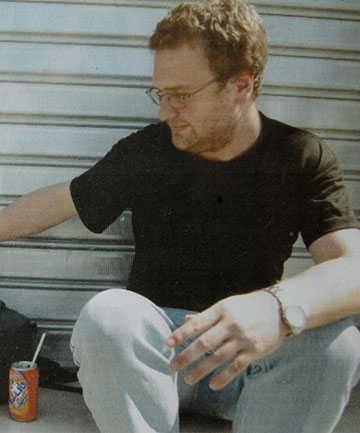 The arrest and detention of a Kiwi journalist lays bare the risks and calculations taken by foreign journalists in Yemen. Iona Craig reports from Sana’a
(more…)
2 Jun 2011 | Egypt, Middle East and North Africa
In the first week of May, in what was essentially a domestic dispute, a Christian woman by the name of Abeer Fakhry, wanting to divorce her husband, announced her conversion to Islam. It was her only option for legal separation, divorce being a near-impossibility under the Egyptian Coptic church, but the incident turned into an armed battle, injuring scores of people and killing 12 in the Imbaba neighbourhood of Cairo.
A rumour spread that Abeer was being held against her will inside the Mar Mina church, which became the epicentre of sectarian fights. The case echoes the now infamous Kamilia Shehata saga, Shehata’s religious affiliation and whereabouts have remained a matter of speculation for nearly two years.
While accusations of interference by the last remaining members of the Mubarak ranks, by “foreign elements”, or even by imprisoned Mubarak staffers continue, the reality is that the recent violence represents years of sectarian tension. This strain regularly finds an escape valve in the form of violence, first between individuals, then later, escalating to engulf full communities.
The new player in the story is the Salafis, a hardline Islamist group which had, until the January 25 revolution, remained largely out of the public sphere and appeared not to have political ambitions. The Salafis deem the entire political system to be flawed and nursed dreams of a Caliphate through pamphlets they distributed in the aftermath of the revolution. They have, however, emerged in recent months as a political player — campaigning in favour of the constitutional amendments that Egyptians have voted upon in March — as well as an organised force, as demonstrated by their deployment of followers in Imbaba. Their political rhetoric during the Imbaba dispute was shrouded in religious language, they claimed they were acting in defence of Muslim converts being withheld against their will.
Salafis also made the headlines when they took over the Nour mosque in Cairo in April — preventing the regular sheikh from giving his weekly Friday sermon. Only a muscled intervention from the army regained control of the mosque several weeks later.
With fiery declarations and the occasional display of force, the Salafis — in no way a homogenous group — are likely to remain in the public eye. Whether they become a force for destabilisation and sectarian violence remains to be seen.
1 Jun 2011 | Middle East and North Africa, News
 Surveillance and spamming — how the Syria’s embattled regime and its supporters battle protesters on social media. Jillian C York reports
(more…)
