21 Jul 2015
Freedom of expression is essential to the arts. But the laws and practices that protect and nurture free expression are often poorly understood both by practitioners and by those enforcing the law.
As part of Index on Censorship’s work on art and offence, Index has published a series of law packs intended to address questions about legal limits related to free expression and the arts.
We intend them as “living” documents, to be enhanced and developed in partnership with arts groups so that artistic freedom is nurtured and nourished.
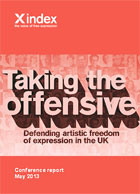
This work builds on an earlier study by Index on Censorship, Taking the Offensive, which showed how self-censorship manifests itself in arts organisations and institutions.
— Jodie Ginsberg, chief executive, Index on Censorship
Child Protection
 Child protection is a sensitive area of law and a deserved focus of public concern. The prospect of a police investigation alone will be a matter of substantial press interest, while an actual prosecution, although unlikely in the professional arts sector, would nevertheless result in grave consequences for the gallery and the artist. As there is no clear legal definition of the concept of indecency, and because of the sensitivity of the matter, decisions made by the police and Crown Prosecution Service can be subjective and inconsistent, and in the wrong context can seriously compromise freedom of expression rights. For that reason, it is important to be aware of the legal framework and to take practical preparatory steps at an early stage.
View the full Child Protection guide: PDF | web
Counter Terrorism
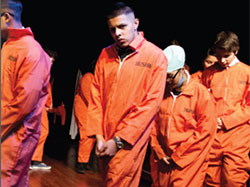 Counter-terrorism is a complex and controversial area of the law, not least because the offences are often very widely drafted. The relevant legal definition of terrorism, contained within the Terrorism Act 2000 (and further extended in 2006), is very broad and potentially covers a very wide range of acts beyond those that are widely understood to be “terrorist” in nature. Artists, and the staff and directors of arts organisations, commit a criminal offence if publications in any medium, including images, which are likely to directly or indirectly encourage terrorism, are shown or displayed. The dissemination of any publication containing such a statement or image is also an offence.
View the full Counter Terrorism guide: PDF | web
Obscene Publications
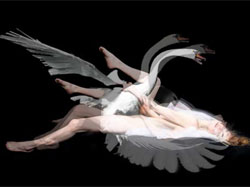 Obscene publications are governed by the Obscene Publications Act 1959 and the Obscene Publications Act 1964. The 1959 Act sets out the legal test for obscenity and creates certain offences and defences. The nature of material that can be held to be obscene is not limited to material of a sexual nature. In fact, it has been held by the courts that material glamourising, or inducing, potentially dangerous behaviour, such as drug taking, may amount to an “obscene” publication.
View the full Obscene Publications guide: PDF | web
Public Order
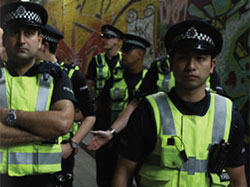 Artists are rarely charged with public order offences under the Public Order Act. For an arts organisation it is far more likely that a public order problem arises because of the reactions of third parties to the work of art. Public order law will more often impact artistic works where the police form the view that the reaction it triggers is serious enough to justify closing the work to maintain order. Such a case presents the problem of an otherwise lawful action that causes, results in, provokes or (more neutrally) precedes a breach or threatened breach of the peace, entailing violent action, such that the police require the otherwise lawful act to cease.
View the full Public Order guide: PDF | web
Race and Religion
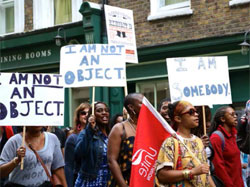 UK law criminalises conduct that has the intent of stirring up racial hatred or hatred on grounds of religion or sexual orientation. “Conduct” includes the use of hateful words, but also a broad range of expression, such as displays of text, books, banners, photos and visual art, the public performance of plays and the distribution or presentation of pre-recorded material. In all three cases a magistrate can grant the police a warrant to seize any material that is hatefully inflammatory.
View the full Race and Religion guide: PDF | web
21 Jul 2015 | Art and the Law Case Studies, Artistic Freedom Case Studies
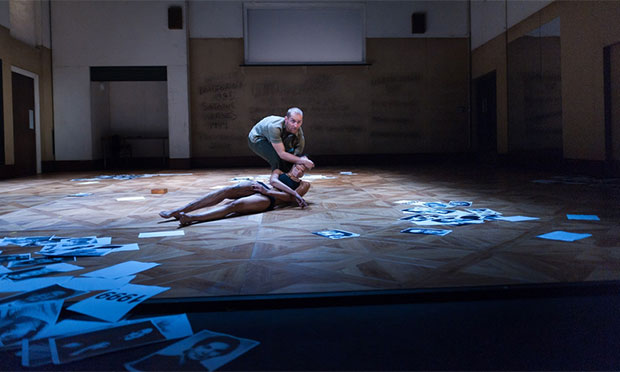
A scene from Can We Talk About This? (Photo: Matt Nettheim for DV8)
As part of our work on art, offence and the law, Julia Farrington, associate arts producer, Index on Censorship, interviewed Eva Pepper, DV8’s executive producer about how she prepared for potential hostility that the show Can We Talk About This? might provoke as it went on tour around the world in 2011-12.
Background
Can We Talk About This?, created by DV8’s Artistic Director Lloyd Newson, deals with freedom of speech, censorship and Islam. The production premiered in August 2011 at Sydney Opera House, followed by an international tour of 15 countries — Sweden, Australia, Hong Kong, France, Italy, Austria, Germany, Greece, Slovenia, Hungry, Spain, Norway, Taiwan and Korea and the UK between August 2011 and June 2012 — and was seen by a 60,000 people.
Extract from publicity of the show:
“From the 1989 book burnings of Salman Rushdie’s The Satanic Verses, to the murder of filmmaker Theo Van Gogh and the controversy of the ‘Muhammad cartoons’ in 2005, DV8’s production examined how these events have reflected and influenced multicultural policies, press freedom and artistic censorship. In the follow up to the critically acclaimed To Be Straight With You, this documentary-style dance-theatre production used real-life interviews and archive footage. Contributors include a number of high profile writers, campaigners and politicians.”
Q&A
Farrington: How did you set about working with the police for this tour?
Pepper: We focused on the UK with policing; I didn’t speak to any police forces in other countries at all, just in the UK cities we toured to: West Yorkshire Playhouse in Leeds; Warwick Arts Centre; Brighton Corn Exchange; The Lowry in Manchester and the National Theatre in London. But we did have a risk assessment and risk protocol that we shared with every venue we went to. We let them know the subject matter and the potential risks: security, safety of the audiences, media storms, safety of the people who were working on the show. They dealt either with their in-house security, or, in the UK, they would often alert the police as well.
Farrington: How did your preparations with police vary around the UK?
Pepper: We started with the Metropolitan Police, about six months before and told them our plans and that we would also contact other police forces. The National Theatre had their own contacts with the police who were already on standby. We still kept the MET events unit informed, but they [National Theatre] dealt with the police themselves. They were much more clued up, they had a head of security whom I briefed; we talked quite a lot. I made sure that he was copied in when anything a bit weird came up on the internet.
Our first venue was Leeds and we approached them about six weeks before the UK premiere. There was a bit of nervousness around Leeds, because of the larger Muslim population in the area. But we were only just beginning our liaison with the police and it took a little time to get a response. In the end we approached senior officers, but they often didn’t engage personally, just put us in touch with the appropriate unit to deal with.
Farrington: They didn’t see it as that important?
Pepper: They liked to be alerted that something might happen and they assured us that they were preparing. The venues also had their own police liaison; sometimes there was a bit of conflict if they had their own. I probably ruffled a few feathers when I went to a more senior officer.
Our starting point to the police was a very carefully worded letter which set out who we were. We didn’t ask permission to put it on we just alerted them that we might need police involvement. I did have some calls and a couple of meetings with officers, where they reiterated what is often said, which is that the police’s mandate is to keep the peace. It was made clear that they have as much of a duty to those people who want to protest or potentially might want to protest, as they have to allow us to exercise our freedom of expression. In Leeds nothing happened but there was a certain amount of nervousness around it.
Farrington: Where – at the venue?
Pepper: I think we were probably a bit nervous, and the police took it seriously enough. We had contact numbers to call. They were very much in the loop of the risk assessment.
Farrington: Was there a police presence on the night?
Pepper: I don’t remember seeing anybody. There was security of the venue of course, but regional venues only go so far with security. With some venues we were a little insistent that they get somebody upstairs and downstairs for example.
Farrington: And search bags, that kind of thing?
Pepper: We insisted people check in bags. The risk protocols weren’t invented for Can We Talk About This? They were really invented for To Be Straight With You [DV8’s previous show] and just tightened up for Can We Talk About This?. The risk protocols are just bullet points to get people thinking through scenarios.
Farrington: In general how would you describe your dealings with the police?
Pepper: I think generally supportive but we came to alert them that we might need them – there wasn’t a crisis. They said ‘thanks for letting us know let us deal with it.’ We would have quite liked to go through their risk assessments, but that didn’t happen. I think we were a little bit on their radar. They offered to send round liaison people to discuss practicalities around the office – stuff we hadn’t really thought about. It was a little bit tricky to get their attention.
The things we asked them to look out for were internet activity, if there was something brewing; sounds terribly paranoid. If there were issues around our London office or tour venues like hate mail, suspicious packages and then protests. So protest was just one thing our board was concerned about.
Farrington: Did you do anything else with the venue to prepare them for a possible hostile response from the media or a member of the public?
Pepper: I asked every venue artistic director or chief executive to prepare a statement. Lloyd would have been the main spokesperson for us if anything went wrong, but for a regional venue it is important that you are ready with a response and they all did that.
Farrington: What kind of thing did they say?
Pepper: We have supported this artist for the last 20 years. Lloyd has always been challenging in one way or another. This time he is challenging about this and we are going with him.
Farrington: Did you have any contact with lawyers?
Pepper: We looked carefully at the contents of the show. We had used interviews with real people and we wanted to be sure that nothing said was libellous or factually incorrect. So we had things looked at. The lawyer would say have you thought about that, did you get a release for this, are you using this from the BBC, do you have permission, have you spoken to this person, does he know you are doing it? And sometimes it is yes and sometimes it was a no.
Farrington: They pointed out some bases you hadn’t covered?
Pepper: Maybe one. We were really good and a bit obsessive. Sometimes we thought we didn’t have to ask because the information was in the public domain anyway, based on an interview that has been online for ten years for example. And the lawyer would or wouldn’t agree with that. It was good for peace of mind. That’s the thing with legal advice it doesn’t mean that nobody comes after you, because the law isn’t black and white.
Farrington: Were there some venues that you took the show to that didn’t think it was necessary to make special preparations?
Pepper: We always made them aware and we let them handle it. There are certain things that we always did. We asked them to consider security, and certainly PR. I was quite concerned that it would be a big PR story and then out of the PR story, as we saw with Exhibit B, comes the police. The protests don’t come from nowhere usually, somebody comes and stirs things up.
Farrington: Did you prepare the venue press departments?
Pepper: Yes we did, and we quite consciously had interviews, preview pieces before hand, where Lloyd could give candid interviews about the show. Almost to take the wind out of people’s sails, to put it out in the open so nobody could say they were surprised.
Farrington: How did you prepare with the performers for potential hostility?
Pepper: We talked through the risk procedure with them. We also got some advice from a security specialist, about being more vigilant than usual, noticing things that are out of the ordinary; if somebody picks a fight in the bar after the show, find a way to alert the others. So yes, the security specialist had a meeting with us here in the office, but also came up to Leeds to talk to the performers.
Farrington: Did it create a difficult atmosphere?
Pepper: It did yes, it got a bit edgy. Next time I would not do it around the UK premiere. It took a long time to set all of this up. To find the right people, to get people to take it seriously, to have meetings scheduled.
Farrington: It took time to find the right kind of security specialist?
Pepper: It also took a little while to get straight what we needed. We probably tried to figure it out for ourselves for a long time. And then got somebody in after all, just as maybe we, or the board got a bit more nervous. When you talk about protests you always worry about the general public, but as an employer there are the people who you send on tour who have to defend the show in the bar afterwards, potentially they are the targets.
Farrington: But they were behind the show?
Pepper: Yes, undoubtedly. But it’s an uncomfortable debate. There were so many voices in that show and you didn’t agree with every voice and it was never really said what really is Lloyd’s or DV8’s line. I would say that all the dancers were fine, but sometimes if somebody corners you in a bar it gets squirmy. No one is comfortable with everything.
Farrington: Can you summarise the response to the show?
Pepper: We had everything from 1 to 5 stars. We had people that loved the dance and hated the politics, who loved the politics and hated the dance. Occasionally somebody liked both. Occasionally somebody hated both. The show was discussed in the dance pages, in the theatre pages and in the comments pages. So in terms of the breadth and depth of the discussion we couldn’t have been more thrilled. Then we had dozens of blogs written about the show. For us Twitter really started with Can We Talk About This? and it was a great instrument for us. Social media was largely positive, though some people were picking a fight on Facebook at some point. It was very, very broad and very widely discussed.
Farrington: And did you interact with Twitter or did you let it roll?
Pepper: Mostly we let it roll. As part of the risk strategy we had a prepared statement from Lloyd which was very similar to the forward in the programme and anybody who had any beef would be redirected to the statement.
Farrington: Did the venues take this performance as an opportunity to have post show discussion and debate?
Pepper: Lloyd prefers preshow talks because he doesn’t like people to tell him what they thought of the shows. Quite often there is a quick Q&A before. In UK, we had one in Brighton [organised by Index] and one at the National. We had fantastic ones in Norway after the Breivik killings. In Norway they weren’t sure it was relevant and then the killings happened and then I got the call to say now we need to talk about it.
But having pre-show talks is certainly how we decided to deal with it. There is a conflict with having a white middle-aged atheist put on a show about Islam. But the majority of voices in the show were Muslim voices of all shades of opinion. It wasn’t fiction. It was based on his research and based on people’s stories – writers, intellectuals, journalists, politicians and who had a personal story to tell
Farrington: How did you prepare work with the board regarding potential controversies?
Pepper: Really the work with the board started with the previous show To Be Straight With You that already dealt with homosexuality and religion and culture; how different communities and religious groups make the life of gay people quite unbearable, internationally and in this country. And even then, we started to say, ‘can we say this? are we allowed to criticise these people like this?’ and out of that grew the ‘yes, I do want to talk about this’ because if we don’t a chill develops. Can We Talk About This? was a history about people who had spoken out about aspects of Islam that they were uncomfortable with or against and what happened to them.
Farrington: What kind of board do you need if you are going to be an organisation that explores taboos like this?
Pepper: We have got a fantastic board; it is incredibly responsible and so is Lloyd. There is a very strong element of trust in Lloyd’s work. They wouldn’t be on the board if they didn’t support him. But, as employers, they are aware of their responsibilities to everyone who works for us. As a company we have to be prepared in the eventuality that there is a PR or security disaster. What we were really trying to do was avoid that eventuality. We will never know. Maybe nothing bad would have happened. I think that Lloyd now wishes more people had seen it, that a film had been made, that it was more accessible to study by those who want to. He thinks that maybe we were a bit too careful. But as an organisation, as DV8, as an employer I think that we did the right thing by looking after people.
Farrington: What advice could you give to prepare the ground for doing work that you know will divide opinion and you know could provoke hostility?
Pepper:
E: If you can anticipate this you already have an advantage, but it’s not always possible to second-guess who might find what offensive. But if you know, I would suggest you ask yourself what buttons you are likely to push; you have to be confident why you are pushing them – usually in order to make an important point. It’s a good idea to articulate this reasoning very well in your head and on paper. Then you have got to be brave and get on with your project. Strong partners are invaluable, so try to get support. But in the end it is about standing up and being able to defend what you do.
Farrington: So you think you could have gone a bit further?
Pepper: I think if you prepare well you could go a bit further. I don’t think there is a law in this country that would stop you from being more offensive than we were. Every artist has to decide for themselves what they want to say and why they are saying it, and if they can justify it they can go for it.
21 Jul 2015
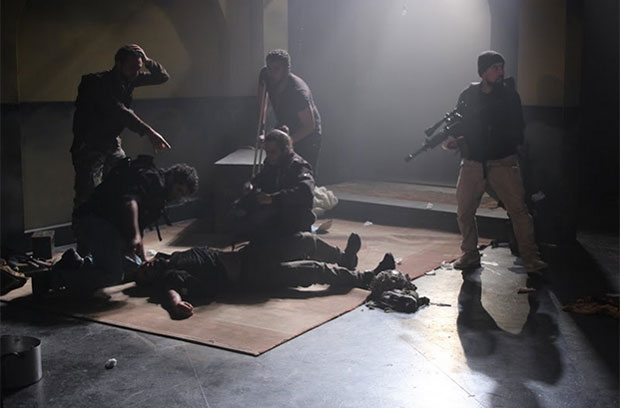
A scene from The Freedom Theatre’s UK tour of The Siege. Image courtesy of The Freedom Theatre
By Julia Farrington
July 2015
Throughout Index on Censorship’s Art and the Law information packs, the lawyers who wrote them stress that the packs offer guidance only and are not a substitute for legal advice. Knowing about the law helps an artist or an organisation identify when there could be a legal issue arising from an artwork. But each artwork is case specific so the advice is to contact a lawyer, if you are in doubt about whether or not you may be in breach of the law.
This short case study of the Palestinian Theatre Company’s first UK tour illustrates how the legality of The Siege was challenged in the media and how the touring venues responded to meet the challenge.
Background
The Freedom Theatre’s first UK tour, 13 May-20 June 2015, took the premiere production of The Siege to 10 UK venues: The Lowry, Manchester; Lakeside Theatre, Colchester; Battersea Arts Centre, London; The Hub, Leeds; St Mary in the Castle, Hastings; The Merlin, Frome; Birmingham Rep, Birmingham; The Cut, Halesworth; The Tron, Glasgow.
The show tells the story of the 2002 siege of the Church of the Nativity in Bethlehem, which was an international news story. The production illustrated the siege from the perspective of the Palestinian fighters who spent 39 days inside the church. The company researched the show by interviewing some of the fighters who are now living in exile in different countries.
In programming The Siege, Battersea Arts Centre (BAC) had anticipated that it and other participating venues might receive some critical feedback connected with the tour. Indeed, the 3 May 2015 Mail on Sunday contained an article with the headline: UK taxpayers fund ‘pro-terrorist’ play – £15,000 of public money given to show based on the words of Hamas killers. The Times of Israel also reported on the production with the strapline – “2002’s hostage standoff at Bethlehem’s Church of the Nativity gets historically questionable treatment in play set to tour England”
The BAC responded to the media reports. This is an excerpt from the briefing document:
- Battersea Arts Centre has agreed to help the Freedom Theatre in their liaison with the press in the UK and to act as a go-between between the company and the other 9 venues on the tour
- We are seeking legal advice from freedom of speech lawyers to reassure ourselves that nothing in the show is in contravention of UK counter-terrorism legislation
- We are looking carefully at the curation of discussions alongside the show which give the opportunity for points of view opposed to the Freedom Theatre point of view to be aired
- We are talking to our Board, funders and others to brief them on the current situation, to share information and to take their advice
- In the light of recent articles we are updating an internal document of Q&As to help us answer any questions likely to be levelled at us or other venues from the press/others. The key principle espoused in these answers is that Battersea Arts Centre (as is true of most if not all of the other venues on the tour we imagine) are providing a platform to this theatre company in the interests of freedom of expression, but BAC is not subscribing to any one particular point of view. We have previously given a platform to a theatre company that presented a piece from an Israeli perspective on the conflict in Israel/Palestine”
This last point, by referring to freedom of expression, cites the venues’ right to freedom of expression as laid out in Article 10 of the European Convention on Human Rights.
Seeking legal advice
In the Q&A mentioned above, one question raised a legal issue: Does this play glorify terrorism? It was also echoed in the media that alleged the play was “pro terrorist”.
Glorification of terrorism is a crime with serious consequences if convicted. While the guidance in our pack goes into some detail of defences for artists and arts organisation, it also stresses that the pack is not a substitute for legal advice. If you are unsure about your responsibilities under the law at any time, you must obtain independent specialist legal advice.
In order to be as confident as possible of the content in The Siege, BAC sought independent legal advice from three different sources: a Trustee contact; an Arts Council contact; Liberty. The Lowry also sought independent legal advice.
This was a sensible belt and braces approach because lawyers’ advice often varies according to interpretations of the law. Lawyers can only advise after all, so it was sensible to go three ways. All three gave advice pro-bono.
BAC created a summary statement from this advice and shared it with the other nine venues. They included a disclaimer that other venues used it at their own risk. It was advice, rather than a watertight guarantee that there couldn’t be other interpretations placed on the script. But it succeeded in its main purpose, which was to reassure the touring venues of their legal position, and enabled them to stand up to hostile press if necessary.
The statement helpfully demonstrates how freedom of expression is qualified by other considerations. In other words, once the lawyers were satisfied that the play didn’t breach legislation, then the right to freedom of expression can be upheld. Here is the summary:
The Siege does not infringe Section 1 of the Terrorism Act 2006, which prohibits the encouragement or glorification of terrorism. The play focuses on the personal struggles of the Palestinian fighters on a human level in attempting to survive the siege. It does not encourage audience members to emulate their conduct. Although the play is likely to be interpreted as sympathetic to the fighters, the sympathy is based on their struggle to survive as people and not on any violent acts or participation in terrorist groups. Violence is at no point encouraged in the play.
The presentation of The Siege, which depicts real-life events expressly from the point of view of the Palestinian fighters, is covered by Article 10 of the Human Rights Act: the right to freedom of expression, including artistic expression. Since The Siege does not commit an offence under the Terrorism Act 2006, and therefore poses no reason for this freedom of expression to be curtailed, prohibiting the play would likely be a breach of Article 10.”
David Jubb, artistic director of Battersea Arts Centre, reflected on the tour:
It was interesting to see the way that language was used in some of the reporting of The Siege. As well as raising the general temperature around the tour and adding to a sense of controversy, the use of legalistic language also introduced questions about the legal status of the show.
We felt that seeking legal advice would be useful to us in a number of ways: to inform our Q&As so that we could confidently answer any question that posed a direct legal challenge to the work; and to settle any anxiety that any staff or Trustees might understandably feel, to demonstrate that the artists and the organisation were on a solid legal footing.
This latter point was especially useful for Trustees who are one-step removed from the day-to-day and for good governance in these matters must be reassured that all risks have been assessed. Perhaps the most productive decision was made by all participating venues together: that we would support each other in the run-up to and during the tour, and work closely with the company at all times.
I know that we at Battersea Arts Centre learnt a lot from the great work of the Lowry and others. Providing each other with a support network ensured that we felt less isolated during stressful moments.”
A short survey was sent around to the venues on the tour asking if there were protests and about their contact with the police. The feedback was that the police were supportive and responsive and acted as useful liaisons between the venue and the protesters. Most venues informed the police of the forthcoming production about one week in advance. One venue approached the police a month in advance, but it seemed to “get lost in the system”. There were protests at many of the venues, but all were peaceful and took place without incident.
Case study: Can We Talk About This?
21 Jul 2015
A scene from Can We Talk About This? (Photo: Matt Nettheim for DV8)
By Julia Farrington
July 2015
As part of our work on art, offence and the law, Julia Farrington, associate arts producer, Index on Censorship, interviewed Eva Pepper, DV8’s executive producer about how she prepared for potential hostility that the show Can We Talk About This? might provoke as it went on tour around the world in 2011-12.
Background
Can We Talk About This?, created by DV8’s Artistic Director Lloyd Newson, deals with freedom of speech, censorship and Islam. The production premiered in August 2011 at Sydney Opera House, followed by an international tour of 15 countries — Sweden, Australia, Hong Kong, France, Italy, Austria, Germany, Greece, Slovenia, Hungry, Spain, Norway, Taiwan and Korea and the UK between August 2011 and June 2012 — and was seen by a 60,000 people.
Extract from publicity of the show:
“From the 1989 book burnings of Salman Rushdie’s The Satanic Verses, to the murder of filmmaker Theo Van Gogh and the controversy of the ‘Muhammad cartoons’ in 2005, DV8’s production examined how these events have reflected and influenced multicultural policies, press freedom and artistic censorship. In the follow up to the critically acclaimed To Be Straight With You, this documentary-style dance-theatre production used real-life interviews and archive footage. Contributors include a number of high profile writers, campaigners and politicians.”
Q&A
Farrington: How did you set about working with the police for this tour?
Pepper: We focused on the UK with policing; I didn’t speak to any police forces in other countries at all, just in the UK cities we toured to: West Yorkshire Playhouse in Leeds; Warwick Arts Centre; Brighton Corn Exchange; The Lowry in Manchester and the National Theatre in London. But we did have a risk assessment and risk protocol that we shared with every venue we went to. We let them know the subject matter and the potential risks: security, safety of the audiences, media storms, safety of the people who were working on the show. They dealt either with their in-house security, or, in the UK, they would often alert the police as well.
Farrington: How did your preparations with police vary around the UK?
Pepper: We started with the Metropolitan Police, about six months before and told them our plans and that we would also contact other police forces. The National Theatre had their own contacts with the police who were already on standby. We still kept the MET events unit informed, but they [National Theatre] dealt with the police themselves. They were much more clued up, they had a head of security whom I briefed; we talked quite a lot. I made sure that he was copied in when anything a bit weird came up on the internet.
Our first venue was Leeds and we approached them about six weeks before the UK premiere. There was a bit of nervousness around Leeds, because of the larger Muslim population in the area. But we were only just beginning our liaison with the police and it took a little time to get a response. In the end we approached senior officers, but they often didn’t engage personally, just put us in touch with the appropriate unit to deal with.
Farrington: They didn’t see it as that important?
Pepper: They liked to be alerted that something might happen and they assured us that they were preparing. The venues also had their own police liaison; sometimes there was a bit of conflict if they had their own. I probably ruffled a few feathers when I went to a more senior officer.
Our starting point to the police was a very carefully worded letter which set out who we were. We didn’t ask permission to put it on we just alerted them that we might need police involvement. I did have some calls and a couple of meetings with officers, where they reiterated what is often said, which is that the police’s mandate is to keep the peace. It was made clear that they have as much of a duty to those people who want to protest or potentially might want to protest, as they have to allow us to exercise our freedom of expression. In Leeds nothing happened but there was a certain amount of nervousness around it.
Farrington: Where – at the venue?
Pepper: I think we were probably a bit nervous, and the police took it seriously enough. We had contact numbers to call. They were very much in the loop of the risk assessment.
Farrington: Was there a police presence on the night?
Pepper: I don’t remember seeing anybody. There was security of the venue of course, but regional venues only go so far with security. With some venues we were a little insistent that they get somebody upstairs and downstairs for example.
Farrington: And search bags, that kind of thing?
Pepper: We insisted people check in bags. The risk protocols weren’t invented for Can We Talk About This? They were really invented for To Be Straight With You [DV8’s previous show] and just tightened up for Can We Talk About This?. The risk protocols are just bullet points to get people thinking through scenarios.
Farrington: In general how would you describe your dealings with the police?
Pepper: I think generally supportive but we came to alert them that we might need them – there wasn’t a crisis. They said ‘thanks for letting us know let us deal with it.’ We would have quite liked to go through their risk assessments, but that didn’t happen. I think we were a little bit on their radar. They offered to send round liaison people to discuss practicalities around the office – stuff we hadn’t really thought about. It was a little bit tricky to get their attention.
The things we asked them to look out for were internet activity, if there was something brewing; sounds terribly paranoid. If there were issues around our London office or tour venues like hate mail, suspicious packages and then protests. So protest was just one thing our board was concerned about.
Farrington: Did you do anything else with the venue to prepare them for a possible hostile response from the media or a member of the public?
Pepper: I asked every venue artistic director or chief executive to prepare a statement. Lloyd would have been the main spokesperson for us if anything went wrong, but for a regional venue it is important that you are ready with a response and they all did that.
Farrington: What kind of thing did they say?
Pepper: We have supported this artist for the last 20 years. Lloyd has always been challenging in one way or another. This time he is challenging about this and we are going with him.
Farrington: Did you have any contact with lawyers?
Pepper: We looked carefully at the contents of the show. We had used interviews with real people and we wanted to be sure that nothing said was libellous or factually incorrect. So we had things looked at. The lawyer would say have you thought about that, did you get a release for this, are you using this from the BBC, do you have permission, have you spoken to this person, does he know you are doing it? And sometimes it is yes and sometimes it was a no.
Farrington: They pointed out some bases you hadn’t covered?
Pepper: Maybe one. We were really good and a bit obsessive. Sometimes we thought we didn’t have to ask because the information was in the public domain anyway, based on an interview that has been online for ten years for example. And the lawyer would or wouldn’t agree with that. It was good for peace of mind. That’s the thing with legal advice it doesn’t mean that nobody comes after you, because the law isn’t black and white.
Farrington: Were there some venues that you took the show to that didn’t think it was necessary to make special preparations?
Pepper: We always made them aware and we let them handle it. There are certain things that we always did. We asked them to consider security, and certainly PR. I was quite concerned that it would be a big PR story and then out of the PR story, as we saw with Exhibit B, comes the police. The protests don’t come from nowhere usually, somebody comes and stirs things up.
Farrington: Did you prepare the venue press departments?
Pepper: Yes we did, and we quite consciously had interviews, preview pieces before hand, where Lloyd could give candid interviews about the show. Almost to take the wind out of people’s sails, to put it out in the open so nobody could say they were surprised.
Farrington: How did you prepare with the performers for potential hostility?
Pepper: We talked through the risk procedure with them. We also got some advice from a security specialist, about being more vigilant than usual, noticing things that are out of the ordinary; if somebody picks a fight in the bar after the show, find a way to alert the others. So yes, the security specialist had a meeting with us here in the office, but also came up to Leeds to talk to the performers.
Farrington: Did it create a difficult atmosphere?
Pepper: It did yes, it got a bit edgy. Next time I would not do it around the UK premiere. It took a long time to set all of this up. To find the right people, to get people to take it seriously, to have meetings scheduled.
Farrington: It took time to find the right kind of security specialist?
Pepper: It also took a little while to get straight what we needed. We probably tried to figure it out for ourselves for a long time. And then got somebody in after all, just as maybe we, or the board got a bit more nervous. When you talk about protests you always worry about the general public, but as an employer there are the people who you send on tour who have to defend the show in the bar afterwards, potentially they are the targets.
Farrington: But they were behind the show?
Pepper: Yes, undoubtedly. But it’s an uncomfortable debate. There were so many voices in that show and you didn’t agree with every voice and it was never really said what really is Lloyd’s or DV8’s line. I would say that all the dancers were fine, but sometimes if somebody corners you in a bar it gets squirmy. No one is comfortable with everything.
Farrington: Can you summarise the response to the show?
Pepper: We had everything from 1 to 5 stars. We had people that loved the dance and hated the politics, who loved the politics and hated the dance. Occasionally somebody liked both. Occasionally somebody hated both. The show was discussed in the dance pages, in the theatre pages and in the comments pages. So in terms of the breadth and depth of the discussion we couldn’t have been more thrilled. Then we had dozens of blogs written about the show. For us Twitter really started with Can We Talk About This? and it was a great instrument for us. Social media was largely positive, though some people were picking a fight on Facebook at some point. It was very, very broad and very widely discussed.
Farrington: And did you interact with Twitter or did you let it roll?
Pepper: Mostly we let it roll. As part of the risk strategy we had a prepared statement from Lloyd which was very similar to the forward in the programme and anybody who had any beef would be redirected to the statement.
Farrington: Did the venues take this performance as an opportunity to have post show discussion and debate?
Pepper: Lloyd prefers preshow talks because he doesn’t like people to tell him what they thought of the shows. Quite often there is a quick Q&A before. In UK, we had one in Brighton [organised by Index] and one at the National. We had fantastic ones in Norway after the Breivik killings. In Norway they weren’t sure it was relevant and then the killings happened and then I got the call to say now we need to talk about it.
But having pre-show talks is certainly how we decided to deal with it. There is a conflict with having a white middle-aged atheist put on a show about Islam. But the majority of voices in the show were Muslim voices of all shades of opinion. It wasn’t fiction. It was based on his research and based on people’s stories – writers, intellectuals, journalists, politicians and who had a personal story to tell
Farrington: How did you prepare work with the board regarding potential controversies?
Pepper: Really the work with the board started with the previous show To Be Straight With You that already dealt with homosexuality and religion and culture; how different communities and religious groups make the life of gay people quite unbearable, internationally and in this country. And even then, we started to say, ‘can we say this? are we allowed to criticise these people like this?’ and out of that grew the ‘yes, I do want to talk about this’ because if we don’t a chill develops. Can We Talk About This? was a history about people who had spoken out about aspects of Islam that they were uncomfortable with or against and what happened to them.
Farrington: What kind of board do you need if you are going to be an organisation that explores taboos like this?
Pepper: We have got a fantastic board; it is incredibly responsible and so is Lloyd. There is a very strong element of trust in Lloyd’s work. They wouldn’t be on the board if they didn’t support him. But, as employers, they are aware of their responsibilities to everyone who works for us. As a company we have to be prepared in the eventuality that there is a PR or security disaster. What we were really trying to do was avoid that eventuality. We will never know. Maybe nothing bad would have happened. I think that Lloyd now wishes more people had seen it, that a film had been made, that it was more accessible to study by those who want to. He thinks that maybe we were a bit too careful. But as an organisation, as DV8, as an employer I think that we did the right thing by looking after people.
Farrington: What advice could you give to prepare the ground for doing work that you know will divide opinion and you know could provoke hostility?
Pepper:
E: If you can anticipate this you already have an advantage, but it’s not always possible to second-guess who might find what offensive. But if you know, I would suggest you ask yourself what buttons you are likely to push; you have to be confident why you are pushing them – usually in order to make an important point. It’s a good idea to articulate this reasoning very well in your head and on paper. Then you have got to be brave and get on with your project. Strong partners are invaluable, so try to get support. But in the end it is about standing up and being able to defend what you do.
Farrington: So you think you could have gone a bit further?
Pepper: I think if you prepare well you could go a bit further. I don’t think there is a law in this country that would stop you from being more offensive than we were. Every artist has to decide for themselves what they want to say and why they are saying it, and if they can justify it they can go for it.