18 Jan 2018 | Art and the Law, Art and the Law Case Studies, Artistic Freedom Case Studies
[vc_row][vc_column][vc_single_image image=”97113″ img_size=”full” add_caption=”yes”][vc_column_text]In September 2016, I received an email from Javaad Alipoor, artistic director of Northern Lines Bradford, who wrote to Index on Censorship to discuss plans for his new play, The Believers Are But Brothers, which explores the radicalisation of young Muslim men and the legal limits of freedom of expression.
Index was particularly keen to work with Alipoor on this issue because two art works dealing with radicalisation, had recently fallen foul of censorship: In September 2015, the artist Mimsy’s satirical installation ISIS threaten Sylvannia had been removed from the Passion for Freedom exhibition at the Mall Gallery on the advice of a police officer who believed that the work was potentially inflammatory. In August the same year, the newly commissioned work Homegrown by Nadia Latif and Omar El-Khairy, which also addressed radicalisation, had been cancelled by the National Youth Theatre for reasons which remain obscure.
In May 2017, a few months before the play premiered at the 2017 Edinburgh Festival, “Effects” (The Enthronement) by MA student James Oberhelm which was to include a video monitor playing two propaganda videos issued by Isis in 2014, was removed from the degree show at Glasgow School of Art.
It seemed possible that Alipoor’s important new play might suffer a similar fate.
However, The Believers Are But Brothers bucked this trend. A work in progress performance was held at the Oval House in London and West Yorkshire Playhouse and it went on to win a Scotsman Fringe First Award, meeting with considerable critical acclaim.
What steps did Alipoor and Luke Emery, producer of the piece, take to ensure the play had the best chance of steering clear of an emerging trend for police and others in authority, to foreclose on artwork that engages with one of the most contentious issues of contemporary UK politics? Here, in their own words, they talk about their process.[/vc_column_text][/vc_column][/vc_row][vc_row][vc_column][vc_custom_heading text=”Javaad Alipoor:” font_container=”tag:h3|text_align:left” use_theme_fonts=”yes”][vc_column_text]
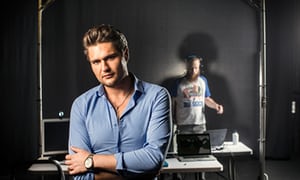
Javaad Alipoor is a writer, theatre maker and director. As well as running a theatre company, he is Resident Associate Director at The Crucible (Sheffield Theatres Trust) and an Associate Director of Theatre in the Mill. He makes work at different scales, building cross-platform digital and hard end community work into everything he does.
His recent work for theatre includes The Believers Are But Brothers (actor/writer/co-director), The Rising of the Moon (writer/director), Bassett (director).
I originally wanted to make a show about ISIS brides. I found out these young women who had gone to the Islamic state and married jihadis had twitter accounts, so I started following and engaging with them. What struck me was the register of their propaganda. One tweeted out this picture of a guy I called Game of Thrones Jihadi. He’s ripped. He’s got this vest on, pecks, scar-bitten, a big gun. The slogan around him was words to the effect – ‘Sisters what kind of a man do you want? Some boring guy who works in an office, or this brother who will die for you’. There was always this offer – fuck this grey, boring England and come and live in a Hollywood film. What the white narrative wanted to do was take agency away from these women who had done these awful thing because they had been tricked into it. But actually an offer is being made. You get some power when you go. At the height of the Islamic State almost all the women’s Sharia policing department in the capital in Raba was made up of European Muslims. You get to push other women around.
When I started looking into it I realised that it’s not my show to make and I ended looking at the similar narrative for men which goes: there is a certain type of young Muslim man for whom the complex identity of being a Muslim in the west is too much. So he withdraws to this black and white world. But all the serious work on this suggests the opposite; journalists like Martin Chulov does this really well. And if you do your own research and engage with these people, the way they use social media to try and get the message out, is very similar. It’s not ‘come to something simple’, but ‘come to something more exciting’. So again, facetiously – there were two lads from Plymouth who were killed in a drone strike in ISIS controlled Syria and the headline in The Star was something like ‘What could make these two lads who worked in a phone shop in Plymouth go off to join the Islamic State?’ The clue’s in the question!
So this became a show about young men – fantasy, religion, technology; and about the way masculinity has changed since the 1970s. I think there is a bunch of us who are alright with the fact that women and sexual minorities have more rights, and a bunch who fucking aren’t on board with that at all. And some of the ways that that works out is culturally inflected, whether you want to talk about the alt right, or ISIS, or Hindutva in India. Obviously the Muslim identity is part of that; but it isn’t saying there is a problem with Muslim young men, there is a problem with young men. Let’s get at that.
In the show [the audience] get sent some screen grabs of an issue of Dabiq, the ISIS’ in-house theoretical journal, which explains the grey zone theory how it is going to collapse and you are going to have to decide. Most of the ISIS propaganda in the show is projected. Whereas you get more Four Chan stuff on WhatsApp to work dramaturgically. We were uncertain about sending the audience a link to Four Chan. As soon as you go on Four Chan there’s kiddy porn and rape videos. There are two inter-related questions – one is – can I send that to someone and the other is should I? Part of the instinct is as a theatre maker – if you are going to walk up to the bell you should ring the bell. But it does then open up that ethical thing. Some of the edits we show are taken from ISIS videos where they glorify murdering people. We never show people being killed in the show, but you are never sure how far we will go and I think that tension works and we were able to be quite playful. The character I’m playing says – well I would have sent you that but I am not sure I can.
The research process is interesting to the extent that it’s that grey area of legality again. I read a blog called Jihadology – you’d worry about the guy who runs it, alongside a bunch of free and pay-for services. Are you a spook? I read a lot of Dabiq magazine – really beautiful, crisp design, intellectually utterly vapid. You can’t imagine anyone serious being persuaded by them. But you can imagine people being inspired by them. Extremist materials that glorifies terrorism, as these things clearly do, come under the Prevention of Terrorism Act. So the question is how does the white person with power look at you. How much is racialised and ‘classed’? Is it ‘stroppy Muslim with these horrible things on their phone’ things’ – guilty until proved innocent or is it actually ‘he’s an artist and intellectual thinking about these? It’s not unrelated to other types of criminalisation. If they pick you up with half an ounce of weed –– if you are mixed race and you come from a shit Northern town, you are a career criminal; if you’re from Oxford that’s a completely different kettle of fish. Because of this show, because the Guardian liked it, it’s bought me a bit more cultural capital.
What was interesting is that no-one was talking about Muslim sensitivity with this show.
The support that Index was giving me and the conversation with Luke was much more about white and police sensitivity. I knew about Homegrown and that soft censorship of a certain sort of white liberal; if there is any talk about police or terrorism, then that liberal space just collapses in on you. This is potentially a more serious thing.
My strategy preparing for the risks I was taking was to two-fold. One was to work with Index, because that felt like it was a conversation that was making people confident. The discussion with the barristers [brokered by Index] really marked a turning point in how we were talking about the problems. We’d got ourselves into this place of worse possible scenario – what’s the defence? Coming out of that meeting we saw it was more likely to be a bit of pressure from the police or the local authority, following a complaint from a panicked, overworked cultural institution, and then that caving in on itself. It was important to have a toolkit for disarming that panic in the first instance. If someone is worried, then let’s talk about it, we can discuss it. Practically, it is about disarming that subtle form of censorship, it’s a proactive way to increase the kinds of things that people of colour are allowed to talk about, and the kinds of conversations we’re allowed into. But more important, it was knowing where the networks of support are, where the allies are, where the people are who do know. If the shit really hits the fan, I am two phone calls away from someone who can help. [/vc_column_text][/vc_column][/vc_row][vc_row][vc_column width=”1/4″][vc_icon icon_fontawesome=”fa fa-quote-left” color=”black” background_style=”rounded” size=”xl” align=”right”][/vc_column][vc_column width=”3/4″][vc_column_text]
My strategy preparing for the risks I was taking was to two-fold. One was to work with Index, because that felt like it was a conversation that was making people confident.
[/vc_column_text][/vc_column][/vc_row][vc_row][vc_column][vc_column_text]The other – comes out of who I am. I grew up in Bradford in the 1990s to early 2000s and the relationship with the police was horrendous, resulting in, among other things, three riots in five years. I am not one of nature’s fans of policing. I know a lot more about the first generation of Prevent because I was working for an organisation which made a decision to take that money, that not a little soul-searching was involved in, taking what was said at the time about autonomy from security services at face value. Post-coloniality has always been part of who I am. I’m quite a big believer of making sure that if there are people of colour in the room, they are the people who decide what the legitimate bounds of discussion lie. So there is a way of talking about the show, being really bold about what the show really is with the people who are co-commissioning, co-producing.
There is a political struggle, macho word struggle, who gets to say what and where. You can’t back away with this going on. There is a whole discourse and politics of risk how the industry theatre works that we need to shift. We take risks all the time, but the way we are willing to do it is mega-racialised. We lionise risks that are about white people and white canon and white artists; but where risks attached to black, colour, Muslim, are too difficult or too hard to take. I overheard some relatively sensible liberal people describing the appointment of Kwame Kwei-Armah [as artistic director of the Young Vic] as a bold move. I thought it’s a good move. Here is an internationally successful guy, running an internationally successful theatre.
More and more I am trying to say this to historically white institutions and the white people in positions of power who run them – just look at yourselves and your policy. Are you willing to overhaul how you racialise risk, to really open up in that way? If so, go back to your office and decide if you are going to start reading text and saying how many people in this play could be of colour, rather than saying this character is Chinese so go off to find a Chinese actor. There is a black and Asian middle class and they do not spend their money with these big historically white institutions, that’s your problem. In London you have a whole scene of BME theatre makers who are little more politically engaged and a little bit more industry savvy and there is a feeling of being a part of an international movement. We don’t have the concentration of those kind of people in the north necessarily.
I sit down with people running our regional producing houses in their big spaces where they feel the financial pressure and go ‘name three writers of colour who feel solid enough for your main house’. Much less than the fingers of one hand are the artistic directors who could name you 3 writers of colour who feel solid enough. August Wilson, Tarrell Alvin McCraney, Lorraine Hansbury these are big Afro-American names, but risk is attached to them in a way that, for instance an [Arthur] Miller, that no-one’s heard of, isn’t. The unknown Miller is a risk these buildings are ready to take.
Racialisation of risk cuts all the way through what we do in the cultural industries determining which risks are you willing to take. What does that mean? That some people get to do the talking and some people don’t. And that is for the me the link with censorship. It is a social model of censorship, more than that liberal historical thing – a social relation that empowers some people and massively disempowers others. It is censorship of omission rather than commission. What we are doing is censoring a whole bunch of voices that don’t fit in to the accepted narrative.
Some of the mainstream stuff gets its hands on it – like Four Lions – The State was a great example of it – but in a world where everything is a bit Homeland that’s the easy story of what trying to disrupt that narrative might mean. The right wing cliché that we really need to have this conversation about the problem Muslim community and radicalisation doesn’t take account of the fact that you have that conversation every fucking day in every fucking newspaper. It’s literally true that Muslims are a minority in this country and people of colour are a minority in a lot of advanced countries, but the flip of that is, because of the way racialisation works, we dominate news. So it is really important to work with artists who are stepping up to that.
[/vc_column_text][/vc_column][/vc_row][vc_row][vc_column][vc_custom_heading text=”Luke Emery:” font_container=”tag:h3|text_align:left” use_theme_fonts=”yes”][vc_column_text]
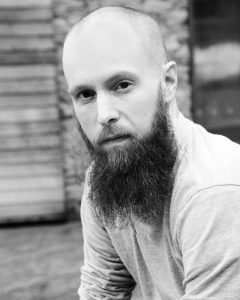
Luke Emery is an independent creative producer. His mission is to help people achieve the seemingly impossible across a spectrum of creative practices. Luke works with artists and organisations who challenge and excite their audiences and who aren’t afraid to ask difficult questions, whilst at the same time providing inviting and welcoming spaces for the public to engage with their work. He works outdoors, indoors and online and across the globe, wherever art can happen.
Our first conversations were purely practical about timing, funding, did we want to go to Edinburgh etc. But when I got to know Javaad and got into the meat of the text of what Javaad was looking at and what he revealed to me about his research activities, that certainly flagged concern. Initially I put up a barrier. It was as much as it was about protecting him as it was everybody who would be working on the project with us. Then, when he told me more about his relationship with the police and the Prevent team there were definitely tensions and previous history with the West Yorkshire Police. So these things were red flags to me. Not only were we in a difficult position because of what he had already done, but who he was as Muslim, left-wing activist and a vocal critic of Prevent and the UK police service.
With regards to his research approach, when we did, later on, talk about about it, I drew on my previous, activist background. I certainly have been spied on by Special Branch, and I would be very surprised if Javaad hasn’t, and in those environments you have to be super, super careful about how you communicate with other people in the movements. If we were talking about anything particularly sensitive we did it in person not by email, and in noisy outdoor places, where it is much harder to record people’s conversations. We used secure, encrypted video calling; we would leave our phones in other rooms so no-one could open up our lines through our phones. Perhaps we were a little bit overzealous, but initially the subject matter made me quite nervous, so I didn’t want to take any chances for him, or myself as the producer.
None of the things that Javaad and I did together were illegal. But whenever we were in the rehearsal room or we were talking about it, or Javaad was working off the reference material with some of the creatives, I would say: we are not asking you to research this, you don’t have to look at these things online, it is up to you, but we are not instructing you. There were a couple of points during the making of the show that I had to shut stuff down. One of them was Javaad wanted to show a video of a beheading. Initially he wanted to show it as an obvious clip and then as a subliminal piece of video. Subliminal footage, as far as I’m aware, is illegal, full stop. So I had to put a stop to that. So we had that conversation regularly about why I was doing that.
[/vc_column_text][/vc_column][/vc_row][vc_row][vc_column width=”1/4″][vc_icon icon_fontawesome=”fa fa-quote-left” color=”black” background_style=”rounded” size=”xl” align=”right”][/vc_column][vc_column width=”3/4″][vc_column_text]
To a certain extent I felt that Index was balancing out some of the caution that we were getting from the legal advice from solicitors.
[/vc_column_text][/vc_column][/vc_row][vc_row][vc_column][vc_column_text]Javaad and Kirsty (co-director) both wanted to send the audience a link to the website FourChan which features heavily in the piece. It is one of the most god awful places on the internet. Child pornography, revenge porn is posted, hate speech, racist cartoons. I vetoed that being included in the show because it would have taken us to the fringes of the Obscene Publications Act (OPA). And they said: but it’s on the internet. But there are lots of things that [are illegal] on the internet. If you put that on a WhatsApp group on someone’s phone in a way that is documented you could definitely be accused of breaching the OPA.
We always knew because of Javaad’s status as a Muslim, someone half Iranian, half English, he is already in a sensitive category for possible persecution, imprisonment or spurious legal charges. That was a big influence across the whole process. It was really interesting as a producer to make those considerations in a way that I don’t think I have ever have done for a white performer. We had to find the balance based on our own work and other work that has been shut down here and elsewhere in the world and make a judgement call. It was a bit of a leap into the unknown.
As a producer, a lot of what I do on a day to day basis is fairly stressful judgement calls. We talked a lot to the solicitors about Javaad’s previous history with the West Yorkshire Police, where there was the potential political and personal axe to grind and whether or to go to them up front about the show and pre-empt any intervention. This would mean us having to go and have a sit down with the police and say everything is fine, it’s just a theatre show. And because we just performing for two nights on a campus in a fairly under the radar fashion, it was much less of a risk just to do the play than reach out to the police and get their antenna up and then potentially to walk into a whole series of conversations that could have got very messy and complicated.
To a certain extent I felt that Index was balancing out some of the caution that we were getting from the [pro-bono] legal advice from solicitors. I think Javaad would say for sure that we were being over-cautious, but from my perspective the lessons I have learnt from people doing more activist focussed work, what some people might say is illegal activity, they can get caught out because they are not careful about how they talk about what they are doing. For me the worse possible scenario would be Javaad being put in prison, or even just getting arrested or hit with a legal bill, those were all factors that we would have no way of dealing with because our funding could never hope to stretch to legal fees. So that was the worse-case scenario. My job as producer working with artists is to be thinking not only about plan a, b, c, but worse-case scenario a, b, c and try and head them off before you get to them.
The inherent challenge for us around making work that is genuinely risk-taking in terms of the subject matter and its research activity is the funding implications of needing a legal team to work with us. Something in the long term that we will certainly be thinking about for work that is going to cause potential controversy, is if we need to partner with somewhere like a national theatre institution that has a legal team on a retainer with the ability to help us answer those questions, rather than it just being me and Javaad. Certainly when you are working independently or in a small company wanting to do risk-taking or controversial work, you should make allowances for legal consultation, but the costs are way beyond the scope of the average ACE grant.
It has been hugely positive experience. Less because of the political things we have learnt – but we have found that there is a huge appetite for this kind of work in the UK, the popularity of the show in Edinburgh speaks to that. And it translates nationally and internationally; it looks like we will tour internationally with this piece. I think the reason why this particular show is so successful is there is dearth of this kind of work being made on UK stages. People have been saying to us all the time about the show that it is all about things that they knew existed, but that they don’t want to have to look at. They know that there is real darkness on the internet and this show allows them to go into that world in ways that they wouldn’t otherwise have access to. Javaad is learning how to research something so he can take people into a world that they only see through a white perspective generally.
Asked how politically engaged work that is controversial and risks censorship could be better supported and so increase the number of producers interested in working in this area, Emery suggests the following:
– we need more face to face workshop opportunities or the opportunity to talk about the work itself. There are a lot of ‘how-to’ guides and video information, but face to face with experts and peers would be more useful.
– Having a lawyer available pro-bono to the process would be invaluable. Talking to the Barristers and the solicitor during the development of ‘The Brothers’ really enriched our understanding. We need advice on how we go through our own process and undertake our research with a good understanding of the legal framework we are operating in.
– A network of producers who want to take risk or who are doing politically charged work, to meet regularly for peer support.[/vc_column_text][three_column_post title=”Case studies” full_width_heading=”true” category_id=”15471″][/vc_column][/vc_row]
12 Jan 2018 | Journalism Toolbox Spanish
[vc_row][vc_column][vc_custom_heading text=”Con ocasión de las elecciones mexicanas del año que viene, Duncan Tucker repasa en este reportaje de investigación para Index las amenazas que han sufrido los periodistas de este país durante la última década.”][vc_row_inner][vc_column_inner][vc_column_text]
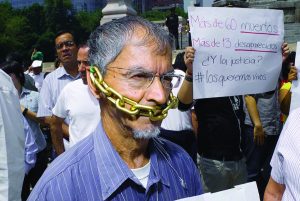
Un periodista mexicano sujeta una cadena alrededor de su boca durante una marcha silenciosa de 2010 en protesta contra los secuestros, asesinatos y violencia que sufren los periodistas del país, John S. and James L. Knight/Flickr
[/vc_column_text][/vc_column_inner][/vc_row_inner][/vc_column][/vc_row][vc_row][vc_column][vc_column_text]
Pablo Pérez, periodista independiente de Ciudad de México, atravesaba en coche el estado sin ley de Guerrero con dos colegas de la capital y cuatro reporteros locales cuando los detuvo una horda de hombres armados. Pérez estaba trabajando en un reportaje sobre los lugareños a los que la violencia del narcotráfico había desplazado de la región.
«Acabábamos de dejar la zona más peligrosa y pasamos por un puesto de control del ejército, lo cual nos hizo creer que estábamos en una zona segura», narra Pérez, poco después del incidente del 13 de mayo. «Pero no: a kilómetro y medio de allí nos detuvo un grupo de 80 a 100 hombres jóvenes; muchos de ellos, armados. Registraron nuestros vehículos y nos robaron todo el equipo, el dinero y los documentos de identificación. Se llevaron uno de nuestros autos y nos dejaron con el otro. Nos dijeron que tenían informadores en el puesto de control y que nos quemarían vivos si se lo contábamos a los soldados», relata.
Pérez y sus compañeros sobrevivieron, conmocionados, pero ilesos. Otros no han tenido tanta suerte. 2016 batió el récord con 11 periodistas asesinados, y 2017 va camino de superar ese cómputo nefasto.
Los medios impresos han comenzado a introducir modestos protocolos de seguridad en una apuesta por proteger a sus empleados, mientras que el gobierno ha anunciado recompensas para quienes faciliten información sobre los responsables de asesinar a periodistas. Pese a todo, lo más probable es que estas medidas no tengan un gran impacto frente a la violencia desenfrenada, la corrupción y la ausencia de justicia imperante en el país. La narcoguerra de México ha dado cifras récord de muertes en 2017 y, con la posibilidad de que las elecciones del año que viene provoquen aún más inestabilidad, no parece que los ataques a periodistas vayan a desaparecer próximamente.
El nivel de peligrosidad varía considerablemente según la región de México a la que nos refiramos. Los ataques a corresponsales extranjeros son raros, probablemente porque acarrearían una presión internacional indeseada. Los mexicanos que trabajan en publicaciones nacionales o metropolitanas también están protegidos de la violencia, hasta cierto punto. Son los reporteros locales los que se enfrentan a los mayores peligros. Según el Comité para la Protección de los Periodistas, el 95% de las víctimas de asesinato como respuesta directa a su trabajo son normalmente reporteros de publicaciones de regiones remotas, donde el crimen y la corrupción rampantes minan el peso de la ley. Los estados sureños de Guerrero, Veracruz y Oaxaca comprenden actualmente los lugares más mortíferos, sumando al menos 31 periodistas asesinados desde 2010 en el territorio.
Pese a los riesgos a los que se expone la profesión, el periodista mexicano medio gana menos de 650 dólares al mes y recibe pocas ventajas.
«No tenemos seguro médico ni de vida. Somos vulnerables a esta violencia», dice Pérez. «Aunque los que vivimos en grandes ciudades estamos mucho más seguros que los que están en lugares como Guerrero».
Cuando visitan zonas en conflicto, reconoce Pérez, no hay mucho que puedan hacer salvo adoptar algún que otro protocolo básico de seguridad. «Todos tratábamos de mantener contacto constante con colegas en la ciudad, cosa que no era nada fácil, ya que a menudo perdíamos la cobertura del teléfono. El protocolo era no separarnos, seguir en contacto con periodistas locales y mantenernos alerta a cualquier señal de peligro».
[/vc_column_text][/vc_column][/vc_row][vc_row][vc_column width=”1/4″][/vc_column][vc_column width=”3/4″][/vc_column][/vc_row][vc_row][vc_column][vc_column_text]
Mientras que los periodistas de la capital pueden refugiarse en lugares relativamente seguros después de trabajar en zonas peligrosas, los reporteros locales están permanentemente expuestos a las consecuencias de su trabajo. Una brutal ilustración de ello fue el asesinato el 15 de mayo de Javier Valdez, uno de los periodistas más afamados y respetados de México, en su Sinaloa natal. Valdez acababa de salir de su oficina de Ríodoce, un semanal de noticias fundado por él mismo, cuando unos hombres armados lo bajaron a la fuerza de su coche y lo obligaron a arrodillarse. Le dispararon 12 veces a quemarropa y acto seguido huyeron con su teléfono y portátil, abandonándolo boca abajo en la carretera. Su característico sombrero panamá estaba manchado de sangre.
Valdez era una autoridad en el campo de los bajos fondos de Sinaloa, la cuna del narcotráfico mexicano. También era el periodista más prominente asesinado en años. En una entrevista con Index unos meses antes de su asesinato, habló de amenazas contra su periódico y lamentaba la falta de protección por parte del gobierno. Afirmaba: «Lo mejor sería llevarme a mi familia y abandonar el país».
En las semanas anteriores a su muerte, Valdez había estado involucrado en las consecuencias de un sangriento forcejeo por el poder dentro del poderoso cártel mexicano de Sinaloa. La violencia en la región se ha disparado desde que el líder Joaquín «El Chapo» Guzmán, de terrible fama, fuera extraditado a EE.UU. el pasado año, dejando a sus hijos Iván y Alfredo luchando por el control del cártel contra Dámaso López, su ex-mano derecha.
Cuando Valdez entrevistó a un intermediario enviado por López en febrero de 2017, los hijos de Guzmán llamaron a la sala de redacción de Ríodoce y les advirtieron acerca de publicar el artículo. Ofrecieron comprar toda la tirada, pero Valdez se mantuvo en sus trece. Cuando el periódico salió en distribución, miembros armados del cártel siguieron a los camiones de reparto por Culiacán y compraron todos los ejemplares. Los colegas de Valdez sospechan que fue su decisión de publicar la entrevista lo que le costó la vida.
Adrián López, editor de Noroeste, otro periódico de Sinaloa, contó a Index que la muerte de Valdez causó «mucha indignación, rabia y miedo» en la comunidad local. Según él, el haber puesto en el blanco a una figura tan conocida envía un mensaje contundente a los periodistas y activistas de México, así como a la sociedad al completo: «Si somos capaces de matar a Javier, somos capaces de matar a cualquiera».
López también ha vivido la interferencia editorial de los cárteles. En 2010, varios hombres armados dispararon 64 veces contra las oficinas de Noroeste, en la ciudad costera de Mazatlán. Los asaltantes habían amenazado a los empleados por teléfono horas antes, instándolos a atribuir los casos recientes de violencia a un cártel rival. «Decidimos no publicar lo que ellos querían porque nuestra postura es que no se puede decir que sí a semejantes exigendias», dijo López. «Si dices que sí una vez, después nunca podrás decir que no».
López sufrió unas circunstancias similares a las de Valdez en 2014, cuando unos hombres armados bloquearon su coche en la capital estatal de Culiacán. Los asaltantes le robaron el coche, la cartera, el teléfono y el portátil y le dispararon en la pierna. Semanas antes, varios reporteros de Noroeste habían recibido amenazas y palizas mientras cubrían el caso de Guzmán y el cártel de Sinaloa.
Según López, su periódico trabaja continuamente para mejorar sus protocolos de seguridad. Noroeste emplea a abogados para denunciar todas las amenazas contra ellos a las autoridades pertinentes, y han contratado a terapeutas que faciliten ayuda psicológica a los trabajadores. «La violencia con la que tratamos día tras día no es normal», explica López. «Necesitamos ayuda profesional para entender y hablar más sobre estas cosas, sobre el trauma que la violencia nos podría ocasionar».
Más de 100 periodistas mexicanos han sido asesinados desde 2000, y hay al menos otros 23 desaparecidos. En estos últimos tres años, cada año ha superado al anterior en cuestión de asesinatos, y este podría ser el más mortífero hasta la fecha, tras los 10 periodistas asesinados en los primeros ocho meses de 2017 (hasta agosto de 23). Las autoridades mexicanas a menudo están implicadas en los ataques. Artículo 19, organismo de control de la libertad de prensa, documentó 426 ataques contra medios de comunicación el pasado año; un incremento del 7% desde 2015. El 53% de esos ataques se atribuyen a ocupantes de cargos públicos o a las fuerzas de seguridad.
Alejandro Hope, analista de seguridad, contó a Index: «Las autoridades federales no han investigado ni procesado estos casos en condiciones. Han creado un entorno de impunidad que ha permitido que prosperen los ataques a la prensa».
En julio de 2010, el gobierno fundó la Fiscalía Especializada para la Atención de Delitos contra la Libertad de Expresión (Feadle) con la intención de investigar los delitos cometidos contra los medios de comunicación. La agencia, que no respondió a la petición de Index de una entrevista, ha facilitado botones de alarma a los periodistas en peligro, les ha instalado cámaras de seguridad en casa y, en casos extremos, les ha asignado guardaespaldas. Pero hacia finales de 2016, de un total de 798 investigaciones, tan solo había logrado condenar tres autores de agresiones a periodistas.
En vista del empeoramiento de la violencia contra la prensa, el presidente Enrique Peña Nieto nombró en mayo de 2017 a un nuevo director que pudiese revigorizar Feadle. Al mes siguiente, su gobierno anunció recompensas de hasta un millón y medio de pesos (83.000 dólares) a cambio de información sobre los responsables de matar a periodistas.
Hope añadió que México ha progresado en cierta medida en lo que respecta a la libertad de prensa en décadas recientes, gracias a la proliferación de webs informativas críticas e independientes y la mejora del acceso público a información sobre el gobierno. Sin embargo, añadió, estas mejorías se han dado sobre todo en lo nacional, mientras que los periodistas de ciertas regiones operan «en un entorno mucho más difícil» a día de hoy.
Las mayores dificultades las entraña el tener que lidiar con las relaciones fluctuantes entre las autoridades locales y las bandas de narcos, dijo Hope. Citó el caso de Miroslava Breach, una respetada reportera asesinada en Chihuahua en abril de 2017 después de que investigara el vínculo entre políticos locales y el crimen organizado.
Hay poco motivo para el optimismo. México se prepara para las elecciones generales del año que viene, pero algunas campañas recientes ya se han visto perjudicadas por acusaciones de fraude electoral e intimidación. Hope advirtió de que las elecciones podrían perturbar la estabilidad de pactos existentes entre criminales y políticos, dificultando aún más el trabajo de los periodistas locales y haciéndolo más peligroso. Vaticina que la actual ola de violencia continuará durante las elecciones «porque va a haber más gente en el terreno informando sobre regiones conflictivas».
Pérez cree que la situación no va a mejorar mientras el país no aborde su cultura de corrupción e impunidad. Puso como ejemplo el caso de Javier Duarte, exgobernador de Veracruz y amigo del presidente, arrestado en Guatemala en abril de 2017 tras seis meses a la fuga. Al menos 17 periodistas locales fueron asesinados y tres más desaparecieron durante los seis años de su mandato; sin embargo, no fue sujeto a escrutinio alguno hasta que se reveló su malversación de aproximadamente tres mil millones de dólares de fondos públicos.
«¿A cuántos de nuestros colegas han asesinado sin que la fiscalía haga nada?» pregunta Pérez. «Lo más importante es apresar a todos nuestros políticos corruptos. Si el robo de fondos públicos no tiene repercusiones, ¿cómo vamos a esperar que aquellos que minan la libertad de expresión se preocupen por las consecuencias?».
[/vc_column_text][/vc_column][/vc_row][vc_row][vc_column][vc_column_text]
UN «WATERGATE» MEXICANO
Una investigación de Citizen Lab y The New York Times este verano ha revelado la presencia del spyware Pegasus, desarrollado por una compañía de ciberarmas israelí llamada NSO Group, en mensajes enviados a periodistas y otros objetivos. Algunos periódicos lo han bautizado como «el Watergate mexicano».
Uno de los objetivos del spyware era Rafael Cabrera, miembro de un equipo de periodistas de investigación dirigidos por Carmen Aristegui. Estos perdieron su empleo en una emisora nacional de radio tras destapar un escándalo de corrupción en el que estaban envueltos el presidente Enrique Peña Nieto y su mujer, Angélica Rivera.
Index habló con él dos años antes acerca de su cobertura del escándalo. En aquel entonces, Cabrera había comenzado a recibir unos misteriosos mensajes de texto en los que lo advertían de que tanto a él como a sus colegas podían demandarlos o encarcelarlos a causa de su investigación.
Los mensajes venían con enlaces que prometían más información, pero Cabrera, sospechando que podían contener algún virus, no los abrió.
Y estaba en lo cierto. Como se descubrió más adelante, abrir el enlace habría permitido a sus remitentes acceder a los datos de Cabrera, ver todo lo que tecleaba en su teléfono y utilizar su cámara y micrófono sin ser detectados.
NSO Group afirma que vende spyware a gobiernos exclusivamente, con la condición de que se use solamente para investigar a criminales y terroristas. Pero la investigación descubrió que Aristegui y su hijo adolescente también habían sido objetivos del spyware, además de otros periodistas, líderes de la oposición, activistas anticorrupción y por la salud pública.
Peña Nieto respondió diciendo que la ley se aplicaría contra aquellos que estaban «haciendo acusaciones falsas contra el gobierno». Más adelante, en una entrevista con The New York Times, un portavoz afirmaba: «El presidente no trató en ningún momento de amenazar ni a The New York Times ni a ninguno de estos grupos. El presidente cometió se explicó mal».
El gobierno, sin embargo, ha admitido el uso de spyware contra bandas criminales, si bien niega haber espiado a civiles. Las autoridades han prometido investigarlo.
Cabrera le contó a Index que tenía poca fe en la credibilidad de una investigación del gobierno de sus propios programas de vigilancia. También expresó su alarma ante la reacción inicial de Peña Nieto. «No está nada bien que el presidente diga que va a tomar acción penal contra ti», afirmaba Cabrera. «Se salió del guion y por un momento nos mostró al dictador que lleva dentro». DT
[/vc_column_text][/vc_column][/vc_row][vc_row][vc_column][vc_column_text]
PLATA O PLOMO
Los periodistas mexicanos se las ven con todo tipo de amenazas y presiones económicas, desde los cárteles del narcotráfico hasta agentes del estado. Article 19 documentó 426 ataques contra la prensa mexicana en 2016, incluyendo 11 asesinatos, 81 agresiones, 79 actos de intimidación, 76 amenazas directas, 58 secuestros y 43 casos de acoso.
Los cárteles se han infiltrado en las salas de prensa de áreas asoladas por el crimen, y normalmente ofrecen a los reporteros a elegir entre «plata o plomo»; es decir, entre un soborno o una bala. Como el aclamado periodista Javier Valdez declaraba para Index meses antes de su asesinato, esto genera miedo y desconfianza dentro de los equipos informativos y fomenta la autocensura.
Muchas publicaciones también temen criticar al estado porque dependen en gran medida de la publicidad contratada por el gobierno. Tanto el gobierno federal como los gobiernos estatales mexicanos se gastaron aproximadamente 1.240 millones de dólares en publicidad en 2015. Las voces críticas afirman que se trata de una forma de «censura blanda», ya que las publicaciones deben vivir con la amenaza implícita de que el gobierno castigará todo tipo de cobertura desfavorable retirando su financiación. DT
[/vc_column_text][/vc_column][/vc_row][vc_row][vc_column][vc_column_text]
CIFRAS CRIMINALES
-
Al menos 107 periodistas han sido asesinados en México desde 2000. Del total, 99 son hombres y 8, mujeres.
-
Han desaparecido 23 periodistas en México desde mayo de 2003 hasta mayo de 2017.
-
En 2016, el 53% de los ataques contra la prensa tuvo a cargos públicos involucrados. Entre 2010 y 2016, las autoridades investigaron 798 ataques a periodistas. Solo los autores de tres de esos ataques han recibido condena.
-
Son más de 200.000 las personas asesinadas o desaparecidas desde que comenzó la guerra antinarco en diciembre de 2006. DT
[/vc_column_text][/vc_column][/vc_row][vc_row][vc_column][vc_column_text]
Investigación realizada para Index por Duncan Tucker, periodista afincado en Guadalajara, México.
Este artículo fue publicado en la revista Index on Censorship en otoño de 2017.
Traducción de Arrate Hidalgo.
[/vc_column_text][/vc_column][/vc_row][vc_row content_placement=”top”][vc_column width=”1/3″][vc_custom_heading text=”Free to air” font_container=”tag:p|font_size:24|text_align:left” link=”url:https%3A%2F%2Fwww.indexoncensorship.org%2F2017%2F12%2Fwhat-price-protest%2F|||”][vc_column_text]Through a range of in-depth reporting, interviews and illustrations, the autumn 2017 issue of Index on Censorship magazine explores how radio has been reborn and is innovating ways to deliver news in war zones, developing countries and online
With: Ismail Einashe, Peter Bazalgette, Wana Udobang[/vc_column_text][/vc_column][vc_column width=”1/3″][vc_single_image image=”95458″ img_size=”medium” alignment=”center” onclick=”custom_link” link=”https://www.indexoncensorship.org/2017/12/what-price-protest/”][/vc_column][vc_column width=”1/3″ css=”.vc_custom_1481888488328{padding-bottom: 50px !important;}”][vc_custom_heading text=”Subscribe” font_container=”tag:p|font_size:24|text_align:left” link=”url:https%3A%2F%2Fwww.indexoncensorship.org%2Fsubscribe%2F|||”][vc_column_text]In print, online. In your mailbox, on your iPad.
Subscription options from £18 or just £1.49 in the App Store for a digital issue.
Every subscriber helps support Index on Censorship’s projects around the world.
 SUBSCRIBE NOW[/vc_column_text][/vc_column][/vc_row]
12 Jan 2018 | Journalism Toolbox Spanish
[vc_row][vc_column][vc_custom_heading text=”El periodista yemení Abdulaziz Muhamad al Sabri detalla los peligros de ser reportero en su país. Laura Silvia Battaglia lo entrevista.”][vc_row_inner][vc_column_inner][vc_column_text]
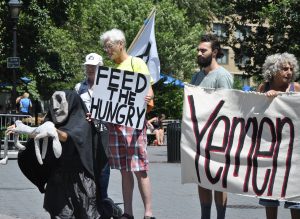
Miembros del Movimiento del Trabajador Católico participan en una vigilia, por el pueblo yemení en el parque de Union Square, Nueva York, Felton Davis/Flickr
[/vc_column_text][/vc_column_inner][/vc_row_inner][/vc_column][/vc_row][vc_row][vc_column][vc_column_text]
Abdulaziz Muhamad al Sabri sonríe, pese a todo. Pero no puede evitar deprimirse cuando ve las fotos tomadas hace unos meses, en las que sale sujetando un teleobjetivo o preparando una cámara de vídeo sobre un trípode: «Los hutíes me las confiscaron. Me confiscaron todo el equipo. Aun si hubiera querido seguir trabajando, no habría podido».
Al Sabri es un periodista, cámara y cineasta yemení, oriundo de Taiz, la ciudad que fue durante un breve periodo el frente más sangriento de la guerra civil del país. Ha trabajado en las zonas de conflicto más peligrosas, proveyendo de material original a medios internacionales como Reuters y Sky News. «Siempre me ha gustado trabajar en el terreno», dice, «y la verdad es que estaba haciendo un muy buen trabajo desde el inicio de la revolución de 2011».
Pero, desde estallido de la guerra, el entorno de trabajo de los periodistas yemeníes ha ido deteriorándose progresivamente. En el caso más reciente, el veterano periodista Yahia Abdulrakib al Yubaihi fue juzgado a puerta cerrada y condenado a muerte después de que publicase artículos en los que criticaba a los rebeldes hutíes de Yemen. Muchos periodistas han desaparecido o han sido detenidos en los últimos años, además de los medios que han cerrado.
«La industria mediática y los que trabajan en Yemen se enfrentan a una máquina de guerra que nos cierra todas las puertas en las narices y controla todas las agencias de noticias locales e internacionales. Los ataques y agresiones que sufrimos han afectado al 80% de la gente empleada en estas profesiones, sin contar a los periodistas que ya han sido asesinados, y se han dado unos 160 casos de agresiones, ataques y secuestros. Muchos periodistas han tenido que abandonar su país para seguir con vida. Como mi queridísimo amigo Hamdan al Bukari, que trabajaba para Al Jazeera en Taiz».
Al Sabri quería contar su historia a Index on Censorship con pelos y señales «porque no hay nada más que podamos hacer, excepto denunciar lo que está pasando, aunque nadie nos escuche». Habla de la intimidación sistemática por parte de las milicias hutíes de su zona contra los periodistas en general, y contra los que trabajan con medios internacionales en particular: «En Taiz han llegado a utilizarnos como escudos humanos. A muchos de mis colegas se los han llevado a depósitos de armas, que están bajo ataque de la coalición [liderada por saudíes y aliada con el gobierno]. Así, cuando alcanzan el objetivo militar, pueden acusar a la coalición de haber matado a periodistas».
Este tipo de intimidación es una de las razones que dificultan enormemente la investigación y transmisión de información sobre el conflicto. «En Taiz y en el norte, aparte de aquellos que trabajan para Masira, el canal de televisión de los hutíes, y los canales pro-Irán, Al Manar y Al Alam, solo son unos pocos los periodistas que pueden trabajar desde aquí. Y esos pocos, locales e internacionales, están jugándose el cuello», afirma Al Sabri.
«Tienes suerte si sales de esta. Si es que no, serás víctima de una bala de las milicias, de agresiones, secuestros. Los extranjeros no pueden conseguir visados por las limitaciones impuestas por el gobierno de [Abdrabuh Mansur] Hadi y la coalición. La excusa oficial es que el gobierno «teme» por sus vidas, porque si los secuestrasen, los encarcelasen o muriesen en un bombardeo de la coalición, sería responsabilidad del gobierno yemení.
[/vc_column_text][/vc_column][/vc_row][vc_row][vc_column width=”1/4″][/vc_column][vc_column width=”3/4″][/vc_column][/vc_row][vc_row][vc_column][vc_column_text]
Al Sabri ha vivido en sus carnes la violencia contra los periodistas de Yemen. En diciembre de 2015, un francotirador lo hirió en un hombro. Apuntaba a su cabeza. En otra ocasión, lo secuestraron, lo retuvieron en una ubicación secreta durante 15 días con los ojos vendados y allí lo sometieron a amenazas de muerte y torturas.
«Me secuestraron una segunda vez, junto a mi colega Hamdan al Bukari, reportero de Al Jazeera, y nuestro conductor, el 18 de enero de 2016. Acabábamos de salir de casa de un amigo para volver adonde vivíamos, cuando un coche nos cerró el paso. Un grupo de hombres enmascarados y armados nos obligó a ir con ellos, nos cubrieron la cabeza y nos llevaron a un lugar desconocido; probablemente algún sitio cerca del frente, porque podíamos oír claramente el sonido de los bombardeos. A las tres de la mañana del día siguiente, los secuestradores nos separaron. Seguíamos con las capuchas puestas. En cuanto a mí, no me permitieron quitarme la venda de los ojos, y, si lo hubiera hecho, dijeron que me habrían matado. Me trajeron un poco de comida y me la comí con los ojos cerrados. Les pregunté quiénes eran y qué querían; me respondieron que eran milicianos hutíes, y que ya me enteraría de lo que querían de mí cuando fuese el momento.
«Al día siguiente me llevaron a otra habitación para interrogarme, y así fue durante los 15 días siguientes. Quienquiera que me estuviese interrogando me acusaba de traición, de ser un mercenario, de aceptar dinero de los saudíes, de los emiratíes, de los estadounidenses y de la Hermandad Musulmana, señalándome a mí y a los míos como el enemigo público número uno de Yemen. Al final del interrogatorio, me volvían a meter en aquel cuarto y decían que me iban a ejecutar. Y así siguieron: salían y volvían a entrar y decían que me iban a ejecutar. Todos los días. Viví un infierno; creía que iba a morir en todo momento.»
A día de hoy, Al Sabri aún conserva las cicatrices de esos horribles 15 días: «Después de que me liberaran, estaba tan devastado psicológicamente que dejé de trabajar y abandoné el periodismo. Aunque quisiera intentarlo de nuevo, ¿cómo iba a poder trabajar, si han destruido todo mi equipo?».
Al Sabri no tiene mucha fe en que la comunidad internacional vaya a cambiar las cosas. «Los periodistas de Yemen estamos atrapados entre dos sistemas de feroz propaganda militar: el del gobierno y el de los rebeldes hutíes. Ambas facciones persiguen a los periodistas que trabajan para el lado contrario, además de que no reconocen la posibilidad de que exista el periodismo independiente. Aquí no hay protección de ningún tipo, ni para los periodistas ni para el periodismo. Aparte de los representantes de la ONU de siempre que «expresan su preocupación», no hay una verdadera intervención extranjera.
»Creo que la comunidad internacional debería obligar a ambas facciones a permitir a los periodistas la libertad de hablar. Deberían luchar por la activación total en Yemen del Artículo 19 de la Ley Yemení [de 1990], que garantiza la libertad de expresión y se opone a la censura de la prensa. De lo contrario, la situación se mantendrá igual, y si vuelves a oír de nosotros, será como personas que han muerto».
[/vc_column_text][/vc_column][/vc_row][vc_row][vc_column][vc_column_text]
La premiada periodista Laura Silvia Battaglia informa desde Yemen regularmente
Este artículo fue publicado en la revista Index on Censorship en verano de 2017
Traducción de Arrate Hidalgo.
Traducción del árabe de Sue Copeland
[/vc_column_text][/vc_column][/vc_row][vc_row content_placement=”top”][vc_column width=”1/3″][vc_custom_heading text=”100 years on” font_container=”tag:p|font_size:24|text_align:left” link=”url:https%3A%2F%2Fwww.indexoncensorship.org%2F2017%2F12%2Fwhat-price-protest%2F|||”][vc_column_text]Through a range of in-depth reporting, interviews and illustrations, the summer 2017 issue of Index on Censorship magazine explores how the consequences of the 1917 Russian Revolution still affect freedoms today, in Russia and around the world.
With: Andrei Arkhangelsky, BG Muhn, Nina Khrushcheva[/vc_column_text][/vc_column][vc_column width=”1/3″][vc_single_image image=”91220″ img_size=”medium” alignment=”center” onclick=”custom_link” link=”https://www.indexoncensorship.org/2017/12/what-price-protest/”][/vc_column][vc_column width=”1/3″ css=”.vc_custom_1481888488328{padding-bottom: 50px !important;}”][vc_custom_heading text=”Subscribe” font_container=”tag:p|font_size:24|text_align:left” link=”url:https%3A%2F%2Fwww.indexoncensorship.org%2Fsubscribe%2F|||”][vc_column_text]In print, online. In your mailbox, on your iPad.
Subscription options from £18 or just £1.49 in the App Store for a digital issue.
Every subscriber helps support Index on Censorship’s projects around the world.
SUBSCRIBE NOW[/vc_column_text][/vc_column][/vc_row]
9 Jan 2018 | Journalism Toolbox Spanish
[vc_row][vc_column][vc_custom_heading text=”Los guerreros islamistas de Al Shabab controlan una quinta parte de Somalia y tienen su propia emisora de radio. Ismail Einashe habla con los periodistas que arriesgan su vida retransmitiendo noticias sobre las actividades del grupo terrorista”][vc_row_inner][vc_column_inner][vc_column_text]
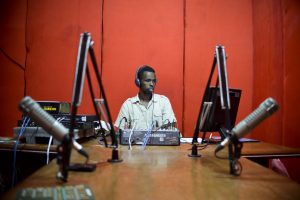
Un periodista retransmite desde Radio Shabelle, una de las populares emisoras de Mogadiscio (Somalia), que corren peligro por pronunciarse contra la organización terrorista Al Shabab, Amisom Public Information/Flickr
[/vc_column_text][/vc_column_inner][/vc_row_inner][/vc_column][/vc_row][vc_row][vc_column][vc_column_text]
Cada mañana, antes de ir a trabajar en Radio Kulmiye, en el centro de Mogadiscio, Maruan Mayu Huseín tiene que comprobar que no haya bombas en su coche. «Miro debajo de las ruedas, pero normalmente ponen las bombas debajo del asiento», dice. «Si me paro en algún lado de la ciudad, entonces tengo que volver a mirar, porque a veces me sigue gente».
Los periodistas somalíes como Huseín viven bajo la amenaza constante del poderoso grupo islamista Al Shabab, estrechamente relacionado con Al Qaeda. Para el grupo, colocar una bomba debajo del asiento de un coche y detonarla a distancia es marca de la casa a la hora de matar a periodistas somalíes. Huseín lo confirma: «Conozco gente muerta y herida por culpa de las bombas que les habían colocado en el coche».
Periodistas como Hindia Hayi Mohamed, madre de cinco hijos, han sido víctimas de esta táctica de Al Shabab. Trabajaba para Radio Mogadiscio y la Televisión Nacional Somalí, dos medios estatales de noticias, cuando un coche bomba la mató a las puertas de la embajada turca en Mogadiscio el 3 de diciembre de 2015. Los integrantes de Al Shabab que la asesinaron habían colocado una bomba bajo el asiento de su coche. Era la viuda de Liban Ali Nur, director de los informativos de la Televisión Nacional Somalí y fallecido en la explosión de un atentado suicida de Al Shabab en septiembre de 2012, junto a otros tres periodistas, en una popular cafetería de la capital.
Los periodistas de radio como Huseín son vulnerables cuando salen de su casa, pues es fácil acribillarlos por la calle. Huseín es reportero para una popular emisora local que retransmite noticias a las partes sur y central de Somalia. Como cuenta a Index: «Si Al Shabab os ve a vosotros, no os dejan pasar. Si me ven a mí, me matan. Trabajar como periodista radiofónico en Somalia es muy duro. El problema es hoy puede haber un ataque terrorista aquí y, mañana, en cualquier otro lado».
La radio sigue siendo el principal medio de la gente para informarse y enterarse de las noticias en Somalia. Hay pocos periódicos impresos y un bajo índice de alfabetización. El somalí solo pasó a ser una lengua escrita en 1972 y, a causa de la guerra civil, no se publican muchos libros en el país. Internet es popular, pero se trata de un fenómeno en su mayoría urbano, especialmente entre los jóvenes y los que han vuelto de la diáspora. Los informativos de televisión existen, pero el acceso a televisores es limitado en uno de los países más pobres del mundo. Por todo ello, la radio sigue siendo crucial. Laura Hammond, experta en Somalia de la Facultad de Estudios Orientales y Africanos de la Universidad de Londres, explica: «La somalí es una cultura oral, y la transmisión de información a través de la radio es una extensión de la antigua tradición de la oración y el intercambio de información por medio de la poesía y la palabra hablada».
Las fuentes radiofónicas que gozan de mayor prestigio son el canal somalí de la BBC, que hace poco celebró su sexagésimo aniversario, y el servicio somalí de Voice of America. Pero al comunicar al público las noticias sobre lo que está pasando en su país, los periodistas somalíes se exponen a una violencia e impunidad de las más terribles en el continente africano. En el Índice de Libertad de Prensa de 2017 realizado por Reporteros sin Fronteras, Somalia ocupa el puesto 167 de 180.
[/vc_column_text][/vc_column][/vc_row][vc_row][vc_column width=”1/4″][/vc_column][vc_column width=”3/4″][/vc_column][/vc_row][vc_row][vc_column][vc_column_text]
Mohamed Ibrahim Moalimuu, el secretario general del Sindicato Nacional de Periodistas Somalíes, nos lo cuenta: «Somalia sigue siendo uno de los peores países para operar como periodista, una profesión que a menudo está en el punto de mira. Son víctimas de intimidaciones constantes, arrestos arbitrarios, tortura y, en ocasiones, asesinato».
Algunos periodistas somalíes se han visto forzados a esconderse por las amenazas continuadas que reciben de Al Shabab. Un periodista al que entrevistó Index, y que quiso permanecer anónimo por razones de seguridad, cuenta: «Mi vida está patas arriba desde que Al Shabab empezó a darme caza […] Al Shabab me llama desde números desconocidos y me dice: “Tu vida está peligro.”»
El periodista es un conocido reportero de radio que cubre noticias sobre el grupo armado. Añade: «He recibido amenazas de Al Shabab. Escucharon mis reportajes sobre sus ataques terroristas y desde entonces me han amenazado de muerte». Lleva dos años ocultándose de ellos, temiendo por su vida.
En febrero de 2017, unos operativos de Al Shabab visitaron la casa de su madre. Relata: «Fueron a casa de mi madre. Le preguntaron: “¿Dónde está?” Ella les dijo que no estaba allí y le dijeron a mi madre: “La próxima vez que veas a tu hijo, estará muerto.” Le tiembla la voz al contarlo. Hoy, exhausto de pasar los días oculto de las balas de Al Shabab, añade: «Quiero recuperar mi vida, pero soy un periodista joven que vive bajo amenaza […] No puedo dejar de ser periodista. No dejaré de usar mi voz».
Según Angela Quintal, coordinadora de programación para África en el Comité para la Protección de los Periodistas, 62 de ellos han perdido la vida en Somalia desde 1992. Más de la mitad de ellos (43 en total) fueron asesinados, con Al Shabab bajo sospecha de ser responsable de la mayoría de las muertes. Pese a que los asesinatos de periodistas han disminuido desde 2012, en 2016 mataron a tres.
Los antecedentes son que, tras el colapso del estado somalí y la guerra civil de 1991, el país se sumió en una orgía de violencia y terrorismo, a lo que se añade una sequía reciente de efectos devastadores. En el vocabulario de la política internacional, Somalia era conocida como «el estado más fallido» del mundo, pero en los últimos años ha dado paso a la expresión «estado frágil». De entre todas las amenazas a las que ha hecho frente Somalia, Al Shabab, posiblemente la organización terrorista más potente de África, se lleva la palma.
En los últimos años, Al Shabab ha perdido algunos territorios en partes del sur de Somalia, como el puerto estratégico de Kismayo, así como mucho territorio en Mogadiscio. Pero aún controla amplias franjas de territorio en el país.
Al Shabab no solo ataca a periodistas radiofónicos somalíes, sino que tiene su propia emisora, llamada Al Ándalus, desde la que retransmiten propaganda yihadista con música devocional islámica, así como estridentes informativos sobre los “kafirs”, o infieles, y cuántos de ellos han matado. La emisora cuenta con un amplio alcance en las partes meridionales de Somalia y en las áreas bajo su control, y está disponible en internet.
Moalimuu dice que Al Ándalus aún funciona y emite en áreas controladas por Al Shabab.
Mary Harper, editora de BBC África e inmersa en la escritura de un libro sobre Al Shabab, afirma que las actividades radiofónicas de la organización terrorista les lleva «siglos de ventaja a Boko Haram».
En lo que respecta a sus ataques a civiles, al gobierno o a las fuerzas de la Unión Africana, según Harper, ofrece una visión bastante fidedigna, pero tiende a exagerar el número de muertos que provoca. Utilizan Al Ándalus como instrumento para suprimir la libertad de expresión y extender su propaganda radical islamista.
Moalimuu dice: «Al Shabab prohíbe la música en todas las áreas que aún controlan. Vigilan los teléfonos móviles de los jóvenes regularmente. Los smartphones y cualquier otro tipo de móvil con cámara están prohibidos en sus territorios. Esta norma sigue aún vigente en todas las áreas controladas por Al Shabab. La gente está muy frustrada, pero no les queda otra opción que obedecer si quieren seguir con vida».
Nur Hasán, un periodista y productor audiovisual retirado de Mogadiscio, explica: « Al Shabab prohíbe la música terminantemente. Si te pillan escuchando música en las zonas bajo su control, el castigo son 40 latigazos y la humillación pública».
Harper apunta que no todas las amenazas provienen de Al Shabab: «Los periodistas de Somalia están amenazados por todas las esquinas».
Pero Huseín sigue preocupado por la amenaza del grupo terrorista. Dice que algunos periodistas de radio están tan preocupados que pasan algunas noches en el estudio en lugar de dormir en sus camas. Él, por su parte, lo tiene claro: «No me preocupará la muerte hasta que venga a por mí». Hasta entonces, dice: «Seguiré mirando que no haya bombas cuando salgo de casa, pero mi destino está en manos de Dios».
[/vc_column_text][/vc_column][/vc_row][vc_row][vc_column][vc_column_text]
Ismail Einashe escribe reportajes regularmente para la revista Index on Censorship desde el Cuerno de África. Nació en Somalilandia y es miembro académico del Dart Center de la Universidad de Columbia con una beca Ochberg.
Este artículo fue publicado en la revista Index on Censorship en otoño de 2017.
Traducción de Arrate Hidalgo.
[/vc_column_text][/vc_column][/vc_row][vc_row content_placement=”top”][vc_column width=”1/3″][vc_custom_heading text=”Free to Air” font_container=”tag:p|font_size:24|text_align:left” link=”url:https%3A%2F%2Fwww.indexoncensorship.org%2F2017%2F12%2Fwhat-price-protest%2F|||”][vc_column_text]Through a range of in-depth reporting, interviews and illustrations, the autumn 2017 issue of Index on Censorship magazine explores how radio has been reborn and is innovating ways to deliver news in war zones, developing countries and online
With: Ismail Einashe, Peter Bazalgette, Wana Udobang[/vc_column_text][/vc_column][vc_column width=”1/3″][vc_single_image image=”95458″ img_size=”medium” alignment=”center” onclick=”custom_link” link=”https://www.indexoncensorship.org/2017/12/what-price-protest/”][/vc_column][vc_column width=”1/3″ css=”.vc_custom_1481888488328{padding-bottom: 50px !important;}”][vc_custom_heading text=”Subscribe” font_container=”tag:p|font_size:24|text_align:left” link=”url:https%3A%2F%2Fwww.indexoncensorship.org%2Fsubscribe%2F|||”][vc_column_text]In print, online. In your mailbox, on your iPad.
Subscription options from £18 or just £1.49 in the App Store for a digital issue.
Every subscriber helps support Index on Censorship’s projects around the world.
SUBSCRIBE NOW[/vc_column_text][/vc_column][/vc_row]
