8 Mar 2012 | Sub-Saharan Africa
Inspired by Tupac, Public Enemy and others in the USA around 2004, a new tsunami of music crashed over hit Tanzania. Bongo Flavah: raw, real, Swahili. It spoke to people, particularly the disenfranchised 3 million who live in slums and suburbs like Temeke and Mobibo of Dar Es Salaam. Kicking out the popular Congolese Rumba, Sebene (sung mostly in Lingala, a Bantu language spoken in some areas of Africa); Bongo Flavah was R & B mixed with pop, mixed with Puff Daddy, with a dollop of gangsta speak. Young men (and a few young women) performed live. Artists such as Lady Jay Dee, Professor J, Ray C, Fid Q and Juma Nature, shook, shimmied and got down in small local beer halls. The whole business was expressive, chaotic and random, like the streets it came from. Songs were about debt, jealousy, lunacy, power failures, teen pregnancy, corruption, albino body part trafficking. Dancing was lewd, grinding, obvious, as well as highly original, eclectic and thrilling. Critics called them “tsotsi”, hooligans, vandals.
Bongo Flavah. Bongo is the Kiswahili slang word for “brain” street smart, savvy, nous — what you need to hustle a living in the sprawling capital Dar es Salaam. Bongo music is edgy, swaggering, improvised to a CD backing track, spontaneous, aspirational and above all Swahili. It is Tanzania’s wild track, it is everywhere: daladalas (cramped rickety public minivans) shops, homes, cafes and bars.
Then came Mchiriku, it’s even more rowdy sister. Its roots are in Uswahilini, the less prestigious parts of Dar-es salaam, where residents are generally considered loud and uncultured, the music cacophonous. Read poor and voiceless. When it’s recorded, it gets massive airplay, and thousands of listeners.
But there’s a less savoury side to this very male, undoubtedly anarchic and truly democratic medium: blatant misogyny, and sexual favours for access. “It’s a kind of open secret in the music business” says Ayesha*, 19, a trainee journalist at a private radio station on Zanzibar “you have to sleep with radio producers, or station owners if you want to get airplay, basically sexual favours for airtime.”
Part of the reason for this is that women — dressed in tiny tops and lycra leggings — in Bongo Flavah and Mchiriku make much of their pelvic flexibility and suppleness: there’s not much doubt what they’re showing off. The versions of female sexuality are fairly standard rap stuff.
Maya Van Lekow, an established Kenyan blues and jazz singer has been in the music business for seven years: “Yes, absolutely, the music business for women is dreadful. It’s not even challenged, it’s blatant: of course you sleep with the whomever, for a record deal, for radio play, to get an interview. It’s unquestioned. A younger singer approached me recently, she said for two years she’d not been able to get airplay, at local stations for over two years, and was forced to sleep with older station managers. She was tearful and desperate.”
Male rapper and record promoter Mzungu K’Chaa concurs: “Bongo flavah started as hip hop; it’s definitely for men only, the music industry generally is very discriminatory to women, and yes, women do have to sleep with the music producers and radio station owners to get airplay. It does need to change.”
Khadija Othman, a sexual health worker on Zanzibar works with young people. “There are two issues here, the first is that women are kept in complete ignorance about their bodies, and their rights. Even to mention a condom a woman will get beaten. The second is that men here think it’s normal for young DJ’s and radio producers to expect sex. And for women to provide sex if the man wants it. Sex is extremely secretive in our society, and until we open up, confront it, we’re going to see more problems. We really really need to talk about these things.”
Her views are shared by young journalists, Salouma* and Carla* who work in the capital, Dar. For women music journalists, or aspirant journalists, the music industry is considered a den of vice. “Our parents literally think we are whores because we work in journalism. Things are very backward here. We don’t tell them about the music bit, it would literally terrify them, and yes, we do see young women coming in off the street, with their tapes, and maybe they get a ‘boyfriend’ for a night. We just try and ignore it. We’re not senior here, we’re female, there’s nothing we can do. It’s shameful really.”
Things are slowly changing. Music creation and production was once dominated by men in Tanzania, Kenya and Zanzibar, and women rarely got actively promoted or showcased. Research is probing into the hidden, and unspoken culture of teen pregnancy and gender based violence against women and girls in Tanzania and Zanzibar. The idea that “you need to sleep with your boss” to get anywhere if you are female is being questioned. Recent figures from local NGO Tanzania Media Women’s Association (TAMWA) and United Nations Development Programme (UNDP) indicates that more that 39 per cent of women aged 15-49 have experienced physical violence in the last 12 months, One in five women have ever experienced sexual violence, and 10 per cent of women had their first sexual intercourse forced against their will.
The last year has seen a marked change in discussion and debate. These issues are finally in the public sphere. Yusuf Mahmoud, Festival Director for the Busara Festival, and President of the Indian Oceans Festival Association: “When we started in 2004, it was difficult to programme women musicians as there were so few in the region. However, looking back, it’s the women who have provided many of the highlights. We have showcased some of the best from the continent including Thandiswa (South Africa), Chiwoniso (Zimbabwe), Nyota Ndogo and Muthoni the Drummer Queen(Kenya) and Tausi Taarab (Zanzibar) — the first all-women orchestra ever in East Africa made their debut at Sauti za Busara.”
Maya Von Lekow says: “I do see myself first as a musician, an artist, but I can also be an advocate, whether for women’s rights generally: in society, in refugee camps, and in the music industry, the two are not incompatible. I can sing, and I also can talk! We’re moving on, talking about our pasts, things are changing, we’re speaking freely, it’s inspiring really!”
5 Mar 2012 | Index Index, Middle East and North Africa, minipost
Two British journalists have been accused of spying in Libya by a militia group who arrested them last month. Gareth Montgomery-Johnson, 36, and Nicholas Davies, 37, from Iran’s state-owned Press TV were arrested by the militia group in Tripoli on 23 February. In a late-night press conference, Dr Suleiman Fortia, a Misratan member of Libya’s ruling National Transitional Council showed what he said was suspicious material found on the two men, including a field dressing, photographs and a photocopy of an Iranian residence permit. Fortia added that the group had governmental authority to hold the men because they represented the “February 17 Revolution”.
28 Feb 2012 | Awards, Azerbaijan News
Recognising investigative journalism of dogged determination across a range of media including print, online, radio and television, taking into consideration impact, originality and revelation
Han Han, blogger, China
 The author of China’s most widely read blog, 29-year-old Han Han has been called “the world’s most popular blogger”. He is also famed for being a cultural critic, race-car driver, actor and novelist. But despite his rock star status he has long been considered a thorn in the side of the Chinese government.
Though he has avoided ideological allegiances, Han Han recently sparked controversy with his essays, “On Democracy”, “On Revolution” and “Wanting Freedom”, which questioned where democracy really equals freedom and whether China will ever be capable of genuine reform.
Han Han has talked about suffering censorship: “Each time I do finish writing something and then can’t see it [after I post it, because it has been censored], I get despondent. And there are just so many government departments [to get past]. Even if the propaganda department and the General Administration of Press and Publications are fine with something, any department issued can wipe your essay away with a simple phone call.”
Lucía Escobar, journalist, Guatemala
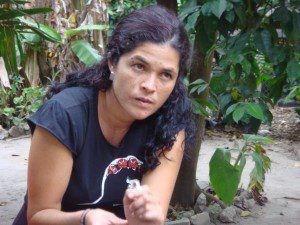 Lucía Escobar’s story highlights the state of press freedom in Guatemala, where journalists are regularly intimidated by paramilitary groups. Escobar is a freelance columnist for El Periódico, a publication based in Guatemala City, and also operates an online radio station, Radio Ati.
On 19 October 2011, Escobar published a column alleging that a local mayor had turned a citizens’ group into a death squad that was socially cleansing “undesirables”, such as beggars and homeless people, and committed crimes including lynchings, torture, beatings and a kidnapping. In her column, Escobar blamed local government figures for being indifferent to the group’s activities.
Subsequent death threats forced Escobar to flee her home with her family and she has said she will remain in exile until the situation improves. No action has been taken by Guatemalan authorities, pointing to a worrying trend in Central America where those in power ignore attacks on journalists.
Kayvan Samimi, journalist, Iran
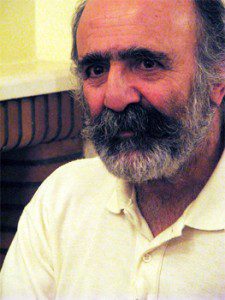 Iranian journalist Kayvan Samimi has been instrumental in keeping dissent alive in the Islamic Republic.
Despite being imprisoned since 2009, Samimi has played a significant role in highlighting the attacks against those who attempt criticise the Iranian administration. In May 2011 Samimi co-authored a letter condemning the Iranian administration for its treatment of prisoners. The letter recorded the methods of torture used against the signatories.
He is serving a six-year prison sentence on charges of “propagating against the regime” and “assembly and collusion to disrupt national security” and has been banned from “political, social, and cultural activities” for 15 years, having been detained in the immediate aftermath of the 2009 presidential election.
Idrak Abbasov, journalist, Azerbaijan
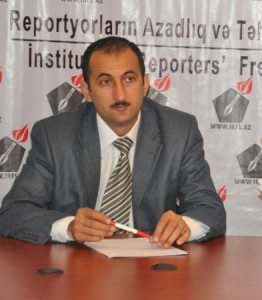 Idrak Abbasov is an Azerbaijani journalist whose investigative work has put his life in danger. Abbasov reports for newspaper Ayna-Zerkalo, contributes to the Institute for War & Peace Reporting website, and he is one of the founding members of Azerbaijan’s Institute for Reporters’ Freedom and Safety (IRFS) .
On 9 September 2011, after Abbasov investigated the activities of a local oil company, the State Oil Company of Azerbaijan (SOCAR) sent bulldozers to his family’s home. SOCAR claimed ownership of the site as part of a project to develop local oil resources with Global Energy Azerbaijan Ltd. His parents and brother were hospitalised after being attacked by the company’s security service during the incident.
It is believed that bulldozers targeted the journalist’s home because of his work monitoring human rights. The violence, threats and harassment of Abbasov and his family continued when his parents were again attacked at their home. One assailant reportedly said: “Tell Idrak to get smarter, or we will cut off his ears.”

supported by

