23 Jan 2015 | News
Bahrain
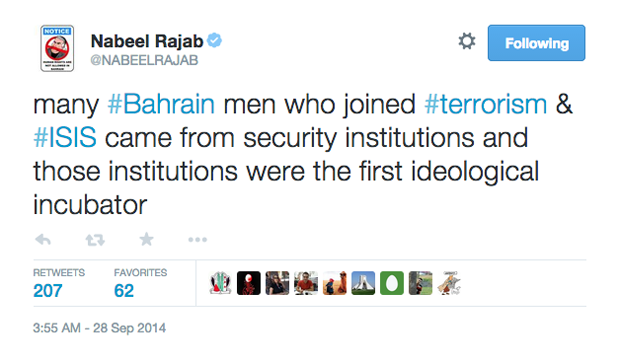
This week, prominent Bahraini human rights activist Nabeel Rajab was handed down a six month suspended sentence over a tweet in which both the country’s ministry of interior and ministry of defence allege that he “denigrated government institutions”. Rajab was only released last May after two years in prison, over charges that included sending offensive tweets. His experience is not unique in Bahrain. In May 2013, five men were arrested for “insulting the king” via Twitter.
Turkey
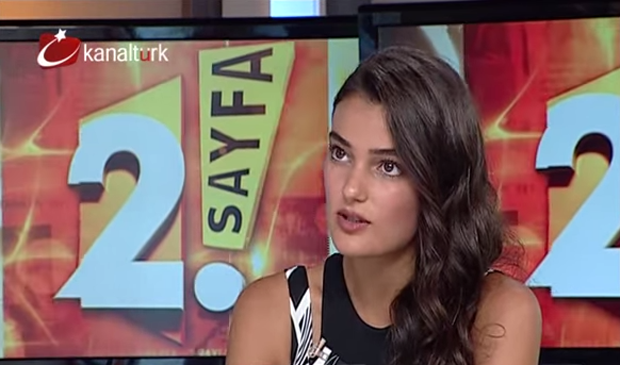
A former Miss Turkey was recently arrested for sharing a satirical poem criticising the country’s President Recep Tayyip Erdogan on her Instagram account. She is set to go on trial later this year. Turkey has a chequered relationship with social media, temporarily banning both Twitter and YouTube in the wake of the Gezi Park protests, in large part organised and reported through social media. In 2013, authorities arrested 25 individuals for spreading “untrue information” on social media.
Saudi Arabia
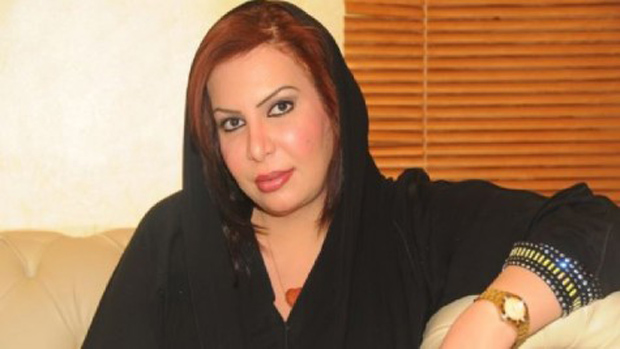
(Photo: Gulf Centre for Human Rights)
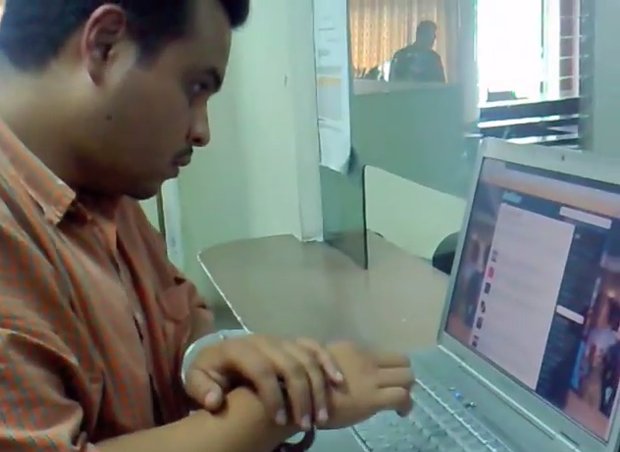
In late 2014, women’s rights activist Souad Al-Shammari was arrested during an interrogation over some of her tweets. The charges against her include “calling upon society to disobey by describing society as masculine” and “using sarcasm while mentioning religious texts and religious scholars”, according to the Gulf Centre for Human Rights.
France
![(Photo: « Source : Réseau Voltaire » [CC BY-SA 3.0 (http://creativecommons.org/licenses/by-sa/3.0)], via Wikimedia Commons](https://www.indexoncensorship.org/wp-content/uploads/2015/01/Dieudonné_Axis_for_Peace_2005-11-18.jpg)
(Photo: Réseau Voltaire [CC BY-SA 3.0], via Wikimedia Commons)
Following the series of terrorist attacks in Paris in early January, at least 54 people have been detained by police for “defending or glorifying terrorism”. A number of the cases, including against comedian Dieudonne M’bala M’bala, are believe to be connected to social media comments.
Britain
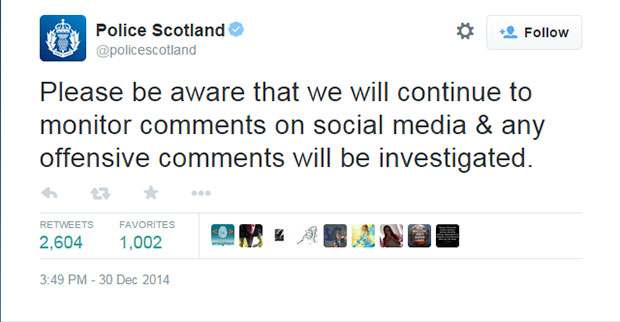
A 22 year old man was arrested in for “malicious communication” following Facebook messages made in response to the murder of soldier Lee Rigby, and another user was arrested after taunting Olympic diver Tom Daly about his dead father. More recently, police arrested a 19-year-old man over an “offensive” tweet about a bin lorry crash in Glasgow that killed six people. TV personality Katie Hopkins, known for her controversial tweets, was also reported to Scottish police following some tasteless tweets about about Scots. The incident prompted Scottish police the to post their now infamous tweet declaring they would continue to “monitor comments on social media“.
China
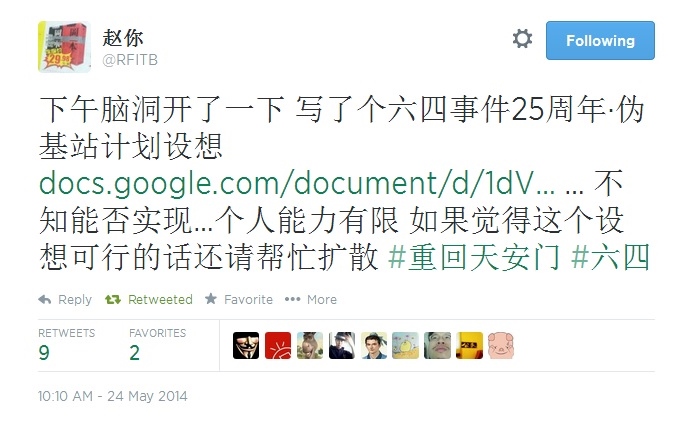
Online activist Cheng Jianping was arrested on her wedding day in 2010 for “disturbing social order” by retweeting a joke by her fiance. She was sentenced to one year of “re-education through labour”. Twitter is officially banned in China, and microblogging site Weibo is a popular alternative. In 2013, four Weibo users were arrested for spreading rumours about a deceased soldier labelled a hero and used in propaganda posters. The four were said to have “incited dissatisfaction with the government”, according to the BBC.
Australia
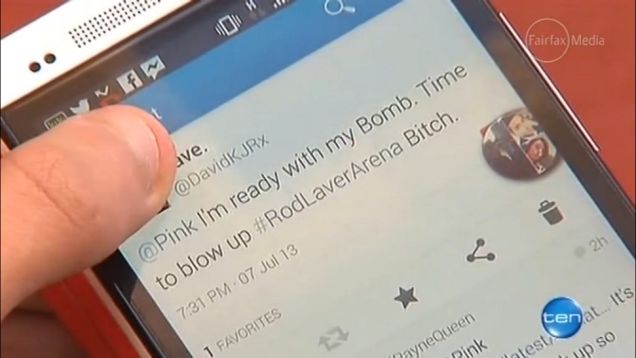
A teen was arrested prior to attending a Pink concert in Melbourne for tweeting: “I’m ready with my Bomb. Time to blow up #RodLaverArena. Bitch.” The tweet referenced lyrics from the American popstar’s song Timebomb.
India
An Indian medical student was arrested in 2012 over a Facebook post questioning why her city of Mumbai should come to a standstill to mark the death of a prominent politician. Her friend was arrested for liking the post. Both were charged with engaging in speech that was offensive and hateful.
United States
Back in 2009, a New York man was arrested, had his home searched and was placed under £19,000 bail for tweeting police movements to help G20 protesters in Pittsburgh avoid the officers. According to Global Voices, it is unclear whether his actions were actually illegal at the time.
Guatemala
A man was arrested in 2009 for causing “financial panic” by tweeting that Guatemalans should fight corruption by withdrawing all their money from banks.
This article was posted on 23 January, 2015 at indexoncensorship.org
5 Aug 2014 | Australia, Digital Freedom, News, Politics and Society
(Image: Shutterstock)
A piece of proposed legislation in the senate in Australia is attempting to wrestle with the legacy of the Snowden leaks with potential implications for media freedom.
In late 2013 information was released to the world that revealed the depth and breadth of the covert architecture in place to monitor and harvest personal data. The unprecedented capabilities and actions of surveillance agencies the world over ignited debate around the nature of privacy in our digital age. But the emergence was not manufactured by the security apparatus or by governments; it was the result of leaked information being published by the press.
Now, a new law proposed by Attorney-General, George Brandis, the National Security Legislation Amendment Bill (no.1) outlines a number of reforms to “modernise and improve” Australia’s capabilities to tackle national security threats. If passed, it could have significant implications for Australian media.
The creation of Special Intelligence Operations (SIO) – covert operations that offer limited immunity for its participants to engage in unlawful conduct – as well as the expansion of computer access warrants are among the sweeping reforms contained within the bill.
Further reforms outline new offences for “unauthorised dealings with an intelligence-related record, including copying, transcription, removal and retention”. But as highlighted by publications such as The Guardian, the Australian Lawyers Alliance (ALA) and members of the opposition, including Greens Senator Scott Ludlam, the bill opens up the possibility for criminal culpability to lie beyond the security operatives dealing with intelligence-related records, to journalists and media outlets who report on information they receive about SIOs. The bill’s explanatory memorandum states that the offence applies to:
“[D]isclosures by any person, including participants in an SIO, other persons to whom information about an SIO has been communicated in an official capacity, and persons who are the recipients of an unauthorised disclosure of information, should they engage in any subsequent disclosure.”
The transcript of the bill’s second reading demonstrates Brandis’s opinion of Snowden, dismissing him as a “so-called ‘trusted insider’” (he has previously referred to the NSA whistle-blower as an “American traitor”). But while he has stated that the bill is not intended to threaten media outlets or limit media freedom, the wording of the bill has set alarm bells ringing. Quoted in The Guardian, ALA spokesperson Greg Barns stated that this bill “takes the Snowden clause and makes it a Snowden/Assange/Guardian/New York Times clause.”
He goes further, explaining how the structure of approving SIOs, threatens media coverage: “ASIO [Australian Security Intelligence Organisation] could secretly declare many future cases to be special intelligence operations. This would trigger the option to prosecute journalists who subsequently discover and report on aspects of these operations.” This lack of clarity in the wording of the bill, as well as the limited oversight as to how the bill can be used – political appointees have the final say – sets a precedent for potential restrictions on media freedom both in Australia and, as a template for action, globally.
The size and scale of the surveillance network, involving governments worldwide, most notably the “five eyes” countries, the US, UK, Canada, New Zealand and Australia raises uncomfortable questions, with no forthcoming answers. The reforms proposed by Brandis seem to suggest that the best way of satisfying these questions is to ensure they are not asked in the first place.
Restricted by inadequate whistle-blower protections, due in part to his status as a private contractor, as well as the national security implications of the leaked documents, reaching out to the media provided to be the sole outlet for Ed Snowden. But it seems now that it could be the media who will be punished for such inadequate protections.
After two readings in the Senate, the bill is poised to be debated in September. And although Brandis has set his sights elsewhere, having mentioned data retention in an interview to ABC, the precedent set by Australia, were this bill to pass, could resonate throughout the world. Scott Ludlam outlined his concern: “I can’t see anything that conditions it or carves out any public interest disclosures. I can’t see anything that would protect journalists.”
This concern does not seem to be shared across the political spectrum. The Australian Prime Minister, Tony Abbott called on journalists for a “sense of responsibility, a sense of national interest”, and the Liberal senator, Cory Bernardi went further by stating that “we need to make sure the press are free to report within the constraints of what is in, I’d say, the national interest”.
Would protecting national interests include the refusal to publish information surrounding the allegations that the Defence Signals Directorate, or DSD, (now called the Australian Signals Directorate) attempted to monitor the calls of the Indonesian president, his wife and senior politicians? What about the DSD’s desire to share harvested online data (or “unminimised” metadata) with other governments without any privacy restraints?
If decisions such as these are left to those who define the role of the press as one of propagating national interests, then the freedom that Bernadi speaks of is surely no freedom at all.
This article was published on August 5, 2014 at indexoncensorship.org
16 Apr 2014 | Australia, News, Politics and Society
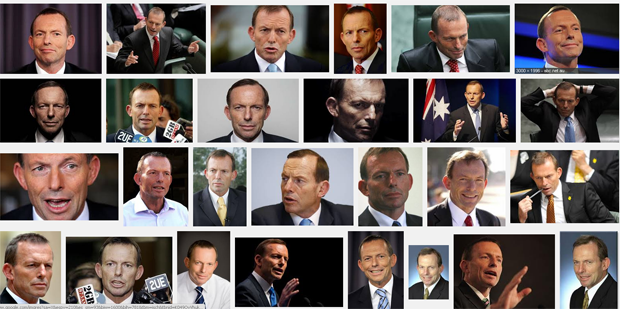
Australian prime minister Tony Abbott
In weeks where Prime Minister Tony Abbott of Australia has publicly praised the importance of freedom of speech in relation to the repeal of a section of the Racial Discrimination Act (18C) it might seem strange that civil servants caught criticising the government, or PM, can be sanctioned for illicit social media use. But to look at the two and suggest it implies gross, implicit hypocrisy, as some have, is not the most nuanced interpretation; however, the new policy code, which actually only applies to one government department bears looking at.
The new guidelines, Social Media Policy of the Department of the Prime Minister and Cabinet, outline what can and cannot be done on social media by employees and seem at pains to cover all bases while also being remarkably intrusive compared with other similar government documents.
The guidelines state they are aimed at ensuring the public believes in the impartiality of those in the Department of the PM&C. They govern social media use, including anonymous comments, during office hours and outside of work, on private devices. What has been noted by the media however is that anonymous speech may be sanctioned and employees are requested to “dob” — that is, report — on colleagues if they see them contravening the new policy. Staff can be reported for being “critical or highly critical of the Department, the Minister or the Prime Minister’’ or “so harsh or extreme in their criticism of the government, government policies, a member of parliament from another political party, or their respective policies, that they could raise questions about the employee’s capacity to work professionally, efficiently or impartially”.
Despite the leaked document now available online, the department maintains, according to the Canberra Times, that its policy on public social media use is a strictly internal document and will not comment. The department also states that no person should speak directly with the media but rather refer all queries to the media department, where the scribe can address queries in writing. This bureaucratic attempt at transparency or a “timely response” is neither limited to this department or government. Under the previous Labor government certain departments, such as the Department of Immigration and Citizenship, took much the same stance at times. Of course, now even refugee or boat arrival numbers are kept secret and weekly press conferences have been scrapped.
The policy has been defended by Freedom Commissioner Tim Wilson, who also defends the repeal of 18C in the name of freedom of speech. He told the Canberra Times: “As I read it, the current policy allows public servants to be critical of government policy, but requires that they do so in a way that does not compromise their capacity, or perception, that they will exercise their role as a public servant in an impartial way.” Wilson believes in the civilising power of codes of conduct and that such “voluntary” agreements do not undermine essential freedom of speech.
The document has rather broad-ranging edicts which could be open to interpretation. It is understood people may “participate robustly” in debate, but robustness may not trump impartiality or professionalism. It is useful then that Abbott’s daughter does not now work for the prime minister’s department. After publicly calling him a “lame, gay, churchy loser” in 2009 her impartiality could be questionable.
This article was published on April 16, 2014 at indexoncensorship.org
8 Apr 2014 | Australia, News, Politics and Society
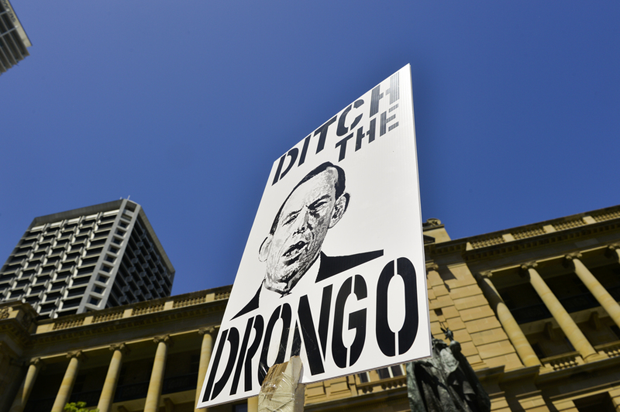
Disillusioned with the Abbott government’s agenda, protestors took to the streets of Brisbane on March 16, 2014. The rally was staged as a vote of no confidence in policy that some say goes against principles of humanity, decency, fairness social justice and equity. (Photo: Claudia Baxter / Demotix)
Australia is looking at repealing sections of the Racial Discrimination Act. Though the move has long been mooted by the government of prime minister Tony Abbott, recent moves to repeal parts of it–and specifically section 18C–has sparked public debate and anger on both sides of the political divide.
“People do have a right to be bigots you know,” attorney general George Brandis told the Australian Senate in late March. He was referring to the Abbott government’s repealing of section 18c of the Racial Discrimination Act which makes it unlawful to “offend, insult, humiliate or intimidate” people based upon their race.
Called by some the “Bolt clause” the repeal of this section has caused both outcry and debate. Conservatives, for the most part, applaud the action for reasons of freedom of speech. Others argue it sets a dangerous precedent and will allow more hate speech to go unchecked or unpunished. It also sends a wider message that racism is acceptable, critics argue.
The Abbott government’s stance can be traced back to 2011. News Limited columnist Andrew Bolt, who is one of the country’s best known conservatives, was found guilty by a federal judge of breaching the Racial Discrimination Act. Writing in Melbourne daily the Herald Sun in 2009 Bolt suggested in two stories that light skinned indigenous people claimed Aboriginality for their own gain. A federal judge found that the articles had not been written in good faith and would offend a reasonable member of the Aboriginal community. Bolt had argued his articles fell within the laws of free speech provisions and, after the ruling was handed down, called it “a terrible day for freedom of speech in this country.”
“In good faith” is important to note as the Racial Discrimination Act’s 18D stipulates that comments made in good faith are permissible as are expressions of genuine belief. Sections D, B and E will also be repealed, however. In their place it will be unlawful to vilify or intimidate persons based upon their race; however, “to intimidate means to cause fear of physical harm.” The new exemption is rather more broad: “This section does not apply to words, sounds, images or writing spoken, broadcast, published or otherwise communicated in the course of participating in the public discussion of any political, social, cultural, religious, artistic, academic or scientific matter.”
Section 18c does not actually carry a criminal penalty. It became law in 1995, partly through recommendations made by the Royal Commission into Aboriginal Deaths in Custody
In a March 12 editorial the Herald Sun pointed out that the government should not be there to adjudicate in cases where offense has been caused and “is to diminish people’s right to voice their opinions, blunt as they might be.” The paper pointed out that defamation laws–incidentally far more commonly used in Australia than any invocation of 18C–are generally more useful in determining if harm has been caused. Bolt has previously been sued for defamation by a Victorian judge.
Brandis has said he is a proponent of free speech and against the kind of internet filtering suggested previously under Labor whereby sites that were refused classification were simply blocked. Many of the sites–in a list published by Wikileaks–contained material that might have possibly been objectionable but was not illegal. As previously reported by Index, Brandis established a “Freedom Commissioner” in Tim Wilson in late 2013. Wilson has been a strong critic of the Australian Human Rights Commission, suggesting it had narrowed its horizons and focused more upon racial discrimination than freedom of speech. Before being appointed to the commission he attacked it for its silence on the previous Labor government’s new media regulations. Wilson made clear last year at the time of his appointment that would support repealing of 18C.
Though publicly committed to free speech Abbott has previously criticised national broadcaster ABC for its reporting of alleged abuse of refugees by the Australian Navy and its reporting of Australia’s tapping of Indonesian Prime Minister Yudhoyono’s wife’s phone, though under the previous administration, “a lot of people feel at the moment that the ABC instinctively takes everyone’s side but Australia’s.”
Though the coalition has lionised the restorative powers of a free press upon a free society, one of its own MPs, Ken Wyatt, has threatened to cross the floor on this issue, while according to the Sydney Morning Herald, MPs David Coleman and Craig Laundy had also expressed concern. Crossing the floor is, though permissible, a rarity dangerous to one’s political career.
Labor Senator Penny Wong and Leader of the Opposition in the Senate suggested that those arguing against 18C are viewing things in terms of “an abstract philosophical or legal argument… it’s a debate about words and principles…For people who have experienced racism… it’s actually a debate about real people and real hurt.”
This article was posted on 8 April 2014 at indexoncensorship.org