17 Jan 2014 | Middle East and North Africa, News, Palestine
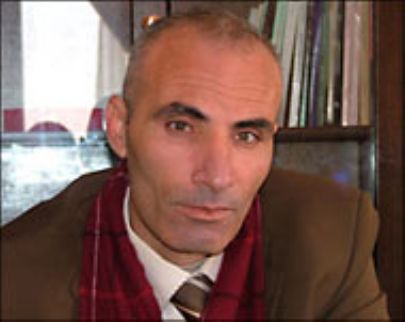 A leading Palestinian human rights activist has claimed that freedom of speech is far greater under the Hamas regime in Gaza than in the Fatah-controlled West Bank.
Khalil Abu Shamala, director of the al-Dameer Centre For Human Rights – which works in both Gaza and the West Bank – said that although there were still occasional arrests of Fatah members, “nowadays we don’t document many violations”.
He noted that this was partly down to Hamas’s weakness in the face of international pressures, particularly the breakdown of relations with the Egyptian regime.
In the past, Hamas has made large-scale arrests of journalists and called many others in for questioning, with opposition activists and bloggers facing harassment.
But although abuses still occurred in Gaza, Abu Shamala said that government forces in the Palestinian Authority–controlled West Bank took much harsher action against critics.
“Freedom of expression in Gaza is better than in the West Bank,” he told Index on Censorship. “We have many cases where the PA arrest and attack people because they criticize them on Facebook, and many Facebookers in the West Bank use alternative names, not their real names. But here, they speak without any harassment by Hamas.”
A rift between Hamas and Fatah, which culminated in the Islamist group seizing power in the Strip in 2007, has led to the creation of two near-separate entities in Gaza and the West Bank. Hamas refuses to recognise the Jewish state and is under an embargo by Israel and the international community.
“I don’t know why, but in the West Bank, Palestinian Authority security systems have cooperation and coordination with Israel – and they don’t want to give the opportunity for a third intifada, and they don’t want to allow Hamas or those who are against the Palestinian Authority [to speak out] because they know many of the Palestinians in the West Bank hate the Palestinian Authority,” Abu Shammala continued.
Hamas has previously issued proceedings against Abu Shamala for his outspoken criticism of the Islamist group.
“After they took over Gaza, they wanted from the beginning to impose their Islamic agenda on the society,” he said, adding that his organisations and others had tried to combat these efforts.
The Hamas deputy foreign minister, Ghazi Hamed, denies that his government took any action to silence their critics.
“We are not oppressing people and people can speak loudly, can criticise the government, can criticise Hamas,” said Hamed. “We never put anyone in jail who criticizes Hamas or write something against Hamas. We have different organisations, political parties, even writers, they have full freedom to write what they want.”
15 Dec 2013 | Magazine, Volume 42.04 Winter 2013
[vc_row][vc_column width=”1/2″][vc_single_image image=”90659″ img_size=”full” onclick=”custom_link” link=”https://shop.exacteditions.com/gb/index-on-censorship”][/vc_column][vc_column width=”1/2″][vc_column_text]
Subscribe to Index on Censorship magazine on your Apple, Android or desktop device for just £17.99 a year. You’ll get access to the latest thought-provoking and award-winning issues of the magazine PLUS ten years of archived issues, including Mission creep.
Subscribe now.
[/vc_column_text][/vc_column][/vc_row]
6 Dec 2013 | Canada, News, Politics and Society
(Image: Shutterstock)
Canadian journalists will face fines for commenting on the striking action of trade unionists under new legislation passed in the province of Alberta. As reported by Index on Censorship earlier this week Bill 45 and Bill 46 will see heavy sanctions placed on those who partake in illegal picketing or comment publicly on those doing so. Both bills passed through their third and final readings on Wednesday 4 December, in front of a full gallery of concerned members of the public
Journalists now face fines of $500 a day for any comments made regarding support for union strikes. Alongside this, Bill 45 also limits the discussion of striking action or threats to strike by civil servants, fining unions $1 million a day unless they are able to convince a court they were not responsible for or encouraging of the striking talk.
Don Braid said in the Calgary Herald this week: “It’s hard to imagine a more blatant violation of free speech, a right that always implies a certain social anarchy to function usefully. People are not allowed to break laws, but they are permitted, except in obvious cases of threatening harm, to talk about challenging, testing, pushing or even breaking them. The offence is in the breaking, not the talking. But not for Alberta’s public unions. Talking is now pretty much illegal.”
An earlier version of this article referred to Alberta as a state. It is a province.
This article was originally posted on 6 Dec 2013 at indexoncensorship.org
29 Oct 2013 | News, Saudi Arabia
 Saudi journalist and blogger Hamza Kashgari, detained for 625 days on blasphemy charges, has been released.
The news was confirmed by Saudi human rights activist Walid Abulkheir, who told AFP: “The authorities freed Kashgari at 6.30 am (0330 GMT)”
This morning, Kashgari himself tweeted: “Mornings of hope…souls that live and never die. Thanks to God.”
The 23-year-old writer was arrested in 2011 when he tweeted a mock conversation between himself and the prophet Mohammed which sparked furious responses, including death threats.
He tried to flee Saudi Arabia, but was detained in Malaysia and deported following a request by Interpol on behalf of Saudi authorities.
Blasphemy is punishable by death in Saudi Arabia.
