9 Jul 2013 | Middle East and North Africa
Despite promising reform and introducing a new constitution in 2011, Morocco’s treatment of dissidents indicates the changes were just window dressing, Samia Errazzouki writes
Morocco’s King Mohammed VI announced a constitutional reform process during a 9 March 2011 speech, following popular protests organised by the 20 February Movement. Regime supporters and allies — France and the United States — hailed the move towards reform as “unprecedented.” Morocco was soon referred to as the “model for the region.”
But the government’s repression of freedom of expression has remained steadfast even after the new constitution.
Most recently, in March 2013 dissident rapperMouad Belghouat (alias El Haqed) was released from jail after he served his second, year-long prison sentence over his anti-regime lyrics, which were described as “undermining state authority.”
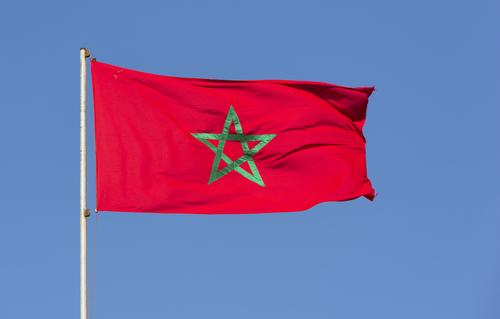 In February 2012, 18-year old Walid Bahomane was charged with “defaming Morocco’s sacred values” after he posted a caricature of Mohammed VI on Facebook. Even though he did not create the illustration, Bahomane was convicted and sentenced to one year in prison for the act of sharing the image.
In the same month, Abdessamad Hidour, an activist with the 20 February Movement faced similar charges after a video of him criticising Mohammed VI was uploaded on Youtube. In the video, he likened Mohammed VI’s reign to colonialism and railed against his corrupt practices, landing him a three-year prison sentence.
These are only a few cases out of many that have drawn widespread attention over the nature of the charges as well as the expedited trials that landed all those charged in jail.
Morocco’s latest constitution supposedly grants the right to freedom of expression, but it still leaves room for repression.
The king stacked the constitutional reform deck by appointing the committee to undertake the work. The reforms introduced some liberalisation, but did not address demands for democratisation of the system. It’s an old trick dating to the 1960s when Morocco’s first constitution was drafted following its independence from France.
The latest version of the constitution incorporates human rights language and places greater attention on the legal protection of free speech, such as the following:
- Article 10 grants the opposition the “freedom of opinion, expression, and of assembly.”
- Article 25 states that “The freedoms of thought, of opinion and of expression under all their forms are guaranteed.”
- Article 28 addresses the press, “The freedom of the press is guaranteed and may not be limited by any form of prior censure.”
Out of context, these articles stand as testaments for what regime supporters describe as “landmark reforms.” However in scrutiny and in practice, these articles have proved to be futile. In Article 28, for example, immediately after stipulating the guarantee of freedom of the press, there is a caveat that leaves this article open to interpretation: “All have the right to express and to disseminate freely and within the sole limits expressly provided by the law, information, ideas, and opinion.” Immediately, “freedom of the press” is limited to a legal framework dictated by the regime and this interpretation has come into play in various recent trials where freedom of speech and press has been threatened, especially in instances when the monarchy has been the target of criticism.
The regime’s response to free speech cases following constitutional reform is swift and relatively consistent, indicating no clear break from its past policies. Despite these violations of freedom of expression, Moroccans continue to express their dissent in multiple media, from online publications to protests on the streets, indicating that the regime’s alleged “path toward reforming” is long and winding.
Samia Errazzouki is a Moroccan-American writer and co-editor of Jadaliyya’s Maghreb Page.
7 May 2013 | Middle East and North Africa, Uncategorized
Moroccan atheist Imad Eddin Habib is now on the run, after police began searching for him last week. Habib told Irshad Manji‘s Moral Courage TV that officers confronted his father, asking him to bring an end to his son’s activism. Habib is the founder of the Council of Ex-Muslims in Morocco, which aims for the “application of a secular constitution.”

The 22-year-old student has gained a reputation for his activism and controversial posts online, including a photograph of himself eating ice cream during the Islamic fasting month of Ramadan. Shortly before he went into hiding, Habib was featured in an article on a high profile Moroccan news site, and police were searching for him hours after it was published.
Atheism is not criminalised in Morocco, but Article 220 of the country’s Penal Code forbids “shaking a Muslim’s faith”. The article’s vague wording can be used to punish anyone who criticises Islam openly, or promotes any other faith with a jail sentence of up to three years. Ahmed Benchemsi wrote that this says that “when you live in Morocco, you can think whatever you want of religion, but you better keep it for yourself.”
Habib is now said to be moving between the homes of friends, after his parents threatened to hand him over to the police if he were to return to their home in Casablanca. Even though he is uncertain about what will happen to him next, Habib is still committed to his beliefs, and called on his fellow Moroccans to push for the country to “work together to apply the universal human rights.”
“If Morocco doesn’t apply universal human rights, we will turn into another religious dictatorship”, he said.
16 Jan 2013 | Uncategorized
A Bangladeshi blogger is in critical condition after being stabbed by three unknown attackers on 14 January in Dhaka, the country’s capital. Asif Mohiuddin, 29, is the author of a blog about atheism widely read in Bangladesh. His posts often satirise religion, with one post referring to god as “almighty only in name but impotent in reality.” Press reports have referred to Mohiuddin as a “militant blogger”, although there is no suggestion that his work incited violence. Shortly after the attack, the South Asian Meeting on Internet and Freedom of Expression was held in Dhaka, and participants called on the government to protect journalist’s human rights under the constitution of Bangladesh, and bring the perpetrators to justice.

– Blogger Asif Mohiuddin was stabbed on 14 January
A Nigerian newspaper editor was shot dead on 12 January. Ikechukwu Udendu was killed in the southeastern city of Onithsa by an unknown assailant, who then phoned the victim’s brother to instruct him to collect the dead body. The editor was on his way to supervise the printing of the mothly newspaper Anambra News when he was attacked. Arrests and attacks on the Nigerian media are frequent but rarely resolved. On 26 April 2012, the offices of daily newspapers in the cities of Abuja and Kaduna were bombed.
Last week saw widespread attacks on the media in Greece, after bombs were placed outside of the homes of five journalists on 11 January. Homemade devices were used to carry out arson attacks on Chris Konstas, Antonis Liaros, George Oikonomeas, Petros Karsiotis and Antonis Skyllakos, members of the Journalists’ Union of Athens Daily Newspapers. Anarchist group Lovers of Lawlessness said they committed the attacks in protest against the journalists for allegedly covering the government favourably since the financial crisis began in 2009.
An editor of investigative weekly Alaan Magazine has been charged with defamation in Morocco, after alleging that a government official had ordered champagne to his hotel room during a business trip. Youssef Jajili printed a hotel receipt under Minister of Manufacture and Trade Abdelkader Amara’s name, which charged him for the alcohol while he was away at the expense of taxpayers. Amara denied the claim, saying that someone had ordered the champagne while he was out of the room. Jajili will appear in court on 28 January, and faces one year imprisonment and if found guilty under section 52 of Morocco’s defamation laws. Even though alcohol is widely available in Morocco, it is forbidden to followers of Islam, who make up the majority of the country.
On 15 January, Facebook announced a new format to its search facilities: “graph search”. The new tool will allow users to search for specific content, people, or images on the site. Critics suggest that the move could undermine Facebook’s privacy policy and allow users less control over their personal information, but Facebook founder and CEO Mark Zuckerberg said that the graph search is “privacy aware,” since the new tool will only search content already shared with the user.
3 Apr 2012 | Index Index, minipost
A Moroccan rapper and activist was arrested by security forces last week, following claims that one of his songs is offensive to a public institution. Megaz El Haked was summoned to a court on the charge of offending a public authority. Lyrics in in one of his songs criticising the political situation in Morocco were deemed to be defamatory. The rapper and activist has been refused provisional release whilst he awaits his trial, which is expected to take place on 4 April. El Haked was imprisoned last year for four months on trumped-up charges, before being released in January 2012.
