5 Feb 2026 | Europe and Central Asia, Features, United Kingdom
This article was commissioned for the Winter 2025 issue of Index on Censorship, Gen Z is revolting: Why the world’s youth will not be silenced, published on 18 December 2025.
Members of Gen Z – those born between 1997 and 2012 – have lived their entire lives within the all-encompassing glare of social media. More than 90% of 16-24-year-olds use such platforms.
Older generations often look on in shock at the level of sharing and over-sharing among young people. But in a world where cancellation has real-world consequences, there is growing evidence that the young are in fact imposing censorship upon themselves, particularly when it comes to unpopular political opinions.
18-year-old William Marsden is keenly aware of this.
“I don’t comment on TikTok, and I don’t comment on Instagram posts because other people I know will see it. Certain things on Instagram are funny, but some people might not think they’re a joke and they might get the wrong idea. You have to be careful with what you like and what you say so sometimes I don’t say anything,” he said.
Marsden is like a growing number of Gen Zers – censoring themselves on social media platforms because of the fear of being cancelled or because, in his words, “they might take the piss out of me”.
“I’m not big into typing comments because you never know what will get back to you and it could potentially affect future employment,” said fellow Gen Zer Harry Waller.
Yet there is a definite divide between in person and online, he said.
“If I’m with my mates, I know it’s comfortable and we’re all as bad as one another.”
Do Gen Zers censor themselves in real life for fear that their thoughts will be captured and shared online?
“Oh, absolutely, yeah,” said Tom Bond, another in the Gen Z demographic. “I possess some political opinions which are a bit outside the normal box and they could sometimes be misconstrued as offensive towards people, which isn’t their necessary intention. But if that were to be recorded and made online, it would perhaps get me in a spot of bother. Also, it’s very easy to take stuff out of context when you haven’t listened to a full conversation,” he said.
19-year-old Evelyn Scott says the fear of making rash comments and responses and having them available for future scrutiny is part of this.
“Since COVID, you can probably say more in person than you can online. It used to be very much like you could say whatever you wanted online and no one was going to track it to you. If you say one thing now, that can cause uproar. You can literally get found out.”
“I live by the rule that if you wouldn’t say it to someone’s face, you don’t say it online,” she said. “The people that are getting screen-shotted and clipped online for saying bad things, it’s because they’re not thinking about actually saying it in person and the consequences that has.”
She recalled a particular incident where this happened.
“Someone I was with in Scouts had something screenshotted of them and sent to loads of parents; it was sort of hate speech. We were all under 16. Police got involved. It’s treated the same as if someone literally did it in front of you.”
William Marsden says that Gen Z is becoming more careful about their public comments as a result of living in a world where everything can be recorded for posterity.
“At school, if you’re mucking about people can just take their phone out and record you. Suddenly everyone in the school’s seen a video of you doing something stupid with your mates. You’ll be immortalised if it ends up in the wrong place,” he said.
“There are some mistakes kids can’t afford to make, and social media is quite dangerous in that way. They can forever be living with that mistake,” he said.
Because of this permanence, more needs to be done to educate young people on social media. Children are being exposed to it from a very young age and even when they mature, a lack of education on how to use it, what not to say and how to behave online can still leave them open to making these potentially long-lasting mistakes.
Evelyn Scott said: “There is definitely a negative side the younger you are using it because you’re not as responsible. But I think it’s important to be educated about it and use it in the right ways because it can be a very positive thing for young people.”
Harry Waller shares his own experience at a much younger age of the difference between comments online and offline, particularly relevant in a world where governments are considering bans on social media for young people.
“I overstepped that barrier [of what I would say online]. Ever since then, I just didn’t do it because it wasn’t like me. I got too comfortable and I’d never do it again.”
Speaking to Index, Positive Social, an organisation dedicated to empowering young people on social media, said: “Pupils often talk about how difficult it is to switch off, how social comparison affects how they see themselves, and how online drama can spill into the classroom. While social media can be wonderful, it needs balance, boundaries and education.”
They added, “Social media itself isn’t inherently good or bad – it’s how we engage with it that matters. When young people are supported to use social media positively – for creativity, learning, connection and campaigning – it can be incredibly empowering. Our view is that we should focus on digital wellbeing. That means helping young people use social media in a way that benefits their lives”
“Age verification and greater platform accountability are essential parts of the solution but they’re not enough on their own. The reality is that millions of under-13s already use social media, often with or without parental awareness. We believe that alongside stronger regulation, education and trust-based monitoring are crucial. But the aim shouldn’t be surveillance, it should be support.”
Evelyn Scott sees the benefits of the freedom of social media but recognises the downsides too.
“Obviously there are cons that come with freedom to post, which is people having very, say, extremist opinions and just trying to show young people and not censoring it, corrupting younger people that don’t know any better about what to listen to.”
Harry Waller told Index: “Everyone complains that we have no freedom of speech, but I would say we do. After the Southport stabbing, people were saying on social media ‘we need to burn down where illegal immigrants are living’. That’s not right. We shouldn’t be using social media as a tool to spread hate.”
Tom Bond said social media is making it easier for people to become radicalised. “You find yourself within an echo chamber of people expressing the same precise views as you. It’s very easy to find yourself in a little bubble and content feeds with stuff personalised to you and you can form quite radical beliefs which you think to be normal.”
But Bond recognises the power of social media for good.
“The ability to express one’s beliefs on social media to a large audience is one of perhaps the main benefits,” he said. “Greta Thunberg, for example, she became a phenomenon within social media, and her views were sort of disseminated to a global audience and change occurred because of that”.
12 Apr 2024 | Israel, News, Opinion, Palestine, Ruth's blog, United Kingdom
Rambunctious, witty and passionate. You are lucky to get one of these qualities in a critic. It elevates their writing away from potentially mean to engaging and joy. Yes, the play may have been a bit drab or the book eighteen chapters too long, but at least the critic was able to puncture the pomposity and draw some positives from the experience. And in my recent experience of the theatre – critics definitely have a role…
The world of food is no different from stage and screen. In these trying times we all need a good laugh served with a side-order of passion. Food critics open the door to the aspirational, allow us to get lost in their experiences of foods that we might never eat, and on occasion help us find that hidden gem we venture to for a family get together or, even better, the dive bar that serves the perfect deep fried food to accompany a few pints of your favourite.
Don’t worry – this isn’t me using my blog to pitch for a new gig as a critic! Although…
No, the reason why I’m discussing this is because of a review of Freddie’s Deli in London I read this week by Jay Rayner. I love Jay’s writing – the sass, the detail and the evident joy he shares with the reader from exploring the good, the bad and the ugly of British cuisine. As you’d expect from Jay, this critical assessment is everything you’d want and more.
But as you get towards the end he exposes what is truth for many at the moment and the real impact of self-censorship.
“When I first came across Freddie’s I was excited. For all my lack of faith or observance these dishes, kept alive by a vestigial memory of the shtetl, root me. Then I hesitated. Could I really write about a Jewish restaurant given the current political turmoil? Would I get abuse for doing so? Surely better to keep shtum. At which point I knew I had no choice: I had to write about it. The horrendous campaign of the government and armed forces of Israel in Gaza cannot be allowed to make being Jewish a source of shame.”
Thankfully, Jay drove these thoughts away and put pen to paper. His review is all the better for sharing these considerations which are all too real for many in the UK at the moment. What can you say, what can you write and what will be the consequences, on social media, or in real life as debates and issues lead to an increasingly toxic public space.
In an era where every word risks being misconstrued or politicised, even the most seasoned commentators and critics may find themselves hesitating before committing pen to paper or voice to screen. What was once a realm of boisterous voices and unwavering judgments now resonates with a quieter, more cautious tone. The fear of backlash, whether from sponsors, readers, or the broader socio-political landscape, has cast a shadow of self-doubt over even the most confident pens, ushering in an epoch where the act of expressing a view is accompanied by a whisper of uncertainty.
In previous blogs, I have noted how the modern world is a dichotomy: we are closer together yet more divided. Another consequence of this is we are living in a global community where the sins of others are imposed on individuals who have no connection to them whatsoever. This matters. It matters especially for freedom of expression.
We can and must do better. There are glimmers of hope in the darkness and we must do what we can to highlight them. Index on Censorship was set up to give a voice to the voiceless. Jay Rayner’s recent critique delivers some home truths about self-censorship and I for one am grateful that he pushed through that niggling doubt to share his important thoughts and I can’t wait to visit Freddie’s Deli.
24 Mar 2020 | News, Volume 49.01 Spring 2020 Extras
[vc_row][vc_column][vc_custom_heading text=”Spanish journalist Silvia Nortes reports on the trend amongst Spanish journalists of self-censoring in the face of job losses and a divided society, a special piece as part of the 2020 spring edition of Index on Censorship magazine” google_fonts=”font_family:Libre%20Baskerville%3Aregular%2Citalic%2C700|font_style:400%20italic%3A400%3Aitalic”][vc_single_image image=”112712″ img_size=”large” add_caption=”yes”][vc_column_text]
Paulino Ros, a journalist with 35 years’ experience in radio, admits he self-censors. It’s understandable – after all, he lost a job because of his reporting of a corruption case.
“The case was confirmed two months later and charges were laid by the Court of Instruction and the police made arrests. Even so, my crime of publishing ended up costing me my job and, even worse, my health,” he said. Ros censors himself “almost every day, so as not to displease my superiors. I stick to the editorial line”.
He is not alone. The co-founder of major Spanish newspaper El País, Juan Luis Cebrián, said recently that plenty of journalists were tailoring what they wrote or said because there was “no free debate, because people think it is better not to mess with that because of social rejection”.
Unlike Ros, most are reluctant to admit to this on record, but the idea that self-censorship is rife is backed up by statistics. The 2016 Annual Report of Journalism by the Madrid Press Association recorded alarming data, for example: 75% of journalists yield to pressure, and more than half acknowledge they usually censor themselves.
And it’s getting worse as certain issues within society are becoming more divisive. In Spain, social movements are strong engines of heated debates. The controversy they generate can pose a danger to journalistic independence, due to the temptation to follow a majority view.
The tension is obvious when reporting on Catalonia, where the resurgence of the independence movement has given rise to a silencing form of nationalism. Journalists working in Catalonia for national media, such as television channels Antena 3 and La Sexta, are branded as “manipulators” by pro-independence social movements. Reporters Without Borders has recorded a series of attacks on journalists in Catalonia since 2017. As the organisation notes, covering quarrels and demonstrations in Barcelona “has become a high-risk task for reporters”. It adds that insults, the throwing of objects, shoving and all kinds of physical and verbal aggression have become routine, especially during live television broadcasts.
The women’s movement can cause the bravest of reporters to duck into a corner. In May 2019, feminist magazine Pikara made a podcast with a midwife, Ascensión Gómez López, about childbirth. June Fernández, founder of Pikara, tweeted a quote from the midwife to promote the podcast: “The epidural turns childbirth into a silent act, disconnected from the body. In childbirth we groan, as with orgasms. But silence is more comfortable in an aseptic environment.”
Two days later, the tweet received more than 1,200 replies, mostly from outraged women, as well as comments from magazine contributors. “Idiots”, “Irresponsible” and “You contribute to worsening the women’s situation” were some of the responses. It was a week in which Pikara was preparing a crowdfunding campaign. “What if lots of people decide not to support us?” Fernández wrote in an article. She told how staff had discussed whether they should have self-censored, as journalists who do not self-censor face the prospect of losing support. But she argued that self-censorship was not a route they wanted to go down.
That was not Pikara’s first controversy. A previous one came when it interviewed a porn star, Amarna Miller. Following much criticism, the magazine issued a letter to readers to justify the decision, and lost a subscriber. The publication also became embroiled in a debate after publishing an opinion piece arguing against breastfeeding.
Pikara’s experience illustrates the power that an audience’s opinion has over editorial decisions. Even feeling the need to state openly that it will not self-censor says a lot.
Andrea Momoitio, a journalist with Pikara, told Index about the intense “agitation around certain movements” and worried that the “media are heading towards niche journalism”. She added: “The more specialised the public is, the more we know their interests, the harder it is to do independent journalism.”
[/vc_column_text][/vc_column][/vc_row][vc_row][vc_column width=”1/4″][vc_icon icon_fontawesome=”fas fa-quote-left” size=”xl”][/vc_column][vc_column width=”3/4″][vc_custom_heading text=”Journalists working in Catalonia for national media, such as television channels Antena 3 and La Sexta, are branded as “manipulators” by pro-independence social movements” font_container=”tag:h3|text_align:left” google_fonts=”font_family:Libre%20Baskerville%3Aregular%2Citalic%2C700|font_style:400%20italic%3A400%3Aitalic”][/vc_column][/vc_row][vc_row][vc_column][vc_column_text]
As editor-in-chief of local newspaper La Opinión in Murcia, Lola García selects content every day.
“Sometimes journalists cannot detach themselves from what surrounds them, so it is easy to get carried away. We need to be more alert than ever,” said García.
“Everything is polarised and, on many occasions, it is necessary to take sides. The key is to do it with truthful and fact-checked information.”
Indeed, the polarisation of Spanish politics, which became evident with extreme right-wing party Vox getting 52 seats in parliament last November, has been reflected in the media. Outlets show marked ideologies and provoke opposing and radical opinions.
In certain cases, this exaltation of ideology turns journalists into advocates for one side or the other. “The role of journalists as analysts is being left aside,” Momoitio said.
This also happens when pitching ideas for pieces or investigations.
Investigative journalist Paula Guisado, who works for national newspaper El Mundo, thinks the difference between self-censorship and a simple choice of content is “very subtle”.
“In my case, it’s a matter of knowing what the media outlet I work for prefers to publish. I invest my time in pitching topics I know will be better received. In corruption scandals, for instance, we all know El Mundo prefers to talk about PSOE [the left-wing party now in power] and El País would rather investigate [the right-wing] PP.”
Rather than seeing this as self-censorship, Guisado says it is “taking advantage of the environment you are working in”.
But García said: “When decisions are made based on non-journalistic criteria, it is self-censorship. When media business, ideology or other interests come into play, the pressure on journalists is intense.”
Job insecurity lies at the heart of this issue. The aforementioned 2016 Annual Report of the Journalistic Profession noted this pressure comes mostly from “people related to ownership or management of the media outlet”, especially when it comes to freelancers. In addition, failing to give in to the pressure can lead to consequences including, in many cases, being dismissed.
Luis Palacio Llanos, who oversees these reports, sees a possible relationship between the precariousness of the industry and self-censorship. “Between 2012 and 2018, and probably before that, unemployment and job insecurity was the main professional concern for Spanish journalists, according to our annual surveys. In 2019, this fell to second place, surpassed by bad pay, another sign of a precarious industry. In addition, journalists always rated their independence when carrying out their job below 5 on a scale of 0 to 10. Over the past few years, less than a quarter of journalists stated they had never been pressured to change significant parts of their pieces.”
The financial crisis that began in 2008 had a lot to do with the rise of self-censorship among journalists. The fall in advertising caused thousands of layoffs and the closure of hundreds of media operations. By 2012, more than 6,200 journalists had lost their jobs, according to the Spanish Federation of Journalist Associations. By 2014, 11,145 journalists had been fired and 100 media outlets had closed.
Momoitio believes the crisis and self-censoring go hand in hand. “The audience demands a very compassionate journalism, which does not take you out of your comfort zone. Journalism is going through such a long crisis that it has to adapt to these requests.”
Palacio added: “Surely the crisis and the deterioration in working conditions have been the main factors in the increase in self-censorship. This has been superimposed on a structural crisis that began at the end of the 20th century alongside the expansion of digitalisation.”
Digital is, of course, another aspect. Social media was central to the Pikara episode. In a time when information reaches millions of people in a matter of seconds, the reaction of a large digital audience can make journalists more vulnerable – and cautious.
“Social media greatly promotes self-censorship,” said Momoitio. The audience “follows you because you tell the stories they want to hear, from their perspective. That is very dangerous and irresponsible”.
García added: “Social media is a double-edged sword. There is greater projection, but it can trigger uncontrolled reactions.”
[/vc_column_text][/vc_column][/vc_row][vc_row][vc_column][vc_column_text]
Silvia Nortes is a freelance journalist based in Murcia, Spain
Index on Censorship’s spring 2020 issue is entitled Complicity: Why and when we chose to censor ourselves and give away our privacy
[/vc_column_text][/vc_column][/vc_row][vc_row][vc_column width=”1/3″][vc_custom_heading text=”Why and when we chose to censor ourselves and give away our privacy” font_container=”tag:h3|text_align:left”][vc_column_text]The spring 2020 Index on Censorship magazine looks at how we are sometimes complicit in our own censorship[/vc_column_text][/vc_column][vc_column width=”1/3″][vc_row_inner][vc_column_inner][vc_single_image image=”112723″ img_size=”full” onclick=”custom_link” link=”http://www.indexoncensorship.org/2020/03/magazine-complicity/”][/vc_column_inner][/vc_row_inner][/vc_column][vc_column width=”1/3″][vc_custom_heading text=”Subscribe” font_container=”tag:h3|text_align:left”][vc_row_inner][vc_column_inner][vc_column_text]In print, online. In your mailbox, on your iPad.
Subscription options from £18 or just £1.49 in the App Store for a digital issue.
Every subscriber helps support Index on Censorship’s projects around the world.
 SUBSCRIBE NOW[/vc_column_text][/vc_column_inner][/vc_row_inner][/vc_column][/vc_row]
18 Dec 2017 | Journalism Toolbox Russian, Volume 46.01 Spring 2017 extras
[vc_row][vc_column][vc_custom_heading text=”Журналисты в Мексике подвержены угрозам и со стороны коррумпированного государства, и со стороны жестоких картелей; иногда нельзя доверится даже коллегам-журналистам, пишет Дункан Такер”][vc_row_inner][vc_column_inner][vc_column_text]
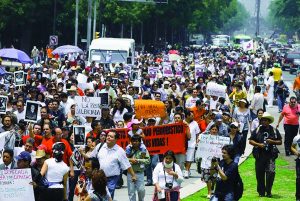
Сотни людей участвуют в марше молчания в знак протеста против похищений и убийств журналистов в Мексике в 2010 году, John S. and James L. Knight/Flickr
[/vc_column_text][/vc_column_inner][/vc_row_inner][/vc_column][/vc_row][vc_row][vc_column][vc_column_text]
«Я надеюсь, что правительство всё-таки не поддастся авторитарному искушению заблокировать интернет и не начнёт арестовывать активистов», ― рассказывает журналу «Индекс на Цензуру» мексиканский блоггер и активист Альберто Ескорция.
Совсем недавно Ескорция и несколько раз угрожали из-за публикации статьи про недавние беспорядки в стране. Вскоре угрозы усилились. Чувствуя себя в ловушке, совсем незащищённым, он начал планировать побег из страны.
Многие обеспокоены свободой слова в Мексике. Экономический застой, свободное падение валюты, бесконечная кровавая война с наркотиками, совершенно непопулярный президент при власти и новоизбранная воюющая администрация Дональда Трампа через границу – все эти факторы создают тяжёлое положение в 2017.
Самая большая проблема – это сам президент Мексики. Четыре года правления Энрике Пенья Ньето принесли вялый экономический рост. Возродилось насилие и коррупционные скандалы. В январе этого года уровень поддержки президента стремительно упал до 12%.
Но когда журналисты попытались дать отчёт про работу президента и его политику, на них началась охота. Например, 2017 год начался с интенсивных протестов, вызванных 20% повышением цен на бензин. В дни протестов, блокад, мародёрств и противостояний с полицией было убито, как минимум, 6 человек и больше чем 1,500 арестовано. Комитет по Защите Журналистов сообщил, что полиция избила, пригрозила или временно задержала по крайней мере 19 репортёров, которые освещали в СМИ беспорядки в северных регионах Коахуйлы и Бая Калифорнии.
Новости не только скрывали, но и подделывали. Массовая истерия охватила Мехико, когда легионы троллей в «Твиттере» подстрекали к насилию и распускали ложную информацию про дальнейшие грабежи, что послужило причиной временного закрытия приблизительно 20,000 объектов малого бизнеса.
«Никогда не видел Мехико таким», ― по телефону докладывает Ескорция из своего столичного дома. «Полиции больше обычного. Вертолёты пролетают каждый час и постоянно слышны сирены. Хотя в этой части города не было никакого мародёрства, люди думают, что оно повсюду».
Последние семь лет Ескорция занимался расследованием применение троллей в Мексике. Он убежден, что поддельные учётные данные в «Твиттере» были применены для распространения страха, дискредитации и
отвлечения внимания от реальных протестов против повышения цен на бензин государственной коррупции. Он сообщил, что обнаружил приблизительно 485 аккаунтов, со страниц которых людей неоднократно подстрекали «грабить Вол-Март».
[/vc_column_text][/vc_column][/vc_row][vc_row][vc_column width=”1/4″][/vc_column][vc_column width=”3/4″][/vc_column][/vc_row][vc_row][vc_column][vc_column_text]
Сначала они призывают людей грабить магазины, потом они требуют наказать мародёров и зовут армию на место происшествия», ― объясняет Ескорция. «Это весьма деликатный вопрос, потому что такими действиями можно спровоцировать цензуру интернета или арест активистов». Он добавил, что за плечами нынешней администрации уже есть одна неудачная попытка установить легитимные законы для блокировки доступа в интернет во время «критических для общественности или национальной безопасности событий».
Несколько дней после того, как хештег «грабить Вол-Март» разлетелся по интернету, Бенито Родригес, хакер, проживающий в Испании, рассказал мексиканской газете «Эль Финансиеро», что эму оплатили раскрутку этой темы. Родригес сознался, что он иногда работает на правительство Мексики и что «возможно» именно этот субъект оплатил ему подстрекательство к мародёрству.
Администрацию Пенья Ньето уже давно подозревают в использовании троллей для политических целей. В интервью с «Bloomberg» в прошлом году хакер из Колумбии, Андрес Сепульведа подтвердил, что с 2005 года его нанимали для влияния на результат девяти президентских выборов в Латинской Америке. В том числе и выборы в Мексике 2012 года, когда, согласно его заявлениям, команда Пенья Ньето заплатила ему, чтобы взломать переписку двоих ближайших противников их кандидата и вывести 30-тысячную армию твитер-ботов для манипуляции актуальными темами и нападения на других кандидатов. Администрация президента официально отвергла какие-либо отношения с Сепульведой.
Мексиканским журналистам также постоянно угрожают жестокие картели. Занимаясь исследованием для своей последней книги «Narcoperiodismo» («Нарко-журнализм»), учредитель газеты «Риодоче» Хавьер Вальдес был ошарашен, каким обыденным теперь стало присутствие картельных шпионов и осведомителей в редакционных отделах новостей местных газет.
Сепульведа заявил, что с 2005 года его нанимали для влияния на результат девяти президентских выборов в Латинской Америке
«Серьезный журнализм с соответствующей этикой очень важен во времена конфликтов, но, к сожалению, журналисты тоже замешаны в наркобизнесе», – рассказал он «Индексу на Цензуру». «Это еще более усложнило нашу работу; теперь нам нужно защищаться и от политиков, и от наркодельцов, и даже от других журналистов».
Вальдес прекрасно знает, как опасно нарушать свои полномочия. «Риодоче» базируется в знойном штате Синалоа, где экономика вращается вокруг наркоторговли. «В 2009 кто-то бросил гранату в офис «Риодоче», но она принесла только материальный ущерб», – рассказал он. «Мне часто звонили, приказывая остановить расследование конкретных убийств или действий наркобоссов. Мне приходилось скрывать важную информацию, чтобы мою семью не убили. Мои источники были убиты или исчезли … Правительству нет никакого дела до этого. Они ничего не предпринимают, чтобы нас защитить. Сколько уже было случаев и все это продолжается».
Несмотря на то, что мексиканские журналисты стыкаются с одинаковыми проблемами, Вальдес сокрушается, как мало солидарности между ними и как мало поддержки от общества в целом. Более того, поскольку Мексика готовится к предстоящим президентским выборам в следующем году и продолжает борьбу с экономическими проблемами, он опасается, что давление на журналистов только усилится, с тяжелыми последствиями для страны.
«Опасность для общества и демократии очень серьезная. Журнализм может значительно влиять на демократию и социальное сознание, но когда нам со всех сторон угрожают, наша работа никогда не будет такой, какой должна быть», – предупреждал Вальдес.
Без радикальных изменений, будущее для Мексики и ее журналистов выглядит еще более мрачным. Он добавил: «Я не вижу общества, которое вступилось бы за своих журналистов или само стало на их защиту. Никакая бизнес-структура не финансирует проектов «Риодоче». Если бы мы обанкротились или закрылись, никто ничего бы не сделал [чтобы помочь]. У нас нет союзников. Нам нужно больше публичности, больше подписчиков и моральной поддержки, но мы сами по себе. Мы долго не продержимся в таких условиях».
Находясь практически в такой же сложной ситуации, Ескорция делится таким же чувством экстренности, но все же остается дерзким, сообщая в «Твиттере» после недавних угроз: «Это наша страна, наш дом, наше будущее и только вещанием мы можем ее спасти. Рассказать правду, объединить людей, создать новые средства массовой информации, поддержать уже существующие, заставить общество захотеть критически посмотреть на ситуацию. Вот как мы действительно можем помочь».
[/vc_column_text][/vc_column][/vc_row][vc_row][vc_column][vc_column_text]
Слушайте интервью с Дунканом Такером в подкасте «Индекса на Цензуру» на «SoundCloud» soundcloud.com/indexmagazine
Дункан Такер – независимый журналист из Гвадалахары, Мексика
Статья впервые напечатана в выпуске журнала Индекс на Цензуру (весна 2017)
[/vc_column_text][/vc_column][/vc_row][vc_row content_placement=”top”][vc_column width=”1/3″][vc_custom_heading text=”The Big Squeeze” font_container=”tag:p|font_size:24|text_align:left” link=”url:https%3A%2F%2Fwww.indexoncensorship.org%2F2017%2F12%2Fwhat-price-protest%2F|||”][vc_column_text]The spring 2017 issue of Index on Censorship magazine looks at multi-directional squeezes on freedom of speech around the world.
Also in the issue: newly translated fiction from Karim Miské, columns from Spitting Image creator Roger Law and former UK attorney general Dominic Grieve, and a special focus on Poland.[/vc_column_text][/vc_column][vc_column width=”1/3″][vc_single_image image=”88803″ img_size=”medium” alignment=”center” onclick=”custom_link” link=”https://www.indexoncensorship.org/2017/12/what-price-protest/”][/vc_column][vc_column width=”1/3″ css=”.vc_custom_1481888488328{padding-bottom: 50px !important;}”][vc_custom_heading text=”Subscribe” font_container=”tag:p|font_size:24|text_align:left” link=”url:https%3A%2F%2Fwww.indexoncensorship.org%2Fsubscribe%2F|||”][vc_column_text]In print, online. In your mailbox, on your iPad.
Subscription options from £18 or just £1.49 in the App Store for a digital issue.
Every subscriber helps support Index on Censorship’s projects around the world.
SUBSCRIBE NOW[/vc_column_text][/vc_column][/vc_row]
