16 Oct 2022 | Malta, News
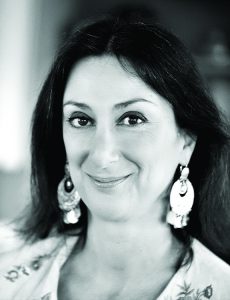
Daphne Caruana Galizia
Five years ago today, investigative reporter Daphne Caruana Galizia was brutally assassinated in a car bomb attack in Malta. Our thoughts are with her family, friends and colleagues. Together with them, we continue to fight for justice.
It is deeply saddening that we have issued a similar statement every year since Caruana Galizia’s murder. Today should be a day to remember and celebrate her fearless journalism, the far-reaching impact of her incisive writing on financial crime, abuses of power and deep-seated corruption, and her unwavering commitment to uncovering the truth and serving the public’s right to information.
Instead, we must yet again note that progress in criminal investigations and prosecutions has been minimal and intolerably slow. Impunity serves to embolden those who use violence to silence critical journalism and it ends only when all those responsible for the heinous murder have been prosecuted to the full extent of the law: the assassins, intermediaries and the mastermind must be brought to justice without further delay.
Similarly, we must point out the unacceptable lack of implementation of the recommendations made by the landmark Public Inquiry into Caruana Galizia’s assassination and the exclusion of structured public consultation, including with our organisations, on proposed legal amendments relating to the safety of journalists and SLAPPs, which in the latter case fail to meet international standards. The process provides a historic opportunity for the Government of Malta to implement its obligations under international and European legal and policy frameworks to create an enabling environment for journalism and to protect journalists.
The lack of political will to initiate the effective and systemic reform that is needed casts doubt on whether Malta’s political class has drawn any lessons from Caruana Galizia’s assassination. Where is the sense of urgency to fix the rotten power structures and dangerous conditions for journalists who report on them, violently exposed by the blast five years ago?
Signed by:
- Access Info Europe
- Access to Information Programme (AIP)
- ARTICLE 19 Europe
- Association of European Journalists-Belgium
- Civic Alliance (CA) Montenegro
- Civil Liberties Union for Europe (Liberties)
- Committee to Protect Journalists (CPJ)
- Corporate Europe Observatory
- English PEN
- European Centre for Press and Media Freedom (ECPMF)
- European Federation of Journalists (EFJ)
- European Integrity Academy – AntiCorruption Youth Greece
- Free Press Unlimited (FPU)
- Global Forum for Media Development (GFMD)
- IFEX
- Index on Censorship
- International Federation of Journalists (IFJ)
- International Institute for Regional Media and Information (IRMI) Ukraine
- International Media Support (IMS)
- International Press Institute (IPI)
- Irish PEN/PEN na hÉireann
- Kosova Democratic Institute
- Legal Human Academy
- Media Diversity Institute
- OBC Transeuropa (OBCT)
- Oživení, z.s. (CZ)
- Partners Albania for Change and Development
- PEN International
- PEN Malta
- Reporters Without Borders (RSF)
- Scottish PEN
- Society of Journalists, Warsaw
- South East Europe Media Organisation (SEEMO)
- Syri i Vizionit
- Transparency International EU
- Wales PEN Cymru
16 Oct 2022 | Greece, Malta, Netherlands, News, Northern Ireland, Slovakia
It shouldn’t have taken a murder. Surely it didn’t need a car bomb in a quiet Maltese town. Daphne Caruana Galizia did not need to die for Europe and the rest of the world to take notice of media freedom’s precarious foundations. But to our shame, it did.
Five years ago today, Daphne was murdered by a car bomb that exploded when she was moments from her front door. But the car bomb was only the mechanism by which she was silenced. Daphne was murdered by the opaque but powerful forces that first encourage, before demanding and eventually forcing silence. But she was never rendered mute, even now.
In the years that have followed, Europe has wrestled both with her legacy – what her investigations revealed – as well as the legacy of her killing – what her murder revealed. In the aftermath of similar killings in Northern Ireland (Lyra McKee), Slovakia (Ján Kuciak and Martina Kušnírová), Greece (Giorgos Karaivaz) and the Netherlands (Peter R. de Vries), as well as increased attention on the use of strategic lawsuits against public participation (SLAPPs), Europe has been forced to address an uncomfortable reality: journalists are at risk all across the continent. And so, by extension, is European democracy.
This is the dark light that bathes Europe, a light emanating from the brutal collapse of the rule of law but also a light that can illuminate what is broken. In the five years that have passed since her death, Daphne’s family have had to fight for every inch to demand both justice for Daphne and accountability for Malta. Whether this was to demand a public inquiry, pressing for progress in the criminal investigation, and putting SLAPPs on the European agenda, the rage, sadness and fury has fuelled a reckoning that has helped bring forward a proposed European Commission directive on SLAPPs, a Europe-wide coalition of organisations fighting to upend this form of lawfare, as well as similar movements at a national level.
In the UK, spurred on by Russia’s unlawful invasion of Ukraine, the UK Government announced in July 2022 an anti-SLAPP mechanism that could limit how UK courts are abused to silence critical speech. As we wait to see what happens – especially after the change in Prime Minister and her cabinet – we hope we are at the threshold of something significant. It is important to remember that a number of the libel threats against Daphne were deployed with the aid of London-based legal expertise – SLAPPs cannot be confined within national borders.
But we must return to Malta to remind ourselves of the pitfalls. Recently announced reforms aimed at protecting journalism, including much-vaunted anti-SLAPP protections, have had to be hurriedly frozen by the Prime Minister after being widely derided as inadequate, both in terms of content, falling far short of the proposed EC Directive, and process. The Institute of Maltese Journalists (IGM) had threatened to step away from the Committee of Experts unless “meaningful” consultation takes place. This was echoed by both the International and European Federations of Journalists (IFJ and EFJ) who have joined the call for the legislation to be withdrawn, as reported in Maltese outlet, NewsBook: “no proposal on media legislative reform should be submitted to the parliament without a transparent public consultation. This is all the more crucial in a country where a state holds some form of responsibility for the killing of a journalist.” While appearing to be fuelled by a desire to be the first EU nation to bring forward national legislation responding to SLAPPs, a grimy sense of competitive haste has seemingly triumphed over a commitment to genuine and meaningful protections.
Today, vigils remembering Daphne’s legacy – her life, her writing, and her commitment to the public’s right to know – are taking place across Europe, in London, Valletta, Brussels and Edinburgh to name a few. But wherever we are, we must ensure that by remembering Daphne’s life, we are reminded of our commitment to protect journalists against vexatious legal threats, physical attacks and every act that isolates, demonises or targets them.
Progress is slow and halting and will not proceed from one point to the next without obstruction – Malta’s current reform process is testament to that – however, the greatest way we can honour Daphne is by moving with purpose to ensure what happened to her cannot happen to another journalist. The dark light has illuminated what needs to change and the urgency with which it must change. It should not have taken the murder of a journalist for this to happen and we must not forget the darkness that sparked this push for greater protections, a darkness that robbed a family of the private space in which to mourn, but we must follow where the light leads. For in Daphne’s words, “There are crooks everywhere you look. The situation is desperate.
5 Oct 2022 | Kazakhstan, Legal action against journalists, News, Statements, United Kingdom
The urgent need to introduce anti-SLAPP measures, proposed by the UK government in July, has been underscored by the recent announcement that a UK registered company and a Kazakhstan endowment fund have issued legal proceedings against a number of UK media outlets.
In January and February 2022, openDemocracy and The Bureau of Investigative Journalism (TBIJ), amongst other outlets, published separate reports on the Nazarbayev Fund and Jusan Technologies Ltd. The Nazarbayev Fund is a Kazakhstan university and schools endowment fund, associated with the former president, Nursultan Nazarbayev and Jusan Technologies Ltd is a UK registered company that controlled over $7.8bn in gross asset value. This included an online marketplace, a mobile phone operator, financial services and shopping centres. According to the reports, the Nazarbayev Fund owned a controlling stake in the company via an intermediary until late 2021, raising questions as to why a UK company held some of Kazakhstan’s wealth.
As a result of their public interest reporting, TBIJ and openDemocracy are among the media outlets who have been threatened with legal action by lawyers instructed by both the Nazarbayev Fund and Jusan Technologies Ltd. There should be no question that investigating and reporting on the financial interests of authoritarian leaders, both during their time in office and afterwards, and entities connected with them, is clearly in the public interest. For this to be met with threats of costly and time-consuming legal action constitutes a significant and severe threat to media freedom and the public’s right to know.
The undersigned organisations call for the legal action against openDemocracy and The Bureau of Investigative Journalism to be dropped and stand in solidarity with all outlets facing SLAPPs for their reporting. We also reiterate our calls to the UK Government to be both bold and swift with their proposals to bring forward anti-SLAPP legislation to ensure all public interest reporting is robustly protected against abusive lawsuits.
Index on Censorship
European Centre for Press and Media Freedom (ECPMF)
Blueprint for Free Speech
Tax Policy Associates Ltd
ARTICLE 19
Spotlight on Corruption
Justice for Journalists Foundation
Whistleblowing International Network
Public Interest News Foundation
Rory Peck Trust
The Daphne Caruana Galizia Foundation
National Union of Journalists
English PEN
Rights and Accountability in Development (RAID)
The Campaign for Freedom of Information in Scotland
Reporters Without Borders (RSF)
Transparency International UK
PEN International
Global Witness
Society of Authors
Protect
4 Aug 2022 | News, Northern Ireland, Statements, United Kingdom
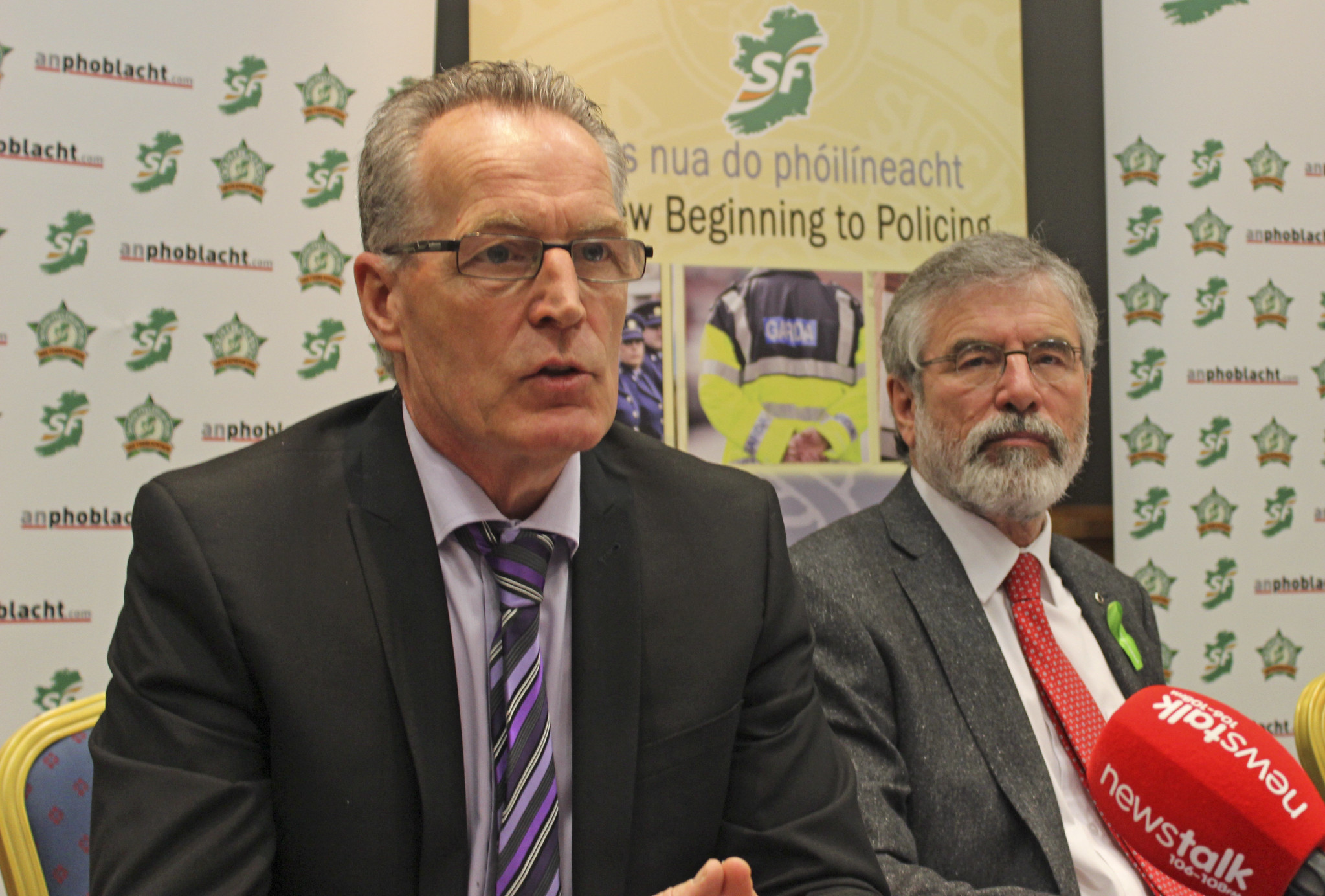
Gerry Kelly MLA & Gerry Adams TD. Photo: Sinn Fein, CC BY 2.0
Index on Censorship is concerned at the lawsuits that have been filed against journalist Malachi O’Doherty and columnist Ruth Dudley Edwards. Both are being sued individually by Sinn Féin politician Gerry Kelly MLA, who is claiming aggravated damages for comments they each made – on radio and in print respectively – in relation to Kelly’s role in 1983 Maze Prison escape.
“Everyone has the right to defend their good name but as elected representatives, politicians have a duty to display a greater degree of restraint when it comes to taking to legal action against journalists. This is especially true when the contested statements are related to matters of public interest. Lawsuits against journalists can have a serious and damaging impact on media freedom and on our democracy,” said Jessica Ní Mhainín, Policy and Campaigns Manager at Index on Censorship.
Explaining Index on Censorship’s decision to file a media freedom alert to the Council of Europe Platform, Ní Mhainín said: “We are concerned that these lawsuits in particular have several characteristics of strategic lawsuits against public participation or ‘SLAPPs’. SLAPPs involve powerful people – such as politicians – making legal threats or taking legal actions against public watchdogs – such as journalists – in response to public interest speech.”
This is the seventh media freedom alert filed on the United Kingdom to the Council of Europe Platform to Promote the Protection of Journalism and Safety of Journalists this year and the third relating to SLAPPs.
