30 Mar 2021 | China, News
[vc_row][vc_column][vc_single_image image=”116480″ img_size=”full” add_caption=”yes”][vc_column_text]Last week, the Chinese government outlined sanctions against nine British individuals and three organisations for daring to speak out about what is going on in Xinjiang.
Those affected by the sanctions are former Conservative party leader Iain Duncan Smith, Tom Tugendhat, chair of the foreign affairs select committee, Nus Ghani from the business select committee, Neil O’Brien, head of the Conservative policy board and China Research Group officer, Tim Loughton of the Inter-Parliamentary Alliance on China, crossbench peer David Alton, Labour peer Helena Kennedy QC and barrister Geoffrey Nice.
The only individual not from the political sphere is Dr Joanne Smith Finley, Reader in Chinese studies at Newcastle University.
The organisations include the China Research Group, the Conservative Human Rights Commission and Essex Court Chambers.
China made the move after the British government imposed sanctions on four Chinese officials and one organisation last Monday: Zhu Hailun, former secretary of the political and legal affairs committee of the Xinjiang Uyghur Autonomous Region (XUAR); Wang Junzheng, deputy secretary of the party committee of XUAR; Wang Mingshan, secretary of the political and legal affairs committee of XUAR; Chen Mingguo, vice chairman of the government of the XUAR, and director of the XUAR public security department; and the Public Security Bureau of the Xinjiang Production and Construction Corps – a state-run organisation responsible for security and policing in the region.
A statement from Tom Tugendhat and Neil O’Brien on behalf of the China Research Group said, “Ultimately this is just an attempt to distract from the international condemnation of Beijing’s increasingly grave human rights violations against the Uyghurs. This is a response to the coordinated sanctions agreed by democratic nations on those responsible for human rights abuses in Xinjiang. This is the first time Beijing has targeted elected politicians in the UK with sanctions and shows they are increasingly pushing boundaries.
“It is tempting to laugh off this measure as a diplomatic tantrum. But in reality it is profoundly sinister and just serves as a clear demonstration of many of the concerns we have been raising about the direction of China under Xi Jinping.”
Commenting on China’s decision, foreign secretary Dominic Raab said: “It speaks volumes that, while the UK joins the international community in sanctioning those responsible for human rights abuses, the Chinese government sanctions its critics. If Beijing want to credibly rebut claims of human rights abuses in Xinjiang, it should allow the UN High Commissioner for Human Rights full access to verify the truth.”
Meanwhile, Prime Minister Boris Johnson said, “The MPs and other British citizens sanctioned by China today are performing a vital role shining a light on the gross human rights violations being perpetrated against Uyghur Muslims. Freedom to speak out in opposition to abuse is fundamental and I stand firmly with them.”
Newcastle University academic Dr Joanne Smith Finley believes she has been sanctioned because of her “ongoing research speaking the truth about human rights violations against Uyghurs and other Turkic Muslims in Xinjiang”
“In short, for having a conscience and standing up for social justice,” she said.
She said, “That the Chinese authorities should resort to imposing sanctions on UK politicians, legal chambers, and a sole academic is disappointing, depressing and wholly counter-productive.”
Dr Smith Finley has studied China for many years.
“I began my journey to become a ‘China Hand’ in 1987, when I enrolled at Leeds University to read modern Chinese studies. My first year spent in Beijing in 1988-89 – during which I also experienced the ‘Tianan’men incident’ – ensured that China entered my bloodstream forever, and the city became my second home,” she said. “I later focused on the situation in the Uyghur homeland (aka Xinjiang), to which I made a series of field trips, long- and short-term-, between 1995 and 2018.”
Dr Smith Finley said since taking up her post at Newcastle University in 2000, she has worked tirelessly to introduce students from the UK, Europe and beyond to the world of Chinese society and politics.
“I have prepared successive student cohorts for their immersion in Chinese culture, and have visited our students each year in situ across five Chinese cities,” she said.
“When China applies political sanctions to me, it thus stands to lose an erstwhile ally,” she said. “Since 2014, I have watched in horror the policy changes that led to an atmosphere of intimidation and terror across China’s peripheries, affecting first Tibet and Xinjiang, and now also Hong Kong and Inner Mongolia.”
“In Xinjiang, the situation has reached crisis point, with many scholars, activists and legal observers concluding that we are seeing the perpetration of crimes against humanity and the beginnings of a slow genocide. In such a context, I would lack academic and moral integrity were I not to share the audio-visual, observational and interview data I have obtained over the past three decades.”
“I have no regrets for speaking out, and I will not be silenced. I would like to give my deep thanks to my institution, Newcastle University, for its staunch support for my work and its ongoing commitment to academic freedom, social justice and inter-ethnic equality.”
Following the announcement of sanctions against Dr Smith Finley, more than 400 academics have written an open letter to The Times in support, asserting their commitment to academic freedom and calling on the Government and all UK universities to do likewise.
There are increasing demands from human rights activists to take action over China’s ‘soft genocide’ in Xinjiang. Tit-for-tat sanctions will not resolve the issue. That will take much firmer action from governments, organisations and individuals who are complicit in the subjugation of the Uyghurs, by buying Chinese products and accepting money built on their suffering.[/vc_column_text][/vc_column][/vc_row][vc_row][vc_column][three_column_post title=”You may also want to read” category_id=”85″][/vc_column][/vc_row]
19 Oct 2015 | Asia and Pacific, China, mobile, News
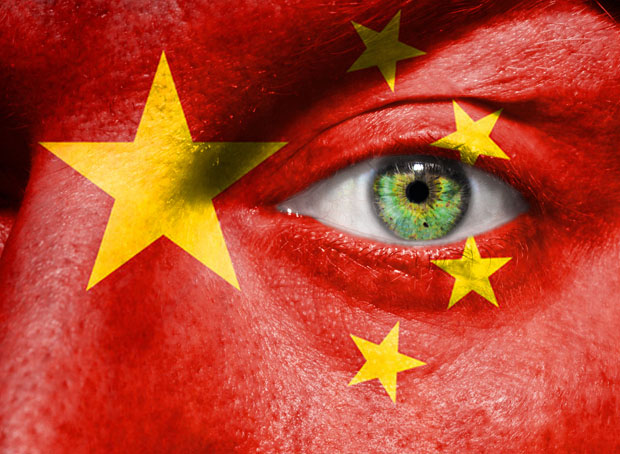
(Photo illustration: Shutterstock)
With UK-China relations warming, the president of the People’s Republic of China, Xi Jinping, will pay a state visit to the UK from 20-23 October. The UK government hopes the visit will help finalise multibillion-pound deals for Chinese state-owned companies to contribute to the building of two British nuclear power plants.
Many — including the Dalai Lama — are concerned that Prime Minister David Cameron and Chancellor George Osborne are putting the desire for profit above concern for human rights.
Xi may be staying in luxury at Buckingham Palace during his visit, but here are just five examples of how respect for free speech in China doesn’t get past the front door:
1. Locking up artists
The soccer-loving Chinese president is due to visit Manchester City Football Club’s stadium with Cameron during his visit. But will he make time for the new exhibition by Chinese artist and dissident Ai Weiwei in London? We won’t hold our breath.
The major retrospective of the artist’s work is currently on show at the Royal Academy of Arts. Ai — whose work is famous for addressing human rights abuses and corruption — has been harassed, beaten, placed under house arrest and imprisoned.
The current London exhibition almost didn’t go ahead as the British Embassy in Beijing turned down Ai’s request for a business visa in connection with his criminal conviction for tax fraud — an accusation he denies. British Home Secretary Theresa May eventually overturned the embassy’s decision, but only after a mass public outcry. This shouldn’t be the height of the British government’s efforts to address Chinese human rights abuses.
2. The use of online “opinion monitors”
China’s Terracotta Army, the 8,000-strong force of sculptures depicting warriors and horses, was purpose-built to protect emperor Qin Shi Huang, who died in 210 BC, in his afterlife. In the modern day, China’s army of “opinion monitors”, which has been purpose-built to protect China’s current leaders from criticism and dissent, dwarfs anything the Qin dynasty could muster.
Last year, Index on Censorship reported that the Chinese government is expanding its censorship and monitoring of web activity with a new training programme for an estimated two million flies on the firewall.
China’s hundreds of millions of web users increasingly use blogs to condemn the state, but posts are routinely deleted by government employees. In 2012, monitors banned more than 100 search terms relating to the 25th anniversary of the Tiananmen Square protest of 1989 and even shut down Google services.
3. Banning books
Often overshadowed by China’s internet censorship, we shouldn’t forget that Chinese authorities have a rich history of restricting free expression in literature. In 1931, Lewis Carroll’s Alice’s Adventures in Wonderland was banned for its portrayal of anthropomorphised animals for fear children would regard humans and animals as equal. During Chairman Mao Zedong’s Cultural Revolution, all aspects of arts and culture had to promote and aid the revolution. Libraries full of historical and foreign texts were destroyed and books deemed undesirable were burned.
The country’s post-Mao transition has been marked by a commitment to “modernising”. While the Chinese populace has access to more information than ever before, their leaders’ continuation of banning books on grounds of non-conformity and deviance are anything but modern.
Publications which are still banned — often for perceived politically incorrect content — include the memoirs of Li Rui, a retired Chinese politician and dissident who caused a stir in the CCP by calling for political reform; Lung Ying-tai’s Big River, Big Sea about the Chinese Civil War; and Jung Chang’s best-selling Wild Swans, a history that spans a century, recounting the lives of three female generations in the author’s family.
4. Detaining activists
Recent years have been marked with an intensification of the crackdown on dissent. On 6 March 2015, just days before International Women’s Day, the Chinese government detained a number of high-profile feminist activists. They were accused of creating a disturbance and, if convicted, could have received three-year prison sentences.
The women had been linked to several actions over the years which highlight issues such as domestic violence and the poor provision of women’s toilets, obvious embarrassments to the authorities.
As a result of their detention, China’s small, but increasingly vocal feminist movement was dealt a heavy blow. Demonstrations were cancelled and debate was effectively silenced. Five of the activists were released fairly quickly, but five more were in prison until 13 April, with two being denied treatment for serious medical conditions while in custody.
5. Repressing Uyghur Muslims
China continues to persecute the largely Muslim minority Uyghurs of Xinjiang. A tough system of policies and regulations deny Uyghurs religious freedom and by extension freedom of expression, association and assembly.
The abuse of national security and anti-terror laws to persecute Uyghurs and further deny them freedom of expression was highlighted in the recent ban by the Chinese authorities on 22 Muslim names in Xinjiang in an apparent attempt to discourage extremism among the region’s Uyghur residents. Many children were barred from attending school unless their names were changed.
Ryan McChrystal is the assistant online editor at Index on Censorship
3 Feb 2014 | China, News, Religion and Culture
(Photo illustration: Shutterstock)
During China’s Cultural Revolution the Uyghur linguist Ibrahim Mutte’i, who helped compile a comprehensive multilingual dictionary, was tortured in the pursuit of cultural conformity by having large volumes of his edited dictionary dropped on his head.
Although the Cultural Revolution resonates as an extreme moment in China’s modern history, today the Chinese Communist Party (CCP) continues to develop expansive legal and political frameworks that repress the cultural and religious freedoms of its Uyghur population in Xinjiang province.
China maintains a stifling grip on the largely Muslim minority Uyghurs of Xinjiang. Aspirations for greater autonomy are repressed through ambiguous and far-reaching criminal laws that equate expressions of independence with separatism and terrorism. Severe restrictions in cultural and religious freedoms are part of considered government policy and Uyghurs are practically the only minority group subject to structural executions for religious offences.
Narratives of “terrorism”, external threats and fanatical separatism have been successfully produced and reproduced by the CCP, to confront ethnic problems in Xinjiang and delegitimise criticisms of government policy. The post 9/11 context has enabled the CCP to widen the scope of “terror” offences in its criminal code, where potential crimes include the dissemination of information and public gatherings that “disturb social order”. Rights to free assembly and expression, alongside peaceful protests are prohibited through punitive legal frameworks.
Expansive definitions of terrorism to include any “non-state” action decontextualise violence in Xinjiang as isolated extremism and privilege national security over individual human rights. By externalising ethnic discord, the CCP denies the existence of legitimate dissent and acts with domestic impunity.
The abuse of national security and anti-terror laws to marginalise and censor free speech are emphasised in the recent arrest of prominent Uyghur intellectual Ilham Tohti.
In a statement released by the Bureau of Public Security in Urumqi, capital of Xinjiang, Tohti is charged with promoting “Xinjiang independence”, the spread of separatism and ethnic discord, sending followers overseas to engage in separatist activities and praising individuals involved in “terrorist” attacks. China’s state-owned newspaper, the People’s Daily, commented that “police authorities have uncovered the concrete evidence behind Ilham Tohti’s separatist activities”.
Tohti has not joined calls for an independent East Turkestan but questioned the impact of economic, social and cultural policies in Xinjiang, and advocated for better treatment of Uyghurs. His arrest and official discourses explaining his crimes point to the criminalisation of dissent and a predictable pattern whereby challenges to state power are not tolerated.
Alongside the political and legal frameworks deployed to proscribe freedom of expression, curtailments of religious and cultural self-determination continue unabated. A recent Project Beauty campaign endorsed by the provincial government in Kashgar, ostensibly to promote “beauty” and “modern culture”, registered veiled women and bearded men at checkpoints in attempts to discourage expressions of Islamic and Uyghur identity.
The Uyghur Human Rights Council documents the indiscriminate targeting of religious practice. Outward expressions of faith at state institutions are forbidden, with public signs ostracising Islamic dress through explanations such as “women and girls, open your veils, don’t disturb modern civilised society”. In addition Uyghur language is being systematically eliminated from tertiary institutions, and classes on Uyghur literature, instructed entirely in Chinese, have been subject to inspection by “language police”.
Local religious leaders must complete compulsory political training through the state-run Islamic Association of China, which provides the Islamic clergy with a collection of state-sanctioned sermons and “approved” copies of the Koran. Private religious education is banned and those found to facilitate the independent tuition of Islam or in possession of non-approved literature, are often charged with “illegal” religious activity.
Furthermore, state employees and anyone under the age of 18 cannot enter a mosque. These measures point to a comprehensive draconian system of censorship, with Uyghurs arrested for offences such as “possession of wrong books” and “teaching the Koran”.
A report from Human Rights Watch, citing the official document A Manual for Urumqi Municipality Ethnic Religious Work, provides further evidence of the flagrant denial of civil and political rights. The manual identifies illegal religious activities to include: “inciting the masses to illegally rally and demonstrate”; “distorting history”; going abroad to study religion or engaging in any kind of religious activity that “span[s] different localities”; and carrying out activities “harmful to the good order of society”. These highly ambiguous injunctions restrict not only freedoms of religious belief, but also deny free expression and freedom of movement under virtually any pretext.
The tragic reality of Xinjiang is that a multidimensional system of surveillance, control and religious suppression has exacerbated an ongoing human rights crisis. Although the number of missing Uyghurs is difficult to verify, most estimates point to the arbitrary detention of thousands every year for “illegal” religious activity.
The signs in 2014, of continued violent “separatist” attacks and aggressive state crackdowns, should alarm the international community as controls seem likely to escalate. Beyond the political disenfranchisement, economic exploitation and cultural erosion of Uyghur identity, CCP assimilationist policies ironically serve only to reinforce a sense of alienation and difference.
This article was posted on 3 Feb 2014 at indexoncensorship.org
