14 Sep 2011 | Index Index, Middle East and North Africa, minipost
Egypt’s SCAF announced on Saturday it will enforce the Emergency Law, which allows civilians, including journalists, to be tried in state security courts and detained indefinitely. The announcement came despite the military’s commitment to annul the law by September, a core demand of the revolution. Under the law, security officials would be allowed to take “legal procedures” to suppress acts of “thuggery” and may use “all legal powers to safeguard the country’s security”. Meanwhile, Al-Jazeera reported that Egyptian police raided the offices of a broadcaster it is affiliated with on Sunday, shutting down their live, round-the-clock broadcasts from Cairo.
14 Sep 2011 | Index Index, minipost
Radio Era Baru was on Tuesday forcibly closed by police and frequency monitoring officials. The move comes in spite of the fact that last week’s conviction of its manager on a charge of broadcasting without permission and disrupting neighbouring frequencies is still the subject of an appeal.
13 Sep 2011 | Uncategorized
The state of North Carolina has about 100 different specialty plate designs, allowing citizens to use their license plate to proclaim their love for square dancing, NASCAR, or even watermelon. North Carolinians against abortion can now share their views in traffic jams, since the General Assembly passed a proposed license plate that features the slogan “Choose Life” earlier this year. Pro-choice drivers who want to display their views on their car are out of luck, their licence slogans rejected by the General Assembly.
The North Carolina chapter of the American Civil Liberties Union (ACLU) filed a federal lawsuit against the state on 8 September 2011, calling for the license plate to be blocked because it violates the First Amendment, as it only allows for the representation of one perspective. Six amendments were proposed to the bill, adding a plate which had a messages such as “Respect Choice”. According to Katherine Lewis Parker, legal director of the NC chapter of ACLU, the decision to only approve the pro-life message is unconstitutional because it provides “a forum to one side of the argument”.
The specialty plate was approved by the legislature on 18 June, and signed into law on 30 June. In a statement, the ACLU said that they were suing “on behalf of North Carolinians seeking a specialty license plate that supports a woman’s right to reproductive freedom”. Republican Mitch Gillespie, who had promoted the anti-abortion plate, has dismissed the ACLU suit, telling the Raleigh News & Observer that the union is “an evil liberal organization to try to appease its liberal base.”
13 Sep 2011 | Asia and Pacific, China
Last week, a Google spokesperson announced that Google.cn’s Chinese Internet Content Provider (ICP) licence had been renewed to 2012.
When Google stopped censoring search result in 2010 and left mainland China to set up in Hong Kong, Google’s ICP renewal by the Chinese government looked doubtful. But to the surprise of many, in July 2010 its licence was successfully renewed. This year, after Google’s announcement, Chinese journalists looked at WHOIS, a Chinese website for checking domain name information noticed that the licence has been extended to March 17 2012.
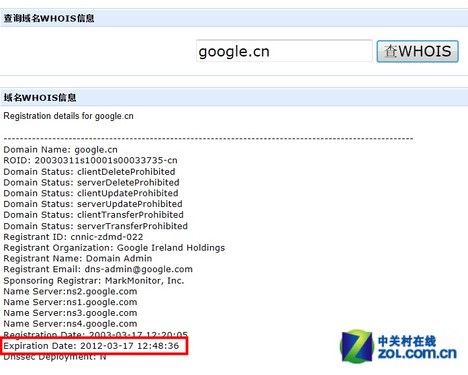
Experts in China, particularly state media commentators, suggest it is likely Google managed to wrangle this renewal through some sort of compromise. International Finance News, a newspaper run by the state mouthpiece the People’s Daily, suggested this is a sure sign that Google does not want to leave the biggest internet market in the world, and was willing to compromise. According to the local technology provisions issued on 26 August 2011, foreign companies cannot evade censorship by any method, without their government contract being terminated.
In another development, today Google launched Google Shihui, a group buying discount site under its Chinese platform Google.cn. Mark Natkin, managing director of Beijing-based consulting firm Marbridge was quoted in PC World saying that “[Shihui is] a fairly safe neutral area of business in which Google can participate without risking as much.” But Google’s insistence on staying in the Chinese market will mean that it will face continued, and possibly tougher, censorship from the government in the future.
