28 Sep 2011 | Index Index, Middle East and North Africa, minipost, News
Egyptian authorities have blocked the publication of a controversial feature story. Daily newspaper Rose al-Youssef were due to run the second part of an investigative article on an alleged Israeli spy once stationed in Cairo, but publication was stopped following the request from an unidentified “sovereign body”. An amended version of the publication was made available on news stands. Similarly, production of the Saturday edition of the independent weekly paper Sawt al-Umma was stopped due to the publication of an article on former president Hosni Mubarak’s trial. Heavy restrictions have been applied for the reporting of the trial, but domestic media outlets have reported extensively on the proceedings.
28 Sep 2011 | Uncategorized
Index on Censorship’s event with the Hacked Off campaign and English PEN at Labour party conference was a useful exercise in ruling out possibilities. The phone hacking scandal is just one in a series that has rocked Britons’ faith in their institutions: a theme picked up by Labour leader Ed Miliband in his speech yesterday. Yet some of the solutions proposed for rebuilding faith in the fourth estate would have a disproportionate effect on freedom of expression. That’s why these events across party conference season have proved useful. Whilst there is no clear consensus on what should be done, the debate is ruling out options that would clearly be unpalatable, and slowly a middle-ground is emerging.
At our events at both Labour and Liberal Democrat conference it was evident there is a strong anti-Murdoch feeling amongst delegates. But alongside this, the consensus is that a free press is essential in holding politicians to account.
As for ruling out the unpalatable, Ivan Lewis MP, Labour’s Shadow Culture Secretary in his keynote speech to the party’s conference argued:
We need a new system of independent regulation including proper like for like redress which means mistakes and falsehoods on the front page receive apologies and retraction on the front page. And as in other professions the industry should consider whether people guilty of gross malpractice should be struck off.
The second idea provoked an immediate response. On this blog, Padraig Reidy described it as a “bizarre distortion of the idea of a free press. Roy Greenslade pointed out countries that licensed journalists included Robert Mugabe’s Zimbabwe, King Khalifa’s Bahrain and President Nazarbayev’s Kazakhstan. Labour MP Tom Harris also sounded caution tweeting: “If a journalist commits a serious misdemeanour, they can already be sacked.” Dan Hodges, an influential Labour activist went further: “On the day of the leader’s speech we announce the state banning of journalists. Labour is ceasing to exist as a serious political party.”
It is interesting that Lewis did not float this idea at our fringe event. Though Martin Moore of the Media Standards Trust distanced his organisation from the idea, he did point out that professional registration bears a similarity to John Lloyd’s proposals for a “Journalism Society” outlined in the Financial Times in July.
However regulation moves forward, the PCC in its current form is no longer credible. One reccurring theme is that Northern & Shell (owner of the Daily Express amongst other titles) don’t even belong to this arbitrator.
At these events, English PEN and Index on Censorship have outlined how not to do press regulation. Jonathan Heawood, the Director of English PEN, has warned against imposing regulations that could constrain investigative journalism, echoing John Kampfner’s warning that the real problem is that the press find out too little rather than too much.
Heawood told the Labour meeting:
“In my five-year-old son’s language, writers of conscience around the world are the “goodies” and the News of the World journalists hacking into Milly Dowler’s voicemail are the “baddies”. The problem is: in the real world, a lot of great journalism happens in the grey area between good and bad. Anyone who thinks that we need tougher media laws in this country should realise how desperately constrained investigative journalists are already.”
Through the Libel Reform Campaign alongside Sense About Science, we have campaigned effectively for a stronger public interest defence as the existing defence in libel has not been of practical use for authors, scientists, NGOs, and citizen journalists. It’s also been pointed out that internationally, states will be watching how Britain approaches press regulation. Any impediments to free expression imposed here will make it easier for despots abroad to justify their actions, as China did when David Cameron floated the idea of banning social media during disturbances.
Public confidence in the press has been shaken. It won’t be restored by ill-considered proposals from politicians. As the Leveson inquiry begins, the focus for reform must be clearer.
You can sign the Libel Reform Campaign’s petition here (http://libelreform.org/sign)
28 Sep 2011 | Uncategorized
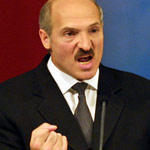
British lawyers have launched an innovative “prosecution kit” which gives citizens throughout the world the tools to pursue Belarusian dictator Alexander Lukashenko through the courts. Matthew Jury explains
(more…)
28 Sep 2011 | Leveson Inquiry
Index attended this morning’s hearing at the Royal Courts of Justice in which Daily Mail publisher Associated Newspapers expressed concern that the six-strong panel in the Leveson Inquiry into phone hacking lacks tabloid or regional newspaper experience.
Associated legal team argued that the panel, members of which Lord Justice Leveson stressed were appointed due to their expertise in a specific field, may be partial and “filter” their prejudices into judgments made throughout the inquiry. Leveson responded that the panel’s role is merely an advisory one, and that any conclusion of the inquiry “will be mine and mine alone”.
With the backing of Trinity Mirror, the Newspaper Publishers’ Association and Guardian News & Media, the publisher also argued that the panel should have more members, noting that the inquiry would “benefit from experts across the industry” that would “fill the gap” left by the lack of representation of mid-market or tabloid papers. A solicitor representing Associated said the omission of such bodies would be “unfortunate in such a major inquiry”.
Leveson’s six advisers are Sir David Bell, former chairman of the Financial Times; Shami Chakrabarti, director of civil rights group Liberty; Lord David Currie, former chairman of Ofcom; Elinor Goodman, former political editor of Channel 4 News; George Jones, former political editor of the Daily Telegraph; and Sir Paul Scott-Lee, former chief constable of West Midlands police.
Leveson argued that the essence of the panel, as well as upcoming seminars attended by core participants and non-core participants alike, was to encourage debate and provide a balance of views. He stressed,
“I am very conscious that I am stepping into a profession that is not the one that I spent 40 years of life in. It is critical that I obtain advice from those who have made their life in this area, not least because I would be keen to understand any flaws that I might have because of lack of experience.”
He concluded he would reserve a ruling on the application to invite further assessors and would provide a decision in due course.
Index will be tweeting from throughout the inquiry at @IndexLeveson
