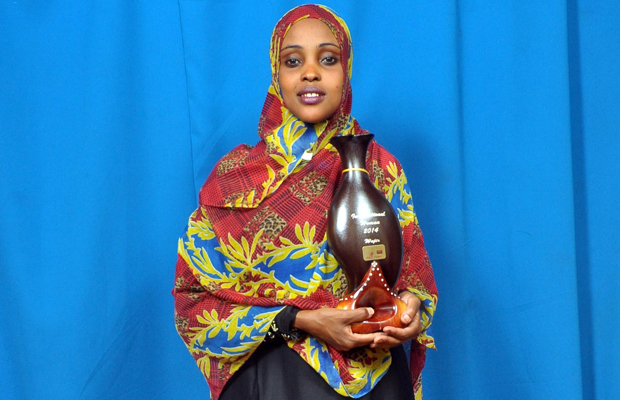
Amran Abdundi is a women’s rights activist based in northeastern Kenya. She runs the Frontier Indigenous Network, an organisation which mobilises female peace builders and rights activists to set up shelters along the dangerous border with Somalia. It offers first aid to the injured as well as to women and girls who have been raped, moving victims to a safer part of Kenya.
As well as protecting citizens endangered by the guerrilla activities of the Al Qaeda-linked group Al Shabaab, Abdundi and her organisation also help those fleeing drought and failed harvests in Somalia. Abdundi is also behind radio-listening groups for women, which share information about access to tuberculosis treatment, among other things.
In a society that teaches women to leave decision-making to men and to look down when men pass, Abdundi’s Frontier Indigenous Network empowers, educates and mobilises rural women to challenge such outdated social codes.
The Al Qaeda-allied Islamist group Al Shabaab has sown terror in the Kenya-Somalia border region, one of the world’s most inhospitable areas. Women in the region are often the victims of violence, rape and murder. The northern region of Kenya is one of deeply conservative social customs, in which a man owns property on a woman’s behalf – even when the woman has bought the land. In the environment Abdundi operates in, a quarter of Kenyan girls and women have endured genital mutilation, despite legislation outlawing the practice.
Abdundi told Index: “I want to see them go to school. I don’t want to see them moving here and there without education – early marriage and female circumcision are also major issues.”
She said that some of the initial challenges the organisation faced have been overcome. In the beginning it was hard to talk to parents about their girls and “how the women have suffered”, she explained. “But now they understand us. They know how good we are and we want to change their lives.”
One of Frontier Indigenous Network’s biggest achievements in 2014 has been in mapping out conflict areas in northern Kenya. It focuses on the factors which fuel armed violence occurring after peace agreements are signed between warring parties. Aware that small arms and light weapons were one of the biggest obstacles to peace in the region, Abdundi and her group mapped many of the weapons used by the combatants. She then instigated a regional agreement to pursue arms traffickers, closing boltholes used by smugglers along the Somali border and developing a register of all recovered weapons. The agreement also targeted a network of groups running an illegal arms trade.
Abdundi has established radio-listening groups specifically for women, in which she encourages them to challenge the repressive cultural values preventing women from being permitted to own property or livestock. She uses the radio groups to reach women with tuberculosis, educating them about access to treatment and breaking cultural beliefs that tuberculosis is caused by curses and bad omens.
Abdundi has also mobilised women along the Kenya-Somalia border to rise against Al-Shabaab, a militant terrorist group, by educating them on the dangers of following the doctrine propagated by the terror organisation; she has received a number of death threats as a result of this work. She has also campaigned against the practice of female circumcision in northern Kenya.
She said: “My dream is to help women, girls and children. I just want to see them doing good. That’s my dream.”
Professors Yaman Akdeniz and Kerem Altiparmak are cyber-law experts and internet rights activists who have campaigned vigorously against the Turkish government’s increasingly restrictive internet access laws. Together, they have raised repeated objections to the controversial Internet Law No 5651, which ostensibly blocked access to child pornography and other harmful content but has also been used to censor politically sensitive content such as pro-Kurdish or left-wing websites. It has been used to block around 50,000 websites.
In February 2014, then prime minister Recep Tayyip Erdogan increased the legislative reach of Law 5651, giving the country’s telecommunications authority (ICTA) more powers over Turkey’s internet users, such as storing user activity data for up to two years, or blocking URLs without court approval. Erdogan immediately made use of the latter opportunity by ordering the ICTA to block Twitter and YouTube in March 2014. Twitter had played a huge role in the escalation of Turkey’s Gezi Park demonstrations in 2013, during which many protesters were arrested and fined for posts to social media.
Social media channels were also being used to circulate damaging information about Erdogan and the AKP, his political party. Following revelations of widespread government corruption late in 2013, wiretapped phone conversations were leaked and spread via Twitter appearing to implicate Erdoğan and senior party members – one recording appears to include Erdogan telling his son to hide a large amount of cash.
He ordered the Twitter block in time to halt the spread of the injurious recordings before nationwide local elections at the end of March. Similarly, the YouTube block was instigated hours after a secret recording at Turkey’s foreign ministry, showing the government’s considerations for military involvement in Syria, was uploaded to the website.
In response to the blocks, Akdeniz and Altiparmak applied to the European Court of Human Rights to request an injunction against the ban. An administrative court in Ankara declared the ban illegal. After the government ignored this decision the pair applied to the highest court in Turkey, the Constitutional Court. Their case was successful, and Twitter was unblocked in April. Their advocacy efforts also helped lift the YouTube ban in June.
Despite their success, Akdeniz and Altiparmak say there is still a huge cause for concern. Even though Twitter and YouTube have now been unblocked, the legal framework for censorship has not been removed. In fact, as soon as Erdogan switched from prime minister to president in September 2014, he quietly slipped more amendments to 5651 through parliament, which allowed even more data logging and even quicker website blocking.
[vc_row][vc_column][vc_column_text]2015 Freedom of Expression Arts Journalism-winner Safa Al Ahmad has spent the last three years covertly filming a mass uprising in Saudi Arabia’s Eastern Province that had, until her film, gone largely unreported.
The ensuing documentary, Saudi’s Secret Uprising, drew widespread attention to a story that would otherwise have been lost to a media blackout.
“Winning the award has brought more exposure – both for credible investigative journalism from Saudi Arabia, and for my work.”[/vc_column_text][/vc_column][/vc_row][vc_row][vc_column][vc_basic_grid post_type=”post” max_items=”12″ style=”load-more” items_per_page=”4″ element_width=”6″ grid_id=”vc_gid:1501490894083-4f5433f2-0fb9-0″ taxonomies=”6932″][/vc_column][/vc_row]
Index on Censorship condemns the brutal murder of US-Bangladeshi blogger Avijit Roy. Roy, an atheist who advocated secularism, was hacked to death by a knife-wielding mob in Dhaka as he walked back from a book fair.
Index CEO Jodie Ginsberg said: “Our sympathies are with the family of Avijit Roy. Roy was targeted simply for expressing his own beliefs and we are appalled by his death and condemn all such killings.”
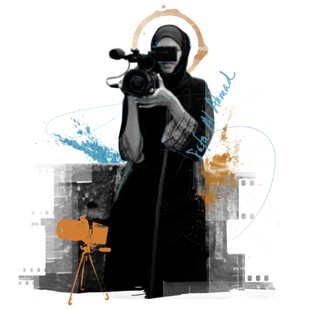 2015 Freedom of Expression Arts Journalism-winner Safa Al Ahmad has spent the last three years covertly filming a mass uprising in Saudi Arabia’s Eastern Province that had, until her film, gone largely unreported.