23 Mar 2018 | Campaigns -- Featured, Malta, Statements
[vc_row][vc_column][vc_column_text]
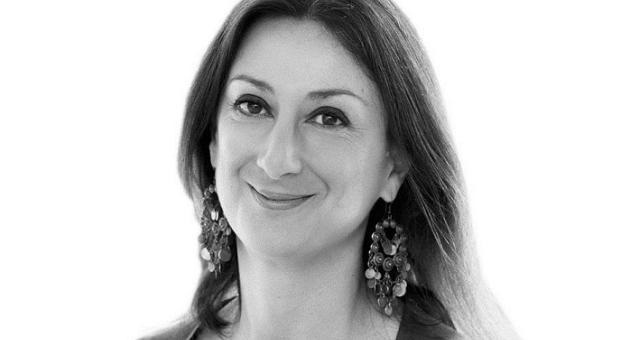
Daphne Caruana Galizia
We, the undersigning international organisations are closely monitoring the investigation of the murder of Maltese journalist Daphne Caruana Galizia and the related court proceedings in Malta.
Daphne Caruana Galizia was a journalist, a blogger, a mother of three. For years, she reported on corruption in her home country, despite being threatened continuously. She was still reporting, even when the Maltese police and other authorities failed to protect her adequately. Daphne Caruana Galizia was assassinated on 16 October 2017 by a car bomb. At the time, she was investigating complex allegations of corruption in an EU Member State.
The killing of a journalist on European soil, likely in retaliation for investigative reporting is unacceptable. Journalism should not be a dangerous profession right in the heart of the European Union. This murder signals the urgent need to strengthen the protection of journalists in the EU Member States and to document and promote accountability for violations of press freedom.
Currently, there are at least three legal proceedings taking place in Malta in an attempt to investigate Daphne Caruana Galizia’s assassination, namely the case filed before the Constitutional Court to remove the deputy police commissioner from the investigation because of conflict of interest, the Court of Magistrates’ inquiry, and the Malta police investigation. The Malta police have identified three suspects. The pre-trial procedure to collect present evidence against them is currently taking place.
We urge you, as a diplomat of your country, to monitor the court proceedings and collect evidence on whether they are being carried out in line with the best international standards.
The next four compilation of evidence hearings will take place on 26 March, and on 12, 20, and 26 April 2018. The next hearing at the Constitutional Court is on 12 April 2018.
Besides showing solidarity, we believe it is crucial to make clear that a case like this cannot be followed by impunity. We are continuing to watch the developments in Daphne Caruana Galizia’s case closely. Malta is a member state of the European Union. Daphne Caruana Galizia and her family are entitled to full justice. The Maltese authorities have the responsibility to provide it. In addition, EU diplomats have the special responsibility to send a strong signal in support of media freedom and respect for human rights and democratic principles.
So far, the European institutions and member-states do not sufficiently monitor the court hearings in Malta. There have been concerns expressed by the victim’s family, journalists, and other civil society actors with regard to the independence and professionalism of the judicial and the prosecutorial system in Malta. International lawyers at Doughty Street Chambers have advised Daphne Caruana Galizia’s family that the investigation into her assassination violates procedural requirements of Article 2 of the European Convention on Human Rights (ECHR). Please find the lawyers’ advice here.
We would be happy to provide you with further information and contacts on the ground. Your engagement in this case is setting a standard and precedent for what is permissible in the European Union.
Yours sincerely,
European Centre for Press and Media Freedom
Article19
Committee to Protect Journalists
European Federation of Journalists
Index on Censorship
PEN International
PEN England
Reporters without Borders[/vc_column_text][/vc_column][/vc_row][vc_row][vc_column][vc_basic_grid post_type=”post” max_items=”12″ style=”load-more” items_per_page=”4″ element_width=”6″ grid_id=”vc_gid:1521808641883-9d60e560-1d86-4″ taxonomies=”18782, 18781″][/vc_column][/vc_row]
23 Mar 2018 | Press Releases
 Ein Fonds in Höhe von EUR 450.000 zur Unterstützung des grenzüberschreitenden, investigativen Journalismus in der Europäischen Union wird heute vom Europäischen Zentrum für Presse- und Medienfreiheit (ECPMF) und dem Internationalen Presse-Institut (IPI) präsentiert.
http://www.ij4eu.net/
Der Fonds Investigativer Journalismus für Europa (# IJ4EU) soll die Zusammenarbeit zwischen JournalistInnen und Nachrichtenredaktionen in der Europäischen Union fördern und stärken, die im öffentlichen Interesse und von grenzüberschreitender Bedeutung sind. Der Fonds zielt darauf ab, Untersuchungen zu unterstützen, die die Überwachungsfunktion der Medien widerspiegeln und die Öffentlichkeit dabei unterstützen, die Verantwortlichen für ihr Handeln und ihre Verpflichtungen zur Rechenschaft zu ziehen. Damit soll ein Beitrag zur Nachhaltigkeit von Demokratie und Rechtsstaatlichkeit in der EU geleistet werden.
Der Fonds wird von IPI verwaltet, einem globalen Netzwerk von RedakteurInnen, MedienvertreterInnen und führenden JournalistInnen, die sich seit 1950 der Verteidigung der Pressefreiheit widmen.
2018 können grenzübergreifende Teams aus InvestigativjournalistInnen und/oder Medien aus mindestens zwei EU-Ländern Zuschüsse bis zu einem Höchstbetrag von 50.000 EUR beantragen, um Untersuchungen zu einem Thema von grenzüberschreitender Relevanz und von öffentlichem Interesse durchzuführen.
Vorgeschlagene Projekte müssen darauf abzielen, neue Informationen aufzudecken. Bereits bestehende oder neu für ein # IJ4EU-Projekt gebildete Investigativgruppen können sich gleichfalls bewerben. Bereits laufende, aber unvollständige Ermittlungen ermöglichen es ebenfalls, Mittel für die Veröffentlichung einer zu veröffentlichen Reportage zu beantragen. Besonders ermutigt werden sollen Teams von JournalistInnen oder Medien, die auf lokaler Ebene außerhalb der Hauptstädte oder in Ländern arbeiten, in denen investigativer Journalismus besonders bedroht ist.
Das Programm plant alle Plattformen zu finanzieren, einschließlich Print, Rundfunk, Online-Medien, Dokumentarfilm und Multi-Plattform-Storytelling.
Um förderfähig zu sein, müssen die vorgeschlagenen Projekte darauf abzielen, bis spätestens 31. Dezember 2018 in mindestens zwei EU-Ländern von angesehenen Nachrichtenagenturen oder Plattformen veröffentlicht (und in veröffentlichbarer Form verfügbar) zu sein
Bewerbungsschluss ist der 3. Mai 2018, an dem auch der weltweite Tag der Pressefreiheit stattfindet. Bewerbungen müssen in englischer Sprache eingereicht werden. Antragsteller müssen eine detaillierte Projektbeschreibung, Informationen zum Untersuchungsteam, einen Forschungs- und Veröffentlichungsplan, ein Budget und eine Risikobewertung vorlegen.
Eine unabhängige Jury wird die zu finanzierenden Projekte auswählen und mit allen erfolgreichen Bewerbern bis zum 15. Juni 2018 Verträge abschließen.
Um vollständige Informationen über Förderfähigkeit, Bewerbungen und den Auswahlprozess zu erhalten, besuchen Sie bitte die Website des Fonds: http://www.ij4eu.net/
“Der investigative Journalismus, der in einer funktionierenden Demokratie einen unverzichtbaren Dienst leistet, steht in der EU unter Druck”, sagte Barbara Trionfi, Exekutivdirektorin des IPI. “Die Bereitstellung von finanzieller Unterstützung für Investigativprojekte trägt dazu bei, dass Informationen über Themen wie Korruption, Finanzkriminalität, Menschenrechtsverletzungen und Umweltschäden in die Öffentlichkeit gelangen.”
Sie fügte hinzu: “Da solche Ermittlungen heutzutage selten auf einen einzelnen Staat beschränkt sind, ist es für Teams von Journalisten von entscheidender Bedeutung, über Grenzen hinweg an Themen zu arbeiten. Wir sind stolz darauf, dass # IJ4EU eine Gelegenheit dazu bieten wird.”
Für weitere Informationen kontaktieren Sie bitte:
Javier Luque
Head of Digital Media
IPI
Email: [email protected]
Tel.: +43 1 5129011
22 Mar 2018 | Austria, Europe and Central Asia, Mapping Media Freedom, Media Freedom, media freedom featured, News
[vc_row][vc_column][vc_column_text]
The new populist government wants to bring major change to Austrian society. Major shifts are expected in the country’s media landscape.
Many experts such as the president of the Austrian Journalism Club (ÖJC), Fred Turnheim, voiced their concerns and warned of the dangers of a democracy-hostile information policy: “This enforced conformity of information coming from the individual ministries and departments of the Federal Government is an authoritarian measure of the Federal Chancellery and contradicts pluralistic media work in a democratic society.”
Since the government’s inauguration in December 2018, journalists have been publicly attacked by politicians and media outlets defamed for critical journalism. Financial cuts on public media outlets are also on the government’s agenda. Hannes Tretter, co-founder of the think tank Boltzmann Institute of Human Rights, says: “According to Article 10 of the European Convention of Human Rights and Article 11 of the EU Charter of Fundamental Rights, governments must not only respect but guarantee the freedom of the media that is based on the principles of pluralism, diversity, tolerance and broadmindedness. Only these principles can enable citizens to have access to a variety of information and opinions which is essential for a living democratic society. Thus, any attacks against journalists have to be examined diligently on the basis of these measures.”
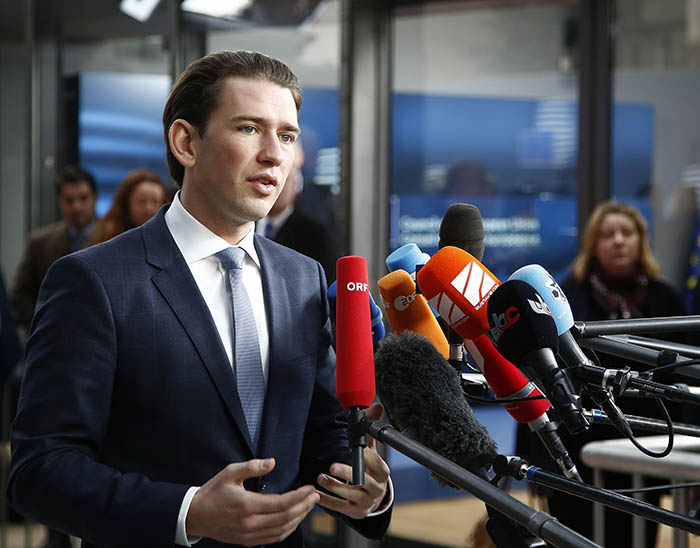
Changes in Austria’s media policy became apparent at the first joint press conference of Austrian chancellor Sebastian Kurz of the People’s Party (ÖVP) and vice-chancellor Heinz-Christian Strache of the far-right Freedom Party (FPÖ), when they announced they would no longer meet directly with the press, as has been the tradition in Austria. Instead, former diplomat Peter Launsky-Tieffenthal has been named an official government spokesperson. While this structure is not uncommon around the world, the Austrian arm of Reporters Without Borders and ÖJC raised concerns, saying that the decision could be a way for politicians to avoid questions and undermine the public’s right to information. ÖJC president Fred Turnheim addressed the chancellor directly in a press release: “As journalists, our work is based on first-hand information. If you want to avoid false interpretations, you need to dissolve the function of the governmental spokesperson.”
Concerns for restrictions on access to information for journalists intensified in February 2018 when Kurz declared the dissolution of the Federal Press Service (Bundespressedienst), which was founded in 1920 and serves as the focal point of communication between the Federal Chancellery and the press.
Concerning the former far-right opposition party, FPÖ has been well known for criticising the press for what it sees as a liberal bias and lack of objectivity. This criticism of the media came as the party has appointed the former editor-in-chief of online portal unzensuriert.at, Alexander Höferl, as head of communications at the interior ministry. Unzensuriert publishes a stream of manipulative and conspiracy-driven news pieces that mainly target migrants, Muslims and political opponents of the FPÖ, as an analysis of the magazine Profil shows.
Now, as a coalition partner, FPÖ threatens to use its clout in the government to significantly cut Austria’s public media as indicated in the government programme. President of Reporters Without Borders, Rubina Möhring, tells Media Mapping Freedom: “The established professionalised media policy hampers access to information and is as much concerning as the attacks of public media outlets. It is important to note that public media, which is not to be confused with state media, holds the mandate of political independence in service of informing the public and needs to be protected.”
Defaming media outlets and accusing them of manipulating information or suppressing the word of the state has become a tactic to diminish the public’s trust in the press. Several FPÖ ministers, including the infrastructure minister, have declared their dislike for government funding of the country’s public service broadcasting corporation ORF. The vice-chancellor has been most direct by calling the ORF “a place where lies become news”, as Index on Censorship’s Media Mapping Freedom project reported. Terms like “fake news” and “lügenpresse” (lying press) have been taken up not only by nationalist movements but have found their way into Austrian public debates and online forums.
ORF — Austria’s largest media outlet with up to four million viewers in a country of 8.7 million people — is primarily financed through a tax, which the government wants to scrap. While ÖVP has only confirmed plans to reform ORF as indicated in the government programme, Strache said: “We want to abolish the ORF excise tax. This is one of the major goals of this government”. ORF editor committee, as well as journalists such as Daniela Kittner, suspect that this is part of the government’s — in particular FPÖ’s — intention to gain political influence through the media sector. On 20 February 2018 the chairmanship of the new ORF supervisory board was consigned to the FPÖ. The current executive committee, which was put in place by the last government, is planned to be restructured as well. Some expect these structural changes of ORF to be part of an effort to weaken public-service broadcasting altogether as media minister Gernot Blümel publicly announced on several occasions that the government intends to strengthen private broadcasters while remaining vague on plans regarding ORF reforms.
Print media — the second biggest source of information in Austria — is also facing difficulties. Wiener Zeitung, the country’s oldest daily newspaper, derives most of its income from public notices that all companies must publish. The coalition government has announced that it intends to end the mandatory requirement. Additionally, the concentrated ownership of the existing 14 daily newspapers and strength of tabloid newspapers undermine the country’s media plurality. The dominant newspaper, tabloid Kronenzeitung, reaches about a third of Austrians. Along with many other print media outlets in Austria, it is reliant on government and political advertising. In 2016 around €16 million was spent by government ministries for advertisement in media outlets. In comparison, Germany spent slightly less despite its significant size difference. Altogether, government ministries, public institutions and enterprises invested around €177 million in political and economic media advertisements in 2016. On the top of the list of beneficiaries is Kronenzeitung. Between April and June 2017, they received €5 million, followed by ORF with €4.9 million. The other two other major tabloid newspapers Österreich and Heute received $3 million each. While concentrated ownership is a structural obstacle to a free and pluralistic media, the large-scale political and economic advertisement industry in Austria adds to the vulnerability of the press to influence by the interests of their donors.
Harald Fiedler, a journalist for Der Standard who regularly writes about the media, highly doubts that Wiener Zeitung will be able to survive. Wolfgang Riedler, the executive director of the newspaper, confirmed in an interview with the newspaper Der Standard that immediate restructuring would be necessary “should the mandatory announcements of companies be abolished. […] If you do not want to lose a quality medium that appears all over Austria, you have to look for a model that will ensure further funding”.
According to anonymous sources of the left-leaning weekly newspaper Der Falter, which itself is continually attacked for its investigative journalism and dismissed as “lügenpresse”, the government plans to close down the public national radio station FM4 due to its “failure to fulfil its educational mandate”. FM4 is well known as an alternative radio station to ORF for young people. While the alleged plans have been dismissed by the ORF and the government, the NGO #aufstehn and Reporters without Borders Austria have started a petition against FM4’s potential shutdown.
Aside from threats to the country’s public media outlets, individual journalists have been singled out for defamation, cyberbullying and restricted access to information.
In the first few weeks of 2018, FPÖ and affiliated youth organisations have published photos and contact details of journalists and actively encouraged its followers to target journalists online. The articles, which were mostly written by far-right media outlets such as Wochenblick, Info-Direkt and unzensuriert.at, were then shared on Facebook by high-ranking FPÖ politicians, including the vice chancellor. As a result, the journalists involved received numerous difficulties, including Colette Schmidt, a journalist at newspaper Der Standard, and Hanna Herbst, deputy editor-in-chief of the news outlet Vice in Austria, who were both subject to cyberbullying campaigns.
“It is clear to me that the intention is to silence journalists who are critical of the new government. FPÖ in particular has a strong network online which it uses systematically to intimidate journalists. This is the first time I have received threats of such an intensity,” Herbst told Mapping Media Freedom.
She characterised the harassment as gender specific. “Female journalists are more likely to be objectified and sexually harassed, but to me, it is important to show that those attacks won’t silence me. I have received a lot of solidarity and I plan to take legal action in order to show the illegitimacy of such acts.”
Tretter adds: “Uncovering anti-Semitic and racist statements and activities of fraternities is a legally required obligation of the State, which is based on the Austrian Prohibition Act of 1947 and the International Convention on the Elimination of All Forms of Racial Discrimination. Since it is the media’s task in a democratic society to serve as a ‘public watchdog’, journalists shall not be hindered in fulfilling their role.”
In another troubling development, selected media outlets are being excluded from political meetings. Starting in October 2017, when ÖVP denied photographers access to proximity talks, the Social Democratic Party (SPÖ) has now denied two newspapers access to a background discussion regarding a topic which both newspapers have previously critically reported on.
Rubina Möhring, president of Reporters without Borders Austria, voices her concerns for the government’s new political direction, but hopes for a strong civil movement to hold against the new political wind. “Attacks on journalists and media outlets are attacks against the right to information and attempts of intimidation are the first steps to an enforced conformity of the media,” she tells Mapping Media Freedom. “During World War II, Austria was stripped of press freedom as the protection of censorship by law was repealed. Critical journalism was brutally silenced while the Nazis made excessive use of propaganda news. We don’t want history to repeat itself. This is why now, more than ever, it is important to stand up for our rights as journalists and citizens.”
This article was updated on 9 April 2018 to reflect the correct title of an FPO minister. [/vc_column_text][/vc_column][/vc_row][vc_row][vc_column][vc_basic_grid post_type=”post” max_items=”4″ element_width=”6″ grid_id=”vc_gid:1523273223680-be701832-3026-6″ taxonomies=”6564″][/vc_column][/vc_row]
22 Mar 2018 | Press Releases
Un fonds de jusqu’à 450 000€ consacré au soutien du journalisme d’enquête transfrontalier dans l’Union Européenne a été lancé aujourd’hui par l’European Centre for Press and Media Freedom (ECPMF) et l’International Press Institute (IPI).
http://www.ij4eu.net/
Le fonds « Investigative Journalism for Europe » (#IJ4EU) vise à encourager et renforcer la collaboration entre les journalistes et les salles de rédaction établis dans l’Union Européenne concernant les révélations d’intérêt public et ayant une porté transfrontalière. L’objectif du fonds est de soutenir les enquêtes qui reflètent le rôle de garde-fou des médias et qui aident le public à tenir les dirigeants responsables de leurs actions et à leur faire respecter leurs obligations. De ce fait, il vise à contribuer à la durabilité de la démocratie et de l’État de droit dans l’UE.
Le fonds sera géré par l’IPI, un réseau international de rédacteurs, de responsables des médias et de journalistes de renom qui défend la liberté de la presse depuis 1950.
En 2018, les équipes transfrontalières de journalistes et/ou organes de presse consacrés au journalisme d’enquête basés dans au moins deux pays de l’UE pourront soumettre une demande de subvention d’un montant maximal de 50 000€ afin de produire des enquêtes sur un sujet d’intérêt public et transfrontalier.
Les projets proposés doivent viser à révéler de nouvelles informations. Les équipes d’enquête déjà existantes ainsi que celles formées pour un projet #IJ4EU sont invitées à soumettre leur demande. Les enquêtes en cours mais incomplètes peuvent solliciter des fonds pour compléter un reportage pouvant être publié. En particulier, les équipes de journalistes ou les organes de presse basés en dehors de capitales ou de grandes villes ou dans des pays où le journalisme d’enquête est particulièrement menacé sont invités à soumettre leur demande.
Le programme envisagera le financement de toutes les plateformes, y compris l’impression, la diffusion, les médias en ligne, la réalisation documentaire et les récits multiplateformes.
Pour être éligible au financement, les projets proposés doivent viser à être publiés (et être disponibles dans un format publiable) par des médias ou plateformes respectés dans au moins deux pays de l’UE d’ici le 31 décembre 2018 au plus tard.
L’échéance pour les demandes est le 3 mai 2018, la Journée mondiale de la liberté de la presse. Les candidatures doivent être soumises en anglais. Les candidats devront communiquer une description détaillée du projet, des informations sur l’équipe d’enquête, un plan de recherche et de publication, un budget et une évaluation des risques.
Un jury indépendant sélectionnera les projets à financer dans le but de conclure des accords avec les candidats retenus d’ici le 15 juin 2018.
Veuillez visiter le site web du fonds pour soumettre votre candidature et lire les informations complètes concernant l’éligibilité et les processus de candidature et de sélection.
« Le journalisme d’enquête, qui joue un rôle essentiel dans toute démocratie qui fonctionne, est mis sous pression dans toute l’UE », dit Barbara Trionfi, directrice générale de l’IPI. « Apporter un soutien financier pour soutenir les projets est une manière d’aider à assurer que les informations concernant des sujets tels que la corruption, le crime financier, les violations des droits de l’homme et les dommages environnementaux atteignent le public. »
Elle ajoute : « Comme de nos jours, de telles enquêtes se limitent rarement à un seul pays, il est essentiel que les équipes de journalistes puissent travailler sur ces sujets à l’échelle transfrontalière. Nous sommes heureux que #IJ4EU puisse offrir une telle opportunité. »
For any questions, please contact:
Javier Luque
Head of Digital Media
IPI
Email: [email protected]
Tel.: +43 1 5129011