NEWS

Truth dies when you fire the fact-checkers
Experts who can spot the red flags and contextualise the information we receive aren’t free-speech enemies
18 Mar 2026

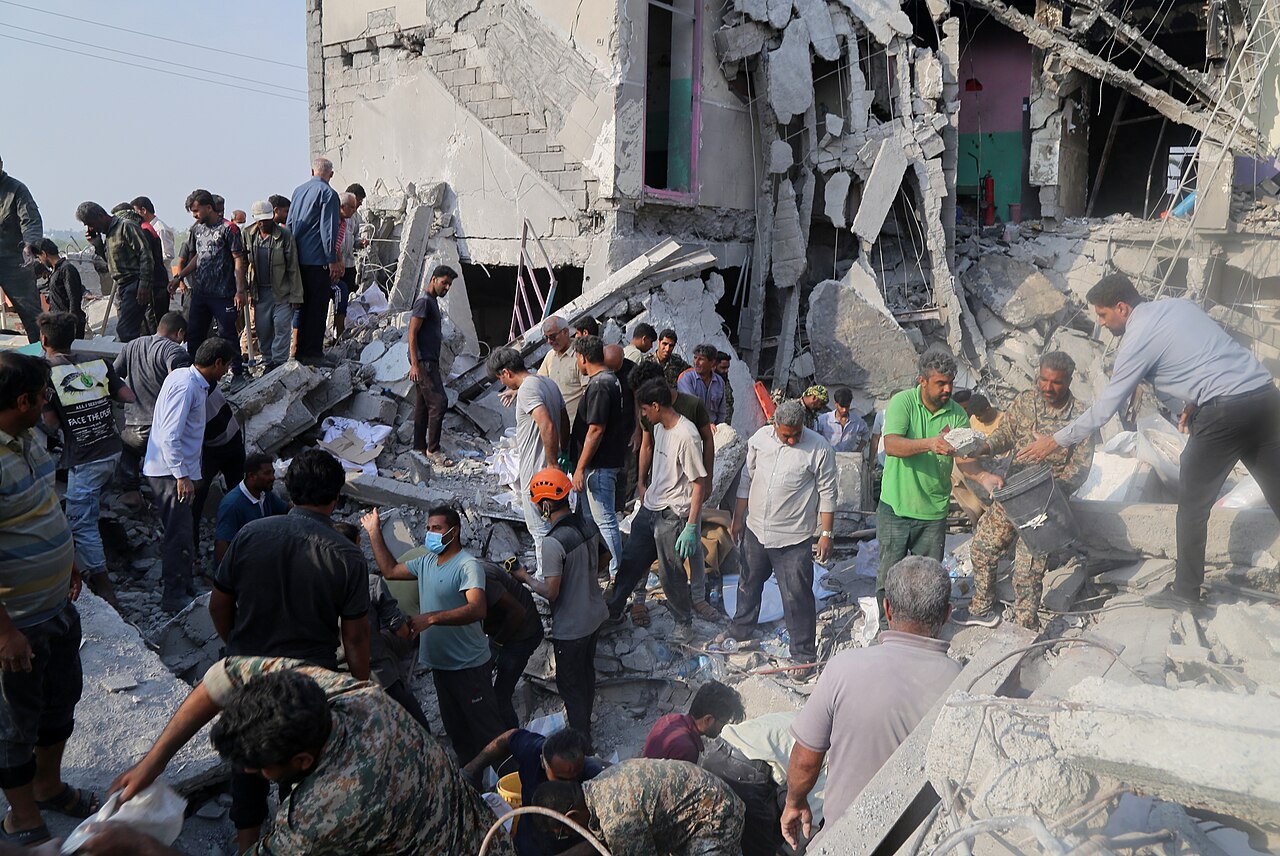
Rescuers at Minab school. Photo by: Mehr News Agency, CC BY 4.0

What actually happened when the Minab school in Iran was bombed matters.

For a few moments last week I thought the Italian novelist Elena Ferrante had died. She hadn’t. It was fake news, spread on X. Before her death was debunked, thousands had engaged with the “news”. Stories like this (and there have been plenty of other faux celebrity deaths) do so well because of our inherent cognitive bias. We see them, we get very emotional – Ferrante is a beloved author – and in that moment we short-circuit critical thinking and head straight to a response – outrage, upset, even schadenfreude.

It’s a similar story with Iran. Israel, the USA, the Iranian regime – all elicit strong emotions, which partly explains why the responses to what happened at the Minab school bombing have been so tense and contradictory. Major public figures, from politicians to comedians, have amplified their version of what they think happened. It’s prompted the New York Times and others to try and decipher, in this incredibly challenging media landscape, just what exactly did take place. Because facts matter.

Few would publicly disagree with this principle and yet cognitive bias today is extending to how people approach fact-checkers. For some they’re censorious liberals, intent on silencing right-wing voices. For others they’re essential soldiers fighting for democracy, and indeed free speech, in the age of Russian troll machines.

Index has always sought to identify issues with handling mis- and disinformation – false flags and stories that change as new evidence emerges. Ultimately we believe that with advances to artificial intelligence and ample examples of online deception, we need a lot more people investigating, highlighting and contextualising where our information comes from.

The Trump administration isn’t with us. Since Donald Trump’s return to power, not only respected journalists and media outlets, but mis- and disinformation researchers have been in his firing line. These researchers have battled federal funding cuts, a surge in abuse, even death threats. In December five people were denied visas to the USA, accused of being part of the “global censorship-industrial complex”. More could fall prey. Plans are afoot for non-citizens working in the space to have their visas revoked or denied and face detention and deportation.

The researchers are fighting back. This week the Knight First Amendment Institute and Protect Democracy filed a lawsuit on behalf of the Coalition for Independent Technology Research (CITR), challenging the constitutionality of the new immigration policy. The claimants argue that it violates their First Amendment rights and is intended to chill independent research about social media and other internet platforms.

“This policy is meant to censor researchers into silence and keep the public in the dark, and that’s exactly what it’s doing,” said Brandi Geurkink, executive director at CITR.

We agree. A viral post suggesting Ferrante is dead doesn’t matter hugely. Information on how the war is being conducted in Iran does. Experts who can spot the red flags and contextualise the information we receive aren’t free-speech enemies and branding them as such is a less than subtle way to silence them.

Support free expression for all


At Index on Censorship, we believe everyone deserves the right to speak freely, challenge power and share ideas without fear. In a world where governments tighten control and algorithms distort the truth, defending those rights is more urgent than ever.

But free speech is not free. Instead we rely on readers like you to keep our journalism independent, our advocacy sharp and our support for writers, artists and dissidents strong.

If you believe in a future where voices aren’t silenced, help us protect it.

Make a £10 monthly donation

At Index on Censorship, we believe everyone deserves the right to speak freely, challenge power and share ideas without fear. In a world where governments tighten control and algorithms distort the truth, defending those rights is more urgent than ever.

But free speech is not free. Instead we rely on readers like you to keep our journalism independent, our advocacy sharp and our support for writers, artists and dissidents strong.

If you believe in a future where voices aren’t silenced, help us protect it.

Make a £20 monthly donation

At Index on Censorship, we believe everyone deserves the right to speak freely, challenge power and share ideas without fear. In a world where governments tighten control and algorithms distort the truth, defending those rights is more urgent than ever.

But free speech is not free. Instead we rely on readers like you to keep our journalism independent, our advocacy sharp and our support for writers, artists and dissidents strong.

If you believe in a future where voices aren’t silenced, help us protect it.

Make a £10 one-off donation

At Index on Censorship, we believe everyone deserves the right to speak freely, challenge power and share ideas without fear. In a world where governments tighten control and algorithms distort the truth, defending those rights is more urgent than ever.

But free speech is not free. Instead we rely on readers like you to keep our journalism independent, our advocacy sharp and our support for writers, artists and dissidents strong.

If you believe in a future where voices aren’t silenced, help us protect it.

Make a £20 one-off donation

At Index on Censorship, we believe everyone deserves the right to speak freely, challenge power and share ideas without fear. In a world where governments tighten control and algorithms distort the truth, defending those rights is more urgent than ever.

But free speech is not free. Instead we rely on readers like you to keep our journalism independent, our advocacy sharp and our support for writers, artists and dissidents strong.

If you believe in a future where voices aren’t silenced, help us protect it.

Donate a different amount

Jemimah Steinfeld

Jemimah Steinfeld has lived and worked in both Shanghai and Beijing where she has written on a wide range of topics, with a particular focus on youth culture, gender and censorship. She is the author of the book Little Emperors and Material Girls: Sex and Youth in Modern China, which was described by the FT as "meticulously researched and highly readable". Jemimah has freelanced for a variety of publications, including The Guardian, The Telegraph, The Independent, Vice, CNN, Time Out and the Huffington Post. She has a degree in history from Bristol University and went on to study an MA in Chinese Studies at SOAS.

READ MORE

CAMPAIGNS

SUBSCRIBE

SUPPORT INDEX'S WORK