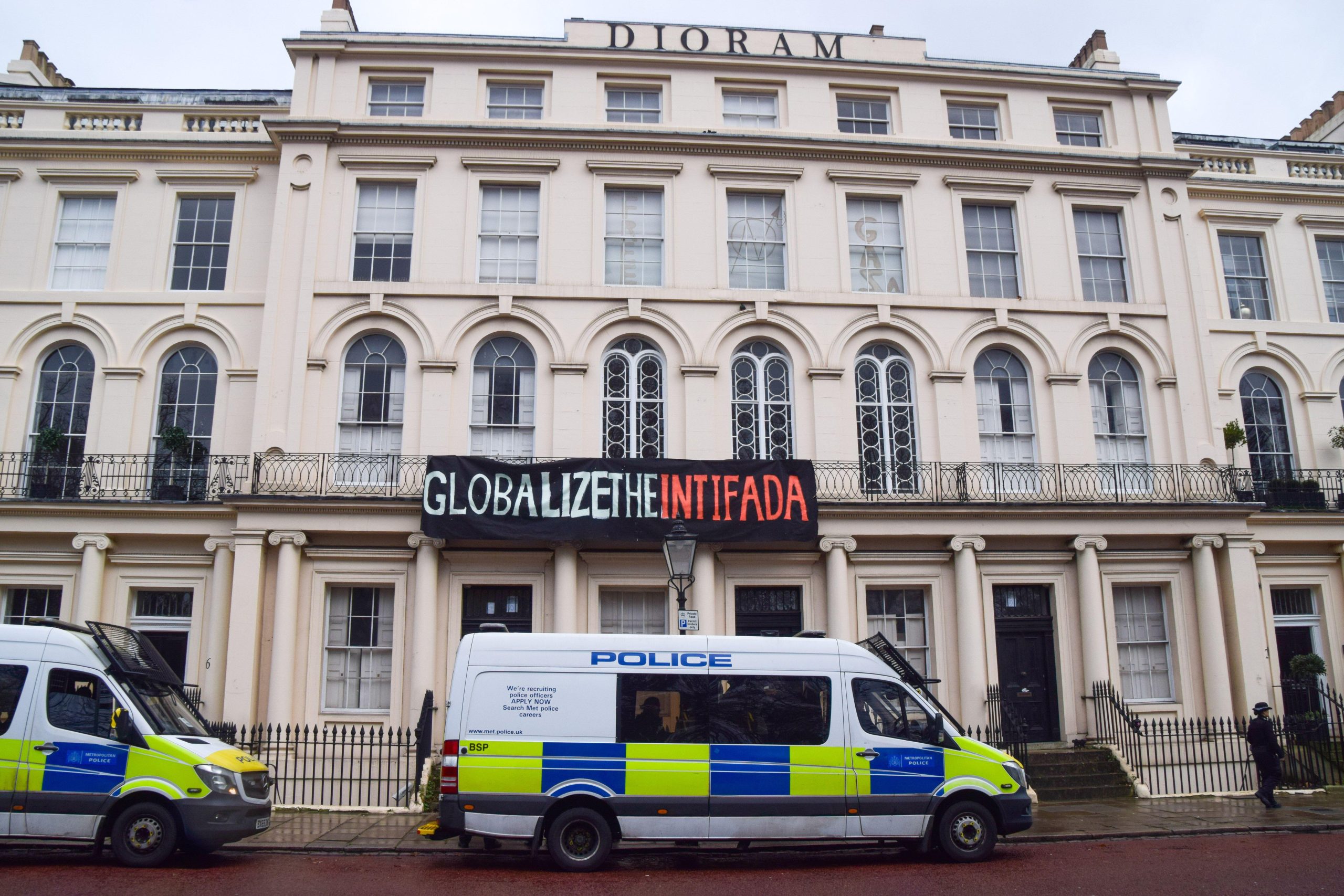
On Wednesday Greater Manchester Police and Metropolitan Police said they’d arrest individuals who amplify the slogan “globalise the intifada”. They clearly meant business. No sooner had they made the announcement that they arrested two for just that. This comes in the wake of the atrocity on Bondi Beach, Sydney, in which fifteen people were killed. This attack was unambiguously antisemitic. It followed the murder of two Jewish people on Yom Kippur in Manchester and two people in Washington DC leaving an event at the Capital Jewish Museum. It followed a foiled plot for the mass murder of Jews in Preston. All of these in addition to skyrocketing incidents of everyday antisemitism.
The case made by Sir Mark Rowley and Sir Stephen Watson is that the recent series of antisemitic attacks since 7 October 2023 have changed the context in which the phrase “globalise the intifada” should be understood.
Whenever speech is restricted, it rightly comes onto our radar and our instinct is to scrutinise such decisions closely. As a matter of principle we support the right of anyone to speak freely as long as their words are lawful and are not obviously intended to cause physical harm to others. Thus we have always defended a wide range of speech, including speech that is offensive, sometimes deeply so, or unsettling, but we do not defend hate speech or incitement to violence. This approach is in line with Article 10 of the European Convention on Human Rights, which protects freedom of expression as a qualified right.
Ultimately our view of this particular ban will rest on how the slogan “globalise the intifada” is understood, and whether it amounts to hate speech and incitement or not. People will argue both sides and indeed have way before Wednesday’s news. New York mayor-elect Zohran Mamdani, for example, has justified the words – but he has also said that it’s not language he’d use.
Index is in the market of words because words matter. Words can bring about positive change, which is why autocrats fear them and try to control them. They can also bring about harm. But proving when speech leads to harm is very difficult. In the end, we intend to see what the courts decide in this particular case before taking a final position.
Has the space for ambiguity around the words “globalise the intifada” lessened since Bondi? Perhaps. However, from Index’s viewpoint, the state – the police and the CPS – will need to demonstrate its case that these words are harmful in and of themselves. Where meaning is genuinely ambiguous, we always argue that the criminal law should tread carefully. Criminalisation should not be the default response to contested political speech. Slippery slopes are not mere abstractions.
There is another dimension too. When we at Index think about bans we don’t just think about whether they’re justified, we interrogate whether they’ll bring about the intended result. In this case the aim of a ban is said by the police chiefs to tackle antisemitism. It’s clearly a justifiable aim. But history does not offer encouragement that bans on speech reduce prejudice.
However, as Zohran Mamdani’s refusal to use the slogan implies, freedom of expression includes not only the right to speak but the responsibility to do so with care, especially in times as volatile as these. The right to say the words does not carry a compulsion to do so, particularly in circumstances where the consequences have been demonstrated. Words matter, yes. But lives – black, white, Israeli, Palestinian, Jew, non-Jew – matter more.