30 Mar 2017 | media freedom featured, News
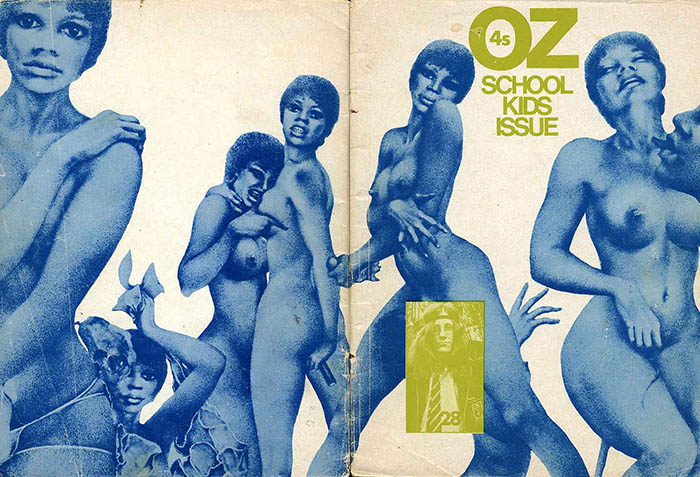
[vc_row][vc_column][vc_custom_heading text=”This is the fourth in a series of articles exploring media freedom drawn from the archives of Index on Censorship magazine. In one of barrister Sir John Mortimer’s last interviews before he died in January 2009, he talked to Index on Censorship about the notorious Oz trial of 1971, as well as Gay News and Inside Linda Lovelace, two other publications he defended. Here we reproduce that interview. Oz was a satirical, underground magazine founded in Australia in the 1960s. The editors of the London edition – Richard Neville, Jim Anderson and Felix Dennis – were prosecuted under the Obscene Publications Act in 1971 for an issue edited by teenagers. ” font_container=”tag:p|font_size:24|text_align:left” google_fonts=”font_family:Libre%20Baskerville%3Aregular%2Citalic%2C700|font_style:400%20italic%3A400%3Aitalic”][vc_column_text]
Index: What were the grounds for prosecution?
John Mortimer: Well, it was sort of the birth of that particular Obscene Publications Act [1959], which was Roy Jenkins’s doing [Jenkins was a principal sponsor of the bill as a backbench MP]. It was meant to be liberalising because it allowed defences of literary merit and scientific merit and all sorts of “bits” of merit. It was a test of that and the Obscene Publications Act, which was meant to be a work of great liberality. It would test obscenity, which was something that would tend to deprave and corrupt the people who were likely to read it. But then there were numerous defences –– that it was of literary merit or historical merit or scientific merit and so on. It seemed rather strange you could be depraved and corrupted, and on the other hand you knew more about history –– that could be a defence. So it never ever seemed to me to be a particularly sensible piece of legislation.
Index: What did you think of it first of all, when you discovered what the charges were?
John Mortimer: It was the schoolkids Oz and nobody wanted to do it. Everybody turned it down. They thought it was disgraceful, defending the schoolkids Oz like that. Numerous QCs turned it down.
Index: What were your tactics for defence? What did you think was the best
way to tackle it?
John Mortimer: In any such case, make it funny, try and make it funny. Then there was Geoffrey Robertson. He was at that time a student at Oxford. But he was Australian, so he knew them all [the Oz editors] very well. He came and was a great help and was very good at
looking up the law.
Index: When you gave your opening speech, you talked about this case “standing at the crossroads of liberty”. Did you think that it was going to be a very important case?
John Mortimer: Yes, I suppose I did. I thought it was a very confused Act of Parliament, which I still do.
Index: Why did you think it was confused?
John Mortimer: Because you could be depraved and corrupted and yet you could be improved and get off. And I think the idea of being depraved and corrupted by a book is . . . nobody’s ever said what that really meant.
[/vc_column_text][/vc_column][/vc_row][vc_row equal_height=”yes” css=”.vc_custom_1490025191055{background-color: #dd3333 !important;}” el_class=”text_white”][vc_column width=”1/2″][vc_custom_heading text=”Protect Media Freedom” use_theme_fonts=”yes” link=”url:https%3A%2F%2Fwww.indexoncensorship.org%2Fdefend-media-freedom-donate-index%2F|||”][vc_column_text]
Reporters working to share the truth are being harassed, intimidated and prosecuted – across the globe.[/vc_column_text][/vc_column][vc_column width=”1/2″ css=”.vc_custom_1490025163341{background-image: url(https://www.indexoncensorship.org/wp-content/uploads/2013/08/newspapers.jpg?id=50885) !important;background-position: center !important;background-repeat: no-repeat !important;background-size: cover !important;}”][/vc_column][/vc_row][vc_row][vc_column][vc_column_text]
Index: Geoffrey Robertson described the trial as a ‘collision of cultural incomprehension’ – the fusty old establishment not remotely understanding the 1960s alternative culture. Did you see it like that yourself?
John Mortimer: I don’t know. I suppose it was –– but I don’t suppose the people out on the street really cared one way or the other.
Index: But in terms of the witnesses you called, when one looks at that –– George Melly, John Peel, Felix Topolski –– it reads like a sort of roll call of the artists and musicians of the day. So in that sense it almost became an arena for the defence of popular culture.
John Mortimer: Yes, if you can call it popular culture. The real thought about the whole case was that the magazine was a load of rubbish. We weren’t defending anything with any particular merit really. We were defending a principle I suppose –– that you shouldn’t have any censorship, that nobody should tell you what to read or write. It’s entirely your own business.
Index: And do you think that the ultimate success of the trial actually was a big step forward in changing that attitude?
John Mortimer: Yes. Well, if it had been lost entirely it would have been a big step back, I suppose. But there had been a lot of cases before that. There had been Fanny Hill [a new paperback edition was banned in the UK in 1963].
Index: What did you think of the judge [Michael Argyle QC]? He gave you a
hard time.
John Mortimer: The judge was an idiot. We gave the judge a harder time than he gave us. The judge was a total buffoon. It started off with a hilarious thing . . . I got there every morning and the prosecutor came and pushed his way past my knees and said, “Give us a kiss, darling.” I said, “Come on, get on with prosecuting then.”
Index: Do you think he was enjoying himself?
John Mortimer: Yes, I suppose everybody enjoyed themselves. There was an
usher who had been the judge’s sergeant major or something in the army and he called him sergeant major all the time. And then John Peel gave evidence and said that he’d once had venereal disease and after he’d given evidence the usher went up to the judge and said, “I broke the glass what that witness drunk out of, Sir. I thought you would approve.” And the judge said, “Well, yes, well done, sergeant major.”
Index: In your famous summing up you said, “To gag a little cheeky criticism to suppress some lavatory humour, we have had rolled out before us the majestic engine of the law.”
John Mortimer: “Since we’ve been sitting here, wars have been started, revolutions have taken place . . .” and all we’d done was go through a little children’s magazine. The wording was fatal to it, that’s why we won the appeal. The judge had said, “Don’t you find it disgusting, don’t you find it embarrassing, don’t you find it offensive?” The only test under the Act is whether something can deprave or corrupt the likely readers. So he misdirected the jury in thinking they could convict just because they found it offensive or unpleasant or shocking or whatever. That was the grounds for the appeal.
One of the judges [in the appeal] sent his clerk down to Soho and found many much more shocking magazines. But really we won the appeal on the basis that the judge [Michael Argyle] had allowed the jury to think that they could convict just because they were shocked or distressed or made unhappy or whatever . . . whereas the only crime under which they could be convicted was that it was liable to deprave or corrupt.
Index: The other big thing that came out after the trial was the incredible corruption amongst the police in Soho –– that while they were pursuing Oz the police were in league with the pornographers. [Home Secretary] Reginald Maudling apparently was very upset at the criticism, with people saying: why are the police going after the small fry, but they’re letting the hardcore pornographers go? Do you think ultimately the success of the appeal began to move the boundaries in terms of attitudes to obscenity?
John Mortimer: Yes, I suppose. There was also The Little Red Schoolbook, which we lost [a sexually explicit guide to challenging authority for kids, also
prosecuted for obscenity in 1971].
Index: And Inside Linda Lovelace, which you won [the publisher of the porn star Linda Lovelace’s autobiography was acquitted in 1976]. So all the cases came to you.
John Mortimer: There was a wonderful moment with Linda Lovelace. There was a description of when she was dangled from the ceiling on an electric . . . rubber . . . like you know, you wind it round and round like a model airplane. So she was on that, and she was slowly lowered down onto the gentleman who would be lying on his back. So when she arrived on top of him she was twiddling around very fast like a model aeroplane. There was a doctor in the witness box at the time, telling the jury what a terrible effect that reading such a thing would have on a 13-year-old schoolgirl. And I looked at the judge and he was giggling so much he had to hide his face in his notebook. So I said to the members of the jury, “Would you think it would have any different effect on a 13-year-old schoolgirl than that which it is now clearly having on a 73-year-old judge?” So we got off on that. That was probably near the end of it.
And then we had another great case, Gay News, in which Mary Whitehouse prayed in the court [Whitehouse brought a private prosecution for blasphemous libel in 1976]. And she prayed in the corridor while the jury was out. And the judge wrote in his autobiography that he felt the hand of
God writing his summing up for him.
Index: Do you think people have got any more sensible?
John Mortimer: Yes. You would have expected when Mrs Thatcher came into power that there would be more of those [cases], but they just stopped.
Index: Are you surprised that the Obscene Publications Act hasn’t been reformed in any way?
John Mortimer: No, I think the general public are quite in favour of censorship.
Index: Sixty years on from the UN Declaration of Human Rights, 60 years on
from Article 19, the right to free speech, do you think we’re in quite a healthy place?
John Mortimer: No, I think we’re in a very unhealthy place, due to the Labour Party. [There are] all these ridiculous things you can’t say –– such as that revolution might be a good thing. I don’t think we have any firm grasp of any principles.
Index: So even though we now have the European Convention enshrined in English law, do you think perhaps our freedom of speech is less protected?
John Mortimer: Well certainly, it has sort of become less protected, hasn’t it? I think the principle, I think the abiding principle, which was that you lived in a country where you could read anything you like – I think that principle is being shaken up by the Labour Party really, and hasn’t been properly reaffirmed, I would say.
[/vc_column_text][/vc_column][/vc_row][vc_row][vc_column][vc_basic_grid post_type=”post” max_items=”4″ element_width=”6″ grid_id=”vc_gid:1490888472503-9dd755ac-1c93-9″ taxonomies=”9044″][/vc_column][/vc_row][vc_row][vc_column width=”1/3″][vc_custom_heading text=”Danger in truth: truth in danger” font_container=”tag:p|font_size:24|text_align:left” link=”url:https%3A%2F%2Fwww.indexoncensorship.org%2F2016%2F05%2Fdanger-in-truth-truth-in-danger%2F|||”][vc_column_text]The summer 2016 issue of Index on Censorship magazine looks at why journalists around the world face increasing threats.
In the issue: articles by journalists Lindsey Hilsum and Jean-Paul Marthoz plus Stephen Grey.[/vc_column_text][/vc_column][vc_column width=”1/3″][vc_single_image image=”80569″ img_size=”medium” alignment=”center” onclick=”custom_link” link=”https://www.indexoncensorship.org/2016/05/danger-in-truth-truth-in-danger/”][/vc_column][vc_column width=”1/3″][vc_custom_heading text=”Subscribe” font_container=”tag:p|font_size:24|text_align:left” link=”url:%20https%3A%2F%2Fwww.indexoncensorship.org%2Fsubscribe%2F|||”][vc_column_text]In print, online. In your mailbox, on your iPad.
Subscription options from £18.
Every subscriber helps support Index on Censorship’s projects around the world.
 SUBSCRIBE NOW[/vc_column_text][/vc_column][/vc_row]
20 Feb 2017
[vc_row][vc_column][vc_column_text]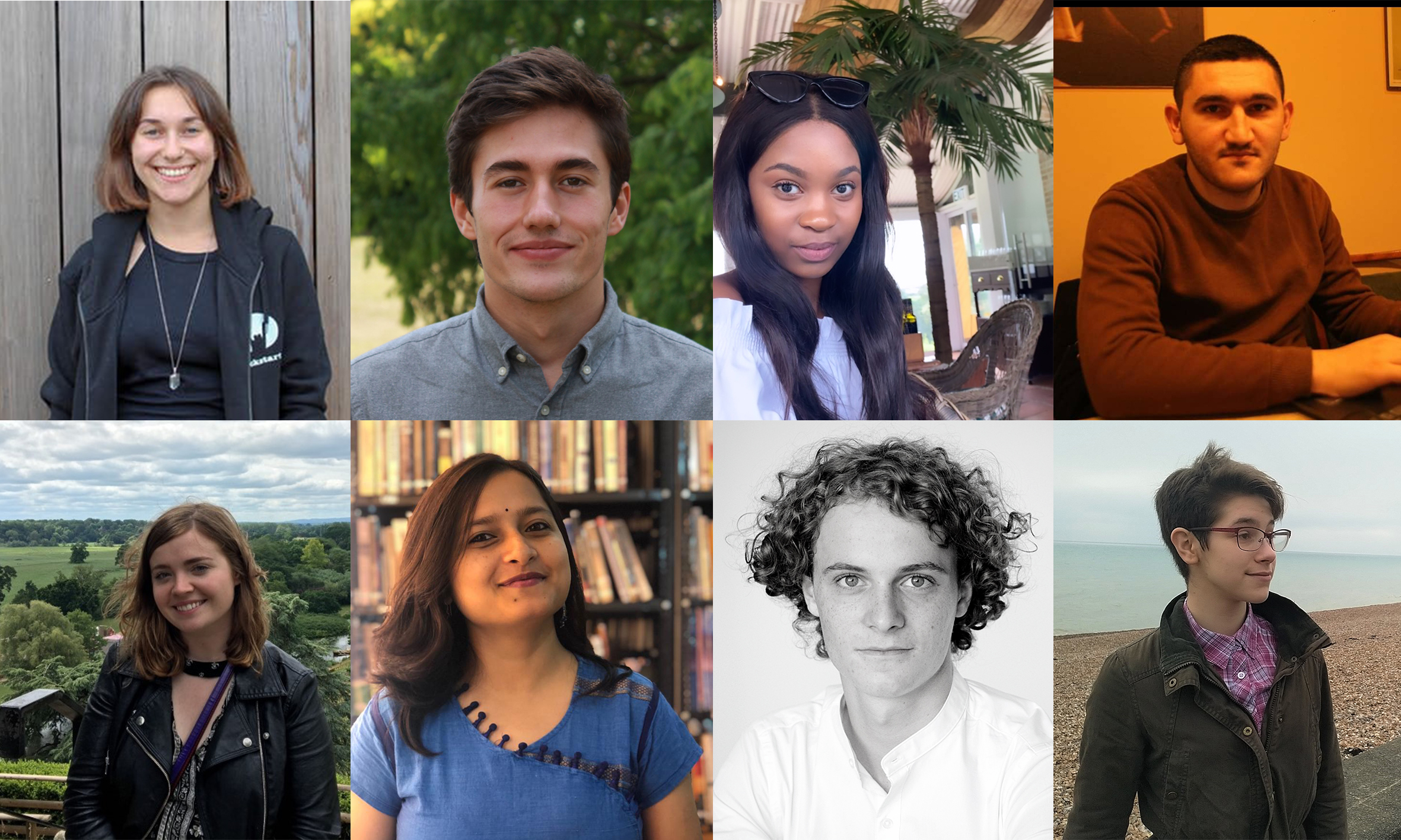 [/vc_column_text][vc_custom_heading text=”Youth Advisory Board” font_container=”tag:h1|text_align:center|color:%230a0a0a” use_theme_fonts=”yes”][vc_column_text]
The youth advisory board is Index on Censorship’s project aimed at engaging with young people aged 16-25 from around the world and gathering their views on freedom of expression issues.
What is the youth advisory board?
The youth board is a specially selected group of young people aged 16-25 who advise and inform Index on Censorship’s work, support our ambition to fight for free expression around the world and ensure our engagement with issues with tomorrow’s leaders. The current members are sitting from January to June 2020.
Why does Index have a youth board?
Index on Censorship is committed to fighting censorship not only now, but also in future generations, and we want to ensure that the realities and challenges experienced by young people in today’s world are properly reflected in our work.
Index is also aware that there are many who would like to commit some or all of their professional lives to fight for human rights and the youth board is our way of supporting the broadest range of young people to develop their voice, find paths to freely expressing it and potential future employment in the human rights, media, and arts sectors.[/vc_column_text][/vc_column][/vc_row][vc_row disable_element=”yes”][vc_column][vc_column_text css_animation=”none”]
Applications now open!
We are looking for enthusiastic young people, aged between 16-25, who must be committed to taking part in monthly meetings, which are held online with fellow participants. Applicants can be based anywhere in the world. We are looking for people who are communicative and who will be in regular touch with Index.
Each youth advisory board sits for six months, has the chance to participate in monthly video conferencing discussions about current freedom of expression issues from around the world, which sometimes include guest speakers. There are exciting opportunities to be interviewed for the podcast and contribute to Index’s Instagram page.
The next youth board is currently being recruited, and will sit from July to December 2020.
How to apply
Please send us the following:
- Cover letter
- CV
- A 250-word blog post about any free speech issue
Applications can be submitted to Orna Herr at [email protected]. The deadline for applications is 26 July at 11:59pm GMT.
What is the youth advisory board?
The youth board is a specially selected group of young people aged 16-25 who advise and inform Index on Censorship’s work, support our ambition to fight for free expression around the world and ensure our engagement with issues with tomorrow’s leaders. The current members are sitting from July to December 2019.
Why does Index have a youth board?
Index on Censorship is committed to fighting censorship not only now, but also in future generations, and we want to ensure that the realities and challenges experienced by young people in today’s world are properly reflected in our work.
Index is also aware that there are many who would like to commit some or all of their professional lives to fight for human rights and the youth board is our way of supporting the broadest range of young people to develop their voice, find paths to freely expressing it and potential future employment in the human rights, media, and arts sectors.[/vc_column_text][vc_row_inner disable_element=”yes”][vc_column_inner width=”1/4″][staff name=”Shini Wang” title=”USA” profile_image=”108370″]Shini Wang is a poet, journalist, and BA student of philosophy at the University of Texas at Austin. She is a member of her university’s liberal arts council, the editor of The Liberator Magazine, and a host of open discussions on campus. Interested in how freedom of expression plays into the creative and imaginative process of international writers and artists who witness injustice, her research investigates censorship and its effects during our post-truth political era.[/staff][/vc_column_inner][vc_column_inner width=”1/4″][staff name=”Nikhil Singh” title=”India” profile_image=”108371″]Nikhil Singh is a law student based in Kolkata, India. He has a keen interest in advocating the right to free speech and often spends his free time promoting it. In the past he has interned with senior advocates in the Supreme Court of India, and has worked on cases involving violation of the right to free speech, civil liberty, and human rights. After graduating from college, Singh intends to work in the legal industry, to fight for people’s rights.[/staff][/vc_column_inner][vc_column_inner width=”1/4″][staff name=”Charles Terroille” title=”France” profile_image=”108373″]Charles Terroille is a French dual degree student in political science and international relations at Sciences Po (Lille) and the University of Kent. His field of work covers media and journalism. After directing his first TV documentary about Dharavi in India at 16 years old, he continued to report in different types of newsrooms in France and the UK. Terroille also specialises in the issue of whistleblowers and has worked on the Luxleaks and Football Leaks cases. He collaborated with the Signals Network Foundation for advocacy and research on the leaks. Terroille is also the founder and director of the International Consortium of Student Journalism (ICSJ).[/staff][/vc_column_inner][vc_column_inner width=”1/4″][staff name=”Emma Quaedvlieg” title=”Serbia” profile_image=”104865″]Emma Quaedvlieg is a Master’s graduate from the Institute of Development Studies, where she focused on popular movements and inequality. She also holds a BA (Hons) in politics and international relations from the University of Nottingham. She has actively campaigned for various gender issues and was elected women’s officer for the student’s union in Nottingham. Her research largely focuses on the western Balkans, where she is contributing to freedom of expression and wider development in local government. Quaedvlieg has also worked in various (international) human rights organisations.[/staff][/vc_column_inner][/vc_row_inner][vc_row_inner disable_element=”yes”][vc_column_inner width=”1/4″][staff name=”Arpitha Desai” title=”India” profile_image=”104862″]Arpitha Desai is a lawyer based in New Delhi, India. As an avid student of constitutional law, she is passionate about civil liberties with a keen interest in censorship, surveillance, and digital rights. Keeping in mind the ever-evolving nature of technology and the needs of the government, industry, and common man, Desai believes that law and policy must strike a holistic balance between conflicting rights.[/staff][/vc_column_inner][vc_column_inner width=”1/4″][staff name=”Krzysztof Katkowski” title=”Poland” profile_image=”108374″]Krzysztof Katkowski is a student of Czacki High School in Warsaw. He is a young activist and journalist cooperating with “Krytyka Polityczna” where he focuses on youth’s community-minded engagement and education. Passionate about science, literature, and philosophy, he wants to popularise the idea of free speech and dialogue between different environments. In the future, Katkowski wants to fight for open society and tolerance which is endangered in recent years, especially in Poland.[/staff][/vc_column_inner][vc_column_inner width=”1/4″][staff name=”Elyse Popplewell” title=”Australia” profile_image=”108372″]Elyse Popplewell is the social media editor at The Australian, the most widely circulated national newspaper in Australia. After attaining a bachelor of communications (journalism) at the University of Technology, Sydney, she began her career at the Institute for Economics & Peace, the think tank that publishes the Global Peace Index annually. Popplewell focuses on the issue of Australian defamation laws gagging important journalism and movements like #MeToo.[/staff][/vc_column_inner][vc_column_inner width=”1/4″][/vc_column_inner][/vc_row_inner][/vc_column][/vc_row][vc_row disable_element=”yes”][vc_column][three_column_post title=”Recent posts” full_width_heading=”true” category_id=”6514″][/vc_column][/vc_row][vc_row][vc_column][vc_column_text]
Meet the Board
The current board is sitting from July to December 2020.[/vc_column_text][vc_row_inner][vc_column_inner width=”1/4″][staff name=”Aliyah Kaitlyn Orr” profile_image=”112187″]Aliyah Kaitlyn Orr (pen name A.K. Nephtali) is a college student in Britain. Orr has been inspired by the power of words ever since a novel helped them realise their gender-neutral identity. Orr writes inclusive fiction that aims to empower LGBTQ+ people around the world. One of their short stories will be published in a digital anthology by the end of 2020. [/staff][/vc_column_inner][vc_column_inner width=”1/4″][staff name=”Subhan Hasanli” profile_image=”114478″]Subhan Hasanli is a 25 year old lawyer, who works with local and international human rights organisations in Azerbaijan. He holds a bachelor’s degree in law from Nakhichevan State University. His goal is to promote the rule of law and human rights, and he hopes to achieve changes in these fields. Hasanli’s hobbies include catching fish, playing chess and reading books about science, politics, and philosophy. His favourite book is Diplomacy by Henry Kissinger. [/staff][/vc_column_inner][vc_column_inner width=”1/4″][staff name=”Carmen Ferri” profile_image=”114479″]Carmen Ferri is a digital rights activist based in Canada. She obtained an undergraduate degree in cultural studies and sociology at Maastricht University, Netherlands, and a master’s degree from the University of Amsterdam in new media and digital culture. During her studies, she worked on projects related to disinformation, hate speech and subcultural expression on digital platforms. Ferri has completed two internships with the Association for Progressive Communications. She worked as a policy analyst intern researching counter-hate speech movements in Asia, then as a communications research intern where she implemented a project examining actors and discourses within digital rights spaces on social media.[/staff][/vc_column_inner][vc_column_inner width=”1/4″][staff name=”Sneha” profile_image=”114480″]Sneha graduated from the Asian College of Journalism with a postgraduate diploma in journalism (new media) and is now a journalist for The Times of India. She previously worked as a reporter for the International Business Times. Sneha is concerned about the issues around press freedom in her country. She is an advocate for open discourse in the hope that it will lead to solutions. Sneha has an avid interest in governance, ecology, environment and urban planning.[/staff][/vc_column_inner][/vc_row_inner][/vc_column][/vc_row][vc_row][vc_column width=”1/4″][staff name=”Pablo Aguera” profile_image=”114481″]Pablo Aguera is a research fellow for Research ICT Africa working on digital rights, data justice and internet access and use. Aguera has produced creative multimedia projects and worked with social enterprises and youth movements across multiple countries. He holds a BSc in philosophy, politics and economics from the University of Warwick, and is currently completing a dual master’s degree in global media and communications at the London School of Economics and the University of Cape Town.
[/staff][/vc_column][vc_column width=”1/4″][staff name=”Siphesihle Fali” profile_image=”114482″]Siphesihle Fali is in her final year studying English literature & language, and media and writing at the University of Cape Town, South Africa. Fali is passionate about expanding her knowledge on societal constructs and the definitions of freedom. She aspires to create real conversations around the right to freedom of expression for the most censored and vulnerable communities, to safeguard and protect their rights. Fali’s interests lie mostly with the rights of women and children, and she intends on dedicating her career to being a voice for those who are denied one.[/staff][/vc_column][vc_column width=”1/4″][staff name=”Claes Kirkeby Theilgaard” profile_image=”114483″]Claes Kirkeby Theilgaard works as the editor-in-chief of the Danish online newspaper 180Grader. He is set to begin his studies in business and communications at the Copenhagen Business School. Theilgaard has worked in journalism and in various political organisations with the aim of furthering democracy and freedom, which has resulted in violent threats and other forms of intimidation. These experiences have made him more motivated to fight for the cause of free speech. Theilgaard is currently working to launch a campaign against “hate speech” laws in Denmark, as well as an organisation to fight censorship and work for free speech both in Denmark and abroad.[/staff][/vc_column][vc_column width=”1/4″][staff name=”Cecily Donovan” profile_image=”114484″]Cecily Donovan graduated from Boston University with degrees in International Relations and Political Science in 2019. She currently lives in New York City working in economic development for Invest Northern Ireland, a UK government agency. She has a background in state government, French language and politics, and European affairs. Donovan is passionate about women’s rights, LGBTQ+ rights, the Black Lives Matter movement and the impact of authoritarianism on freedom of expression globally.
[/staff][/vc_column][/vc_row]
7 Feb 2017 | Awards, News, Press Releases
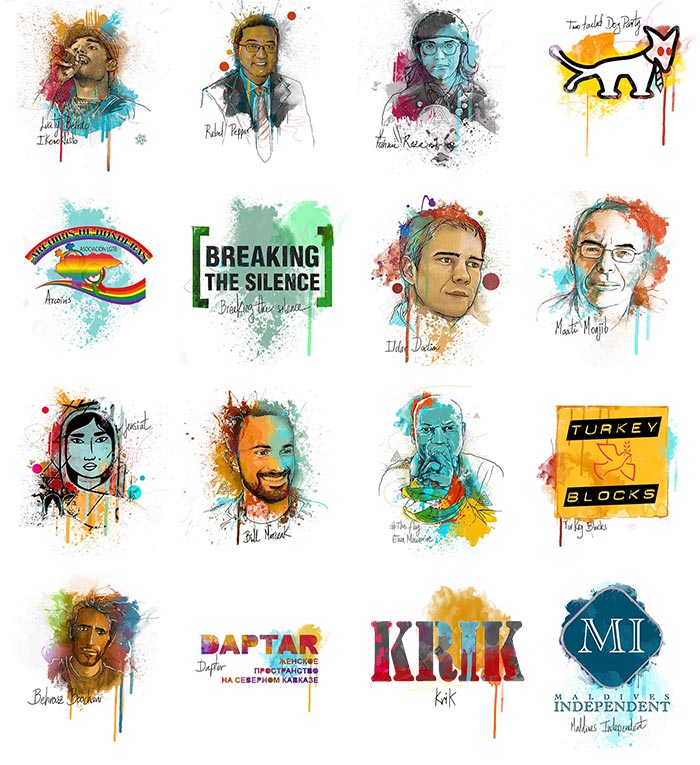 Judges include actor Noma Dumezweni; former Vanity Fair editor Tina Brown
- Sixteen courageous individuals and organisations who fight for freedom of expression in every part of the world
A Zimbabwean pastor who was arrested by authorities last week for his #ThisFlag campaign, an Iranian Kurdish journalist covering his life as an interned Australian asylum seeker, one of China’s most notorious political cartoonists, and an imprisoned Russian human rights activist are among those shortlisted for the 2017 Index on Censorship Freedom of Expression Awards.
Drawn from more than 400 crowdsourced nominations, the shortlist celebrates artists, writers, journalists and campaigners overcoming censorship and fighting for freedom of expression against immense obstacles. Many of the 16 shortlisted nominees are regularly targeted by authorities or by criminal and extremist groups for their work: some face regular death threats, others criminal prosecution or exile.
“The creativity and bravery of the shortlist nominees in challenging restrictions on freedom of expression reminds us that a small act — from a picture to a poem — can have a big impact. Our nominees have faced severe penalties for standing up for their beliefs. These awards recognise their courage and commitment to free speech,” said Jodie Ginsberg, CEO of campaigning nonprofit Index on Censorship.
Awards are offered in four categories: arts, campaigning, digital activism and journalism.
Nominees include Pastor Evan Mawarire whose frustration with Zimbabwe’s government led him to the #ThisFlag campaign; Behrouz Boochani, an Iranian Kurdish journalist who documents the life of indefinitely-interned Australian asylum seekers in Papua New Guinea; China’s Wang Liming, better known as Rebel Pepper, a political cartoonist who lampoons the country’s leaders; Ildar Dadin, an imprisoned Russian opposition activist, who became the first person convicted under the country’s public assembly law; Daptar, a Dagestani initiative tackling women’s issues like female genital mutilation that are rarely discussed publicly in the country; and Serbia’s Crime and Corruption Reporting Network (KRIK), which was founded by a group of journalists to combat pervasive corruption and organised crime.
Other nominees include Hungary’s Two-tail Dog Party, a group of satirists who parody the country’s political discourse; Honduran LGBT rights organisation Arcoiris, which has had six activists murdered in the past year for providing support to the LGBT community and lobbying the country’s government; Luaty Beirão, a rapper from Angola, who uses his music to unmask the country’s political corruption; and Maldives Independent, a website involved in revealing endemic corruption at the highest levels in the country despite repeated intimidation.
Judges for this year’s awards, now in its 17th year, are Harry Potter actor Noma Dumezweni, Hillsborough lawyer Caiolfhionn Gallagher, former Vanity Fair editor Tina Brown, designer Anab Jain and music producer Stephen Budd.
Dumezweni, who plays Hermione in the stage play Harry Potter and the Cursed Child, was shortlisted earlier this year for an Evening Standard Theatre Award for Best Actress. Speaking about the importance of the Index Awards she said: “Freedom of expression is essential to help challenge our perception of the world”.
Winners, who will be announced at a gala ceremony in London on 19 April, become Index on Censorship Freedom of Expression Awards Fellows and are given support for their work, including training in areas such as advocacy and communications.
“The GreatFire team works anonymously and independently but after we were awarded a fellowship from Index it felt like we had real world colleagues. Index helped us make improvements to our overall operations, consulted with us on strategy and were always there for us, through the good times and the pain,” Charlie Smith of GreatFire, 2016 Freedom of Expression Awards Digital Activism Fellow.
This year, the Freedom of Expression Awards are being supported by sponsors including SAGE Publishing, Google, Vodafone, media partner CNN, VICE News, Doughty Street Chambers, Psiphon and Gorkana. Illustrations of the nominees were created by Sebastián Bravo Guerrero.
Notes for editors:
- Index on Censorship is a UK-based non-profit organisation that publishes work by censored writers and artists and campaigns against censorship worldwide.
- More detail about each of the nominees is included below.
- The winners will be announced at a ceremony at The Unicorn Theatre, London, on 19 April.
For more information, or to arrange interviews with any of those shortlisted, please contact: Sean Gallagher on 0207 963 7262 or [email protected]. More biographical information and illustrations of the nominees are available at indexoncensorship.org/indexawards2017.
Index on Censorship Freedom of Expression Awards nominees 2017
Arts
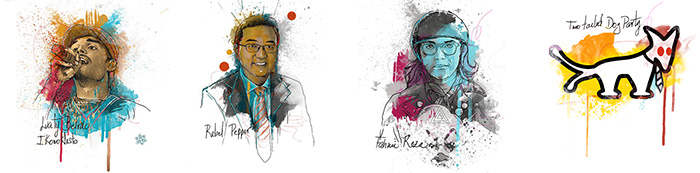
Luaty Beirão, Angola
Rapper Luaty Beirão, also known as Ikonoklasta, has been instrumental in showing the world the hidden face of Angolan President José Eduardo dos Santos’s rule. For his activism Beirão has been beaten up, had drugs planted on him and, in June 2015, was arrested alongside 14 other people planning to attend a meeting to discuss a book on non-violent resistance. Since being released in 2016, Beirão has been undeterred attempting to stage concerts that the authorities have refused to license and publishing a book about his captivity entitled “I Was Freer Then”, claiming “I would rather be in jail than in a state of fake freedom where I have to self-censor”.
Rebel Pepper, China
Wang Liming, better known under the pseudonym Rebel Pepper, is one of China’s most notorious political cartoonists. For satirising Chinese Premier Xi Jinping and lampooning the ruling Communist Party, Rebel Pepper has been repeatedly persecuted. In 2014, he was forced to remain in Japan, where he was on holiday, after serious threats against him were posted on government-sanctioned forums. The Chinese state has since disconnected him from his fan base by repeatedly deleting his social media accounts, he alleges his conversations with friends and family are under state surveillance, and self-imposed exile has made him isolated, bringing significant financial struggles. Nonetheless, Rebel Pepper keeps drawing, ferociously criticising the Chinese regime.
Fahmi Reza, Malaysia
On 30 January 2016, Malaysian graphic designer Fahmi Reza posted an image online of Prime Minister Najib Razak in evil clown make-up. From T-shirts to protest placards, and graffiti on streets to a sizeable public sticker campaign, the image and its accompanying anti-sedition law slogan #KitaSemuaPenghasut (“we are all seditious”) rapidly evolved into a powerful symbol of resistance against a government seen as increasingly corrupt and authoritarian. Despite the authorities’ attempts to silence Reza, who was banned from travel and has since been detained and charged on two separate counts under Malaysia’s Communications and Multimedia Act, he has refused to back down.
Two-tailed Dog Party, Hungary
A group of satirists and pranksters who parody political discourse in Hungary with artistic stunts and creative campaigns, the Two-tailed Dog Party have become a vital alternative voice following the rise of the national conservative government led by Viktor Orban. When Orban introduced a national consultation on immigration and terrorism in 2015, and plastered cities with anti-immigrant billboards, the party launched their own mock questionnaires and a popular satirical billboard campaign denouncing the government’s fear-mongering tactics. Relentlessly attempting to reinvigorate public debate and draw attention to under-covered or taboo topics, the party’s efforts include recently painting broken pavement to draw attention to a lack of public funding.
Campaigning
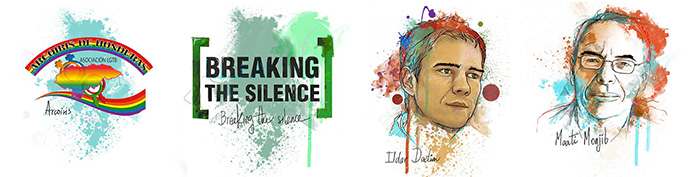 Arcoiris, Honduras
Established in 2003, LGBT organisation Arcoiris, meaning ‘rainbow’, works on all levels of Honduran society to advance LGBT rights. Honduras has seen an explosion in levels of homophobic violence since a military coup in 2009. Working against this tide, Arcoiris provide support to LGBT victims of violence, run awareness initiatives, promote HIV prevention programmes and directly lobby the Honduran government and police force. From public marches to alternative awards ceremonies, their tactics are diverse and often inventive. Between June 2015 and March 2016, six members of Arcoiris were killed for this work. Many others have faced intimidation, harassment and physical attacks. Some have had to leave the country because of threats they were receiving.
Breaking the Silence, Israel
Breaking the Silence, an Israeli organisation consisting of ex-Israeli military conscripts, aims to collect and share testimonies about the realities of military operations in the Occupied Territories. Since 2004, the group has collected over 1,000 (mainly anonymous) statements from Israelis who have served their military duty in the West Bank and Gaza. For publishing these frank accounts the organisation has repeatedly come under fire from the Israeli government. In 2016 the pressure on the organisation became particularly pointed and personal, with state-sponsored legal challenges, denunciations from the Israeli cabinet, physical attacks on staff members and damages to property. Led by Israeli politicians including the prime minister, and defence minister, there have been persistent attempts to force the organisation to identify a soldier whose anonymous testimony was part of a publication raising suspicions of war crimes in Gaza. Losing the case would set a precedent that would make it almost impossible for Breaking the Silence to operate in the future. The government has also recently enacted a law that would bar the organisation’s widely acclaimed high school education programme.
Ildar Dadin, Russia
A long-term opposition and LGBT rights activist, Ildar Dadin was the first, and remains the only, person to be convicted under Russia’s 2014 public assembly law that prohibits the “repeated violation of the order of organising or holding meetings, rallies, demonstrations, marches or picketing”. Attempting to circumvent this restrictive law, Dadin held a series of one-man pickets against human rights abuses – an enterprise for which he was arrested and sentenced to three years imprisonment in 2015. In November 2016, website Meduza published a letter smuggled to his wife in which Dadin wrote that he was being tortured and abuse was endemic in Russian jails. The letter, a brave move for a serving prisoner, had wide resonance, prompting a reaction from the government and an investigation. Against his will, Dadin was transferred and disappeared within the Russian prison system until a wave of public protest led to his location being revealed in January 2017. Dadin was released on February 26 after a supreme court order.
Maati Monjib, Morocco
A well-known academic who teaches African studies and political history at the University of Rabat since returning from exile, Maati Monjib co-founded Freedom Now, a coalition of Moroccan human rights defenders who seek to promote the rights of Moroccan activists and journalists in a country ranked 131 out of 180 on the Reporters Without Borders Press Freedom Index. His work campaigning for press freedom – including teaching investigative journalism workshops and using of a smartphone app called Story Maker designed to support citizen journalism – has made him a target for the authorities who insist that this work is the exclusive domain of state police. For his persistent efforts, Monjib is currently on trial for “undermining state security” and “receiving foreign funds.”
Digital Activism
 Jensiat, Iran
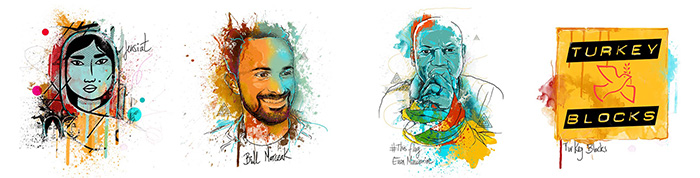
Despite growing public knowledge of global digital surveillance capabilities and practices, it has often proved hard to attract mainstream public interest in the issue. This continues to be the case in Iran where even with widespread VPN usage, there is little real awareness of digital security threats. With public sexual health awareness equally low, the three people behind Jensiat, an online graphic novel, saw an an opportunity to marry these challenges. Dealing with issues linked to sexuality and cyber security in a way that any Iranian can easily relate to, the webcomic also offers direct access to verified digital security resources. Launched in March 2016, Jensiat has had around 1.2 million unique readers and was rapidly censored by the Iranian government.
Bill Marczak, United States
A schoolboy resident of Bahrain and PhD candidate in computer science at the University of California, Berkeley, Bill Marczak co-founded Bahrain Watch in 2013. Seeking to promote effective, accountable and transparent governance, Bahrain Watch works by launching investigations and running campaigns in direct response to social media posts coming from activists on the front line. In this context, Marczak’s personal research has proved highly effective, often identifying new surveillance technologies and targeting new types of information controls that governments are employing to exert control online, both in Bahrain and across the region. In 2016 Marczak investigated several government attempts to track dissidents and journalists, notably identifying a previously unknown weakness in iPhones that had global ramifications.
#ThisFlag and Evan Mawarire, Zimbabwe
In May 2016, Baptist pastor Evan Mawarire unwittingly began the most important protest movement in Zimbabwe’s recent history when he posted a video of himself draped in the Zimbabwean flag, expressing his frustration at the state of the nation. A subsequent series of YouTube videos and the hashtag Mawarire used, #ThisFlag, went viral, sparking protests and a boycott called by Mawarire, which he estimates was attended by over eight million people. A scale of public protest previously inconceivable, the impact was so strong that private possession of Zimbabwe’s national flag has since been banned. The pastor temporarily left the country following death threats and was arrested in early February as he returned to his homeland.
Turkey Blocks, Turkey
In a country marked by increasing authoritarianism, a strident crackdown on press and social media as well as numerous human rights violations, Turkish-British technologist Alp Toker brought together a small team to investigate internet restrictions. Using Raspberry Pi technology they built an open source tool able to reliably monitor and report both internet shut downs and power blackouts in real time. Using their tool, Turkey Blocks have since broken news of 14 mass-censorship incidents during several politically significant events in 2016. The tool has proved so successful that it has begun to be implemented elsewhere globally.
Journalism
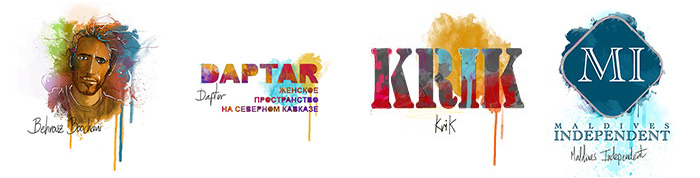
Behrouz Boochani, Manus Island, Papua New Guinea/Australia (he is an Iranian refugee)
Iranian Kurdish journalist Behrouz Boochani fled the city of Ilam in Iran in May 2013 after the police raided the Kurdish cultural heritage magazine he had co-founded, arresting 11 of his colleagues. He travelled to Australia by boat, intending to claim asylum, but less than a month after arriving he was forcibly relocated to a “refugee processing centre” in Papua New Guinea that had been newly opened. Imprisoned alongside nearly 1000 men who have been ordered to claim asylum in Papua New Guinea or return home, Boochani has been passionately documenting their life in detention ever since. Publicly advertised by the Australian Government as a refugee deterrent, life in the detention centre is harsh. For the first 2 years, Boochani wrote under a pseudonym. Until 2016 he circumvented a ban on mobile phones by trading personal items including his shoes with local residents. And while outside journalists are barred, Boochani has refused to be silent, writing numerous stories via Whatsapp and even shooting a feature film with his phone.
Daptar, Dagestan, Russia
In a Russian republic marked by a clash between the rule of law, the weight of traditions, and the growing influence of Islamic fundamentalism, Daptar, a website run by journalists Zakir Magomedov and Svetlana Anokhina, writes about issues affecting women, which are little reported on by other local media. Meaning “diary”, Daptar seeks to promote debate and in 2016 they ran a landmark story about female genital mutilation in Dagestan, which broke the silence surrounding that practice and began a regional and national conversation about FGM. The small team of journalists, working alongside a volunteer lawyer and psychologist, also tries to provide help to the women they are in touch with.
KRIK, Serbia
Crime and Corruption Reporting Network (KRIK) is a new independent investigative website which was founded by a team of young Serbian journalists intent on exposing organised crime and extortion in their country which is ranked as having widespread corruption by Transparency International. In their first year they have published several high-impact investigations, including forcing Serbia’s prime minister to admit that senior officials had been behind nocturnal demolitions in a Belgrade neighbourhood and revealing meetings between drug barons, the ministry of police and the minister of foreign affairs. KRIK have repeatedly come under attack online and offline for their work –threatened and allegedly under surveillance by state officials, defamed in the pages of local tabloids, and suffering abuse including numerous death threats on social media.
Maldives Independent, Maldives
Website Maldives Independent, which provides news in English, is one of the few remaining independent media outlets in a country that ranks 112 out of 180 countries on the Reporters Without Borders Press Freedom Index. In August 2016 the Maldives passed a law criminalising defamation and empowering the state to impose heavy fines and shut down media outlets for “defamatory” content. In September, Maldives Independent’s office was violently attacked and later raided by the police, after the release of an Al Jazeera documentary exposing government corruption that contained interviews with editor Zaheena Rasheed, who had to flee for her safety. Despite the pressure, the outlet continues to hold the government to account.
28 Sep 2016 | mobile, News
Monday marked the beginning of Banned Books Week. To celebrate the freedom to read, Index on Censorship staff explore some of their favourite, and some of the most important, banned or challenged books.
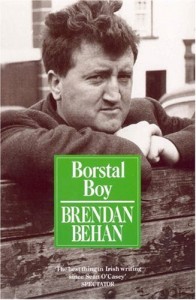
Ryan McChrystal – Borstal Boy by Brendan Behan
Brendan Behan’s autobiographical work Borstal Boy was banned in Ireland in December 1958. His London publisher, Hutchinson’s, had sent a batch of copies to Dublin to be sold at a Christmas market but they were confiscated at the port. Behan was outraged that a group of “country yobs” could prevent the distribution of his book.
Borstal Boy is the story of how a 16-year-old Behan landed himself in a series of institutions for young offenders in Kent, having been charged with membership of the IRA, and what happened to him after that.
Although Ireland’s Censorship of Publications Board never explained why the book was banned, it probably had something to do with its depictions of adolescents talking about sex and its pillorying of Irish social attitudes, republicanism and the Catholic Church. The board is, after all, known for its stringent adherence to Roman Catholic values.
When Behan later learned that the book was also banned in Australia and New Zealand, he took solace in song and humour as he went around Dublin singing:
“My name is Brendan Behan, I’m the latest of the banned
Although we’re small in numbers we’re the best banned in the land,
We’re read at wakes and weddin’s and in every parish hall,
And under library counters sure you’ll have no trouble at all.”
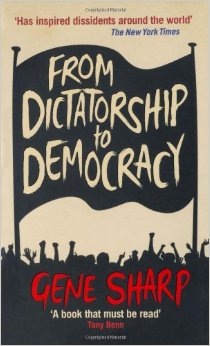
David Heinemann – From Dictatorship to Democracy by Gene Sharp
Running the Freedom of Expression Awards’ Fellowship and helping brave people who are often fighting totalitarian regimes can sometimes feel like an uphill battle. How can one person or organisation ever hope to defeat an entire dictatorship?
They can’t, of course, but Gene Sharp’s little book reminds me that “the deliberate, non-violent disintegration of dictatorships” is possible when people work together in certain ways. Part handbook, part political pamphlet, it’s an invaluable toolbox for any serious democratic activist. Its potency was illustrated last year when a group of young Angolans were imprisoned simply for trying to get together and discuss it at a book club.
The fact that I could read it on my commute home reminded me never to take my freedoms for granted.
Vicky Baker – The Bible
The Bible is not an obvious choice for me as I’m an atheist, but loosely picking up on that misattributed Voltaire quote, I would defend anyone’s right to read it – or indeed any other religious book.
Pope Francis has called The Bible “an extremely dangerous book”. Owning it or reading it can get you still get you imprisoned or killed in certain parts of the world. This is the sort of book banning that we should all be extremely worried about, whatever your religion.
These days I don’t even have a copy in my house, but its stories formed part of my childhood. When I grew up I learnt that my hometown, Amersham in Buckinghamshire, also had an important connection to censorship of The Bible. In the 16th century a group of local Lollards were burned at the stake for wanting to translate the book from Latin to English; some of their children were forced to light the pyre.
Known as the Amersham Martyrs, they have since been honoured in a memorial stone, costumed walking tours, and through occasional community plays about their lives, staged in a local church. (Imagine if the bishop who sentenced them saw this today.)
Sadly, we live in a world where censorship of the Bible is not ancient history. In 2014, an American man was sent to labour camp in North Korea for leaving a Bible in a restaurant’s bathroom when visiting as a tourist. It was deemed a crazy act – and, indeed, the move also endangered his local tour guides – but it is outrageous that simply leaving a book behind, so readers can choose to pick it up or not, can still lead to such punishments.
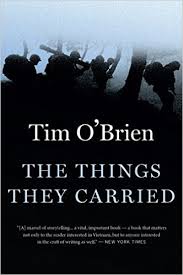
David Sewell – The Things They Carried by Tim O’Brien
One of those cases in the USA where the pressure to ban comes not from the authorities, but from citizens wanting it pulled from libraries or schools. Complaints were made about its sweary language and its graphic depictions of violence and death. But there again it’s about a grunt’s eye view of the Vietnam war, so go figure.
Only this is really a remarkable work of fiction, which is highly literary in its narrative form. It uses stories to try and construct the extreme experience of war, but also uses war to explore the drive to create stories for ourselves. Language is used to defang terror on the battlefield, stories are invented (and embellished through the re-telling) to keep dead comrades alive, because if they are allowed to die, then it brings death one step closer to the surviving soldiers.
A fascinating book that tries to put words to the unsayable and unspeakable, and its would-be censors are attempting to make it a different kind of unspeakable and unsayable.
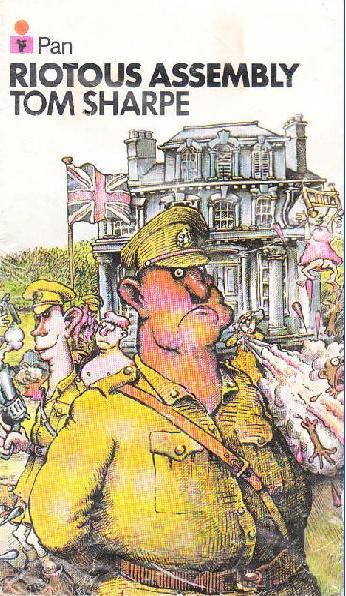
Kieran Etoria-King – Riotous Assembly by Tom Sharpe
One of the most enduring, darkly funny things I’ve ever read was the opening chapter of Tom Sharpe’s 1971 novel Riotous Assembly, in which a South African police chief argues with an old white woman who shot her black chef in the garden of her stately home. As two deputies collect up the obliterated corpse of the man she killed with a four-barrelled elephant gun, Miss Hazelstone, who graphically describes her illicit love affair with the chef, demands to be arrested for murder, while a disgusted Kommandant van Heerden insists that the killing of a black person is not murder. Meanwhile, the entire police force of the fictional town of Piemburg, operating under mistaken intelligence, are engaged in a fierce and escalating firefight at the gate, unaware that they are actually shooting at each other from behind cover.
Sharpe had lived in South Africa from 1951 to 1961 before he was deported over a play he staged that criticised the government, so he had an intimate knowledge of the country and Riotous Assembly, a hilarious send-up of the South African police force, is driven as much by real venom and contempt for the Apartheid system as it is by vulgar humour. Of course, that system wasn’t going to tolerate such mockery and the book was banned in South Africa as well as Zimbabwe.
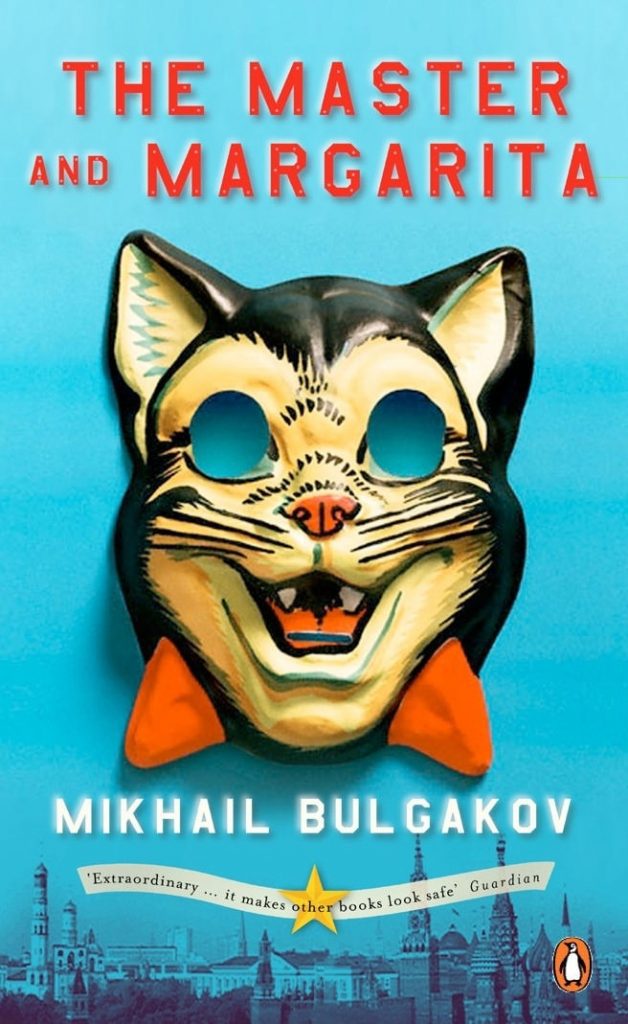
Helen Galliano – The Master and Margarita by Mikhail Bulgakov
I first came across The Master and Margarita – considered to be one of the finest novels to come out of the Soviet Union – as a performance student at Goldsmiths and a lover of magical realism. I immediately fell into Bulgakov’s wild and dangerous world of talking cats, decapitations, magic shows, Satan’s midnight ball and plenty of vodka. I was hooked, reading it multiple times throughout my third year and even created a performance reimagining Margarita’s transformation into a witch.
The forward to the 1997 translation of the novel reads: “Mikhail Bulgakov worked on this luminous book throughout one of the darkest decades of the century. His last revisions were dictated to his wife a few weeks before his death in 1940 at the age of forty-nine. For him, there was never any question of publishing the novel. The mere existence of the manuscript, had it come to the knowledge of Stalin’s police, would almost certainly have led to the permanent disappearance of its author.”
Faced with persecution, Bulgakov burned the first manuscript of The Master and Margarita, only to re-write it later from memory. It was eventually published nearly three decades after his death and since then “manuscripts don’t burn”, a famous line from the book, has come to symbolise the power and determination of human creativity against oppression.
Great literature and great ideas will always survive.
What’s it like to be an author of a banned or challenged book? How can librarians support authors who find themselves in this situation? To mark Banned Books Week, Vicky Baker, deputy editor of Index on Censorship magazine, will chair an online discussion with three authors on 29 September, followed by a Q&A. It is free to join, although attendees must register in advance.