5 Sep 2016 | Australia, Magazine, mobile
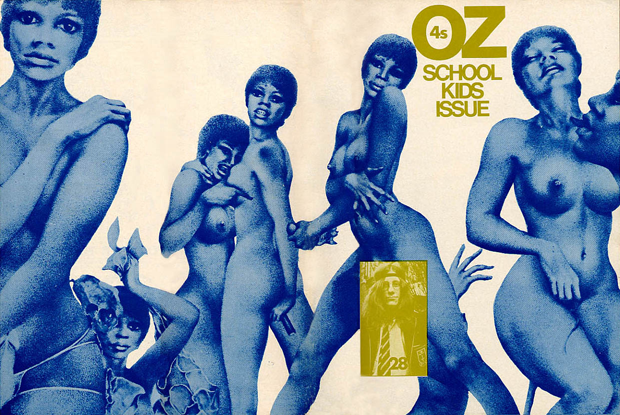
The school kids issue of Oz magazine lead to one of the longest conspiracy trials in England (Image: OZ/Wikimedia Commons)
Richard Neville, who co-founded the 1960s counterculture magazine Oz, has died in Australia aged 74.
The satirical magazine, which was first published on April Fool’s Day in 1963, poked fun at socially-conservative Austrailia and tackled taboo subjects such as abortion, homosexuality, sexism and racism.
The editors of the London edition – Neville, along with Jim Anderson and Felix Dennis – were prosecuted under the Obscene Publications Act in 1971 for a schoolkids issue (edited by teenage schoolchildren). Particular offence was caused by a cartoon of Rupert Bear having sex – in a collage created by schoolboy contributor Vivien Berger. The editors were found guilty and the convictions provoked an outcry. Hundreds demonstrated outside the Old Bailey in London, including John Lennon and Yoko Ono. The verdict was later quashed on appeal.
The last Oz was published in 1973.
In 2008, the English barrister John Mortimer spoke to Index about defending the editors of Oz magazine and taking on one of the most infamous obscenity cases on the 1970s.
Index: What were the grounds for prosecution?
John Mortimer: Well, it was sort of the birth of that particular Obscene Publications Act [1959], which was Roy Jenkins’s doing [Jenkins was principal sponsor of the bill as a backbench MP]. It was meant to be liberalising, because it allowed defences of literary merit and scientific merit and all sorts of ‘bits’ of merit. It was a test of that and the Obscene Publications Act, which was meant to be a work of great liberality. It would test obscenity, which was something that would tend to deprave and corrupt the people who were likely to read it. But then there were numerous defences – that it was of literary merit or historical merit or scientific merit and so on. It seemed rather strange you could be depraved and corrupted, and on the other hand you knew more about history – that could be a defence. So it never ever seemed to me to be a particularly sensible piece of legislation.
Index: What did you think of it first of all, when you discovered what the charges were?
John Mortimer: It was the schoolkids Oz and nobody wanted to do it. Everybody turned it down. They thought it was disgraceful, defending the schoolkids Oz like that. Numerous QCs turned it down.
Read the article in full here.
13 Apr 2016 | Awards, mobile, Music in Exile, News
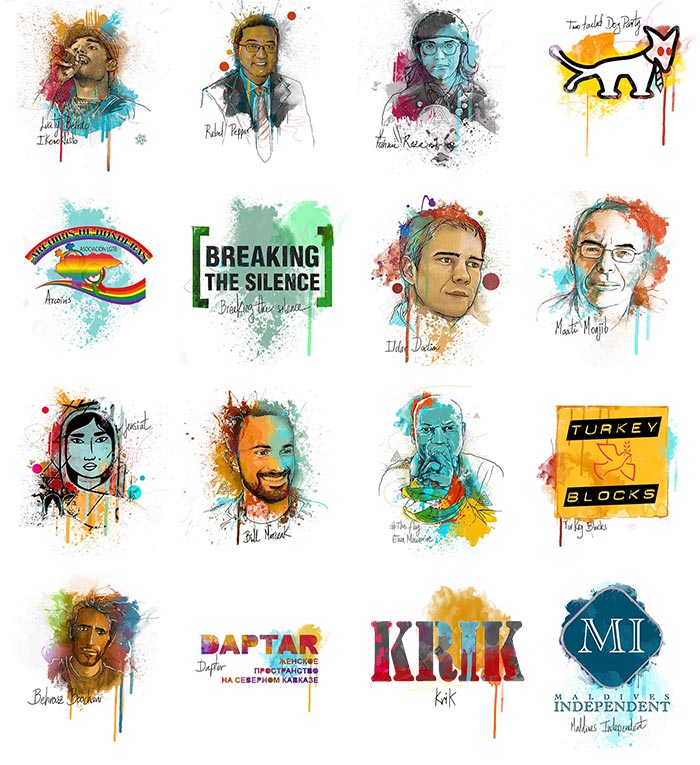
Each year, the Index on Censorship Freedom of Expression Awards gala honours courageous champions who fight for free speech around the world.
Drawn from more than 400 crowdsourced nominations, this year’s nominees include artists, journalists, campaigners and digital activists tackling censorship and fighting for freedom of expression. Many of the 16 shortlisted are regularly targeted by authorities or by criminal and extremist groups for their work: some face regular death threats, others criminal prosecution.
The gala takes place Wednesday 19 April at the Unicorn Theatre in London and will be hosted by comedian, actor and writer Katy Brand. If you aren’t lucky enough to be attending, you can catch the night’s events by tuning into coverage and a live Periscope stream @IndexCensorship beginning at 7:30PM BST.
We will be live tweeting throughout the evening on @IndexCensorship. Get involved in the conversation using the hashtag #IndexAwards2017.
Index on Censorship Freedom of Expression Awards nominees 2017
Arts
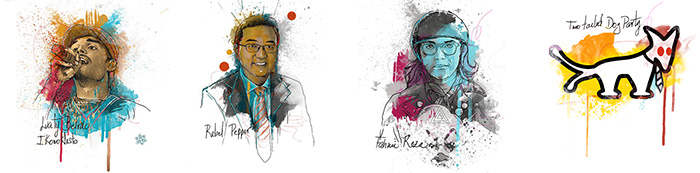
Luaty Beirão, Angola
Rapper Luaty Beirão, also known as Ikonoklasta, has been instrumental in showing the world the hidden face of Angolan President José Eduardo dos Santos’s rule. For his activism Beirão has been beaten up, had drugs planted on him and, in June 2015, was arrested alongside 14 other people planning to attend a meeting to discuss a book on non-violent resistance. Since being released in 2016, Beirão has been undeterred attempting to stage concerts that the authorities have refused to license and publishing a book about his captivity entitled “I Was Freer Then”, claiming “I would rather be in jail than in a state of fake freedom where I have to self-censor”.
Rebel Pepper, China
Wang Liming, better known under the pseudonym Rebel Pepper, is one of China’s most notorious political cartoonists. For satirising Chinese Premier Xi Jinping and lampooning the ruling Communist Party, Rebel Pepper has been repeatedly persecuted. In 2014, he was forced to remain in Japan, where he was on holiday, after serious threats against him were posted on government-sanctioned forums. The Chinese state has since disconnected him from his fan base by repeatedly deleting his social media accounts, he alleges his conversations with friends and family are under state surveillance, and self-imposed exile has made him isolated, bringing significant financial struggles. Nonetheless, Rebel Pepper keeps drawing, ferociously criticising the Chinese regime.
Fahmi Reza, Malaysia
On 30 January 2016, Malaysian graphic designer Fahmi Reza posted an image online of Prime Minister Najib Razak in evil clown make-up. From T-shirts to protest placards, and graffiti on streets to a sizeable public sticker campaign, the image and its accompanying anti-sedition law slogan #KitaSemuaPenghasut (“we are all seditious”) rapidly evolved into a powerful symbol of resistance against a government seen as increasingly corrupt and authoritarian. Despite the authorities’ attempts to silence Reza, who was banned from travel and has since been detained and charged on two separate counts under Malaysia’s Communications and Multimedia Act, he has refused to back down.
Two-tailed Dog Party, Hungary
A group of satirists and pranksters who parody political discourse in Hungary with artistic stunts and creative campaigns, the Two-tailed Dog Party have become a vital alternative voice following the rise of the national conservative government led by Viktor Orban. When Orban introduced a national consultation on immigration and terrorism in 2015, and plastered cities with anti-immigrant billboards, the party launched their own mock questionnaires and a popular satirical billboard campaign denouncing the government’s fear-mongering tactics. Relentlessly attempting to reinvigorate public debate and draw attention to under-covered or taboo topics, the party’s efforts include recently painting broken pavement to draw attention to a lack of public funding.
Campaigning
 Arcoiris, Honduras
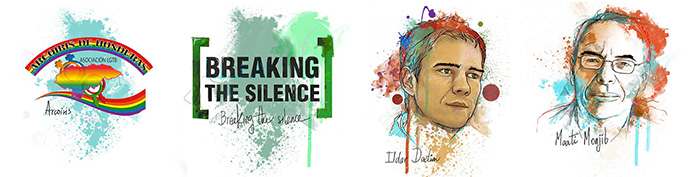
Established in 2003, LGBT organisation Arcoiris, meaning ‘rainbow’, works on all levels of Honduran society to advance LGBT rights. Honduras has seen an explosion in levels of homophobic violence since a military coup in 2009. Working against this tide, Arcoiris provide support to LGBT victims of violence, run awareness initiatives, promote HIV prevention programmes and directly lobby the Honduran government and police force. From public marches to alternative awards ceremonies, their tactics are diverse and often inventive. Between June 2015 and March 2016, six members of Arcoiris were killed for this work. Many others have faced intimidation, harassment and physical attacks. Some have had to leave the country because of threats they were receiving.
Breaking the Silence, Israel
Breaking the Silence, an Israeli organisation consisting of ex-Israeli military conscripts, aims to collect and share testimonies about the realities of military operations in the Occupied Territories. Since 2004, the group has collected over 1,000 (mainly anonymous) statements from Israelis who have served their military duty in the West Bank and Gaza. For publishing these frank accounts the organisation has repeatedly come under fire from the Israeli government. In 2016 the pressure on the organisation became particularly pointed and personal, with state-sponsored legal challenges, denunciations from the Israeli cabinet, physical attacks on staff members and damages to property. Led by Israeli politicians including the prime minister, and defence minister, there have been persistent attempts to force the organisation to identify a soldier whose anonymous testimony was part of a publication raising suspicions of war crimes in Gaza. Losing the case would set a precedent that would make it almost impossible for Breaking the Silence to operate in the future. The government has also recently enacted a law that would bar the organisation’s widely acclaimed high school education programme.
Ildar Dadin, Russia
A Russian opposition and LGBT rights activist, Ildar Dadin was the first, and remains the only, person to be convicted under a notorious 2014 public assembly law. Aimed at punishing anyone who breaks strict rules on protest, the law was enacted to silence dissent after a wave of demonstrations following Putin’s last election victory. Dadin’s crime was to stage a series of one-man pickets, often standing silently with a billboard, attempting to duck the cynical law and push for free expression. For his solo enterprise, Dadin was arrested and sentenced to three years imprisonment in December 2015. In November 2016, website Meduza published a letter smuggled from Dadin to his wife, exposing torture he claimed he was suffering alongside fellow prisoners. The letter, a brave move for a serving prisoner, was widely reported. A government investigation was prompted, and Dadin was transferred – against his will – to an undisclosed new location. A wave of public protest led to Dadin’s new location in a Siberian prison colony being revealed in January 2017. In February 2017, Russia’s constitutional and Supreme Courts suddenly quashed Dadin’s conviction, ruling he should be released and afforded opportunity for rehabilitation.
Maati Monjib, Morocco
A well-known academic who teaches African studies and political history at the University of Rabat since returning from exile, Maati Monjib co-founded Freedom Now, a coalition of Moroccan human rights defenders who seek to promote the rights of Moroccan activists and journalists in a country ranked 131 out of 180 on the Reporters Without Borders Press Freedom Index. His work campaigning for press freedom – including teaching investigative journalism workshops and using of a smartphone app called Story Maker designed to support citizen journalism – has made him a target for the authorities who insist that this work is the exclusive domain of state police. For his persistent efforts, Monjib is currently on trial for “undermining state security” and “receiving foreign funds.”
Digital Activism
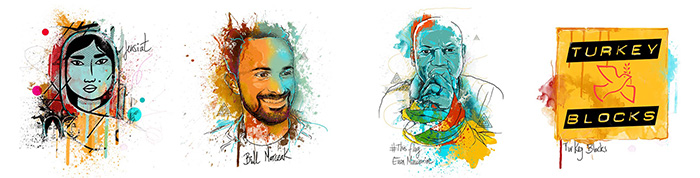 Jensiat, Iran
Despite growing public knowledge of global digital surveillance capabilities and practices, it has often proved hard to attract mainstream public interest in the issue. This continues to be the case in Iran where even with widespread VPN usage, there is little real awareness of digital security threats. With public sexual health awareness equally low, the three people behind Jensiat, an online graphic novel, saw an an opportunity to marry these challenges. Dealing with issues linked to sexuality and cyber security in a way that any Iranian can easily relate to, the webcomic also offers direct access to verified digital security resources. Launched in March 2016, Jensiat has had around 1.2 million unique readers and was rapidly censored by the Iranian government.
Bill Marczak, United States
A schoolboy resident of Bahrain and PhD candidate in computer science at the University of California, Berkeley, Bill Marczak co-founded Bahrain Watch in 2013. Seeking to promote effective, accountable and transparent governance, Bahrain Watch works by launching investigations and running campaigns in direct response to social media posts coming from activists on the front line. In this context, Marczak’s personal research has proved highly effective, often identifying new surveillance technologies and targeting new types of information controls that governments are employing to exert control online, both in Bahrain and across the region. In 2016 Marczak investigated several government attempts to track dissidents and journalists, notably identifying a previously unknown weakness in iPhones that had global ramifications.
#ThisFlag and Evan Mawarire, Zimbabwe
In May 2016, Baptist pastor Evan Mawarire unwittingly began the most important protest movement in Zimbabwe’s recent history when he posted a video of himself draped in the Zimbabwean flag, expressing his frustration at the state of the nation. A subsequent series of YouTube videos and the hashtag Mawarire used, #ThisFlag, went viral, sparking protests and a boycott called by Mawarire, which he estimates was attended by over eight million people. A scale of public protest previously inconceivable, the impact was so strong that private possession of Zimbabwe’s national flag has since been banned. The pastor temporarily left the country following death threats and was arrested in early February as he returned to his homeland.
Turkey Blocks, Turkey
In a country marked by increasing authoritarianism, a strident crackdown on press and social media as well as numerous human rights violations, Turkish-British technologist Alp Toker brought together a small team to investigate internet restrictions. Using Raspberry Pi technology they built an open source tool able to reliably monitor and report both internet shut downs and power blackouts in real time. Using their tool, Turkey Blocks have since broken news of 14 mass-censorship incidents during several politically significant events in 2016. The tool has proved so successful that it has begun to be implemented elsewhere globally.
Journalism
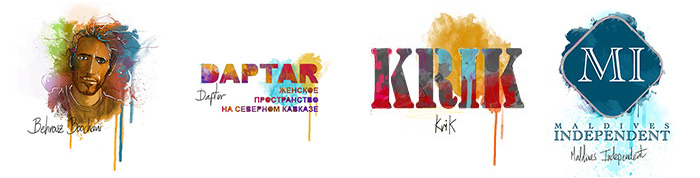
Behrouz Boochani, Manus Island, Papua New Guinea/Australia
Iranian Kurdish journalist Behrouz Boochani fled the city of Ilam in Iran in May 2013 after the police raided the Kurdish cultural heritage magazine he had co-founded, arresting 11 of his colleagues. He travelled to Australia by boat, intending to claim asylum, but less than a month after arriving he was forcibly relocated to a “refugee processing centre” in Papua New Guinea that had been newly opened. Imprisoned alongside nearly 1000 men who have been ordered to claim asylum in Papua New Guinea or return home, Boochani has been passionately documenting their life in detention ever since. Publicly advertised by the Australian Government as a refugee deterrent, life in the detention centre is harsh. For the first 2 years, Boochani wrote under a pseudonym. Until 2016 he circumvented a ban on mobile phones by trading personal items including his shoes with local residents. And while outside journalists are barred, Boochani has refused to be silent, writing numerous stories via Whatsapp and even shooting a feature film with his phone.
Daptar, Dagestan, Russia
In a Russian republic marked by a clash between the rule of law, the weight of traditions, and the growing influence of Islamic fundamentalism, Daptar, a website run by journalists Zakir Magomedov and Svetlana Anokhina, writes about issues affecting women, which are little reported on by other local media. Meaning “diary”, Daptar seeks to promote debate and in 2016 they ran a landmark story about female genital mutilation in Dagestan, which broke the silence surrounding that practice and began a regional and national conversation about FGM. The small team of journalists, working alongside a volunteer lawyer and psychologist, also tries to provide help to the women they are in touch with.
KRIK, Serbia
Crime and Corruption Reporting Network (KRIK) is a new independent investigative website which was founded by a team of young Serbian journalists intent on exposing organised crime and extortion in their country which is ranked as having widespread corruption by Transparency International. In their first year they have published several high-impact investigations, including forcing Serbia’s prime minister to admit that senior officials had been behind nocturnal demolitions in a Belgrade neighbourhood and revealing meetings between drug barons, the ministry of police and the minister of foreign affairs. KRIK have repeatedly come under attack online and offline for their work –threatened and allegedly under surveillance by state officials, defamed in the pages of local tabloids, and suffering abuse including numerous death threats on social media.
Maldives Independent, Maldives
Website Maldives Independent, which provides news in English, is one of the few remaining independent media outlets in a country that ranks 112 out of 180 countries on the Reporters Without Borders Press Freedom Index. In August 2016 the Maldives passed a law criminalising defamation and empowering the state to impose heavy fines and shut down media outlets for “defamatory” content. In September, Maldives Independent’s office was violently attacked and later raided by the police, after the release of an Al Jazeera documentary exposing government corruption that contained interviews with editor Zaheena Rasheed, who had to flee for her safety. Despite the pressure, the outlet continues to hold the government to account.
8 Apr 2016 | Magazine, mobile, Student Reading Lists
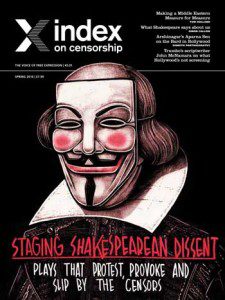
Order your copy of the Staging Shakesearean dissent here.
Order your copy of Index on Censorship here
To mark the release of the spring 2016 issue of Index on Censorship magazine Index has compiled a reading list of articles from the magazine archives covering the censorship of theatre. The latest issue, Staging Shakespearean Dissent, takes a look at how Shakespeare’s plays have allowed directors to tackle issues that would have otherwise been censored in countries around the world.
Egoli — City of Gold
August 1982 vol. 11 no. 4
Performances of South African play Egoli, by writer Matsemela Manaka, went ahead at a Johannesburg theatre without being censored, yet the printed version – an extract of which is featured in this article – was banned. Egoli, which means “city of gold”, focuses on the plight of migrant mine workers in South Africa. Its two characters, John Moalusi Ledwaba and Hamilton Mahonga Silwane, were in prison at the same time: one for a political crime, the other for rape and murder. Now they work in the gold mines, while their families attempt to farm in the “homelands”.
Read the full article here.
Knife edge
March 2015 vol. 44 no. 1
Lucien Bourjeily’s 2013 play Will It Pass or Not? was banned by Lebanon’s censorship bureau, yet his 2015 play For Your Eyes Only, Sir was approved after some minor changes, despite the play including scenes from its banned prequel. Aimée Hamilton talks to Bourjeily about why his new play escaped the censors when his previous one didn’t, and what inspired it; and For Your Eyes Only, Sir is translated into English for the first time for Index on Censorship magazine.
Read the full article here.
Oh! How I miss the termite
July 1979 vol. 8 no. 4
Despite government assurances that it was lifting restrictions on Brazilian stage productions in April 1979, theatres were among the most censored over the next decade. Every play had to be submitted to the censor in Brasilia before it was staged, and a complete rehearsal had to take place in the presence of a censor of the town in which the play was being performed. In December 1978 one of Brazil’s best know playwrights Plínio Marcos, notorious for having 18 of his works suppressed without performance, wrote the play Oh! How I Miss the Termite to be read only, believing he could not get the play performed publicly.
Read the full article here.
My Temptation
November 1986 vol. 15 no. 10
In an interview with Czech exile Karel Hvizdala, for inclusion in a book of interviews he was working on, Czechoslovakian playwright Vaclav Havel, who was unable work in his profession in his own country – where nothing he had written had been published or performed since 1969 – speaks about his latest plays Largo Desolato and Temptation.
Read the full article here.
A censored life
February 1985 vol. 14 no. 1
Karel Kyncl tells the story theatre and film actress Vlasta Chramostová, her Living Room Theatre, and how Shakespeare was used as a form of resistance. In the 1960s and 70s Czechoslovakian actors put on performances of Macbeth in houses, which they called Living Room Theatre. However, Shakespeare was seen as an enemy of socialism by Czechoslovakia police, who began to harass the actors. The actors continued to perform despite pressure from the police but eventually some of these actors were driven into exile.
Read the full article here.
Shame in Birmingham
May 2005 vol. 34 no. 2
Janet Steel discusses the censorship Gurpreet Kaur Bhatti faced when the British-Pakistani playwright attempted to put on her production Behzti at the Birmingham Repertory Theatre. The local Sikh community called for the play to be banned, stating it incited racial hatred, which led to Bhatti receiving threats because of her work.
Read the full article here.
Nan Levinson: Bowdler revisited
March 1990 vol. 19 no. 3
Nan Levinson discusses censorship of Romeo and Juliet in textbooks in American schools. Artist Janet Zweig read an article written by a student about the discrepancies between the play in his school textbook and the version he saw on stage. Over 300 lines had been cut from the play, the majority of which contained sexual references. Zweig spoke to publishers and found the publishers that didn’t cut lines from the textbook didn’t sell as many as those who did. She went on to make a book from the 336 lines that were cut from the textbooks, part of which is featured in this article.
Read the full article here.
Dame Janet Suzman: Stage directions in South Africa – June 2014 vol. 43 no.2
Dame Janet Suzman’s 1987 production of Othello in South Africa caused a huge amount controversy due the production showing a relationship between a black man and a white woman during the apartheid. Many people left the production in protest and sent threatening letters, however the play escaped being banned or censored because it was Shakespeare. In this article Suzman discusses why she chose to put on such a controversial production and how through Shakespeare they escaped the censors.
Read the full article here.
The fate of Tang Xianzu
November 1998 vol. 27 no. 6
The long awaited revival of a 400-year-old classical opera, in rehearsal at Shanghai’s Kunju Theatre, was called off by the Shanghai Bureau of Culture. It accused the director of introducing “archaic, superstitious and pornographic” elements into his production and vetoed its export first to New York and subsequently to France, Australia and Hong Kong. Mu Dan Ting, (Peony Pavilion), had not been performed in its entire act since it was written by Tang Xianzu in 1598 during the Ming Dynasty, as it was written out of classical repertoire under the communists. However director Yang Lian believes this time round its banning has more to do with political manoeuvering than the nature of the opera itself.
Read the full article here.
Theatre Censorship
August 1980 vol. 9 no. 4 23-28
“Censorship in the theatre has always been more petty and strict than censorship in general – that of literature, for instance. Sadly, it has often been the finest examples of Russian drama that have not reached the stage until several years – sometimes decades – after they were written.” Anna Tamarchenko discusses the censorship of Russian theatre throughout the years.
Read the full article here.
Order your copy of Index on Censorship here or take out a digital subscription via Exact Editions (just £18 for the year, with a free trial).
16 Feb 2016 | Art and the Law Commentary, Artistic Freedom Commentary and Reports
In the United States, Australia and Britain a handful of art museums and galleries have come under scrutiny for displaying photographs of children.
Work by photographers such as Nan Goldin, Bill Henson and Sally Mann depicting children expressing a bodily awareness have provoked a reoccurring debate cast in two competing concerns. Voices generally sympathetic to the arts community defend the fundamental right of freedom of artistic expression and emphasise that children are able to give consent. Those calling for institutions to censor art accuse artists of perpetuating the sexualisation of children and ‘playing into the hands’ of paedophiles.
A more critical dialogue on the ethics of exhibiting photographs of young people’s bodies has been hard to find in these debates. The issues are bound up in the display of their image are addressed only during crises of controversy and too often presented as mutually exclusive, while voices of now-adult models remain profoundly absent.
Among the handful of models that have voiced their opinions in media, Sally Mann’s daughter spoke of her experiences as “teaching her the power of art” and inspiring her own career as an artist. Despite the media’s efforts, the now adult models of Bill Henson reflect on their collaboration with the artist as “empowering“. It seems that within circumstances that prioritise the needs and interests of the child, young people can experience an active engagement in art that is inspiring.
Yet not every parent or artist prioritises the best interests of the child when encouraging them to model, making this a particularly difficult ethical territory for museums to negotiate. An inherent power imbalance between parents and/or artists and young people allows some to pursue self-goals over the well-being of the child.
Adolescence is a time in which young people develop their identity, sexuality and thinking in adult-like ways, *while still remaining vulnerable and sensitive to expectations of adults* but also during which they have particular vulnerabilities and remain sensitive to expectations and coercion of adults. A young person might not see the implications of posing in certain ways as problematic until growing into adulthood. *I’d suggest making a new graph here*Consent is fluid and changeable because a person’s feelings may change according to the embodied experiences of adolescence. The meanings a photograph might evoke in other viewers might not become evident until later in life. In addition, photographs are mutable and can be read in very different ways that are temporally and culturally contingent.
In 2010, Vanity Fair published an article that exposed the emotional damage caused by Pop Art pioneer Larry Rivers on his two daughters by filming them naked during their early teens. Rivers made tapes of Emma and her older sister Gwynne on different occasions during the late 70s, “sometimes just with their breasts exposed, sometimes naked, as their father asked them questions about their bodies and budding sexuality“. Although film is inherently different from photography, it shares similarities in this context in that it is expected to show a supposed reality, the true image of a person. One of his daughters later said the film, Growing, contributed to the eating disorder and mental health problems she experienced during her adolescence and adulthood. Despite requests to have the tape destroyed, the archive’s keepers of The Larry Rivers Foundation have decided to keep the film behind closed doors in his daughter’s lifetime, but insist the collection should be kept for the sake of art.
Emma’s account embodies the idea that there is something predatory about the act of taking a photograph, as Susan Sontag asserted in On Photography. Photographs can blur the boundaries between reality and fiction and assert control over their subject, by turning a person into an object that can be possessed. River’s daughter is one of few who has attempted to gain back control over her image and ultimately failed to do so. Although the embargo on the video is partial, it does not grant her control.
Consent is negotiated and defined at the site of construction of the artwork by the relationships between the artist, parents and the autonomy of the child, but cultural institutions play a role by collecting, giving access to, exhibiting and publicising images. A museum grants the image a status inside the realm of art, but also brings work such as Larry River’s from the private into the public sphere. Outside the contemplated context of a gallery or archive, there is little space to negotiate the terms at which a photograph is used. Without any right of ownership of images of themselves, can a young person truly give lifelong informed consent for their image to be used?
No research exists that can enrich this discussion and more significantly bring to light how young people and adults reflect on their experiences. Moreover, a more open and interdisciplinary dialogue between lawyers, children rights advocates, medical ethicists, police, artists and museums is needed to equip institutions with the knowledge to encourage more informed and transparent decision-making and at the same time safeguard themselves against both censorship and self-censorship. A helpful way forward might take the shape of a more dynamic museum ethics discourse that appreciates the complexities of the context in which photographs are made and is rooted in an ethic of care towards the child on display.
Ceciel Brouwer is a young academic doing a PhD at the School of Museum Studies in Leicester. Her research explores how museums negotiate the ethical issues involved in collecting, interpreting and displaying photographs of children that express a bodily awareness. She became interested in ethics, consent and representations of young people when reflecting on the impact of her own experiences as a child participant in medical research and treatment. Her research is funded by the AHRC and Midlands3Cities.
