17 May 2013 | Azerbaijan News, Europe and Central Asia, News
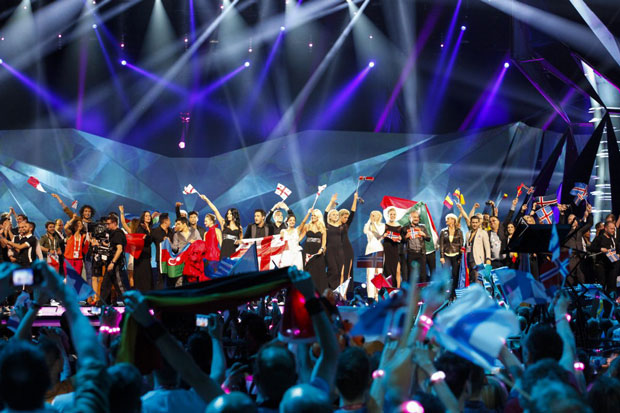
The Eurovision Song Contest gives a platform to some of Europe’s outliers on free expression. Photo: Sander Hesterman (EBU) / Eurovision 2013
Europe will once again be swept away by a sparkly hurricane of techno beats and pompous ballads, kitschy and/or traditional costumes, wind machines, pyrotechnics, heavily accented English, awkward host banter and nul points. Yes, Eurovision takes our breath away in more ways than one.
While first and foremost a showbiz spectacle, if you look beneath the layer of sequins you’ll soon discover the political tinge to the continent’s premier singing competition. From the start in 1956, it was designed as fun way of testing out new broadcasting technology. Those partial to the occasional conspiracy theory would have you believe this was also a convenient cover for pan-European satellite testing during the Cold War, which is why NATO members Turkey and Israel were invited to the party.
With the lifting of the Iron Curtain and the inclusion of the Eastern Bloc in 1990, much was said about the healing, unifying power of the contest. Since then, even more has been said about the tendency of the late arrivals to share their points amongst themselves. The UK, for instance, have been vocal about political, neighbourhood voting being the cause of their recent Eurovision failings, rather than, say, sending entries like this. And while Eurovision, somewhat censoriously, prohibits political songs that has not stopped artists from trying to get their meaningful messages across.
The most famous recent example is perhaps Georgia’s pun-tastic 2009 offering “We Don’t Want To Put In’‘, to be performed at final in — you guessed it — Moscow. They were told to change the song or drop out, and ultimately chose the latter. Krista Siegfrids, Finland’s entrant this year, has warned she might be planting a kiss on one of her female dancers in protest at her country’s failure to adopt equal marriage legislation.
Most significantly, Eurovision gives its entrants prime time access to some 800 million viewers around the world – an unparalleled platform on which to promote their nation should they choose to. Many have jumped at the opportunity, chief among them the land of fire; Azerbaijan. As 2012 hosts, the Aliyev regime poured millions of their significant oil wealth into reforming their international reputation as a repressive hereditary dictatorship. The only problem with this otherwise foolproof plan was that they forcefully evicted people to make room for an ambitious Eurovision-inspired urban renewal project in Baku, attacked journalists covering and speaking up about it, and generally conducted their notoriously human rights abusing business as usual. Not much has changed since the party left town a year ago — only this week, the regime announced they have extended libel laws to online speech ahead of October’s presidential election.
Before that, 2009 hosts Russia attempted to dazzle Europe and the world, with a spectacular stage show in the 25,000 capacity Indoor Olympic Arena in Moscow. However, LGBT activists seized the opportunity to shine the spotlight on the country’s poor record on gay rights, attempting to stage a Slavic-wide Pride parade on the day of the final. In a clear violation of the right to freedom of expression and assembly, the parade was banned. Many of the protesters who showed up anyway, were attacked and arrested. LGBT rights remain poor in Russia, with a 100-year ban on pride parades in Moscow announced only last year. The charm offensive of last year’s singing, dancing, baking grandma entry has this year been followed by the John-and-Yoko-esque ‘What If?‘, which among other gems, contains the lyrics “Together we can make a better place/ On this little island out in space”. Meanwhile, in Russia, internationally funded NGOs have to register as ‘foreign agents’, or risk fines and prison time.
You don’t have to host to be able to host to take full advantage of the promotional platform Eurovision. Like Belarus, you can condense your message to fit the 3-minute performance slot. In 2011, the country known as Europe’s last dictatorship sent Anastasiya Vinnikova to perform the subtly named “I Love Belarus“. Somehow, it didn’t progress to the final. Maybe the rest of Europe had some trouble reconciling the country described in the song, with its “fields full of gold” and “free, friendly and young people”, with the country where you’re put in prison for pointing out that your repressive dictator is, well, a dictator.
Also in the running this year is Hungary, the country with some of the most draconian press regulation on the continent. There’s Ukraine, where the former prime minister is serving a seven-year jail sentence for what is widely recognised as politically motivated charges. In Italy, the final will be broadcast on public broadcaster RAI, one half of the TV duopoly that poses a big threat to the country’s media plurality. In Greece, financial woes have also had a pretty detrimental effect on freedom of expression. Bulgaria’s web of cosy relationships between authorities and media leaves the country without an accurate picture of itself.
Yes, Eurovision is first and foremost one of the biggest parties in the world. However, as you’re watching the spectacle unfold on Saturday, spare a thought for the Europeans who are not as free to express themselves as their fellow countrymen on stage in Malmo.
18 Jun 2012 | News, Volume 41.02 Summer 2012
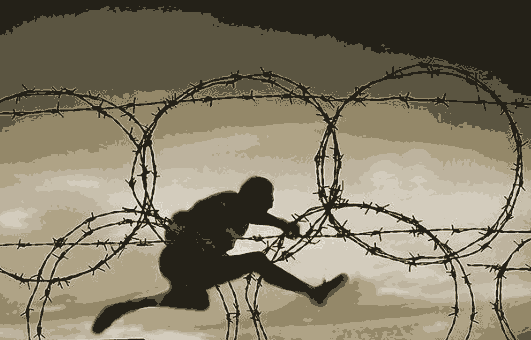
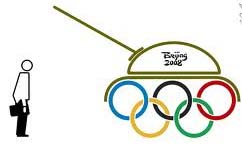 Despite talk of reform, the Bahrain Grand Prix and the Beijing Olympics proved to be catalysts for rights abuses. Mihir Bose asks whether human rights should be a criterion for hosting coveted international sporting events
On the evening of 13 July 2001, as Beijing held a press conference in Moscow to celebrate securing the 2008 Olympics, they had an unexpected visitor: François Carrard, the Swiss lawyer who was executive director of the International Olympic Committee (IOC). Normally on such occasions the IOC keeps its distance and lets the victorious city have its moment in the sun. But Carrard felt he had to address the media on the human rights issue.
In the lead-up to the vote, Beijing’s rivals, in particular Toronto and Paris, had made much of China’s human rights record. As the members gathered, some 50 protesters assembled outside chanting “Free Tibet”. The Russian police, some wearing riot gear, broke up the protest and six people were seen being taken away in a waiting bus after demonstrators tried to unfurl three banners on the Moscow River embankment, opposite the World Trade Centre where the IOC was meeting. There were reports of 12 arrests.
 The IOC had so far refused to discuss human rights, arguing that it was only concerned with making a decision about sport. Nor was the issue addressed by the Evaluation Commission that visited the bid cities and whose assessment formed the basis of the IOC members’ decision. The report of the commission was crucial as, following the revelation of the 1998 Salt Lake City corruption scandal in which IOC members were accused of taking bribes, they were subsequently barred from visiting bid cities. Just before the vote for the 2008 Games, Hein Verbruggen, the Dutch chairman of the Evaluation Commission, summarised to his fellow members the various potential risk factors of the bidding cities. But he did not mention human rights.
Beijing did face a question on human rights during its presentation. But this was delivered in such a roundabout way that only seasoned IOC observers could have understood it. Roland Baar, a rower from Germany, raised the ethical issue of playing beach volleyball in Tiananmen Square. Beijing had proposed this idea, but it had been shelved after objections from the Evaluation Commission that it was not a suitable venue. Baar was so circumspect that he did not even utter the words “Tiananmen Square”, lest it offend the Chinese.
But now Carrard felt free to talk about human rights. At the press conference, apologising profusely for intervening at the Chinese party, he revealed, “On human rights we had two choices — a decision we close the door and that is a hugely respectable decision. The other way is to bet on openness. We bet that in seven years’ time the interactions, the progress and the development will be such that human rights can be improved.”
Beijing Olympics: China’s coming-out party
Long before the Beijing Olympics was staged it was clear that this was an impossible bet, and in the end Jacque Rogge, who was elected president of the IOC a few days after the vote in Moscow, made it clear that it was no business of the committee to monitor China’s moral development. Indeed, Rogge confessed that the IOC neither had the power nor the ability to do anything on human rights. The result: China rode out the protests that accompanied the Games, in particular the ones that marked the torch relay. China, as it had always planned, used the Games to show they could take the Olympics, a western invention, and do it better. By the end of it, IOC members were applauding the Games as China’s giant coming-out party and declaring the bar had been raised to such an extent that other countries would struggle to match it. All talk of human rights and opening up the country had vanished.
The fact was that the Games went to Beijing not because the Olympic movement thought it could change China, but because of wider geopolitical considerations. The overwhelming view of IOC members was that the Games had to go to the most populous country in the world. China had been a good Olympic member. Whatever its human rights record, there was no Olympic reason to refuse the bid. There was also a fear that Beijing, having failed in 1993 when it lost to Sydney by two votes, might walk out of the Olympics if China did not succeed this time.
There was a dominant view in the Olympic movement that, with the collapse of the Soviet Union, a strong China was needed to balance the all-powerful Americans. Ivan Slavkov, the IOC member from Bulgaria — later expelled from the movement in 2005 when he was caught by an undercover reporter saying he would take bribes in exchange for votes — said at the time: “We need China to act as a check on the US. The US is the only superpower. It dominates everything, including the Olympics and the medal tables. China is coming up fast and, by giving the Games to them, we can make sure they develop in the right direction.”
The legacy of the 1936 Berlin Olympics
The IOC’s dance round the issue of human rights over the decades illustrates a wider problem for all sports organisations faced with such ethical concerns. The classic example of this was the 1936 Berlin Olympics. The award of the Games to Berlin was intended to symbolise the re-admission of a peaceful, democratic Germany to the family of nations after the horrors of the First World War. By a supreme irony, the Games have gone down in history as a triumph of Nazi propaganda. As the official Olympic-Zeitung proudly asked on 19 August 1936: “Do we have to point out that the great victor at the Olympic Games is Adolf Hitler?”
The 1936 Olympics, which left us the legacy of the torch relay, offers a template for the use of sport for ulterior purposes with its extraordinary mixture of opportunism, improvisation and attention to detail in the Nazi preparations for the Games. But Hitler could not have fulfilled his agenda to show how normal his regime was if leaders of international sport had not played into his hands, with their willingness to believe dishonest public assurances and to accept gestures and symbols rather than look at reality.
Since then, sports leaders have often looked the other way when major sporting events are held against a background of state violence, in countries whose repressive regimes seek to present themselves as open societies to the outside world. The list includes rebel South African cricket tours of the apartheid era, financed by tax concessions by the white regime, the 1968 Mexico Olympics, the Ali-Foreman fight in 1974 in a Zaire ruled by the brutal and corrupt despot Mobutu Sese Seko, and the 1978 World Cup in Argentina, organised by a junta which, even then, was embarking on a massive programme of killing people opposed to the regime.
Back in 1851, when Prince Albert wished to advertise the might of Queen Victoria’s realm he held a Great Exhibition — essentially a trade fair displaying the works of industry of all nations. There was culture in the form of Charlotte Bronte, Lewis Carroll and George Eliot, but no sport.
Sport, morality and character
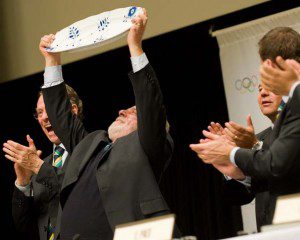 Today, sporting events have come to replace trade expos as a symbol of national success. Nelson Mandela used the power of sport, particularly rugby, to woo the whites, and felt that the rainbow nation had arrived when in 2010 it became the first African country to stage the football World Cup. In Copenhagen in 2009, President Lula of Brazil shed tears after Rio won the right to stage the 2016 Olympics. “Everybody talks of Brazil as the country of tomorrow,” he said. “Here in Copenhagen tomorrow has arrived.” His pleasure was all the greater as Rio had beaten Barack Obama’s Chicago, despite the fact that the most powerful man in the world made a personal plea to the IOC.
But the problem for sport is that, unlike expos, it carries a moral dimension. It is interesting to note that Beijing’s rivals made much of this distinction. Claude Bébéar, president of the Paris bid, made it clear he would have no problems with a Chinese city hosting an expo, but not the Olympics. Giving China the Games, he argued, would indicate moral approval for the regime.
The idea that sport had universal significance emerged only in the 19th century as the rules for modern sports were being formulated. In his fictional novel Tom Brown’s Schooldays, Thomas Hughes presented his headmaster at Rugby, Thomas Arnold, as a sporting guru. His message, said Hughes, was that sport could reach out beyond the playing fields more effectively than any other form of human activity. Indeed, sport could shape society for the greater good.
The headmaster of Hughes’s book was an invention — the real life Arnold had no interest in sport. But the idea proved so powerful that it seduced a French baron, Pierre de Coubertin, who came to Rugby to worship at Arnold’s shrine and used his principles to revive the Olympics, setting it a high political goal. As he put it:
It is clear the telegraph, railways, the telephone, the passionate research in science, congresses and exhibitions have done more for peace than any treaty or diplomatic convention. Well, I hope that athletics will do even more … let us export runners and fencers; there is a freetrade of the future, and on the day when it is introduced within the walls of old Europe the cause of peace would have received a new and mighty stay.
Modern sport is essentially the marriage of Hughes’s big idea in the private realm – that sport develops character — with Coubertin’s big idea in the public realm — that sport can transmit values within and between nations through regular international competition.
Bahrain and Formula One
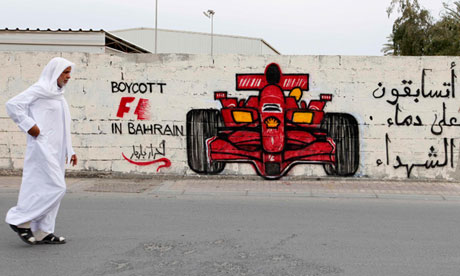
The problem arises when sport collides with political reality, as it did in the wake of the Arab spring. As millions rose up in the Arab world last year to challenge and even change their despotic rulers, in Bahrain the desire for freedom came into conflict with modern sport. In the picturesque words of the Daily Mail’s Martin Samuel, the result of “little brown people” wanting freedom meant “the next thing you know is there is one less place for rich white guys to race cars”.
Formula One’s first Grand Prix of the season was due to take place in Bahrain in March, just weeks after the kingdom had been engulfed by protesters demanding more freedom. There had been highly publicised protests at the main Pearl Roundabout in the financial district of Manama with some 31 protesters killed. Armoured cars, including Saudi troops and forces from Qatar and UAE, had rolled into the kingdom to restore order. How could a sports event take place in such a climate? And where was the moral compass of sport in even thinking it could?
The race was the dream of Crown Prince Sheikh Salman bin Hamad bin Isa al Khalifa, who had made it clear that money was no object in bringing one of the most high profile world events to his desert kingdom. The Bahrain government funded the race. The Sakhir circuit, where the Grand Prix had been run since 2004, had cost some £92m. The F1 organisers had been paid £24.6m to allow Bahrain to organise the opening race of the 2010 season, and this had risen by 60 per cent for the 2011 race. The protesters knew how dear the race was to the Crown Prince and that if they wanted to wring political concessions from him, they had to hit at his beloved sport.
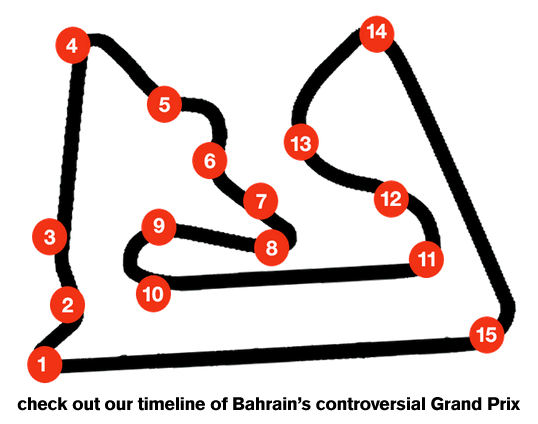 However, the F1 organisers of the race did not seem to understand the moral questions involved. Neither FIA, the governing body, nor Bernie Ecclestone — the F1 rights holder — wanted to put their heads above the parapet. Their reluctance, it was assumed, was due to the fear that if they cancelled the race they would stand to lose £37m in rights fees.
In the end, the Crown Prince himself decided the race had to be put back, hoping it could be held later in the year. His wish appeared to have been granted when, following an FIA inspection team visit, FIA’s World Council unanimously agreed that the Bahrain Grand Prix would now be held on 30 October. The decision provoked outrage from human rights activists and race fans. Many argued that for all the talk of high values, sport was more bothered about Mammon and ended up conspiring with despots.
The FIA’s judgement was further called into question when details of the inspection report emerged. Over a two-day trip, the FIA had met the minister of culture and tourism, the minister of the interior, had had lunch with the board that runs the Grand Prix, met circuit personnel and visited a shopping centre. But they had not met any of the dissidents. It was clear that the race could now not go ahead at the rescheduled date either. However, it was logistics not morality that was given as the reason for the cancellation. The new date for the race in October meant Bahrain would get India’s Grand Prix schedule – the new Formula One commercial centre – and extend the calendar into December. The teams just could not cope with the pressures this would create.
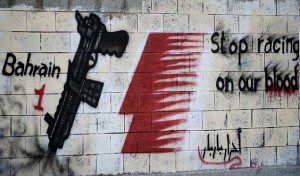 The whole affair brought little credit to Formula One, least of all the highly paid drivers. Apart from Red Bull’s Mark Webber, who acknowledged the moral question of sport taking place in the wake of a bloodbath, nearly all the other drivers avoided the moral issue. I could not even coax Britain’s most successful F1 driver, Nigel Mansell — who has chalked up 31 race wins and the 1992 world title — to take a stand on this issue. When I asked in the middle of the crisis whether it would be morally justified to stage the Bahrain Grand Prix, Mansell replied: “There are great people involved in Formula One who are in charge and it is up to them to speak to the power brokers of the country.”
The problem here, as Max Mosley, the former head of FIA, astutely put it was:
The Formula One world did not seem to appreciate that the government in Bahrain was about to use the Grand Prix in support of suppressing human rights.
For all the moral high ground Formula One may like to claim, when faced with a stark ethical issue it is powerless and has to duck and dive. The same drama has played itself out again this year, with F1 facing international condemnation for holding the race in Bahrain.
Sports administrators may present themselves as the Vatican of sport, beyond the control of any authority but their own. Yet the money needed to run modern sport means they have to compromise with dubious governments and regimes. The result is that the high moral purpose of sport is sacrificed if not totally ignored. And until sport can deal with this basic contradiction, problems such as Bahrain will continue to appear. The worrying thing is that few in sport seem willing or able to deal with it.
 Mihir Bose is the author of The Spirit of the Game: How Sport Made the Modern World (Constable)
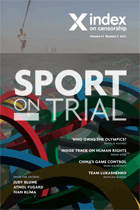
This article appears in the summer 2012 edition of Index on Censorship magazine. Click on
The Sports Issue for subscription options and more

 Index joins civil society groups in voicing concerns about proposals made by the International Telecommunication Union (ITU) that would threaten the openness of the internet