Case study: Can We Talk About This?

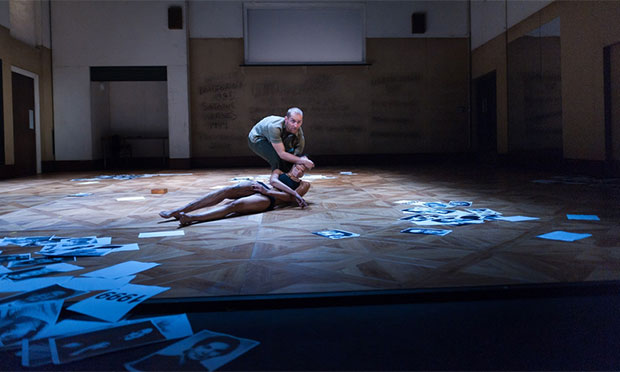
A scene from Can We Talk About This? (Photo: Matt Nettheim for DV8)

A scene from Can We Talk About This? (Photo: Matt Nettheim for DV8)

By Julia Farrington
July 2015

As part of our work on art, offence and the law, Julia Farrington, associate arts producer, Index on Censorship, interviewed Eva Pepper, DV8’s executive producer about how she prepared for potential hostility that the show Can We Talk About This? might provoke as it went on tour around the world in 2011-12.

Background

Can We Talk About This?, created by DV8’s Artistic Director Lloyd Newson, deals with freedom of speech, censorship and Islam. The production premiered in August 2011 at Sydney Opera House, followed by an international tour of 15 countries — Sweden, Australia, Hong Kong, France, Italy, Austria, Germany, Greece, Slovenia, Hungry, Spain, Norway, Taiwan and Korea and the UK between August 2011 and June 2012 — and was seen by a 60,000 people.

Extract from publicity of the show:

“From the 1989 book burnings of Salman Rushdie’s The Satanic Verses, to the murder of filmmaker Theo Van Gogh and the controversy of the ‘Muhammad cartoons’ in 2005, DV8’s production examined how these events have reflected and influenced multicultural policies, press freedom and artistic censorship. In the follow up to the critically acclaimed To Be Straight With You, this documentary-style dance-theatre production used real-life interviews and archive footage. Contributors include a number of high profile writers, campaigners and politicians.”

Q&A

Farrington: How did you set about working with the police for this tour?

Pepper: We focused on the UK with policing; I didn’t speak to any police forces in other countries at all, just in the UK cities we toured to: West Yorkshire Playhouse in Leeds; Warwick Arts Centre; Brighton Corn Exchange; The Lowry in Manchester and the National Theatre in London. But we did have a risk assessment and risk protocol that we shared with every venue we went to. We let them know the subject matter and the potential risks: security, safety of the audiences, media storms, safety of the people who were working on the show. They dealt either with their in-house security, or, in the UK, they would often alert the police as well.
law-pack-promo-art-3

Child Protection: PDF | web

Counter Terrorism: PDF | web

Obscene Publications: PDF | web

Public Order: PDF | web

Race and Religion: PDF | web

Art and the Law home page


Case studies

Behud – Beyond Belief
Can We Talk About This?
Exhibit B
“The law is no less conceptual than fine art”
The Siege
Spiritual America 2014

Commentary

Julia Farrington: Pre-emptive censorship by the police is a clear infringement of civil liberties
Julia Farrington: The arts, the law and freedom of speech
Ceciel Brouwer: Between art and exploitation
Tamsin Allen: Charging for police protection of the arts
Gurpreet Kaur Bhatti: On Behzti
Daniel McClean: Testing artistic freedom of expression in UK courts


Reports and related information

WN-Ethics14-140What Next? Meeting Ethical and Reputational Challenges

Read the full report here or download in PDFTaking the offensive: Defending artistic freedom of expression in the UK (Also available as PDF)

Beyond Belief190x210Beyond belief: theatre, freedom of expression and public order – a case study

UN report on the right to artistic expression and creation
Behzti case study by Ben Payne
freeDimensional Resources for artists
Artlaw Legal resource for visual artists
NCAC Best practices for managing controversy
artsfreedom News and information about artistic freedom of expression


These information packs have been produced by Vivarta in partnership with Index on Censorship and Bindmans LLP.

The packs have been made possible by generous pro-bono support from lawyers at Bindmans LLP, Clifford Chance, Doughty Street Chambers, Matrix Chambers and Brick Court.

Supported using public funding by Arts Council England


Farrington: How did your preparations with police vary around the UK?

Pepper: We started with the Metropolitan Police, about six months before and told them our plans and that we would also contact other police forces. The National Theatre had their own contacts with the police who were already on standby. We still kept the MET events unit informed, but they [National Theatre] dealt with the police themselves. They were much more clued up, they had a head of security whom I briefed; we talked quite a lot. I made sure that he was copied in when anything a bit weird came up on the internet.

Our first venue was Leeds and we approached them about six weeks before the UK premiere. There was a bit of nervousness around Leeds, because of the larger Muslim population in the area. But we were only just beginning our liaison with the police and it took a little time to get a response. In the end we approached senior officers, but they often didn’t engage personally, just put us in touch with the appropriate unit to deal with.

Farrington: They didn’t see it as that important?

Pepper: They liked to be alerted that something might happen and they assured us that they were preparing. The venues also had their own police liaison; sometimes there was a bit of conflict if they had their own. I probably ruffled a few feathers when I went to a more senior officer.

Our starting point to the police was a very carefully worded letter which set out who we were. We didn’t ask permission to put it on we just alerted them that we might need police involvement. I did have some calls and a couple of meetings with officers, where they reiterated what is often said, which is that the police’s mandate is to keep the peace. It was made clear that they have as much of a duty to those people who want to protest or potentially might want to protest, as they have to allow us to exercise our freedom of expression. In Leeds nothing happened but there was a certain amount of nervousness around it.

Farrington: Where – at the venue?

Pepper: I think we were probably a bit nervous, and the police took it seriously enough. We had contact numbers to call. They were very much in the loop of the risk assessment.

Farrington: Was there a police presence on the night?

Pepper: I don’t remember seeing anybody. There was security of the venue of course, but regional venues only go so far with security. With some venues we were a little insistent that they get somebody upstairs and downstairs for example.

Farrington: And search bags, that kind of thing?

Pepper: We insisted people check in bags. The risk protocols weren’t invented for Can We Talk About This? They were really invented for To Be Straight With You [DV8’s previous show] and just tightened up for Can We Talk About This?. The risk protocols are just bullet points to get people thinking through scenarios.

Farrington: In general how would you describe your dealings with the police?

Pepper: I think generally supportive but we came to alert them that we might need them – there wasn’t a crisis. They said ‘thanks for letting us know let us deal with it.’ We would have quite liked to go through their risk assessments, but that didn’t happen. I think we were a little bit on their radar. They offered to send round liaison people to discuss practicalities around the office – stuff we hadn’t really thought about. It was a little bit tricky to get their attention.

The things we asked them to look out for were internet activity, if there was something brewing; sounds terribly paranoid. If there were issues around our London office or tour venues like hate mail, suspicious packages and then protests. So protest was just one thing our board was concerned about.

Farrington: Did you do anything else with the venue to prepare them for a possible hostile response from the media or a member of the public?

Pepper: I asked every venue artistic director or chief executive to prepare a statement. Lloyd would have been the main spokesperson for us if anything went wrong, but for a regional venue it is important that you are ready with a response and they all did that.

Farrington: What kind of thing did they say?

Pepper: We have supported this artist for the last 20 years. Lloyd has always been challenging in one way or another. This time he is challenging about this and we are going with him.

Farrington: Did you have any contact with lawyers?

Pepper: We looked carefully at the contents of the show. We had used interviews with real people and we wanted to be sure that nothing said was libellous or factually incorrect. So we had things looked at. The lawyer would say have you thought about that, did you get a release for this, are you using this from the BBC, do you have permission, have you spoken to this person, does he know you are doing it? And sometimes it is yes and sometimes it was a no.

Farrington: They pointed out some bases you hadn’t covered?

Pepper: Maybe one. We were really good and a bit obsessive. Sometimes we thought we didn’t have to ask because the information was in the public domain anyway, based on an interview that has been online for ten years for example. And the lawyer would or wouldn’t agree with that. It was good for peace of mind. That’s the thing with legal advice it doesn’t mean that nobody comes after you, because the law isn’t black and white.

Farrington: Were there some venues that you took the show to that didn’t think it was necessary to make special preparations?

Pepper: We always made them aware and we let them handle it. There are certain things that we always did. We asked them to consider security, and certainly PR. I was quite concerned that it would be a big PR story and then out of the PR story, as we saw with Exhibit B, comes the police. The protests don’t come from nowhere usually, somebody comes and stirs things up.

Farrington: Did you prepare the venue press departments?

Pepper: Yes we did, and we quite consciously had interviews, preview pieces before hand, where Lloyd could give candid interviews about the show. Almost to take the wind out of people’s sails, to put it out in the open so nobody could say they were surprised.

Farrington: How did you prepare with the performers for potential hostility?

Pepper: We talked through the risk procedure with them. We also got some advice from a security specialist, about being more vigilant than usual, noticing things that are out of the ordinary; if somebody picks a fight in the bar after the show, find a way to alert the others. So yes, the security specialist had a meeting with us here in the office, but also came up to Leeds to talk to the performers.

Farrington: Did it create a difficult atmosphere?

Pepper: It did yes, it got a bit edgy. Next time I would not do it around the UK premiere. It took a long time to set all of this up. To find the right people, to get people to take it seriously, to have meetings scheduled.

Farrington: It took time to find the right kind of security specialist?

Pepper: It also took a little while to get straight what we needed. We probably tried to figure it out for ourselves for a long time. And then got somebody in after all, just as maybe we, or the board got a bit more nervous. When you talk about protests you always worry about the general public, but as an employer there are the people who you send on tour who have to defend the show in the bar afterwards, potentially they are the targets.

Farrington: But they were behind the show?

Pepper: Yes, undoubtedly. But it’s an uncomfortable debate. There were so many voices in that show and you didn’t agree with every voice and it was never really said what really is Lloyd’s or DV8’s line. I would say that all the dancers were fine, but sometimes if somebody corners you in a bar it gets squirmy. No one is comfortable with everything.

Farrington: Can you summarise the response to the show?

Pepper: We had everything from 1 to 5 stars. We had people that loved the dance and hated the politics, who loved the politics and hated the dance. Occasionally somebody liked both. Occasionally somebody hated both. The show was discussed in the dance pages, in the theatre pages and in the comments pages. So in terms of the breadth and depth of the discussion we couldn’t have been more thrilled. Then we had dozens of blogs written about the show. For us Twitter really started with Can We Talk About This? and it was a great instrument for us. Social media was largely positive, though some people were picking a fight on Facebook at some point. It was very, very broad and very widely discussed.

Farrington: And did you interact with Twitter or did you let it roll?

Pepper: Mostly we let it roll. As part of the risk strategy we had a prepared statement from Lloyd which was very similar to the forward in the programme and anybody who had any beef would be redirected to the statement.

Farrington: Did the venues take this performance as an opportunity to have post show discussion and debate?

Pepper: Lloyd prefers preshow talks because he doesn’t like people to tell him what they thought of the shows. Quite often there is a quick Q&A before. In UK, we had one in Brighton [organised by Index] and one at the National. We had fantastic ones in Norway after the Breivik killings. In Norway they weren’t sure it was relevant and then the killings happened and then I got the call to say now we need to talk about it.
But having pre-show talks is certainly how we decided to deal with it. There is a conflict with having a white middle-aged atheist put on a show about Islam. But the majority of voices in the show were Muslim voices of all shades of opinion. It wasn’t fiction. It was based on his research and based on people’s stories – writers, intellectuals, journalists, politicians and who had a personal story to tell

Farrington: How did you prepare work with the board regarding potential controversies?

Pepper: Really the work with the board started with the previous show To Be Straight With You that already dealt with homosexuality and religion and culture; how different communities and religious groups make the life of gay people quite unbearable, internationally and in this country. And even then, we started to say, ‘can we say this? are we allowed to criticise these people like this?’ and out of that grew the ‘yes, I do want to talk about this’ because if we don’t a chill develops. Can We Talk About This? was a history about people who had spoken out about aspects of Islam that they were uncomfortable with or against and what happened to them.

Farrington: What kind of board do you need if you are going to be an organisation that explores taboos like this?

Pepper: We have got a fantastic board; it is incredibly responsible and so is Lloyd. There is a very strong element of trust in Lloyd’s work. They wouldn’t be on the board if they didn’t support him. But, as employers, they are aware of their responsibilities to everyone who works for us. As a company we have to be prepared in the eventuality that there is a PR or security disaster. What we were really trying to do was avoid that eventuality. We will never know. Maybe nothing bad would have happened. I think that Lloyd now wishes more people had seen it, that a film had been made, that it was more accessible to study by those who want to. He thinks that maybe we were a bit too careful. But as an organisation, as DV8, as an employer I think that we did the right thing by looking after people.

Farrington: What advice could you give to prepare the ground for doing work that you know will divide opinion and you know could provoke hostility?

Pepper:
E: If you can anticipate this you already have an advantage, but it’s not always possible to second-guess who might find what offensive. But if you know, I would suggest you ask yourself what buttons you are likely to push; you have to be confident why you are pushing them – usually in order to make an important point. It’s a good idea to articulate this reasoning very well in your head and on paper. Then you have got to be brave and get on with your project. Strong partners are invaluable, so try to get support. But in the end it is about standing up and being able to defend what you do.

Farrington: So you think you could have gone a bit further?

Pepper: I think if you prepare well you could go a bit further. I don’t think there is a law in this country that would stop you from being more offensive than we were. Every artist has to decide for themselves what they want to say and why they are saying it, and if they can justify it they can go for it.

Index joins new European Centre for Press and Media Freedom

asdlksakjkajlsd

Index on Censorship is delighted to announce it has joined the European Centre for Press and Media Freedom, launched this week in Leipzig, Germany, as a founder member.

The centre’s aim is to unite Europe’s media freedom community and to address media freedom violations in EU member states and beyond. Among the other founding member organisations are the European Federation of Journalists (the regional branch of the International Federation of Journalists), and the Russian Mass Media Defence Centre, as well as academic institutions from Greece to Portugal.

The centre’s work will be based on activities that promote the spirit and the values of the European Charter for Press Freedom, signed in 2009 by 48 editors-in-chief and leading journalists from 19 countries.

“Index is thrilled to be part of this initiative because of its potential to increase the impact of all media freedom campaigns in the region,” said Index on Censorship CEO Jodie Ginsberg. “We monitor threats to journalists across Europe, and it’s a fabulous asset to be able to draw more attention to these threats via the centre, to analyse trends, and then take action to address them.”

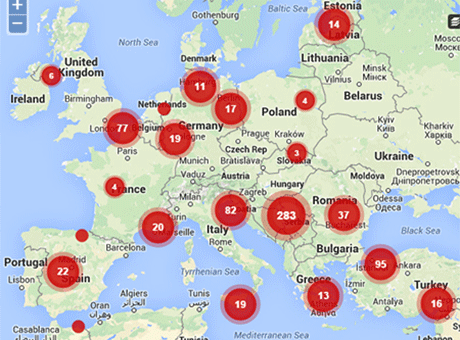
The European Centre for Press and Media Freedom was one of two projects financed by the European Commission in its latest round of funding for initiatives that address media freedom in Europe. The other was Index’s Mapping Media Freedom project, which launched as a pilot project in 2014.

Since its launch, more than 750 reports of threats to journalist and media organisations have been reported to the map.

Media freedom in Europe needs action more than words

As we approach World Press Freedom Day, the right to freedom of expression will again be celebrated as an inalienable European value across the continent — by the public, the media and politicians alike. But to many, this will mean little more than engaging in a well trodden mental routine. We hardly consider the difficulties that freedom of expression faces in practice.

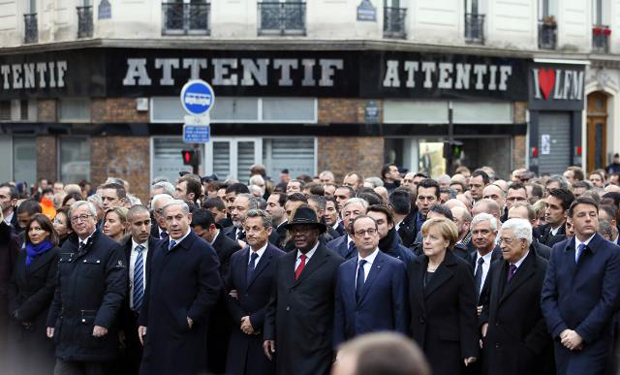
In the first part of 2015, more than a third of journalist killings in the word took place in two European countries; France and Ukraine. If it is true that Europe’s reactions to the Charlie Hebdo attack — the majority of them very emotional — were salubrious, they simultaneously gave rise to ambiguous situations. Many of the leaders that will on 3 May reaffirm their commitment free expression, supported the same message by taking part in the historic march in Paris on 11 January.

But upon seeing Angela Merkel, some were also reminded that Germany continues to treat blasphemy as a crime — as do Denmark, Spain, Poland and Greece, among others. Ireland, whose Enda Kenny was also in attendance, has a constitution which specifically mentions blasphemy and in 2010 enacted a new law against it. All these European countries defend themselves by saying that they do not apply their laws against “blasphemers”. That argument does not carry much weight when it comes to opposing those countries — Saudi Arabia, Iran, various Asian countries — that have tried to turn blasphemy into a universal crime recognised by the UN.

Spain’s Mariano Rajoy too marched in solidarity, but his government has taken steps to promote changes in the penal code that would “represent a serious threat to freedom of information, expression and the press”.

And what was Viktor Orban doing in Paris? The Hungarian president has reunified Hungary‘s public media so as to better bind them to his own party. Despite being the leader of an EU country, Orban has followed Vladimir Putin’s example. In this experimental model, the Andrei Sakharov Center and Museum is no longer ordered to close as it was in the old days, but rather fined 300,000 roubles (€5,000) for failing to register as a “foreign agent”. One day brings an announcement of compulsory registration for bloggers in Russia; another day, harassment against Russian and Hungarian NGOs perceived as “unpatriotic”.

Turkish Prime Minister Ahmet Davutohlu traveled to Paris, only to later label Charlie Hebdo’s post-attack issue a “provocation”. A reminder: Turkey is an EU candidate country where dozens of journalists have been sentenced to prison, and where various internet sites, including those that dared to reproduce some of Charlie Hebdo’s caricatures, have been blocked.

But also present at the march, were various representatives of European journalists — myself included. Just behind the Charlie Hebdo survivors, we carried a banner with the message “Nous sommes Charlie”.

Walking next to me was Franco Siddi, of the Italian National Press Federation. He talked to me about how imprisonment for defamation is still a possibility in Italy, though the European Court of Human Rights has ruled it a disproportionate punishment.

In my home country Spain too, this possibility of imprisonment remains, even if under Spanish jurisprudence freedom of expression consistently prevails over the demands of plaintiffs. In Italy, the situation is the same, yet my Italian colleagues point out that in 2014 alone, 462 journalists in the country were threatened with legal action for alleged acts of defamation. And while the current proposal for reform being considered foresees eliminating the possibility of jail time, it increases the potential fines.

This is not the only potential legal threat facing European journalists. Long before 9/11, there existed a reflexive habit of passing “urgent” laws under security pretexts, as in the UK during the most difficult years of the Northern Ireland conflict. The current model is the United States’ Patriot Act, which has recently been discussed in France. Meanwhile, in Britain and Spain are debating what free expression activists describe as “gag laws”. In Macedonia, the sentencing of the investigative journalist Tomislav Kezarovski to two years in prison under one of these security inspired laws stands out as a warning sign.

Against this worrying backdrop, across Europe journalists, freedom advocates, campaigners and even politicians are standing up for press freedom. When Gvozden Srecko Flego, member of the Parliamentary Assembly of the Council of Europe, recently highlighted the cases of Russia, Ukraine, Turkey and Azerbaijan as particularly problematic, he also suggested a countermeasure. He recommends “organising annual debates […], with the participation of journalists’ organisations and media outlets” in the respective parliaments of each state.

Media concentration, one of the most serious challenges to media pluralism and free expression in Europe, is being tackled. One proposal, which some international bodies have already accepted, would create a “Media Identity Card” requiring owners to publicly identify themselves and thus create an environment of more open and transparent media ownership.

When defending freedom of expression as a European value, we cannot allow ourselves to simply fall in into mental routines. This World Press Freedom Day we need both words and actions.

Paco Audije is a member of the Steering Committee of the European Federation of Journalists (EFJ)

World Press Freedom Day 2015

Media freedom in Europe needs action more than words
Dunja Mijatović: The good fight must continue
Mass surveillance: Journalists confront the moment of hesitation
The women challenging Bosnia’s divided media
World Press Freedom Day: Call to protect freedom of expression

This column was posted on 1 May 2015 at indexoncensorship.org

Kostas Vaxevanis: Greek justice and freedom of the press exist in name only

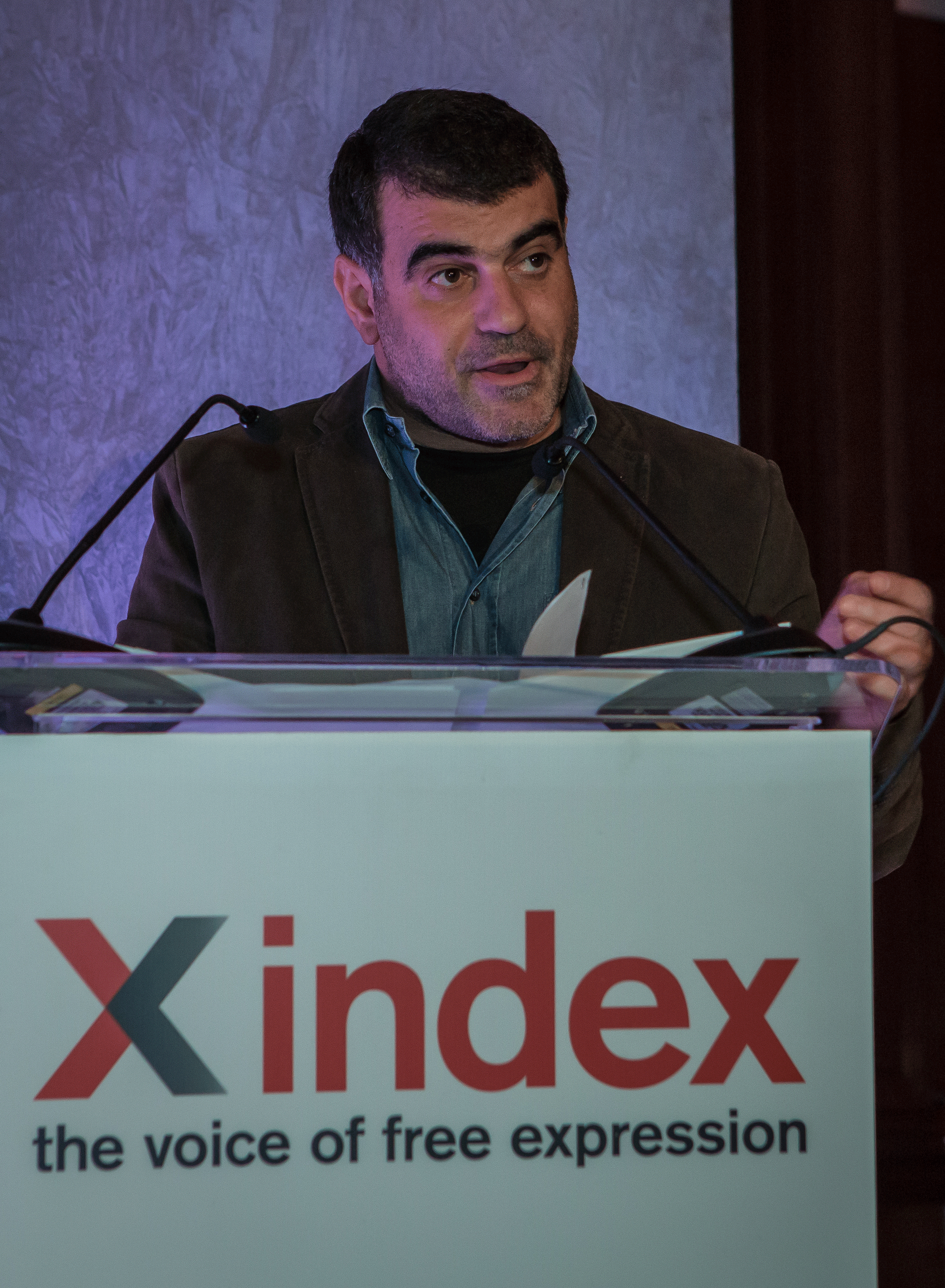
Greek journalist Kostas

Kostas Vaxevanis won the 2013 Index on Censorship Journalism award for his investigative journalism through his work on the magazine Hot Doc. On 30 March 2015 he was convicted of criminal defamation for his reporting on banking irregularities in Greece and given a 26 month suspended sentence.

The justice system of Greece is often compared to a very thin fishing net, which catches the small fish, but which allows the bigger, stronger fish to break free.

It is a widely-held belief in Greece that there is a lack of justice administered by the country’s judicial system, and this belief is confirmed if one looks at recent history.

None of the major scandals of recent years — ranging from that of the Athens Stock Exchange to the scandal involving judges who conspired in the rigging of court cases — resulted in any guilty verdicts.

A few days ago, the Greek justice system sentenced former finance minister Giorgos Papakonstantinou to a mere 12 months’ imprisonment for his removal of names from the so-called Lagarde List of alleged Greek tax evaders with Swiss bank accounts, while he was not convicted for the most serious charges against him, namely, his inaction with regard to the individuals named on the list. However, this paradoxical situation, in which the Greek justice system charged and attempted to prosecute me on two occasions over the publication of the Lagarde List but did not sentence the government minister who concealed it, does not stop here. At the same time that a Greek court issued a paltry 12 month prison sentence to Papakonstantinou, a different court sentenced me to a 26 month suspended sentence, following charges that were filed against me by one of Greece’s major oligarchs, businessman Andreas Vgenopoulos.

Investigative reports which were publicised in the magazine which I publish, Hot Doc, revealed that Andreas Vgenopoulos had purchased the Cyprus-based Marfin Bank, which he then utilized in order to provide capitalization to other business interests of his and to those of his fellow oligarchs. According to the Cypriot government, Vgenpoulos’ actions with Marfin Bank was one of the main factors which resulted in the collapse of the country’s economy.

All of the reports which were published in Hot Doc were derived form official documents from the parliament of Cyprus, from Cypriot prosecutors, from Greek courts, and from the central banks of Greece and Cyprus. On the basis of documentation, anti-corruption prosecutors were obliged to launch an investigation regarding the financial activities of Vgenopoulos.

Even though this investigation is still in progress, along with a parallel investigation being conducted by Cypriot authorities, who have also issued a warrant for the freezing of Vgenopoulos’ assets totaling €2.4 billion, I was tried and sentenced by a Greek court on charges of libel. In court, I provided documentation from the vice prosecutor of the Greek Court of Appeals, who was requesting that Greek authorities investigate Vgenopoulos on allegations of bribery and money laundering based on evidence held by Cypriot authorities. Despite this, I was found guilty and issued a sentence that is greater than that issued by the Greek judicial system to a former Greek government minister, Giorgos Papakonstantinou.

In contrast to the standards of European law and European court decisions, which have made it clear that journalists are obligated to maintain a critical stance and, often, a strong and aggressive tone towards public figures, the Greek court which tried me concocted “malicious intent” on my part. Indeed, it is notable that the prosecutor, who was the same individual which had requested that I be sentenced for my revelation of the Lagarde List, on the basis of an unprecedented assertion: that I am “a very good journalist”, which means that my actions were undertaken “with malicious intent, and not out of ignorance”. This is unprecedented in global legal history.

Following my sentencing, numerous international organizations and actors responded, including the OSCE and the International Federation of Journalists, but once again, the only reaction in Greece was a guilty silence. At the present time, I am personally facing, along with Hot Doc magazine, no less than 42 different criminal cases and lawsuits. These are charges filed by politicians and oligarchs, whom we have investigated as part of our journalistic responsibilities. None of these individuals have officially responded to any of our revelations, as public figures are obliged to do.

Instead, they have resorted to legal means while attempting to influence public opinion by saying that they “will punish the slanderer in court”. In this way, they avoid responding to the revelations made against them and employ the justice system in their favour, to hold journalists hostage. It should be noted that Hot Doc’s legal bills for all of these different cases have surpassed €100,000.

The ultimate aim of this coordinated effort of charges and lawsuits against me and my magazine is to force us to reach a settlement, or to otherwise lead to our economic obliteration. It is rare for a journalist to challenge a coordinated and corrupt system, which also holds influence over specific individuals within the legal system, who then hold the power to issue specific sentences and decisions upon request.

Meanwhile, freedom of the press is rapidly being transformed into an altar upon which everyone pretends to worship, but which contains many skeletons within.

Unfortunately, the same is true of justice in Greece as well, resulting in a system where even honest justices often operate in fear of displeasing a government minister or major business figure, who has the power to file charges against them and destroy them.

When former defense minister Akis Tsohatzopoulos was arrested, his personal effects included notes on coordinated actions he would undertake with business figures, in order to destroy prosecutors who were continuing investigations against him. The justice system, in turn, did not have the courage to further examine this and to investigate those who plotting to kill their fellow prosecutors, instead allowing these crucial pieces of evidence to get “lost” in the mountains of paperwork relating to this case.

In this most blatant of manners, judges and prosecutors who depart from the judicial branch in Greece later become legal consultants to the same business figures which, until recently, they held a responsibility to investigate and prosecute. And this convoluted web of corruption and injustice is veiled behind a legal system which issues harsh punishments for charges such as that of libel. This legal system arrests and prosecutes “slanderers”, but, God forbid, never any major fraudsters or corrupt politicians. The very concept of an independent judiciary is devalued on a daily basis in Greece, in the eyes of justice and common sense. If one asks judicial professionals to tell you about justice, they can refer you to a whole range of laws, but to far fewer instances of true justice being served or public figures having been imprisoned.

This column was posted on April 20 2015 at indexoncensorship.org

SUPPORT INDEX'S WORK