22 Jun 2015 | Academic Freedom, Counter Terrorism, Magazine, United Kingdom, Volume 44.02 Summer 2015
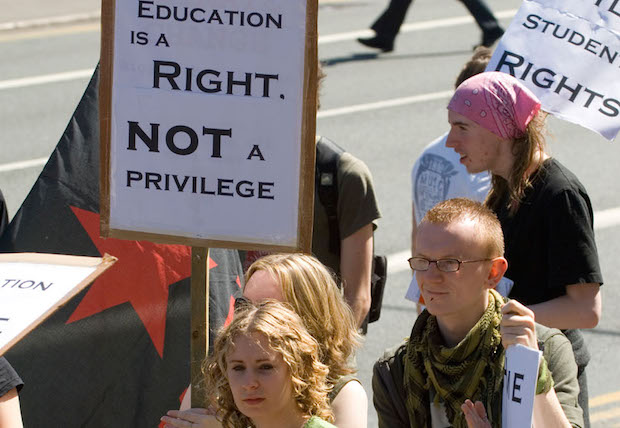
Students at a protest in Manchester. Photo: Alamy/ M Itani
The realisation of academic freedom typically depends on controversy: it voices dissent. Linked to free speech, it is marked primarily by critique, speaking against – even offending against – prevailing or accepted norms. If it is to be heard, to make a substantial difference, such speech cannot be entirely divorced from rules or law. Yet legitimate rule – law – is itself established through talk, discussion and debate. Academic freedom seeks a new linguistic bond by engaging with or even producing a free assembly of mutually linked speakers. To curb such freedom, you delegitimise certain speakers or forms of speech; and the easiest way to do this is to isolate a speaker from an audience and to isolate members of an audience from each other. Silence the speaker; divide and rule the audience. When that seems extreme, work surreptitiously: attack not what is said but its potentially upsetting or offensive “tone”. Such inhibitions on speech increasingly chill conditions on campus.
Academic freedom is typically enshrined in university statutes, a typical formulation being that “academic staff have freedom within the law to question and test received wisdom, and to put forward new ideas and controversial or unpopular opinions, without placing themselves in jeopardy of losing their jobs or privileges” – as the statutes of the University of Warwick, where I work, have it. Yet academic freedom is now being fundamentally weakened and qualified by legislation, with which universities must comply.
British Prime Minister David Cameron, speaking in Munich on 5 February 2011, said: “We must stop these groups [terrorists] from reaching people in publicly funded institutions like universities.” This was followed by a UK government report on tackling extremism, released ahead of the recent election, which said: “Universities must take seriously their responsibility to deny extremist speakers a platform.” It was suggested that “Prevent co-ordinators” could “give universities access to the information they need to make informed decisions” about who they allowed to speak on campuses. Ahead of May’s UK election university events had already been changed or cancelled. And immediately after the election, the government signalled its intention to focus further on the extremism agenda. In endorsing this approach, university vice-chancellors have acquiesced in a too-intimate identification of the interests of the search for better argument with whatever is stated as government policy. The expectation is that academics will in turn give up the autonomy required to criticise that policy or those who now manage it on government’s behalf in our institutions.
Governments worldwide increasingly assert the legal power to curtail the free speech and freedom of assembly that is axiomatic to the existence of academic freedom. This endangers democracy itself, what John Stuart Mill called “governance by discussion”. The economist Amartya Sen, for example, has recently resigned from his position as chancellor of Nalanda University in India because of what he saw as “political interference in academic matters” whereby “academic governance in India remains … deeply vulnerable to the opinions of the ruling government”. (See our report from India in our academic freedom special issue.) This is notable because it is one extremely rare instance of a university leader taking a stand against government interference in the autonomous governance of universities, autonomy that is crucial to the exercise of speaking freely without jeopardy.
Academic freedom, and the possibilities it offers for democratic assembly in society at large, now operates under the sign of terror. This has empowered governments to proscribe not just terrorist acts but also talk about terror; and governments have identified universities as a primary location for such talk. Clearly closing down a university would be a step too far; but just as effective is to inhibit its operation as the free assembly of dissenting voices. We have recently wit- nessed a tendency to quarantine individuals whose voices don’t comply with governance/ government norms. Psychology professor Ian Parker was suspended by Manchester Metropolitan University and isolated from his students in 2012, charged with “serious misconduct” for sending an email that questioned management. In 2014, I myself was suspended by the University of Warwick, barred from having any contact with colleagues and students, barred from campus, prevented from attending and speaking at a conference on E P Thompson, and more. Why? I was accused of undermining a colleague and asking critical questions of my superiors, the answers to which threatened their supposedly unquestionable authority. None of these charges were later upheld at a university tribunal.
More insidious is the recourse to “courtesy” as a means of preventing some speech from enjoying legitimacy and an audience. Several UK institutions have recently issued “tone of voice” guidelines governing publications. The University of Manchester, for example, says that “tone of voice is the way we express our brand personality in writing”; Plymouth University argues that “by putting the message in the hands of the communicator, it establishes a democracy of words, and opens up new creative possibilities”. These statements should be read in conjunction with the advice given by employment lawyer David Browne, of SGH Martineau (a UK law firm with many university clients). In a blogpost written in July 2014, he argued that high-performing academics with “outspoken opinions”, might damage their university’s brand and in it made comparisons between having strong opinions and the behaviour of footballer Luis Suárez in biting another player during the 2014 World Cup. The blog was later updated to add that its critique only applied to opinions that “fall outside the lawful exercise of academic freedom or freedom of speech more widely”, according to the THES (formerly the Times Higher Education Supplement). Conformity to the brand is now also conformity to a specific tone of voice; and the tone in question is one of supine compliance with ideological norms.
This is increasingly how controversial opinion is managed. If one speaks in a tone that stands out from the brand – if one is independent of government at all – then, by definition, one is in danger of bringing the branded university into disrepute. Worse, such criticism is treated as if it were akin to terrorism-by-voice.
Nothing is more important now than the reassertion of academic freedom as a celebration of diversity of tone, and the attendant possibility of giving offence; otherwise, we become bland magnolia wallpaper blending in with whatever the vested interests in our institutions and our governments call truth.
This vested interest – especially that of the privileged or those in power – now parades as victim, hurt by criticism, which it calls of- fensive disloyalty. What is at issue, however, is not courtesy; rather what is required of us is courtship. As in feudal times, we are legitimised through the patronage of the obsequium that is owed to the overlords in traditional societies.
Academic freedom must reassert itself in the face of this. The real test is not whether we can all agree that some acts, like terrorism, are “barbaric” in their violence; rather, it is whether we can entertain and be hospitable to the voice of the foreigner, of she who thinks – and speaks – differently, and who, in that difference, offers the possibility of making a new audience, new knowledge and, indeed, a new and democratic society, governed by free discussion.
© Thomas Docherty
Thomas Docherty is professor of English and of comparative literature at the University of Warwick in the UK.
This article is part of a special issue of Index on Censorship magazine on academic freedom, featuring contributions from the US, Ukraine, Belarus, Mexico, India, Turkey and Ireland. Subscribe to read the full report, or buy a single issue. Every purchase helps fund Index on Censorship’s work around the world. For reproduction rights, please contact Index on Censorship directly, via [email protected]
9 Jun 2015 | Academic Freedom, Magazine, Volume 44.02 Summer 2015
[vc_row][vc_column][vc_custom_heading text=”What is the state of academic freedom in 2015? Index on Censorship magazine’s summer 2015 issue takes a global vantage point to explore all the current threats – governmental, economic and social – faced by students, teachers and academics. “][vc_row_inner][vc_column_inner width=”1/2”][vc_column_text]
In the UK and US, offence and extremism are being used to shut down debates, prompting the adoption of “no-platforming” and “trigger-warnings”. In Turkey, an exam question relating to the Kurdish movement led to death threats for one historian. In Ireland, there are concerns over the restraints of corporate-sponsored research. In Mexico, students are being abducted and protests quashed.
[/vc_column_text][/vc_column_inner][vc_column_inner width=”1/2″][vc_single_image image=”66714″ img_size=”full”][/vc_column_inner][/vc_row_inner][vc_column_text]
Plus we have reports on Ukraine, China and Belarus, on how education is expected to toe an official line. Also in this issue: Sir Harold Evans, AC Grayling, Tom Holland and Xinran present their free-speech heroes. Ken Saro-Wiwa Junior introduces a previously unpublished letter from his activist father, 20 years after he was executed by the Nigerian state, and Raymond Joseph reports on the dangers faced by Africa’s environmental journalists today. Comedian Samm Farai Monro, aka Comrade Fatso, looks at the rise of Zimbabwean satire; Matthew Parris interviews former UK attorney general Dominic Grieve; Italian journalist Cristina Marconi speaks to Marina Litvinienko, wife of the murdered KGB agent Alexander; and Konstanty Gebert looks at why the Polish Catholic church is upset by Winnie the Pooh and his non-specific gender.
Our culture section presents exclusive new short stories by exiled writers Hamid Ismailov (Uzbekistan) and Ak Welaspar (Turkmenistan), and poetry by Musa Okwonga and Angolan journalist Rafael Marques de Morais. Plus there’s artwork from Martin Rowson, Bangladeshi cartoonist Tanmoy and Eva Bee, and a cover by Ben Jennings.
[/vc_column_text][/vc_column][/vc_row][vc_row][vc_column][vc_custom_heading text=”SPECIAL REPORT: FIRED, THREATENED AND IMPRISONED” css=”.vc_custom_1483456198790{margin-right: 0px !important;margin-left: 0px !important;border-bottom-width: 1px !important;padding-top: 15px !important;padding-bottom: 15px !important;border-bottom-color: #455560 !important;border-bottom-style: solid !important;}”][vc_column_text]
Is academic freedom being eroded?
Silence on campus – Kaya Genç explores why a Turkish historian received death threats for writing an exam question
Universities under fire in Ukraine’s war – Tatyana Malyarenko unveils how Ukrainian scholars have to prove their patriotism in front of a special committee
Industrious academics – Michael Foley looks at how the commercial pressures on Ireland’s universities and students is narrowing research
Stifling freedom – Mark Frary’s take on 1oo years of attacks on US academic freedom
Ideas under review – Lawyer and journalist Suhrith Parthasarathy looks at how the Indian government interfering with universities’ autonomy. Also Meena Vari asks if India’s most creative artistic minds are being stifled
Girls standing up for education – Three young women from Pakistan, Uganda and Nigeria on why they are fighting for equality in classrooms
Open-door policy – Professor Thomas Docherty examines the threats to free speech in UK universities. Plus the student’s view, via the editor of Cambridge’s The Tab new site
Mexican stand-off – After the abduction of 43 students, Guadalajara-based journalist Duncan Tucker looks at the aftermath and the wider picture
Return of the red guards – Jemimah Steinfeld reports on the risks faced by students and teachers who criticise the government in China
[/vc_column_text][/vc_column][/vc_row][vc_row][vc_column][vc_custom_heading text=”IN FOCUS” css=”.vc_custom_1481731813613{margin-right: 0px !important;margin-left: 0px !important;border-bottom-width: 1px !important;padding-top: 15px !important;padding-bottom: 15px !important;border-bottom-color: #455560 !important;border-bottom-style: solid !important;}”][vc_column_text]
Pride and principles – Matthew Parris in conversation with the former UK attorney general Dominic Grieve
A letter from Ken Saro-Wiwa – A moving tribute from the son of one of the Ogoni nine and a previously unpublished letter from his father who was killed in Nigeria 20 years ago
Hunt and trap – Raymond Joseph reports on the dangers currently being faced by Africa’s environmental journalists
Litvinienko’s legacy – Italian journalist Cristina Marconi speaks to Marina Litvinienko, wife of the murdered KGB agent Alexander
God complex – Konstanty Gebert looks at why the Polish Catholic church is so worried about Winnie the Pooh’s gender
Zuma calls media ‘unpatriotic’ – Professor Anton Harber speaks to Natasha Joseph about the increasing political pressure on South African journalism
Dangers of blogging in Bangladesh – Vicky Baker on the recent murders of Bangladeshi bloggers by fundamentalists, plus a cartoon by Dhaka Tribune’s Tanmoy
Comedy of terrors – Samm Farai Monro, aka Comrade Fatso, on the power of Zimbabwe’s comedians to take on longstanding political taboos
Print under pressure – Miriam Mannak reports on the difficulties facing the media in Botswana, as the president tightens his grip on power
On forgotten free speech heroes – Sir Harold Evans, AC Grayling, Tom Holland and Xinran each pick an individual who has made a telling contribution to free speech today
Head to head – Lawyer Emily Grannis debates with Michael Halpern on whether academic’s emails should be in the public domain
[/vc_column_text][/vc_column][/vc_row][vc_row][vc_column][vc_custom_heading text=”CULTURE” css=”.vc_custom_1481731777861{margin-right: 0px !important;margin-left: 0px !important;border-bottom-width: 1px !important;padding-top: 15px !important;padding-bottom: 15px !important;border-bottom-color: #455560 !important;border-bottom-style: solid !important;}”][vc_column_text]
The pain of exile – Exclusive new fiction from Uzbek writer Hamid Ismailov, who has not only had all his books banned back in his homeland, but every mention of his name
Eye of the storm – A poem by Musa Okwonga on the importance of allowing offensive views to be heard and debated on university campuses
The butterfly effect – The lesser known poetry of Index award-winner Rafael Marques De Morais
Listening to a beating heart – A new short story from Ak Welsapar, an author forced to flee his native Turkmenistan after being declared an enemy of the people
[/vc_column_text][/vc_column][/vc_row][vc_row][vc_column][vc_custom_heading text=”COLUMNS” css=”.vc_custom_1481732124093{margin-right: 0px !important;margin-left: 0px !important;border-bottom-width: 1px !important;padding-top: 15px !important;padding-bottom: 15px !important;border-bottom-color: #455560 !important;border-bottom-style: solid !important;}”][vc_column_text]
Global view – Index’s CEO Jodie Ginsberg on the difficulties of measuring silenced voices
Index around the world – An update on Index’s latest work
[/vc_column_text][/vc_column][/vc_row][vc_row][vc_column][vc_custom_heading text=”END NOTE” css=”.vc_custom_1481880278935{margin-right: 0px !important;margin-left: 0px !important;border-bottom-width: 1px !important;padding-top: 15px !important;padding-bottom: 15px !important;border-bottom-color: #455560 !important;border-bottom-style: solid !important;}”][vc_column_text]
Battle of the bots – Vicky Baker reports on the fake social media accounts trying to silence online protest
[/vc_column_text][/vc_column][/vc_row][vc_row][vc_column][vc_custom_heading text=”SUBSCRIBE” css=”.vc_custom_1481736449684{margin-right: 0px !important;margin-left: 0px !important;border-bottom-width: 1px !important;padding-bottom: 15px !important;border-bottom-color: #455560 !important;border-bottom-style: solid !important;}”][vc_column_text]Index on Censorship magazine was started in 1972 and remains the only global magazine dedicated to free expression. Past contributors include Samuel Beckett, Gabriel García Marquéz, Nadine Gordimer, Arthur Miller, Salman Rushdie, Margaret Atwood, and many more.[/vc_column_text][vc_row_inner][vc_column_inner width=”1/2″][vc_single_image image=”76572″ img_size=”full”][/vc_column_inner][vc_column_inner width=”1/2″][vc_column_text]In print or online. Order a print edition here or take out a digital subscription via Exact Editions.
Copies are also available at the BFI, the Serpentine Gallery, MagCulture, (London), News from Nowhere (Liverpool), Home (Manchester), Calton Books (Glasgow) and on Amazon. Each magazine sale helps Index on Censorship continue its fight for free expression worldwide.
 SUBSCRIBE NOW[/vc_column_text][/vc_column_inner][/vc_row_inner][/vc_column][/vc_row]
4 Jun 2015 | Europe and Central Asia, Ireland, mobile, News
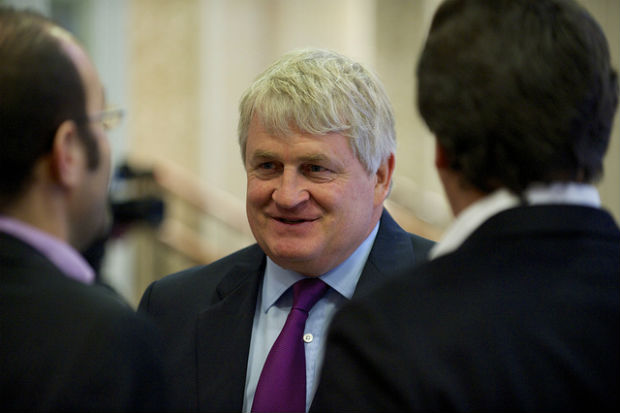
“Where would we be in Ireland if four million people had to make public all their banking relationships?” tycoon Denis O’Brien asked in an Irish Times opinion piece last week. It is a more interesting question than I suspect O’Brien meant it to be. The Irish economy suffered heavily from the nods, winks, strokes carried on behind closed doors throughout the 90s and 2000s, and perhaps a little more transparency, a touch more daylight shed on banking matters, would have been for the good.
O’Brien, owner of a large central plain of Ireland’s media landscape, was writing for one of the newspapers he didn’t own amidst a controversy surrounding his own private banking relationships, specifically his relationship with the state-owned Irish Bank Resolution Corporation (IBRC).
Independent TD Catherine Murphy had made allegations in the parliamentary chamber regarding the interest rate Mr O’Brien had been given on a €500m loan from IBRC. The loan related to the purchase of Siteserv, a major recycling firm.
O’Brien, on learning about Murphy’s remarks, apparently while breakfasting in Haiti, was incensed by what he saw as a blatant breach of privacy, and immediately instructed his lawyers to seek an injunction on the reporting of the Dáil speech, which they duly won. “It was one of those nanosecond decisions,” O’Brien wrote, in an article brimming with indignation. Those who criticised the injunction were engaged in nothing less that a witch hunt: “I have never experienced the level of abuse, venom and hatred resulting from taking a stand to protect privacy in relation to my financial affairs.” He then signed off, oddly: “I will always be proud to be Irish, optimistic and a republican with a small ‘r’.” Good to know, Denis.
Actually, that last statement is worth looking at: in spite of it all, in spite of all the slings and arrows, in spite of the insufferability of this stupid, petty, greasy-till fumbling little country, O’Brien will not abandon Ireland. He is proud, he is optimistic, he is a republican, but not too republican. We are lucky to have him.
This language was echoed by his spokesman James Morrissey, who told RTE’s Keelin Shanley that, frankly we were lucky to have O’Brien. “I think it’s important to mention, and it would be a celebratory fact if it was an IDA-backed [state-assisted] company, but Denis O’Brien employs in and around 10,000 people both directly and indirectly in this country and he’s entitled to invest and he’s entitled to have his leading bid for a company accepted.”
In Ireland, you see, wealth and employment are articles of faith, and they should not be questioned lest they melt into air.
I am not even going to attempt to get into the exact details of O’Brien’s finances. The injunction on reporting was “clarified” earlier this week, and as a result, you can now read articles such as this one on The Journal, which was removed after the injunction was initially granted, reporting on Murphy’s speech.
No, these are not the business pages and others will report on the ins and outs better than I. What concerns us here are two factors: parliamentary privilege, and the public interest.
First of all, parliamentary privilege: that is, the right to speak without hindrance in parliament, and the right for the press to report what is said in parliament.
While O’Brien’s spokesman Morrissey may have dismissed the Dáil as a “talking club”, it’s absolutely crucial to a democracy that elected representatives can make their representations fearlessly. Lord knows it doesn’t happen enough, but we should be encouraging it.
Almost six years ago in Britain, in an important moment for the free press, democracy and justice, The Guardian took on metals and energy company Trafigura when it attempted to stifle reporting of an internal document on a waste spill. On that occasion, Carter-Ruck attempted to stop the papers from reporting a parliamentary question from Paul Farrelly MP on the issue. Trafigura and its lawyers backed down on their injunction just hours before The Guardian was due to appeal. It was an important moment, not just in upholding the principle of parliamentary privilege, but also in proving its worth (it should be noted that some idiotic things can also be done under the mantle of parliamentary privilege, but the good rather outweighs the bad).
Returning to present-day Ireland, here’s the transcript where O’Brien’s spokesman called the nation’s parliament a “talking club”:
Shanley: [W]hat relevance is it how many people [O’ Brien] employs in this country? I mean we’re talking here about press freedom. We’re talking about somebody with huge power, who owns half of the media and is preventing the other half from reporting…”
Morrissey: “No I think you’re missing my point. I was just saying when [opposition parliamentarian] Billy Kelleher talks about powerful people. A powerful person has the same rights as a person who’s not powerful and that is a democratic right to their good name and reputation and not to have it sullied in the Dáil. And I think, to be brutally blunt about it, the Dáil is a bit of a talking club. They want their own rules for themselves and I think, to be fair, it’s important that people stand up for democracy inside the Dáil, as well as outside the Dáil because that’s the basis on which they get elected.”
Note here that democracy is whatever you want it to be at that particular time: and the things you do not want can be undemocratic. Note the spokesman for the nation’s wealthiest person making an appeal to the common man against the political class. O’Brien, his spokesman is saying, is an ordinary man with the same rights as the rest of us.
But here’s the question of public interest: is he? Clearly, he has more money than us. And because of that, he has more influence than us. O’Brien, he of the 10,000 jobs, is very, very important. There is, it would appear to me, an obvious difference between him getting a €500m loan from a state bank, and you or I getting a €50,000 small business loan. O’Brien cannot be in the same breath this great important job creator and media mogul, and just a humble man who can enjoy absolute privacy.
The price, perhaps of the privilege O’Brien enjoys with his fortune is our privilege to know what he’s doing with it.
This column was posted on 4 June 2015 at indexoncensorship.org
1 May 2015 | Denmark, European Union, France, Germany, Greece, Hungary, Ireland, Italy, Macedonia, mobile, News, Poland, Spain, Turkey, Ukraine, United Kingdom
As we approach World Press Freedom Day, the right to freedom of expression will again be celebrated as an inalienable European value across the continent — by the public, the media and politicians alike. But to many, this will mean little more than engaging in a well trodden mental routine. We hardly consider the difficulties that freedom of expression faces in practice.
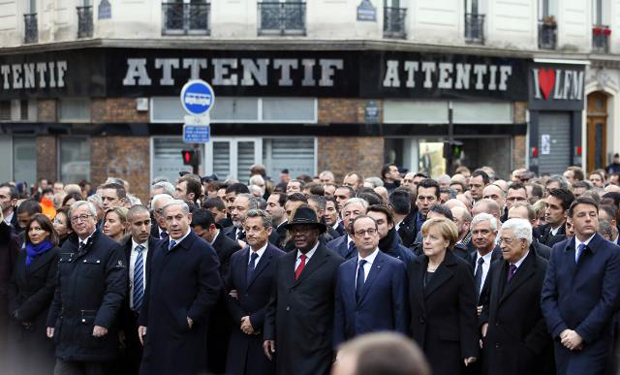
In the first part of 2015, more than a third of journalist killings in the word took place in two European countries; France and Ukraine. If it is true that Europe’s reactions to the Charlie Hebdo attack — the majority of them very emotional — were salubrious, they simultaneously gave rise to ambiguous situations. Many of the leaders that will on 3 May reaffirm their commitment free expression, supported the same message by taking part in the historic march in Paris on 11 January.
But upon seeing Angela Merkel, some were also reminded that Germany continues to treat blasphemy as a crime — as do Denmark, Spain, Poland and Greece, among others. Ireland, whose Enda Kenny was also in attendance, has a constitution which specifically mentions blasphemy and in 2010 enacted a new law against it. All these European countries defend themselves by saying that they do not apply their laws against “blasphemers”. That argument does not carry much weight when it comes to opposing those countries — Saudi Arabia, Iran, various Asian countries — that have tried to turn blasphemy into a universal crime recognised by the UN.
Spain’s Mariano Rajoy too marched in solidarity, but his government has taken steps to promote changes in the penal code that would “represent a serious threat to freedom of information, expression and the press”.
And what was Viktor Orban doing in Paris? The Hungarian president has reunified Hungary‘s public media so as to better bind them to his own party. Despite being the leader of an EU country, Orban has followed Vladimir Putin’s example. In this experimental model, the Andrei Sakharov Center and Museum is no longer ordered to close as it was in the old days, but rather fined 300,000 roubles (€5,000) for failing to register as a “foreign agent”. One day brings an announcement of compulsory registration for bloggers in Russia; another day, harassment against Russian and Hungarian NGOs perceived as “unpatriotic”.
Turkish Prime Minister Ahmet Davutohlu traveled to Paris, only to later label Charlie Hebdo’s post-attack issue a “provocation”. A reminder: Turkey is an EU candidate country where dozens of journalists have been sentenced to prison, and where various internet sites, including those that dared to reproduce some of Charlie Hebdo’s caricatures, have been blocked.
But also present at the march, were various representatives of European journalists — myself included. Just behind the Charlie Hebdo survivors, we carried a banner with the message “Nous sommes Charlie”.
Walking next to me was Franco Siddi, of the Italian National Press Federation. He talked to me about how imprisonment for defamation is still a possibility in Italy, though the European Court of Human Rights has ruled it a disproportionate punishment.
In my home country Spain too, this possibility of imprisonment remains, even if under Spanish jurisprudence freedom of expression consistently prevails over the demands of plaintiffs. In Italy, the situation is the same, yet my Italian colleagues point out that in 2014 alone, 462 journalists in the country were threatened with legal action for alleged acts of defamation. And while the current proposal for reform being considered foresees eliminating the possibility of jail time, it increases the potential fines.
This is not the only potential legal threat facing European journalists. Long before 9/11, there existed a reflexive habit of passing “urgent” laws under security pretexts, as in the UK during the most difficult years of the Northern Ireland conflict. The current model is the United States’ Patriot Act, which has recently been discussed in France. Meanwhile, in Britain and Spain are debating what free expression activists describe as “gag laws”. In Macedonia, the sentencing of the investigative journalist Tomislav Kezarovski to two years in prison under one of these security inspired laws stands out as a warning sign.
Against this worrying backdrop, across Europe journalists, freedom advocates, campaigners and even politicians are standing up for press freedom. When Gvozden Srecko Flego, member of the Parliamentary Assembly of the Council of Europe, recently highlighted the cases of Russia, Ukraine, Turkey and Azerbaijan as particularly problematic, he also suggested a countermeasure. He recommends “organising annual debates […], with the participation of journalists’ organisations and media outlets” in the respective parliaments of each state.
Media concentration, one of the most serious challenges to media pluralism and free expression in Europe, is being tackled. One proposal, which some international bodies have already accepted, would create a “Media Identity Card” requiring owners to publicly identify themselves and thus create an environment of more open and transparent media ownership.
When defending freedom of expression as a European value, we cannot allow ourselves to simply fall in into mental routines. This World Press Freedom Day we need both words and actions.
Paco Audije is a member of the Steering Committee of the European Federation of Journalists (EFJ)
World Press Freedom Day 2015
• Media freedom in Europe needs action more than words
• Dunja Mijatović: The good fight must continue
• Mass surveillance: Journalists confront the moment of hesitation
• The women challenging Bosnia’s divided media
• World Press Freedom Day: Call to protect freedom of expression
This column was posted on 1 May 2015 at indexoncensorship.org