6 Apr 2017 | Awards, Digital Freedom, News
[vc_row][vc_column][vc_column_text]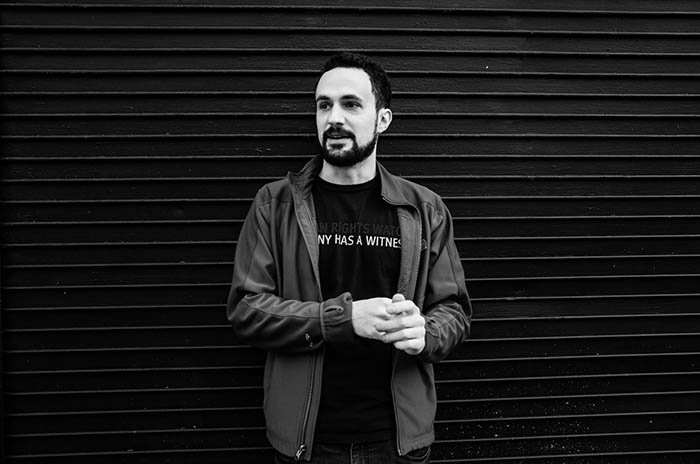
A schoolboy resident of Bahrain and a recent PhD student in computer science at the University of California, Berkeley, Bill Marczak co-founded Bahrain Watch in 2012. Seeking to promote effective, accountable and transparent governance, Bahrain Watch works by launching investigations and running campaigns in direct response to social media posts coming from activists on the front line. In this context, Marczak’s personal research has proved highly effective, often identifying new surveillance technologies and targeting new types of information controls that governments are employing to exert control online, both in Bahrain and across the region. In 2016 Marczak investigated several government attempts to track dissidents and journalists, notably identifying a previously unknown weakness in iPhones that had global ramifications.
Index spoke with Marczak in the run up to the Freedom of Expression Awards, where he is nominated for the Digital Activism award.
Ryan McChrystal: In the summer of 2016 you discovered a previously known weakness in Apple’s iPhone that had global ramifications. Can you talk us through how that first came to light?
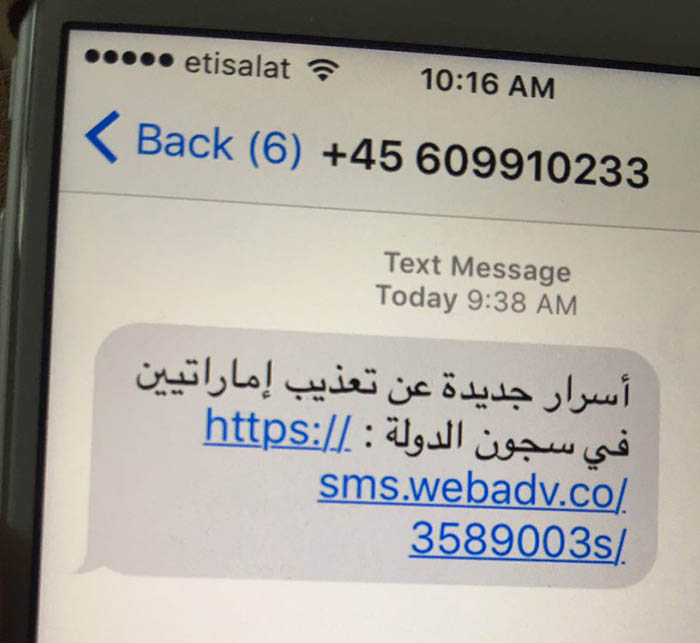
Bill Marczak: In August of 2016, Ahmed Mansoor, an activist in the UAE, reached out to me after he had received suspicious text messages. I had known him previously because he gets suspicious things in his inbox or on phone quite frequently. He sent me these text messages and asked me to take a look. The messages said: “New secrets about detainees tortured in UAE prison.” And there was a link inside the text message which I recognised because it was connected to a series of websites I had been tracking for the past six months or so. I had already attributed them to the NSO Group (an Israeli spyware company).
At that point, I was able to get the spyware they were using to target Mansoor
McChrystal: What does the software actually allow governments to do? What are the dangers for activists?
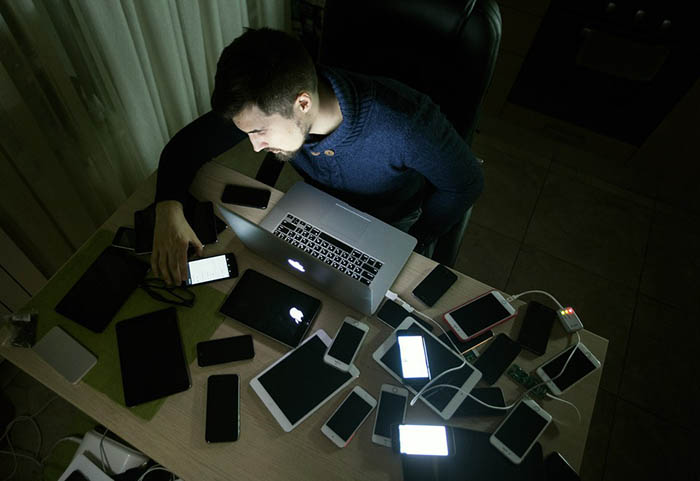
Marczak: The malware that NSO sells, called Pegasus, is actually pretty sophisticated in what it can collect. In the security community, the iPhone is generally thought to be more secure because Apple goes to such lengths to lock down and make it really, really hard to install an application from outside the App Store and to do something to the device that’s not approved by Apple. The fact that this malware even existed and could affect an iPhone in the single touch of a button was very surprising. Once your phone is infected, the malware would essentially be able to see everything on the device. If you had any saved passwords, for example, they would all be sent back to whoever infected you. That person would also get the ability to intercept your calls, SMS, Whatsapp, Viber, or any other communication service you use.
Perhaps most scarily, the malware allowed the user to turn on the webcam and the microphone on your iPhone to spy on activity going on around the phone. This could be used to spy on meetings or to see who you were hanging around with.
McChrystal: And this was was the first piece of malware of its kind.
Marczak: That’s correct. It was the first known zero-day remote jailbreak for the iPhone that was used as part of spyware. A jailbreak is a piece of software that allows you to get around Apple’s security precautions for the phone. Jailbreaking started out as a way for hobbyists and enthusiasts to install their own software not approved by Apple on the iPhone, so it was a very innocuous line of research. But once iPhones became more popular, people started putting their whole lives on their phones. That’s when jailbreaks became really, really valuable to people who would want to spy on iPhone users.
Nowadays, there are companies that will pay you if you sell them software or the code that jailbreak the phone. Some companies, like Zerodium, offer up to $1.5m. Presumably they’ll then be able to sell it to interested users for even more.
McChrystal: How did Apple respond when you informed them of your discovery?
Marczak: Working with the folks at Citizen Lab, I got in touch with Apple very early on in the process to alert them of what we had found. Initially, when we called up Apple was like: “Yeah, yeah, sure, send us some details and we’ll take a look.” When we sent what we were able to pull down from those links, the tone changed right away and they realised this was really serious. They said: “Give us more information because we want to work closely with you on this.”
McChrystal: How are governments using this kind of malware maliciously? And why should human rights activists specifically be worried?
Marczak: This kind of software can be used, for instance, in legitimate criminal investigations, but it can also be used essentially for anything the government wants to use it for. Once NSO Group sells the spyware to a government, that’s where NSO’s ability to control things ends. The government can then decide who it wants to target, who it wants to infect. If sold to a government agency that has a history of abusing surveillance, it’s likely they are going to abuse it to target human rights defenders and political opponents.
It’s something that human rights activists should be concerned about because everything is moving online these days. They are on their phones, communicating with other activists, human rights violations are being documented by videos or pictures on the phone. Your confidential or secret sources might be a WhatsApp contact, or a Signal contact if you’re even more secure.
If just one person has been infected, governments can map out an entire network of human rights defenders or opponents. They can keep tabs on an entire operation or human rights infrastructure in a country.
McChrystal: By bringing this malware to light, how many people’s privacy do you think you’ve helped to protect? Is there a way to put a number on it?
Marczak: The patch that Apple released, which coincided with the report that I published with Citizen Lab, went out to every iPhone user around the world. Apple subsequently issued a patch to every Mac laptop and desktop user. The number is in the high hundred of millions, if not billions of people whose phones and computers were patched.
Of course, not all of those people would have been affected, but having that sort of broad impact was very exciting.
McChrystal: Are you yourself now in danger of cyber attacks? Have there been any attempts that you’ve noticed?
Marczak: It’s something that I’ve thought a lot about. If you look at the security industry as a whole, researchers themselves can be very easily targeted. There have been instances where foreign intelligence agencies have targeted anti-virus companies, for instance, to figure out what they are working on next.
That’s the main risk I am worried about: if some foreign intelligence agency decides “hey, Bill’s working on some interesting stuff. Let’s hack him and see what he’s up to.”
When I’ve done some work in the field, for instance in the Middle East, I think through a set of operations security procedures like how to prevent someone coming into my hotel room when I’m away and bug my laptop.
McChrystal: What’s your connection to Bahrain and how did that lead to the establishment of Bahrain Watch?
Marczak: My own connection with Bahrain began in 2002. I went to high school there because of my dad’s job. Going to high school in a place, you obviously develop a lot of connections and experiences that tie you there, at least emotionally. Bahrain very much feels like one of my homes.
While I was there, I was never much interested in the political situation. But going back to the USA for college and observing from abroad, I did start to notice by reading the international media that there were certain things not right with the country, especially in 2011, when the Arab Spring protests started. Once I saw that police were shooting protesters in the street, and that one of my homes was in crisis, I though if there was a way that I, a computer science student sitting in Berkeley, California, could do anything to have a positive impact on the situation.
At the time, I didn’t really know what to do. I started following Bahraini activists, people on the ground and those who were actually at the protests. Those involved in the Arab Spring very much engaged with the rest of the world through social media. They sometimes sent out pictures of shotgun shells or tear gas canisters, asking if anyone knew who was manufacturing and supplying the government with them.
I was able to respond to these requests and see if I could find out some new information. I started off doing research into the various kinds of weapons that the police were using. That initial research got me some recognition among activists on the ground. We got in touch and developed connections which led us to decide to found Bahrain Watch in 2012.
Bahrain Watch initially focused on these arms, but them later expanded to documenting western PR companies that the government had hired to influence the media narrative. It expanded from there to a bunch of different areas.
McChrystal: The situation for human rights activists in Bahrain is changing, and in many ways it’s become more difficult. What does this mean for Bahrain Watch operations over the next year?
Marczak: You’re definitely right that the situation on the ground is very bad. In the past year we’ve seen the continued harassment of human rights defenders on the ground. One of the things we are trying to do going forward is to is, we started off in 2012 as an all-volunteer organisation and we were very much sustained by the energies and the passions of the Arab Spring.
But in the years since, a lot of that energy has died off to an extent, not just in Bahrain, but in the broader activist community. One of our challenges going forward has been to try and formalise the organisation so that we’re actually getting funding and have the capacity and resources to undertake more longer-form types of work. We’ve got some of that already, we have gotten a bit of funding, and we’re looking mainly to continue our work with digital security, so trying to provide support and advice to dissidents on the ground to help enhance their security posture, given the ongoing crackdown by the government.
At the same time we want to do more broader types of investigations into corruption more closely into the government’s strategy of controlling the media.
See the full shortlist for Index on Censorship’s Freedom of Expression Awards 2017 here.[/vc_column_text][/vc_column][/vc_row][vc_row full_width=”stretch_row_content” equal_height=”yes” el_class=”text_white” css=”.vc_custom_1490258749071{background-color: #cb3000 !important;}”][vc_column width=”1/2″][vc_custom_heading text=”Support the Index Fellowship.” font_container=”tag:p|font_size:28|text_align:center” use_theme_fonts=”yes” link=”url:https%3A%2F%2Fwww.indexoncensorship.org%2Fsupport-the-freedom-of-expression-awards%2F|||”][vc_column_text]
By donating to the Freedom of Expression Awards you help us support
individuals and groups at the forefront of tackling censorship.
Find out more
[/vc_column_text][/vc_column][vc_column width=”1/2″ css=”.vc_custom_1490258649778{background-image: url(https://www.indexoncensorship.org/wp-content/uploads/2016/04/donate-heads-slider.jpg?id=75349) !important;background-position: center !important;background-repeat: no-repeat !important;background-size: cover !important;}”][/vc_column][/vc_row][vc_row][vc_column][vc_basic_grid post_type=”post” max_items=”4″ element_width=”6″ grid_id=”vc_gid:1491488367891-c15491ac-4f30-3″ taxonomies=”8734″][/vc_column][/vc_row]
29 Mar 2017 | Azerbaijan, Azerbaijan News, Digital Freedom, Mapping Media Freedom, News
[vc_row][vc_column][vc_column_text]
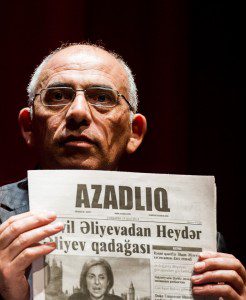
Rahim Haciyev, acting editor-in-chief of 2014 Index on Censorship Freedom of Expression Journalism Award-winning Azerbaijani newspaper Azadliq (Photo: Alex Brenner for Index on Censorship)
Civil, political and human rights are harshly restricted and frequently violated in Azerbaijan. Independent and critical journalists frequently find themselves — or their families — targeted.
Rahim Haciyev, acting editor in chief of the Index Award-winning independent newspaper Azadliq, was forced to flee Azerbaijan after years of official harassment. The government has repeatedly cracked-down on dissent.
Haciyev wrote to Index on Censorship from exile in a western European country:
I’m very sorry that the repressive policy of the Azerbaijani authorities against the Azadliq newspaper forced me to leave the country.
After the arrest of the newspaper’s financial director Faig Amirli, the authorities soon stopped issuing a print version. Amirli was arrested on obviously fabricated charges. I was summoned several times to the prosecutor’s office several times to testify about the paper’s financial affairs. The prosecutors said that this was connected with the criminal case of Amirli, but are invesitgating him under charges of “inciting religious hatred” and “violating the rights of citizens under the pretext of conducting religious rights”.
It turned out that they were interested in the financial issues of the newspaper in order to find a way to silence it. In addition, several employees of the newspaper were summoned for questioning. Then a court ordered tax authorities to comb through the paper’s financial activities. It’s clear that this was undertaken to increase pressure on the newspaper and me personally.
Aiming to cripple Azadliq, the government-owned distribution company was ordered to withhold circulation receipts — $84,000. So we weren’t able to print or even pay our bills. Three staffers are in prison — Seymur Hezi, Faig Amirli and Elchin. Each of them had sharply criticised the lawlessness and corruption of Azerbaijani officials.
In February, 11 Azadliq employees were summoned to the prosecutor’s offices to be interrogated again. Several government agencies increased their pressure on the newspaper’s online operation.
I had been warned twice in the past two years by the prosecutor general’s office that under my leadership Azadliq had been slandering Azerbaijani authorities. In their notices I was told that failure to comply with their terms would mean legal repercussions for me. But I refused. The newspaper continued to report on corruption, abuses of power and the absence of the rule of law. We were devoted to pursuing the truth.
And that is why the authorities intensified repression against the newspaper. Now this lawlessness has forced me to leave the country.
This decision was extremely difficult. I am cut off from my family and friends. I have two children and don’t know when I will see them again.
But despite all the problems I will continue to work daily for the newspaper’s website.
It’s my job, this is my job, this is my life.
Rahim Haciyev
Acting Editor-in-Chief, Azadliq
Haciyev is just one of the many journalists who have been targeted by Azerbaijani authorities in recent years. The country is ranked 163rd out of 180 countries in RSF’s 2016 World Press Freedom Index, which ranks 180 countries according to the level of freedom available to journalists. Almost everyone who speaks out against the regime of President Ilham Aliyev, including journalists, human rights defenders, activists and bloggers, are commonly imprisoned on spurious charges, such as drug and weapon possession, hooliganism and tax evasion. Reports of torture and abuse are typical by those being detained. At least 15 Azerbaijani prisoners of conscience currently remain in jail, including:[/vc_column_text][/vc_column][/vc_row][vc_row][vc_column width=”1/2″][vc_column_text]
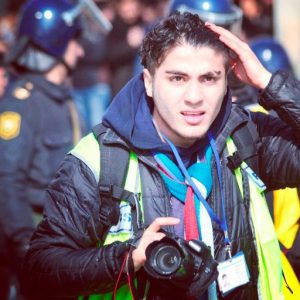
Mehman Huseynov (Twitter)
Mehman Huseynov, an Azerbaijani journalist and pro-opposition blogger, was sentenced to two years in jail on 3 March by a Baku court for defaming the police chief of the city’s Nasimi district. Huseynov intends to appeal his sentencing. According to Front Line Defenders, a group of police officers violently attacked Huseynov on 9 January. The next he was brought to court, found guilty of disobeying police orders and fined 200 manat (£96). [/vc_column_text][/vc_column][vc_column width=”1/2″][vc_column_text]
Founder and editor of online news portal Kend.info Elchin Ismayilli was arrested on 17 February on charges of “extorting money” and “aggravated abuse of a position of influence”. According to the Caucasian Knot, he was also accused of blackmailing a local office, charges he insists were fabricated to silence his coverage of local corruption and human rights violations. On 18 February, Ismayilli was sentenced to a pre-trial detention period of 24 days. He has previously been subject to multiple arrests and cases of harassment related to his work as a journalist.[/vc_column_text][/vc_column][/vc_row][vc_row][vc_column width=”1/2″][vc_column_text]
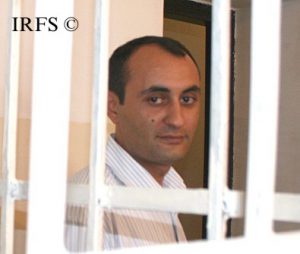
On 3 March, a court decided to prolong the period of investigation of Faig Amirli for three months, the Azerbaijan Press Agency reported. Amirli, financial director of newspaper and assistant chairman of the Azerbaijani Popular Front Party (APFP), was arrested on 20 August 2016 for “inciting religious hatred” and “violating the rights of citizens under the pretext of conducting religious rights,” according to Radio Free Europe/Radio Liberty.[/vc_column_text][/vc_column][vc_column width=”1/2″][vc_column_text]
Writer and blogger Rashad Ramazanov was arrested on 9 May 2013 and sentenced to nine years in prison. According to English PEN, his charges included “illegal possession and sale of drugs”. Police claimed to have found nine grams of heroin on his body, although Ramazanov insists that the drugs were planted by the officers, who he claims also beat him up and tortured him during interrogation. Ramazanov was sentenced to nine years in prison in November 2013 on a trumped-up drug trafficking charge. PEN International reported that on 23 January Ramazanov was moved to solitary confinement for 15 days, the reason for which remains unknown. On 7 February Ramazanov was released from solitary confinement, and his family was given permission to visit him.[/vc_column_text][/vc_column][/vc_row][vc_row][vc_column width=”1/2″][vc_column_text]
Founder and editor of the website Azel, Afgan Sadygov, was sentenced on 12 January to 2.5 years in jail. Sadygov was arrested on 22 November 2016 based on accusations of “hooliganism” after he was attacked on 9 August 2016 and allegedly hit a woman, Contact Online news reported. Sadygov’s website often reports on issues such as poor infrastructure maintenance, bad quality of roads and waste of public funds in Azerbaijan’s Jalilabad region.[/vc_column_text][/vc_column][vc_column width=”1/2″][vc_column_text]
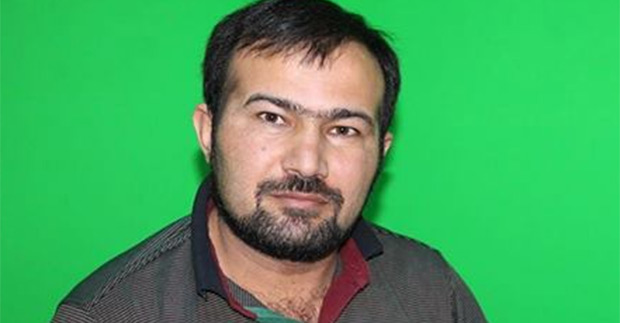
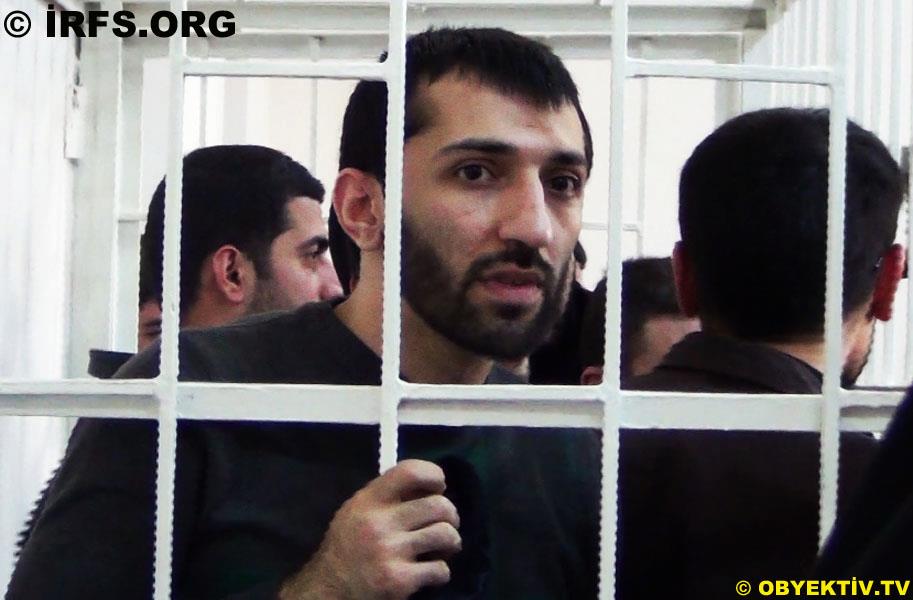
Seymur Hezi
According to MeydanTV, the Supreme Court will hear the appeal of Seymur Hezi, reporter for opposition news source Azadliq and presenter for critical TV program “Azerbaycan Saati” on 13 April. The journalist was sentenced to five years in prison on 29 January 2015 on a trumped-up charge of aggravated hooliganism, Index on Censorship reported. The charge came after Hezi was attacked on 29 August by Maherram Hasanov, a complete stranger, and defended himself. Hezi has accused President Ilham Aliyev and chief of staff Ramiz Mehdyev of ordering his arrest.[/vc_column_text][/vc_column][/vc_row][vc_row][vc_column width=”1/2″][vc_column_text]
The lawyer of Nijat Aliyev, former chief editor of religious website Azadxeber.org, has not been able to get hold of the text of the verdict of the Supreme Court of Azerbaijan for his client, Contact Online news reported. Aliyev’s lawyer believes that the delay has been intentional in order to prevent the filing of a complaint with the European Court of Human Rights, Contact Online news reported. According to IRFS, Aliyev was detained on 20 May 2012 and sentenced to 10 years in prison on 9 December 2013 on charges of illegal possession of drugs and weapons, incitement of religious hatred, calls to seize power and distributing banned religious literature. Aliyev’s website previously published criticisms of the government’s policies in regards to religion, the possibility of a LGBT parade in Baku and the allotment of too much funding for the Eurovision Song Contest in 2012, OCCRP reported.[/vc_column_text][/vc_column][vc_column width=”1/2″][vc_column_text]
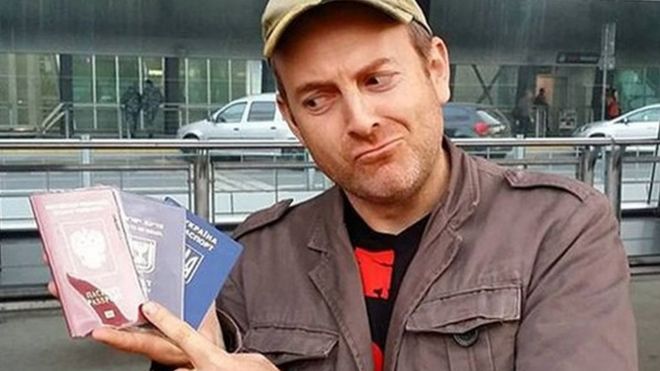
Alexander Lapshin (BBC)
Russian-Israeli travel blogger Alexander Lapshin was extradited from Belarus to Azerbaijan on 7 February. He faces up to five years in prison on charges of “public calls against the state” and “unauthorised crossing of borders,” according to Armenian News Agency ArmenPress. These charges came after Lapshin traveled to the disputed territory of Nagorno-Karabakh and sympathised in his blog entries with the Armenians he met, GlobalResearch reported. [/vc_column_text][/vc_column][/vc_row][vc_row][vc_column width=”1/2″][vc_column_text]
Fikrat Faramazoglu, editor-in-chief of news website jam.az, has been detained since 30 June 2016 on the charge of extortion by means of threats, which is punishable by up to five years in prison. According to Azerbaijan Free Expression Platform, these charges originated when a local restaurant owner accused Faramazoglu of extorting money from him when asked to remove defamatory articles about the restaurant on websites owned by the journalist.[/vc_column_text][/vc_column][vc_column width=”1/2″][vc_column_text]
Blogger and social media activist Abdul Abilov has been imprisoned since 22 November 2013. According to Azerbaijan Free Expression Platform, Abilov was charged with illegal possession, storage and manufacturing or sale of drugs when authorities claim to have found illegal drugs in his home and on his person, which Abilov continues to protest were planted on him. On 27 May 2014 Abilov was sentenced to five-and-a-half years in prison. Stop Sycophants!, the Facebook page previously run by Abilov, was shut down following his arrest, IRFS reported. The page was known to strongly criticise authorities.[/vc_column_text][/vc_column][/vc_row]
27 Mar 2017 | Awards, Israel, Middle East and North Africa, News
[vc_row][vc_column][vc_column_text]
Breaking the Silence, an Israeli organisation consisting of Israeli veteran combatants, aims to collect and share testimonies about the realities of military operations in the Occupied Territories. Since 2004, the group has collected over 1,000 (mainly anonymous) statements from Israelis who have served their military duty in the West Bank and Gaza.
In 2014, Breaking the Silence published 111 testimonies from over 60 soldiers who served in Operation Protective Edge in Gaza. The organisation reached out to soldiers directly after the cessation of bombing in Gaza and published a book of its findings in May 2015. For publishing these frank accounts Breaking the Silence has come under repeated attack from the Israeli government.
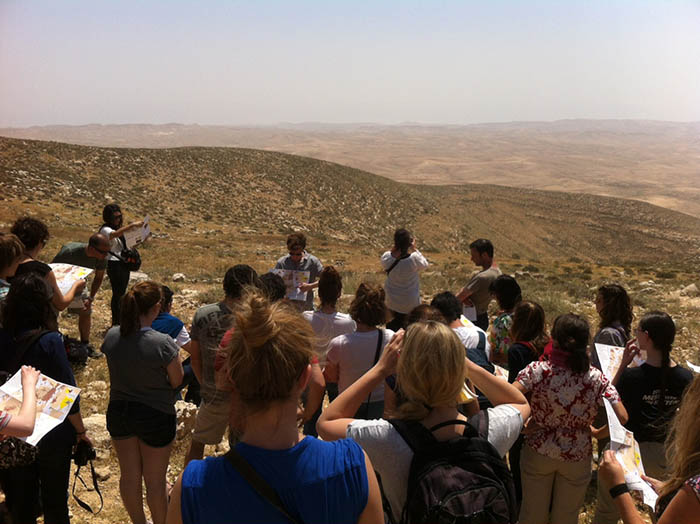
A Breaking the Silence guided tour of Hebron and the South Hebron Hills
In 2016 pressure on the organisation became particularly pointed and personal, with state-sponsored legal challenges, denunciations from the Israeli cabinet, physical attacks on staff members and damages to property. Led by Israeli politicians including the prime minister, and defence minister, there have been persistent attempts to force the organisation to identify a soldier whose anonymous testimony was part of a publication raising suspicions of war crimes in Gaza. Losing the case would set a precedent that would make it almost impossible for Breaking the Silence to operate in the future. The government has also recently enacted a law that would ban the organisation’s widely acclaimed high school education programme.
Following the attacks on the organisation, hundreds of soldiers began to break their own silence in a spontaneous outpouring of support for the group. The soldiers, who are non-Breaking the Silence testifiers, posted pictures on social media of their army service. This included testimonies from soldiers who served in the First and Second Intifadas and even the Lebanon War. Public figures, musicians, artists, and hundreds of individuals, were involved in this wave of support.
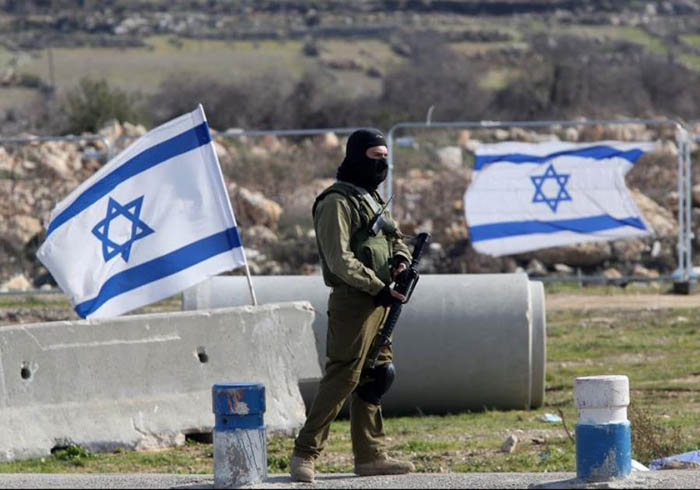
Israel Defence Forces soldier manning a checkpoint
In March 2017, Israel’s state prosecutor asked a court to dismiss its previous request to force Breaking the Silence to provide details that were liable to expose the identity of a soldier whose testimony raised suspicions of war crimes.[/vc_column_text][/vc_column][/vc_row][vc_row full_width=”stretch_row_content” equal_height=”yes” el_class=”text_white” css=”.vc_custom_1490258749071{background-color: #cb3000 !important;}”][vc_column width=”1/2″][vc_custom_heading text=”Support the Index Fellowship.” font_container=”tag:p|font_size:28|text_align:center” use_theme_fonts=”yes” link=”url:https%3A%2F%2Fwww.indexoncensorship.org%2Fsupport-the-freedom-of-expression-awards%2F|||”][vc_column_text]
By donating to the Freedom of Expression Awards you help us support
individuals and groups at the forefront of tackling censorship.
Find out more
[/vc_column_text][/vc_column][vc_column width=”1/2″ css=”.vc_custom_1490258649778{background-image: url(https://www.indexoncensorship.org/wp-content/uploads/2016/04/donate-heads-slider.jpg?id=75349) !important;background-position: center !important;background-repeat: no-repeat !important;background-size: cover !important;}”][/vc_column][/vc_row][vc_row][vc_column][vc_basic_grid post_type=”post” max_items=”4″ element_width=”6″ grid_id=”vc_gid:1490773732537-194f8bf9-6216-9″ taxonomies=”8734″][/vc_column][/vc_row]