4 Oct 2013 | Africa, Middle East and North Africa, News, Sudan
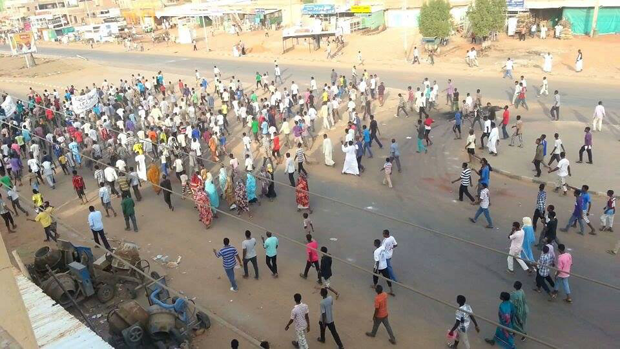
The government of Sudan cut the country off from the internet as protests against the end of fuel subsidies spread.
The release of the annual Freedom on the Net report for the first time includes a chapter on Sudan, authored by Index Award nominees GIRIFNA. This is more than timely, as the country is witnessing a new wave of widespread protests triggered by the Sudanese government’s announcement in late September 2013 that it will lift economic subsidies from fuel and other essential food items.
Based on a survey of 60 countries in Freedom House’s Freedom on the Net 2013, Sudan is categorised as “Not Free” with a score of 63, placing it among the bottom 14 countries in the category. As one of ten sub-Saharan African countries surveyed, Sudan joined Ethiopia as the two “Not Free” countries in the region. Kenya and South Africa were categorised as “Free” and the remaining six – Angola, Malawi, Nigeria, Rwanda, Uganda and Zimbabwe – as “Partly Free”.
Sudan has invested heavily in its telecommunications infrastructure in the last decade, resulting in a steadily increasing internet penetration rate of 21 percent and a mobile penetration rate of 60 percent by the end of 2012, according to the International Telecommunication Union (ITU). It also boasts the cheapest post-paid costs in the Middle East and North Africa in 2012, and healthy market competition amongst four telecommunications providers.
However, these infrastructural and economical advantages are highly reduced against the backdrop of a State that has little respect for freedom of expression, freedom of association, participation and peaceful assembly. The Sudanese regime is amongst the worst globally in terms its obstruction of the access to independent and diverse information both offline and online. A global study on press freedom conducted by Reporters without Borders earlier this year ranks Sudan at 170 out of 179 countries surveyed. This clearly reflects that the violations of freedom of expression impacting the traditional print media are also starting to reflect online.
The Sudan Revolts, the wave of protests triggered by economic austerity plans that hit the country between June and July 2012, was the first time the authorities implemented a large-scale crackdown and detentions of citizens using digital platforms to communicate, connect, coordinate and mobilise. Additionally, the government increased its deployment of a Cyber Jihadist Unit to monitor and hack into Facebook and email accounts of activists. The National Telecommunications Corporation (a government agency) also engages in the censoring and blocking of opposition online news forums and outlets. YouTube, for example, was blocked for two months in late 2012 in response to the “Innocence of Muslims” video.
The attacks on cyber dissidents during Sudan Revolts included the detention of digital activists, such as Usamah Mohammed, for up to two months, the forced exile of Sudan’s most prominent video blogger Nagla’a Sid Ahmad, and the kidnapping and torture of the Darfurian online journalist Somia Hundosa. Moreover, one of the most high profile political detainees from the Nuba Mountains, Jalila Khamis, spent nine months in detention without charges. When she was finally brought to trial in December 2012, the main evidence against her was a YouTube video taken by Sid Ahmad, in which Khamis testified about the shelling of civilians in the Nuba Mountains by the government.
Since September 23 this year, authorities have responded to the new wave of protests with unprecedented violence toward peacefully protesting urban dwellers. More than 200 have been killed in Khartoum and Wad Madani by live bullets fired by riot police, national security agents, and/or state sponsored militias. According to a government statement, 600 citizens have been detained, though activists say that number is much higher. On Wednesday, September 25, the government shut down internet access for 24 hours. When the internet returned, it was much slower, with Facebook inaccessible on mobile phones and YouTube blocked or non-functional due to a very slow broadband connection.
The US sanctions imposed on Omer El Bashir’s regime since 1997 also continue to hinder the free access to the internet and the free flow of information as it limits access to a number of new media tools. This includes limited access to anti virus suites, e-document readers, and rich content multimedia applications that most Sudanese citizens cannot download. The inability to download software security updates makes many users in Sudan vulnerable to malware. Smart phone applications cannot be downloaded or purchased from the iTunes and/or Android stores.
Additionally, Sudan has a combination of restrictive laws that work together to impede freedom of expression both off and online, including the 2009 Printed Press Materials Law, and a new Media law that has recently appeared in Parliament, which officials have hinted would for the first include language restricting online content. Additionally, the National Security Act (2010) gives National Intelligence and Security Services the permission to arrest journalists and censor newspapers under the pretext of “national security,”. An IT Crime Law, in effect since 2007 criminalises websites that criticise the government or publishes defamatory materials. All these laws contradict Sudan’s National Interim Constitution, which guarantees the right to freedom of expression, association and assembly.
A version of this article has been published on GIRIFNA’s website. The arabic version of the Freedom on the Net report can be accessed here.
3 Oct 2013 | News
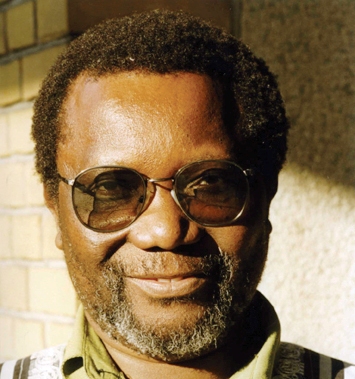 Born in Malawi in 1944, Jack Mapanje, one of Africa’s most distinguished poets, studied in England before returning to teach at the University of
Malawi.
His first collection of poems, Of Chameleons and Gods, published in the UK in 1981, was banned in Malawi in June 1985 due to its being ‘full of … coded attacks’ on the ruling dictatorship of Hastings Kamuzu Banda. Two years later, in September 1987, he was imprisoned without trial or charge by the Malawian government.
Many writers, linguists and human rights activists campaigned for his release, including Harold Pinter and Wole Soyinka, and in 1990 he was awarded the PEN/Barbara Goldsmith Freedom to Write Award. Despite this international pressure, Mapanje served almost four years in Mikuyu prison, where he composed his second collection of poetry, The Chattering Wagtails of Mikuyu Prison, and most of his third collection, Skipping without Ropes. He was finally released in May 1991.
On His Royal Blindness Paramount Chief Kwangala
by Jack Mapanje
I admire the quixotic display of your paramountcy
How you brandish our ancestral shields and spears
Among your warriors dazzled by your loftiness
But I fear the way you spend your golden breath
Those impromptu, long-winded tirades of your might
In the heat, do they suit your brittle constitution?
I know I too must sing to such royal happiness
And I am not arguing. Wasn’t I too tucked away in my
Loin-cloth infested by jiggers and fleas before
Your bright eminence showed up? How could I quibble
Over your having changed all that? How dare I when
We have scribbled our praises all over our graves?
Why should I quarrel when I too have known mask
Dancers making troubled journeys to the gold mines
On bare feet and bringing back fake European gadgets
The broken pipes, torn coats, crumpled bowler hats,
Dangling mirrors and rusty tincans to make their
Mask dancing strange? Didn’t my brothers die there?
No, your grace, I am no alarmist nor banterer
I am only a child surprised how you broadly disparage
Me shocked by the tedium of your continuous palaver. I
Adore your majesty. But paramountcy is like a raindrop
On a vast sea. Why should we wait for the children to
Tell us about our toothless gums or our showing flies?
25 Sep 2013 | News, Religion and Culture
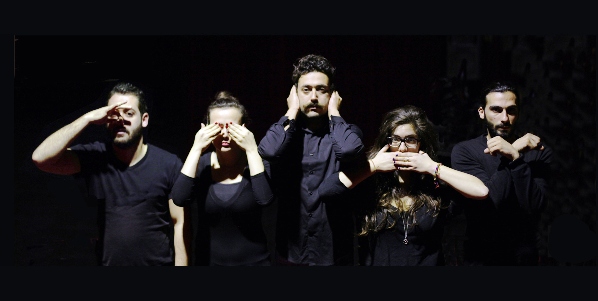
A publicity shot from Lucien Bourjeily’s latest play
Banning a work of art, a book or a play says more about a society and its temperament than anything else. As free speech and readers mark Banned Books Week, Index on Censorship magazine editor Rachael Jolley looks at Lebanon, where the country’s Censorship Bureau has recently flexed its muscles
In the past few weeks, Lebanese playwright Lucien Bourjeily has had his play Will It Pass or Won’t It? banned by his government. Ironically, the play is about censorship, specifically the process in Lebanon whereby plays are passed by the Censorship Bureau of the General Security Office — or not performed.
Bourjeily’s play dramatically challenged that process. But the censors did not see the funny side of his finger poking at a system that involves playwrights putting their words through the wringer of a censorship process, before being squeezed out again.
The censors came up with a variety of reasons why the play should not be shown, ranging from it not being “realistic” (surely missing the point of fiction there), to it not being good enough. Those in charge decided it was not for the people to decide whether it was worthy of their time, it was for them. And with that the play was to be banned.
Banning a work of art, a book or a play says more about the society and its temperament than anything else. Some nations are less than confident about themselves; they are clearly worried that if their ideas are questioned they will be weakened and their power diminished. Ban a book or a play if you worry that by talking an idea or a principle that discussion will somehow harm society. If you don’t worry about your values, principles or laws being discussed since you are perfectly willing and able to defend them, then there is no need for a work of art, book or play to be censored.
A robust, vibrant and creative society is a place where open discussions can take place, and Index on Censorship magazine, throughout its life, has often helped publish some important writings which were censored in other parts of the world, and smuggled out to Index. When the Soviet Union still existed, great thinkers there were censored and silenced, and Index helped their voices to be heard. Today it still seeks to help publish those whose words and ideas are silenced by their own governments. In its winter edition it will publish an extract from Bourjeily’s play so that readers can make up their own minds about whether it is worth performing.
Healthier societies do not hold back debates, even when they may disagree with them. They allow them oxygen to see how worthy of consideration they are. Ideas can shock or offend. Robust societies can cope with that, and even feel healthier for it.
Prodding and debating, as any writer, politician, thinker, inventor or scientist knows, is good for an idea or a thesis; it might be flawed, disproved or ignored. Or not. In the same way that scientists depend on their ideas being tested to see if they work and should be developed, leaders of nations should expect their proposals, their laws or processes to be prodded, debated and discussed. And that is what happens in a book or a play.
In a recent interview, Bourjeily said he felt that the Lebanese were treating their people as children, not allowing them to make their own decisions. Because of that, they were no longer expressing ideas in public, because of the consequences. They are self censoring, they are not exploring. None of that is good for any developing society. Inventors and scientists are attracted to those vibrant centres as are artists and writers. Across the world and throughout history those buzzing hives of thought have led the globe financially and culturally. As ever an open lively society attracts the world’s leading thinkers and creators, a place where censorship and fear is rife does not. Leaders of the world take note.
Rachael Jolley is editor of Index on Censorship, an award-winning magazine, devoted to protecting and promoting free expression. International in outlook, outspoken in comment, Index reports on free expression violations around the world, publishes banned writing and shines a light on vital free expression issues through original, challenging and intelligent commentary and analysis, publishing some of the world`s finest writers.
To mark Banned Books week, Index’s publisher SAGE has freed up access to the full archive of Index on Censorship through 28 Sept. Access articles here: http://ioc.sagepub.com/
This article was originally posted on Sage Connection
7 Jun 2013 | In the News
AZERBAIJAN
Europe criticizes Azeri leader over Internet defamation law
European institutions criticized Azeri President Ilham Aliyev yesterday for signing legislation making defamation over the Internet a criminal offence punishable by imprisonment as the country prepares for an autumn presidential election.
(Free Malaysia Today)
EGYPT
Columnist sentenced to prison for libel
Writer Osama Ghareeb did not know he had already been sentenced to one year in prison by a Cairo court until being summoned to Moqattam Police Station on Wednesday, according to the writer’s Twitter account. (Daily News Egypt)
GLOBAL
Gallery: Five free expression exiles
IFEX marks World Refugee Day, 20 June 2013, with profiles of five people living in exile for practicing the right to free expression through their professions (IFEX)
INDIA
Safeguards needed to protect privacy, free speech in India: HRW
The Indian government should enact clear laws to ensure that increased surveillance of phones and the Internet does not undermine rights to privacy and free expression, Human Rights Watch said today. (Business Standard)
Standing up to censorship central
A recent judgment on the airing of ‘low value’ television programming misinterprets the proportionality doctrine and raises the question: should the state be giving advice to adults? (The Hindu)
MALAWI
(Censorship Board Says Does Not Regulate Material On the Internet
The Malawi Censorship Board has said it does not censor materials on the Internet because it is not mandated to do so.(AllAfrica.com)
NEW ZEALAND
Racial stereotypes pervade
It was interesting watching the response last week after cartoonist Al Nisbet was allowed to draw cartoon stereotypes in the Marlborough Express about Maori and Pacific Islanders. (Auckland Now)
SINGAPORE
Web ‘blackout’ in Singapore to protest new online rules
Over 130 Singaporean bloggers blacked out their homepages Thursday to protest new licencing rules for news websites they say will muzzle freedom of expression. (NDTV)
TURKEY
Protests expose the extent of self-censorship in Turkish media
Only days after Turkish Prime Minister Recep Tayyip Erdogan called social media “the worst menace to society”, the country arrested 25 social media users in Izmir for allegedly “spreading untrue information” on Twitter. Sara Yasin gives a rundown on Turkey’s Twitter phobia. (Index on Censorship)
Turkey’s prime minister vows to continue Gezi Park development
Despite mass protests, Recep Tayyip Erdogan to push ahead with construction, saying it will make Istanbul more beautiful (The Guardian)
UKRAINE
Censorship by violence
One of my friends recently told me a story about the son of her friends. He had to be taken to a psychologist after watching news on TV about a mother killing her child. (Kyiv Post)
UNITED STATES
Documents: U.S. mining data from 9 leading Internet firms; companies deny knowledge
The National Security Agency and the FBI are tapping directly into the central servers of nine leading U.S. Internet companies, extracting audio and video chats, photographs, e-mails, documents, and connection logs that enable analysts to track foreign targets, according to a top-secret document obtained by The Washington Post. (Washington Post)
Drawing Line On Free Speech
The freedom to say what we think, no matter how repugnant to others, is one of the greatest glories of our system of government. It also is the foundation supporting our other liberties. (The Intelligencer)
Lindsey Graham Hates Free Speech
Are we starting to get under the skin of U.S. Sen. Lindsey Graham (RINO-S.C.)? At first glance it would appear that way … Graham, a frequent target of this website’s criticism (due to his frequent awfulness), suggested this week that bloggers don’t deserve one of the most basic freedoms guaranteed to all Americans under the U.S. Bill of Rights.
(Fits News)
IRS Attorney Carter Hull Sent Targeted Letters to ACLJ Tea Party Clients from Washington, D.C.
The Wall Street Journal reports that transcripts of interviews by congressional staffers point the finger to IRS attorneys in Washington, further confirming that the targeting of conservative groups originated by the IRS in Washington, D.C. and that it was not the mistake of a couple of rogue, low level IRS agents in one Cincinnati office as the Obama Administration and the IRS continue to claim. (ACLU)
New York Post hit with libel lawsuit over ‘Bag Men’ Boston bombings cover
Two Massachusetts residents sue New York Post on claims it falsely portrayed them as suspects in Boston Marathon attack (The Guardian)
ZAMBIA
Kasonokomona Wins First Round of Court Battle
Zambian activist Paul Kasonkomona has won an important first round in his court battle. In an interview on Zambian television in April he called for the recognition of gay and lesbian rights, as well as the rights of sex workers. He was arrested after the interview and charged under section 178(g) of the Zambian Penal Code. (AllAfrica.com)
