7 Jul 2014 | Morocco, News, Statements
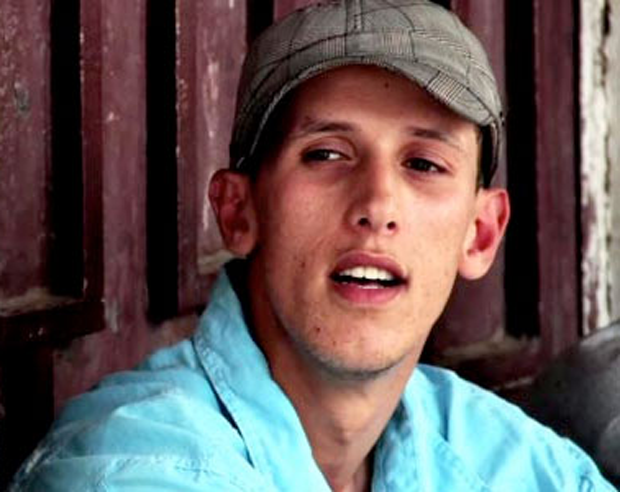
The Moroccan rapper Mouad Belghaoute – also known as Lhaqed or El Haqed, ‘the enraged one’ – was sentenced on 1 July 2014 to four months in prison amid concerns that the trial was unfair, and that he is being held because of his popularity and lyrics that condemn corruption and police brutality. Arrested on 18 May, the 26-year-old rapper is expected to remain in prison until mid-September.
In an Open Letter to the Moroccan Minister of Justice and Liberties El Mustapha Ramid, 11 organisations committed to the defence of the rights to freedom of expression, culture and the arts have condemned the four-month sentence served against Mouad Belghouate following a trial that fell short of international standards:
7 July 2014
Mr El Mustapha Ramid
Minister of Justice and Liberties
Ministère de la Justice et des libertés Place El Mamounia – BP 1015
Rabat
Morocco
Fax: +212 537 73 47 25
We the undersigned organisations committed to the defence of the rights to freedom of expression, culture and the arts, condemn the four-month sentence served against musician Mouad Belghouate (aka El Haqed) following a trial that fell short of international standards. We are concerned that the sentence has been given in retribution for his involvement in Morocco’s pro-democracy movement, and specifically his condemnation of corruption and police violence through his music.
Convicted of assaulting police officers during an incident in Casablanca on 18 May 2014, evidence including testimonies of witnesses to the incident were not accepted by the court. This led defence lawyers to withdraw from the proceedings calling them “unjust” and “unfair”.
This is the third incident since 2011 where Belghouate has been imprisoned following trials that have been condemned as highly flawed. Notably in May 2012 he was imprisoned for 12 months for insulting police in a song and its accompanying video, a charge that clearly violated his rights to freedom of expression.
Belghouate has been closely engaged with the 20th February democracy movement, and he has been openly critical of corruption in Morocco and accused police of brutality in his lyrics, leading to concerns that these are the source of the accusations against him, concerns that are heightened by trial irregularities.
Morocco has ratified the International Covenant on Civil and Political Rights which includes the rights to freedom of expression and fair trial. We therefore call on the Moroccan authorities to immediately release Mouad Belghouate and to ensure that any appeal be carried out fairly and include all evidence and witnesses relevant to the case.
Yours sincerely,
Arterial Network
ARTICLE 19
European Composer and Songwriter Alliance
European Council of Artists
freeDimensional
Freemuse
Index on Censorship
Initiative for Freedom of Expression, Turkey
Equity’s International Committee for Artists’ Freedom (ICAF)
Observatoire de la liberté de creation, France
Vivarta
Copies to:
President of National Human Rights Council Mr. Driss El Yazmi
Minister of Culture, Mr Mohamed Amine Sbihi
Association Marocaine des Droits Humains (AMDH), Mr. Ahmed El Haij (President)
» Arabic: المغرب: رسالة مفتوحة إلى وزير
» French: Maroc: Lettre ouverte à Mr El Mustapha Ramid
9 Jul 2013 | Middle East and North Africa
Despite promising reform and introducing a new constitution in 2011, Morocco’s treatment of dissidents indicates the changes were just window dressing, Samia Errazzouki writes
Morocco’s King Mohammed VI announced a constitutional reform process during a 9 March 2011 speech, following popular protests organised by the 20 February Movement. Regime supporters and allies — France and the United States — hailed the move towards reform as “unprecedented.” Morocco was soon referred to as the “model for the region.”
But the government’s repression of freedom of expression has remained steadfast even after the new constitution.
Most recently, in March 2013 dissident rapperMouad Belghouat (alias El Haqed) was released from jail after he served his second, year-long prison sentence over his anti-regime lyrics, which were described as “undermining state authority.”
 In February 2012, 18-year old Walid Bahomane was charged with “defaming Morocco’s sacred values” after he posted a caricature of Mohammed VI on Facebook. Even though he did not create the illustration, Bahomane was convicted and sentenced to one year in prison for the act of sharing the image.
In the same month, Abdessamad Hidour, an activist with the 20 February Movement faced similar charges after a video of him criticising Mohammed VI was uploaded on Youtube. In the video, he likened Mohammed VI’s reign to colonialism and railed against his corrupt practices, landing him a three-year prison sentence.
These are only a few cases out of many that have drawn widespread attention over the nature of the charges as well as the expedited trials that landed all those charged in jail.
Morocco’s latest constitution supposedly grants the right to freedom of expression, but it still leaves room for repression.
The king stacked the constitutional reform deck by appointing the committee to undertake the work. The reforms introduced some liberalisation, but did not address demands for democratisation of the system. It’s an old trick dating to the 1960s when Morocco’s first constitution was drafted following its independence from France.
The latest version of the constitution incorporates human rights language and places greater attention on the legal protection of free speech, such as the following:
- Article 10 grants the opposition the “freedom of opinion, expression, and of assembly.”
- Article 25 states that “The freedoms of thought, of opinion and of expression under all their forms are guaranteed.”
- Article 28 addresses the press, “The freedom of the press is guaranteed and may not be limited by any form of prior censure.”
Out of context, these articles stand as testaments for what regime supporters describe as “landmark reforms.” However in scrutiny and in practice, these articles have proved to be futile. In Article 28, for example, immediately after stipulating the guarantee of freedom of the press, there is a caveat that leaves this article open to interpretation: “All have the right to express and to disseminate freely and within the sole limits expressly provided by the law, information, ideas, and opinion.” Immediately, “freedom of the press” is limited to a legal framework dictated by the regime and this interpretation has come into play in various recent trials where freedom of speech and press has been threatened, especially in instances when the monarchy has been the target of criticism.
The regime’s response to free speech cases following constitutional reform is swift and relatively consistent, indicating no clear break from its past policies. Despite these violations of freedom of expression, Moroccans continue to express their dissent in multiple media, from online publications to protests on the streets, indicating that the regime’s alleged “path toward reforming” is long and winding.
Samia Errazzouki is a Moroccan-American writer and co-editor of Jadaliyya’s Maghreb Page.
3 Apr 2012 | Index Index, minipost
A Moroccan rapper and activist was arrested by security forces last week, following claims that one of his songs is offensive to a public institution. Megaz El Haked was summoned to a court on the charge of offending a public authority. Lyrics in in one of his songs criticising the political situation in Morocco were deemed to be defamatory. The rapper and activist has been refused provisional release whilst he awaits his trial, which is expected to take place on 4 April. El Haked was imprisoned last year for four months on trumped-up charges, before being released in January 2012.
14 Feb 2012 | Index Index, Middle East and North Africa, minipost
The most recent issue of the French magazine “Le Nouvel Observateur” was confiscated by Moroccan authorities after it published an image from the French-Iranian film “Persepolis”. The issue, due to be distributed on 2 February, included an article on the animated film, which tells the story of the suffering of an Iranian family following the Iranian revolution in 1979 and the main character’s subsequent exile to France. Morocco withstood pressure from Iranian authorities to ban the film in May 2008, screening it at the Meknes International Festival of Animated Film (FICAM).
