15 Sep 2025 | About Index, Asia and Pacific, Nepal, News, Newsletters
It’s been a week of political violence and while many might still be glued to news about the murder of Charlie Kirk (my response here), I want to turn attention to another unfolding crisis – the growing war on digital freedoms. This week that war flared dramatically in Nepal.
The story moved fast. Thousands of people, mostly young, took to the streets at the start of the week to protest the government’s decision to ban 26 social media platforms. Scores of unarmed protesters were killed and government buildings torched. The prime minister and other officials then resigned. The social media bans were lifted. Writing for Index from the country this week, Gary Wornell spoke of his horror and sadness at what unfolded. “The Nepal I had known as my second home for the last 13 years would never be,” he said. His piece is both a good explainer and a deeply emotional witness account.
The government tried to justify the bans as necessary to tackle fake news, hate speech and platform accountability. The youth saw it differently, and called it censorship, plain and simple. We agree, not least because we’ve heard this line before, many times. Across South Asia (and for that matter the world) governments use the pretext of “online safety” to roll back digital rights and, by extension, civil liberties.
In India, we’ve closely tracked how Narendra Modi’s government has tightened control over digital platforms through legislative and regulatory measures, often under the guise of combating fake news or protecting national unity and security. The ruling party has also benefitted from the mob veto, where right-wing groups and influencers have lodged a blizzard of police complaints about errant social media posts. These have resulted in prominent individuals, such as commentator Dr Medusa and journalist (and Index award winner) Mohammed Zubair, being charged with sedition. In Pakistan a bill was passed in January that gives the government sweeping controls on social media. Users can now be sent to prison for spreading disinformation. Sri Lanka’s Online Safety Act allows the government to take down content critical of it to apparently protect national security interests. Bangladesh has the Digital Security Act, which has been criticised for its breadth. I’ll park the UK’s Online Safety Act but we have concerns about that too, as we’ve frequently highlighted.
Not all legislation is cynical or censorious. Several voices from our South Asia network reminded us this week that digital spaces are indeed being used to incite hate and violence. The amplification of hateful content against the Rohingya in Myanmar on Facebook is a tragic example. But here’s a distinction: recognising and responding to harm is not the same as justifying an authoritarian response. Even those most concerned with digital hate in South Asia condemned Nepal’s actions.
The fury has died down in Nepal. Still, as the above pattern shows, it’s unlikely this woeful chapter will be the end of government attempts to shut down digital discourse.
12 Sep 2025 | Asia and Pacific, Nepal, News
On Monday 8 September I drove into Bouddha on the north eastern corner of Kathmandu from my home in Besigaun. It was just like any other day at this time of year with the streets crowded with cars and scooters and local buses stopping at every junction, their conductors with the doors swung open, shouting out their lists of destinations, cramming passengers into every available space for a 20 rupee bus ride into town. I was on my way to Yaks recording studio around lunchtime to continue work on an audio project and once settled into the soundproof room on the 5th floor of the building began my session reading from the script. Less than two hours into the recording I took off my headphones, surprised by the noises filtering through the walls and into the mic rendering the session useless. That’s not normal. I waited a few minutes, and then, rather than making a complaint to the management, I decided I had done enough for the day and packed up. As I left, I noticed the workstations in the design studio all vacant. Something is not right.
It wasn’t until I arrived home around 4pm that the news of the shooting and killing of Gen-Z protesters outside the parliament buildings became apparent. The shock of the tragedy was starting to reveal itself on social media. It was only then that I connected the commotion outside the recording studio with the protest taking place in other parts of the city and I began to realise the gravity of the situation. The videos of protesters in what appeared to be quite harmless situations being shot and killed by the Nepal Police was something I had never expected to see in Nepal, or anywhere else for that matter. It wasn’t until I woke the following morning to the angry sounds of demonstrators in our neighbourhood that I realised that the Nepal I had known as my second home for the last 13 years would never be the same again. I was overwhelmed with sadness for this country and its people who have bravely worked hard and suffered so long to lift themselves out of poverty despite the setbacks caused by natural disasters, economic hardship and political incompetence.
So what was it that brought Gen Z out onto the streets to protest that fateful Monday morning in September? On the Thursday before, the government announced that they were blocking 26 social media apps—ostensibly because those companies were not registered in Nepal, and until they registered and paid their dues, they would be banned from conducting their business in Nepal. That, in principle, seemed fair enough to me. Businesses should be registered, but why had the government waited more than 15 years to implement the ruling? This was not a step-by-step plan which would have caused mild irritation to most Nepalis. It was a serious threat to millions who depend on social media as vital sales channels through which they conduct their small businesses. A blanket ban, instantly executed, wreaked instant economic hardship on a significant proportion of the entrepreneurial sector of the population and sent them into panic mode overnight. Added to that, the younger generation understands the value of social media as their main avenue of expression through which they can express their grievances and frustrations with the current situation in Nepal. The older generation in government positions were largely ignorant of the importance of social media to the younger generation and dismissed them out of hand. They misjudged the situation and ignored the signals coming from the young to their peril. By Tuesday morning the ban on social media had been lifted, but the damage had already been done.
To understand better just how dependent Nepalis are on social media, one should be aware that Nepal’s economy depends to a large extent on remittances from family members working abroad—mostly in the Middle East, Japan, Korea and Malaysia. These families, split families, through no fault of their own, are torn apart because of a lack of well paid jobs in their own country. They rely heavily on social media to keep connected—to keep the fragile thread of family alive—and to dream of a life where they can live in the same house as their loved ones, instead of decades in forced exile just to survive. The children of these migrant workers are using the savings of their parents and leaving the country by the million every year to study abroad and take jobs in a variety of professions in the developed world, with never the intention to return. Nepal is haemorrhaging its young blood faster than it can ever replace it and the cost to the nation is literally a question of life or death.
This blocking of social media was the spark that ignited the flame of discontent that motivated Gen Z to get out on the streets of Kathmandu and protest their dissatisfaction to the government. But the protest was not about the blocking of social media – that was the straw that broke the camel’s back. The protest was about the rampant corruption in government, cronyism and nepotism and lack of transparency in a government hopelessly entrenched in its ways—turning a blind eye to the chronic needs of its people. The evidence of corruption became even more apparent when the social media profiles of the grown-up children of members of the government and other political parties showed them living in lavish apartments around the world, having expensive holidays and sporting Rolex watches and Gucci handbags and driving cars worth hundreds of thousands of dollars, while their fathers were apparently only earning a measly 400 USD a month in Nepal.
So where did all that money come from to furnish these people with such lavish lifestyles? To my mind you don’t have to look further than the half-completed infrastructure projects littering the countryside. Projects lying unfinished for five years or more – disintegrating before my eyes, washed away by a monsoon of diverted funds. But what do I really know about the inner workings of the governing of this country? Very little. I don’t have the evidence. I just see unfinished projects everywhere and a population whose patience has run out. Add to that the pictures allegedly showing the children of government officials living lifestyles abroad well beyond the reach of many middle class Europeans and you have a powder keg of emotional dynamite ready to blow up the Houses of Parliament. That is what happened.
On the day after the Gen Z protest, the public took to the streets in anger and frustration at the government’s lack of empathy for the loss of life of their children. There were no apologies—no statements of regret. No taking responsibility for this act of aggression. For every child murdered by the Nepal Police there were thousands who came out into the streets. What followed became one of the blackest days in Nepal’s history—a day of utter devastation with historic government buildings, hotels, police stations and businesses set on fire and routes for fire engines blocked by the mobs to prevent any access to the properties by the emergency services. Ministers were tracked down and subjected to mob violence, their houses ransacked and burned to the ground—the stashes of their ill-gotten wealth reduced to flames, floating into the smoke-filled sky.
This morning I ventured out into a city reeling from the shock of the events of the previous three days. With no interim government yet established, the army has taken control of the city, imposing a curfew with twice daily access to shops and essential services amounting to five daylight hours split between early morning and late afternoon. I set off with my camera and international press card to take a few shots of what I had only witnessed on social media. It was a heartbreaking reconnaissance. The streets were littered with burned out carcasses of cars and trucks. The local police headquarters was a blackened skeleton of brick and concrete. The army stopped me the second I parked my scooter outside the burned-out shell of the local superstore, ignored my press card and told me in no uncertain terms to leave the area immediately. I left.
But the feeling on the street was not one of fear or trepidation. People were going about their business shopping at the small local stalls and supermarkets with only the slightest sense of anxiety to get home before the 10am curfew. Electricians were busy repairing cables damaged by the rioting and local groups were clearing the streets of the flotsam and jetsam of the days before. On social media there was progress being made by representatives of the Gen Z generation–the young hopefuls on whose shoulders the future of Nepal now rests. And they have a strong contender to take responsibility for an interim cabinet who has the advantage of age and experience to guide them. Former Chief Justice of Nepal Sushila Karki is perceived by most of my close friends as good news for the country. She is smart, honest, and a woman with a commendable track record. And she knows the law. There is a lot of work to be done to undo the decades of corruption and poor governance, but I get the feeling that the will of the Nepalese is strong enough to endure the years it will take to achieve a more fair and balanced society that will turn this tragedy into a solid and lasting period of prosperity not only for Gen Z but for future generations to come.
—
Index asked Gary to speak to Nepalis about their hopes and fears following the violence of the last few days.
The author and translator Viplob Pratik said, “I have a clear understanding of the Gen Z movement, and I deeply admire their courage. This movement did not emerge overnight; it took shape after a long period of simmering dissatisfaction and suffocation among the youth regarding the government system of Nepal. Consequently, this Gen Z resistance is a reaction to prolonged repression — thoughts and emotions subdued by a ruling party that has consistently neglected the desires, needs, and interests of young people. The government’s tendency to take the youth’s voice for granted, to ignore them, and to underestimate their capacity for mature decision-making, played a significant role in igniting the current situation. As a result, Nepal witnessed the pivotal events of 8 September 2025.”
He added, “We do not need to teach Gen Z; they know what they are doing. However, now that the initial wave of the movement has calmed and it is evolving, I am disheartened to see various entities—whether from the old political parties, insiders, or outsiders—trying to capitalise on the moment. They are essentially attempting to exploit the loopholes for their own gain. Witnessing such a scenario fills me with profound concern. I strongly believe that if the outcome of this movement is not guided onto the right path by fair and deserving hands, it will be a tragedy that history will mourn.”
Rajan Ghimire, a humanitarian, development and rights activist, recounted his own thoughts on the past three days.
“Day 1: The morning began with optimism, but by the afternoon I felt deep anger at the government’s brutal response toward the youth.
Day 2: I started the day still angry, but by midday that anger gave way to fear. In the evening I felt a growing sense of hopelessness. Near my home, there is a gas station with a garage attached. After hearing that people had set fire to Bhatbhateni in Koteshwor, I was alarmed to learn that someone set a vehicle on fire in the garage near the gas station. We feared the gas station might explode. Thankfully, the fire was contained, but none of us could sleep that night.
Day 3: The day passed under a cloud of uncertainty, not knowing what would happen next.”
He added, “Thankfully no major infrastructure damage was reported but we lost human lives. It feels as if our country has been pushed back by years, even decades. I hold on to hope that we can rise from the ashes and rebuild but I remain confused about how.”
Suraj Ghimire said, “Right now, leaders from different parties are trying to break the unity of the protesters, taking advantage of divisions and pushing their own agendas online. They think this will help them regain power, but the people have spoken, the ones that were out on the streets don’t want them back. What they want is simple and clear: the president’s resignation and the dissolution of the current parliament.”
Medical student Nabin Poudel said, “The ongoing Gen Z movement is undeniably legitimate, embodying years of accumulated frustration over systemic corruption and decades of ineffective leadership. Yet, the prolonged indecision regarding the dissolution of the lower house and the formation of an interim government threatens to deepen political instability rather than resolve it.”
The winter 2025 edition of Index on Censorship magazine will look at both the silencing of Gen Z around the world and how influencers like Charlie Kirk, who was murdered in September, became important voices for this demographic.
14 Oct 2016 | Afghanistan, Asia and Pacific, Bangladesh, Burma, India, mobile, News, Pakistan, Sri Lanka, Tibet
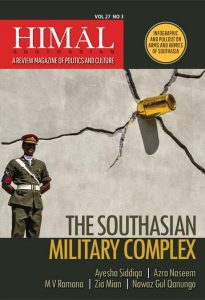 One of South Asia’s most influential news magazines, Himal Southasian, is to close next month after 29 years of publishing as part of a clampdown on freedom of expression across the region. The magazine has a specific goal: to unify the divided countries in South Asia by informing and educating readers on issues that stretch throughout the region, not just one community.
Index got a chance to speak with Himal Southasian’s editor, Aunohita Mojumdar, on the vital role of independent media in South Asia, the Nepali government’s complicated way of silencing activists and what the future holds for journalism in the region.
“The means used to silence us are not straightforward but nor are they unique,” Mojumdar said. “Throughout the region one sees increasing use of regulatory means to clamp down on freedom of expression, whether it relates to civil society activists, media houses, journalists or human rights campaigners.”
Himal Southasian, which claims to be the only analytical and regional news magazine for South Asia, faced months of bureaucratic roadblocks before the funding for the magazine’s publisher, the Southasia Trust, was cut off due to non-cooperation by regulatory state agencies in Nepal, said the editor. This is a common tactic among the neighbouring countries as governments are wary of using “direct attacks or outright censorship” for fear of public backlash.
But for Nepal it wasn’t always this way. “Nepal earlier stood as the country where independent media and civil society not accepted by their own countries could function fearlessly,” Mojumdar said.
In a statement announcing its suspension of publication as of November 2016, Himal Southasian explained that without warning, grants were cut off, work permits for editorial staff became difficult to obtain and it started to experience “unreasonable delays” when processing payments for international contributors. “We persevered through the repercussions of the political attack on Himal in Parliament in April 2014, as well as the escalating targeting of Kanak Mani Dixit, Himal’s founding editor and Trust chairman over the past year,” it added.
Index on Censorship: Why is an independent media outlet like Himal Southasian essential in South Asia?
Aunohita Mojumdar: While the region has robust media, much of it is confined in its coverage to the boundaries of the nation-states or takes a nationalistic approach while reporting on cross-border issues. Himal’s coverage is based on the understanding that the enmeshed lives of almost a quarter of the world’s population makes it imperative to deal with both challenges and opportunities in a collaborative manner.
The drum-beating jingoism currently on exhibit in the mainstream media of India and Pakistan underline how urgent it is for a different form of journalism that is fact-based and underpinned by rigorous research. Himal’s reportage and analysis generate awareness about issues and areas that are underreported. It’s long-form narrative journalism also attempts to ensure that the power of good writing generates interest in these issues. Based on a recognition of the need for social justice for the people rather than temporary pyrrhic victories for the political leaderships, Himal Southasian brings journalism back to its creed of being a public service good.
Index: Did the arrest of Kanak Mani Dixit, the founding editor for Himal Southasian, contribute to the suspension of Himal Southasian or the treatment the magazine received from regulatory agencies?
Mojumdar: In the case of Himal or its publisher the non-profit Southasia Trust, neither entity is even under investigation. We can only surmise that the tenuous link is that the chairman of the trust, Kanak Mani Dixit, is under investigation since we have received no formal information. Informally we have indeed been told that there is political pressure related to the “investigation” which prevents the regulatory bodies from providing their approval.
The lengthy process of this denial – we had applied in January 2016 for the permission to use a secured grant and in December 2015 for the work permit, effectively diminished our ability to function as an organisation until the point of paralysis. While the case against Dixit is itself contentious and currently sub judice, Himal has not been intimated by any authority that it is under any kind of scrutiny. On the contrary, regulatory officials inform us informally that we have fulfilled every requirement of law and procedure, but cite political pressure for their inability to process our requests. Our finances are audited independently and the audit report, financial statements, bank statements and financial reporting are submitted to the Nepal government’s regulatory bodies as well as to the donors.
Index: Why is Nepal utilising bureaucracy to indirectly shut down independent media? Why are they choosing indirect methods rather than direct censorship?
Mojumdar: The means used to silence us are not straightforward but nor are they unique. Throughout the region one sees increasing use of regulatory means to clamp down on freedom of expression, whether it relates to civil society activists, media houses, journalists or human rights campaigners. Direct attacks or outright censorship are becoming rarer as governments have begun to fear the backlash of public protests.
Index: With the use of bureaucratic force to shut down civil society activists and media growing in Nepal, how does the future look for independent media in South Asia?
Mojumdar: This is actually a regional trend. However, while Nepal earlier stood as the country where independent media and civil society not accepted by their own countries could function fearlessly, the closing down of this space in Nepal is a great loss. As a journalist I myself was supported by the existence of the Himal Southasian platform. When the media of my home country, India, were not interested in publishing independent reporting from Afghanistan, Himal reached out to me and published my article for the eight years that I was based in Kabul as a freelancer. We are constantly approached by journalists wishing to write the articles that they cannot publish in their own national media.
The fact that regulatory means to silence media and civil society is meeting with such success here and that an independent platform is getting scarce support within Nepal’s civil society will also be a signal for others in power wishing to use the same means against voices of dissent.
It is a struggle for the media to be independent and survive. In an era where corporate interests increasingly drive the media’s agenda, it is important for all of us to reflect on what we can all do to ensure the survival of small independent organisations, many of which, like us, face severe challenges.
