“The new rise of radio allows more opportunities to discuss and debate than ever before, but we must also fight for radio stations to be unbound from state control and to be able to broadcast news freely,” Index on Censorship magazine Editor Rachael Jolley writes in the new issue.
Listen to a radio show, and you might be provoked, informed or excited about a new subject. But in listening you are doing something that is a little out of fashion, contemplating what others are saying, not tweeting some angry instant response, or even just posting the first thought that comes into your head.
After many predictions of its death, radio is on the rise again, its audience is growing across various age groups and various countries including the US and UK, and part of the reason might be because we are all a bit tired of transmitting constantly. Instead we appear to be happier to settle down and listen to radio and, particularly its news programmes, once again, argued Jolley.
We report that in the summer of 2017, around 48.2 million people in Britain listened to the radio at least once a week, up 0.9% from 2016. And in 2017 across the Atlantic, the USA is seeing a surge in listeners for news and talk radio. Of particular interest is the steady growth in those who listen to the radio for news in the 18-35 age group. “Radio was thought to be going out of fashion as new technologies elbowed it out of the way, but instead it’s back and gathering new audiences. Part of the reason might be growing awareness that someone’s ramblings are not necessarily a reliable source of information.”
Our special report on radio and its impact in 2017 includes a report from Laura Silvia Battaglia in Mosul on the radio station that is giving a voice to the residents of the city, while Claire Kopsky interviews people behind “radio boats”, which are broadcasting information on cholera in the Central African Republic in a bid to educate the population about the disease. We report on how Somali radio journalists receive threats from Al-Shabab for doing their jobs. “I check underneath my wheels, but normally they put bombs under the seat in your car,” says radio reporter Marwan Mayow Hussein.
Then there are the stories of radio proving a perfect outlet for people to share their most private inner thoughts and experiences, as radio star Wana Udobang writes about from a Nigerian context and best-selling author Xinran remembers back in China.
“Part of the increased popularity of radio is that it’s managed to evolve and we explore how podcasts are being made in some of the least likely – and most censored – places, such as China, and smuggled into North Korea.” The magazine also have a handy guide on making your own podcasts, for those with an idea.
But radio’s ability to reach the masses also means that this powerful tool can get into the wrong hands. Then there’s Rwanda, which two decades ago saw the airwaves being monopolised by voices promoting genocide. The country has moved on a lot, but radio there is still far from free. Veteran reporter Graham Holliday who has covered the country reports on the latest challenges.
And there’s interviews with BBC World Service English director Mary Hockaday, pirate radio DJ Allan Brando, Hong Kong broadcaster Hugh Chiverton and science presenter Robin Ince.
Outside the special report on radio, the magazine publishes a special investigation into the dangers faced by journalists in Mexico, by our special correspondent Duncan Tucker, who looks at how many reporters have been murdered since 2000, as 2017 looks to record the most killings for a decade.
Plus Orwell Prize winning journalist Iona Craig argues that encrypted apps are needed to give reporters in dangerous countries more security.
Notes:
You can order your copy here, or take out a digital subscription via Exact Editions. Copies are also available at the BFI, the Serpentine Gallery, MagCulture, (London), News from Nowhere (Liverpool), Home (Manchester), Calton Books (Glasgow) and on Amazon. Each magazine sale helps Index on Censorship continue its fight for free expression worldwide.
About Index on Censorship magazine
Index on Censorship magazine was first published in 1972 and remains the only global magazine dedicated to free expression. Since then, some of the greatest names in literature and academia have written for the magazine, including Nadine Gordimer, Mario Vargas Llosa, Amartya Sen, Samuel Beckett, as well as Arthur Miller and Harold Pinter. The magazine continues to attract great writers, passionate arguments, and expose chilling stories of censorship and violence. It is the only global free expression magazine.
Each quarterly magazine is filled with reports, analysis, photography and creative writing from around the world. Index on Censorship magazine is published four times a year by Sage, and is available in print, online and mobile/tablets (iPhone/iPad, Android, Kindle Fire).
Winner of the British Society of Magazine Editors 2016 Editor of the Year in the special interest brand category.
As the Boston Globe said, Index has bylines that Vanity Fair would kill for. “Would that bylines were the only things about Index people were willing to kill for”
[vc_row][vc_column][vc_custom_heading text=”Contributors include Madeleine Thien, Xinran, Peter Bazalgette, Laura Silvia Battaglia, Mahesh Rao, Chawki Amari and Amie Ferris-Rotman”][vc_column_text]
The retro medium of radio is back, as we explore in the Autumn issue of Index on Censorship magazine 2017, which is excellent news for the delivery of well, news. Laura Silvia Battaglia reports from Mosul on the radio station that is giving a voice to the people there, while Claire Kopsky interviews people behind “radio boats“, boats that are broadcasting information on cholera in the Central African Republic in a bid to educate the population about the disease.
Then there are the examples of radio proving a perfect outlet for people to share their most private inner thoughts and experiences, as Wana Udobang writes about from a Nigerian context and Xinran remembers back in China.
Part of the increased popularity of radio is that it’s managed to evolve and we have an article on how podcasts are being made in some of the least likely – and most censored – places, such as China, and smuggled into North Korea. We also have a handy guide on making your own podcasts, for those with an idea.
But radio’s ability to reach the masses also means that this powerful tool can get into the wrong hands. Ismail Einashe explores this in his article on al-Shabaab in Somalia, who operate a very popular radio station. Then there’s Rwanda, which two decades ago saw the airwaves being monopolised by voices promoting genocide. The country has moved on a lot, but radio is still far from free.
Outside the special report, we take you to Russia where a seemingly innocent film about the last tsar has angered the country’s church. With Banned Books Week coming up, we ask a selection of writers to choose the books that made them think most about free speech. What would be your pick? And we have an extract from a forthcoming novel highlighting the dangers of being a journalist in Mexico, with superb illustrations to accompany.
Finally, don’t miss our cut-out-and-keep male nipple template, a handy tool to ensure female nipples are social media friendly.
[/vc_column_text][/vc_column][/vc_row][vc_row][vc_column][vc_custom_heading text=”Special report: Free to air “][vc_column_text]
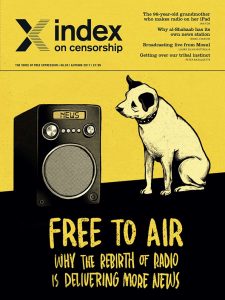
Why the rebirth of radio is delivering more news
Fear for the airwaves, by Ismail Einashe: In Somalia al-Shabaab control a prominent radio station and a fifth of the country. Meet the radio presenters who brave danger to keep reporting
Project freedom? by Sally Gimson: Radio Free Europe was at the frontline of Cold War reporting. Three decades on, is it still needed?
Sound unbound, by Oleg Shynkarenko: How a new radio station was built from scratch using crowdfunding to break away from oligarchs and government pressure
Don’t touch that dial, by Kieran Etoria-King, Rachael Jolley, Jemimah Steinfeld: Interviews with a pirate rain DJ, comedian Robin Ince, a Hong Kong presenter, the controller of BBC World Service English and the editor of a refugee radio station
Syrians speaking, by Rhodri Davies: Syrians in exile on why they set up a new radio station and what it covers
Power to the podcast, by Mark Frary: Podcasting is bringing a whole new audience to radio and giving investigative journalism a boost. Plus, our handy guide to making your own podcasts
Stripsearch cartoon, by Martin Rowson: There’s a new app out called Smart Ink. Will it become a dictator’s favourite tool?
Tuning into a brave new world, by Jan Fox: Grassroots radio is on the rise in the USA, where a 98-year-old granny is a station superstar, but it’s not without challenges
Under the rad(io)ar, by Kaya Genç: A radio station in Turkey, known for its criticism of the government, is somehow surviving the current crackdown
Taboos and telephones, by Xinran: Radio was one of the first outlets where Chinese women spoke about personal issues such as forced abortions. Is the same honesty possible today?
Stationed in the warzone, by Laura Silvia Battaglia: Radio presenters in Mosul tell Index how the station is giving a voice to the people, but it has not been easy operating under bombardment
Secrets, lies and Lagos lives, by Wana Udobang: Exorcisms and illicit affairs are just some of the topics callers to a popular talk show in Nigeria wanted to share
New waves, by Claire Kopsky: Radio took to riverboats in the Central African Republic to bring information and news about a cholera epidemic
Chat rooms, by Milton Walker: Talk about interactivity, Jamaican radio shows sometimes receive as many as 4,000 text messages
Sound and fury, by Graham Holliday. Two decades ago Rwandan radio was monopolised by voices promoting genocide, but radio is still not free from controversy
Let’s get this show on the road, by Silvia Nortes: Meet the Spanish comedians behind Radio Gaga, a television show about radio which visits overlooked communities
Closing access to the back door, by Iona Craig: Investigative journalists working in hostile environments need encrypted apps to work more safely. This is being forgotten in the current debate on encryption
No one owns language, by Jemimah Steinfeld: The 2016 Man Booker Prize winner Paul Beatty discusses “offensive” language and teaching styles
Risky business, by Charlotte Bailey: Amid confiscations and threats, one chain of bookstores continues to operate in Libya
Tracking down the F word in fiction, by Mahesh Rao, Sean Gallagher, Kieran Etoria-King, Grainne Maguire, Ryan McChrystal: Ahead of Banned Books Week, writers choose the books that make them think about free speech
Costume drama, by Amie Ferris-Rotman: Russia’s religious right claim God is annoyed about a film on the last tsar, just part of a new censorship culture
Bulldozing his way through the media, by Natasha Joseph: Tanzania’ current president has been nicknamed “the bulldozer” and the media is in his sight
Big brother we’re watching you, by Jason Daponte: Members of a new, hip London club claim to have empowered voters in the UK General Election
Making a killing, by Duncan Tucker: A special Index investigation looking at why Mexico is an increasingly deadly place to be a journalist as reporters face threats from corrupt police to deadly drug gangs
New tribal instinct, by Peter Bazalgette: Our pact mentality has become more pronounced as we spend more time online, the author argues
Parallel lives and unparalleled risks, by Tim MacGabhann: The author discusses his time reporting from Mexico, how the death of one journalist particularly affected him and introduces an excerpt from his forthcoming book
The people’s poet, by Wiji Thukul: Nearly 20 years since Indonesia’s famous poet disappeared, Eliza Vitri Handayani introduces the man and some new translations of his poems
The disappeared, by Chawki Amari: The award-winning Algerian writer talks about prison in Algeria and the media landscape in France. Plus a short story
Index around the world, by Kieran Etoria-King: Top comedy acts discuss the importance of humour following our event Stand up for Satire, plus news of other Index summer highlights
Uncovering the nipple cover-up, by Jemimah Steinfeld: The battle to give the female nipple equal rights as one woman heads to the Supreme Court. Plus, a cut-out-and-keep male nipple for social media use
[/vc_column_text][/vc_column][/vc_row][vc_row content_placement=”top”][vc_column width=”1/3″][vc_custom_heading text=”Free to air” font_container=”tag:p|font_size:24|text_align:left” link=”url:%20https%3A%2F%2Fwww.indexoncensorship.org%2F2017%2F09%2Ffree-to-air%2F|||”][vc_column_text]Through a range of in-depth reporting, interviews and illustrations, the autumn 2017 issue of Index on Censorship magazine explores how radio has been reborn and is innovating ways to deliver news in war zones, developing countries and online
With: Ismail Einashe, Peter Bazalgette, Wana Udobang[/vc_column_text][/vc_column][vc_column width=”1/3″][vc_single_image image=”95458″ img_size=”medium” alignment=”center” onclick=”custom_link” link=”https://www.indexoncensorship.org/magazine”][/vc_column][vc_column width=”1/3″ css=”.vc_custom_1481888488328{padding-bottom: 50px !important;}”][vc_custom_heading text=”Subscribe” font_container=”tag:p|font_size:24|text_align:left” link=”url:https%3A%2F%2Fwww.indexoncensorship.org%2Fsubscribe%2F|||”][vc_column_text]In print, online. In your mailbox, on your iPad.
Subscription options from £18 or just £1.49 in the App Store for a digital issue.
Every subscriber helps support Index on Censorship’s projects around the world.
Index on Censorship magazine celebrated the launch of its summer 2017 issue with an evening exploring the 1917 Russian Revolution and its effects on our freedoms today.
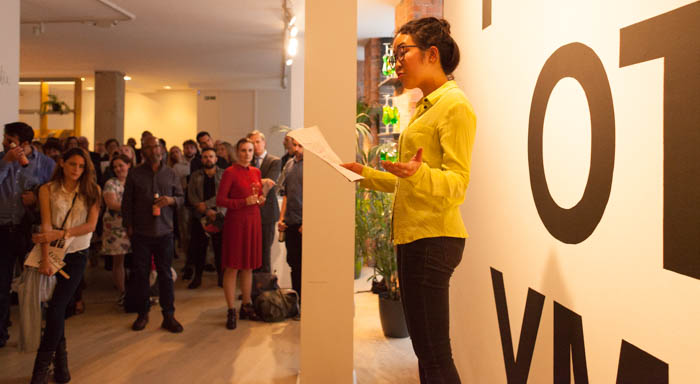
The Calvert 22 Foundation-hosted event examined the role of propaganda, culture and politics from around the globe.
Speakers included Don Guttenplan, editor-at-large for The Nation, who spoke on the cultural Cold War; Katya Rogatchevskaia, lead curator of Central and East European collections at the British Library, who examined the role of Russian propaganda both during the Cold War and today; and Adam Cathcart, a specialist in Chinese history at Leeds University, who spoke on the impact of Soviet art and music in North Korea.
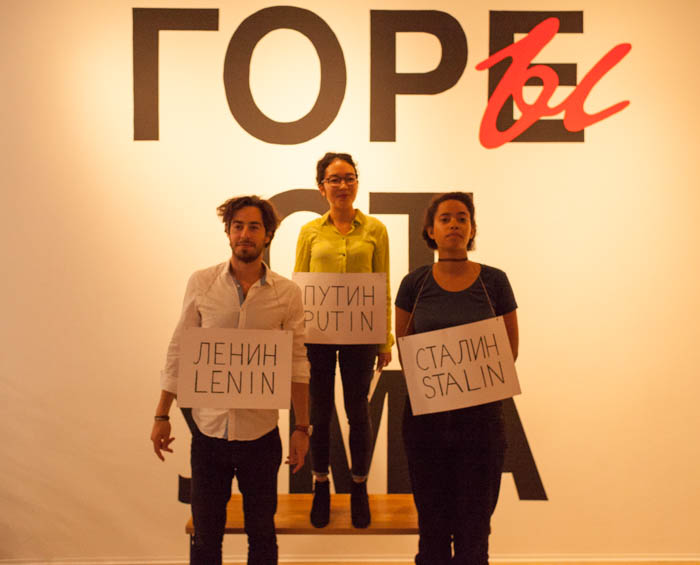
Guests were invited to listen to actors performing excerpts from speeches by Lenin, Stalin and Putin. Guttenplan noted the speeches reminded him of the dialogue he hears in today’s political realm. “When we were listening to Lenin’s speech, I was thinking, well that doesn’t sound that different from John McDonnell and Jeremy Corbyn,” he said.
Rogatchevskaia discussed how art and propaganda influenced the Russian Revolution. “It was important that a revolution was happening at the same time in art and in social and political life,” she said. “These two revolutions actually met at one point and that created a fantastic abundance of really great art, and that’s why we remember this period.”
Cathcart spoke of the “cultural cold war” with South Korea on one side and China and North Korea on the other. He explained how cultural revolutions in South Korea have influenced the Chinese mindset and their favour of North Korean customs. “Chinese scholars have to come to grips with the Korean wave,” Cathcart said. “This is a country that has done extremely well, everybody’s on high broadband internet, the pop bands are doing extremely well. North Korea exports almost nothing culturally. North Korean music is something they’ve [the Chinese] tried to bring in competition with South Korea.”
Index’s summer publication, which was given to all attendees, features reports from across the globe including Uzbekistan, China, Russia, Cuba and Turkey. Writers for this issue include David Aaronovitch, Nikita Khrushchev’s great-granddaughter Nina Khrushcheva, and an interview with author Margaret Atwood.
The event was held on at Calvert 22 Foundation, which celebrates the culture and creativity of the New East.
Katya Rogatchevskaia, lead Curator of Central and East European collections at the British Library, discusses Russia’s revolutionary propaganda. (Photo: Sean Gallagher / Index on Censorship)
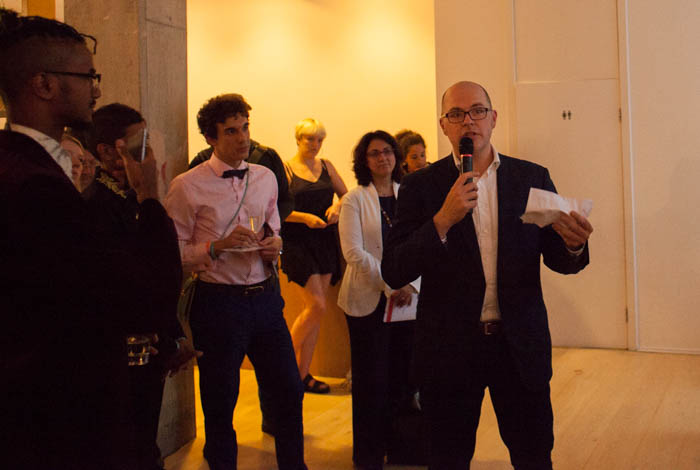
An actor reads from a speech by Vladimir Lenin. (Photo: Sean Gallagher / Index on Censorship)
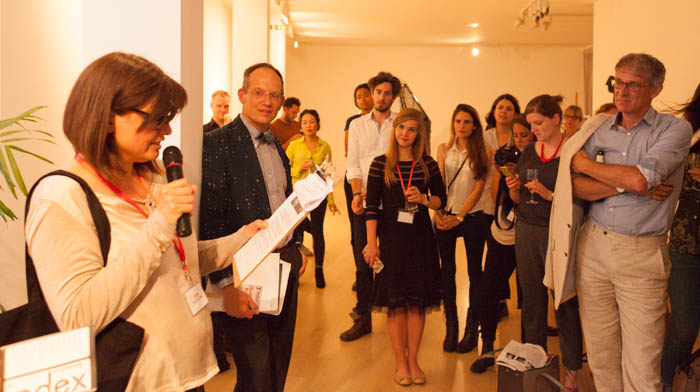
Adam Cathcart, a specialist and lecturer in Chinese history at Leeds University, explores the impact of Soviet art on North Korean art and culture. (Photo: Sean Gallagher / Index on Censorship)
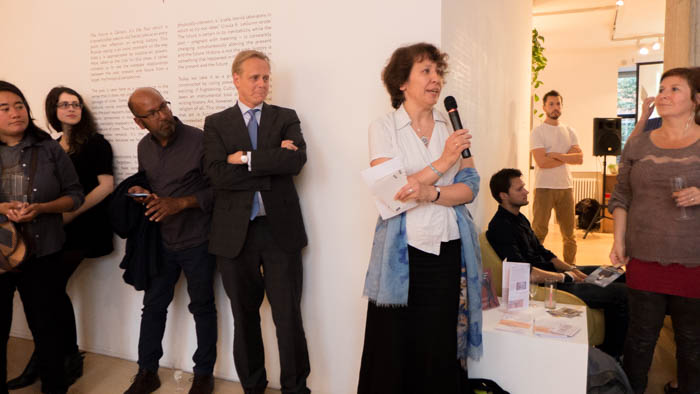
Index on Censorship magazine editor Rachael Jolley introduces the summer 2017 issue. (Photo: Sean Gallagher / Index on Censorship)
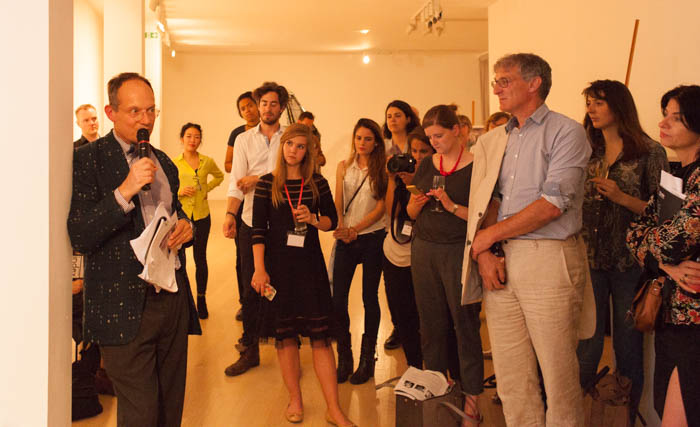
Don Guttenplan, Editor-at-Large for The Nation, shares his take on the cultural cold war, (Photo: Sean Gallagher / Index on Censorship)
Actors read from speeches by Lenin (Matthew Romain), Stalin (Amanda Wilkin) and Putin (Jennifer Leong). (Photo: Sean Gallagher / Index on Censorship)
An actor reads from a speech by Vladimir Putin. (Photo: Sean Gallagher / Index on Censorship)
[/vc_column_text][/vc_column][/vc_row][vc_row content_placement=”top”][vc_column width=”1/3″][vc_custom_heading text=”100 Years On” font_container=”tag:p|font_size:24|text_align:left” link=”url:https%3A%2F%2Fwww.indexoncensorship.org%2F2017%2F06%2F100-years-on%2F|||”][vc_column_text]Through a range of in-depth reporting, interviews and illustrations, the summer 2017 issue of Index on Censorship magazine explores how the consequences of the 1917 Russian Revolution still affect freedoms today, in Russia and around the world.
With: Andrei Arkhangelsky, BG Muhn, Nina Khrushcheva[/vc_column_text][/vc_column][vc_column width=”1/3″][vc_single_image image=”91220″ img_size=”medium” alignment=”center” onclick=”custom_link” link=”https://www.indexoncensorship.org/magazine”][/vc_column][vc_column width=”1/3″ css=”.vc_custom_1481888488328{padding-bottom: 50px !important;}”][vc_custom_heading text=”Subscribe” font_container=”tag:p|font_size:24|text_align:left” link=”url:https%3A%2F%2Fwww.indexoncensorship.org%2Fsubscribe%2F|||”][vc_column_text]In print, online. In your mailbox, on your iPad.
Subscription options from £18 or just £1.49 in the App Store for a digital issue.
Every subscriber helps support Index on Censorship’s projects around the world.
[vc_row][vc_column][vc_custom_heading text=”As the Summer 2017 issue of Index on Censorship magazine looks at the modern implications of the Russian revolution 100 years on, Margaret Flynn Sapia lists 10 global songs inspired by revolutions of the last century”][vc_row_inner][vc_column_inner][vc_video link=”https://www.youtube.com/watch?v=Q2wneBVssPc&list=PLCY0ZVWasL3FginL7uuYQJy6JfXGIWmGu”][/vc_column_inner][/vc_row_inner][/vc_column][/vc_row][vc_row][vc_column][vc_column_text]
Music has an undeniable ability to move people; musicians can reach across borders and boundaries, pull at the heartstrings and say the unsayable. As a result, music has long been used to call for revolution, urging listeners to rise up against injustice and power. For the launch of Index on Censorship magazine’s summer 2017 issue, 100 Years On: What difference Russia’s revolution makes to our freedom today,we have compiled a playlist themed around the idea of revolution.
Tracy Chapman – Talkin ‘Bout A Revolution
In a world gripped by the denouement of the Cold War, Tracy Chapman saw change on the horizon. “Poor people gonna rise up /And get their share/ Poor people gonna rise up/And take what’s theirs” sums up the sentiment of Talkin ‘Bout A Revolution. Optimistic, perhaps, but the song arrived in 1988, at the cusp of a global uprising that saw the fall of Apartheid South Africa, the Soviet Union and several smaller communist regimes, as well as a Western ideological shift away from the ruthless capitalism of Thatcher and Reagan.
Gil Scott-Heron – The Revolution Will Not Be Televised
The Revolution Will Not Be Televised was released in 1970, at the end of a turbulent decade that saw the assassinations of several civil rights heroes including John F. Kennedy, Martin Luther King, Malcolm X and Fred Hampton. It calls on people to unite and take action beyond watching a television screen, warning that the revolution will not come with the glitz and glamour of television, and that the television will not be on their side. Gil Scott-Heron, an important figure and musician during the US Civil Rights movement, is keen to call for realistic understandings of how change can be achieved in this song.
The Specials – Nelson Mandela
The Specials’ Nelson Mandela drew popular attention to Mandela’s mistreatment in South Africa when it was released in 1984, bringing the injustice of his then two-decade imprisonment into common knowledge. When it was performed at a Wembley concert on Mandela’s 70th birthday in 1988, its chorus of “free Nelson Mandela” became a global rallying cry for the end of apartheid. Two years later, Mandela walked out of prison, and the apartheid regime fell shortly after.
David Zé – Mwangolé (O guerrilheiro)
One of Angola’s most renowned revolutionary artists, David Zé is particularly adept in his descriptions of the suffering and abuse of Angolans under Portuguese colonial rule.Mwangolé O guerrilheiro may not call for a specific course of revolutionary action, but its representation of the enduring pain and intolerable living conditions of Angolans remind listeners of what can drive a person to risk everything and revolt for their freedom. In a country that suffered through a generation-long civil war, that context can never be forgotten.
Carlos Puebla –Y en eso llego Fidel
“The fun was over, El Comandante came and ordered them to stop”, Puebla sings in this famous hymn to the Cuban revolution. Throughout the song, Carlos Puebla celebrates Castro’s arrival and overtake of the island, putting an end to capitalism’s prior corruption and exploitation of the island’s people. The droves of people who fled the subsequent corruption and exploitation by Castro’s communist regime might dispute the song’s celebratory tone.
The Korean People’s Army State Merited Chorus – Defend the Headquarters of the Revolution(혁명의 수뇌부 결사옹위하리라)
In North Korea, even revolutionary music – what should be defined and expressed by the people, free of censorship – is an unyielding expression and promotion of state power. Defend the Headquarters of the Revolutionprovides no mention of Korean culture or history preceding Kim Jong II, instead extolling the virtue of picking up arms for the Kims and fighting to the death, viewing this fight as a revolution against the rest of the world.
Vasily Agapkin – Farewell of Slavianka
Farewell of Slavianka (Proshchaniye slavyanki) became so popular during the 1917 Revolution that, despite its non-communist roots, the Soviet Union eventually adopted it as an official national song. This piece represents two fundamental components of revolution: popular sentiment during the people’s initial rebellion, and post-revolutionary appropriation of that sentiment into state propaganda.
Yulduz Usmonova – Ayting Ayting
Songs which explicitly detail Soviet occupation in Uzbekistan are scarce. However, songs sung in Uzbek instead of Russian (especially before the country’s independence) have long served as expressions of nationalism and rejection of the Russian hierarchy. Ayting Ayting is not a typical revolutionary song, but its defiance lies in its subtle refusal to conform to Russian norms.
Yoko Ono and John Lennon – Imagine
“Imagine there’s no countries, it isn’t hard to do, nothing to kill or die for”, sings John Lennon. This song co-written by Lennon and his wife Yoko Ono asks us to contemplate a different kind of revolution – not a singular uprising or struggle, but a new peaceful world where the divisions of religion and nationality have disappeared. The chorus of “You may say I’m a dreamer, but I’m not the only one” hints at the faint possibility of this future, if people could only come together long enough to realise how similar they are. In a sad irony, he was eventually assassinated by a mentally ill Christian extremist who considered this blasphemy.
Crosby, Stills, Nash and Young – Ohio
The Vietnam War and its national impact are deeply entrenched within US society, and have inspired countless pieces of art, film and music. Crosby, Stills, Nash and Young’s song Ohio was written in response to the 1970 Kent State University massacre, in which national guard soldiers opened fire on anti-war student protesters leaving four dead and nine wounded. The song was released just a few weeks after the incident, and placed the blame directly on the Richard Nixon administration. It was soon adopted as an anthem of the US’s anti-establishment movement.
Print copies of Index on Censorship magazine are available on Amazon, or you can find information about print or digital subscriptions here. Copies are also available at the BFI, the Serpentine Gallery, MagCulture, (London), News from Nowhere (Liverpool), and Home (Manchester). Each magazine sale helps Index on Censorship continue its fight for free expression worldwide
[/vc_column_text][/vc_column][/vc_row][vc_row content_placement=”top”][vc_column width=”1/3″][vc_custom_heading text=”100 Years On” font_container=”tag:p|font_size:24|text_align:left” link=”url:https%3A%2F%2Fwww.indexoncensorship.org%2F2017%2F06%2F100-years-on%2F|||”][vc_column_text]Through a range of in-depth reporting, interviews and illustrations, the summer 2017 issue of Index on Censorship magazine explores how the consequences of the 1917 Russian Revolution still affect freedoms today, in Russia and around the world.
With: Andrei Arkhangelsky, BG Muhn, Nina Khrushcheva[/vc_column_text][/vc_column][vc_column width=”1/3″][vc_single_image image=”91220″ img_size=”medium” alignment=”center” onclick=”custom_link” link=”https://www.indexoncensorship.org/magazine”][/vc_column][vc_column width=”1/3″ css=”.vc_custom_1481888488328{padding-bottom: 50px !important;}”][vc_custom_heading text=”Subscribe” font_container=”tag:p|font_size:24|text_align:left” link=”url:https%3A%2F%2Fwww.indexoncensorship.org%2Fsubscribe%2F|||”][vc_column_text]In print, online. In your mailbox, on your iPad.
Subscription options from £18 or just £1.49 in the App Store for a digital issue.
Every subscriber helps support Index on Censorship’s projects around the world.


 Guests were invited to listen to actors performing excerpts from speeches by Lenin, Stalin and Putin. Guttenplan noted the speeches reminded him of the dialogue he hears in today’s political realm. “When we were listening to Lenin’s speech, I was thinking, well that doesn’t sound that different from John McDonnell and Jeremy Corbyn,” he said.