#IndexAwards2018: Champions of free expression shortlist announced
- Judges include Serpentine CEO Yana Peel; BBC journalist Razia Iqbal
- Sixteen courageous individuals and organisations who fight for freedom of expression in every part of the world
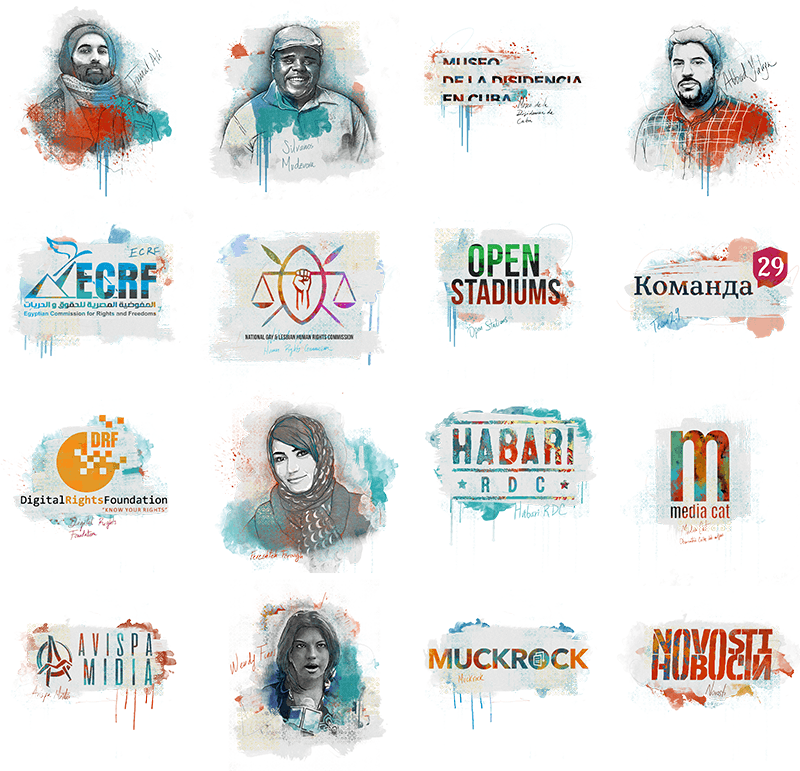
An exiled Azerbaijani rapper who uses his music to challenge his country’s dynastic leadership, a collective of Russian lawyers who seek to uphold the rule of law, an Afghan seeking to economically empower women through computer coding and a Honduran journalist who goes undercover to expose her country’s endemic corruption are among the courageous individuals and organisations shortlisted for the 2018 Index on Censorship Freedom of Expression Awards Fellowships.
Drawn from more than 400 crowdsourced nominations, the shortlist celebrates artists, writers, journalists and campaigners overcoming censorship and fighting for freedom of expression against immense obstacles. Many of the 16 shortlisted nominees face regular death threats, others criminal prosecution or exile.
“Free speech is vital in creating a tolerant society. These nominees show us that even a small act can have a major impact. These groups and individuals have faced the harshest penalties for standing up for their beliefs. It’s an honour to recognise them,” said Jodie Ginsberg, CEO of campaigning nonprofit Index on Censorship.
Awards fellowships are offered in four categories: arts, campaigning, digital activism and journalism.
Nominees include rapper Jamal Ali who challenged the authoritarian Azerbaijan government in his music – and whose family was targeted as a result; Team 29, an association of lawyers and journalists that defends those targeted by the state for exercising their right to freedom of speech in Russia; Fereshteh Forough, founder and executive director of Code to Inspire, a coding school for girls in Afghanistan; Wendy Funes, an investigative journalist from Honduras who regularly risks her life for her right to report on what is happening in the country.
Other nominees include The Museum of Dissidence, a public art project and website celebrating dissent in Cuba; the National Gay and Lesbian Human Rights Commission, a group proactively challenging LGBTI discrimination through the Kenya’s courts; Mèdia.cat, a Catalan website highlighting media freedom violations and investigating under-reported or censored stories; Novosti, a weekly Serbian-language magazine in Croatia that deals with a whole range of topics.
Judges for this year’s awards, now in its 18th year, are BBC reporter Razia Iqbal, CEO of the Serpentine Galleries Yana Peel, founder of Raspberry Pi CEO Eben Upton and Tim Moloney QC, deputy head of Doughty Street Chambers.
Iqbal says: “In my lifetime, there has never been a more critical time to fight for freedom of expression. Whether it is in countries where people are imprisoned or worse, killed, for saying things the state or others, don’t want to hear, it continues to be fought for and demanded. It is a privilege to be associated with the Index on Censorship judging panel.”
Winners, who will be announced at a gala ceremony in London on 19 April, become Index on Censorship Freedom of Expression Awards Fellows and are given year-long support for their work, including training in areas such as advocacy and communications.
“This award feels like a lifeline. Most of our challenges remain the same, but this recognition and the fellowship has renewed and strengthened our resolve to continue reporting, especially on the bleakest of days. Most importantly, we no longer feel so alone,” 2017 Freedom of Expression Awards Journalism Fellow Zaheena Rasheed said.
This year, the Freedom of Expression Awards are being supported by sponsors including SAGE Publishing, Google, Private Internet Access, Edwardian Hotels, Vodafone, media partner VICE News, Doughty Street Chambers and Psiphon. Illustrations of the nominees were created by Sebastián Bravo Guerrero.
Notes for editors:
- Index on Censorship is a UK-based non-profit organisation that publishes work by censored writers and artists and campaigns against censorship worldwide.
- More detail about each of the nominees is included below.
- The winners will be announced at a ceremony in London on 19 April.
For more information, or to arrange interviews with any of those shortlisted, please contact Sean Gallagher on 0207 963 7262 or [email protected].
More biographical information and illustrations of the nominees are available at indexoncensorship.org/indexawards2018.
Index on Censorship Freedom of Expression Awards Fellowship nominees 2018
ARTS
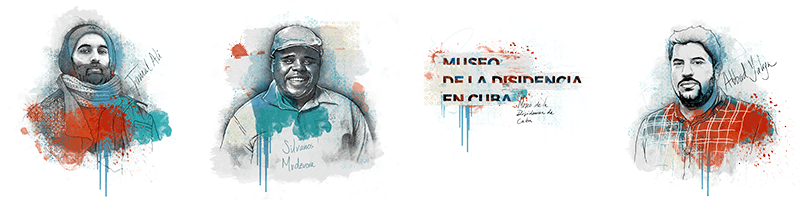
Jamal Ali
Azerbaijan
Jamal Ali is an exiled rapper and rock musician with a history of challenging Azerbaijan’s authoritarian regime. Ali was one of many who took to the streets in 2012 to protest spending around the country’s hosting of the Eurovision song contest. Detained and tortured for his role in the protests, he went into exile after his life was threatened. Ali has persisted in releasing music critical of the country’s dynastic leadership. Following the release of one song, Ali’s mother was arrested in a senseless display of aggression. In provoking such a harsh response with a single action, Ali has highlighted the repressive nature of the regime and its ruthless desire to silence all dissent.
Silvanos Mudzvova
Zimbabwe
Playwright and activist Silvanos Mudzvova uses performance to protest against the repressive regime of recently toppled President Robert Mugabe and to agitate for greater democracy and rights for his country’s LGBT community. Mudzvova specialises in performing so-called “hit-and-run” actions in public places to grab the attention of politicians and defy censorship laws, which forbid public performances without police clearance. His activism has seen him be traumatically abducted: taken at gunpoint from his home he was viciously tortured with electric shocks. Nonetheless, Mudzvova has resolved to finish what he’s started and has been vociferous about the recent political change in Zimbabwe.
The Museum of Dissidence
Cuba
The Museum of Dissidence is a public art project and website celebrating dissent in Cuba. Set up in 2016 by acclaimed artist Luis Manuel Otero Alcántara and curator Yanelys Nuñez Leyva, their aim is to reclaim the word “dissident” and give it a positive meaning in Cuba. The museum organises radical public art projects and installations, concentrated in the poorer districts of Havana. Their fearlessness in opening dialogues and inhabiting public space has led to fierce repercussions: Nuñez was sacked from her job and Otero arrested and threatened with prison for being a “counter-revolutionary.” Despite this, they persist in challenging Cuba’s restrictions on expression.
Abbad Yahya
Palestine
Abbad Yahya is a Palestinian author whose fourth novel, Crime in Ramallah, was banned by the Palestinian Authority in 2017. The book tackles taboo issues such as homosexuality, fanaticism and religious extremism. It provoked a rapid official response and all copies of the book were seized. The public prosecutor issued a summons for questioning against Yahya while the distributor of the novel was arrested and interrogated. Yahya also received threats on social media and copies of the book were burned. Despite this, he has spent the last year giving interviews to international and Arab press and raising awareness of freedom of expression and the lives of young people in the West Bank and Gaza, particularly in relation to their sexuality.
CAMPAIGNING
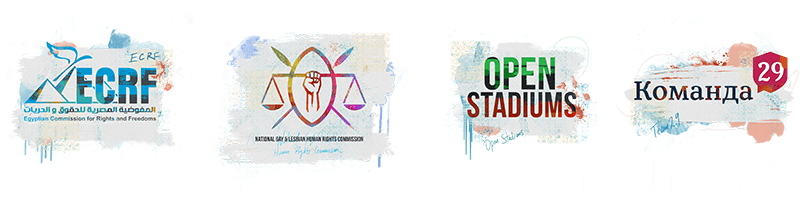
Egyptian Commission for Rights and Freedoms
Egypt
The Egyptian Commission for Rights and Freedoms or ECRF is one of the few human rights organisations still operating in a country which has waged an orchestrated campaign against independent civil society groups. Egypt is becoming increasingly hostile to dissent, but ECRF continues to provide advocacy, legal support and campaign coordination, drawing attention to the many ongoing human rights abuses under the autocratic rule of President Abdel Fattah-el-Sisi. Their work has seen them subject to state harassment, their headquarters have been raided and staff members arrested. ECRF are committed to carrying on with their work regardless of the challenges.
National Gay and Lesbian Human Rights Commission
Kenya
The National Gay and Lesbian Human Rights Commission is the only organisation in Kenya proactively challenging and preventing LGBTI discrimination through the country’s courts. Even though being homosexual isn’t illegal in Kenya, homosexual acts are. Homophobia is commonplace and men who have sex with men can be punished by up to 14 years in prison, and while no specific laws relate to women, former Prime Minister Raila Odinga has said lesbians should also be imprisoned. NGLHRC has had an impact by successfully lobbying MPs to scrap a proposed anti-homosexuality bill and winning agreement from the Kenya Medical Association to stop forced anal examination of clients “even in the guise of discovering crimes.”
Open Stadiums
Iran
The women behind Open Stadiums risk their lives to assert a woman’s right to attend public sporting events in Iran. The campaign that challenges the country’s political and religious regime, and engages women in an issue many human rights activists have previously thought unimportant. Iranian women face many restrictions on using public space. Open Stadiums has generated broad support for their cause in and out of the country. As a result, MPs and people in power are beginning to talk about women’s rights to attend sporting events in a way that would have been taboo before.
Team 29
Russia
Team 29 is an association of lawyers and journalists that defends those targeted by the state for exercising their right to freedom of speech in Russia. It is crucial work in a climate where hundreds of civil society organisations have been forced to close and where increasingly tight restrictions have been placed on public protest and political dissent since mass demonstrations rocked Russia in 2012. Team 29 conducts about 50 court cases annually, many involving accusations of high treason. Aside from litigation, they offer legal guides for activists, advice on what to do when state security comes for you and how to conduct yourself under interrogation.
DIGITAL ACTIVISM
Digital Rights Foundation
Pakistan
In late 2016, the Digital Rights Foundation established a cyber-harassment helpline that supported more than a thousand women in its first year of operation alone. Women make up only about a quarter of the online population in Pakistan but routinely face intense bullying including the use of revenge porn, blackmail, and other kinds of harassment. Often afraid to report how badly they are treated, women react by withdrawing from online spaces. To counter this, DRF’s Cyber Harassment Helpline team includes a qualified psychologist, digital security expert, and trained lawyer, all of whom provide specialised assistance.
Fereshteh Forough
Afghanistan
Fereshteh Forough is the founder and executive director of Code to Inspire, a coding school for girls in Afghanistan. Founded in 2015, this innovative project helps women and girls learn computer programming with the aim of tapping into commercial opportunities online and fostering economic independence in a country that remains a highly patriarchal and conservative society. Forough believes that with programming skills, an internet connection and using bitcoin for currency, Afghan women can not only create wealth but challenge gender roles and gain independence.
Habari RDC
Congo
Launched in 2016, Habari RDC is a collective of more than 100 young Congolese bloggers and web activists, who use Facebook, Twitter and YouTube to give voice to the opinions of young people from all over the Democratic Republic of Congo. Their site posts stories and cartoons about politics, but it also covers football, the arts and subjects such as domestic violence, child exploitation, the female orgasm and sexual harassment at work. Habari RDC offers a distinctive collection of funny, angry and modern Congolese voices, who are demanding to be heard.
Mèdia.cat
Spain
Mèdia.cat is a Catalan website devoted to highlighting media freedom violations and investigating under-reported or censored stories. Unique in Spain, it was a particularly significant player in 2017 when the heightened atmosphere in Catalonia over the disputed independence referendum brought issues of censorship and the impartiality of news under the spotlight. The website provides an online platform that catalogues systematically, publicly and in real time censorship perpetrated in the region. Its map on censorship offers a way for journalists to report on abuses they have personally suffered.
JOURNALISM
Avispa Midia
Mexico
Avispa Midia is an independent online magazine that prides itself on its daring use of multimedia techniques to bring alive the political, economic and social worlds of Mexico and Latin America. It specialises in investigations into organised criminal gangs and the paramilitaries behind mining mega-projects, hydroelectric dams and the wind and oil industry. Many of Avispa’s reports in the last 12 months have been focused on Mexico and Central America, where the media group has helped indigenous and marginalised communities report on their own stories by helping them learn to do audio and video editing. In the future, Avispa wants to create a multimedia journalism school to help indigenous and young people inform the world what is happening in their region, and break the stranglehold of the state and large corporations on the media.
Wendy Funes
Honduras
Wendy Funes is an investigative journalist from Honduras who regularly risks her life for her right to report on what is happening in the country, an extremely harsh environment for reporters. Two journalists were murdered in 2017 and her father and friends are among those who have met violent deaths in the country – killings for which no one has ever been brought to justice. Funes meets these challenges with creativity and determination. For one article she had her own death certificate issued to highlight corruption. Funes also writes about violence against women, a huge problem in Honduras where one woman is killed every 16 hours.
MuckRock
United States
MuckRock is a non-profit news site used by journalists, activists and members of the public to request and share US government documents in pursuit of more transparency. MuckRock has shed light on government surveillance, censorship and police militarisation among other issues. MuckRock produces its own reporting, and helps others learn more about requesting information. Last year the site produced a Freedom of Information Act 4 Kidz lesson plan to help educators to start discussions about government transparency. Since then, they have expanded their reach to Canada. The organisation hopes to continue increasing their impact by putting transparency tools in the hands of journalists, researchers and ordinary citizens.
Novosti
Croatia
Novosti is a weekly Serbian-language magazine in Croatia. Although fully funded as a Serb minority publication by the Serbian National Council, it deals with a whole range of topics, not only those directly related to the minority status of Croatian Serbs. In the past year, the outlet’s journalists have faced attacks and death threats mainly from the ultra-conservative far-right. For its reporting, the staff of Novosti have been met with protest under the windows of the magazine’s offices shouting fascist slogans and anti-Serbian insults, and told they would end up killed like Charlie Hebdo journalists. Despite the pressure, the weekly persists in writing the truth and defending freedom of expression.