15 Mar 2017 | Campaigns, Campaigns -- Featured, Statements, Turkey, Turkey Statements
JOINT ORAL STATEMENT ON THE DETERIORATION OF FREEDOM OF EXPRESSION AND MEDIA FREEDOM IN TURKEY
UN Human Rights Council 34th Special Session
Item 4: Human rights situations that require the Council’s attention
15 March 2017
Mr President,
Index on Censorship, PEN International, ARTICLE 19 and 65 organisations are deeply concerned by the continuous deterioration of freedom of expression and media freedom in Turkey following the violent and contemptible coup attempt on 15 July 2016.
Over 180 news outlets have been shut down under laws passed by presidential decree following the imposition of a state of emergency. There are now at least 148 writers, journalists and media workers in prison, including Ahmet Şık, Kadri Gürsel, Ahmet and Mehmet Altan, Ayşe Nazlı Ilıcak and İnan Kızılkaya, making Turkey the biggest jailer of journalists in the world. The Turkish authorities are abusing the state of emergency by severely restricting fundamental rights and freedoms, stifling criticism and limiting the diversity of views and opinions available in the public sphere.
Restrictions have reached new heights in the lead up to a crucial referendum on constitutional reforms, which would significantly increase executive powers, set for 16 April 2017. The Turkish authorities’ campaign has been marred by threats, arrests and prosecutions of those who have voiced criticism of the proposed amendments. Several members of the opposition have been arrested on terror charges. Thousands of public employees, including hundreds of academics and opponents to the constitutional reforms, were dismissed in February. Outspoken “No” campaigners have been detained, adding to the overall climate of suspicion and fear. The rights to freedom of expression and information, essential to fair and free elections, are in jeopardy.
In the run-up to the referendum, the need for media pluralism is more important than ever. Voters have the right to be duly informed and to be provided with comprehensive information on all views, including dissenting voices, in sufficient time. The prevailing atmosphere should be one of respect for human rights and fundamental freedoms. There should be no fear of reprisals.
We urge this Council, its members and observer states, to call on the Turkish authorities to:
- Guarantee equal broadcasting time for all parties and allow for the dissemination of all information to the maximum extent possible in order to ensure that voters are fully informed;
- Put an end to the climate of suspicion and fear by:
- Immediately releasing all those held in prison for exercising their rights to freedom of opinion and expression;
- Ending the prosecutions and detention of journalists simply on the basis of the content of their journalism or alleged affiliations;
- Halting executive interference with independent news organisations including in relation to editorial decisions, dismissals of journalists and editors, pressure and intimidation against critical news outlets and journalists;
- Revoke the excessively broad provisions under the state of emergency, the application of which, in practice, are incompatible with Turkey’s human rights obligations.
Thank you Mr. President
ActiveWatch – Media Monitoring Agency
Adil Soz – International Foundation for Protection of Freedom of Speech
Albanian Media Institute
Americans for Democracy & Human Rights in Bahrain
ARTICLE 19
Association of European Journalists
Basque PEN
Brazilian Association for Investigative Journalism
Canadian Journalists for Free Expression
Cartoonists Rights Network International
Center for Independent Journalism – Hungary
Croatian PEN centre
Danish PEN
Digital Rights Foundation
English PEN
European Centre for Press and Media Freedom
European Federation of Journalists
Finnish PEN
Foro de Periodismo Argentino
German PEN
Global Editors Network
Gulf Centre for Human Rights
Human rights watch
Icelandic PEN
Independent Chinese PEN Center
Independent Journalism Center – Moldova
Index on Censorship
Institute for Media and Society
International Press Institute
International Publishers Association
Journaliste en danger
Media Foundation for West Africa
Media Institute of Southern Africa
Media Watch
MYMEDIA
Nigeria PEN Centre
Norwegian PEN
Pacific Islands News Association
Pakistan Press Foundation
Palestine PEN
PEN American Center
PEN Austria
PEN Canada
PEN Català
PEN Centre in Bosnia and Herzegovina
PEN Centre of German-Speaking Writers Abroad
PEN Eritrea in exile
PEN Esperanto
PEN Estonia
PEN France
PEN International
PEN Melbourne
PEN Myanmar
PEN Romania
PEN Suisse Romand
PEN Trieste
Portuguese PEN Centre
Punto24
Reporters Without Borders
Russian PEN Centre
San Miguel PEN
Serbian PEN Centre
Social Media Exchange – SMEX
South East Europe Media Organisation (SEEMO)
South East European Network for Professionalization of Media
Vigilance pour la Démocratie et l’État Civique
Wales PEN Cymru
World Association of Newspapers and News Publishers (WANIFRA)
15 Mar 2017 | Academic Freedom, Campaigns, Campaigns -- Featured, Digital Freedom
[vc_row][vc_column][vc_column_text]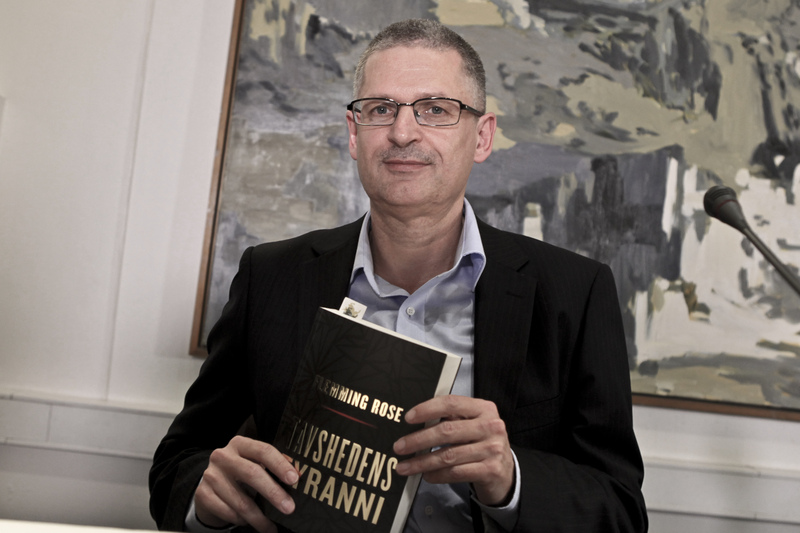
I want to begin with a story that took place not long before the fall of the Soviet Union. It illustrates what happens when an oppressive regime, and its institutions, loses its monopoly and control of information.
A deputy chairman and general of the KGB had invited a private citizen and acquaintance to his office on Lubyanka Square in central Moscow. The private citizen was working in the newly created private sector as an communications officer.
In the totalitarian state of the Soviet Union a deputy chairman of KGB, the secret police, was one of the best informed people in the country.
The KGB controlled what information should be made available to the public, they were in charge of surveillance of the population and reported back to the party leadership about conversations in lines for vodka, about dissidents, about foreigners, about anything. The KGB had special access to information that no one else was allowed to read, listen to or watch.
The KGB controlled the so called special archives, Spetskhrany, where forbidden books were hidden out of the public’s sight and Soviet citizens needed special permission to access them.
KGB-generals and high ranking party officials read The Gulag Archipelago by Aleksandr Solzhenitsyn and other banned works of literature. They studied Russian emigre writers and the emigrant press that ordinary citizens were not allowed to read or put on their book shelves. If they did, they risked ending up in a labor camp in Siberia.
All that started to change with Mikhail Gorbachev’s glasnost policy during the second half of the 1980s. The regime’s loosening grip on society, the opening up of the country to alternative ideas and people from other parts of the world, the challenging of Soviet taboos and official ideology played a crucial role in the demise of the USSR.
In this process the KGB and other repressive institutions lost their status as the ultimate gatekeepers of information and in the end they, therefore, lost power.
As I mentioned, the conversation between the KGB general and a private citizen who was an outsider to the regime but no dissident took place at the time of the unravelling of Soviet power. The private citizen, let’s call him Yura, was of course curious to find out why the KGB general wanted to talk to him. It turned out that the KGB general had just one question to this guest: “Yura, he said, could you please tell me what is going on in the country? I just don’t have a clue.”
For anyone with experience of the Soviet Union that was an astonishing question. A KGB general asking a private citizen about what was going on in the country was highly unusual. It revealed the changed relationship between power and information. It indicated that Soviet censorship had come to an end.
[/vc_column_text][/vc_column][/vc_row][vc_row equal_height=”yes” content_placement=”middle” el_class=”text_white” css=”.vc_custom_1489569355941{background-color: #6b6b6b !important;}”][vc_column width=”1/2″][vc_custom_heading text=”Protect Media Freedom” use_theme_fonts=”yes” link=”url:https%3A%2F%2Fwww.indexoncensorship.org%2Fdefend-media-freedom-donate-index%2F|||”][vc_column_text]
We monitor threats to press freedom, produce an award-winning magazine and publish work by censored writers.[/vc_column_text][/vc_column][vc_column width=”1/2″ css=”.vc_custom_1489569293052{background-image: url(https://www.indexoncensorship.org/wp-content/uploads/2013/08/newspapers.jpg?id=50885) !important;}”][/vc_column][/vc_row][vc_row][vc_column][vc_column_text]This is being said as a preface to a few observations about dictatorships, power and censorship.
Every dictatorship is based on the control and manipulation of information. That’s why censorship is crucial to any oppressive regime. It cannot survive without it. Censorship is by definition closely connected with power and the exercising of it.
To be more specific: Censorship is an instrument to assist in the attainment, preservation or continuance of somebody’s power, whether exercised by an individual, an institution or a state. It is – as Michael Scammell, one of the founders of Index on Censorship has put it – “the extension of physical power into the realm of the mind and the spirit”. (1)
With the redistribution of power from state to non-state actors – from Google and Facebook to ISIS and thousands of NGOs and social movements around the world and with new ways and discourses to silence unwelcome expression not always associated with state power it makes sense to introduce a broader definition of censorship – a definition that doesn’t focus exclusively on the state and the use of hard power to silence speech.
I think this is of importance in the context of Censorship Awareness Week and our attempt to understand and deconstruct the more subtle mechanisms of what Tom Cushman called “prevention of the mind”. This goes for states, institutions and individuals.
We live in a world of cognitive biases that from time to time operates as censors. They close our mind and prevent us from seeing complexities and different sides of a problem. Be it confirmation bias, blind spot bias, courtesy bias, hindsight bias, outcome bias, social biases, ingroup bias, stereotyping and so on and so forth or the bias of a public opinion – remember John Stuart Mill’s warning against the Tyranny of public opinion?
A definition of censorship may go like this:
“Censorship describes a variety of processes… formal and informal, overt and covert, conscious and unconscious, by which restrictions are imposed on the collection, display, dissemination, and exchange of information, opinions, ideas and imaginative expression.” (2)
In the following I will focus on the history of censorship in Europe in order to understand one of its fundamental premises. Then I’ll take a look at the internet and the way governments try to control it with increasing success. I will pay special attention to China, because it is the most powerful country trying to undermine the internet’s libertarian and transnational core. Finally, I will return to Europe and the US and ask what can be done to counter censorship and self-censorship in our part of the world.
Censorship is a loaded word. It triggers negative associations in most people in spite of the fact that everybody, people and governments, support it and practise from time to time and in one form or another.
It’s a bit like the debate about freedom of speech and its limits. People say I am in favor of free speech, but… until nothing is left of free speech.
When it comes to censorship they say: I am against censorship, but… – and then it goes: We need to shut down offensive speech, we need to protect the country, we need to fight terrorism, we need to protect the truth or the public order or religious and national symbols or certain feelings or public morals and social cohesion.
The list goes on and on depending on time and place.
Censorship in Europe was first and foremost connected to the church. The church exercised strict control over the dissemination and interpretation of the holy scriptures. The church and the state were for centuries so close that what was seen as injurious to the church was automatically regarded as injurious to the state.
The church’s authority to act as censor started to erode as a result of the Reformation when the heresy of choice was introduced. It became impossible to maintain that there were no possible alternatives to the Roman way.
The impact of the Reformation in the aftermath of the invention of the printing press proved to be decisive in determining a changing attitude to censorship. It lead to a conceptual separation of words and deeds, of expression and action as Michael Scammell says in his seminal essay on censorship and its history. I quote:
“Up to the 17th century, action and expression, had been held to be virtually one where religious heresy and political crimes were concerned. To advocate on orthodox or dissenting religious views was tantamount to a physical attack on church members or property, while to advocate political change or express hostility to the prevailing order was ‘sedition’ and equivalent to treason.
“The consequence of this breakthrough was that a ruling power or government might be expected to take measures against actions hostile to its existence, but it should tolerate the expression of hostile opinions.” (3)
In other words the distinction between words and deeds is fundamental to upholding freedom of speech. It paved the way for a doctrine of religious tolerance and religious freedom and later for freedom of expression. The distinction serves as a line separating democracy from dictatorship, a free society from an unfree society. The former does not treat words as if they were actions, the latter does. That’s why dissidents end up in jail for word crimes in a dictatorship while they sit in parliament or become presidents in democracies. Think of Vaclav Havel or Andrei Sakharov.
I believe that it is of the utmost importance to keep this fundamental distinction in mind in today’s world, where so many people are eager to equalise words with deeds insisting that words can be as harmful as actual physical violence and therefore we have to criminalise them. We don’t want to return to the Middle Ages.
Today censorship is regarded as abnormal and as an emergency measure and therefore it tends to hide when it becomes the norm and institutionalised. If censorship is being exercised openly governments may give it another name in order to provide it with a cover of decency or to present it as a necessary measure to counter a domestic or foreign threat.
The dream of any free speech activist would be to see the end of censorship. With the introduction of the internet it was a widespread assumption that it would be impossible to exercise censorship as before. US President Bill Clinton in 2000 laughed at the possibility that the internet could be controlled.
In 1996, internet pioneer John Parry Barlow, wrote a Declaration of Independence of Cyberspace. It said:
“Governments of the Industrial World, you weary giants of flesh and steel, I come from Cyberspace, the new home of Mind. On behalf of the future, I ask you of the past to leave us alone. You are not welcome among us. You have no sovereignty where we gather. We are creating a world where anyone, anywhere may express his or her beliefs, no matter how singular, without fear of being coerced into silence or conformity.” (4)
Governments, Barlow claimed, did not “possess any methods of enforcement that people living in cyberspace had to have to fear.”
As late as 2011 one of the leaders of the uprising against the Mubarak government in Egypt said: “It you want to liberate a people, give it the internet.”
Today things look different and you may as well say:
“If you want to empower the government and provide it with tools to put you under surveillance and limit your freedom, give it the internet and digital technology.”
The internet is seen by governments as both a threat and a means of control.
Today John Parry Barlow’s declaration from 20 years ago sounds utopian. Back then a lot of people hoped that the internet once and for all would do away with censorship.
It didn’t happen. Around the world new systems of control are taking hold. They are stifling the global conversation and repression and violence against journalists are at record levels. Today governments are increasingly exercising their sovereignty on the internet, fencing it in through the establishment of national borders and enforcing their own laws and limitations.
Just to give you one example showing how the internet and the digital technology has been transformed from a tool of liberation into to a tool of repression:
At the time of demonstrations in Iran in 2009 security agents tortured journalists and activists in order to get passwords to their social media and e-mail accounts, and then combed through their networks and arrested their sources and colleagues. (5)
In this way the internet is repeating developments that took place after the invention of other new technologies from the printing press in the 15th century to radio and television in the 20th century. Sooner or later governments find ways to control the new technology to their own advantage.
The Democrators (6)
We don’t have that many hard core dictatorship in the world today. The director of the New York based Committee to Protect Journalists Joel Simon labels the new autocrats “democrators”.
They prefer to rule by manipulation, not by force. Dictators impose their will. Democrators govern with the support of the majority. Dictators control information, democrators manage it. Democrators win elections, dictators denounce elections as a key to legitimate government.
Democrators span the globe and the ideological spectrum.
The two most successful democrators are Turkey’s Recep Tayyip Erdogan and Russia’s Vladimir Putin.
They tolerate private media but manage critical expression through diverse measures such as national security prosecutions, punitive tax audits, manipulation of government advertising, and seemingly reasonable content restrictions like prohibitions on hate speech, extremism or support of terrorism – restrictions that liberal democracies also have though they apply them with more restraint and checks. When democrators like Erdogan and Putin do crackdown on media, they cast their efforts as consistent with international law.
China is a league of itself (7). It represents the most formidable attempt to show that a powerful determined state can still control the flow of information, ideas and images across and within its frontiers.
The Chinese Party-state claims the right to control all expression within its frontiers on three grounds.
First, it refers to the idea of information sovereignty, second, it insists that is has a civilisational difference that justifies control of the internet so that it doesn’t come under the influence of non-Chinese values and finally the communist party claims that it knows best what is good for the people.
China is the country with the most internet-users in the world, 642 million people or 22 percent of all users in the world and the fastest-growing connected population is also the world’s most ambitious censor. An estimated 2 million censors police the internet and the activities of users, among them 300,000 party members who are paid to push the party line online.
Nevertheless, 76 percent of Chinese questioned in a poll in 2014 said they felt free from government surveillance. Thanks to the internet the Chinese government has been able to deploy censorship strategies that are subtle and harder for the public to see. They have combined traditional oppression with more sophisticated way of exercising censorship. It’s been called “networked authoritarianism”.
The Great Firewall of China – a complex system of internet filtering and blocking and directing that allows the government to block hundreds of thousands of websites. The system works because all internet traffic in or out of China passes through only eight gateways. In cases of regional unrest the government can simply unplug the internet.
Censorship is being delegated to private companies.
China has created its own tech companies – Baidu instead of Google, RenRen instead of Facebook, Sina Weibo instead of Twitter – that makes it easier to control, filter and block the digital technology.
And China is building a global coalition to counter US dominance on the internet. This group of countries than involves Russia, Iran, Turkey and countries in the Middle East, Africa and Asia are fighting on 2 fronts.
- They seek to internationalise internet governance by putting it under UN control.
- They seek to challenge international legal standards which define freedom of expression as a transnational right that is guaranteed regardless of frontiers as it says in the UN declaration of human rights.
To the Chinese leadership mass media is not a forum through which individuals can realise their right to freedom of expression; rather it is the means through which societies can advance their collective interest as defined by the country’s leadership. This is an understanding of the media that China shares with a lot of governments.
After having visited China I want to bring you back closer to our life and reality and say a few words about self-censorship.
Self-censorship is driven by fear. It is closely connected to censorship and intimidation of the public space. When people stop fearing for the consequences of what they say dictatorships fall. Fear is often a very legitimate feeling, but it comes at a price. A fear society doesn’t have to apply repressive laws because people themselves will internalise the limits of freedom that have been drawn by intimidators of one kind or another. Citizens will practice self-censorship so that there will no need to silence them. They will silence themselves.
Self-censorship is invisible. You will only learn about it if people are honest about their motivations for not saying one thing or the other out of fear. You cannot pass a law that protects people against fear. It’s extremely destructive for a society.
Writers and artists in repressive societies have to struggle with self-censorship but self-censorship is also a fact of life in democracies, though for other reasons. In the words of the Serbian writer Danilo Kis self-censorship is a process that involves an external pressure, political or social, that forces you to give up sovereignty over your work and let others decide what to say and not to say. This definition reveals the existential core of self-censorship.
Exercising self-censorship you abandon part of yourself to the censors. In an essay from 1986 on censorship and self-censorship Kis wrote:
“The fight against self-censorship is anonymous, lonely and without witnesses. It makes its subject feel humiliated and shameful for cooperating. It means that you read your own text with another person’s eyes. It’s a situation where you become your own judge, more suspicious and tougher than anybody else. (…) The self-appointed censor is the author’s alter ego, an alter ego that leans over the author’s shoulder and sticks his nose in the text. (…) It’s impossible to defeat this censor because he is like God – he knows everything and sees everything. He is the product of one’s own mind, of one’s own nightmares. This alter ego succeeds in undermining and corrupting even the strongest individuals that the external censorship hasn’t been able to destroy. Self-censorship allies itself with lying and spiritual corruption when we deny that it exists.” (8)
Censorship and self-censorship have become the preferred way to manage diversities of culture, religion and opinion in a world where more and more people are living in cities and having a life on line and therefore are becoming physical and virtual neighbors.
A lot of it is being done out of the most noble and honorable intentions – to protect minorities, to avoid offending religious sensibilities, to keep the social peace and so on and so forth.
Nevertheless I believe this is the wrong way because it makes it more difficult to understand one another. Silence rarely promotes a deeper understanding between human beings.
It also undermines what Jonathan Rauch has called the Liberal Science model (9), that is, that in a knowledge producing society there can be no final say and no personal authority when it comes to determining who has a right to say what, ask questions and challenge what is being said. No matter, whether the insistence on a final say or personal authority comes from fundamentalists or humanitarians or egalitarians.
Fundamentalists want to protect what they see as the indisputable truth, political or religious, while the humanitarians want to stop what they see as verbal violence and the egalitarians insist that some perspectives should have preferable treatment.
There is no way to advance knowledge peacefully and productively by adhering to principles advocated by humanitarians or egalitarians. Their principles undermine liberal science and ultimately peace and freedom. Knowledge cannot be had except where criticism is unfettered and doubt is never rebuked. The only way to decide who is right is through open-ended public checking of each by each, through criticism and questioning. This is the epistemological constitution of a liberal society.
I want to end by quoting the British historian Timothy Garton Ash who last year published a fine book on the principles of free and better speech in a globalised world. Garton Ash explains why free speech is so important to understand others and ourselves.
Timothy Garton Ash writes: “Over the last half century, human enterprise and innovation, from the jet plane to the smartphone, have created a world in which we all are becoming neighbours, but nowhere is it written, that we will be good neighbours.
“Central to this endeavour is free speech. Only with freedom of expression can I understand what it is to be you. Only with freedom of information can we control both public and private powers. Only by articulating our differences can we clearly see what they are, and why they are what they are.
“Openness about all kinds of human difference is as vital as civility. I cannot fully express myself – that is, my self – unless I identify my differences with others. We all notice differences and respond to them both consciously and unconsciously. Unless we explore these responses and feelings, we have no chance of digging down to the hidden biases of which we are not aware.
“If we ‘speak as we feel/not what we ought to say’, as Shakespeare puts it at the end of King Lear, we can learn from experience what is hurtful to others, and hence discover for ourselves what it takes to live together as neighbors.
“Rather than brushing our perceptions of human difference under the carpet, where they fester like rotten banana skins, we speak about them openly but civilly – as well as in such registers as art and humor.”
Flemming Rose is a Danish journalist, author and since 2010 foreign affairs editor at the Danish newspaper Jyllands-Posten.
Notes:
- Michael Scammell, Censorship and its History: A Personal View; in Article 19’s Information, Freedom and Censorship – World Report 1988, edited by Kevin Boyle; London 1988.
- Julian Petley, Censorship: A Beginner’s Guide, Oxford 2009.
- Scammell.
- Quoted in: Timothy Garton Ash, Free Speech: Ten Principles for a Connected World; London 2016.
- Joel Simon, The New Censorship: Inside the Global Battle for Media Freedom; New York 2015
- Simon.
- On censorship in China see Garton Ash and Simon and Philip Bennett and Moises Naim, 21st-Century Censorship; in Columbia Review of Journalism; January/February 2015.
- Danilo Kis, Censorship/Self-censorship; in Index on Censorship vol. 15/1, January 1986.
- Jonathan Rauch, Kindly Inquisitors: The New Attacks on Free Thought (expanded edition); Chicago 2013 (First edition, 1993).
- Garton Ash.
[/vc_column_text][/vc_column][/vc_row][vc_row][vc_column][vc_basic_grid post_type=”post” max_items=”4″ element_width=”6″ grid_id=”vc_gid:1489568894073-da7ef77c-6016-4″ taxonomies=”4524″][/vc_column][/vc_row]
9 Feb 2017 | Mapping Media Freedom, News, Youth Board
[vc_row][vc_column][vc_column_text]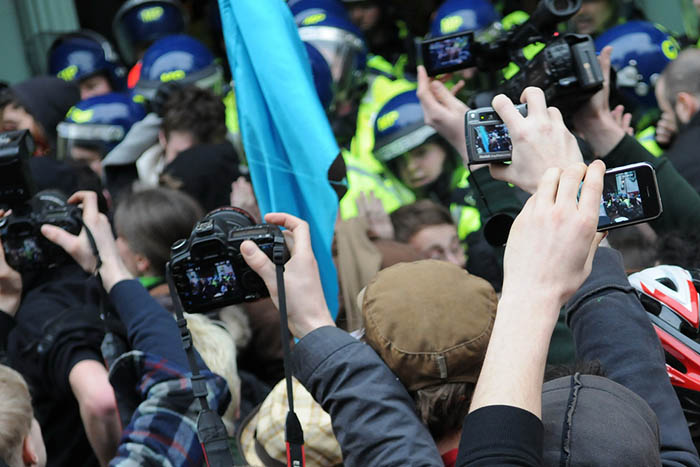
To highlight the most pressing concerns for press freedom in Europe in 2017, members Index’s outgoing youth board review the year gone by with some of our Mapping Media Freedom correspondents.
Youth board member Sophia Smith Galer, from the UK, spoke to Ilcho Cvetanoski, Mapping Media Freedom correspondent for Croatia, Montenegro, Bosnia and Macedonia.
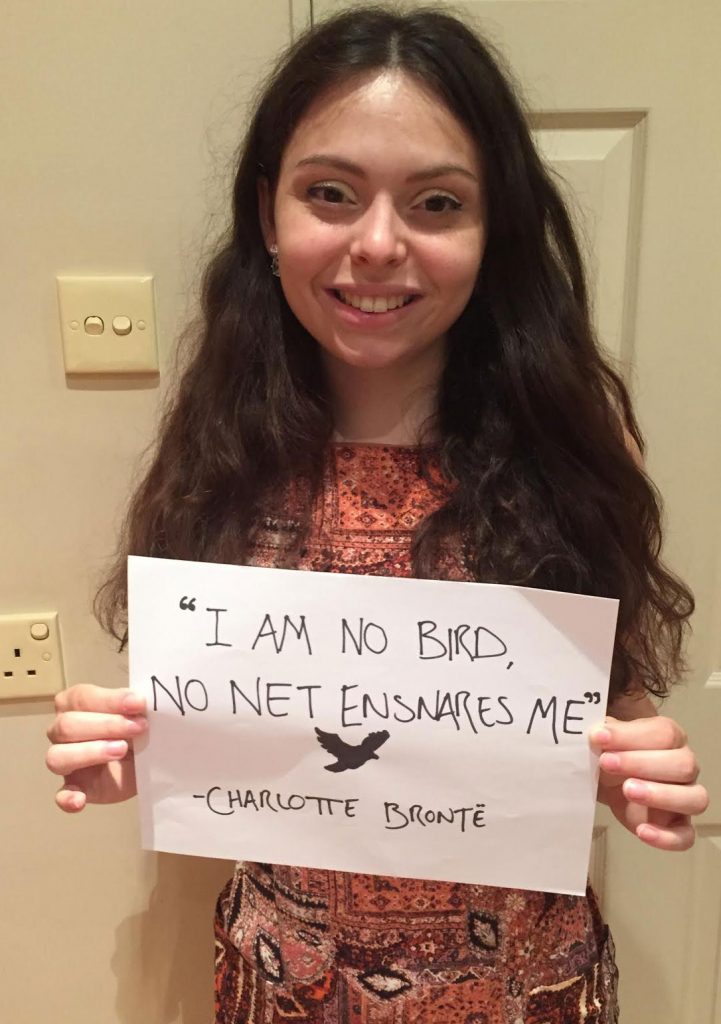 According to Cvetanoski, a lot has improved in the region over the last 15 years. The era during which journalists were targeted and killed is long passed, but the media is still dogged by censorship and political divides. In fact, journalists are regularly threatened and vilified by political elites, often denounced as foreign mercenaries, spies and traitors. Cvetanoski reports that this has led to “physical threats, the atmosphere of impunity, media ownership and also verbal attacks amongst the journalists themselves”. He notes that techniques pressuring journalists have changed from “blatant physical assaults to more subtle ones”.
The breaking up of the former Yugoslavia has undoubtedly been a historical burden on Bosnia and Herzegovina and Croatia. Cvetanoski describes this legacy as having left “deep scars in every aspect of the people’s lives, including the lives and the work of journalists”. Media workers are still remembered as having once been tools of the state. Nowadays, the opposite is happening; they’re being criticised by political elites as enemies of the state simply for scrutinising politicians’ behaviour.
It’s unsurprising that this has left many journalists in the region politicised, undermining professionalism and trust in the media. Conservative politicians court sympathisers in the media so that they can manipulate the angle and content of stories that are run. The fact that journalist salaries are low and that the economic situation is poor overall further imperils journalistic integrity in the face of bribes.
If the situation remains as it is – with limited and highly controlled sources for financing the media, a poor political culture and low media literacy among citizens – then Cvetanoski holds little hope for the future of press freedom in the region. News consumers aren’t equipped with the literacy levels to distinguish between professional versus sensational journalism, nor are the sources of media funding transparent or appropriate. “In this deadlock democracy, the first victims are the citizens who lack quality information to make decisions.”
Mapping Media Freedom is helping to change this. Making journalists feel less alone and offering a space for them to report threats to press freedom ensures that the hope for a free press throughout Europe is kept alive.
The youth board’s Constantin Eckner, from Germany, spoke with Zoltán Sipos, the MMF correspondent for Hungary, Romania and Bulgaria.
 As MMF illustrates, journalists in all three countries have to deal with constant pressure from authorities and various degrees of censorship. In 2016, 42 incidents were reported in Hungary, 21 in Romania and 7 in Bulgaria.
Index on Censorship’s regional correspondent Zoltán Sipos, who is also the founder and editor of Romania’s investigative outlet Átlátszó Erdély, points out that the Hungarian government and its allies within the country follow a sophisticated plan to neutralise critical media outlets. Several newspapers that struggled financially have been purchased by rich business people or media moguls in recent history. “Just like in regards to any other part of society, prime minister Viktor Orbán seeks for a centralisation of the media industry,” Sipos says.
Yet, instead of simply controlling the media, Orbán and the reigning party Fidesz intend to use established outlets and broadcasters to construct narratives in favour of their agendas. Only a handful of independent outlets remain in Hungary.
In November 2016, Class FM, Hungary’s most popular commercial radio channel, was taken off the air. The Media Council of Hungaryʼs National Media refused to renew its licence as Class FM was owned by Hungarian oligarch Lajos Simicska, whose outlets became very critical towards the government after a quarrel between him and Orbán.
The authorities in Romania and Bulgaria might not follow a well-wrought plan, but the situation for critical journalists is as severe. “The main problem is that most outlets can’t generate enough revenue from the market,” Sipos explains. “These outlets found themselves under constant pressure, as powerful business people are willing to purchase them and use them to promote their own political agendas.” Ultimately, this issue leads to the demise of independent reporting and weakens voices critical of the ruling parties and influential political players.
Sipos concludes that “these three countries have little to no tradition of independent journalism.” Although death threats towards, or even violence against journalists do not exist, the working conditions for critical reporters are difficult.
He recommends the investigative outlets Bivol.bg from Bulgaria, atlatszo.hu and Direkt36.hu from Hungary as well as RISE Project and Casa Jurnalistului from Romania as bastions of independent journalism. A few mainstream outlets that conduct critical reporting are 444.hu, index.hu, HotNews.ro and Digi24.
Layli Foroudi, a youth board member from the UK, interviewed Mitra Nazar, MMF correspondent for Serbia, Kosovo, Slovenia and the Netherlands.
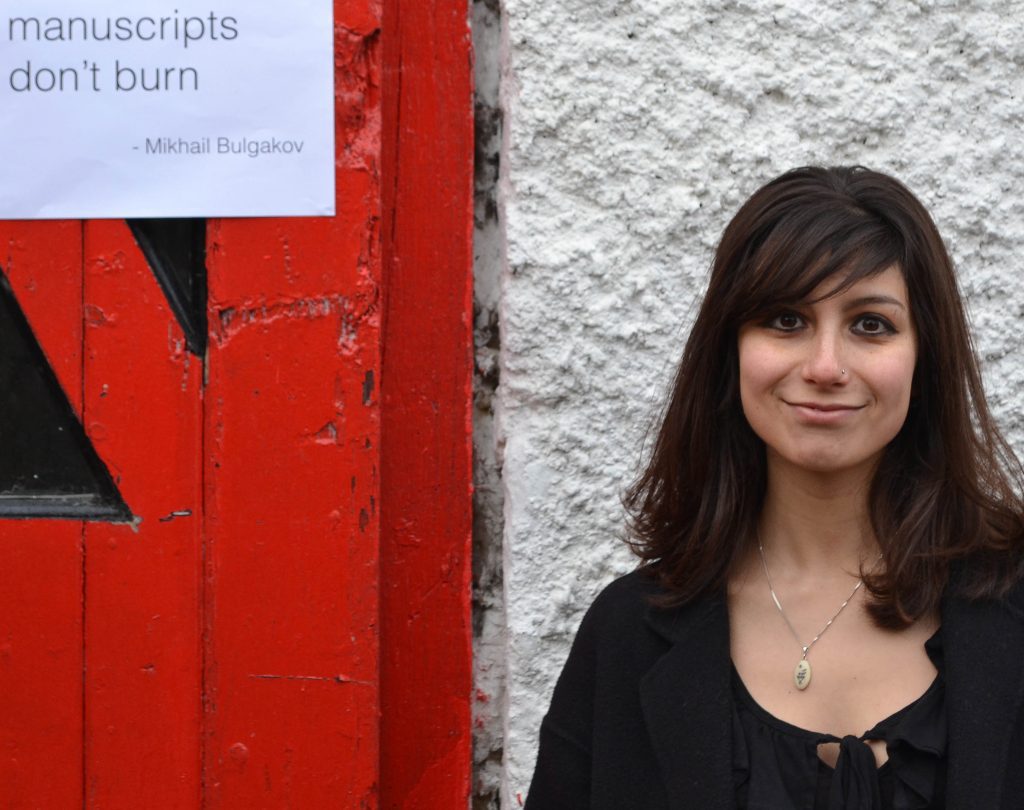 A Dutch national based in Belgrade, Serbia and the Netherlands are Nazar’s natural beats, and she also monitors media freedom in the nearby Balkan states of Slovenia and Kosovo.
This year, Serbia has been the most intense of the four countries to cover. Serbian journalists have been subject to physical attacks and the government has maintained a smear campaign against independent media outlets in the country.
“This is a very organised campaign,” explains Nazar, “they’re being called foreign spies and foreign mercenaries.”
The “foreign spy” accusation has a real effect on the personal safety of journalists, whose pictures are often published alongside such accusations in the pro-government media. Nazar, who wrote a feature on the subject, says that this can cause such journalists to be branded as unpatriotic and anti-Serbian: “When the government accuses journalists of being “foreign spies”, it gives the impression that these independent journalists are against Serbia as a country.”
The ruling party of Serbia even went so far as to organise a touring exhibition called Uncensored Lies, where the work of independent media was parodied in an attempt to prove that the government does not censor, however, the exhibition also served to discredit these publications by calling the content “lies”.
“Can you imagine the ruling party organises an exhibition discrediting independent media,” says Nazar, shocked, “this is not indirect censorship, it is directly from the government.”
The media landscape in the Netherlands does not experience direct state-sponsored censorship, but there are other challenges. The Netherlands ranks 2nd in the 2016 RSF World Press Freedom Index, but Nazar has still reported a total of 49 incidents since the Mapping Media Freedom project started, from police aggression against journalists, to assaults on reporters during demonstrations, to broadcasters being denied access to public meetings.
For 2017, she is interested in looking into how the Dutch media deals with the rise of the far right and a growing anti-immigrant sentiment, especially in the upcoming elections which will see controversial far-right candidate Geert Wilders stand for office.
Last year, a Dutch tabloid De Telegraaf published an article about the arrival of refugees to the Netherlands with a sensational headline that generated a lot of debate in the Dutch media, which Nazar says is becoming increasingly politicised and polarised.
For Nazar, there is a line to be drawn with what legacy media outlets should and should not publish. “That line is representing and following the facts,” she says, “if you publish a headline that says there is a “migrant plague”, that is beyond facts – it is a political agenda.”
The youth board’s Ian Morse, from the USA, interviewed Vitalii Atanasov, the MMF correspondent for Ukraine.
In just the past two months in Ukraine, journalists have been assaulted, TV stations have been banned and governments on both sides of the country’s conflict with Russia have sought to limit public information and attack those who publicise.
Vitalii Atanasov is the correspondent who reported these incidents to the Mapping Media Freedom project. Drawing on sources from individual journalists to large NGOs, Atanasov monitors violations of media plurality and freedom in Ukraine for the project. To verify a story, he sometimes contacts media professionals directly, or crowdsources through social media, as he finds that all journalists publicise cases of violation of their rights, attacks, and incidents of violence.
“Some cases are complicated, and the information about them is very contradictory,” Atanasov tells Index. “So I’m trying to trace the background of the conflict that led to the violation of freedom of expression and media.”
Many of the violations that occur in Ukraine are either individual attacks on media workers by separatists in the east or Ukrainian officials attempting to control the media through regulation and licensing.
Of about a dozen and a half reports since he began working with MMF, Atanasov says many reports stick out, such as the “blatant” attempts of authorities to influence the work of major TV channels such as Inter and 1+1 channels. Most recently, Ukraine banned the independent Russian station Dozhd from broadcasting in Ukraine. While TV has recently been the target, problems with media freedom have come from almost everywhere.
“The sources of these threats can be very different,” Atanasov says, “for example, representatives of the authorities, the police, intelligence agencies, politicians, private businesses, third parties, criminals, and even ordinary citizens.”
Atanasov and MMF build off the work of other groups working in Ukraine, such as the Institute of Mass information, Human Rights Information Center, Detector Media, and Telekritika.ua.
Click on the bubbles to view reports or double-click to zoom in on specific regions. The full site can be accessed at https://mappingmediafreedom.org/
[/vc_column_text][/vc_column][/vc_row][vc_row][vc_column][vc_basic_grid post_type=”post” max_items=”4″ element_width=”6″ grid_id=”vc_gid:1486659943480-96bea7cd-9879-6″ taxonomies=”6514, 6564″][/vc_column][/vc_row]
8 Feb 2017 | Azerbaijan, Mapping Media Freedom, News
[vc_row][vc_column][vc_column_text]
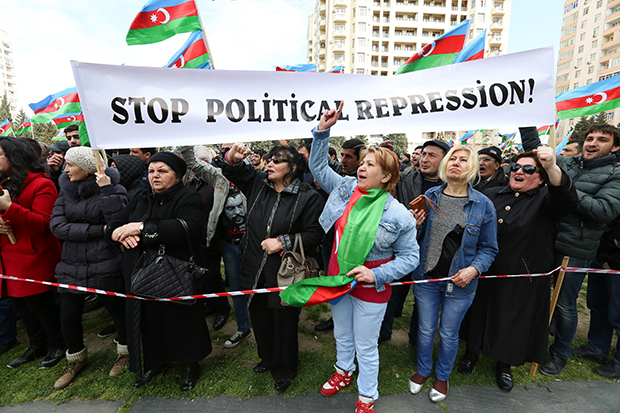
Photo: Aziz Karimov
For Azerbaijan’s president Ilham Aliyev and many other authoritarian leaders across the world, independent journalism and what it represents is bad news. The more irritating leaders find journalists’ work, the harsher consequences are for those reporting. This has been one of the most worrying trends across the world in recent years.
In 2016, there were 38 threats to press freedom reported to the Index on Censorship project Mapping Media Freedom. Journalists critical of the government were tortured and arrested. Internet sites were repeatedly blocked. TV outlets were knocked off the air through revocation of broadcast licences. Newspapers were starved to near bankruptcy and prevented from printing. Online criticism of the country’s hereditary president has been outlawed. Even family members of journalists have been targeted.
“In the last year alone, authorities have either detained, arrested, questioned six journalists and one blogger. Some parliament members have even hinted at introducing legislation that would monitor social media. The relentless pressure on media professionals and citizen journalists in Azerbaijan is aimed at shutting down any criticism of the Aliyev regime. The continued crackdown on freedom of speech is a clear violation of human rights,” Hannah Machlin, Mapping Media Freedom project officer, said.
The dismal state of free expression in Azerbaijan catalogued by Mapping Media Freedom is indirectly validated by Reporters Without Borders’ 2016 Press Freedom Index. That organisation found a disturbing decline in respect for media freedom around the world.
“It is unfortunately clear that many of the world’s leaders are developing a form of paranoia about legitimate journalists,” secretary general of RSF Christophe Deloire said.
Azerbaijan ranks 163rd on the press freedom index. The country’s ruling powers have long banned independent journalism and anyone who remained defiant was branded an agent, a traitor, a hooligan, a drug addict, anything but a journalist. While Mapping Media Freedom began closely monitoring the country in the second quarter of 2016, the clampdown on journalists long precedes this.
In 2014, authorities shut down the office of Azerbaijan Service for Radio Free Europe Radio Liberty. Around the same time, the dissident media outlet Meydan TV, shut down its office fearing a similar action. Its reporters on the ground have been detained, questioned and placed on travel ban lists ever since. Independent newspapers such as Zerkalo and Azadliq have been stifled with numerous libel charges. Both newspapers ceased printing issues with Azadliq available to its readers online only. One, columnist and TV anchor Seymur Hezi, remains in jail following a charge of “aggravated hooliganism” saw him sent to prison for over five years.
Azerbaijan’s media in exile
As the space for a free media shrank over the past few years, journalists fled the country. Some have chosen neighbouring Georgia as their base while others continue their work from Berlin and elsewhere.
Since 2015, a group of exiled Azerbaijani civil society activists who have been based in Georgia have designed a project to create opportunities for Azerbaijani journalists based in Georgia’s capital, Tbilisi, to work with local media outlets. Under the guidance of the Human Rights House Tbilisi, this initiative has involved at least a dozen journalists from Azerbaijan. The group has reported on the human rights and the day-to-day of living in Georgia.
Gulnur Kazimova left Azerbaijan out of fear of persecution and is currently based in Tbilisi where she lives with her family. She was among the participants of the HRH initiative. During the programme she reported on women’s issues that Azerbaijani community faced in Georgia. One such story was about a 19-year-old woman who was constantly beaten and threatened by her husband who kidnapped her at the age of 13 and eventually murdered her by cutting her throat. Another exiled journalist, Tural Gurbanli, wrote about the issue of wearing hijab in the village of Karajala, which is mostly populated by Azerbaijanis who have settled in Georgia.
Emin Milli, a former political prisoner, who currently lives in exile in Berlin, created Meydan TV, an online media platform. With over 400,000 likes on their Facebook page, and over 60,000 subscribers to its YouTube Channel, Meydan TV has strived to present a comprehensive picture of Azerbaijan by collecting news, conducting interviews and providing independent reporting. Its freelance contributors inside the country have paid a heavy price for this: they have been persecuted by the police, detained, questioned and placed on no travel lists.
Radio Free Europe and Radio Liberty Azerbaijan Service’s contributors have also been targeted by officials in the country. Like Meydan TV, Radio Liberty has a large following on Facebook with over 400,000 readers and more than 100,000 subscribers on YouTube.
Index on Censorship Award-winning Azadliq newspaper continues its coverage of the country through its online presence despite the ongoing targeting by the government. The newspaper’s editor-in-chief is exiled while his family members have been harassed by the authorities, and the newspaper’s chief financial director was arrested for his alleged support for Gulen religious movement said to be behind the failed coup in Turkey and his criticism of the authorities and was recently sentenced to 10 years in jail.
The current list of political prisoners that stands around 100 individuals includes prominent journalist Seymur Hezi, as well as other journalists and bloggers who have been jailed on bogus charges. Despite the release of top investigative reporter Khadija Ismayil in May of 2016, along with a number of other prominent political prisoners, the new arrests and crackdown against existing independent media, its reporters and its platforms are indicative of a revolving door policy when it comes to press freedom in Azerbaijan. [/vc_column_text][vc_basic_grid post_type=”post” max_items=”4″ element_width=”6″ grid_id=”vc_gid:1486487716820-6a1b311c-3186-5″ taxonomies=”7145″][/vc_column][/vc_row]
