16 Jan 2015 | Azerbaijan, Azerbaijan Letters, News
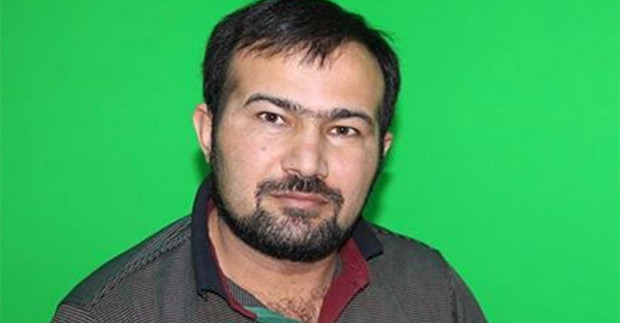
Journalist Seymur Hezi, who works for Index award-winning Azadliq newspaper, is in prison awaiting trial. Hezi was arrested on trumped-up charges of hooliganism on 29 August 2014. The journalist denies the charges, says they are politically motivated and are linked to his work.
Hezi has shared a letter with Meydan TV:
I feel good in the prison. I have no complaints in regard to my health and general mood. There is nothing different besides that I miss my friends and relatives. I think about what is going around and read much. I wouldn’t like to waste my time. I don’t know how much time I’ll spend here, so I don’t want to lose this period. My advice to the youth in freedom is that, wasting time for nothing is unacceptable, whatever the conditions are.
Sometimes I get some newspapers. Recently, I’ve read in one of them the letter Khadija Ismail wrote from the prison and I was impressed. Maybe, the very first reason is that we are very close here from the viewpoint of distance. Here, in Kurdakhany, the distance between us may be some 100 feet, only. Maybe, even less. The author of the letter is kept some 100 feet away me.
I possess strange feelings after reading her letter. The letter full of will and determination has been written by a woman. An Azerbaijani woman. You know that we had many of such determined and strong-willed women in our history. But such determination and will of struggle in a woman in prison… It is a true historical event. It is the history of our will, determination and decisiveness. Particularly, of our women…
Khadija Ismail is one of the greatest examples of righteousness truthfulness and the direct expression of true words. For her, there is only truth and nothing else and it is right, whatever the arguments are. It is right despite of all obstacles in front of her. She is being tested for it every single day.
I don’t know whether we owe it to extreme patriarchal state of our society or something else, expressing the power, endeavor and bravery of a woman, our fathers have always said: “Sheis a woman like a man”. Today, observing a woman like Khadija, we can change this saying. For expressing the manhood and will of a man, I would say: “He is a man like the Azerbaijani woman” or more correctly: “He is a man just like Khadija”.
My greetings to my friends and relatives. I kiss and hug all of you. Wish to reach beautiful days of freedom. Earlier or later, we will meet soon. I love you.
Your friend,
Seymur Hezi
01/13/2015
This article was originally posted on 14 January 2015 at meydan.tv. It is reposted here with permission.
2 Jan 2015 | Mapping Media Freedom, News
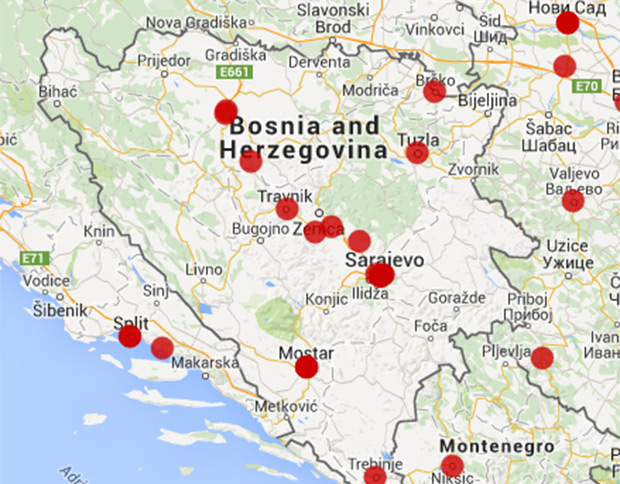
Press organisations and representatives have strongly condemned a police raid on Bosnia news site Klix.ba that took place on 29 Dec. Authorities are trying to uncover the source of a recording that is said to be of the Republika Srpska Prime Minister Zeljka Cvijanovic.
During the recorded conversation a woman’s voice can be heard admitting that her party bought two MPs to ensure its majority in the national assembly.
Irfan Nefic, a police spokesman, said the raid by about half a dozen police officers was ordered by a Sarajevo court, the Associated Press reported.
The search started at 8.30 am on Monday, 29 December 2014, and lasted more than seven hours. Four Klix.ba workers were held at their offices for questioning. During the investigation police copied materials from the newsroom’s computers. At a post raid press conference, Dario Simic, the portal director, and Jasmin Hadziahmetovic, editor in chief, said that police seized 19 computers hard drives, USB memory flash-sticks, CDs, documents, notes and their private mobile phones.
The raid followed the interrogation of Simic and Hadziahmetovic by Banja Luka police on 4 December 2014. Police had demanded they reveal the identity of the person that gave them the recorded conversation. The journalist and the director of the portal refused to identify their source. The incriminating recording was posted online in mid-November, after the Bosnian general elections, local media reported.
National journalists associations called the raid a dark day for Bosnian journalism and characterized the police action as “attack on the publics’ right to know and to be informed,” said Dario Novalic, the head of the Press Council in Bosnia, a self-regulatory body for print and online media.
“Such an act, of the worst kind of pressure on the freedom of information and media freedom, is a direct attempt of deterring journalists from publishing information in the public’s interest and sends a message of what will happen to any media who publishes in the public’s interest,” Novalic said.
Borka Rudic, secretary general of the Bosnian Journalists Association, said that journalists have the right to protect their sources and that the raid is “unacceptable”. “This is the most brutal attack on freedom of speech and journalist rights ever recorded in Bosnia,” Rudic said.
Association of Journalists of the Republika Srpska strongly condemned the police raid and appealed to international organizations to put pressure on local institutions to respect media freedom.
OSCE Representative on Freedom of the Media Dunja Mijatović said that the protection of sources is one of journalists’ key privileges and it must be safeguarded. “Interrogation and pressure on members of the media to reveal their sources is simply unacceptable,” Mijatović said.
She urged the authorities in Bosnia and Herzegovina to do their utmost to stop persecuting journalists and to respect their right to protect their sources.
“This is a grave and disproportionate intrusion into the journalists’ right to report about public interest issues,” Mijatović said. “While fully recognizing the importance of rule of law, I consider this case to constitute unacceptable treatment of the media in a democratic society.”
Al Jazeera Balkans reported that the police are investigating how the media got the recording. Officials suspect that the recording was obtained by unauthorized phone tapping.
After the raid, a police officer struck a photographer with a backpack because he was unhappy he had been photographed. The incident was recorded by a TV station’s cameraman.
For more on media violations in Bosnia, visit mediafreedom.ushahidi.com
This article was posted on Jan 2, 2015 at indexoncensorship.org
22 Dec 2014 | Europe and Central Asia, Magazine, News, Politics and Society, United Kingdom, Volume 43.04 Winter 2014
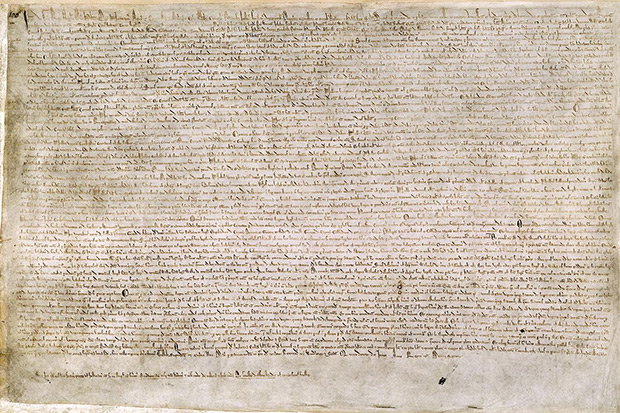
2015 marks the 800th anniversary of the Magna Carta. Index on Censorship magazine’s winter issue has a special report that examines all ways in which the document affected modern freedoms. Here John Crace kicks us off with a tongue-in-cheek trip through history
Call it a free for all. Call it an innate sense of fair play. Call it what you will, but the English had always had a way of making their feelings known to a monarch who got a bit above himself by hitting the country for too much money in taxes or losing overseas military campaigns or both. They rebelled. Sometimes it worked, sometimes it didn’t but it was the closest medieval England had to due process. Then came John, a king every bit as unloved – if not more so – as any of his predecessors; a ruler who had gone back on many of his promises and was doing his best to lose all England’s French possessions and all of a sudden the barons had a problem. There wasn’t any obvious candidate to replace him.
So instead of deposing him, they took him on by limiting his powers.
Kings never have much liked being told what to do and John was no exception. If he could have got out of cutting a deal with the barons he would have done. But even he understood that impoverishing the people he relied on to keep him in power hadn’t been the cleverest of moves, and so he reluctantly agreed to take part in the negotiations that led to the sealing of The articles of the Barons – later known as Magna Carta – at Runnymede on 15 June 1215. Which isn’t to say he didn’t kick and scream his way through them before agreeing to the 61 demands which were the bare minimum for his remaining in power. He did, though, keep his fingers cunningly crossed when the seal was being applied. As soon as the barons had left London, King John announced — with the Pope’s blessing — that he was having no more to do with it. The barons were outraged and went into open rebellion, though dysentery got to King John before they did and he died the following year. Don’t shit with the people, or the people shit with you. Or something like that.
With the original Magna Carta having lasted barely three months, there were some who reckoned they could have saved themselves a lot of time and effort by topping King John rather than negotiating with him. But wiser – or perhaps, more peaceful – counsel prevailed and its spirit has endured through various subsequent mutations – most notably the 1216 Charter, The Great Charter of 1225 and the Confirmation of Charters of 1297 and has widely come to be seen as the foundation stone of constitutional law, both in England and many countries around the world. It was the first time limitations had been formally placed on a monarch’s power and the rights of citizens to the due process of law and trial by jury had been affirmed. Well, not quite all citizens. When the various charters talked of the rights of Freemen, it didn’t mean everyone; far from it. Freemen just meant that small class of people, below the barons, who weren’t tied to land as serfs. The Brits have never liked to rush things. They like their revolutions to be orderly. The underclass would just have to wait.
Magna Carta and its derivative charters were never quite the symbols of enlightened noblesse oblige they are often held to be. The noblemen didn’t sit around earnestly thinking about how they could turn England into a communal paradise. What was the point of having fought and back-stabbed your way to the top only to give power away to the undeserving? The charters were matters of political expedience. The nobles needed the Freemen on their side in their face-off with the king and an extension of their rights was the bargaining chip to secure it. Benevolence never really entered the equation. Nor was Magna Carta ever really a legal constitutional framework. Even if King John hadn’t decided to ignore it within months, it would still have been virtually unenforceable as it had no statutory authority. It was more wish-list than law.
Ironically, though, it is Magna Carta’s weaknesses that have turned out to have guaranteed its survival. Over the centuries, Magna Carta has become the symbol of freedom rather than its guarantor as different generations have cherry-picked its clauses and interpreted them in their own way. While wars and poverty might have been the prime catalyst for the Peasant’s Revolt against King Richard II in 1381, it was Magna Carta to which the rebellion looked for its intellectual legitimacy. The Freemen were now seen to be free men; constitutional rights were no longer seen as residing in the few. The King and his court were outraged that the peasants had made such an elementary mistake as to mistake the implied capital F in Freemen for a small f and the leaders were executed for their illiteracy as much as their impudence.
Bit by bit, starting in 1829 with the section dealing with offences against a person, the clauses of Magna Carta were repealed such that by 1960 only three still survived. Some, such as those concerning “scutage” — a tax that allowed knights to buy out of military service — and fish weirs, had become outdated; others had already been superseded by later statutes. Two of those that remained related to the privileges of both the Church of England and the City of London — a telling insight into the priorities of the establishment. Those who still wonder, following the global financial collapse of 2008, why the bankers were allowed to get away with making up the rules to suit themselves need look no further than Magna Carta. The bankers had been used to getting away with it for the best of 800 years. You win some you lose some.
The survival of clause 39 of the original Magna Carta has been rather more significant for the rest of us. “No Freeman shall be taken or imprisoned, or be disseised of his Freehold, or Liberties, or free Customs, or be outlawed, or exiled, or any other wise destroyed; nor will We not pass upon him, nor condemn him, but by lawful judgment of his Peers, or by the Law of the Land. We will sell to no man, we will not deny or defer to any man either Justice or Right.” Or in layman’s terms, due process: the legal requirement of the state to recognise and respect all the legal rights of the individual. The guarantee of justice, fairness and liberty that not only underpins – well, most of the time – the UK’s constitutional framework, but those of many other countries as well.
Britain has no written constitution. Not because parliament has been too lazy to get round to drawing one up, but because one is already assumed to be in the lifeblood of every one living in Britain. Queen Mary may have had “Calais” written on her heart, but the rest of us all have “Magna Carta” inscribed there. It can be found on the inside of the left ventricle, for those of you who are interested in detail. Other countries haven’t been so trusting in the genetic inheritance of feudal England and have insisted on getting their constitutions down in non-fugitive ink.
That Magna Carta has also been the lodestone for the constitutions of so many other countries, most notably the USA, is less a sign of the global reach of democratic principles – much as that might resonate with romantic ideals of justice — than of the spread of British people and British imperial power. After the Mayflower arrived in what became the USA from Plymouth in 1620, the first settlers’ only reference point for the establishment of civil society was Magna Carta. The settlers had a lot of other things on their minds in the early years — most notably their own survival and the share price of British American Tobacco — and they hadn’t got time to dream up their own bespoke constitution. If they had, they might have come up with something that abolished slavery and gave equal rights to black people sometime before the 1960s. So they settled for an off-thepeg version of Magna Carta, with various US amendments. And some poor spelling. In 1687 William Penn published the first version of Magna Carta to be printed in America. By the time the fifth amendment — part of the bill of rights – was ratified four years after the original US constitution in 1791, Magna Carta had been enshrined in American law with “No person shall be deprived of life, liberty or property without due process of law.”
The fact that the American idea of Magna Carta was not one that would necessarily have been recognised in Britain was neither here nor there. For the Americans, the notion of the rights of a people to govern themselves was more than something that had been fought for over many centuries – a gradual taking back of power from an absolute ruler — that had been ratified on paper. They were fundamental rights that pre-existed any country and transcended national borders. And even if there was no one left alive on Earth, these rights would remain. They might as well have been handed down by God, though it’s probably just as well Adam hadn’t read the sections on the right to defend himself and bear arms. If he had shot the serpent, the whole history of the world might have been very different. As it is, when the Americans took on the British in the War of Independence, they weren’t fighting against a colonial overlord so much as for their basic rights to freedom.
The distinction is a subtle but important one. For though the more recent constitutions of former British colonies, such as Australia, India, Canada and New Zealand, more closely reflected the way Magna Carta was understood back in the mothership, those interpretations of it were still very much a product of their time. As a historical document, Magna Carta remains fixed in the 13th century: a practical solution to the problem of an iffy king. But as a concept it is a shifting, timeless expression of the democratic ideal. It can mean and explain anything. Up to and including that Britain always knows best.
Yet the appeal of Magna Carta endures and it remains the gold standard for democracy in any debate. Whatever side of it you happen to be on. British eurosceptics argue that the UK’s continuing membership of the European Union threatens the very parchment on which it was written; that Britain is being turned into a serf by a European despot. Pro Europeans argue that the EU does more than just enshrine the ideals of Magna Carta, it turns the most threatened elements of it into law.
Eight hundred years on, Magna Carta remains a moving target. Something to be aspired to but never truly attained. A highly combustible compound of idealism and pragmatism. Somehow, though, you can’t help feeling that King John and the feudal barons would have understood that. And approved.
This article is from the Winter 2014 issue of Index on Censorship magazine as 1215 and all that.
This article was originally posted on Dec 22, 2014 at indexoncensorship.org
21 Nov 2014 | Azerbaijan News, News, Politics and Society
Impunity is a festering sore on freedom of the press. Harassment, violence and murder of journalists are problems around the world — even in Europe, as Index’s project mapping media violations has shown. The numbers speak for themselves: of the 370 media workers murdered in connection with their job over the past ten years, 90% have been murdered without their killers being punished. Many of these crimes aren’t even investigated.
Ahead of the International Day to End Impunity, journalists from across the world told Index why impunity is such a danger to free expression and a free press.
Kostas Vaxevanis, Greek investigative journalist, HOT DOC, and 2013 Index award winner
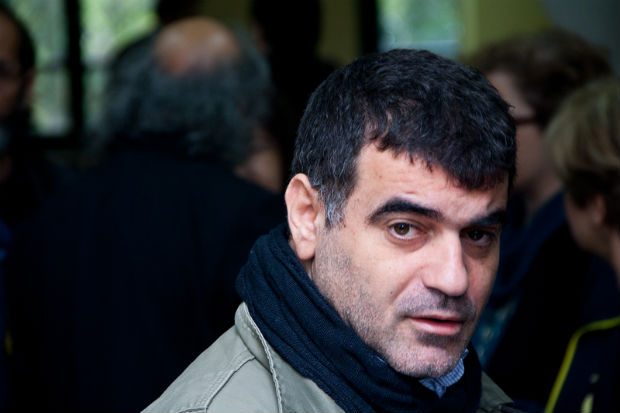
Impunity generates corruption and its enemy is the one thing that exposes and threatens it: the freedom of the press.
The HOT DOC is currently facing 40 lawsuits mainly from ministers and politicians in an attempt to shut us down as journalists. We reveal scandals like one with the minister of justice, a former judge who committed an “error” that granted amnesty to officials who had abused public funds, and instead of answering in public as required as politicians, we are being sued. We pester the courts and despite winning lawsuits, we need more than 80,000 euro per year for court expenses.
Heather Brooke, British-American journalist and 2010 Index award winner

It is a problem that journalists around the world get threatened, intimidated and killed just for doing their job.
These crimes, like any other crime, need to be investigated. If not, it sends a message that this is okay; that the law is only for certain people. It is an implicit acceptance of this behaviour.
If we want to have a strong press, threats, intimidation and murder of journalists can’t be seen to be implicitly condoned by the state. It’s a dangerous message. It makes people frightened to ask tough questions, and if that happens, you are on the way to shutting down a robust press.
Kareem Amer, Egyptian blogger and 2007 Index award winner

I come from a country where we have a lack of justice. The executive power controls the parliament and the justice system. People feel that if they get mistreated or oppressed by those in power nothing will protect them or bring them justice.
Not only people who express their opinions suffer from a lack of justice. People from different backgrounds who have a different way of thinking and different interests also don’t trust the justice system. Those who have more power can easily avoid punishment and take revenge against victims who tried to get their rights through judiciary system.
Officially, police officers don’t have any kind of formal immunity. According to the law they can be questioned if they violate the rights of people by torturing or murdering. But, in fact, all those accused of killing protesters and torturing prisoners managed to avoid being punished, with a few exceptions.
I feel that it’s not safe to express your opinions freely in a country where people can easily avoid punishment.
I have been sentenced to four years in jail for writing two articles and publishing them on the internet, and during that time I have been through physical violence and mistreatment committed by security forces. I reported it but no one has been questioned or punished. That made me feel that there is no justice in my country and that it is easy to be humiliated and tortured and you will not get protected, since the judiciary system is practically part of the executive power and the judges do what the authorities want them to do.
Rahim Haciyev, Azerbajiani journalist and acting editor of 2014 Index award winner Azadliq
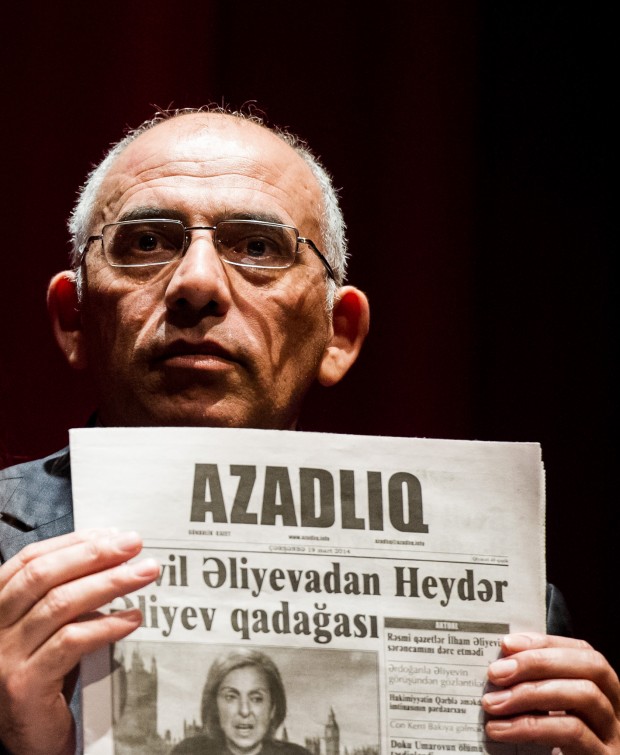
Rahim Haciyev, deputy editor-in-chief of Azerbaijani newspaper Azadliq (Photo: Alex Brenner for Index on Censorship)
Freedom of expression is the basis of all other rights and freedoms. Free speech is something all authoritarian regimes are worried about as it threatens their existence. That is why freedom of expression is specifically targeted by authoritarian regimes. If there are no free people, there is no freedom of expression. Free speech is a precondition for journalists to be able to work in full strength and thus fulfill their functions in society. Authoritarian regimes organise permanent attacks on journalists with impunity. A free journalist armed with freedom of expression is a threat to an authoritarian regime, this is why perpetrators receive awards, not punishment for oppressing journalists’ rights. This process leads to self-censorship, and journalists stop being carriers of truthful information, which in the end affects society.
Nazeeha Saeed, award-winning Bahraini journalist, who was tortured in police custody
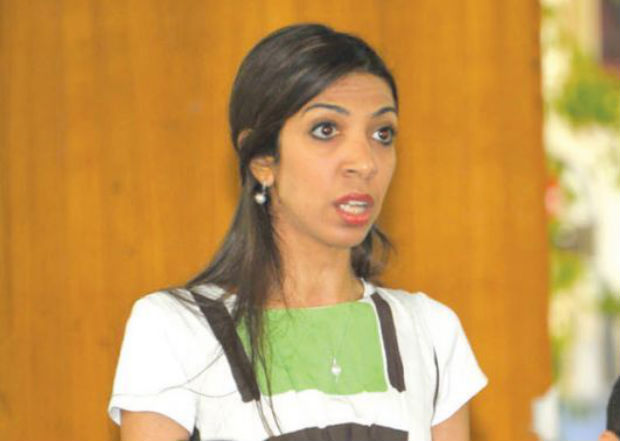
Impunity is a threat to free expression because journalists and people who report the facts on the ground will feel danger, and if no one gets punished for crimes against journalists or others it establishes a systematic impunity culture. Feeling insecure is something bad, it stops people from having a normal life, functioning and expressing themselves.
Endalk Chala, Ethiopian blogger and co-founder of the Zone9 blogging collective (of which six members are currently imprisoned for their writing)

Impunity is a threat for free expression on many levels. In my experience I have seen impunity when it cultivates self-censorship. Let’s take the case of Zone9 bloggers. Since their arrest there are a lot of people who tried to visit them in prison, take a picture of them, attend their trial and tweet about their hearings but all of these have invited very bad reactions from the Ethiopian police.
Some were arrested briefly, others were beaten and it has become impossible to attend the “trial” of the bloggers and journalists. No action was taken by the Ethiopian courts against the bad actions of the police even though the bloggers have contentiously reported the kinds of harassment. As a result, people have stopped tweeting, taking pictures and writing about the bloggers. Apparently, the volume of the tweets and Facebook status updates which comes from Ethiopia has dwindled significantly. People don’t want to risk harassment because of a single tweet or a picture. This self-censorship could be attributed to impunity, which is pervasive in Ethiopia.
Impunity also causes a lack of trust in the Ethiopian judicial system. I don’t trust the independence of the Ethiopian justice system. I have never seen a police man/woman or a government authority being prosecuted for their bad actions against journalists. The Ethiopian government has been prosecuting hundreds of journalists for criminal defamation, terrorism and inciting violence but not a single government person for violating journalists’ rights. This tells you a lot about the compromised justice system of the country.
Andrei Soldatov, Russian investigative journalist and co-founder and editor of Agentura.Ru

Russia is known for its traditions of self-censorship. Despite what the laws say, the rules are explained in a quiet voice in some unmarked cabinets. Sometimes the rules are even not explained, and journalists, editors and owners of media have to constantly guess what is allowed at that moment. Not everyone is allowed to ask directly, so we are all in the game about signals sent by the authorities.
Journalists are beaten and killed in Russia, and this provides plenty of room to send such signals to the journalistic community. You don’t need to explain that investigative reporting in the North Caucasus is not allowed anymore: you just need to turn the investigation of Anna Politkovskaya’s assassination in 2006 into a show trial, where the assassins are duly found guilty, but the question of masterminds is never answered. You could be sure, the signal would be taken correctly.
Fergal Keane, Irish journalist, BBC foreign correspondent and 2003 Index award winner
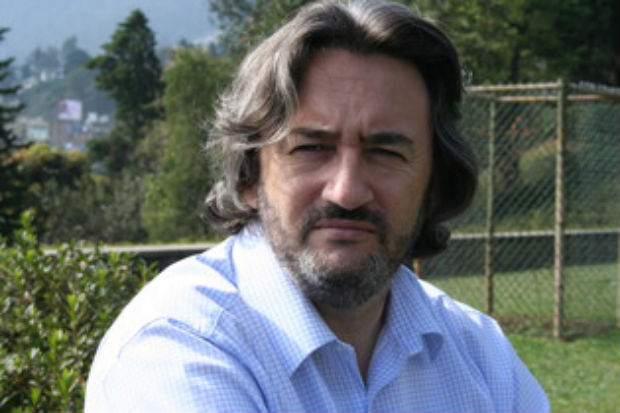
Impunity allows the enemies of free speech to threaten, torture and kill journalists secure in the knowledge they will never be called to account. I can’t think of a greater threat.
Veran Matic, B92 board of directors chairman and B92 news editor-in-chief
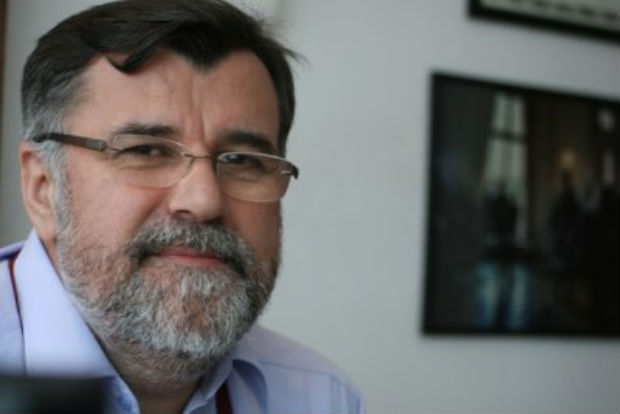
In my 25 years of experience in Serbia, I have been editor-in-chief of a media outlet that was banned on several occasions and I have been arrested.
Impunity directly encourages and expands violence towards journalists. The culture of producing fear is the most efficient form of censorship. One unsolved murder creates space for implementing the next one without any threat for the executioners. In the meantime, the media gets killed/eliminated in the process.
The lack of discontinuity with Slobodan Milosevic’s authoritarian regime had left room for impunity to remain intact.
Less than two years ago, I decided to make a kind of a breakthrough when it comes to impunity. I proposed the establishment of a mixed commission composed of journalists, members of the police and members of the security information agency. We managed to bring the 1999 murder of Slavko Curuvija to a phase where official indictment was brought, along with arrest of all suspects in this murder case. The 2001 murder of our colleague Milan Pantic is also in the final stage of investigation. A 1994 assassination — of Dada Vujasinovic — is being reviewed by the National Forensic Institute from The Hague because local institutions have compromised themselves in this case.
In the same way as impunity restricts freedom of speech, solving of these cases, at least 20 years later, will surely contribute to journalists being encouraged to do their job in the best possible way. Of course, I am not counting here on the new problems with which journalists and media face, and that call for finding new models of financing high quality journalism for the sake of public interest, worldwide.
The team behind Pao-Pao, a Chinese website focusing on internet freedom issues

This year, we have seen a rising number of Chinese journalists, academics and human rights lawyers detained, threatened and arrested simply for speaking out online. While Chinese regulations on freedom of speech need to be closely examined, tech companies also play an important role in the deterioration of freedom of speech in China.
While Chinese tech companies are under the tight control of the Chinese authorities, there exists a culture of impunity in the western tech companies, especially when they are doing business in China. When we worked with our partner GreatFire to launch a FreeWeibo iOS application last year (an app to deliver uncensored content from Weibo, the largest social media platform in China), Apple decided to remove the app from their Chinese iTunes store. The only reason given was that Apple received a request from the Chinese authorities. This June, LinkedIn censored user posts deemed sensitive by the Chinese government on the global level, far beyond Beijing’s censorship requirement, even though LinkedIn does not have servers in China.
It would be the start of the end if these global tech companies start removing content simply because they do not want to upset their business relationships with China. It is crucial to hold these companies accountable for their behaviour. Otherwise it will further erode freedom of expression, not only for China, but also for the whole world.
The International Day to End Impunity was set up in 2011 by free speech network IFEX, of which Index on Censorship is a member, with the aim of demanding accountability and justice on behalf of those “targeted for exercising their right to freedom of expression”.
This article was originally posted on 21 November 2014 at indexoncensorship.org. It was updated at 14:09, 24 November to include the response from Pao-Pao.