18 Mar 2014 | Asia and Pacific, News, Pakistan
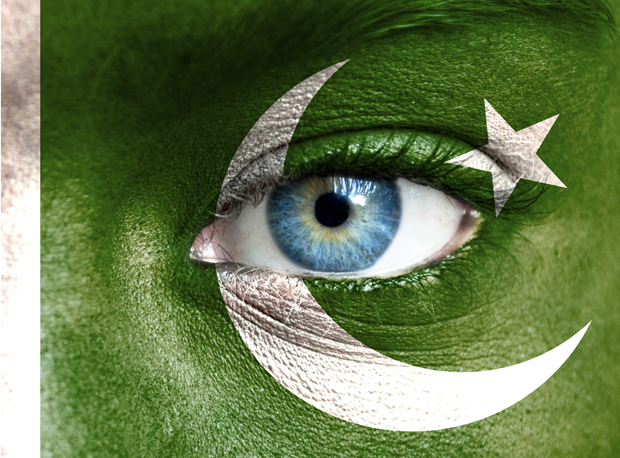
(Image: Aleksandar Mijatovic/Shutterstock)
Pakistan’s record of abuse of its dubious blasphemy law has been criticised by a report from the US Commission on International Religious Freedom. The country currently has 14 individuals known to be on death row while 19 others are serving life sentences on charges of committing blasphemy.
Take for example the case of Aasia Bibi, accused of insulting the prophet Muhammad. The 45-year old Christian and mother of five says she was “falsely accused to settle an old score”. In jail since June 19, 2009, she has yet to have her appeal heard. Sameena Imtiaz, founder of Islamabad-based Peace Education Development Foundation (PEAD) says the commission’s findings are another “reminder of the religious intolerance that has permeated the society at large”. The hearing on March 17, before the Lahore High Court was “cancelled by order” yet again, informed her lawyer Mohammad Yasin Badar, who does not know the reason. “I got a text message from the court,” he said but surmises: “This is a very sensitive case.”
But while Bibi may be only Pakistani woman to have been sentenced to death for blasphemy, she is not alone. In November 2013, a 72-year old homeopath doctor Masood Ahmed, a British national of the minority Ahmadi sect, which has been declared non-Muslim by the constitution, was jailed for discussing Islam — a criminal offence punishable with death under Section 295-C of the Pakistan Penal Code (PPC). His conversation was filmed using a mobile phone in which he is seen reciting verses from the Quran. He has been released on bail. Then there is a mentally ill, 69-year-old British citizen, Mohammad Asghar, convicted in January this year, for sending letters proclaiming he was Prophet Mohammad. He remains in prison today.
The original blasphemy law, drawn up by the British and amended in 1986 by then-dictator General Zia-ul-Haq, puts in place a mandatory death sentence under section 295-C. Imtiaz says since the amendment more than a 1,000 cases have been registered against Ahmadis, Christians, Hindus and even Muslims.
The National Commission for Justice and Peace has also been keeping a close watch on the numbers. According to them, from 1987 to 2013, as many as 1,281 people have been charged, of which 616 are Muslims, 474 Ahmadis, 171 Christians and 20 Hindus.
Pakistan has never executed anyone under the offence but the between 1990 to 2012, several of the accused have been killed in associated vigilante violence outside the courts or in prisons.
According to a report by the Islamabad-based Center for Research and Security Studies, since 1990, extra judicial murders of 52 accused have taken place.
In its State of Human Rights in 2012 report, the independent Human Rights Commission of Pakistan states: “Abuse of the blasphemy law continues to take a heavy toll in terms of human lives and harassment of citizens.”
“The sheer number of cases registered in the past 25 years suggests the law has been widely abused,” concedes Imtiaz, adding that investigations have revealed that often the reasons for the abuse stem from personal enmity, property disputes, religious hatred.
“Decades have passed but none of the governments that followed, found the courage to repeal the discriminatory laws that have contributed significantly to intolerance, violence, bigotry, hate and injustice in the country,” says Bushra Gohar, a senior member of the Awami National Party. A legislator in the last assembly, she had submitted a bill in the assembly for the repeal of the blasphemy clauses inserted by Zia ul Haq, but it was never tabled in the assembly.
And for that reason, says Imtiaz there was an urgent need for debate to include “all segments of society on the pros and cons of the law and how it is abetting religious intolerance”.
In the meantime, she said, “an effective counter law that prohibits the abuse of the law for settling personal gains and inciting hatred” should be implemented. “The current law is not only vague but is rarely put to use due to fear of persecution and pressures,” she points out.
There have been half-hearted attempts to initiate a debate but after two high profile assassinations — of Punjab governor, Salman Taseer and minister for minorities, Shahbaz Bhatti — took place, for speaking on Bibi’s behalf and opposing the blasphemy laws, all efforts have been stalled.
“Political expediency, compromise and appeasement of a handful of religious extremists have prevented each subsequent government to initiate a meaningful debate, or even initiate pertinent legislation in the parliament to repeal or amend the discriminatory laws that continue to play havoc with the lives of women, minorities and the poor,” Gohar said.
Citing the recent torching of a temple in Larkana, in Sindh over blasphemy allegations, she says: “It shows how easy it is to incite mob violence and as in numerous similar cases in the past the root cause will not be addressed.”
According to the former legislator, strong political will is seriously lacking to review and amend or repeal the blasphemy law. “We cannot hope for justice for the victims and their families if we cannot even have an open debate on the discriminatory laws in the parliament and if the parliament, the courts and the government are threatened, coerced and silenced by a bunch of religious extremists.”
The annual report prepared by the Commission on International Religious Freedom looks at the state of religious freedom around the world.
This article was posted on March 18, 2014 at indexoncensorship.org
17 Mar 2014 | News, Religion and Culture, Young Writers / Artists Programme

A few weeks ago, 13,000 writers swarmed Seattle for the annual Association of Writers and Writing Programs conference. In the seaport city known for its ideal reading (and writing) weather — and home to poet Maged Zaher — writers filled hotel rooms and bars. On official panels they debated the state of contemporary literature, and at offsite readings and parties, they celebrated the written word.
The song of the nightingale / Is not up for sale
Ziba Karbassi, Gravequake
On the other side of the hemisphere, Ziba Karbassi doesn’t need to attend a conference to know what contemporary literature looks like. Born in 1974 in Tabriz, Iran, this rising star of Persian poetry, who also writes in her first language of Azeri Turkish, has been living in exile in London since leaving her country in 1989. Karbassi has published eight books of poetry in Persian, and with Stephen Watts, she has translated much of her work into English.
Taken from an incident close to the author’s family in the 1980s, her poem “Death by Stoning” depicts a young pregnant woman taken to prison, tortured, and stoned to death:
I am not a scaffold to be toppled
not a felled tree to be sunk in the flood
I am only a bag of bones and skin
smashed about
The heavy consonants in the nouns and adjectives and the scattered form of the poem demonstrate the mother-to-be’s “anguished, loving, and crazed” state of mind. “Death by Stoning” shows how poetry can give us a view into worlds distant from — but not entirely unlike — our own. Poetry can also play a part in shaping our world.
After the US invasion of Iraq by the Bush administration in 2003, over 13,000 poets rallied in the global movement Poets Against the War. During Occupy Wall Street in the autumn of 2011, poets from around the world contributed to the People’s Library in Zuccotti Park to form a living, breathing, inclusive anthology of the moment. At Occupy Oakland’s Port Shutdown on 2 November, 2011, there was a strong poets’ contingent, and when protestors in Cairo marched on Tahrir Square in solidarity with Occupy Oakland, the meme “Don’t Afraid” from one protestor’s sign quickly became a poetic rallying cry for Oaklanders.
But for artists as for whistleblowers — especially those working against repression, colonialism, and the destruction of the environment by big business — exercising free speech, online or off, can still lead to worst-case scenarios of exile, as in Karbassi’s case, and execution, as friends, relatives, and fans of Arab-Iranian poet Hashem Shaabani can attest to.
What! Graveyard? Fear? Are you kidding? You’re kidding, right?
Gravequake
Karbassi, however, is not afraid of expressing herself, and poets continue to organise, as manifested at the Revolution and/or Poetry conference in the San Francisco Bay Area in October 2013.
Our poetry is not exactly our politics, and our politics are not necessarily our poetry, but the line between them is blurry and easily crossed. Poetry remains a relatively free space: there are plenty of freely accessible journals on the internet; house and salon-style readings are growing in and around urban centres; anyone could submit to the Occupy Wall Street anthology, and all submitted poems were accepted. The art form remains a hopeful space for full participation in cultural and everyday life, whether we gather at conferences or in the streets — or both.
This article was posted on March 17, 2014 at indexoncensorship.org
10 Mar 2014 | Africa, News, Uganda
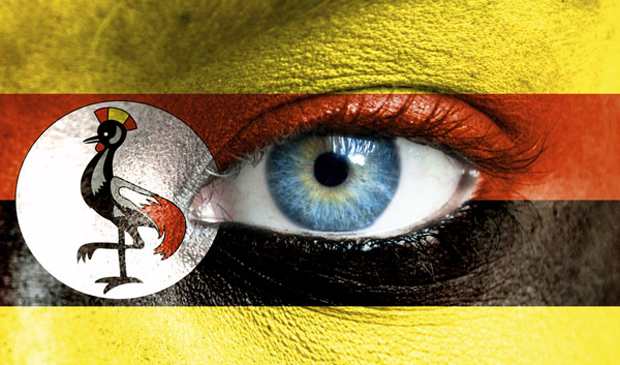
(Photo illustration: Shutterstock)
Uganda’s recently passed Anti-Pornography Act 2014 is believed to have led to targeting of women wearing mini-skirts, prompting the cabinet to review the law.
Prime Minister Amama Mbabazi told parliament recently that it is not the duty of the public but the police to implement the law: “The law is not about the length of one’s dress or skirt. As cabinet, we are going to look at the act again.”
The law, assented to by President Yoweri Museveni on 6 February this year, creates and defines the offence of pornography and its prohibition. It bans anyone from producing, trafficking, publishing, broadcasting, procuring, importing exporting or abetting any form of pornography.
Nowhere in the law is a ban on mini-skirts mentioned. The prime minister said that the term “indecent” as defined in the act to mean “non conformity with generally accepted standards” is too broad and varies from one person to another. “It’s very important that the law is clear and specific. I request the public not to take the law in their hands. It’s criminal, especially to women; they must be fully protected, and we shall protect them,” he said.
Initially, the bill proposed the prohibition of types of dress that exposed different body parts like breasts, thighs, genitalia and buttocks, but that clause was deleted before it was enacted into law. The law that was ultimately passed targets media organisations, Internet Service Providers (ISP’s), the entertainment and leisure industry and others putting what is deemed pornographic material into the public domain. Despite this, many women are afraid of the consequences of the law.
The apparent misunderstanding of the law by the public has generally been blamed on Ethics and Integrity Minister Simon Lokodo, who has suggested that it will ultimately help in the fight against indecent dressing by women. He has openly stated that “if a woman is dressed in attire that irritates the mind and excites other people of the opposite sex, you are dressed in wrong attire, so please you should hurry up and go home and change.” He maintains that women should “dress decently” because “men are so weak that if they saw an indecently dressed woman, they would just jump on her”. It should be noted that this minister is a former priest of the Catholic Church.
The act defines pornography as any cultural practice, radio or television programme, writing, publication, advertisement, broadcast, upload on the internet, display, entertainment, music, dance, picture, audio or video recording, show, exhibition or any combination of these that depicts a person engaged in explicit sexual activities or conduct; sexual parts of a person; erotic behaviour intended to cause sexual excitement or any indecent act or behaviour tending to corrupt morals.
The act also proposes setting up a Pornography Control Committee to, among other things, ensure that perpetrators of pornography are apprehended and prosecuted, and to collect and destroy all pornographic materials.
Ruth Ojiambo Othieno, the Executive Director of Isis-Women’s International Cross Cultural Exchange said she was disappointed that the law is targeting women and their bodies.
Miria Matembe, a woman’s activist and former ethics minister argues that the law is very vague and compares it to former President Idi Amin’s directive that women should not wear skirts and dresses more than three inches above the knee.
In a statement, police spokesperson Judith Nabakooba warned that if one suspects a person to be indecently dressed, they should report the matter to police but not take the law into their own hands. “Anyone found participating in mob justice of undressing people and are caught will be dealt with accordingly,” she said.
This article was posted on March 10, 2014 at indexoncensorship.org
8 Mar 2014 | Azerbaijan News, News
International Women’s Day is a day to remember violence against women, the education gap, the wage gap, online harassment, everyday sexism, the intersection between sexism and other -isms, and a whole host of other issues to make us realise we’ve still got a long way to go. A day to demand continued progress, and a day to pledge to work to achieve it.
But it is also a day to celebrate. To appreciate the fantastic achievements that are made every day, everywhere, by women from all walks of life. It’s a day to be grateful to the women who dedicate their lives to fighting on the front lines to protect rights vital to us all. We want to shine the spotlight on women who have stood up for freedom of expression when it’s not the easy or popular thing to do, against fierce opposition and often at great personal risk. The following eight women have done just that. We know there are many, many more. Tell us about your female free speech hero in the comments or tweet us @IndexCensorship.
Meltem Arikan — Turkey
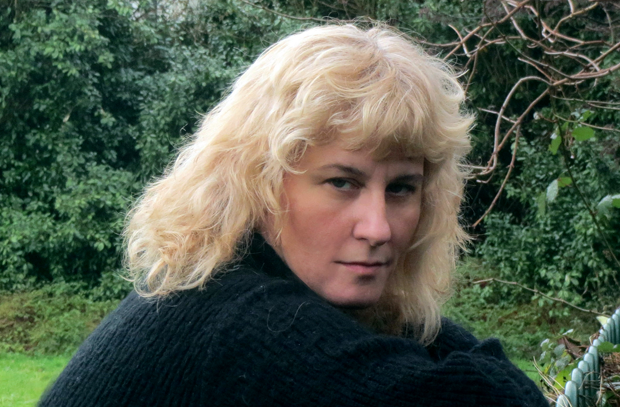
Meltem Arikan
Arikan is a writer who has long used her work to challenge patriarchal structures in society. He latest play “Mi Minor” was staged in Istanbul from December 2012 to April 2013, and told the story of a pianist who used social media to challenge the regime. Only a few months after, the Gezi Park protests broke out in Turkey. What started as an environmental demonstration quickly turned into a platform for the public to express their general dissatisfaction with the authorities — and social media played a huge role. Arikan was one of many to join in the Gezi Park movement, and has written a powerful personal account of her experiences. But a prominent name in Turkey, she was accused of being an organiser behind the protests, and faced a torrent of online abuse from government supporters. She was forced to flee, now living in exile in the UK.
I realised that we were surrounded, imprisoned in our own home and prevented from expressing ourselves freely.
Anabel Hernández — Mexico

Anabel Hernández (Image: YouTube)
Hernández is a Mexican journalist known for her investigative reporting on the links between the country’s notorious drug cartels, government officials and the police. Following the publication of her book Los Señores del Narco (Narcoland), she received so many death threats that she was assigned round-the-clock protection. She can tell of opening the door to her home only to find a decapitated animal in front of her. Before Christmas, armed men arrived in her neighbourhood, disabled the security cameras and went to several houses looking for her. She was not at home, but one of her bodyguards was attacked and it was made clear that the visit — from people first identifying themselves as members of the police, then as Zetas — was because of her writing.
Many of these murders of my colleagues have been hidden away, surrounded by silence – they received a threat, and told no one; no one knew what was happening…We have to make these threats public. We have to challenge the authorities to protect our press by making every threat public – so they have no excuse.
Amira Osman — Sudan
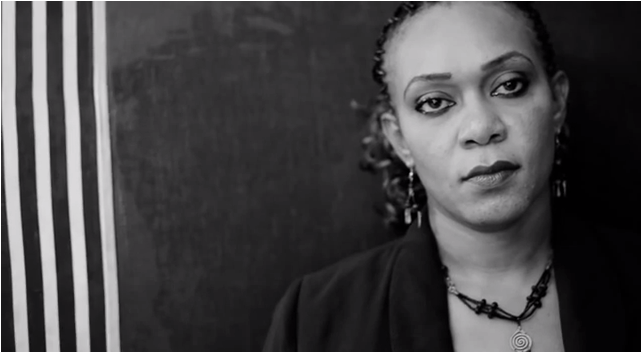
Amira Osman (Image: YouTube)
Amira Osman, a Sudanese engineer and women’s rights activist was last year arrested under the country’s draconian public order act, for refusing to pull up her headscarf. She was tried for “indecent conduct” under Article 152 of the Sudanese penal code, an offence potentially punishable by flogging. Osman used her case raise awareness around the problems of the public order law. She recorded a powerful video, calling on people to join her at the courthouse, and “put the Public Order Law on trial”. Her legal team has challenged the constitutionality of the law, and the trial as been postponed for the time being.
This case is not my own, it is a cause of all the Sudanese people who are being humiliated in their country, and their sisters, mothers, daughters, and colleagues are being flogged.
Fadiamata Walet Oumar — Mali
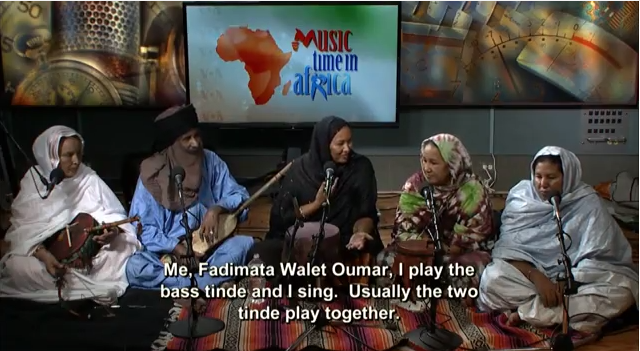
Fadiamata Walet Oumar with her band Tartit (Image: YouTube)
Fadiamata Walet Oumar is a Tuareg musician from Mali. She is the lead singer and founder of Tartit, the most famous band in the world performing traditional Tuareg music. The group work to preserve a culture threatened by the conflict and instability in northern Mali. Ansar Dine, an islamists rebel group, has imposed one of the most extreme interpretations of sharia law in the areas they control, including a music ban. Oumar believes this is because news and information is being disseminated through music. She fled to a refugee camp in Burkina Faso, where she has continued performing — taking care to hide her identity, so family in Mali would not be targeted over it. She also works with an organisation promoting women’s rights.
Music plays an important role in the life of Tuareg women. Our music gives women liberty…Freedom of expression is the most important thing in the world, and music is a part of freedom. If we don’t have freedom of expression, how can you genuinely have music?
Khadija Ismayilova — Azerbaijan
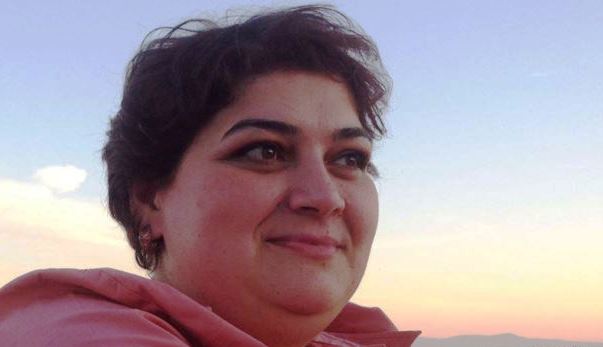
Khadija Ismayilova
Ismayilova is an award-winning Azerbaijani journalist, working with Radio Free Europe/Radio Liberty. She is know for her investigative reporting on corruption connected to the country’s president Ilham Aliyev. Azerbaijan has a notoriously poor record on human rights, including press freedom, and Ismayilova has been repeatedly targeted over her work. She was blackmailed with images of an intimate nature of her and her boyfriend, with the message to stop “behaving improperly”. This February, she was taken in for questioning by the general prosecutor several times, accused of handing over state secrets because she had met with visitors from the US Senate. In light of this, she posted a powerful message on her Facebook profile, pleading for international support in the event of he arrest.
WHEN MY CASE IS CONCERNED, if you can, please support by standing for freedom of speech and freedom of privacy in this country as loudly as possible. Otherwise, I rather prefer you not to act at all.
Jillian York — US
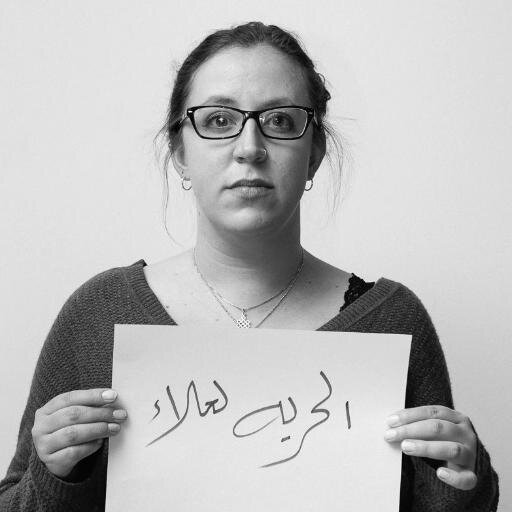
Jillian York (Image: Jillian C. York/Twitter)
Jillian York is a writer and activist, and Director of Freedom of Expression at the Electronic Frontier Foundation (EFF). She is a passionate advocate of freedom of expression in the digital age, and has spoken and written extensively on the topic. She is also a fierce critic of the mass surveillance undertaken by the NSA and other governments and government agencies. The EFF was one of the early organisers of The Day We Fight Back, a recent world-wide online campaign calling for new laws to curtail mass surveillance.
Dissent is an essential element to a free society and mass surveillance without due process — whether undertaken by the government of Bahrain, Russia, the US, or anywhere in between — threatens to stifle and smother that dissent, leaving in its wake a populace cowed by fear.
Cao Shunli — China
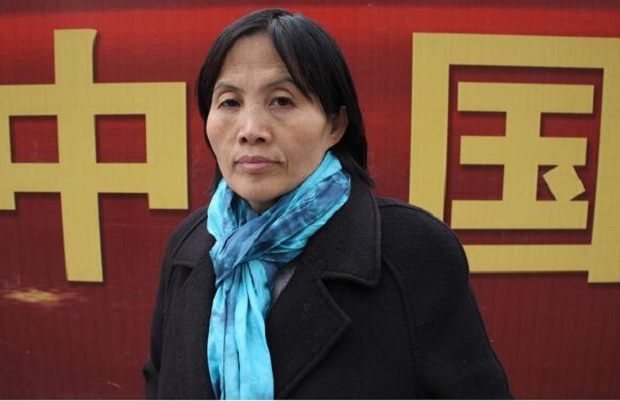
Cao Shunli (Image: Pablo M. Díez/Twitter)
Shunli is an human rights activist who has long campaigned for the right to increased citizens input into China’s Universal Periodic Review — the UN review of a country’s human rights record — and other human rights reports. Among other things, she took part in a two-month sit-in outside the Foreign Ministry. She has been targeted by authorities on a number of occasions over her activism, including being sent to a labour camp on at least two occasions. In September, she went missing after authorities stopped her from attending a human rights conference in Geneva. Only in October was she formally arrested, and charged for “picking quarrels and promoting troubles”. She has been detained ever since. The latest news is that she is seriously ill, and being denied medical treatment.
The SHRAP [State Human Rights Action Plan, released in 2012] hasn’t reached the UN standard to include vulnerable groups. The SHRAP also has avoided sensitive issue of human rights in China. It is actually to support the suppression of petitions, and to encourage corruption.
Zainab Al Khawaja — Bahrain
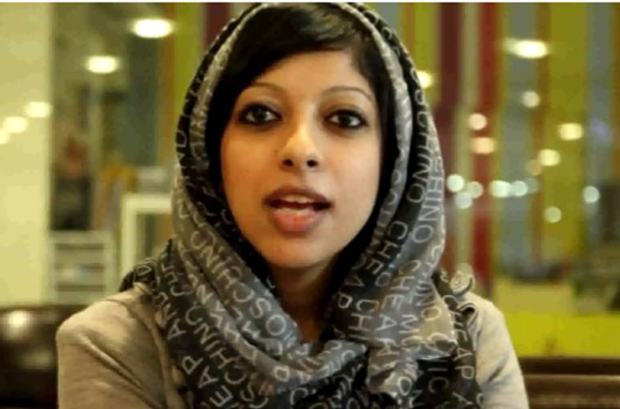
Zainab Al Khawaja
Al Khawaja is a Bahraini human rights activist, who is one of the leading figures in the Gulf kingdom’s ongoing pro-democracy movement. She has brought international attention to human rights abuses and repression by the ruling royal family, among other things, through her Twitter account. She has also taken part in a number of protests, once being shot at close range with tear gas. Al Khawaja has been detained several times over the last few years, over “crimes” like allegedly tearing up a photo of King Hamad bin Isa Al Khalifa. She had been in jail for nearly a year when she was released in February, but she still faces trials over charges like “insulting a police officer”. She is the daughter of prominent human rights defender Abdulhadi Al Khawaja, who is currently serving a life sentence.
Being a political prisoner in Bahrain, I try to find a way to fight from within the fortress of the enemy, as Mandela describes it. Not long after I was placed in a cell with fourteen people—two of whom are convicted murderers—I was handed the orange prison uniform. I knew I could not wear the uniform without having to swallow a little of my dignity. Refusing to wear the convicts’ clothes because I have not committed a crime, that was my small version of civil disobedience.
This article was posted on March 8, 2014 at indexoncensorship.org
