9 Jan 2014 | Europe and Central Asia, European Union, News, Politics and Society
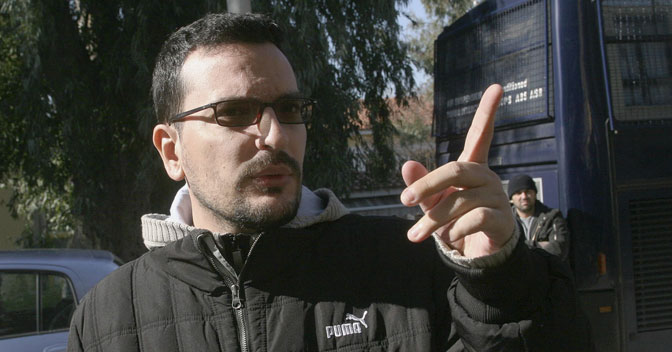
Sokratis Giolia, an investigative journalist, was shot dead outside his home in Athens prior to publishing the results of an investigation into corruption.
This article is part of a series based on our report, Time to Step Up: The EU and freedom of expression
The main threats to media freedom and the work of journalists are from political pressure or pressure exerted by the police, to non-legal means, such as violence and impunity. There have been instances where political pressure against journalists has led to self-censorship in a number of European Union countries. This pressure can manifest itself in a number of ways, from political pressure to influence editorial decisions or block journalists from promotion in state broadcasters to police or security service interventions into media investigations on political corruption.
The European Commission now has a clear competency to protect media freedom and should reflect on how it can deal with political interference in the national media of member states. As the heads of state or government of the EU member states have wider decision-making powers at the European Council this gives a forum for influence and negotiation, but this may also act as a brake on Commission action, thereby protecting media freedom.
Italy presents perhaps the most egregious example of political interference undermining media freedom in a EU member state. Former premier Silvio Berlusconi has used his influence over the media to secure personal political gain on a number of occasions. In 2009 he was thought to be behind RAI decision to stop broadcasting Annozero, a political programme that regularly criticised the government. In the lead up to the 2010 regional elections, Berlusconi’s party pushed through rules which effectively meant that state broadcasters had to either feature over 30 political parties on their talk shows or lose their prime time slots. Notably, Italian state broadcaster RAI refused to show adverts for the Swedish film Videocracy because it claimed the adverts were “offensive” to Silvio Berlusconi.
Under the government of Prime Minister Viktor Orbán, Hungary has seen considerable political interference in the media. In September 2011, popular liberal political radio station “Klubrádió” lost its licence following a decision by the Media Authority that experts believed was motivated by political considerations. The licence was reinstated on appeal. In December 2011, state TV journalists went on hunger strike after the face of a prominent Supreme Court judge was airbrushed out of a broadcast by state-run TV channel MTV. Journalists have complained that editors regularly cave into political interference. Germany has also seen instances of political interference in the public and private media. In 2009, the chief editor of German public service broadcaster ZDF, Nikolaus Brender, saw his contract terminated in controversial circumstances. Despite being a well-respected and experienced journalist, Brender’s suitability for the job was questioned by politicians on the channel’s executive board, many of whom represented the ruling Christian Democratic Union. It was decided his contract should not be renewed, a move widely criticised by domestic media, the International Press Institute and Reporters Without Borders, the latter arguing the move was “motivated by party politics” which, it argued, was “a blatant violation of the principle of independence of public broadcasters”. In 2011, the editor of Germany’s (and Europe’s) biggest selling newspaper, Bild, received a voicemail from President Christian Wulff, who threatened “war” on the tabloid if it reported on an unusual personal loan he received.
Police interference in the work of journalists, bloggers and media workers is a concern: there is evidence of police interference across a number of countries, including France, Ireland and Bulgaria. In France, the security services engaged in illegal activity when they spied on Le Monde journalist Gerard Davet during his investigation into Liliane Bettencourt’s alleged illegal financing of President Sarkozy’s political party. In 2011, France’s head of domestic intelligence, Bernard Squarcini, was charged with “illegally collecting data and violating the confidentiality” of the journalists’ sources. In Bulgaria, journalist Boris Mitov was summoned on two occasions to the Sofia City Prosecutor’s office in April 2013 for leaking “state secrets” after he reported a potential conflict of interest within the prosecution team. Of particular concern is Ireland, which has legislation that outlaws contact between ordinary police officers and the media. Clause 62 of the 2005 Garda Siochána Act makes provision for police officers who speak to journalists without authorisation from senior officers to be dismissed, fined up to €75,000 or even face seven years in prison. This law has the potential to criminalise public interest police whistleblowing.[1]
It is worth noting that after whistleblower Edward Snowden attempted to claim asylum in a number of European countries, including Austria, Finland, Germany, Italy, Ireland, the Netherlands, Spain, the governments of all of these countries stated that he needed to be present in the country to claim asylum. Others went further. Poland’s Foreign Minister Radosław Sikorski posted the following statement on Twitter: “I will not give a positive recommendation”, while German Foreign minister Guido Westerwelle said although Germany would review the asylum request “according to the law”, he “could not imagine” that it would be approved. The failure of the EU’s member states to give shelter to Snowden when so much of his work was clearly in the public interest within the European Union shows the scale of the weakness within Europe to stand up for freedom of expression.
Deaths, threats and violence against journalists and media workers
No EU country features in Reporters Without Borders’ 2013 list of deadliest countries for journalists. But since 2010, three journalists have been killed within the European Union. In Bulgaria in January 2010 , a gunman shot and killed Boris Nikolov Tsankov, a journalist who reported on the local mafia, as he walked down a crowded street. The gunman escaped on foot. In Greece, Sokratis Giolia, an investigative journalist, was shot dead outside his home in Athens prior to publishing the results of an investigation into corruption. In Latvia, media owner Grigorijs Nemcovs was the victim of an apparent contract killing, which Reporters Without Borders claims appeared to be carefully planned and executed.103 Nemcovs was also a political activist and deputy mayor, and his newspaper, Million, was renowned for its investigative coverage of political and local government corruption and mismanagement.
While it is rare for journalists to be killed within the EU, the Council of Europe has drawn attention to the fact that violence against journalists does occur in EU countries, particularly in south eastern Europe, including in Greece, Latvia, Bulgaria and Romania.[2] The South East Europe Media Organisation (SEEMO) has raised concerns over police violence against journalists covering political protests in many parts of south eastern Europe, particularly in Romania and Greece.
[1] There is an official whistleblowing mechanism instituted by the law, but it is not independent of the police.
[2] William Horsley for rapporteur Mats Johansson, ‘The State of Media Freedom in Europe’, Committee on Culture, Science, Education and Media, Council of Europe (18 June 2012).
8 Jan 2014 | News, Politics and Society, Turkey
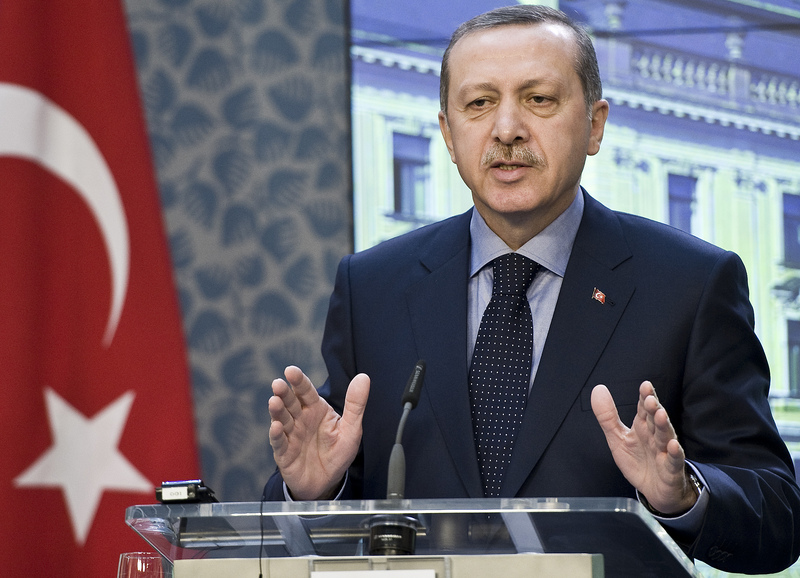
Turkish Prime Minister Recep Tayyip Erdogan (Photo: Philip Janek / Demotix)
“What happened in Turkey during the last ten years?” When the storm is over and if we wake up to a bright morning after it’s all over, we will end up with that question at hand which could take another ten years to answer.
One answer could commence as such: A leader came upon and he taught his people a template to think by repeating it over and over again. (The frequency and length of Prime Minister’s speeches are not without cause. Their purpose is not to leave a space to think, therefore a chance to doubt for the people.)
Around the leader an alignment was formed as it happens with all leaders. That working alliance matured, deepened and ornamented leader’s modus operandi. That educated alliance, members of which were not worse than the average in society, wore the oppugning, vindictive, ambushing style and worked hard to provide an intellectual legitimation for the leader’s template. (Those who wrote headlines such as “they were not arrested for their journalistic activities,” journalists providing testimonials for KCK and Ergenekon cases for the judiciary which was already politicized, academicians feasting for “civil governance,” attorneys dancing with jackals, artists using all forms of art, from poetry to music, to be included in the photo shot of good fortune. I’m talking about a huge crowd.)
Since the rest of the people who were not included in the leader’s definition of “my citizens” meaning “the real citizens,” are considered non-human – therefore expelled from human status-, unlawful cruelty against those was accepted in the beginning, later totally ignored. Leader told “his citizens” not to consider the others, nor to feel remorse or feel for them, time and again.
Leader told to “his people” that they were the ones who were done injustice in fact, he told that many times. He told that so many times that they finally believed in him. They wanted to believe, for humanity cannot accept harm for malfeasance. Malfeasance must have a “good” reason, having something to do with benefaction, and grievance is always a good reason. At the end, party member “citizens” started to see the killing of kids by ambition for power, that are as poor as themselves, as a conspiracy against them. (A nation who does not feel remorse after seeing the face of Ali Ismail Korkmaz, a youngster beaten to death by the police during Occupy Gezi, is seriously ill, is insane.)
Leader did not only destroy justice but also the feeling of one. No one in this country can no longer relate a court of justice to jurisprudence, nobody can. Leader replaced the justice, which is supposed to be the basis of the estate with the love the masses felt for him. The behavior of the people in leader’s rallies/rites wearing shrouds and going crazy were not without reason; they sacrificed their physical and spiritual beings for the being of the leader. Leader was justice itself. As the concept of justice is related to God in ancient man’s mind.
For the length of ten years, organized ignorance, in the form of crazy and colossal crowds, mounted over freedom of opinion, human values, conscience and common denominators of humanity. They had their leader shouting “Ahead!” Numerous and grave human rights violations were experienced. It would take at least another ten years to account for those.
When the current ten years are over and a new ten years period would start, it would be more difficult for us. We would ask “what had happened?” We would like to find out by thinking over. Whilst looking for a historical reason we would end up at September 12 coup d’état. As we scratch the surface of history we would arrive at a point when “Deniz and his friends” were hanged, when in fact “kindness” was dangling on the gallows, in fact all were silent back then as well.
Maybe we would go further back to the Dersim Massacre. Maybe further back. To 1915. Maybe further back in history to the time of Ottoman sultans who slayed their brothers… We would search for “the seed of malfeasance” on this land, the first sin, the first womb of mercilessness. But it would still be very difficult to account for the last ten years. Because it is almost impossible to find a rational reason for organized ignorance, organized desire to not to think, organized unscrupulousness. If we finally decide to try those in the court of humanity, if we would have the power to do that, we then have the chore to find a courthouse big enough for all who started that system, for all who supported it and made it possible. That crowd is for sure very crowded.
*The book Radical Malfeasance Problem in Hannah Arendt” by Berrak Coskun, published by Ayrinti Publishers, inspires this article. With gratitude.
The original article in Turkish is published in Birgün Daily on January 6th, 2014. Translated to English by Stratos Moraitis. The translation was originally published at The Globe Times and is posted here with permission of the author.
7 Jan 2014 | News, Religion and Culture, Turkey
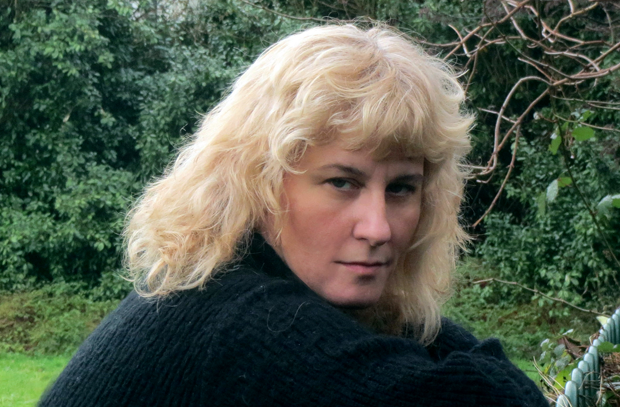
Meltem Arikan
In the days after the Gezi Park protests, Turkish playwright and author Meltem Arikan found herself at the centre of a government-led hate campaign that left her fearing for her life.
Arikan, now living in the United Kingdom, left Turkey because of the vicious and sustained campaign against her on social media and TV. She was subjected to a continuous barrage of brutal verbal abuse and rape and death threats. The attacks were fronted by Turkish politicians who accused her, and the people behind the production of her play Mi Minor, of being the architects of the Gezi Park demonstrations. The campaign was targeted and persecutory, “like a witch hunt in the 15th century” and members of the public were encouraged by politicians to create Twitter accounts and join the action against her.
This was not the first time that the government had tried to silence her. Arikan’s 2004 novel Stop Hurting my Flesh tells the story of women’s lives that have been left devastated by experiences of sexual abuse and incest. The novel was banned by the government accusing it of “destroying the Turkish family order, offending the Namus (honour) of the society, arousing sexual desire in the readers and disturbing the order of society by inducing fear within women, by using a feminist approach.”
Arikan was interviewed by Index on Censorship Head of Arts Julia Farrington.
Index: How did censorship of your novel affect you?
Arikan: When you experience censorship or a ban you don’t feel fully comfortable about the things you produce. You always have the feeling of “what’s going to come out of this now?” I have already discovered that when my work connects with real lives, I get into trouble.
When they banned my novel, I felt so furious, pure fury. Really. And after that I started a lot of campaigns. Before my novel if you said the word “incest” on TV you would be fined. But the act of incest itself was not punished at all. And you couldn’t open a case on incest because there was no law against incest. They only had child abuse but they are totally different things. My campaigns contributed to the word being accepted, and the law has changed as a result of these campaigns. Later I was awarded the ‘Freedom of Thought and Speech Award’ by the Turkish Publishers Association. But none of this stopped my fury. And then I understood that people are actually comfortable with the way things are. And that when I try to talk about something uncomfortable, people think that I am paranoid, or exaggerating so I stopped. And I started to focus on the world as a whole through social media.
Index: What started your interest in social media?
Arikan: When Wikileaks published the data cables, it shook the male dominated world order. Seeing that world leaders were powerless to stop Wikileaks from fearlessly publishing data cables, excited me very much. Turkish press did not pay enough attention to what was happening around the world. That’s why I started to follow the developments from world press and social media. I started using my Facebook and Twitter accounts more, to inform the people in my country about the happenings. I was not interested in social media as much before, but afterwards I spent most of my time sharing information. I got quite obsessed. People even wrote tweets to me to say ‘have some sleep, you need to sleep’ because I wanted to be awake when people started tweeting in US due to the time difference.
Index: How did this time spent on social media influence the writing of Mi Minor?
Arikan: For two years in social media around the time of Arab revolutions, and the Occupy movement, I felt, received and perceived what was happening around the world. I witnessed how social media gave a platform for people to share their personal stories or give information by using Twitter, broadcasting with their mobile phones using Ustream, live-stream when traditional media was silent. After I got involved in social media I didn’t care about individual countries anymore because I came to realize that interactions on social media happen regardless of the borders of distances, languages, nations, religions or ideologies, and this inspired me to create a play. It was all about the situations and events happening all around the world. Later I shared the script of Mi Minor with people from various countries. A friend from US read my play and said, this is just like US. Then during the rehearsals a friend said that it resembles Korea and another said that it was just like Turkmenistan. This was exactly what I wanted, that it was perceived by people from different countries as their own country.
As a writer it was important to be able to understand what kind of a change was happening and seeing the free flow of information and how people’s perception was changing. During that time I realised we are in a transition period from analogue to the digital world. And I was interested to see how the perception was changing, especially to see where young people’s perception was heading and how it affected the relationship between people and government.
As a woman and writer not just using the social media, but becoming aware of the kind of impact it has had, and using it to develop an art piece to make others aware of the transition we are in – all this has changed my life completely.
Index: In what ways is Mi Minor a ‘social media’ play?
Arikan: Mi Minor was a play that was set in a country called Pinima: freedom in a box deMOCKracy. During the play the audience could choose to play the President’s deMOCKracy game of the or support the Pianist’s rebellion against the system. The Pianist starts reporting all the things that are happening in Pinima through Twitter, which starts a Role Playing Game (RPG) with the audience. Mi Minor was staged as a play where an actual and social media oriented RPG was integrated with the actual performance. It was the first play of its kind in the world.
It was written to be located and performed anywhere in the world and everywhere the show would be live streamed online through Ustream and online audience would influence the action as much as the real live audience.
The actual audience could stand along side the actors, they could use their smart phones during the play to tweet, take photos and share them online in order to show the world what was happening in the fictional country Pinima. At the same time the online audience would do the same by following everything from the Pianist’s Ustream in English, which she starts from the beginning of the play. This created another platform for the actual audience and the online audience to interact with the hashtag #miminor on Twitter. In every performance there were digital actors who would be ready in front of their computers as well as the actual actors. Together they would make the play happen. On every level, the audience was made to make a choice as to which side they were going to be in Mi Minor?
We created a promotional website for Pinima that introduces you to the politics, geography and culture of this small fantasy state. I chose a lot of silly rules from other countries. I researched ridiculous laws around the world, and selected some of them, exaggerated and changed them and put them in the play.
Examples of laws and regulations from Mi Minor: There will no longer be treble sounds and the key of E on the pianos. A masterpiece of design, these brand new pianos will be down to a size that they could be carried in the pockets; President hasn’t slept for 48 hours and he listened to the telephones of people whom he randomly chose. The President declared that this shall be done by him once a week. In his declaration, he underlined that in every country; the telephones are being listened to, however they do it behind closed doors. It’s never announced to the public whose telephones are listened to. Whereas in our country what the President is doing, in the name of democracy and transparency, should be set as an example to the whole world; The president has decided that only two parties will participate in the elections. He is the presidential candidate for both parties; To protect the solidarity and morality of the family, all curtains in homes must be kept closed while having sex at home. Having sex in cars and other conveyances will be a criminal act. Also from today, bar owners are obliged to provide soup to their customers. Bars that fail to provide soup are hereby prohibited from selling alcoholic beverages; From now on, peacocks will have priority on the roads. To awaken a sleeping polar bear to take its photograph is strictly forbidden, plus, those who disturb frogs and rabbits will be fined.
Index: The play has been translated into English but not yet published. Can you give us an idea of the story?
Arikan: I really didn’t want to tell a story. With Mi Minor I wanted to create a situation in which people, anywhere in the world, could see what they do when they were given the opportunity to change something – do they get involved or do they keep quiet?
Index: And when you performed it in Istanbul what did the audience do?
Arikan: At the beginning, during the first couple of performances the audience mainly kept back. Later, there were some very active women and young people, high school and university students, who would be against the system in Pinima during the performances. In each play there were also those who chose to support the system and showed their respect and love to the President of Pinima. Audience who are used to conventional theatre chose to sit in the stalls and watch the action. They didn’t get so involved as the others. I must say, that those who are not aware of the digital world couldn’t get properly involved with the play but those who are aware of it enjoyed every minute of the play and took action using their imaginations.
Index: How did the online audience behave, interact? Did the anonymity and separation made the online audience more or less radical?
Arikan: Using the digital media tools gave the both digital and actual audience another platform to express themselves about what they perceive or experience in the Pinima world during the play. And as far as I observed, the anonymity and separations made them more radical all around the world.
Index: Some pro-government media have claimed that the play was designed as a rehearsal for the demonstrations in Gezi Park.
Arikan: When I read the accusations on some pro-government newspapers and later watched how it was taken to an extreme level on TV programs, I was shocked. In my play my intention was to criticise the patriarchy and perception of the analogue world all around the world. Even though all the countries in the world are being ruled by different leaders, even though it seems like every country has a different system of its own, I believe there is only one domination that exists and that is the Patriarchy.
When I was researching for Mi Minor [in 2011] I did everything I could so that the play wasn’t associated with Turkey, or the particular situation of Turkish politics, or any other actual country. It was a fictional dystopia. Mi Minor is an absurd play and it is too worrying to see how absurdity can be accused of being responsible for the reality of what happened in Gezi Park.
And the most interestingly worrying is that these accusations are still on-going. I wrote an absurd play and now my life has become more absurd then my play.
Index: One of the icons of the Gezi Park demonstrations was a woman in a red dress and the pianist in the Mi Minor wears a red dress. And someone took a piano into the Taksim Square. Is this a coincidence?
Arikan: One of the icons of Gezi Park demonstrations being the woman in red dress and the revolutionary pianist with red dress in my play Mi Minor is a coincidence. When I was writing the play, I was criticized by many for choosing to put a piano at the Pinima square. When they said it would be ridiculous to have a piano at the square, an instrument such as guitar or violin would be much better; I strongly stood against it and refused to change it. During the Gezi Park demonstrations I was surprised to see a piano being brought to the Taksim Square on TV. But then months later I was literally shocked when I saw the picture of another piano in the middle of the protests in Ukraine.
On the other hand Oscar Wilde says, “…life imitates art far more than art imitates life.”
As a woman writer, for three years I tried to understand the transition period from analogue to the digital world and I wrote many articles about this subject. After writing articles about this transition period to digital world, I decided to write a play to convey my vision to society as well. Today I’m seeing how one after the other my predictions in my articles and in my play are coming to life.
When I was writing Mi Minor, I have recognised that the younger generation who are widely perceived to be wasting their time in front of their computers and therefore apolitical, could, if given a platform to express themselves, become political and resist a the oppressions of the analogue system together as women and men. That’s why I created the characters in the play called The Teenagers who joined the pianist in the revolution. During the performances I have witnessed that young people, high school and university students were the most active members of the audience. When I look at what happened during the Gezi Park demonstrations I can clearly see how right I was. Unlike everyone else, I had no difficulty understanding the behaviour of these digital teenagers and young adults who were peacefully resisting the authorities out on the streets and parks as well as social media without any attempt of violence, without any leadership.
Even before writing my play in one of my articles I said,
“…We are in a transition from analogue to the digital world. During this transition the common problematic of all sides of the world, from East to the West, from South to the North, is the concept and perception of freedom in societies.
The West is still being dominated with the data and foundations of the analogue world. The transition from analogue to the digital world does not just involve the technological developments but also involves the change in the perception of people. Even though, the West says, “yes” to this transition on technological developments, -just like the East- it says “no” in terms of social and psychological developments of this transition…”
Also, at the time I wrote this article, the news about Snowden hadn’t been leaked and the global debates about surveillance hadn’t started yet.
So my question that I would like to see debated: Would you be potentially guilty if you can foresee what could happen in the world?
This article was posted on 7 Jan 2013 at indexoncensorship.org
3 Jan 2014 | News, Politics and Society, Religion and Culture
At its core, freedom of religion or belief requires freedom of expression. Both fundamental rights are protected in the Universal Declaration of Human Rights, yet nearly half of all countries penalize blasphemy, apostasy or defamation of religion. In 13 countries, atheists can be put to death for their lack of belief.
The U.S. State Department names and shames eight “Countries of Particular Concern” that severely violate religious freedom rights within their borders. These countries not only suppress religious expression, they systematically torture and detain people who cross political and social red lines around faith. The worst of the worst are:
1. Burma
Burma’s population is 90 percent Theravada Buddhist, a faith the government embraces and promotes over Christianity, Islam and Hinduism. Minority populations that adhere to these and other faiths are denied building permits, banned from proselytizing and pressured to convert to the majority faith. Religious groups must register with the government, and Burmese citizens must list their faith on official documents. Burma’s constitution provides for limited religious freedom, but individual laws and government officials actively restrict it. Most at risk in Burma are Rohingya Muslims, 240 of whom were killed this year in clashes with Buddhist mobs. Burma has refused to grant citizenship to 800,000 Rohingya, 240,000 of whom have fled their homes in recent clashes.
2. China
The ruling Chinese Communist Party is officially an atheist organisation. China’s constitution provides for freedom of religious belief, but the government actively restricts any religious expression that could potentially undermine its authority. Only five religious groups — Buddhists, Taoists, Muslims, Catholics and Protestants — can register with the government and legally hold services. Adherents of unregistered faiths and folk religions often worship illegally and in secret. Uighur Muslims, Tibetan Buddhists and Falun Gong practitioners have faced particularly severe repression in recent years, including forced conversion, torture and imprisonment.
3. Eritrea
The Eritrean government only recognizes four religious groups: the Eritrean Orthodox Church, Sunni Islam, the Roman Catholic Church, and the Evangelical Lutheran Church of Eritrea. These groups enjoy limited religious freedom while adherents of other faiths face harassment and imprisonment. Religious persecution in Eritrea is generally driven by government rather than social concerns. Jehovah’s Witnesses and other conscientious objectors who refuse to enroll in compulsory military training are subject to physical abuse, detention and hard labour. People of non-recognized religions are barred from congregating in disused houses of worship and have trouble obtaining passports or visas to exit the country.
4. Iran
Iran’s constitution offers some religious freedom rights for recognized sects of Islam along with Christians, Jews and Zoroastrians. Baha’is, who the government considers apostates and labels a “political sect,” are excluded from these limited protections and are systematically discriminated against through gozinesh provisions, which limit their access to employment, education and housing. Evangelical Christians and other faith groups face persecution for violating bans on proselytizing. Religious minorities have been charged in recent years and imprisoned in harsh conditions for committing “enmity against God” and spreading “anti-Islamic propaganda.” Government-controlled media regularly attack Baha’is, Jews and other minority faiths to amplify social hostilities against them.
5. North Korea
North Korea’s constitution guarantees religious freedom, but this right is far from upheld. The state is officially atheist. Author John Sweeney says the country is “seized by a political religion” and that it considers established religious traditions a threat to state unity and control. North Korea allow for government-sponsored Christian and Buddhist religious organizations to operate and build houses of worship, but political analysts suspect this “concession” is for the sake of external propaganda. A Christian group says it dropped 50,000 Bibles over North Korea over the past year. If caught with one, citizens face imprisonment, torture or even death. Given the government’s extreme control over the flow of reliable information, it is difficult to determine the true extent of religious persecution in North Korea.
6. Saudi Arabia
Saudi Arabia’s constitution is not a standalone document. It is comprised of the Quran and sayings of the Prophet Muhammad, which do not include religious freedom guarantees as spelled out in Article 18 of the Universal Declaration of Human Rights. In Saudi, it is illegal to publicly practice any faith other than the state’s official religion Sunni Islam. Members of other faiths can worship privately, but non-Muslim houses of worship may not be built. The Committee for the Promotion of Virtue and Prevention of Vice, otherwise known as Saudi’s morality or religious police, enforce Shariah law on the streets. Apostasy and blasphemy against Sunni Islam can be punished by death, as several high-profile Twitter cases have reminded global media in recent years.
7. Sudan
Sudan’s interim constitution partially protects religious freedom but restricts apostasy, blasphemy and defamation of Islam. Muslim women are also prevented from marrying non-Muslim men. The country’s vaguely worded apostasy law discourages proselytizing of non-Muslim faiths. Christian South Sudanese living in Sudan are subject to harassment and intimidation by government agents and society at large, but untangling the religious and ethnic motivations for this persecution can be difficult. Muslims generally enjoy social, legal and economic privileges denied to the Christian minority population. Government authorities have reportedly destroyed churches in recent years, and Christian groups have reportedly been subject to disproportionate taxes and delays in building new houses of worship. Read more about Sudan’s crackdown on Christians.
8. Uzbekistan
Proselytizing is prohibited in Uzbekistan, and religious groups must undergo a burdensome registration process with the government to enjoy what limited religious freedom is permitted in the country. More than 2,000 religious groups have registered with the government, the vast majority of which are Muslim but also include Jewish, Catholic and other Christian communities. Registered and unregistered groups are sometimes subject to raids, during which holy books have been destroyed. Individuals and groups deemed “extremist,” often for national security concerns rather than specific aspects of their faith, are imprisoned under harsh conditions and tortured, sometimes to death.
