9 Jul 2013 | In the News
INDEX EVENTS
18 July New World (Dis)Order: What do Turkey, Russia and Brazil tell us about freedom and rights?
Index, in partnership with the European Council on Foreign Relations, is holding a timely debate on the shifting world order and its impact on rights and freedoms. The event will also launch the latest issue of Index on Censorship magazine, including a special report on the multipolar world.
(More information)
FROM INDEX ON CENSORSHIP MAGAZINE
Global view: Who has freedom of expression?
Freedom of expression is a universal, fundamental human right. But who actually has access to free expression? Index CEO Kirsty Hughes looks at the evidence.
(Index on Censorship)
Global view: Who has freedom of expression?
Freedom of expression is a universal, fundamental human right. But who actually has access to free expression? Index CEO Kirsty Hughes looks at the evidence.
(Index on Censorship)
The multipolar challenge to free expression
As emerging markets command influence on the international stage, Saul Estrin and Kirsty Hughes look at the impact on economics, politics and human rights.
(Index on Censorship)
News in monochrome: Journalism in India
The media’s infatuation with a single narrative is drowning out the country’s diversity, giving way to sensationalist reporting and “paid for” news. But, says Bharat Bhushan, moves towards regulation could have a chilling effect too
(Index on Censorship)
Censorship: The problem child of Burma’s dictatorship
Writer and artist Htoo Lyin Myo gives his personal account of working under government censorship in Burma
(Index on Censorship)
BURMA
Burma’s Press Council Threatens Resignation Over Media Rules
Members of Burma’s interim Press Council say they will resign if the newly minted Printing and Publishing Enterprise Bill is passed into law in its current guise.
(The Irrawaddy)
CHINA
State of the artist in China
“What can they do to me?” asks Ai Weiwei. “Who is afraid of Ai Weiwei?” sprays a young woman on city buildings in Hong Kong. You can hate him or love him but you can’t ignore Ai Weiwei.
(The Hindu)
GLOBAL
All the ways Google is asked to censor the web, in one handy chart
Google recently released statistics on all the legal requests it gets to censor the Web via its many services, from Search to YouTube. Now Sebastian Sadowski has created some handy visualizations of all the ways information is being censored — perhaps without you even realizing it.
(io9)
INDIA
To free the press or not to: the Indira govt debate?
The Indira Gandhi government feared Emergency and its various aspects, including the controversial family planning programme, would see the government “severely criticised” if press censorship was lifted in the run-up to the March 1977 Lok Sabha elections.
(Indian Express)
‘India has a strong culture for cinema’
Cinema is a movement that lets you enter the personal space of subjects without disturbing them and the art lies in then knitting a story around them, acclaimed French filmmaker Claire Denis said on Monday while addressing a news conference at the Film and Television Institute of India (FTII).
(Times of India)
IRAN
Iran’s Rouhani Set to Revamp Censorship?
Iranian President-elect Hassan Rouhani may be set to revamp the country’s censorship, according to a speech he delivered in Tehran.
(Israel National News)
MOROCCO
Free speech sidelined in Morocco
Despite promising reform and introducing a new constitution in 2011, Morocco’s treatment of dissidents indicates the changes were just window dressing, Samia Errazzouki writes
(Index on Censorship)
NEW ZEALAND
Critic claims censorship on Collins Wiki
Justice Minister Judith Collins’ office has become embroiled in a Wikipedia war with ministry critic Roger Brooking. Brooking is an outspoken critic of Collins and the Justice Ministry and was a prolific Wikipedia editor – now banned – under the username Offender9000.
(Southland Times)
RUSSIA
Guest Post: International solidarity with Russian civil society is crucial
Global action is needed to counter Putin’s crackdown on civil society, says Yuri Dzhibladze, president of the Center for the Development of Democracy and Human Rights
(Index on Censorship)
Russia to Develop ‘Code of Ethics’ for Film Industry
Veteran Russian directors Karen Shakhnazarov and Marlen Khutsiyev have been included in a working group charged with developing a code of ethics for the Russian film industry, an idea originally suggested by President Vladimir Putin.
(The Hollywood Reporter)
SINGAPORE
US ‘deeply concerned’ by Singapore Internet rules
The United States said Monday it was “deeply concerned” by what it called a “new restrictive” law in Singapore for licensing online news websites.
(Inquirer)
TUNISIA
Hollande’s Tunisia Visit Upsets
Some Civil Society Advocates
While many observers expected the visit of French President Francois Hollande to Tunisia to be postponed, others believed that its timing was counterproductive in the sense that it signaled indirect support for the ruling troika.
(Al Monitor)
UNITED STATES
Top Attorney Floyd Abrams Has Defended Free Speech For Over 40 Years
Floyd Abrams is an ardent defender of free speech and a passionate proponent of the First Amendment. Except for the time that his 12-year-old daughter, now a federal judge, told her dad that she and some friends were going to an R-rated movie.
(NY1)
Coalition calls for veto of NJ media violence ‘disinformation bill’
The National Coalition Against Censorship, American Booksellers Foundation for Free Expression and the Center for Democracy and Technology sent a letter to New Jersey Governor Chris Christie today asking him to veto Senate Bill 2715, which would require the state’s Department of Education “to prepare and distribute informational pamphlets on how parents can limit a child’s exposure to media violence,” which includes video games, according to the text of the bill.
(Polygon)
Previous Free Expression in the News posts
July 8 | July 5 | July 4 | July 3 | July 2 | July 1 | June 28 | June 27 | June 26 | June 25
9 Jul 2013 | Middle East and North Africa
Despite promising reform and introducing a new constitution in 2011, Morocco’s treatment of dissidents indicates the changes were just window dressing, Samia Errazzouki writes
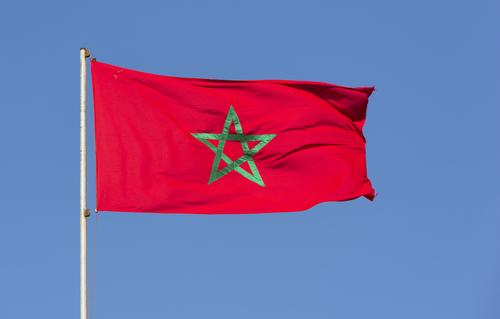
Morocco’s King Mohammed VI announced a constitutional reform process during a 9 March 2011 speech, following popular protests organised by the 20 February Movement. Regime supporters and allies — France and the United States — hailed the move towards reform as “unprecedented.” Morocco was soon referred to as the “model for the region.”
But the government’s repression of freedom of expression has remained steadfast even after the new constitution.
Most recently, in March 2013 dissident rapperMouad Belghouat (alias El Haqed) was released from jail after he served his second, year-long prison sentence over his anti-regime lyrics, which were described as “undermining state authority.”
 In February 2012, 18-year old Walid Bahomane was charged with “defaming Morocco’s sacred values” after he posted a caricature of Mohammed VI on Facebook. Even though he did not create the illustration, Bahomane was convicted and sentenced to one year in prison for the act of sharing the image.
In the same month, Abdessamad Hidour, an activist with the 20 February Movement faced similar charges after a video of him criticising Mohammed VI was uploaded on Youtube. In the video, he likened Mohammed VI’s reign to colonialism and railed against his corrupt practices, landing him a three-year prison sentence.
These are only a few cases out of many that have drawn widespread attention over the nature of the charges as well as the expedited trials that landed all those charged in jail.
Morocco’s latest constitution supposedly grants the right to freedom of expression, but it still leaves room for repression.
The king stacked the constitutional reform deck by appointing the committee to undertake the work. The reforms introduced some liberalisation, but did not address demands for democratisation of the system. It’s an old trick dating to the 1960s when Morocco’s first constitution was drafted following its independence from France.
The latest version of the constitution incorporates human rights language and places greater attention on the legal protection of free speech, such as the following:
- Article 10 grants the opposition the “freedom of opinion, expression, and of assembly.”
- Article 25 states that “The freedoms of thought, of opinion and of expression under all their forms are guaranteed.”
- Article 28 addresses the press, “The freedom of the press is guaranteed and may not be limited by any form of prior censure.”
Out of context, these articles stand as testaments for what regime supporters describe as “landmark reforms.” However in scrutiny and in practice, these articles have proved to be futile. In Article 28, for example, immediately after stipulating the guarantee of freedom of the press, there is a caveat that leaves this article open to interpretation: “All have the right to express and to disseminate freely and within the sole limits expressly provided by the law, information, ideas, and opinion.” Immediately, “freedom of the press” is limited to a legal framework dictated by the regime and this interpretation has come into play in various recent trials where freedom of speech and press has been threatened, especially in instances when the monarchy has been the target of criticism.
The regime’s response to free speech cases following constitutional reform is swift and relatively consistent, indicating no clear break from its past policies. Despite these violations of freedom of expression, Moroccans continue to express their dissent in multiple media, from online publications to protests on the streets, indicating that the regime’s alleged “path toward reforming” is long and winding.
Samia Errazzouki is a Moroccan-American writer and co-editor of Jadaliyya’s Maghreb Page.
28 Jun 2013 | Middle East and North Africa
European ministers and Gulf Cooperation Council (GCC) members will meet on Sunday in Bahrain to discuss the future of their political and economic relations from 2013-2016. Bahrain’s free speech violations in recent weeks should also be up for discussion, says Sara Yasin
Bahrain is introducing new regulations on Voice Over Internet Protocol (VoIP) applications that could mean a ban on programmes like Skype, WhatsApp, Viber, and Tango.
Minister of State for Communication Fawaz bin Mohammed Al Khalifa cited “security considerations” for the new regulations, according to Gulf News. He also said that it was part of “efforts exerted by the GCC to ensure the existence of regulations that preserve the rights of operators and that there is no abuse of communication applications”. Saudi Arabia, also a member of the GCC, blocked Viber earlier this month. The country has also threatened to ban Skype and WhatsApp after the companies refused to comply with the country’s monitoring requests.
The UK National Contact Point (NCP) for the Organisation for Economic Cooperation and Development (OECD) has announced that it will consider a case brought against a UK-based surveillance company for selling technology that was used to spy on Bahraini dissidents. Five organisations filed formal complaints against Gamma International with the OECD, arguing that the company has been in violation of the OECD guidelines by selling its technology to repressive governments. The company has claimed that it “would not supply the product identified in the complaint in a situation where it believed it would be used for the purpose of repressing civil rights”. Last year suspicious e-mails were sent to Bahraini dissidents, including London-based activist Ala’a Shehabi. The e-mails were eventually linked to Gamma International’s FinFisher Suite, which infects email accounts and electronic devices using Trojans. Privacy International, along with the Bahrain Center for Human Rights, Reporters Without Borders, Bahrain Watch, and European Center for Constitutional and Human Rights brought the complaints against the security company in February this year.
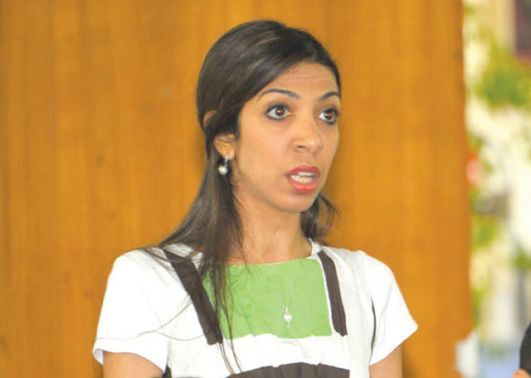
Bahraini journalist Nazeeha Saeed
Manama’s Court of Appeal this week upheld the acquittal of Sarah Al-Moosa, a policewoman charged with torturing France 24 journalist Nazeeha Saeed. Al-Moosa was acquitted October last year, after a Manama Court decided that Saeed’s evidence was “contradictory” and “not consistent” with the forensic report. Saeed presented three medical reports confirming her account of torture while in police custody, after her arrest in May 2011. She was detained while covering a crackdown on pro-democracy protests.
The jail sentence of human rights defender Zainab Alkhawaja has been extended by two months for allegedly assaulting two policewomen. Alkhawaja has been in jail since 27 February this year, serving on charges of “taking part in illegal gathering, unlawful entry to Pearl Roundabout, and insulting a police officer.” The activist’s sentence means that she will be held until February next year. Alkhawaja has been active in documenting and speaking out against human rights violations since the start of unrest in the country in February 2011.
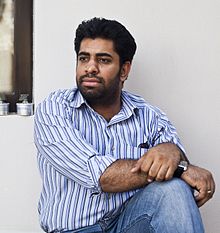
Human rights defender Mohammad Al-Maskati
The head of Bahrain Youth Society for Human Rights (BYSHR), Mohamed Al-Maskati, is currently facing charges for “participation in illegal protest.” The activist appeared before Manama’s Lower Criminal Court on 19 June, but the hearing was then postponed until July. If convicted, Al-Maskati faces up to six months jail time. The Bahrain Center for Human Rights (BCHR) believes that Al-Maskati has been targeted for condemning the regime’s human rights violations at the Human Rights Council in Geneva last September. The activist reportedly received threatening phone calls for his participation, and was targeted by pro-government newspapers following his return. Index has previously condemned Bahrain’s treatment of human rights defenders, including BCHR head Nabeel Rajab, who is serving a two-year jail sentence for “organising illegal gatherings.”
Sara Yasin is an Editorial Assistant at Index. She tweets from @missyasin
28 Jun 2013 | In the News
INDEX POLICY PAPER
Is the EU heading in the right direction on digital freedom?
While in principle the EU supports freedom of expression, it has often put more emphasis on digital competitiveness and has been slow to prioritise and protect digital freedom, Brian Pellot, digital policy advisor at Index on Censorship writes in this policy paper
(Index on Censorship)
BRAZIL
Brazil protesters: Is common ground really necessary?
The bus fare hikes that sparked widespread Brazilian protests have been reversed, but protests continue. Can they last?
(The Christian Science Monitor)
BURMA
Burma censors Time Magazine for coverage of radical Buddhists
Reporters Without Borders condemns the decision by Burmese magazine distributor Inwa Publications not to sell Time Magazine’s July issue, which has cover story about the Burmese Buddhist monk Ashin Wirathu headlined “The Face of Buddhist Terror.”
(Thailand Business News)
CHINA
Rethinking the Firewall as a One-Way Mirror
Maybe he should be known for hanging China’s One-Way Mirror instead constructing its Great Firewall. That’s the message Chinese Internet users are sending as the nation’s best-known censorship engineer, Fang Binxing, said he was retiring. Known as the father of China’s Great Firewall for helping develop tools that keep Internet users in the country from surfing websites available elsewhere, Mr. Fang is facing a fresh line of criticism in the wake of allegations by former U.S. defense contractor Edward Snowden that American intelligence agencies regularly compromised Chinese servers.
(Wall Street Journal)
CANADA
Bill to end ‘hate speech’ portion of human rights law gets mixed reviews but Senate approval
A contentious section of Canadian human rights law, long criticized by free-speech advocates as overly restrictive and tantamount to censorship, is gone for good.
(The Province)
EUROPEAN UNION
Post-Prism leaks, where does the EU stand on digital freedom?
The EU needs to develop a coherent and comprehensive digital freedom strategy. Brian Pellot writes
(Index on Censorship)
HUNGARY
Can free expression survive in Hungary?
Funding has been removed from projects not deemed to be in keeping with the official view of Hungarian culture.
(New Statesman)
SUDAN
Sudanese journalist targeted for allegedly insulting the military
When three journalists were invited to accompany a military official to a town supposedly recaptured from rebels, they did not expect to end up caught in crossfire. One journalist is being targeted after an anonymous and more honest account of the incident appeared online. Reem Abbas reports
(Index on Censorship)
TUNISIA
Tunisian court sets free Femen activists
Three European women who were sentenced to four months in jail for staging a topless protest in support of a detained Tunisian Femen activist have arrived in Paris after being freed a day earlier by a Tunisian court, French media has reported.
(France 24)
TURKEY
Angela Merkel warns Turkey European democratic values ‘non-negotiable’ for EU entry
GERMAN Chancellor Angela Merkel said she welcomed an agreement to reopen talks with Turkey about joining the European Union but warned in the light of the crackdown on Turkish anti-government protests that democratic values were non-negotiable.
(Irish Independent)
Turkey heads for Twitter showdown after anti-government protests
The Turkish government is heading towards a showdown with Twitter after asking it to set up a “representative office” inside the country. The move could presage censorship of the microblogging service it has accused of helping stir weeks of anti-administration protests.
(The Guardian)
UNITED KINGDOM
British media ‘may leave Belfast over province’s refusal to change libel laws’
British media groups may pull out of Northern Ireland because the province is refusing to implement changes to antiquated libel laws, the House of Lords has been warned.
(The Daily Mail)
Wealthy are gagging the media: Nesbitt
The UUP leader and a retired part-time judge yesterday told MLAs that the wealthy and powerful are using the current libel laws in an attempt to “control” the media.
(News Letter)
Libel lawyer: I did not lobby DUP to block bill
Belfast’s most prominent libel lawyer has said that he did not lobby DUP Finance Minister Sammy Wilson to block British libel reforms extending to Northern Ireland.
(News Letter)
Free Speech or Hate Speech? Britain Bans U.S. Anti-Muslim Bloggers
A British decision to bar a visit by two prominent American anti-Islam activists has prompted righteous indignation from the targets of the ban as well as a more measured debate about the limits of free speech.
(The New York Times)
Free Speech Dies in UK: Robert Spencer, Pamela Geller Banned from Entering
“U.S. Bloggers banned from Entering the UK.” That’s how a BBC headline broke the news that authors Pamela Geller and Robert Spencer were denied entry to the country that gave the world the Magna Carta.
(PJ Media)
UNITED STATES
Kickstarter’s Choice: How free should speech be on the web?
“No problem. I don’t want you to do anything you aren’t comfortable with.” Memorize that line. It is your go-to when faced with resistance. Say it genuinely, without presumption. All master seducers are also masters at making women feel comfortable. You’ll be no different. If a woman isn’t comfortable, take a break and try again later.”
(The New Yorker)
Another ‘Free Speaker’ Jailed for Views
Speaking one’s mind in American police state becoming an increasingly dangerous proposition
(American Free Press)
Virginia-based appeals court reinstates NC dietary advice blogger’s free-speech lawsuit
A federal appeals court has reinstated a North Carolina blogger’s lawsuit claiming state officials violated his free-speech rights. The North Carolina Board of Dietetics/Nutrition last year told Stanley resident Steve Cooksey to take down or modify parts of his website offering dietary advice to fellow diabetics. The board said it had received a complaint that Cooksey was operating as a dietician without a state license.
(The Washington Post)
For Censoring Websites, the Muzzle Award Goes to Rhode Island Public Schools
Over the past two decades, the Internet has become a crucial tool in public education, opening schoolchildren to the broader world. Yet concerns about sex, violence, and other inappropriate content has led many school districts to impose draconian restrictions limiting kids’ access to even the most innocuous material.
(WGBH Boston)
Previous Free Expression in the News posts
June 27 | June 26 | June 25 | June 24 | June 21 | June 20 | June 19 | June 18 | June 17
