31 Jan 2013 | Uncategorized
A woman who said she was raped by state security forces and the journalist who interviewed her were charged by police on 29 January in Somalia. Journalist Abdiaziz Abdinur Ibrahim could face four years imprisonment for insulting a government body and two years for inducing false evidence. Abdiaziz has been charged with insulting a government body, simulating a criminal offence and making a false accusation. The alleged rape victim’s husband and two others who introduced her to the journalist were charged with assisting her to secure a profit for the rape allegation and assisting her to evade investigation. The sentences are five and four year terms respectively. The next hearing will be held on 2 February. Abdiaziz had interviewed the woman on 8 January after she said she was raped by soldiers at a displaced persons camp in Mogadishu. He was detained by the Central Investigations Department of the police two days later.

Non-thinker (2012) by Aida Makoto – A less controversial piece from the Japanese artist
The New York Times has claimed it was hacked by Chinese officials over a period of four months. The attacks are thought to have come from hackers connected to the military in a possible retaliation to a series of stories run by the newspaper — alluding to the vast wealth accumulated by premier of the state council Wen Jiabao. The hackers entered into the Times’s systems, accessing information on the personal computers of 53 employees, including China correspondents. Mandiant, an internet security company hired by the newspaper on 7 November, said the attacks were likely to have been part of a spy campaign, after discovering that the computers used for the attacks were the same used for Chinese military attacks on US military contractors in the past. Hackers began attacking the Times on 13 September, around the time the Wen Jiabao story was in its final pre-publishing stages.
A former policeman in the Ukraine has been sentenced to life in prison for the murder of an investigative journalist, it was reported on 30 January. Oleksiy Pukache was the fourth person to be charged with the murder of Georgiy Gongadze, after his dismembered body was discovered in 2000. The other three were sentenced to 12 and 13 years. As Pukache was sentenced, he announced that equal blame for the murder should be placed on the country’s former president Leonid Kuchma and then presidential chief of staff Volodymyr Lytvyn.
Gongadze’s headless body was found in the woods six weeks after he was kidnapped in Kiev — a case which caused huge demonstrations and helped prompt the 2004 Orange Revolution. A lawsuit taken out against Kuchma in March 2011 was dismissed when prosecutors deemed it unlawful.
A Chinese man who was sent to a labour camp for making a joke about politician Bo Xilai has received minor damages after his compensation appeal was rejected. Fang Hong was sentenced to re-education for a year in 2011 for posting a poem online mocking the disgraced politician and his then police chief Wang Lijun. Chongqing’s Dianjiang county court rejected Fang’s request for around £37,400 in psychological damages, instead offering him just over £5,800, as well as rejecting his appeal for a public apology. This was the first known case of officials compensating for Bo-era abuses. Fang said he would ask his lawyers about appealing the ruling, but critics said his initial appeal was rejected to prevent a stream of further claims. Fang was freed in 2012 following the fall of Bo — whose wife Gu Kailai was convicted of the murder of British Businessman Neil Heywood in November 2011.
An art exhibition in Japan depicting cannibalism and Sadomasochism has prompted a debate over artistic freedom of expression. Aida Makoto’s Monument for Nothing exhibition at the Mori Art Museum in Tokyo on 29 January caused protests from Japanese organisation People Against Pornography and Sexual Violence, who wrote to museum director Nanjo Fumio to demand Makoto’s work be removed. Some of the artists pieces, depicted a giant blender filled with naked women, as well as Japanese pensioners playing croquet with severed heads. Makoto is said to use pornography to prompt people to look beneath Japan’s calm exterior and examine the darker elements of Japanese culture.
18 Jan 2013
Hillsborough Family Support Group: UK lobbying group
 For more than 20 years, the Hillsborough Family Support Group lobbied the UK government for a second investigation into the Hillsborough disaster, the human crush at the Sheffield Wednesday stadium, which claimed 96 lives in 1989.
The group, set up by families who had lost loved ones in the disaster, worked tirelessly to keep the case open and to make public information that had been suppressed by the authorities following the disaster. This included the alteration of 164 police statements, 116 of them to delete or change reports, as police sought to shift the blame on to the victims. Their years of effort won the group an Amnesty ‘Long Walk’ award.
Families were integral to a process that focused on finding and publishing documents, rather than a judicial inquiry-style cross-examination of witnesses.
James Jones, the Anglican bishop of Liverpool, who chaired an independent investigation panel into the case, told the Financial Times: “The documents speak for themselves.”
Their work has promoted freedom of expression in the UK by challenging the police cover up and persevering in their campaign for the truth behind the disaster. Following the publication of the independent panel’s report in September 2012, the HFSG has called for fresh inquests to be held and for criminal prosecutions to be brought against those responsible both for the deaths and for perverting the course of justice.
As a result of their combined efforts, the Independent Police Complaints Commission has launched an investigation into police action following the disaster. In December, a high court accepted the attorney general’s application to quash the verdict of a disputed 1990 enquiry, opening the way for new inquests to take place.
Malala Yousafzai, Pakistani education campaigner
 15 year old Pakistani schoolgirl Malala Yousafzai has received global attention for her courage in standing up to the Taliban and her defence of girls’ education. Yousafzai first came to attention when, at the age of 11, she wrote a pseudonymous diary for BBC Urdu, describing the Taliban’s closure of her school in the city of Mingora.
The closure followed the destruction of more than 100 schools in the district. Later in 2009, a journalist and filmmaker from the New York Times made a film about Yousafzai and her struggle to keep up her education. The same year, she began to make public appearances including on television, to advocate for girls’ education.
In October 2012, a Taliban gunman shot Yousafzai in the head and chest for her activism, as she was returning home from school in Pakistan’s Swat district. After receiving life-saving surgery in Pakistan, she was flown to a Birmingham hospital for specialist medical care. She was released in January but will return to undergo cranial reconstruction surgery.
Yousafzai’s rise in prominence has been rapid. In 2011, she chaired a session of the Unicef-supported Child Assembly in Pakistan’s Swat district, was nominated for the International Children’s Peace Prize by Bishop Desmond Tutu and won Pakistan’s National Youth Peace Prize. Following the attempt on her life, in November 2012, more than 60,000 people called for her to be awarded the Nobel peace prize.
In 2012, Yousafzai was named by Foreign Policy magazine on its 2012 list of top global thinkers and nominated for Time magazine’s Person of the Year.
Ales Bialiatski, Belarusian human rights defender
 Ales Bialiatski is a prominent human rights defender in Belarus. As chairman of the Viasna Human Rights Centre and vice president of the International Federation for Human Rights, he dedicated his life to helping victims of human rights until his imprisonment in August 2011. Bialiatski was sentenced to four and a half years for alleged tax evasion.
A defender of freedom of expression and human rights since Soviet days, when he led efforts to memorialise Belarusian victims of Stalin’s purges, Bialiatski founded the human rights NGO Viasna in Minsk in 1996 to provide financial and legal aid to prisoners of conscience and their families.
The vice president of the International Federation for Human Rights, his work was honoured internationally several times before his arrest. Bialiatski was jailed for using money in personal bank accounts in Lithuania and Poland to support Viasna’s human rights work in Belarus. The organisation was unable to register in Belarus, and therefore unable to open a bank account there.
The Minsk authorities claimed he had been tried and jailed lawfully. In December 2012 a UN Working Group rejected this position and ruled that Bialiatski was in fact being arbitrarily detained by the government in contravention of UN Human Rights conventions and that he should be immediately released and awarded compensation.
Bialiatski’s arrest was part of an on-going crackdown against critics of President Alexander Lukashenko, known as Europe’s last dictator. Following his disputed re-election in December 2010, seven opposition candidates were arrested.
Meanwhile freedom of expression continues to be severely restricted in Belarus. Lukashenko’s regime has passed several laws to muzzle critics, including one to ban silent protests and even clapping in the streets.
Girifna, Sudanese youth movement
 Girifna, a Sudanese youth movement calling for non-violent resistance, has been taking the country by storm. The group, whose name comes from the Arabic for “We are fed up”, was set up by university students in October 2009 to encourage their peers to vote in the 2010 election.
Combining demands for freedom of association with monitoring and information campaigns, members distribute information about human rights violations and organise peaceful protests.
Girifna stands apart not just because of the age of its members but also its ethnic diversity.
Though women’s voices are widely suppressed in Sudan, they play an important role in Girifina’s campaign and information work. In July 2012, mothers, daughters and sisters marched alongside each other as part of the Kandake Protest (the Protest of Strong Women). As well as traditional methods of campaigning such as leafleting and organising youth forums on issues of social justice, Girifna uses the power of the internet to spread its message.
One of the group’s most successful campaigns involved posting the testimony of a woman who was kidnapped and gang-raped by members of the security forces on YouTube – an unprecedented move in a country where speaking out about rape is considered shameful. But Girifna’s actions have not been without repercussions. Around 2,000 people were arrested following the June protests with detainees held incommunicado and without access to lawyers. Many members of the group have been arrested, detained, tortured and sexually assaulted.
Girifna has been targeted by the Sudanese authorities following a wave of demonstrations that began in June 2012. Several members of Girifna have been detained without being able to speak to their families or lawyers. Some say they were tortured in detention. Despite this attempt to silence them, Girifna continue to distribute information and organise activities, including peaceful protests calling for the respect and protection of human rights in Sudan.
17 Jan 2013 | Awards
Kostas Vaxevanis, Greek journalist
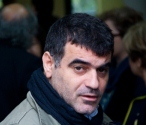 The arrest of Greek investigative journalist Kostas Vaxevanis on 28 October 2012, just days after he published a list of more than 2,000 suspected tax evaders, drew international condemnation.
He was found not guilty of breaking data privacy laws in November 2012, but the Athens public prosecutor subsequently ordered a retrial. If he is sentenced, he faces up to two years’ imprisonment or a fine.
Vaxevanis published the so-called “Lagarde List” of wealthy Greeks with Swiss bank accounts in his weekly magazine Hot Doc in October 2012. The list is named after IMF head Christine Lagarde, who handed it over to her Greek counterpart in 2010 when she was French finance minister.
Successive Greek governments have failed to prosecute a single person on the list or any other high-profile individual for tax evasion. Vaxevanis argues that publication of the list was in the public interest. He told the Guardian: “The country is governed by a poisonous combination of politicians, businessmen and journalists who cover one another’s backs … Had it not been for the foreign media taking such an interest in my own story, it would have been buried.”
Dimitris Trimis, head of the Athens Newspaper Editors Union, told the BBC that the pressure on press freedom in Greece was the most intense of his career. Before Vaxevanis’ arrest two state TV presenters were taken off air after discussing a minister’s response to claims by anti-fascist demonstrators that they had been tortured by the police.
Soon after Vaxevanis’ arrest, journalist Spiros Karatzaferis was detained after announcing he would leak damaging documents about the country’s faltering economy. “The government feels insecure,” Trimis said. The only way it feels it can convince society of its policies is to try to manipulate the media through coercion.
Photo: Demotix / Kostas Pikoulas
Mosireen, Egyptian citizen media collective
 Founded in Egypt in early 2011, the Mosireen Collective sought to support and promote the growing wave of citizen journalism that had emerged in the lead-up to the ousting of Hosni Mubarak, when members of the public captured the protests and police brutality on their mobile phones.
Working as facilitators, producers and archivists, Mosireen provide both online and offline space to share this wave of citizen news and people’s perspectives with the wider world.
Whilst none of the Mosireen founders were journalists by profession – they come from a variety of other disciplines, from urban planning to graphic design and mechanics – they recognised the importance of the independent media voices emerging from the revolution.
Mosireen’s media centre in Cairo is a community-supported space, and although professionals also use the centre, the focus is on providing ordinary people with skills, equipment, and know-how. The collective has since trained several hundred people with the output of their work available to download, stream, screen and distribute for free on a non-commercial basis. Footage from the archive is also regularly screened at Tahrir Cinema, a free open-air cinema off Tahrir Square (pictured). It continues to film the on-going discontent to this day.
Mosireen – a play on the Arabic words for “Egypt” and “determined” – also holds regular public events and talks in its workspace in downtown Cairo. The opportunity for the public to get involved in all aspects of production allows for an unprecedented level of interactivity in the creation of Egyptian history. All of which is in line with another of Mosireen’s objectives: to counter the narratives put forward by state-owned media through the presentation of multiple viewpoints.
Ta Phong Tan, imprisoned Vietnamese blogger
 Ta Phong Tan is one of three Vietnamese bloggers, collectively calling themselves the ‘Club for Free Journalists’, at the centre of a draconian clampdown by the country’s authorities. Vietnam is one of the world’s most restrictive countries for freedom of speech and the press. Only China, Eritrea and North Korea come lower on RSF’s press-freedom index.
Tan (pictured) and her fellow bloggers were arrested in September 2012 and charged with ‘conducting propaganda against the state’ in articles that allegedly ‘distorted and opposed’ the Vietnamese government.
In fact in over 700 articles on Tan’s blog Cong Ly va Su That (‘Justice and Truth’) she exposed the extent of corruption in the country. She covered a broad range of social issues, including the maltreatment of children, corruption, unfair taxation and illegal land confiscations by local party officials.
Before becoming a journalist, Tan worked as a police woman in Hanoi, giving her an insight into the workings of the system. On 4 October 2012, after a trial lasting just one day, Tan was sentenced to spend the next ten years in jail, with an additional five years of house arrest upon release. She refused to plead guilty.
This month a court in Vinh in Nghe An province, northern Vietnam, sentenced 14 activists, many of them bloggers, to up to 13 years in jail followed by several years of house arrest. The BBC reported that their convictions relied on loosely worded national security laws — in this instance article 79 of the penal code, which vaguely prohibits activities aimed at overthrowing the government. The Committee to Protect Journalists reported that state officials had beaten and stripped online reporter Nguyen Hoang Vi while detained by Ho Chi Minh City police.
“These shocking prison sentences confirm our worst fears — that the Vietnamese authorities have chosen to make an example of these bloggers, in an attempt to silence others,” Rupert Abbott, Amnesty’s researcher on Vietnam, told the New York Times, adding that freedom of expression in the country was “dire and worsening.”
Before the trial began, Tan’s mother killed herself in a self-immolation protest against the treatment of her daughter, and the violence, harassment and threats of deportation levelled against the family.
Sadiye Eser and Turkey’s imprisoned journalists
 Sadiye Eser (pictured) who writes for the leftist daily Evrensel (Universal) Newspaper, was arrested on 10 December and is still being held. The most recent reports claimed she is now likely to be being held at Bakirkoy Women’s prison.
Police asked Eser about political rallies she had covered as a journalist, as well as the notes she had kept on them, according to a statement by the Journalists’ Union of Turkey.
Broadly worded anti-terror and penal code statutes allow the authorities to conflate coverage of banned groups and special investigations with outright terrorism or other anti-state activity.
These statutes ” make no distinction between journalists exercising freedom of expression and [individuals] aiding terrorism,” said Mehmet Ali Birand, an editor with the Istanbul-based station, Kanal D, speaking to Committee to Protect Journalists (CPJ).
Censorship in Turkey remains endemic. CPJ estimated that Eser’s detention brought to 50 the number of people in jail for journalistic activity in the country. Other organisations suggest the number is even higher. Turkey currently is ahead of even Iran and China in the number of journalists it is known to have in prison.
There is also more widely a chilling atmosphere for free expression and press freedom in Turkey leading to sackings of journalists and self-censorship: as the European Commission said in its 2012 progress report on Turkey: “On a number of occasions journalists have been fired after signing articles openly critical of the government. All of this, combined with a high concentration of the media in industrial conglomerates with interests going far beyond the free circulation of information and ideas, has a chilling effect and limits freedom of expression in practice, while making self-censorship a common phenomenon in the Turkish media.” They also point out that 16641 cases in total were pending against Turkey at the European Court of Human Rights in September 2012. In March 2012, Orhan Pamuk, a Turkish writer and Nobel laureate, was charged and fined for a statement in a Swiss newspaper that “we have killed 30,000 Kurds and one million Armenians.”
