27 Sep 2013 | Digital Freedom, News, Pakistan
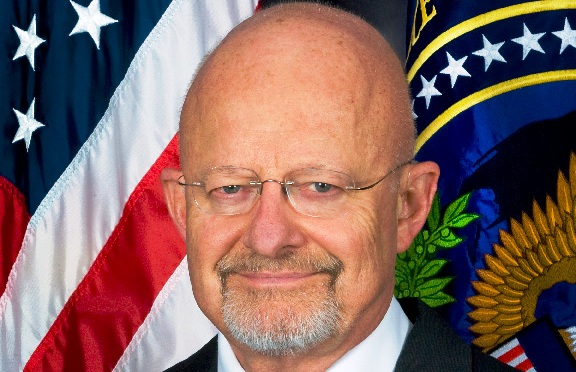
NSA head James R Clapper
Dear Mr Clapper,
We are reaching out to you with important information that may be of crucial value in preserving your organisation’s integrity and purpose. As citizens of Pakistan, we feel there’s an unexplainable bond, a debt if you’d like to call it, that we owe to your agency; after all, we are the second most interesting people in the world in your ever-vigilant eyes. We are therefore writing to raise with you an issue of extreme importance & national security.
The information here is highly critical and can jeopardise our security if leaked; you see, the world does not really recognise whistleblowers as yet. We trust you to keep this to yourself.
The government of the United Kingdom and the government of Canada are both involved in activities that may be considered by you a grave violation of the sovereignty of your organisation. Independent research group The Citizen Lab – truly independent as they do not take government or corporation support – has revealed the presence of Netsweeper and FinFisher equipment in Pakistan, belonging to companies with headquarters in Canada and the United Kingdom respectively.
It is baffling that these two respected governments, your notable allies, have not taken the necessary steps to disable these equipments, or at the very least stopped the trade. FinFisher for one has been used actively in Bahrain, aiding the Bahraini government in cracking down on activists, including an activist your government has lauded and awarded. This seems to us as a painful revelation that shows a lack of faith in your agency from your own allies.
As far as we are concerned, we don’t understand why these companies need to sell this equipment to our government, and why our government needs to spy on us when your organisation has dedicated staff, labour, and, not to forget, extensive budgets to be able to do just that.
With a heavy heart, we hope to keep you informed (just in case you missed out) and hope that you will take strict action to strike down these Weapons of Mass Surveillance that are in blatant disregard, grossly disrespectful, and a gross violation of your integrity and the national security values of your country.
Yours sincerely,
Citizens of the Second Most Interesting Nation in the World
SIGN INDEX’S PETITION AGAINST INTERNET SURVEILLANCE
This article was originally posted on 27 Sept 2013 at indexoncensorship.org
18 Jul 2013 | Digital Freedom, News, Pakistan
A Pakistani human rights organisation has called for an investigation into an alleged “secret censorship deal” between the country’s government and Facebook. Sara Yasin reports
According to Bytes for All (B4A), a representative of the Pakistan Telecommunication Authority claimed on 4 July that “the government of Pakistan has an existing ‘arrangement’ with Facebook, which allows them to have ‘undesirable content and Facebook pages blocked as per directions from the authority”.
In an open letter to the Global Network Initiative (GNI) — of which Facebook is a member — B4A said that if true, it is “betrayal by the company towards the users of Facebook in Pakistan. The claim is upsetting because if true, it breaches the trust of its users, vehemently opposes what Facebook publicly proclaims in its principles, and is in stark contrast to the social network’s commitment to freedom of expression, peaceful assembly, and association as a member of the Global Network Initiative”.
On 22 May, at this year’s Stockholm Internet Forum, it was announced that Facebook would join the GNI — a multi-stakeholder group dedicated to promoting and defending freedom of expression in the Information and Communication Technology (ICT) sector.
“As the largest social network, both in Pakistan and the global cyberspace, we feel that Facebook following its own principles and the principles of GNI can go a long way in ensuring that citizen’s right to access, privacy, and freedom of expression are preserved even under hostile and difficult environments”, said B4A.
B4A has also been embroiled in a battle to reverse a September 2012 decision to block YouTube. The country decided to block the video sharing site for refusing to take down a clip from controversial anti-Islam film “Innocence of Muslims.”
Sara Yasin is an Editorial Assistant at Index. She tweets from @missyasin
13 May 2013 | Asia and Pacific
We are a consortium of NGOs and individuals— ARTICLE 19, Association For Progressive Communications, Access Now, Bolo Bhi, Centre For Democracy & Technology, Centre For Peace & Development Initiatives, Christopher Parsons,Chunri Chuopaal, Digital Rights Foundation, Electronic Frontier Foundation, Free Press, Global Voices Advocacy, Index On Censorship, Intermedia Pakistan, Individual Land Pakistan, Jacob Appelbaum (The Tor Project), Leila Nachawati, Privacy International, Reporters Without Borders, Renata Avila (Human Rights & IP lawyer), Simon Davies (Privacy Surgeon), Institute for Research Advocacy and Development Pakistan, The Internet Democracy Project India, and Nawaat — committed to respecting user privacy and promoting freedom of expression and access to information.
We express our dismay and condemnation over the presence of a FinFisher Command and Control server on a network operated by the Pakistan Telecommunication Company Limited (PTLD’s). FinFisher, developed by a UK-based company Gamma International, has been used to target activists in Bahrain. Privacy International is currently engaged in a lawsuit over the export of FinFisher, and has also filed a complaint with the OECD.
In February 2012, alongside an international coalition of civil society groups, we actively campaigned to stop the impending nation-wide firewall and to inform the government and international surveillance companies of the repercussions of the firewall would have on academia, businesses, trade, and civil society. As a result, five major international companies known to sell surveillance, filtering, and blocking systems publicly committed not to apply for the government’s call for proposals last year.
In March 2013 the Ministry of Information Technology made a commitment to shelve their plans for acquiring the technology for URL filtering and blocking. With the Citizen Lab report we have now learnt that servers at PTLD, one of the largest ISPs in the country, are hosting a command and control server for FinSpy. Based on the report, there are two possibilities: (1) elements of the Government of Pakistan are deploying FinFisher trojans or (2) a foreign government is using a server inside Pakistan for a digital espionage campaign. Either one of these possibilities is highly troubling, and the findings warrant immediate investigation. Moreover, given that a Pakistan Telecommunications Authority’s representative has admitted in court that PTCL has acquired a traffic filtering system, we feel that this acquisition and surveillance capability represents a further threat to the free flow of information, user rights, freedom of expression and privacy in Pakistan.
As members of Pakistan’s civil society and organizations committed to ensuring the government upholds democratic principles in Pakistan, and with concerns about restrictions on privacy as well as access to information, we strongly urge PTCL to immediately investigate the existence of FinFisher Command and Control Servers and to publicly disclose their findings. PTCL to should follow the example of the Canadian ISP SoftCom that investigated and then disabled the FinFisher server on its networks that was similarly identified by Citizen Lab in March 2013. By keeping their users in the dark any further PTCL would harm open and secure access in Pakistan. PTCL should under no circumstances allow FinFisher or other remote intrusion or filtering tools within their network, as their presence directly violates user’s rights and privacy, as well as threatening Pakistan’s network security.
If PTCL wants to further support business, innovation, entrepreneurship, trade, international investment, academia and human rights, it should immediately investigate and disable this espionage equipment on its network.
Signed:
ARTICLE 19, Association For Progressive Communications, Access Now, Bolo Bhi, Centre For Democracy & Technology, Centre For Peace & Development Initiatives, Christopher Parsons,Chunri Chuopaal, Digital Rights Foundation, Electronic Frontier Foundation, Free Press, Global Voices Advocacy, Index On Censorship, Intermedia Pakistan, Individual Land Pakistan, Jacob Appelbaum (The Tor Project), Leila Nachawati, Privacy International, Reporters Without Borders, Renata Avila (Human Rights & IP lawyer), Simon Davies (Privacy Surgeon), Institute for Research Advocacy and Development Pakistan, The Internet Democracy Project India, and Nawaat
11 May 2013 | Asia and Pacific
Pakistan’s historic election is history. Historic because it is the first time a government has completed its term without being ruthlessly axed, toppled by military dictatorship or unelected politicians.
It was also one of the bloodiest elections in the country’s history. At the end of three weeks of campaigning, at least 117 people including election candidates have been killed. Former Prime Minister Nawaz Sharif began talks on Sunday to form a new government, The New York Times reported.
As the campaigns proceeded, the rift became clearer: the Taliban threatened and attacked specific political parties namely, Awami National Party, Pakistan People’s Party and Muttahida Qaumi Movement, derailing their campaigns to the point where the parties had to shut down their election offices. Even that didn’t stop the terror attacks, as locked and empty political party offices continued to be targeted. The Taliban claimed that the political parties being targeted were secular and worked against the ideology of Islam. Although the Taliban were the biggest perpetrators, they weren’t the only ones: political rivalries and attacks continued throughout the country during campaign time. Only Punjab, one of the country’s largest provinces, remained relatively terror free.
 Moreover, the political parties that were not on the Taliban hit list shied away from calling out the Tehrik-e-Taliban Pakistan over the attacks, despite condemning the attacks vocally. Eventually, as a gesture of solidarity, Pakistan Tehreek – e – Insaaf, party led by Imran Khan, announced to it would withdraw all its scheduled events for election campaigning in Karachi.
Violence, Moral Policing and the Constitution
Violent attacks by far have been the biggest deterrent to political campaigning this election, sustaining attacks because of their secular ideology shunned political workers from expressing their views, further bifurcating the already polarised political and social discourse.
But hindrance to freedom of expression began as early as the election process itself. The election commission sparked a huge debate when the nomination papers of a renowned columnist were rejected by the district returning officer, or RO, “for writing against the ideology of Pakistan” in his columns. But even more concerning was the fact that the objection was raised by invoking the constitution’s Article 62 & 63, introduced during the much-reviled dictatorship of Zia-ul-Haq. To paraphrase, the articles made it mandatory for prospective political candidates to have a clean criminal record; of being of noble and sound character reflecting the Islamic beliefs and of not having ever worked against the security and interest of the nation or having criticized the military or the judiciary, amongst other things.
The account of journalist and politician Ayaz Amir was even more revealing: “I was told that in my column I have endorsed liquor drinking. I really don’t know from where the RO has got this impression, as I have not written anything like this.” As fellow journalist Omar Warraich aptly summed it, it seemed Amir was being disqualified for a thought crime. Amir challenged this in the Lahore High Court, which reversed the RO’s decision, allowing Amir to contest elections. However, that hasn’t stopped the much needed debate around Pakistan’s amended constitution, which successfully cripples freedom of speech, expression and even privacy by subjecting it to ‘reasonable restrictions’ from vague terms like ‘glory of Islam’ to a subjective issue of ‘morality’.
The missing voters
It’s hard not to acknowledge the void left by the missing voters — women, the nearly 1.5 million people of Gilgit Baltistan and the four million Ahmadis. Although their plights may vary, the issue remains the same — a significant segment of the society will watch the elections unfold from a distance and not enough has been done to ensure their participation.
The Ahmadiyya community has boycotted the elections process for at least three decades after a law declared them ‘non-Muslims’. This was exacerbated in 2011 when the election commission created a separate voters list for the Ahmadis. This action marginalised them even further. Even though Pakistan’s Supreme Court took the discrimination complaint under serious consideration, it ruled that the court couldn’t over rule a constitutional command. The past few years have been tumultuous for the country’s religious minorities, the boycott from the Ahmadiyya community might deter other religious minorities from voting.
A report published last year by Pakistan’s Fair & Free Election Network, approximately 10 million Pakistani women were unaccounted for in the draft electoral rolls released in 2011. With the exception of a few, political parties have remained largely negligent of mobilising the women voters. Despite powerful women in the assembly and strikingly powerful stories of women candidates the issue remains: How many women will turn up to exercise their right to vote? Will the stories of candidate Veeru Kohli, bonded labourer from Hyderabad and Badam Zari of Bajaur inspire more women voters to practice their rights? Reports suggest otherwise.
More Pakistan Coverage >>>
• Global coalition of NGOs call to investigate and disable FinFisher’s espionage equipment in Pakistan
Sana Saleem is a Karachi-based journalist and human rights activist working for advocacy group Bolo Bhi.
