20 Dec 2013 | News, Politics and Society, Ukraine
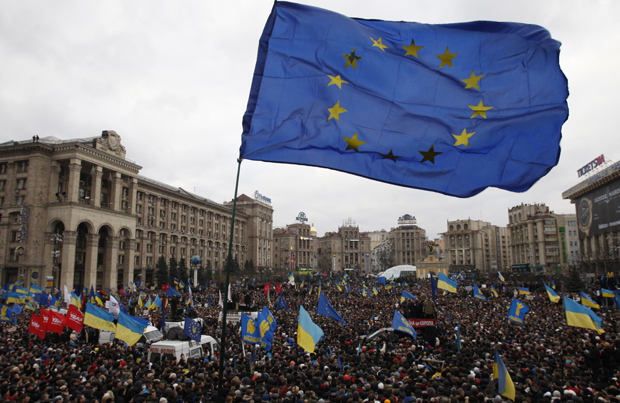
(Photo: Anatolii Stepanov / Demotix)
The coverage of Ukrainian protests in the Russian media suggests a centralised anti-EU message and has provoked outrage in Kiev.
At first, Russian TV channels appeared to broadcast inaccuracies only on the numbers taking part in the demonstrations. Despite clear evidence on the ground that tens of thousands or even hundreds of thousands were taking part, Russian reporters described scenes as “a few hundred protesters.”
Russia’s state-run First Channel then chose to dramatise Ukraine’s alleged descent into anarchy with a montage depicting combat scenes from Yugoslavia in the early 1990s, accompanied by a morbid musical soundtrack.
Komsomolskaya Pravda, a popular Russian daily, led on Tuesday with “Ukraine may split into several parts” with an illustrative map to depict the predicted chaos. The next day, a headline read “Western Ukraine is preparing for civil war.”
Overall – the message from the state-controlled Russian media seems to have been – “Ukraine is suffering at the fate of dangerous opposition militants.”
Putin has lent his weight to the propaganda, describing unrest in Kiev as “more of a pogrom than a revolution” and calling protesters “well-prepared and trained militant groups.”
“Ukraine is like a liner going in a circle,” commented a high-profile Russian journalist this week. “The passengers are calmed by the fact that Europe is near, there is not far to go. In reality the economic collapse of the whole country lies ahead…Passengers will be hurt. Some will not survive.”
The journalist quoted is Dmitry Kiselyov, who Vladimir Putin recently named as head of a re-launched Russia Today — as part of the take-over of previous state broadcaster RIA Novosti.
The shutdown of RIA Novosti was seen as a further degradation in the impartiality of the Russian media — despite being state-owned it had offered some balanced reporting on Russian domestic and foreign policy.
Media analysts in Russia have commented that Kiseylov’s appointment to Russia Today, now the sole government news agency, may have derived from his loyal allegiance to Putin and his ability to propagandise in his favour.
In support of recent anti-homosexual legislation passed by the Russian government, Kiselyov had commented.
“Fining gays is not sufficient -– they should not be allowed to give blood, or sperm and in case of a car accident, their hearts should be burnt or buried as useless”
Kiselyov’s assessment on Maidan went further than his dubious ship analogy — suggesting on his weekly TV show that Sweden, Lithuania and Poland may be manipulating events behind the scenes as revenge for a battle the Russians won in the early 18th century, a battle that happened to be fought in present-day Ukraine.
“It looked like thirst for revenge for Poltava,” argued Kiseylov, citing the name of a battle that took place in 1709.
He then labelled Ukrainian opposition leader and boxer Vitali Klitschko, and his brother Vladimir, as “gay icons,” before describing the “ancient African military techniques,” which the protesters were apparently employing.
He also accused protesters of aggressively firing tear gas at police (when multiple Ukrainian and European media sources confirmed the opposite was correct), and said that opposition leaders had brought students to the protest as sacrificial lambs for the security forces. In fact, police had gone out and savagely beaten groups of students hours before.
Finally, he describes the “writers” of the revolution as a Ukrainian-American-European conspiracy, against Russia.
Skewed Russian coverage has not gone unnoticed in Ukraine. A journalist interrupted a live broadcast from Rossiya 24 – handing over a fake “Oscar” statue in recognition of the “lies and nonsense” that was being reported.
Before being pushed off frame, the Ukrainain Vitaly Sedyuk was able to blurt out “We love Russians but after the way you covered events….”
The Russian reporter ended his piece still holding the fake Oscar statue in his hand.
In contrast to relatively objective reporting in Ukraine, the reporting of Kiseylov and other Russians, combined with a media landscape which has now lost most of its independent voices, indicates the strongest move yet towards total state control of the Russian media.
This article was published on 20 Dec, 2013 at indexoncensorship.org
3 Dec 2013 | Campaigns
Members and partners of the Human Rights House Network condemn in the strongest terms the excessive use of force by Ukrainian authorities to disperse peaceful demonstrations, following the refusal by Ukraine to sign the European Union association agreement.
Tuesday, 03 December 2013, by Human Rights House Foundation (HRHF)
In their joint letter [download on the right], member and partner NGOs of the Human Rights House Network (HRHN) also call upon President Viktor Yanukovych to immediately revoke measures aiming at using force against protestors and release all protestors and journalists detained, and ensure that relatives of injured and arrested protestors and journalists were informed of their situation.
The 29-30 November 2013 demonstration on Maidan Nezalezhnosti, Kyiv’s Independence Square, essentially of students and activists, was peaceful until the police used excessive force to disperse it. The NGOs call upon Ukrainian authorities to undertake an independent and transparent investigation on the unlawful dispersal of the peaceful protest, and bring those responsible to justice, as requested by one of the members of the Human Rights House Kyiv, the Ukrainian Helsinki Human Rights Union.
Another member of the Human Rights House Kyiv, the Information Centre for Human Rights reports that 52 journalists were injured by police forces or by stones and grenades thrown by violent elements. The Centre for Civil Liberties, also a member of the Human Rights House Kyiv, is coordinating the legal aid “EuroMaidanSOS” since Sunday night. The Centre has received around 200 phone calls during the weekend. So far, they have registered 75 complaints related to arrests, beatings and people who were temporarily taken away from the 29-30 November demonstration. This does not include clashes with the police in front of the Presidential Administration Sunday 1 December. The NGOs call upon Ukrainian authorities to immediately and unconditionally drop all charges against peaceful protestors and journalists, release and compensate all of them, and ensure that they can carry out their work.
According to “EuroMaidanSOS”, 14 people (youth activists and students apparently) have disappeared, since the police intervention on 29-30 November 2013 at Maidan Nezalezhnosti. “EuroMaidanSOS” and human rights groups have called hospitals but not found information allowing them to trace back to the disappeared people. The NGOs call upon President Viktor Yanukovych to ensure that law enforcement authorities inform relatives of injured and arrested protestors of their situation. Ukraine has the obligation to protect anybody from being a victim of an enforced disappearance, even more so when injured or arrested by law enforcement authorities at a peaceful protest.
In their joint letter, the NGOs call upon you President Viktor Yanukovych to follow advice from Ukrainian civil society, including by:
Taking concrete measures aiming at stopping the use of force by police to disperse protestors, even if they occupy governmental buildings, and to publicly acknowledge the right of anybody to peacefully protest and the duty of the State security forces to protect peaceful protestors;[1]
Undertaking an independent and transparent investigation on the unlawful dispersal of the peaceful protest of 29-30 November 2013, and ensure that those responsible are brought to justice and do not enjoy impunity; Immediately and unconditionally dropping all charges against peaceful protestors and journalists, release and compensate all of them; Ensuring that law enforcement authorities inform relatives of injured and arrested protestors of their situation, protecting everybody from being a victim of an enforced disappearance, including by immediately investigating the cases of 14 people disappeared following the police intervention on 29-30 November 2013 at Maidan Nezalezhnosti;[2]
Ensuring that human rights NGOs and journalists are able to monitor assemblies and report on police violence without fearing retaliation, and that human rights defenders and activists are not charged for participating in peaceful protests.[3]
Signed by:
Human Rights House Kyiv (on behalf of the following NGOs):
Ukrainian Legal Aid Foundation
Ukrainian Helsinki Human rights Union
Human Rights Information Center
Association of Ukrainian Human Rights Monitors on Law Enforcement (Association UMDPL)
Azerbaijan Human Rights House (on behalf of the following NGOs):
Women’s Association for Rational Development
Institute for Reporters’ Freedom and Safety
Society for Humanitarian Research
Media Rights Institute
Association for the Protection of Women’s Rights in Azerbaijan after D. Aliyeva
Legal Education Society
Azerbaijan Lawyers Association
Barys Zvozskau Belarusian Human Rights House in exile, Vilnius
Human Rights House Belgrade (on behalf of the following NGOs):
Helsinki Committee for Human Rights in Serbia
Lawyers Committee for Human Rights (YUCOM)
Belgrade Centre for Human Rights
Human Rights House Sarajevo (on behalf of the following NGOs):
Association Transitional Justice Accountability and Remembrance in Bosnia and Herzegovina
Helsinki Committee for Human Rights in Bosnia and Herzegovina
Renesansa
Serbian Civic Council
Human Rights House Tbilisi (on behalf of the following NGOs):
Article 42 of the Constitution
Caucasian Centre for Human Rights and Conflict Studies
Georgian Centre for Psychosocial and Medical Rehabilitation of Torture Victims
Human Rights Centre
Union Sapari – Family without Violence
Human Rights House Oslo (on behalf of the following NGOs):
Human Rights House Foundation
Human Rights House Voronezh (on behalf of the following NGOs):
Charitable Foundation
Civic Initiatives Development Center
Confederation of Free Labor
For Ecological and Social Justice
Free University
Golos
Interregional Trade Union of Literary Men
Lawyers for labor rights
Memorial
Ms. Olga Gnezdilova
Soldiers Mothers of Russia
Voronezh Journalist Club
Voronezh-Chernozemie
Youth Human Rights Movement
Human Rights House Yerevan (on behalf of the following NGOs):
Helsinki Citizens’ Assembly – Vanadzor
Socioscope
Jurists against Torture
Human Rights House Zagreb (on behalf of the following NGOs):
Association for Promotion of Equal Opportunities for People with Disabilities
B.a.B.e. – Be active, Be emancipated
Centre for Peace Studies
Documenta – Centre for Dealing with the Past
GOLJP – Civic Committee for Human Rights
Svitanje – Association for Protection and Promotion of Mental Health
Election Monitoring and Education Center, Azerbaijan
Helsinki Foundation for Human Rights, Poland
Human Rights Club, Azerbaijan
Index on Censorship, United Kingdom
26 Nov 2013 | Campaigns, European Union, United Nations
In a joint letter to Baroness Catherine Ashton, High Representative for Foreign Affairs & Security Policy and Vice-President of the European Commission, Index on Censorship has joined 66 human rights NGOs from European Union member States, States from the European Partnership and States in cooperation with the European Union stress that the intent to reduce OHCHR’s budget is a signal in the wrong direction. The programme budget for the biennium 2014-2015 for 2014-2015 already decreases the budget of OHCHR by a net 4.8%, whilst the promotion and protection of human rights represents only 3% of the overall UN budget.
Keeping in mind that within the overall UN budget, the share allocated to the promotion and protection of human rights represents approximately 3%, the intent to reduce OHCHR’s budget is a signal in the wrong direction. Soon the Human Rights Council will celebrate its 10 years of existence – we believe that all States and group of States aiming at promoting human rights should ambition to raise that share to at least 10% to celebrate the 10 years of existence of the Council, which will be made impossible if the European Union continues to pressure for more and more “across the board” cuts in the UN’s human rights budget.
20 years after the Office was established, does the European Union really want to a force contributing to undermining the sustainability of OHCHR, hence weakening the voice for human rights within the UN system?
Azerbaijan Human Rights House (on behalf of the following NGOs):
Association for Protection of Womens’ Rights
Azerbaijan Lawyers Association
Human Rights Center of Azerbaijan
Institute for Peace and Democracy
Legal Education Society
Women’s Association for Rational Development
Media Rights Institute
Public Union of Democracy and Human Rights Resource Centre
Society for Humanitarian Research
Barys Zvozskau Belarusian Human Rights House in exile, Vilnius
Human Rights House Belgrade (on behalf of the following NGOs):
Belgrade Centre for Human Rights
Lawyers’ Committee for Human Rights
Helsinki Committee for Human Rights in Serbia
Policy Center
Human Rights House Kiev (on behalf of the following NGOs):
Association of Ukrainian Human Rights Monitors on Law Enforcement (Association UMDPL)
Center for Civil Liberties
Human Rights Information Center
Human Rights House Tbilisi (on behalf of the following NGOs):
Article 42 of the Constitution
Caucasian Centre for Human Rights and Conflict Studies
Georgian Centre for Psychosocial and Medical Rehabilitation of Torture Victims
Human Rights Centre
Media Centre
Union Sapari – Family without Violence
Human Rights House Oslo (on behalf of the following NGOs):
Human Rights House Foundation (HRHF)
Health and Human Rights Info
Norwegian Helsinki Committee
Human Rights House Voronezh (on behalf of the following NGOs):
Charitable Foundation
Civic Initiatives Development Centre
Confederation of Free Labor
For Ecological and Social Justice
Free University
Golos
Interregional Trade Union of Literary Men
Lawyers for labor rights
Memorial
Ms. Olga Gnezdilova
Soldiers Mothers of Russia
Voronezh Journalist Club
Voronezh-Chernozemie
Youth Human Rights Movement
Human Rights House Yerevan (on behalf of the following NGOs):
Armenian Helsinki Association
Helsinki Citizens’ Assembly – Vanadzor
Jurists against Torture
Guaranteeing Equal Opportunities
Shahkhatun
Socioscope
Women’s Resource Center
Human Rights House Zagreb (on behalf of the following NGOs):
Association for Promotion of Equal Opportunities for People with Disabilities
B.a.B.e. – Be active, Be emancipated
Centre for Peace Studies
Documenta – Centre for Dealing with the Past
GOLJP – Civic Committee for Human Rights
Svitanje – Association for Protection and Promotion of Mental Health
Russian Research Centre for Human Rights (on behalf of the following NGOs):
Human Rights Network Group
Independent Psychiatric Association of Russia
Moscow Centre for Prison Reform
Moscow Helsinki Group
Mother’s Right Foundation
Non-violence International
Right of the Child
Right to Live and Have Civil Dignity
Social Partnership FoundationUnion of the Committees of Soldiers’ Mothers of Russia
Helsinki Foundation for Human Rights, Poland
Human Rights Club, Azerbaijan
Rafto Foundation, Norway
Human Rights House Foundation (HRHF)
Index on Censorship
28 Oct 2013 | Magazine, News
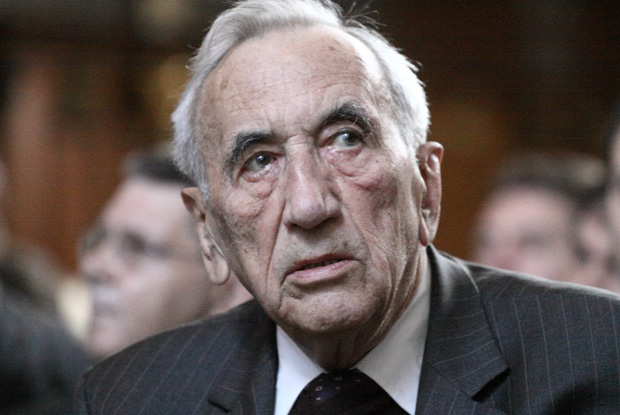
Tadeusz Mazowiecki, Poland’s first post-Communist Prime Minister, died today. In 1995, he spoke to Index on Censorship magazine about his decision to resign as Special Rapporteur of the UN Commission on Human Rights in former Yugoslavia, in protest of the inaction of the international community in the face of the conflict
—
In 1989 Tadeusz Mazowiecki, a founding member of Solidarity, was elected the first non-Communist premier of Poland. Two years later, after resigning his premiership, he became Special Rapporteur of the United Nation’s Commission on Human Rights in former Yugoslavia. In July this year, in his letter of resignation, he said, ‘One cannot speak about the protection of human rights with credibility when one is confronted with the lack of consistency and courage displayed by the international community and its leaders. Dawid Warsawski talked to him for Index
Following your resignation in the wake of the fall of Srebrenica, you have become a symbol of resistance for critics of the UN mission in Bosnia. Are you comfortable in this role?
I don’t know if it’s possible to feel comfortable as a symbol. The response to my resignation proved that it was a necessary protest. The world had come to accept war crimes as a fact of life. But there were those who found it difficult to understand why rhetoric about human rights and morality wasn’t being reflected in political action. There was a need for some kind of gesture on their behalf.
In an open letter published in La Stampa a few days after your resignation, the Croatian writer Slavenka Drakulic, though respecting your decision, accuses you if betraying the hopes of people in former Yugoslavia who wanted you to be their voice.
I saw this as a serious problem when I was weighing up the options. But I do intend to go on speaking out, and I believe that, for these people too, it was more important to protest than to pretend that nothing had happened. For me, Srebrenica was the last straw. Once again promises had been broken and values betrayed. It is hard to be the voice of hope when one is forced into a posture of complete helplessness.
What powers did the UN mandate give you?
I had the right to analyse and report on all abuses of human rights and humanitarian law. But the recommendations I made in connection with the war touched upon issues that came under the exclusive competence of the Security Council. That was the mandate’s weakness.
Only the Human Rights Commission, which appointed me to this post, was obliged to take account of my recommendations. Extraordinary meetings apart, the Commission meets barely once a year to make a survey of the human rights situation throughout the world. There is little time for detailed examination.
The Security Council drew on my reports, but had no obligation to take account of my recommendations. In the course of my three years at the UN, I was invited to a meeting of the Security Council just once, and allowed to make a brief address. My invitation, as Human Rights Commission rapporteur, drew protest from the representatives of China and Zimbabwe. Within the UN structure, the Human Rights Commission is subordinate to the Economic and Social Council – which is far less important than the Security Council. My invitation set a bureaucratic precedent and it must have stirred anxieties. A discussion on human rights in the former Yugoslavia today could mean a debate on China tomorrow.
Did you feel that the UN was giving you firm help and support?
I didn’t; yet people I met on the ground were convinced that the UN was fully behind me and that I could do a great deal within it. This wasn’t exactly the case and made my own position more difficult.
What sort of budget and personnel did you have at your disposal?
Compared to rapporteurs in other countries I managed to secure a considerable amount. I won the right to appoint personnel on the ground, though I didn’t have any influence on their selection. We have representation in Zagreb, Sarajevo, Skopje and most recently in Mostar. But we failed to gain representation in Belgrade because of the attitude taken by the Serbian authorities. My colleagues were able to intervene over some issues (in Croatia, for example). In other cases they were unable to do so because they weren’t permitted to go in by the Serbian side in Bosnia, Croatia, Serbia itself and Montenegro.
What were the financial arrangements?
The appointment of ground personnel overstepped the normal UN budget. The costs were covered by additional funds from state sources, particularly the US government, and by private funds, especially the Soros Foundation. We didn’t know at the end of one year whether funding for the following year would be available.
How do you assess your co-operation with the Bosnian, Croat and Serb authorities on the ground?
Everyone expected me to report on crimes committed by the other sides and preferred me not to note their own human rights abuses. After two visits the Serb authorities began to register great dissatisfaction with my mission – probably because I wrote full and harsh reports about the position of Albanians in Kosovo.
In my dealings with the Bosnian Serbs there were serious problems from the start. During my first visit, when we looked at the explosive issue of the concentration camps, I went to Manjaca. There I had an extraordinary and unforgettable interview with the camp commandant. He addressed me with a mixture of flattery and threats, and the purpose of it all was to prevent me from seeing the prisoners. Later the Bosnian Serb authorities apologised. The fact that I had concluded that the Bosnian Serbs were chiefly responsible for carrying out ethnic cleansing policies must have played a part in this episode, as well as my view that their human rights abuses were the most glaring. The Croatian authorities were ‘generally co-operative’, as they say. But the military authorities did not, for example, put a stop to the expulsion of Serbian families from homes on military property, despite promises to the contrary.
The Bosnian authorities were co-operative, but at the end of my mission I discovered that in Tarcino there has for years been a camp maintained by the Bosnian authorities, with over one hundred prisoners held hostage by local people.
How useful was your own experience as a political prisoner in Communist Poland? I remember an incident in Zenica where prisoners were saying that when the commandant goes home, the guards set about ill-treating them. The commandant denied the allegations, to which you responded that you too had been a prisoner once and fully understood what it meant. His jaw dropped. I imagine he’d never met a former prisoner turned dignitary.
The experience was just as useful when I was formulating my criticisms of the London Conference. Watching its political dynamic I saw a failure to understand who we were dealing with.
For some, it was a political problem, faintly exotic and rather marginal on the world scale. They were working on it without the experience that, at times, there is nothing real about ‘realpolitik’. They showed a lack of readiness to tread the edge of the impossible in politics. In Eastern Europe we have learnt all about this, but it still doesn’t fit into the categories of Western European political thought – even despite the fall of Communism.
What were your relations with the various agencies of the UN?
There was a serious lack of co-ordination between the different agencies of the UN and others – such as the London International Conference on former Yugoslavia – of which the UN forms a significant part. I also had to get used to the fact that UN staff, especially the civilian staff of UNPROFOR were under no obligation to pass on documentation relating to human rights abuses. There was one occasion when vital information concerning a serious war crime (the mass graves at Ovcara near Vukovar) was not communicated to us. I discovered that UNPROFOR personnel had been aware of it, while I found out only at a later stage. Information as important as that should have been passed on.
In general I have the impression that UN structures are not geared to monitoring or counteracting human rights abuses. In my view the UNPROFOR mandate was essentially sick. It was assumed that it was possible to go into a war situation with a peacekeeping mandate. Moreover, the international community made a series of concessions to the Serbs; it was prepared to accept what they had done as a fait accompli. And the Serbs became increasingly less inclined to take account of the possibility that their actions might provoke a strong response. UNPROFOR came to be treated like a hostage, initially in a metaphorical sense and, later, literally. The UNPROFOR mandate was wholly inadequate in these conditions.
What preventive facilities does the UN have? It seems to act adequately In the wake of disasters, but apparently can’t do anything to prevent them.
I agree, but at present the UN has become a convenient whipping boy. Decisions are taken not by the UN but by its member states. The question is do we really want an organisation which would have greater powers? Personally, I was unable to accept the lack of will to action. The UN lacks a clear vision of itself as an organisation and the single- mindedness to realise it the one hand pledges were being made in the name of the UN and on the other the will wasn’t there to fulfil them.
Who lacks the will? Where does the blockage arise?
In my view the UN lacks a clear vision of itself as an organisation and the single-mindedness to realise it. Secondly, the states involved in decision taking have no common political will; there is a conflict of interests. It’s a problem which reaches beyond the Yugoslav conflict. What are the guidelines by which the world is to order itself following the collapse of the geo-political model drawn up at Yalta? The UN was created as an integral part of that model. Do we now want to strengthen and equip it with effective means of action? Or is it to be a political International Red Cross which, though perhaps necessary, cannot promise people any kind o f resolution?
What are your plans now?
I don’t propose to wash my hands of the former Yugoslavia . These three years have been very important to me personally. Elementary human solidarity is also a factor: it’s very hard for me to agree with the view that the Balkans are a traditionally violent region which should be left well alone. Moreover, I firmly believe that we have underestimated the consequences of this conflict and of Europe’s ineffectual response to it for the whole international order.
Dawid Warsawski is the pen name of Konstanty Gebert, a former under- ground activist and journalist involved in Jewish cultural life
Click here to subscribe to Index on Censorship magazine, or download the app here
This article was originally published in the autumn 1995 edition of Index on Censorship magazine.
