20 Jul 2017 | Campaigns -- Featured, media freedom featured, Statements
[vc_row][vc_column][vc_column_text]His Excellency Petro Poroshenko
President of Ukraine
11 Bankova Street
Kiev 01220
Ukraine
CC: Yuriy Stets, Minister of Information Policy
Dear President Poroshenko,
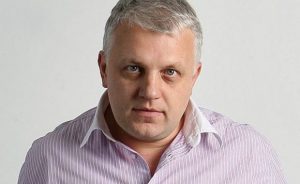
Pavel Sheremet (Photo: Ukrainska Pravda)
We are writing as active partners of the Council of Europe’s Platform to protect journalism and safety of journalists to urge you to ensure that Ukrainian investigating authorities carry out a thorough, independent, and effective investigation into the murder a year ago in Kiev of prominent Belarusian-born journalist Pavel Sheremet.
Sheremet’s killing in a car bombing in Ukraine’s capital city on July 20, 2016, cast a chill over the country’s press corps, and the ongoing impunity for those behind the crime has continued to affect journalists’ ability to cover sensitive subjects.
The current investigation by Ukrainian authorities, including the General Prosecutor’s Office (GPO), National Police, and Security Service of Ukraine (SBU), has produced no results a year after the killing, as confirmed by Committee to Protect Journalists’ recent report, Justice Denied: Ukraine comes up empty in probe of Pavel Sheremet’s murder, which CPJ launched in Kiev last week. Moreover, as CPJ confirmed during its advocacy mission that week–including in a July 11, 2017, meeting with you—authorities currently have no suspects and no leading motive for the murder.
Independent, enterprising journalists in Ukraine work under hostile conditions filled with threats, harassment, and cyberbullying in retaliation for their critical coverage of government policies and the conflict between pro-Russia separatists and Ukrainian security forces in the country’s east. A number of journalists have said they work in fear, both because of the impunity in Sheremet’s killing and authorities’ failure to recognise the importance of a critical, independent press in a democratic society.
The report on Sheremet’s murder brought into relief a number of flaws in the official investigation that need to be addressed without delay. Crucial video evidence that showcased potential suspects or key witnesses of the crime surfaced only after Ukrainian journalists—not investigators—published it. No one has publicly identified two persons seen on security camera footage apparently planting the bomb under Sheremet’s vehicle, although investigators are in possession of a clear photograph of one of the individuals.
The report also found that police and security service officials have each alleged that the other destroyed video evidence; potential witnesses and Pavel Sheremet’s colleagues say investigators have not closely questioned them; and the national police chief first tasked with leading the murder investigation resigned, citing obstruction by her superiors.
Pavel Sheremet and his former Ukrainska Pravda colleagues were under surveillance in the months before his death, but it is unclear by whom, or why. We are very concerned for their safety, especially given that it remains unclear whether the fact of the surveillance is currently being investigated.
The confirmed presence of a former SBU agent, Igor Ustimenko, near Sheremet’s apartment the very night assassins planted the bomb under his car—and the ongoing lack of clarity about the reasons and circumstances of his presence—further raise doubts about the genuineness and thoroughness of the official investigation.
The authorities were unable to provide clear answers to pressing concerns, including to such basic procedural questions as who is in charge of the investigation or why the photo of the person seen on camera footage apparently planting the bomb has not been publicly disclosed. We hope that these issues can be addressed immediately.
Press freedom concerns, including the lack of progress in Sheremet’s murder investigation, were also raised during meetings between the partners of the Council of Europe’s Platform to protect journalism and safety of journalists, and Ukrainian investigating authorities on April 4-5, 2017.
We encourage you, Mr. President, to ensure that the investigation into Sheremet’s killing examines the possibility that Ukrainian officials—former or current—may have been involved. In order to do that, we ask you to consider independent oversight of this case, which is a litmus test not only for Ukraine’s commitment to press freedom but also for its adherence to the rule of law.
We are pleased to learn that during your July 11 meeting with CPJ, you made a commitment to invite an international criminal investigator to support the Ukrainian investigation into Sheremet’s murder. We hope that discussions on this initiative will take place between Ukraine and its international partners without delay, and we encourage you to immediately contact Ukraine’s partners, including the Delegation of the European Union in Kiev, in relation to that.
Lastly, we strongly urge you to take all measures to protect the space for critical and independent journalism, including by condemning the practice of dividing journalists into patriotic and unpatriotic; and by ensuring that reporters can work freely, without fear of reprisal, and with the full protection of the state. Publicly addressing Pavel Sheremet’s colleagues at Ukrainska Pravda on the anniversary of his murder, and making a commitment to defending their safety, would be an exemplary first step toward achieving that goal.
Thank you in advance for your consideration of these urgent matters. We await your response.
Sincerely,
Article 19
Association of European Journalists (AEJ)
Committee to Protect Journalists
European Federation of Journalists (EFJ)
Index on Censorship
International Federation of Journalists (IFJ)
International Press Institute (IPI)
International News Safety Institute (INSI)
Reporters Sans Frontieres (RSF)[/vc_column_text][/vc_column][/vc_row][vc_row][vc_column][vc_separator color=”black”][vc_row_inner][vc_column_inner width=”1/2″][vc_custom_heading text=”Ukraine” font_container=”tag:p|font_size:30|text_align:left” use_theme_fonts=”yes” link=”url:https%3A%2F%2Fmappingmediafreedom.org%2F|||”][vc_column_text]Index on Censorship monitors press freedom in Ukraine and 41 other European area countries.
As of 20/07/2017, there were 284 verified reports of violations connected to Ukraine in the Mapping Media Freedom database.[/vc_column_text][/vc_column_inner][vc_column_inner width=”1/2″][vc_single_image image=”94485″ img_size=”full” onclick=”custom_link” link=”https://mappingmediafreedom.org/#/”][/vc_column_inner][/vc_row_inner][/vc_column][/vc_row]
20 Jul 2017 | Campaigns, Campaigns -- Featured, Media Freedom, media freedom featured, Statements
[vc_row][vc_column][vc_column_text]Dear Mr. Désir
Index on Censorship welcomes your appointment as the Representative on Freedom of the Media by the OSCE member states. We would like to extend our congratulations to you.
Like you, we agree wholeheartedly that the role of RFoM is important. In fact it is more important today than when the office was founded 1997. Since then, the media has faced pressures from a changing financial environment and — in some nations — government interference.
Through its project Mapping Media Freedom, Index on Censorship monitors press freedom violations in 42 OSCE member states. In just the last three years, there have been 3,302 verified incidents. Sadly, the number of reports we investigate is increasing. Journalists are coming under pressure from the left and the right of the political spectrum, from governments and non-state actors, from organised crime and private citizens. These multidimensional threats demand a consistent and robust response that crosses international boundaries.
We ask that, on assuming your responsibilities, you urgently consider the following as your priorities:
- Focusing attention on how the independence of the public media in OSCE member states such as Poland and Hungary is being undermined
- Calling attention to a continent-wide drift toward tighter regulation of the media — whether online or off — in OSCE nations such as France, the UK and Germany
- Raising awareness of widespread interference with the professional duties of journalists through legal obstacles and demands for accreditation, most acutely in OSCE members Belarus, Russia and Azerbaijan
- Building on the record of the RFOM office by being a vocal and visible advocate for journalists
- Continuing a determined and consistent approach to cases of impunity
- Resisting ill-guided attempts to use legislation to further curtail the marketplace of ideas in the member states
- Call out use of terror legislation to silence media by member states
- Mount a sustained campaign against criminal defamation laws in member states
Index on Censorship stands ready to partner with you to protect the media’s right to report and the public’s right to information.[/vc_column_text][/vc_column][/vc_row][vc_row][vc_column][vc_column_text]
Mapping Media Freedom
Click on the bubbles to view reports or double-click to zoom in on specific regions. The full site can be accessed at https://mappingmediafreedom.org/[/vc_column_text][/vc_column][/vc_row]
17 Jul 2017 | Digital Freedom, Mapping Media Freedom, Media Freedom, media freedom featured, News, Ukraine
[vc_row][vc_column][vc_column_text]
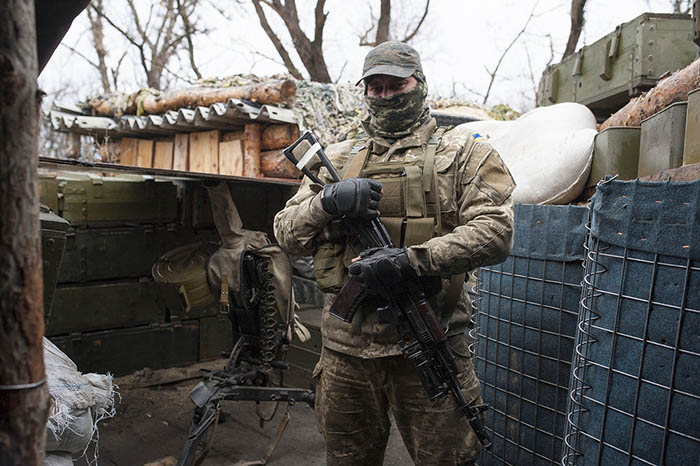
Ukrainian post control before separatist zone (Credit: Geoffrey Froment/Flickr)
Soon after the annexation of Crimea by the Russian Federation, full-scale fighting began between Ukrainian troops and separatists supported by Russia in the east of Ukraine. During active fighting in 2014, it was relatively easy for journalists to access to territories controlled by separatists.
“Accreditation was given quickly and without delay,” a Ukrainian producer who worked with international TV channels said. The producer, who requested anonymity because of ongoing work in the area, admits the risk for journalists was high because of the chaotic situation on the frontline and many of them faced detention by separatist militants. “I, like many, was detained and placed in a basement, but, fortunately, it only lasted for several hours,” he added.
Anna Nemtsova, a correspondent for Newsweek magazine and The Daily Beast, told Mapping Media Freedom that in 2014 she was abducted twice – firstly in the Luhansk region and secondly in the city of Donetsk.
“These were classic abductions,” Nemtsova said. “In Luhansk region, near Krasny Luch, armed militia wearing masks took our cell phones away from us and drove us in an unknown direction. In Donetsk, it happened near the morgue, where, according to our information, the militia had brought some of the bodies of passengers of the downed Boeing MH-17. Both detentions lasted for a few hours.”
Soon the situation with journalists’ access to uncontrolled territories would change for the worse. In February 2015, the Minsk agreements were signed and a ceasefire was established. The ceasefire agreement prompted the authorities of the two self-proclaimed republics to start monitoring journalists’ reports from the Donetsk People’s Republic and Luhansk People’s Republic.
“If they did not like the angle of coverage or some term, for example ‘separatist republics’, the name of a journalist was immediately added to the list of undesirable persons. The press service began to summon such journalists to ‘talks’ to express their dissatisfaction,” source who works as a local TV producer told MMF.
Nemtsova also faced similar difficulties. In summer 2015 she was told that the DPR press service did not like her reports and threatened to ban her, which later they said they did. “Their complaints were unreasonable, they were not about any errors in my report, but about the term ‘separatists’, which they claimed I used in my stories,” she said.
Thus, the monitoring of publications about the separatist zone in the media has led to the fact that from the summer of 2015 many journalists who tried to obtain accreditation from the self-proclaimed authorities began to receive refusals. Some reporters who managed to enter the territory of the self-proclaimed republics were detained and deported. On 16 June 2015, separatists from DPR captured Novaya Gazeta special correspondent Pavel Kanygin and handed him over to Russian security services (FSB). According to the journalist, they checked his documents and released him “in the middle of a field.”[/vc_column_text][/vc_column][/vc_row][vc_row][vc_column][vc_separator color=”black” align=”align_left”][vc_row_inner][vc_column_inner width=”1/2″][vc_custom_heading text=”Ukraine” font_container=”tag:p|font_size:24|text_align:left” use_theme_fonts=”yes” link=”url:https%3A%2F%2Fmappingmediafreedom.org%2F|||”][vc_column_text]Index on Censorship monitors press freedom in Ukraine and 41 other European area countries.
As of 17/07/2017, there were 282 verified reports of violations connected to Ukraine in the Mapping Media Freedom database.[/vc_column_text][/vc_column_inner][vc_column_inner width=”1/2″][vc_single_image image=”94239″ img_size=”full” alignment=”center” onclick=”custom_link” link=”https://mappingmediafreedom.org/”][/vc_column_inner][/vc_row_inner][vc_separator color=”black” align=”align_left”][/vc_column][/vc_row][vc_row][vc_column][vc_column_text]Over the past year, arbitrary refusals to enter the territory of the self-proclaimed republics have been quite frequent. In December 2016, Deutsche Welle’s correspondent Christian Trippe and his crew were barred from entering the territory of the self-proclaimed DPR. Journalists were trying to get to the territory controlled by DPR at a checkpoint near Marinka. Journalists had to wait an hour in a neutral zone between two fronts, while they were not allowed to return to the territory controlled by Ukrainian forces. The crew had received an authorisation from DPR press centre and had scheduled an interview with a spokesperson for the separatists. The journalists planned to visit Donetsk with Principal Deputy Chief Monitor Alexander Hug of the OSCE Special Monitoring Mission to Ukraine. However, the militants did not let them through the checkpoint with the OSCE, citing the decision of DPR special services.
In 2016, the self-proclaimed authorities continued the practice of detentions and expulsions of journalists. In November, special forces of the self-proclaimed Donetsk People’s Republic detained and expelled two journalists working for Russian TV channel Dozhd. Correspondents Sergei Polonsky and Vasiliy Yerzhenkov were detained by intelligence agencies on the evening of 25 November in Donetsk. Polonsky said that members of the self-proclaimed Ministry of State Security went to their apartment and took them to the main building of the ministry where they were interrogated. “Three employees of the Ministry of State Security were involved in the interrogation. They watched videos and deleted them. They also blocked Polonsky’s phone, broke Yerzhenkov’s phone and destroyed his notebook,” Dozhd reported. According to Dozhd, the journalists were not physically abused. “We experienced psychological abuse, but nothing more,” Polonsky said. Later, employees of the Ministry of State Security explained to the correspondents that their detention was a consequence of “false information” in the accreditation, which turned out to be a wrong phone number.
The Dozhd crew were accredited to work in Donetsk by the Security Service of Ukraine and by the Ministry of information of DPR. Journalists entered the DPR border on 24 November from Russia to interview Alexey Khodakovsky, former secretary of DPR’s Security Council. Previously, the self-proclaimed Ministry of State Security of DPR said the cause of the journalists’ expulsion was “biased” and “provocative” coverage of the situation in the DPR.
Local journalists and bloggers often find it even more risky to work in the separatist territories. In 2014, many journalists were forced to leave the territory, and are now working elsewhere in Ukraine. Over the past year, a number of arrests by separatists have been reported. The latest one is an incident with blogger and writer Stanyslav Aseev who disappeared in Donetsk. The blogger was reportedly detained by militants of the self-proclaimed DPR. Aseev uses the alias Stanislav Vasin and contributes to a number of news outlets including Radio Liberty Donbass Realities project, Ukrayinska Pravda, Ukrainian week and Dzerkalo Tyzhnya. He also runs a prominent blog via Facebook.
Donbass Realities project editor-in-chief Tetyana Jakubowicz said their contact with Aseev was lost on 2 June. That day, Aseev filed the latest report from territories held by separatists for Radio Liberty. Aseev’s relatives and friends confirmed that they also lost contact with the blogger. They questioned the self-proclaimed Ministry of Public Security of the DPR, but didn’t receive any answers. The journalist’s mother found evidence that his flat was broken into in Donetsk and noticed that some of his belongings were missing, including a laptop. On 12 July, Amnesty International reported that it learned that Aseev was being held by the de-facto “ministry of state security”.
Recently, several bloggers have been arrested in the self-proclaimed LPR. In October 2016 Vladislav Ovcharenko, a 19-year old blogger, who runs the Twitter account Luhansk Junta, was detained by separatists. Later, armed representatives of the self-proclaimed Ministry of the State Security raided his parents’ apartment, taking his mother’s computer. In December 2016, Facebook blogger Gennadiy Benytskiy was arrested in Luhansk. The blogger, who is known for his pro-Ukraine views, was accused of distributing of “extremist materials” online.
Journalists take risks even when they get accreditation from the separatist authorities. A leak by the website Myrotvorets in May 2016 led to the personal data of more than 5,000 journalists becoming available online. The link to the leak was published by some Ukrainian politicians, calling journalists who received accreditation “traitors.” Some of the journalists then received threats.[/vc_column_text][/vc_column][/vc_row][vc_row][vc_column][vc_column_text]
Mapping Media Freedom
Click on the bubbles to view reports or double-click to zoom in on specific regions. The full site can be accessed at https://mappingmediafreedom.org/[/vc_column_text][/vc_column][/vc_row]
11 Jul 2017 | Azerbaijan, Azerbaijan Statements, Campaigns, Campaigns -- Featured, Statements
President of France, Mr. Emmanuel Macron
L’Élysée
55 Rue du Faubourg Saint-Honoré
75008 Paris, France
Ministry of Europe and Foreign Affairs of France
37, Quai d’Orsay
75351 Paris, France
Embassy of France to Azerbaijan
9, rue Rassoul Rza
AZ 1000, Baku, Azerbaijan
Subject: Support for political prisoners in Azerbaijan
11 July 2017
Dear President Macron,
We are writing to you on behalf of the undersigned organisations to draw your attention to the repressive free speech situation in Azerbaijan and to request your support to ensure the release of those imprisoned on politically motivated grounds in this country. In particular, we urge you to use your administration’s influence and leverage to help ensure the implementation of the ruling issued by the European Court of Human Rights (ECtHR) on the case of political opposition activist Ilgar Mammadov. He remains in prison, although the Court concluded that he was detained in retaliation for his criticism of the government. The persistent non-execution of the ruling in his case by the Azerbaijani authorities is undermining the credibility of the human rights protection regime established by the Council of Europe and sets a dangerous precedent for all those wrongfully prosecuted in Azerbaijan who turn to the Court in search of justice.
In view of France’s role as a leading European state and host country for the ECtHR and other Council of Europe bodies, as well as its well-developed cooperation with Azerbaijan in trade and other areas, your engagement on this issue would be particularly important. We welcome the moral, value-based and human rights oriented leadership that you have embraced for your presidency and are confident that you will vigorously pursue human rights in relations with Azerbaijan’s government on the basis of the common standards set out in the European Convention on Human Rights.
In the last few years, Azerbaijan’s government has carried out a relentless crackdown on alternative voices in the country. Legislation seriously restricting the operation of NGOs has been enforced, independent media subjected to pressure, the political opposition has been marginalised and human rights defenders, journalists and political opposition activists have been arrested, convicted and imprisoned on politically motivated charges.
While some of those imprisoned on such grounds have been released as a result of international pressure, new arrests continue to take place. For example, well-known blogger Mehman Huseynov was arrested and sentenced to two years in prison on defamation charges in March this year after speaking out about police ill-treatment. Journalist Aziz Orujov and opposition member Gozel Bayramli were arrested on other spurious charges in May, while in the same month journalist Afgan Mukhtarli was abducted in Georgia only to resurface in Azerbaijani custody. Many government critics imprisoned in previous years also remain behind bars, including Ilgar Mammadov.
Ilgar Mammadov, who chaired the political opposition REAL party and served as director of the Council of Europe School of Political Studies in Azerbaijan, was detained in February 2013 after monitoring and reporting on street protests in the town of Ismayilli, which resulted in clashes with the police. He was groundlessly accused of instigating these clashes and sentenced to seven years in prison on trumped-up charges of organising mass riots and using violence against police. In a judgment issued in May 2014, the ECtHR found that Ilgar Mammadov’s arrest and detention violated his rights to liberty and security, judicial review of his detention and to be presumed innocent under the European Convention on Human Rights. The court also found that Azerbaijan’s government had imposed restrictions on his rights for purposes other than those permitted, in violation of its obligations under the Convention. The court concluded that Mammadov was detained on political rather than legal grounds for the purpose of punishing and silencing him for his criticism of the government.
It has now been more than three years since the ECtHR adopted its judgement in this case, but the Azerbaijani authorities have consistently failed to implement it, although Azerbaijan is legally bound to comply with ECtHR rulings as a party to the European Convention on Human Rights. The Azerbaijani authorities have ignored repeated calls by other Council of Europe bodies, including its Committee of Ministers – which supervises the implementation of court rulings, its Secretary General and its Human Rights Commissioner to execute the judgment on Mammadov’s case. In November 2016, Azerbaijan’s Supreme Court rejected an appeal submitted by Mammadov on the basis of the ECtHR ruling and upheld his seven- year prison sentence. As a result, he continues to be unlawfully imprisoned.
To date the case of Ilgar Mammadov is the only one where the relevant authorities have failed to implement an ECtHR ruling that has found that the detention of an individual violates the right to liberty and security under the European Convention on Human Rights. As emphasized in a joint statement issued by 44 members of the Civic Solidarity Platform and the Sport for Rights Coalition in May 2017, the non-implementation of the ECtHR’s judgment on this case has developed into a test of the legitimacy of the Council of Europe as the guardian of human rights and the rule of law in the region. Thus, this case is no longer only about the unlawful deprivation of liberty of Ilgar Mammadov. On the contrary, it has become a case that risks weakening the effectiveness of the entire human rights protection regime established by the Council of Europe, as well as eroding confidence in this regime among people in Azerbaijan and other member states who turn to the ECtHR when their rights are being trampled upon by their governments.
We urge you to do all in your power to help prevent this dangerous outcome and to ensure the implementation of the ECtHR judgment in the case of Ilgar Mammadov, as well as the release of him and others arbitrarily detained on politically motivated grounds in Azerbaijan. To this end, we urge you in particular to:
- Support the civil society appeal to the Committee of Ministers of the Council of Europe to refer the case of Ilgar Mammadov back to the ECtHR on the grounds of non-execution of the judgment under article 46.4 of the European Convention on Human Rights, which sets out a mechanism in cases where parties to the convention refuse to abide by a final
- Issue a public statement on the importance of the execution of ECtHR judgments in view of the integrity and credibility of the human rights protection regime established by the Council of Europe, giving particular attention to the failure by the Azerbaijani authorities to date to implement the ruling on the case of Ilgar Mammadov and the wider implications of
- Prominently raise the case of Ilgar Mammadov and others who have been deprived of their liberty in retaliation for their exercise of fundamental freedoms in Azerbaijan, including Mehman Huseynov, Aziz Orujov, Gozel Bayramli and Afgan Mukhtarli in relations with the Azerbaijani authorities and use all available means of leverage to press for their
- Invite representatives of Azerbaijani civil society to a meeting to demonstrate support with them and to discuss the challenges they face and ways in which your administration can help address these challenges and promote improved respect for the standards protecting fundamental freedoms set out in the European Convention on Human
We thank you for your consideration of the issues raised in this letter and would be happy to provide additional information should you so request.
Sincerely,
- Association UMDPL (Ukraine)
- Bir Duino (Kyrgyzstan)
- Canadian Journalist for Free Expression (Canada)
- Center for Civil Liberties (Ukraine)
- Center for Participation and Development (Georgia)
- Centre for the Development of Democracy and Human Rights (Russia)
- Crude Accountability (USA)
- Eastern Partnership Civil Society Forum
- Fair Trails (UK)
- Freedom Files (Poland/Russia)
- Freedom Now (USA)
- German-Russian Exchange (DRA – Germany)
- Helsinki Committee for Human Rights (Serbia)
- Helsinki Foundation for Human Rights (Poland)
- Human Rights Matter (Germany)
- Human Rights Watch (USA)
- Index on Censorship (UK)
- International Partnership for Human Rights (Belgium)
- Kazakhstan International Bureau for Human Rights and the Rule (Kazakhstan)
- Legal Policy Research Center (Kazakhstan)
- Legal Transformation Center (Belarus)
- Libereco – Partnership for Human Rights (Germany/Switzerland)
- Moscow Helsinki Group (Russia)
- Norwegian Helsinki Committee (Norway)
- PEN America (USA)
- People in Need (Czech Republic)
- Public Association “Dignity” (Kazakhstan)
- Public Verdict Foundation (Russia)
- Regional Center for Strategic Studies (Azerbaijan)
- The Barys Zvozskau Belarusian Human Rights House (Belarus)
- The Kosova Rehabilitation Centre for Torture Victims (Kosovo)
- Truth Hounds (Ukraine)
- World Organisation against Torture (OMCT)
Human rights defenders from Azerbaijan who have signed the letter:
- Akif Gurbanov, Institute for Democratic Initiatives
- Alasgar Mammadli, lawyer
- Anar Mammadli, Election Monitoring and Democracy Training Center
- Annagi Hajibayli, Azerbaijan Lawyers Association
- Asabali Mustafayev, lawyer
- Bashir Suleymanli, Civil Rights Institute
- Intiqam Aliyev, Legal Education Society
- Khadija Ismayilova, human rights defender, investigative journalist
- Latafat Malikova, Regional Human Rights and Education Public Union
- Rasul Jafarov, Human Rights Club
- Samir Kazimli, human rights defender
- Xalid Bagirov, human rights defender, lawyer
- Zohrab Ismayıl, Public Association for Assistance to Free Economy
