25 Apr 2017 | Mapping Media Freedom, News, Serbia
[vc_row][vc_column][vc_single_image image=”89875″ img_size=”full” add_caption=”yes”][vc_column_text]A few days before the 2 April 2017 Serbian presidential elections, a picture was posted on Twitter that caused an unexpected storm.
The picture, taken three days before the vote, which was widely expected to be won by the current prime minister Aleksandar Vucic, showed a copy of each daily newspaper from that day laid out on a table. Yet every paper looked the same. Each was wrapped in a blue, red and white election campaign poster of Vucic’s Serbian Progressive Party (SNS).
“It was a shock,” said Slavica Lekic, the newly appointed president of the Independent Journalist Association of Serbia (NUNS), from his office in Belgrade. “With this, Aleksandar Vucic clearly demonstrated that he can control over everything in this country.”
The mass advertising on the front page of the nation’s newspapers was for many a step too far; proof of how powerful Vucic and his party had become, and of the financial control they exert over Serbia’s media. Vucic won the election by a landslide, but the picture’s effect lingered. It was an important reason why, on the day after Vucic’ huge victory, tens of thousands of young Serbs took to the streets across the country to protest.
The protesters, at first mainly students, organised themselves on social media using the hashtag #protivdiktature, which means “against dictatorship”. Thousands have been protesting on a daily basis ever since. They’re worried about the state of democracy and media freedom in the country where the president-elect is consolidating his power over all institutions, leaving little room for critical voices.
Media freedom has declined since SNS came to power in 2012, and deteriorated further after Vucic became Prime Minister in 2014, according to Reporters Without Borders.
Journalists increasingly face economic and editorial pressure as well as threats and intimidation when they are critical of the government. Independent media are often the subject of smear campaigns by pro-government media outlets and TV stations, targeting them as foreign mercenaries and enemies of the state.
Lekic points out that most of Serbia’s mainstream media, including private media, are indirectly controlled by the government. There are strong ties between the government and the business community, giving both a huge leverage over advertising budgets, he explains. “When Vucic came to power he arrested the richest businessman in Serbia, Miroslav Miskovic,” says Lekic.“That act frightened all the other businesses, which are now doing whatever they can to please him.”
Even before the vote, there were opposition complaints about the uneven nature of the media’s coverage of the campaign. According to a report by the Bureau for Social Research, who monitored the campaign, Vucic appeared on television more than all the other candidates combined, and was usually portrayed in a positive light.
“He directly controls the most popular TV station, TV Pink, and the most read newspaper, Informer,” says Lekic. “The other media are subject to self-censorship due to the pressure of advertisers connected to the government.” Lekic is convinced that Vucic’s move from prime minister to president will lead to even more difficulties for Serbia’s independent media. “This is definitely the end of freedom in journalism in Serbia,” he says.
Aside from a few online voices, the only critical newspaper is the daily Danas, which means “Today” in Serbian. The paper was founded in 1997 during the repressive regime of strongman Slobodan Milosevic but grew to become a free voice in Serbia. But today Danas is struggling to stay alive. Like many across the world, business has been tough over the past few years. But it became a lot tougher when nearly every single advertiser pulled out, all within a few months.
“The problem is that nobody dares to advertise in a paper that reports critically on the government and the prime minister,” Lekic explained. “Vucic and his people have targeted Danas as a hostile newspaper.”
Protesters have been holding Danas papers in the air, using it as a symbol of the lack of media freedom. They’ve urged Serbs to buy Danas and stop them from going out of business. Danas is being sold during the protests, and people are queuing to get a copy from street sellers.
“The campaign to save our paper is working,” says Milos Mitrovic, a journalist at Danas. “Sales are actually going up. People are taking selfies with Danas and sending them to us. It’s incredible.”
There have even been reports of companies donating to the paper, but urging them not to print any adverts as they would rather stay anonymous.
Every evening the protesters march through the city, passing the building of the state broadcaster RTS, blaming the station for not covering the protests on TV. “At first they were not showing it at all,” said one protester in Belgrade. “Now they are downplaying the numbers or saying that we are paid by foreign powers.”
But even recognising the protests is progress. “There is more coverage of the protests in international press than in Serbian media,” says Stevan Dojcinovic, editor-in-chief for the investigative journalism network KRIK, nominees for the 2017 Freedom of Expression Award for journalism. His collective has investigated many cases of corruption and misuse of power by the Vucic government. Dojcinovic points out that their investigations are also widely ignored by Serbia’s mainstream media. “RTS didn’t publish anything on the interview we did with the wife of Belgrade’s mayor, Sinisa Mali,” he said. In that interview, Mali revealed examples of corruption in which her ex-husband was directly involved.
Meanwhile, Vucic, who enjoys support from both the European Union and Russia, has calmly addressed the protesters during a press conference. “We are a democratic country and everybody has the right to be pleased or displeased with the election outcome,” he said. “Those who have time to protest can protest as long as they keep it peaceful.”
Lekic has only recently been appointed as president of NUNS but is clear on what the big issues facing independent media in Serbia are. “We don’t have institutionalised censorship in the classical sense but we do have frightened and underpaid journalists who think they have to be obedient to be able to keep their jobs,” he says. “This is how self-censorship kicks in and we have to change that.”
In fact, Lekic has already had his fair share of threats and intimidation. He was the subject of smear campaigns by TV Pink and Informer. He’s been labelled a foreign spy more times than he can remember. “I’ve been a journalist for 37 years but only in the last decade I’ve got used to being a target,” he says. His biggest worry is the effect it has on his family. “My daughter of twelve once called me from school, she was crying because a boy in her class had told her that her dad is a criminal,” he says. “He’d heard so on TV.” [/vc_column_text][/vc_column][/vc_row][vc_row][vc_column][vc_basic_grid post_type=”post” max_items=”4″ element_width=”6″ grid_id=”vc_gid:1493107922412-e3b33cbb-00e3-9″ taxonomies=”113″][/vc_column][/vc_row]
21 Apr 2017 | Azerbaijan, Azerbaijan Statements, Campaigns -- Featured, Statements
We, representatives of international and national non-governmental organisations, issue this appeal prior to a discussion of the investigation into allegations of corruption at the Parliamentary Assembly of the Council of Europe (PACE) in connection with its work on Azerbaijan, at the Assembly’s April 2017 session and a meeting of the Bureau of the Assembly before the session. We call upon you to support a full, thorough and independent investigation into the corruption allegations, with full civil society oversight.
We are extremely concerned about credible allegations presented in a December 2016 report by the European Stability Initiative (ESI), “The European Swamp: Prosecutions, corruption and the Council of Europe” building on previous findings by ESI and others published in 2012-16, detailing improper influencing of Assembly members by representatives of the Azerbaijani government. In particular, the reports include credible allegations that PACE members from various countries and political groups received payments and other gifts with a view to influencing the appointment of Assembly rapporteurs on Azerbaijan, as well as reports and resolutions of the Assembly on Azerbaijan, most notably the PACE vote on the draft resolution on political prisoners in Azerbaijan in January 2013.
The allegations regarding improper conduct of PACE members are serious, credible, and risk gravely undermining the credibility of the Assembly, as well as the Council of Europe as a whole. It is essential that these allegations are investigated thoroughly and impartially. Calls and recommendations for independent investigation into these allegations put forward by ESI have been echoed by many civil society actors, including Amnesty International, Transparency International, and a group of 60 members of Azerbaijani civil society actors and 20 international NGOs.
We welcome the decision of the PACE Bureau on 27 January 2017 to set up an independent investigation body to shed light on hidden practices that favour corruption. The Bureau has also committed to revising the Assembly’s Code of Conduct and invited GRECO (the Council of Europe’s Group of States against Corruption) to provide advice to the Rules Committee, charged with the investigation.
On 3 March, Wojciech Sawicki, PACE Secretary General, presented the Assembly Bureau with a draft terms of reference for the external and independent investigation at the Bureau meeting in Madrid. The proposal is credible, defining a wide mandate and competences and including strong guarantees for the independence of the investigation and safeguards against non-compliance with its work.
Unfortunately, the proposal was met with resistance at the meeting, and no agreement was made on its substance. The proposal was further discussed at a meeting of the heads of the PACE Parliamentary groups on 28 March in St Petersburg: again, no consensus was reached on its content, and whether it should be adopted.
A thorough investigation is essential to restore PACE’s credibility and allow it to effectively address human rights violations across the Council of Europe, including in Azerbaijan. The chairman of Azerbaijani NGO the Institute for Reporters Freedom and Safety, Mehman Huseynov is already facing reprisals for raising the corruption allegations during the January PACE session. A day after his NGO sent a letter about the corruption allegations to PACE members in January, he was abducted and tortured by police and later sentenced for 2 years on defamation charges for allegedly making false allegations about torture. For PACE to be in a position to respond to such violations, it must be seen as independent and not under the influence of states wishing to influence their conduct.
We call upon members of the PACE Bureau to commit to the Sawicki proposal and to call for a full plenary debate on the proposal at the April session of PACE. We also call on the PACE Bureau to include a mechanism of civil society oversight of the investigation to ensure its full independence and impartiality.
We call upon all Members of the Assembly to support in the strongest possible terms an independent, external and thorough investigation. This can be done by signing a written Declaration on the Parliamentary Assembly Integrity introduced on 25 January 2017 by PACE members Pieter Omtzigt (The Netherlands, Christian Democrat), and Frank Schwabe (Germany, Social Democrat) urging the PACE President Pedro Agramunt (Spain, EPP) to launch a “deep, thorough investigation by an independent panel” that makes its findings public. More than one fifth of the Assembly members have joined the declaration. More voices in support of the Assembly integrity are needed. Moreover, PACE members must insist on their right to discuss the Sawicki proposal at the April session of the Assembly, to ensure that PACE has the mechanisms in place to adequately deal with corruption allegations.
We call on the Secretary General of the Council of Europe Thorbjorn Jagland to make a very strong statement to affirm that there will be no tolerance of any corruption, including bribery, trading in influence or taking up of roles that imply a conflict of interest, in the Parliamentary Assembly and the Council of Europe in general.
Commitment to the rule of law, integrity, transparency, and public accountability should be effectively enforced as the key principles of the work of the Parliamentary Assembly. If such a decision is not made now, reputational damage to PACE may become irreparable, preventing PACE from fulfilling its role as a guardian of human rights across the Council of Europe region.
Signatures:
1. The Netherlands Helsinki Committee
2. International Partnership for Human Rights (Belgium)
3. Centre for the Development of Democracy and Human Rights (Russia)
4. Freedom Files (Russia/Poland)
5. Norwegian Helsinki Committee
6. Ukrainian Helsinki Human Rights Union
7. Analytical Center for Interethnic Cooperation and Consultations (Georgia)
8. Article 19 (UK)
9. The Barys Zvozskau Belarusian Human Rights House (Belarus/Lithuania)
10. Index on Censorship (UK)
11. Human Rights House Foundation (Norway)
12. Human Rights Movement “Bir Duino-Kyrgyzstan”
13. PEN International (UK)
14. Crude Accountability (USA)
15. Legal Transformation Center (Belarus)
16. Bulgarian Helsinki Committee
17. World Organisation Against Torture (OMCT) (Switzerland)
18. The Kazakhstan International Bureau for Human Rights and the Rule of Law
19. Belarusian Helsinki Committee
20. Center for Civil Liberties (Ukraine)
21. Promo LEX (Moldova)
22. Libereco – Partnership for Human Rights (Germany/Switzerland)
23. Public Association “Dignity” (Kazakhstan)
24. Human Rights Monitoring Institute (Lithuania)
25. Swiss Helsinki Committee
26. Human Rights Information Center (Ukraine)
27. Public Verdict Foundation (Russia)
28. Albanian Helsinki Committee
29. Kharkiv Regional Foundation “Public Alternative” (Ukraine)
30. Helsinki Foundation for Human Rights (Poland)
31. Women of Don (Russia)
32. DRA – German-Russian Exchange (Germany)
33. Association UMDPL (Ukraine)
34. European Stability Initiative (Germany)
35. International Media Support (IMS) (Denmark)
36. Civil Rights Defenders (Sweden)
37. International Federation for Human Rights (FIDH) (France)
38. Sova Center for Information and Analysis (Russia)
39. Kosova Centre for Rehabilitation of Torture Victims (Kosovo)
40. Truth Hounds (Ukraine)
41. People in Need Foundation (Czech Republic)
42. Eastern Partnership Civil Society Forum (Belgium)
43. Macedonian Helsinki Committee
44. International Youth Human Rights Movement
45. Human Rights First (USA)
46. Regional Center for Strategic Studies (Georgia/Azerbaijan)
47. Human Rights Club (Azerbaijan)
48. Institute for Reporters Freedom and Safety (IRFS) (Azerbaijan)
49. Media Rights Institute (Azerbaijan)
50. Public Association for Assistance to Free Economy (Azerbaijan)
51. Institute for Peace and Democracy (Netherlands/Azerbaijan)
52. Turan News Agency (Azerbaijan)
53. Democracy and NGO development Resource Center (Azerbaijan)
54. Youth Atlantic Treaty Association (Azerbaijan)
55. Monitoring Centre for Political Prisoners (Azerbaijan)
56. Azerbaijan without Political Prisoners (Azerbaijan)
20 Apr 2017 | Awards, Digital Freedom
[vc_row][vc_column][vc_video link=”https://www.youtube.com/watch?v=bc48C8QSOY4″][vc_column_text]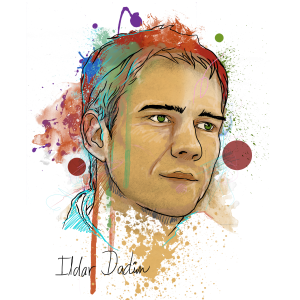 A Russian opposition and LGBT rights activist, Ildar Dadin was the first, and remains the only, person to be convicted under a notorious 2014 public assembly law. Aimed at punishing anyone who breaks strict rules on protest, the law was enacted to silence dissent after a wave of demonstrations following Putin’s last election victory. Dadin’s crime was to stage a series of one-man pickets, often standing silently with a billboard, attempting to duck the cynical law and push for free expression. For his solo enterprise, Dadin was arrested and sentenced to three years imprisonment in December 2015. In November 2016, website Meduza published a letter smuggled from Dadin to his wife, exposing torture he claimed he was suffering alongside fellow prisoners. The letter, a brave move for a serving prisoner, was widely reported. A government investigation was prompted, and Dadin was transferred – against his will – to an undisclosed new location. A wave of public protest led to Dadin’s new location in a Siberian prison colony being revealed in January 2017. In February 2017, Russia’s constitutional and Supreme Courts suddenly quashed Dadin’s conviction, ruling he should be released and afforded opportunity for rehabilitation.
Активист, долгое время защищавший права ЛГБТ и оппозиции, Ильдар Дадин стал первым и единственным в России осужденным по принятой в 2014 году статье «Неоднократное нарушение установленного порядка организации либо проведения собрания, митинга, демонстрации, шествия или пикетирования».
Пытаясь обойти этот закон, Дадин провел серию одиночных пикетов против нарушений прав человека, за что был арестован и в 2015 приговорен к трем годам тюрьмы. В ноябре 2016, интернет-издание «Медуза» опубликовало письмо, которое Дадин передал через свою жену. В нем он рассказал о том, как его пытали, и о повсеместности насилия в российских тюрьмах. Публикация его письма – смелый шаг для отбывающего наказание заключенного – имело широкий общественный резонанс, вызвав реакцию со стороны правительства и став основанием для расследования. Дадина, против его воли, перевели из его колонии, после чего он исчез внутри российской пенитенциарной системы. Его местонахождение было раскрыто лишь в январе 2017 после волны общественных протестов. После того как Верховный суд отменил приговор, Ильдар Дадин вышел на свободу из колонии, 26 февраля.
“Nastya, I ask you to publish this letter because there is a real ‘information blockade’ in this place. (…) I am not afraid of death. Most of all, I am afraid of not being able to withstand the torture and surrendering.” — Ildar Dadin[/vc_column_text][/vc_column][/vc_row][vc_row][vc_column][awards_fellows years=”2017″][vc_basic_grid post_type=”post” max_items=”12″ style=”load-more” items_per_page=”4″ element_width=”6″ grid_id=”vc_gid:1493892409601-d3982799-8efd-3″ taxonomies=”9013″][/vc_column][/vc_row]
