10 Feb 2015
By Thomas A. Bass
Today Index on Censorship continues publishing Swamp of the Assassins by American academic and journalist Thomas Bass, who takes a detailed look at the Kafkaesque experience of publishing his biography of Pham Xuan An in Vietnam.
The first installment was published on Feb 2 and can be read here.
To date, there have been six books written about Pham Xuan An, three in Vietnamese, one in French, and two in English. The self-described “official” biography, Perfect Spy, was published in the United States in 2007 and translated into Vietnamese a year later. “We turned the book red,” said someone knowledgeable about its publication in Vietnam. In other words, Vietnamese censors brightened the patriotic color in an already selective portrait of a national hero.
From the title alone, one understands that Perfect Spy portrays Pham Xuan An as a Vietnamese nationalist and patriot. The book also claims that he retired happily at the end of the Vietnam war in 1975. The problem with this narrative is that appears not to be true. Every spy has a cover, the life he hides behind while leading a double existence or, in Pham Xuan An’s case, a quadruple existence, since, at one time or another, he worked for the French Deuxième Bureau, the CIA, and both the South and North Vietnamese intelligence agencies. His spying for the French was limited to moonlighting as a censor at the Post Office, trimming Graham Greene’s dispatches to Paris Match. His work for the Americans included his being trained in psychological warfare in the1950s by Edward Lansdale and other CIA operatives.
His work for South Vietnamese intelligence, where he served as right-hand man to spy chief Tran Kim Tuyen, supposedly ended in 1962, when Tuyen was cashiered in a failed coup attempt. But An kept in touch with Tuyen, who remained an inveterate “coup cooker.” He took him food and medicine while the master spy was under house arrest (undoubtedly passing messages during these exchanges). Then An did Tuyen one final service. He saved his life. The famous 1975 photo of the last U.S. helicopter lifting off from the roof of 22 Gia Long Street shows a rickety ladder leading up to the chopper. The last man climbing that ladder, thanks to the intercession of his former right-hand man, is Tran Kim Tuyen. Why did An help the long-time head of South Vietnamese intelligence escape from the communists? “I knew I would be in trouble,” An told me. “This was the chief of intelligence, an important man to capture, but he was my friend. I owed him.” Who knows what bonds of loyalty were served or embarrassing questions avoided as Tuyen flew off to exile in England.
For twenty years An maintained his cover as a journalist, but when this was blown at the end of the Vietnam war, he developed a second cover—that of a happily-retired global strategist who spent his days shooting the breeze with Western journalists and other visitors. Recently I saw film footage of An being interviewed in 1988 by Vietnamese refugee and Hollywood actress Tiana Silliphant. Tiana was gathering material for her documentary From Hollywood to Hanoi. While being interviewed, An sits casually on the front steps of his house, with not one but two German shepherds guarding his back. Tiana asks him straight away about the people he betrayed and the friends who died as a result of his spying. An goes bug-eyed and shifty. One sees him making up his answers on the spot, beginning to spin the story that will develop into his second cover. “I retired from the military a few weeks ago,” he says. “I never betrayed anyone.”
An is on record saying that he retired from the military in 1988. But he is also on record saying that he retired in 2002 and again in 2005. This is when a visitor noticed a large, flat-panel TV in his living room, with a card attached saying that the TV was a retirement present from his “friends” in Tong Cuc II—Vietnamese military intelligence. It is more likely that An never retired, that he remained a member of the intelligence services until the day he died. Under his first cover, as a journalist, he worked as a spy from the 1950s until the end of the Vietnam war in 1975. Under his second cover, as a retired strategist, he worked as a spy for another thirty years—even longer than his first career. What he did as an intelligence agent in active service remains unknown, but he undoubtedly wrote reports on his visitors and offered the kind of political analysis for which he was famous. With his humorous quips about how the communists had failed to “reeducate” him, An deflected any suspicions that he was still working as a spy. This aspect of his life was only revealed after his death, when General Nguyen Chi Vinh, who was then head of Tong Cuc II, delivered the oration at An’s funeral. General Vinh’s speech about An’s “extraordinary military achievements,” accomplished while living “in the bowels of the enemy,” included the list of An’s military medals, each of which tells an important story about his life.
In a glancing reference, Perfect Spy mentions that Pham Xuan An won eleven military medals. He actually won sixteen military medals, and six of these medals were awarded after 1975. Fourteen of the total number of medals, and four of the medals awarded after 1975, are combat medals. These are given not for strategic analysis, but for specific military actions. An won medals for his tactical assistance in battles ranging from Ap Bac in 1963 and Ia Drang in 1965 to the Tet Offensive in 1968 and on to the Ho Chi Minh Campaign that ended the war in 1975. What An did to win four military medals after 1975 remains unknown.
To undercount An’s medals, ignore their significance, and overlook the fact that many of these medals were awarded after 1975 is part of the campaign to make Pham Xuan An a “perfect spy,” a benign figure, like Ho Chi Minh, removed from the staggering violence that marked Vietnam’s anti-colonial wars. In Perfect Spy other aspects of An’s career have been trimmed or suppressed. Softened in the narrative are his criticisms of communist incompetence and corruption, his acerbic comments about Russian influence in Vietnam, his attacks on Chinese meddling in the nation’s affairs, his jokes about having been “reeducated” in 1978, and his opposition to the Chinese-influenced clique that currently runs the country. Also downplayed or ignored are the details that explain why An’s wife and four children were sent to the United States in 1975 and then, a year later, recalled to Vietnam. In the version crafted for public consumption, and as reported by An’s “official” biographer, he remained in Saigon at the end of the war to care for his sick mother. In fact, the Vietnamese intelligence services planned to send An to the United States, where he would continue spying for the communists. Only when this plan was overruled by the Politburo was An forced to stay in Vietnam and recall his family. This information about An’s post-war activities reveals how Vietnam intended—and undoubtedly succeeded—in placing spies in the United States at the end of the war. It also reveals a rift between the country’s intelligence services and the Politburo, a rift that Vietnamese propaganda would like to paper over with a story about a sick mother.
Once the shadows are put back into Pham Xuan An’s life, the censors are bound to object to his less-than-perfect narrative. In fact, they will spend five years rewriting the story and struggling to get it as close as possible to the official version. Nha Nam’s gambit was flawed. Because one book about Pham Xuan by a westerner had been translated and published in Vietnam did not mean that a second book would follow easily. In fact, as we learned recently, even the “red” version of An’s life had been a hard sell. This was revealed in a State Department cable of September 2007, which was released by Wikileaks in 2011. The cable, by a consular official in Ho Chi Minh City, describes how the Vietnamese translation of Perfect Spy, although it was published by a government-owned company, was nearly pulped at the last minute by censors in the Ministry of Public Security. They objected “to the numerous quotes from Pham Xuan An lamenting that Vietnam had simply traded one overlord for another—the Soviet Union—and his criticism of post-war policies.” The editors were in trouble for “supporting the publication of a book in which one of the country’s most renowned heroes unleashes broadside attacks on post-war GVN policy and the closed nature of Vietnamese society.” According to the consular memo, “the pro-reform faction within the GVN” got “the upper hand” over “the counter-reform faction” only when the president of Vietnam himself gave his approval to publish the book.
One can see in these stories about Vietnamese censorship how the rule of law has been replaced by the rule of the jungle. Powerful people will do everything possible to protect their prerogatives. I am alarmed by these stories, but many people yawn when I talk to them about censorship in Vietnam. “What do you expect?” they say. “There’s nothing surprising here.” Even my Vietnamese friends have succumbed to fatalism and a strange belief that they can read around corners. “I can tell where a book has been cut,” novelist Bao Ninh assured me. “We know what’s missing. We just can’t talk about these things.”
It is hard to argue against censorship in the face of rampant cynicism, but a worthy effort was made recently by Nobel laureate Amartya Sen. In an essay written for Index on Censorship in 2013, Sen chastises his native India for thinking that they should emulate China, which appears to be the model for how authoritarian governments can swap personal freedom for economic growth. Sen argues the opposite position, that “press freedom is crucially important for development.” Free speech has “intrinsic value,” he says. It is “a necessary requirement of informed politics.” It gives “voice to the neglected and disadvantaged,” and it is crucial for “generating new ideas.” China appears to be doing quite nicely at the moment, but Sen—an economist who did his award-winning work on the theory of famine—reminds us what can happen when propaganda replace news.
“There is an inescapable fragility in any authoritarian system,” he writes. The last time this phenomenon revealed itself in China, during the botched agrarian reforms of the Great Leap Forward, the country suffered one of the world’s most devastating famines. “The Chinese famine of 1959-1962 … killed at least 30 million people, when the regime failed to understand what was going on and there was no public pressure against its policies, as would have arisen in a functioning democracy.”
“The policy mistakes continued throughout these three years of devastating famine,” says Sen. “The information blackout was so complete with censorship and control of the state media that government itself came to be deceived by its own propaganda and believed that the country had 100 million more metric tons of rice than it actually had. Eventually, Chairman Mao himself made a famous speech in 1962, lamenting the ‘lack of democracy,’” a lack that, in this case, had proved lethal. India and other parts of the world might be tempted to emulate China, in light of its double-digit growth, but people would be foolish, says Sen, to adopt the anti-democratic measures that weaken totalitarian systems and make them susceptible to believing their own lies.
Part 8: The habits of war
This seventh installment of the serialisation of Swamp of the Assassins by Thomas A. Bass was posted on February 10, 2015 at indexoncensorship.org
6 Feb 2015
By Thomas A. Bass
Today Index on Censorship continues publishing Swamp of the Assassins by American academic and journalist Thomas Bass, who takes a detailed look at the Kafkaesque experience of publishing his biography of Pham Xuan An in Vietnam.
The first installment was published on Feb 2 and can be read here.
The web is where Vietnamese literature has moved, as the grey net of police surveillance, fines, exile and prison is cinched ever more tightly around the country’s journalists, bloggers, artists, musicians, writers and poets
|
About Swamp of the Assassins
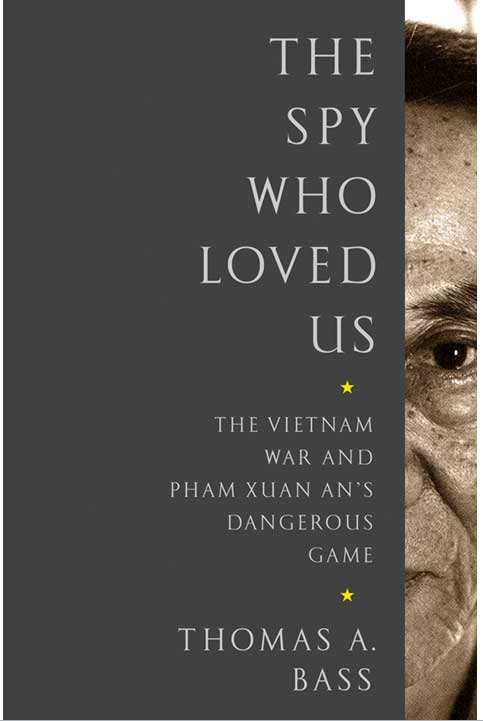
Thomas Bass spent five years monitoring the publication of a Vietnamese translation of his book The Spy Who Loved Us. Swamp of the Assassins is the record of Bass’ interactions and interviews with editors, publishers, censors and silenced and exiled writers. Begun after a 2005 article in The New Yorker, Bass’ biography of Pham Xuan An provided an unflinching look at a key figure in Vietnam’s pantheon of communist heroes. Throughout the process of publication, successive editors strove to align Bass’ account of An’s life with the official narrative, requiring numerous cuts and changes to the language. Related: Vietnam’s concerted effort to keep control of its past
|
About Thomas Bass
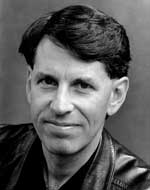
Thomas Alden Bass is an American writer and professor in literature and history. Currently he is a professor of English at University at Albany, State University of New York.
|
About Pham Xuan An
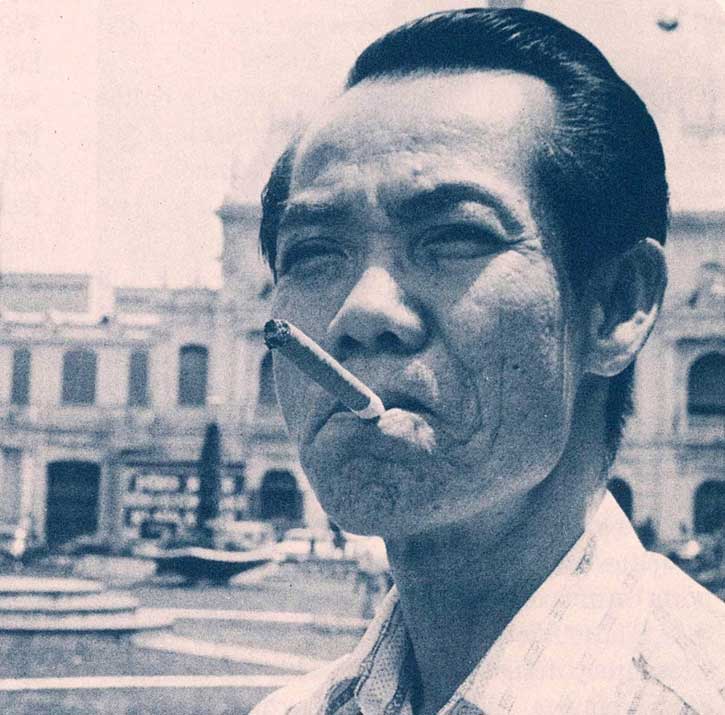
Pham Xuan An was a South Vietnamese journalist, whose remarkable effectiveness and long-lived career as a spy for the North Vietnamese communists—from the 1940s until his death in 2006—made him one of the greatest spies of the 20th century.
|
Contents
2 Feb: On being censored in Vietnam | 3 Feb: Fighting hand-to-hand in the hedgerows of literature | 4 Feb: Hostage trade | 5 Feb: Not worth being killed for | 6 Feb: Literary control mechanisms | 9 Feb: Vietnamology | 10 Feb: Perfect spy? | 11 Feb: The habits of war | 12 Feb: Wandering souls | 13 Feb: Eyes in the back of his head | 16 Feb: The black cloud | 17 Feb: The struggle | 18 Feb: Cyberspace country
|
Sometime in March 2014—no one can tell me for sure, and, in fact, the book’s publishing license is not issued until May 2014—a Vietnamese translation of The Spy Who Loved Us appears in Hanoi. By this point, even the title of my book has been censored. It has been reduced to Z.21, a code name for Pham Xuan An, as if the book itself, like its hero, will try to travel unnoticed through the shifting terrain of Vietnam’s culture wars.
I had been sent a final list of censored passages and was settling down to review these cuts when I received the email telling me that the book had been published. This was a breach of contract, but I decide not to press the point, because I am now contractually free, in six months, to release my own uncensored version on the web. The web is where Vietnamese literature has moved, as the gray net of police surveillance, fines, exile, and prison is cinched ever more tightly around the country’s journalists, bloggers, artists, musicians, writers, and poets—yes, even Vietnam’s poets can get in trouble, as I soon learn on a visit to Vietnam.
I use the minor stir occasioned by my book’s publication (including a cover story in Communist Youth magazine) to schedule a trip to Southeast Asia. I want to meet the censors with whom I had been sparring for the past five years, or at least the ones who will step forward and talk to me. I arrive on the night flight from Paris to Hanoi at the end of May and begin swimming through a miasma of tropical heat and humidity, before taking refuge in the Church Hotel, near St. Joseph’s cathedral in Hanoi’s old quarter. From here I schedule a meeting with Nguyen Viet Long, my original editor at Nha Nam. I also schedule meetings with Nguyen Nhat Anh and Vu Hoang Giang, chairman and vice-chairman of the company. Later, I learn that two other people who played a role in this affair are willing to talk to me. They include Nguyen The Vinh, editor at Hong Duc, the state-owned publishing company that produced the final list of passages to be censored and then issued my publishing license. Also willing to meet me is Duong Trung Quoc, an historian and elected member of Vietnam’s National Assembly, who seems to have negotiated the political deals required to get my book—or at least a version of my book—published in Vietnam.
The translator of Z.21 is a Hanoi journalist named Do Tuan Kiet. Judging from his work (unfortunately, he is out of town during my visit), Kiet speaks Vietnam’s dominant northern dialect, which today is larded with Marxist-Leninist terms borrowed from the Chinese. This language grates on the ears of southern Vietnamese. It is not the language spoken by Pham Xuan An, the hero of my book, and, in fact, An mocked this speech. He dismissed the ten months he spent in 1978 at the Nguyen Ai Quoc National Political Academy outside Hanoi as “reeducation”—a failed attempt to teach him this jargon. “I had lived too long among the enemy,” he said. “They sent me to be recycled.”
After my book was translated, Long, my editor, began the serious work of censoring it. Over the years, as he tried to secure a publishing license, more and more changes were made to the text, as one state-owned company after another rejected the book. By the end, I imagine the project had grown ripe with the odor of danger. It was not something one wanted to touch if you valued your career as an editor at Police newspaper or the Ministry of the Interior. Long himself must have begun to look a bit suspicious. Then he left trade book publishing and went to work editing math texts for school children.
Long and I have agreed to meet at my hotel. He rings the bell and enters the room nervously. He sits on the edge of the sofa, apologizes for being late, and finally agrees to drink a beer. In his 50s, with dark hair framing his square head, Long is dressed in the uniform of a Vietnamese cadre: owlish eyeglasses, short-sleeved white shirt with pen in the front pocket, metal watch flopping around his wrist, gray slacks, and sandals. He glances around him, as if he is looking for listening devices, and begins answering my questions with the kind of guarded indirection one develops in a police state.
Trained as an engineer in the former Soviet Union, Long’s specialty was cybernetics or control systems for nuclear reactors, particularly the nuclear reactor in Dalat that the victorious North Vietnamese seized from the retreating Americans in 1975. A graduate of the Moscow Power Engineering Institute, Long taught himself English during his five years in Russia.
After chatting about his move from cybernetics to publishing, we begin talking about my book. “There was a serious battle to edit your book,” he says. “I was caught in the middle, being pressured by the author and my superiors. The regime has declared this a sensitive book. You can get in a lot of trouble for handling this kind of project improperly. That’s all I can tell you.”
“By law, there are no private publishing houses in Vietnam,” he says. “So Nha Nam has to ally itself with a state-run publisher every time it releases a book. We took your book to a lot of publishers, and they all turned it down. Finally, Hong Duc agreed to give it a publishing license. They’re a powerful publisher.”
“Why are they powerful?” I ask.
Long laughs nervously. “Let’s just say they’re powerful. That’s all I can tell you.” Later I learn that Hong Duc is run by Vietnam’s Ministry of Information and Communication, one of the country’s major censors.
“What about the material that was cut from the book?” I ask.
“The translator translated the entire book,” he says. “Then we removed the passages that had to be removed. We couldn’t leave them untouched. Publishing your book was a very hard process. A lot of subjects had to be censored, and there was no choice about removing them.”
When I ask for examples, he mentions Colonel Bui Tin, who defected to France in 1990 to protest Vietnam’s lack of democracy, and General Giap, who, before his death in 2013, wrote letters opposing China’s influence in Vietnam. “Nothing about these affairs can be written,” he says. “Everyone knows about them, but you can’t get a publishing permit if these things are in your book.”
“How do you know what has to be censored?”
“We must know. We observe. Maybe some people have different ideas, but we know what we’re supposed to do. A lot of it depends on timing,” he says. “We published a book by the Dalai Lama against China. Then, when the authorities noticed what we had done, we were forbidden from publishing more books by the Dalai Lama. In general, we couldn’t publish anything bad about China. For example, the 1979 border war between Vietnam and China was something we weren’t allowed to write about.”
Long has a nervous cough at the back of his throat. He declines a second beer. Again he glances around the room, finding nothing to make him look less glum.
“The censorship is often silent,” he says. “Without formally being banned, all the books that have been published can suddenly disappear from the shelves.”
“Publishing your book was a very hard process,” he says again. “It was the most difficult book for me.”
I ask Long if he is a member of the Communist Party. He is not a Party member, but his brother is. “There are political benefits from joining the party,” he says. “It helps you rise in state-run institutions.”
He declines another beer and says it’s time for him to retrieve his motorbike and ride home. He congratulates me on the publication of my book.
“It is not really my book,” I say, mentioning the four hundred passages that were cut.
“Four hundred is not so many,” he says. “We have an expression in Vietnamese, ‘If the head goes through, the tail will follow.’ In the next edition, maybe some of these passages will be restored.”
As Long slips out the door, he looks worried about having said too much during our brief encounter. I wish him well in his new job. “The pay is better,” he assures me.
Part 6: Vietnamology
This fifth installment of the serialisation of Swamp of the Assassins by Thomas A. Bass was posted on February 6, 2015 at indexoncensorship.org
27 Jan 2015 | About Index, mobile, Press Releases
* South American cartoonist and mafia investigator shortlisted for 2015 Freedom of Expression award
* Other nominees include a jailed Moroccan rapper, the lawyers who fought Turkey’s social media ban, and a Mexican news platform fighting cartel-enforced media blackouts
* Judges include Martha Lane Fox, Mariane Pearl, Keir Starmer, and Elif Shafak
A journalist under 24-hour protection because of his reports into the Italian mafia, an Ecuadorian cartoonist facing prosecution for depicting government corruption, and lawyers who challenged Turkey – and won – over its social media ban, are among those shortlisted for the Index on Censorship Freedom of Expression Awards this year.
Drawn from more than 2,000 nominations, the shortlist celebrates those at the forefront of tackling censorship and threats to freedom of expression. Many of the 17 shortlisted nominees are regularly targeted by authorities or by criminal and extremist groups for their work: some face regular death threats, others criminal prosecution.
“The Index Freedom of Expression Awards recognise some of the world’s most courageous journalists, artists and campaigners,” said Jodie Ginsberg, CEO of campaigning charity Index on Censorship. “These individuals and groups often work in isolation, with little funding or support, but they are all driven by the vision of a world in which everyone can express themselves freely – no matter who they are or what they believe.”
Awards are offered in four categories: journalism; arts; campaigning; and digital activism.
Those on the shortlist include Lirio Abbate, an Italian journalist whose investigations into the mafia mean he requires constant protection; Safa Al Ahmad, whose documentary exposed details of a unreported mass uprising in Saudi Arabia; radio station Echo of Moscow, one of Russia’s last remaining independent media outlets; and Rafael Marques de Morais, an Angolan reporter repeatedly prosecuted for his work exposing government and industry corruption.
Arts nominees include Ecuador’s censored cartoonist “Bonil” – who has for more than 30 years critiqued and lampooned the country’s authorities; Moroccan rapper Mouad ‘El Haqed’ Belghouat, whose music challenges poverty and government corruption; Rory “Panti Bliss” O’Neill, a Dublin-based drag artist who speaks out against homophobia; and Malian musicians Songhoy Blues, who fled their country after music was banned. Guitarist Garba Touré was threatened with having his hand cut off.
In the campaigning category, nominees range from lawyers Yaman Akdeniz and Kerem Altiparmak, who successfully overturned Turkey’s social media ban last year; to innovative German anti-Nazi group ZDK; to Amran Abdundi, working on the treacherous Somali-Kenya border to help women and girls who are frequently victims of violence, rape and murder. They also include Abdul Mujeeb Khalvatagr who is working to develop a free media in Afghanistan, and The Union of the Committee of Soliders’ Mothers of Russia – a group dedicated to exposing stories of Russian soldiers, killed in the Ukraine conflict, which the Russian government denies.
The digital activism category, which is decided by public vote, includes investigative news outlet Atlatszo.hu, which is using freedom of information requests to hold the Hungarian government to account; Nico Sell, a US-based entrepreneur and online privacy activist; online map Syria Tracker, which is providing reliable data on human rights abuses in Syria; and Valor por Tamalipas, a crowd-sourced news platform set up to fill a void created by the region’s drug cartel-induced media blackout.
More detail about the nominees is included below.
The winners will be announced at a ceremony at The Barbican, London, on March 18.
The judges for this year’s awards – now in their 15th year – are digital campaigner and entrepreneur Martha Lane Fox; bestselling Turkish novelist Elif Shafak; journalist and campaigner Mariane Pearl; and human rights lawyer Keir Starmer.
For more information, or to arrange interviews with any of those shortlisted, please contact: David Heinemann on 0207 260 2660. Photos of the nominees are available at www.indexoncensorship.org
Notes for editors
The shortlisted nominees:
Journalism
Lirio Abbate (Italy);
Safa Al Ahmad (Saudi Arabia);
Rafael Marques de Morais (Angola);
Echo of Moscow (Russia)
Arts
“Bonil” (Ecuador);
Panti Bliss (Ireland);
Songhoy Blues (Mali);
“El Haqed” (Morocco)
Campaigning
Amran Abdundi (Kenya/Somalia);
Yaman Akdeniz and Kerem Altiparmak (Turkey);
Abdul Mujeeb Khalvatgar (Afghanistan);
Zentrum Demokratische Kultur (Germany);
The Union of the Committee of Soldiers’ Mothers of Russia (Russia)
Digital Advocacy
Atlatszo.hu and Tamás Bodoky (Hungary);
Nico Sell (USA);
Syria Tracker (Syria);
Valor por Tamaulipas (Mexico)
Index on Censorship, founded in 1972 by poet Stephen Spender, campaigns for freedom of expression worldwide. Its award-winning quarterly magazine has featured writers such as Vaclav Havel, Nadine Gordimer, Arthur Miller, Philip Pullman, Salman Rushdie, Aung San Suu Kyi and Amartya Sen.
The Index on Censorship Freedom of Expression Awards are now in their 15th year. Previous winners include Nobel Peace Prize winner Malala Yousafzai, Israeli conductor Daniel Barenboim, and Russian journalist Anna Politkovskaya.
The awards are sponsored by Doughty Street Chambers (sponsors of the Campaigning award); The Guardian newspaper group (sponsors of the Journalism award); Google (sponsors of the Digital Advocacy award); and Sage Publications. The Digital Advocacy award is decided by public vote between January 27 and February 15.
Nominees for the Index on Censorship Freedom of Expression Awards 2015
Journalism
Lirio Abbate
Lirio Abbate is a Rome-based journalist working for the weekly news magazine L’Espresso. He specialises in investigating the criminal activity and political connections of Italian mafia groups, from whom he is routinely subjected to violent threats. Abbate has written four books about mafia groups since 1993. The most recent, Fimmine Ribelli or Rebel Women (2013), illustrates the severe plight of women living under the sway of the ‘Ndrangheta’ – the Calabrian mafia. Abbate is also a leading member of press freedom NGO Ossigeno Per L’informazione (Oxygen via information). In 2011 he founded an anti-mafia literary festival called Trame, which has taken place annually in the heart of Calabrian mafia territory.
Safa Al Ahmad
Safa Al Ahmad has spent the last three years covertly filming an unreported mass uprising in Saudi Arabia’s eastern province. Her 30-minute documentary, Saudi’s Secret Uprising, was broadcast in May 2014, and has drawn wide attention to the violent and bloody protests. Al Ahmad took enormous risks in her regular filming trips. First, as a woman travelling alone, she drew the attention of Saudi officials in a country in which women have limited control over their day-to-day lives. Second, she carried a camera full of footage of dissent. Saudi Arabia is ranked by Freedom House as one of the most restrictive Arabic countries in terms of free expression – Al Ahmad would almost certainly have faced severe punishment if caught filming.
Rafael Marques de Morais
Rafael Marques de Morais is an Angolan journalist and human rights activist. Since 2008 he has run anti-corruption watchdog news site, MakaAngola.org. Marques de Morais exposes government and industry corruption, as well as human rights violations. In 1999, he was arrested and detained for 40 days without charge, and denied food and water for days at a time, following an article critical of the Angolan president. His six-month sentence for defamation was finally suspended on condition that he wrote nothing critical of the government for five years. Within three years he was again reporting abuses. He currently faces nine charges of defamation for reports on human rights abuses committed during diamond mining operations.
Ekho Mosky (Echo of Moscow)
An independent Russian radio station, Echo is one of few media outlets that is critical of Vladimir Putin’s regime and describeded by many as the last bastion of free speech in the country. It has an estimated audience of 7 million people across Russia. Echo was set up in 1990 by radio veterans jaded with Soviet propaganda, and has taken an interrogative stance towards Russia’s government ever since. Its focus is on maintaining balance – it airs pro- and anti-Kremlin voices in equal measure. Editor-in-chief Alexei Venediktov has often battled with Putin. In 2012 Putin remarked that Ekho served foreign interests and “pour[ed] diarrhoea over me day and night”.
Arts
Xavier “Bonil” Bonilla
Bonil is the pen name of Xavier Bonilla, an Ecuador-based editorial cartoonist who draws for several national newspapers, particularly El Universo. For thirty years he has critiqued, lampooned and ruffled the feathers of Ecuador’s political leaders, earning a reputation as one of the wittiest and most fearless cartoonists in South America. More recently, Bonil has gained a new epithet – ‘the pursued cartoonist’ is how Spanish newspaper El Pais styled him in its list of the 12 Latin Americans in 2014 news. Twice in 2014 incumbent president Rafael Correa publicly denounced Bonil and threatened him with legal action – the first case was successful against Bonil, and the second is ongoing.
Mouad “El Haqed” Belghouat
El Haqed, roughly translated as ‘the enraged’, is a Moroccan rapper and human rights activist. His music has publicised widespread poverty and endemic government corruption in Morocco since 2011, when his song ‘Stop the Silence’ galvanised Moroccans to protest against their government. He has been imprisoned on spurious charges three times in as many years, most recently for four months in 2014. Haqed believes that police had been looking for an opportunity to arrest him after the release of ‘Walou’ – Haqed’s 2014 album, which is banned from being sold or played in public. One officer at the scene was heard to say “I have scores to settle with you”. Haqed and his brother were beaten by police as they were detained.
Rory ”Panti Bliss” O’Neill
Rory O’Neill sees his it as his duty as “to say the unsayable”. A Dublin-based stand-up comedian and self-described accidental activist for gay rights, he has performed a comedy drag act under the name Panti Bliss for more than two decades. O’Neill rocketed to international fame in January 2014 after he and national broadcaster RTE were threatened with legal action for defamation following a TV appearance in which he identified homophobic writers and groups in Irish media. RTE edited out the offending segment on its online player, issued an apology and paid six individuals €85,000 of public money to settle the dispute. The apology prompted almost a thousand complaints to the TV station and triggered countrywide debate.
Songhoy Blues
Songhoy Blues is a four-piece “desert blues” band, based in Mali. It is made up of musicians who fled north Mali after militant Islamist groups captured the territory and implemented strict sharia law – including the prohibition of secular music – in spring 2012. Despite the lifting of sharia law many musicians continue to self-censor, fearful of the Islamist groups’ return and retribution. In 2014 Songhoy Blues went on a global tour, and also supported artists such as Damon Albarn and Julian Casablancas across Europe. Mojo magazine has named them one of 10 “new faces of 2015”. Their debut album, Music In Exile, will be released in February, and its lead single – Al Hassidi Terei, produced by Zinner – has received critical acclaim.
Campaigning
Amran Abdundi
Amran Abdundi is a women’s rights activist based in north-eastern Kenya. She runs the Frontier Indigenous Network, an organisation that helps women set up shelters along the dangerous border with Somalia. It offers first aid and support for rape victims, including moving them to a safer part of Kenya. As well as protecting citizens endangered by the guerrilla activities of Al Qaeda-linked group Al Shabaab, the organisation helps those fleeing drought and failed harvests in Somalia. Abdundi has established radio-listening groups for women, in which she encourages them to challenge repression and educates them about diseases such as tuberculosis.
Yaman Akdeniz and Kerem Altiparmak
Yaman and Kerem are cyber-law experts and internet rights activists who have campaigned vigorously against the Turkish government’s increasingly restrictive internet access laws. Together, they have raised repeated objections to controversial internet law 5651. This law ostensibly blocks access to child pornography and other harmful content, but it is also used to censor politically sensitive content such as pro-Kurdish or left-wing websites. It has been used to block around 50,000 websites. Their advocacy efforts, including an appeal to Turkey’s highest court, forced the overturn of blocks on Twitter and YouTube in 2014.
Abdul Mujeeb Khalvatgar
Abdul Mujeeb Khalvatgar is an Afghan journalist and the executive director of the media advocacy group Nai Supporting Open Media in Afghanistan, which works to develop a free media in Afghanistan as the country develops a peacetime society.
A radio journalist for more than 10 years, Khalvatgar is also a member of Afghanistan’s Foundation Open Society Institute, working as media coordinator and acting country manager. Khalvatgar is also an active member of the Access to Information Law Working Group, a group of more than 15 media professionals and activists working for better access to Information Law in Afghanistan.
“Nazis against Nazis” (ZDK)
Rechts gegen Rechts was a guerrilla event that took place in Wunsiedel, Germany, in November 2014. It was designed to peacefully counter an annual neo-Nazi march through the streets of the small town where Rudolf Hess is buried. For every metre the marchers walked, money was raised for an anti-extremism, Nazi-rehabilitation charity ZDK. ZDK was set up in 2003 to tackle all forms of extremism – particularly religious and nationalist extremism. As well as rehabilitating neo-Nazi defectors, it recently began a project called Hayad – meaning ‘life’ in Arabic – which aims to de-radicalise Muslims who want to leave their families and join jihadist groups.
The Union of the Committee of Soldiers’ Mothers of Russia
The Union of the Committee of Soldiers’ Mothers of Russia is an NGO network based in Russia, dedicated to improving transparency and exposing human rights abuses in the Russian military. It aims to provide soldiers’ families with reliable information, kept private by the notoriously secretive Russian military. It also provides legal advice for Russian soldiers and their families, and to conscientious objectors.
The first Soldiers’ Mothers groups were established in 1989, in the last days of the Soviet Union. In 2014, members began revealing that their investigations had found that many wounded or killed Russian soldiers had been fighting in Ukraine.
Digital Activism
Atlatszo.hu and Tamás Bodoky
Atlatszo.hu is an investigative news outlet founded and managed by Tamás Bodoky, the main goal of which is to promote free, transparent circulation of information in Hungary. The website, which receives around 500,000 unique visitors per month, acts as watchdog to a Hungarian government which has increasingly tightened its grip on press freedom in the country. Through it, Bodoky produces investigative reports based on freedom of information requests, and instigates lawsuits in cases where its requests are refused. In 2014, the website has uncovered cases of state control of the media, election fraud, government corruption, tax fraud, and misuse of public funds.
Nico Sell
Nico Sell is a US-based entrepreneur and activist for online privacy and secure digital communication. Sell is the CEO of Wickr, a private messaging app with watertight encryption technology. Messages sent using the app ‘self-destruct’ after a length of time adjusted by the sender – from six days to one second – and are then overwritten by gibberish data on the sender’s and receiver’s phones, making them impossible to recreate. Every year at Defcon, Sell runs a nonprofit training camp for children and teenagers called R00tz Asylum, in which digital skills such as white-hat hacking techniques are taught.
Syria Tracker
Syria Tracker is a crisis-mapping platform, which collates and exhibits live data on human rights abuses and other welfare issues brought about by the Syrian conflict. Reports of killings, rapes, water and food tampering, and chemical attacks ongoing in Syria are geolocated and collated onto a live map by US-based volunteers. Syria Tracker synthesises two pre-existing data-sourcing platforms and this combination makes for meticulous accuracy, since data from one source is triangulated with the other, and unverified information is discarded. The news-tracking tool covers anti- and pro-Assad news sources to reduce potential bias.
Valor por Tamaulipas
Valor por Tamaulipas is a crowd-sourced news platform, based in Mexico and set up in 2012 to fill the void created by the region’s cartel-induced media blackout. Valor’s online followers – more than half a million on Facebook and 100,000 on Twitter – send in reports of cartel-related violence, such as shootings, robberies, or missing people. These reports are immediately curated and disseminated by the page administrator, with a hashtag such as #SDR (“situación de riesgo” i.e. situation of risk) attached. From its inception, Valor por Tamaulipas (which means “Courage for Tamaulipas”) has been under constant threat by cartels.
27 Jan 2015 | About Index, Awards, mobile
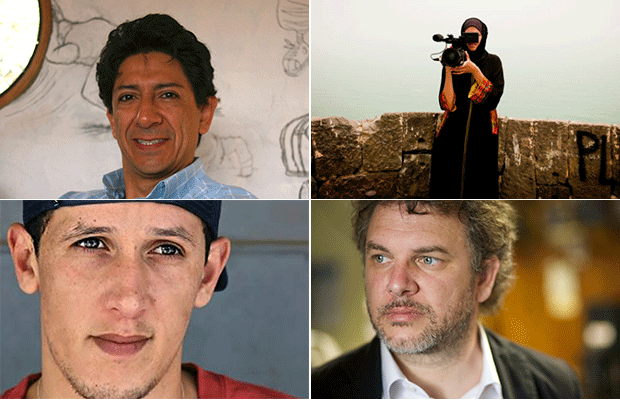
From top left: Xavier “Bonil” Bonilla, Safa Al Ahmad, Mouad “El Haqed” Belghouat and Lirio Abbate are among the Index Freedom of Expression Awards nominees for 2015.
A journalist under 24-hour protection because of his reports into the Italian mafia, an Ecuadorian cartoonist facing prosecution for mocking a congressmen’s pay packet, and lawyers who challenged Turkey – and won – over its social media ban, are among those shortlisted for the Index on Censorship Freedom of Expression Awards this year.
Drawn from more than 2,000 nominations, the shortlist celebrates those at the forefront of tackling censorship and threats to freedom of expression. Many of the 17 shortlisted nominees are regularly targeted by authorities or by criminal and extremist groups for their work: some face regular death threats, others criminal prosecution.
“The Index Freedom of Expression Awards recognise some of the world’s most courageous journalists, artists and campaigners,” said Jodie Ginsberg, CEO of Index. “These individuals and groups often work in isolation, with little funding or support, but they are all driven by the vision of a world in which everyone can express themselves freely – no matter who they are or what they believe.”
Awards are offered in four categories: journalism, arts, campaigning and digital activism.
Those on the shortlist include Lirio Abbate, an Italian journalist whose investigations into the mafia mean he requires constant protection; Safa Al Ahmad, whose documentary exposed details of an unreported mass uprising in Saudi Arabia; radio station Echo of Moscow, one of Russia’s last remaining independent media outlets; and Rafael Marques de Morais, an Angolan reporter repeatedly prosecuted for his work exposing government and industry corruption.
Arts nominees include Ecuador’s censored cartoonist Xavier “Bonil” Bonilla – who has for more than 30 years critiqued and lampooned the country’s authorities; Moroccan rapper Mouad “El Haqed” Belghouat, whose music challenges poverty and government corruption; Rory “Panti Bliss” O’Neill, a Dublin-based drag artist who speaks out against homophobia; and Malian musicians Songhoy Blues, who fled their country after music was banned. Guitarist Garba Touré was threatened with having his hand cut off.
In the campaigning category, nominees range from lawyers Yaman Akdeniz and Kerem Altiparmak, who played a key part in overturning Turkey’s social media ban last year; to innovative German anti-Nazi group ZDK; to Amran Abdundi, working on the treacherous Somali-Kenya border to help women and girls who are frequently victims of violence, rape and murder. They also include Abdul Mujeeb Khalvatgar who is working to develop a free media in Afghanistan, and The Union of the Committee of Soliders’ Mothers of Russia – a group dedicated to exposing stories of Russian soldiers, killed in the Ukraine conflict, which the Russian government denies.
The digital activism category, which is decided by public vote, includes investigative news outlet Atlatszo.hu, which is using freedom of information requests to hold the Hungarian government to account; Nico Sell, a US-based entrepreneur and online privacy activist; online map Syria Tracker, which is providing reliable data on human rights abuses in Syria; and Valor por Tamalipas, a crowd-sourced news platform set up to fill a void created by the region’s drug cartel-induced media blackout.
The shortlisted nominees:
Arts

Panti Bliss (Ireland)
Songhoy Blues (Mali)
“Bonil” (Ecuador)
“El Haqed” (Morocco)
More details
Campaigning
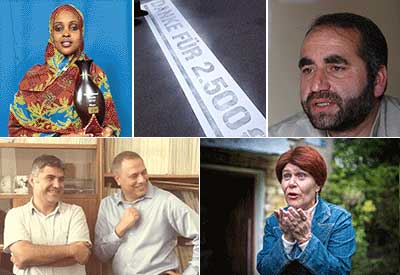
Amran Abdundi (Kenya/Somalia)
Zentrum Demokratische Kultur (Germany)
Abdul Mujeeb Khalvatgar (Afghanistan)
Yaman Akdeniz and Kerem Altiparmak (Turkey)
Soldiers’ Mothers (Russia)
More details
Digital Activism
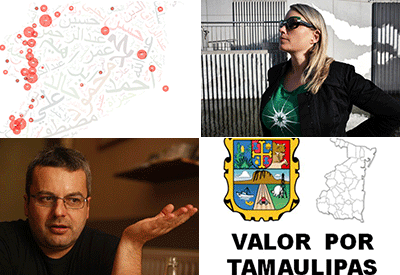
Syria Tracker (Syria)
Nico Sell (USA)
Atlatszo.hu and Tamás Bodoky (Hungary)
Valor por Tamaulipas (Mexico)
More details
Journalism
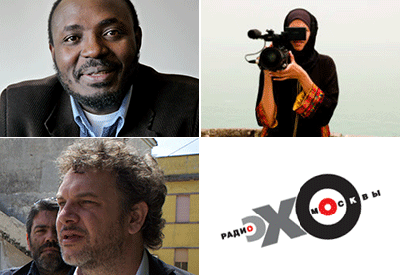
Rafael Marques de Morais (Angola)
Safa Al Ahmad (Saudi Arabia)
Lirio Abbate (Italy)
Echo of Moscow (Russia)
More details
This article was posted on 27 January 2015 at indexoncensorship.org
