24 Mar 2014 | Digital Freedom, India, News
For many years, the Indian public in particular, had very little interest in who controlled the internet and decisions taken at a structural level that shaped its future.
The press carried little tidbits about the World Summit on Information Society; a pair of United Nations-sponsored conferences about information, communication and, with an aim to bridge the so-called global digital divide separating rich countries from poor countries by spreading access to the internet in the developing world, the UN body, International Telecommunications Union (ITU); which coordinates the shared global use of the radio spectrum, promotes international cooperation in assigning satellite orbits, works to improve telecommunication infrastructure in the developing world, and assists in the development and coordination of worldwide technical standards, and Internet Corporation for Assigned Names and Numbers (ICANN), which coordinates the Internet Assigned Numbers Authority (IANA) functions, which are key technical services critical to the continued operations of the Internet’s underlying address book, the Domain Name System (DNS) and also UN Commission of Science and Technology Working Group on Enhanced Cooperation, where governments come together to discuss issues like internet governance.
What was commonly known followed a similar trajectory: America invented the internet, it is a global commons, and it works well.
Over the last few years, however, as the Indian experience with the internet has matured, questions of governance, both internally and externally have started making headlines. Allegations of mass surveillance have hogged all headlines. Another factor cannot be missed: the Indian digital economy is growing rapidly, and while internet governance is nowhere close to being an election issue in India, domestically, access, freedom of expression, cyber crime and cyber security are growing concerns. There also the reality that as India’s population gets increasingly connected, it will host one of the biggest online demographies in the world. Therefore, India’s views and actions in terms of how the internet should grow and be governed is crucial to the future of the internet itself.
In October 2011, the Indian government proposed that a UN Committee for Internet-Related Policies (CIRP) be formed, so that governments can debate and deliberate on vital issues such as intellectual property enforcement, privacy and data protection, online filtering and censorship and network neutrality. Those opposed to the idea have warned that the “open” nature of the internet will be threatened by governments who favor a controlled and censored form of the internet. Also the proposed structure of the UN-CIRP seemed to be the very anti-thesis of a dynamic internet; it involved setting up a 50 member committee that only met for two weeks in the year. Those opposed to this bureaucratic suggestion, instead, favour a multi-stakeholder transnational governance mechanism, which gives all stakeholders of the internet a place on the table; including governments, businesses and civil society members.
The last few months of 2013 were very active internationally, on questions of internet governance. Three big international events made headlines, and India’s role in them is especially telling. The first was the Internet Governance Forum (IGF) in Indonesia in November. This event brought together all members of civil society on a common platform to deliberate on the rules of global governance, but in effect did not have any binding powers. Given that it was held in the wake of the Snowden revelations of NSA surveillance, the conversations centered around the need to ensure better protection of all citizens in the online environment and to reach a proper balance between actions driven by national security and respect for freedom of expression, privacy and human rights. While in the 2012 IGF, India’s Minister for Communication Technology had been present, in 2013, was “extremely small” according to Dr Anja Kovaks who participated there. She added that, “many developing countries look up to India’s engagement with internet-governance forums to ensure that the concerns of the developing world are not ignored during policy-making.”
In December, 2013, the UN Commission of Science and Technology Working Group on Enhanced Cooperation released a statement which also carried India’s proposal that, “The UN General Assembly could embark on creation of a multilateral body for formulation of international Internet-related public policies. The proposed body should include all stakeholders and relevant inter-governmental and international organisations in advisory capacity within their respective roles as identified in Tunis agenda and WGIG report. Such body should also develop globally applicable principles on public policy issues associated with the coordination and management of critical Internet resources.” Earlier this year, a note written by India’s National Security Council Secretariat (NSCS), leaked to an Indian newspaper in March 2014, warns of the DNS system under US control, and goes on to say that “India’s position is aligned with Russia, Saudi Arabia and Iran who also want governments to collectively drive internet management worldwide…” It adds that, “trust in the internet has declined and India’s objective in the Geneva session was to ensure its concerns are accommodated in whatever international regime of Internet governance finally emerges.”
However, in the backdrop of continuing internet governance discussions, came the announcement by Brazilian President Dilma Rousseff that in the light of revelations of global mass surveillance by the US, Brazil was going to host an internet governance conference — NETmundial — in April 2014. This announcement was made after consulting the head of ICANN, Fadi Chehde. In contrast, the Indian reaction to these revelations seemed rather muted, perhaps because India too is building a mass surveillance regime within its national borders. It is also believed that Brazil asked India take a bigger role with them, however, Indian foreign ministry officials have stated off-the-record that details about the conference were not easy to come by from Brazil. Either way, the conference dates coincide with Indian general elections of 2014 and the formation of a new national government, and will most likely see a small Indian delegation.
A month before the Brazil conference comes the announcement by the United States government that the U.S. National Telecommunications and Information Administration will end its formal relationship with the Internet Corporation for Assigned Names and Numbers in late 2015, with ICANN developing a new global governance model. It has been made clear by the ICANN President and CEO Fadi Chehadé that the transition out of NTIA was “not a final decision to surrender control of the internet” or about announcing a new law or policy. “The [U.S.] government also set clear boundaries for that discussion, including a very clear statement that it will not release control of these functions to any government-led or inter-governmental organization solution.” Former CEO of ICANN Rod Beckstorm gave an interview in which he speculated that the US government made the announcement now “because they face the serious risk of losing even more at the upcoming NETmundial conference on internet governance in Brazil. This event could potentially lead to greater United Nations control over the internet and open the door to increased influence by countries opposed to a free and open internet.”
This, of course, is a hint that the US government would rather restructure ICANN and keep the multistakeholder approach towards internet governance open, rather than let some governments steer the course towards a government led body governing the internet.
In a reaction to the announcement, Member of Parliament and vocal critic of the Indian government’s position, Rajeev Chandrasekhar told Index that “India needs to think ahead, because its position on the governance of the internet and its inexplicable alliance with China, Saudi Arabia on this issue has been based on the so called US control of the net. First, the Ministry of External Affairs’s entrenched position of a UN body needs to be withdrawn forthwith. I have substantiated its problems at multiple levels. India has lost its leadership status to Brazil in the internet governance space, thanks to government’s position, and reflects complete failure of thought by Indian leadership.” Looking towards the future, Chandrasekhar added that, “the new government needs to hold national, open public consultation on the issue. Parliament needs to be involved. Governments want to regulate; industry invests, builds infrastructure and drives innovation; and civil society/academia protects civil ideals and users’ interest, including privacy, free speech and human rights. A free, open, safe, secure and truly global internet can only be managed through a multi-stakeholder mechanism with specific areas of intergovernmental cooperation, such as cyber terrorism, international jurisdiction.”
Other civil society voices, too, have called for the Indian government to rise to this new challenge. Security expert, Dr. Raja Mohan wrote in the Indian Express that, “Delhi has a long record of posturing at multilateral forums and shooting itself in the foot when it comes to national interest. Believe it or not, in the 1970s, India opposed, at the UN, the direct broadcast satellite technology in the name of protecting its territorial sovereignty. With an IT sector that is deeply integrated with the global economy and contributing nearly 8 per cent of India’s GDP as well as the world’s third-largest group of internet users, India does not have the luxury of quixotic pursuits. Delhi’s negotiating position must be rooted firmly in India’s economic interests. Issue-based coalitions — with countries, companies and civil society groups — are critical for ensuring the best possible outcomes.”
Given the Indian government’s taste for pushing unilateral mechanisms for governing the internet at an international level, and Indian civil society, which for the most part seems to vocally support a multistakeholder approach, the Indian elections might bring about a new opportunity for both sides to find clarity. Some argue that multistakeholder models give an equal seat to governments like the US, but also to their corporate giants such as Google, Facebook, AT&T, which might help them secure a majority over crucial issues and therefore an international unilateral model might be beneficial for smaller countries. Alternatively, a government-led model, as India suggests, pre-supposes a consultative mechanism within countries so that the will of the people can be reflected. One thing is clear, with its technology boom, population, and growing dependence on the internet for economic prosperity, governance and free expression, the country can no longer afford to not assume a leadership role in this area, while at the same time sticking to its core democratic principles. It needs to rise to its leadership potential and reflect the will of its people.
This article was published on 24 March 2014 at indexoncensorship.org
17 Mar 2014 | Volume 43.01 Spring 2014
[vc_row][vc_column][vc_custom_heading text=”In the Spring issue of the magazine, we include a special report, the war of words, on the use of propaganda and censorship during conflicts.”][vc_row_inner][vc_column_inner width=”1/2″][vc_column_text]
This theme seems particularly timely with the current situation in Crimea, where we are seeing classic propaganda techniques being rolled out to rally support for the vote to join Russia. Our special report of 15 articles and essays, starts with WWI where the current use of the term propaganda was invented and looks at poster campaigns, and propaganda journalism in the USA, but our writers, who include Lyse Doucet, David Aaronovitch, Rana Mitter, and serving army officer Ric Cole, also look at WWII, Iraq, Afghanistan and Syria.
[/vc_column_text][/vc_column_inner][vc_column_inner width=”1/2″][vc_single_image image=”80560″ img_size=”large”][/vc_column_inner][/vc_row_inner][vc_column_text]
Natasha Joseph interviews a journalist who worked in South Africa during apartheid, and what it was like to file stories from a newsroom knowing one of your colleagues was a spy; and Scottish journalist John MacLeod reports on a bombing cover-up in Clydebank, near Glasgow, where a huge swath of the town was flattened, and the rest of the country was left completely unaware because of wartime censorship. This Scottish story is still not that well known, even today. Something that illustrates the power of the cover-up during wartime, is the way details of the wartime flu epidemic was kept from millions of people all over the world.
In the other sections of the magazine, Irena Maryniak looks at the rise of racism and nationalism in Hungary; and Konstanty Gebert reports on hate crime and anti-semitism in Poland. The magazine includes two articles about censorship in science, one from Canada and one from the United States.
Also in this issue:
• Samizdat still going: underground newspapers in Belarus
• First extract in English of a controversial Turkish play
• Film fans go head to head on which decade has seen the strongest women’s voices on film. And don’t miss our competition to votes on the decade, and win tickets to a screening at Rich Mix cinema
• How do you feel about propaganda? Take our survey.
[/vc_column_text][/vc_column][/vc_row][vc_row][vc_column][vc_custom_heading text=”SUBSCRIBE” css=”.vc_custom_1481736449684{margin-right: 0px !important;margin-left: 0px !important;border-bottom-width: 1px !important;padding-bottom: 15px !important;border-bottom-color: #455560 !important;border-bottom-style: solid !important;}”][vc_column_text]Index on Censorship magazine was started in 1972 and remains the only global magazine dedicated to free expression. Past contributors include Samuel Beckett, Gabriel García Marquéz, Nadine Gordimer, Arthur Miller, Salman Rushdie, Margaret Atwood, and many more.[/vc_column_text][vc_row_inner][vc_column_inner width=”1/2″][vc_single_image image=”76572″ img_size=”full”][/vc_column_inner][vc_column_inner width=”1/2″][vc_column_text]In print or online. Order a print edition here or take out a digital subscription via Exact Editions.
Copies are also available at the BFI, the Serpentine Gallery, MagCulture, (London), News from Nowhere (Liverpool), Home (Manchester), Calton Books (Glasgow) and on Amazon. Each magazine sale helps Index on Censorship continue its fight for free expression worldwide.
 SUBSCRIBE NOW[/vc_column_text][/vc_column_inner][/vc_row_inner][/vc_column][/vc_row]
8 Mar 2014 | Azerbaijan News, News
International Women’s Day is a day to remember violence against women, the education gap, the wage gap, online harassment, everyday sexism, the intersection between sexism and other -isms, and a whole host of other issues to make us realise we’ve still got a long way to go. A day to demand continued progress, and a day to pledge to work to achieve it.
But it is also a day to celebrate. To appreciate the fantastic achievements that are made every day, everywhere, by women from all walks of life. It’s a day to be grateful to the women who dedicate their lives to fighting on the front lines to protect rights vital to us all. We want to shine the spotlight on women who have stood up for freedom of expression when it’s not the easy or popular thing to do, against fierce opposition and often at great personal risk. The following eight women have done just that. We know there are many, many more. Tell us about your female free speech hero in the comments or tweet us @IndexCensorship.
Meltem Arikan — Turkey
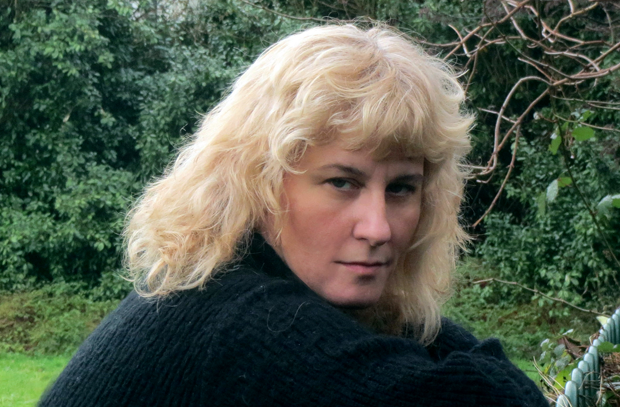
Meltem Arikan
Arikan is a writer who has long used her work to challenge patriarchal structures in society. He latest play “Mi Minor” was staged in Istanbul from December 2012 to April 2013, and told the story of a pianist who used social media to challenge the regime. Only a few months after, the Gezi Park protests broke out in Turkey. What started as an environmental demonstration quickly turned into a platform for the public to express their general dissatisfaction with the authorities — and social media played a huge role. Arikan was one of many to join in the Gezi Park movement, and has written a powerful personal account of her experiences. But a prominent name in Turkey, she was accused of being an organiser behind the protests, and faced a torrent of online abuse from government supporters. She was forced to flee, now living in exile in the UK.
I realised that we were surrounded, imprisoned in our own home and prevented from expressing ourselves freely.
Anabel Hernández — Mexico
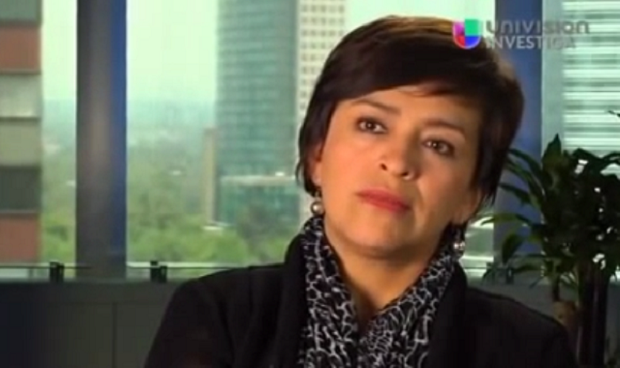
Anabel Hernández (Image: YouTube)
Hernández is a Mexican journalist known for her investigative reporting on the links between the country’s notorious drug cartels, government officials and the police. Following the publication of her book Los Señores del Narco (Narcoland), she received so many death threats that she was assigned round-the-clock protection. She can tell of opening the door to her home only to find a decapitated animal in front of her. Before Christmas, armed men arrived in her neighbourhood, disabled the security cameras and went to several houses looking for her. She was not at home, but one of her bodyguards was attacked and it was made clear that the visit — from people first identifying themselves as members of the police, then as Zetas — was because of her writing.
Many of these murders of my colleagues have been hidden away, surrounded by silence – they received a threat, and told no one; no one knew what was happening…We have to make these threats public. We have to challenge the authorities to protect our press by making every threat public – so they have no excuse.
Amira Osman — Sudan
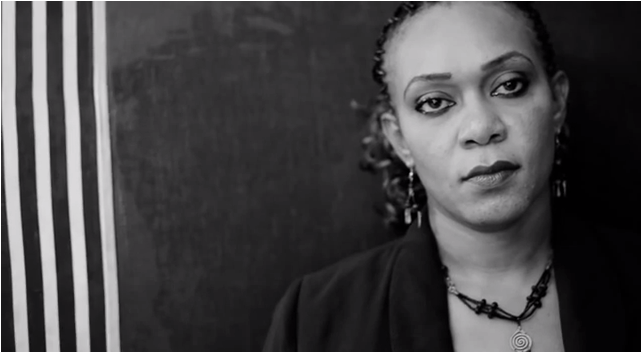
Amira Osman (Image: YouTube)
Amira Osman, a Sudanese engineer and women’s rights activist was last year arrested under the country’s draconian public order act, for refusing to pull up her headscarf. She was tried for “indecent conduct” under Article 152 of the Sudanese penal code, an offence potentially punishable by flogging. Osman used her case raise awareness around the problems of the public order law. She recorded a powerful video, calling on people to join her at the courthouse, and “put the Public Order Law on trial”. Her legal team has challenged the constitutionality of the law, and the trial as been postponed for the time being.
This case is not my own, it is a cause of all the Sudanese people who are being humiliated in their country, and their sisters, mothers, daughters, and colleagues are being flogged.
Fadiamata Walet Oumar — Mali
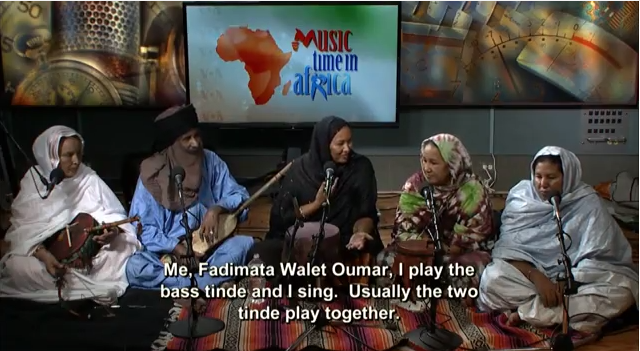
Fadiamata Walet Oumar with her band Tartit (Image: YouTube)
Fadiamata Walet Oumar is a Tuareg musician from Mali. She is the lead singer and founder of Tartit, the most famous band in the world performing traditional Tuareg music. The group work to preserve a culture threatened by the conflict and instability in northern Mali. Ansar Dine, an islamists rebel group, has imposed one of the most extreme interpretations of sharia law in the areas they control, including a music ban. Oumar believes this is because news and information is being disseminated through music. She fled to a refugee camp in Burkina Faso, where she has continued performing — taking care to hide her identity, so family in Mali would not be targeted over it. She also works with an organisation promoting women’s rights.
Music plays an important role in the life of Tuareg women. Our music gives women liberty…Freedom of expression is the most important thing in the world, and music is a part of freedom. If we don’t have freedom of expression, how can you genuinely have music?
Khadija Ismayilova — Azerbaijan
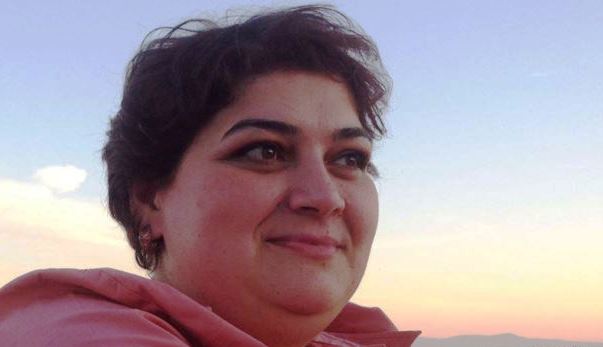
Khadija Ismayilova
Ismayilova is an award-winning Azerbaijani journalist, working with Radio Free Europe/Radio Liberty. She is know for her investigative reporting on corruption connected to the country’s president Ilham Aliyev. Azerbaijan has a notoriously poor record on human rights, including press freedom, and Ismayilova has been repeatedly targeted over her work. She was blackmailed with images of an intimate nature of her and her boyfriend, with the message to stop “behaving improperly”. This February, she was taken in for questioning by the general prosecutor several times, accused of handing over state secrets because she had met with visitors from the US Senate. In light of this, she posted a powerful message on her Facebook profile, pleading for international support in the event of he arrest.
WHEN MY CASE IS CONCERNED, if you can, please support by standing for freedom of speech and freedom of privacy in this country as loudly as possible. Otherwise, I rather prefer you not to act at all.
Jillian York — US
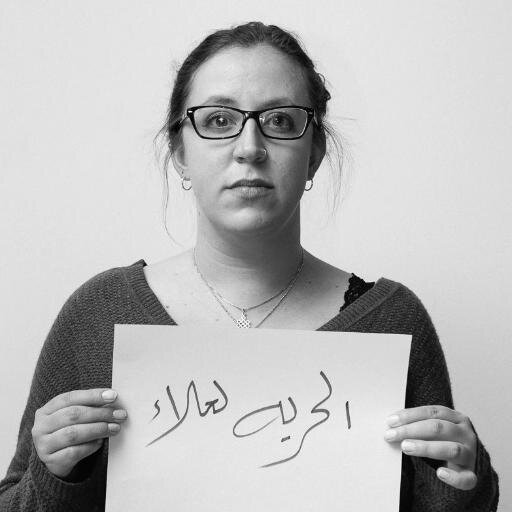
Jillian York (Image: Jillian C. York/Twitter)
Jillian York is a writer and activist, and Director of Freedom of Expression at the Electronic Frontier Foundation (EFF). She is a passionate advocate of freedom of expression in the digital age, and has spoken and written extensively on the topic. She is also a fierce critic of the mass surveillance undertaken by the NSA and other governments and government agencies. The EFF was one of the early organisers of The Day We Fight Back, a recent world-wide online campaign calling for new laws to curtail mass surveillance.
Dissent is an essential element to a free society and mass surveillance without due process — whether undertaken by the government of Bahrain, Russia, the US, or anywhere in between — threatens to stifle and smother that dissent, leaving in its wake a populace cowed by fear.
Cao Shunli — China
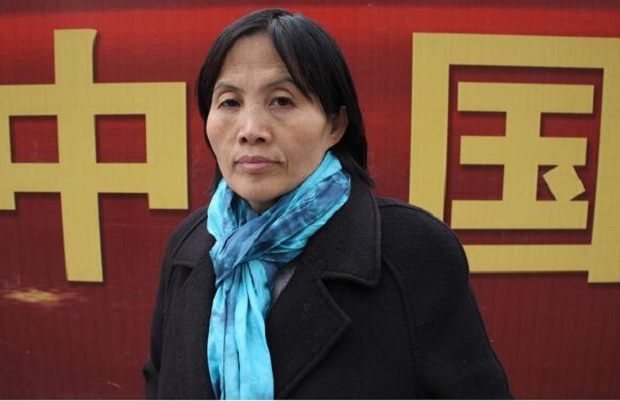
Cao Shunli (Image: Pablo M. Díez/Twitter)
Shunli is an human rights activist who has long campaigned for the right to increased citizens input into China’s Universal Periodic Review — the UN review of a country’s human rights record — and other human rights reports. Among other things, she took part in a two-month sit-in outside the Foreign Ministry. She has been targeted by authorities on a number of occasions over her activism, including being sent to a labour camp on at least two occasions. In September, she went missing after authorities stopped her from attending a human rights conference in Geneva. Only in October was she formally arrested, and charged for “picking quarrels and promoting troubles”. She has been detained ever since. The latest news is that she is seriously ill, and being denied medical treatment.
The SHRAP [State Human Rights Action Plan, released in 2012] hasn’t reached the UN standard to include vulnerable groups. The SHRAP also has avoided sensitive issue of human rights in China. It is actually to support the suppression of petitions, and to encourage corruption.
Zainab Al Khawaja — Bahrain
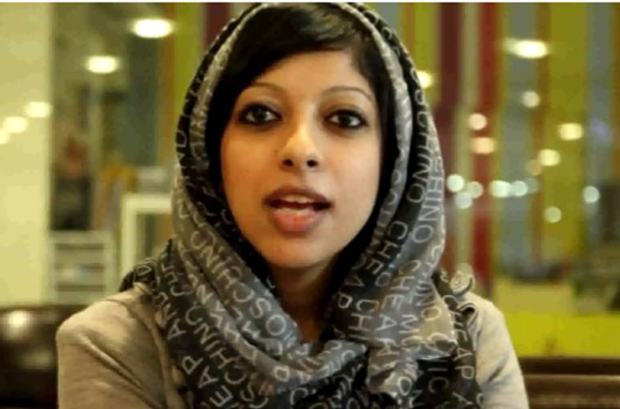
Zainab Al Khawaja
Al Khawaja is a Bahraini human rights activist, who is one of the leading figures in the Gulf kingdom’s ongoing pro-democracy movement. She has brought international attention to human rights abuses and repression by the ruling royal family, among other things, through her Twitter account. She has also taken part in a number of protests, once being shot at close range with tear gas. Al Khawaja has been detained several times over the last few years, over “crimes” like allegedly tearing up a photo of King Hamad bin Isa Al Khalifa. She had been in jail for nearly a year when she was released in February, but she still faces trials over charges like “insulting a police officer”. She is the daughter of prominent human rights defender Abdulhadi Al Khawaja, who is currently serving a life sentence.
Being a political prisoner in Bahrain, I try to find a way to fight from within the fortress of the enemy, as Mandela describes it. Not long after I was placed in a cell with fourteen people—two of whom are convicted murderers—I was handed the orange prison uniform. I knew I could not wear the uniform without having to swallow a little of my dignity. Refusing to wear the convicts’ clothes because I have not committed a crime, that was my small version of civil disobedience.
This article was posted on March 8, 2014 at indexoncensorship.org
7 Mar 2014 | News, Religion and Culture, Ukraine, Young Writers / Artists Programme
As the Euromaidan protests gripped Ukraine, French street-artist Roti travelled to Kiev. He was eager to support protesters who were struggling with a violent police response to their government’s tilt toward Russia.
For months Roti had worked on an idea for a sculpture: A woman emerging out of water. The concept, which was originally meant for Paris, took on new meaning as the demonstrators in Kiev became set on revolution.
Roti cast his idea in marble and the sculpture, New Ukraine, became an allegory for Euromaidan protesters. The woman’s face, toes and hands protruded from the block of stone. As she struggled for freedom, she created ripples in the stone surrounding her – after all, discontent spreads.
On January 7, 2014, the artist illegally installed his work at the center of Kiev’s Independence Square. “It’s a gift. Not to a nation but to its people”, Roti declared. His intentions were clear. The work came as attacks on journalists and protesters became more and more regular. New Ukraine was a symbol of hope and progress at a time when resolve could have easily wavered.
The night of the installation, protesters celebrated by dancing and singing in the street. Confidence seemed momentarily rejuvenated. In the following weeks clashes between police and protesters would claim their first lives.
New Ukraine is not the only street-art to offer support to the Ukrainian people. Graffiti decorates Kiev’s main square – crossed out swastikas and the slogan “BIG BROTHER IS WATCHING YOU” have become common features.
During protest, street-art becomes a barometer of social consciousness. Scrawled words and images on city walls reflect changing attitudes and a disdain for the ruling authority. The stencils of President Yanukovych’s body, punctured with bullet holes, were a more extreme example.
Like the ripples of New Ukraine, street art spread ideas through Kiev and further afield. With Twitter and Reddit offering a more collective version of the news, artists’ efforts escaped the borders of Ukraine and communicated their message to the global community. They achieved impact through imagery and reached a more diverse audience than most newspapers.
It was on Reddit that I discovered a photograph of a police barricade. It had been painted with a cartoon depicting a Ukrainian flag holding hands with a European flag as Russia looks on, scowling. The message was simple but memorable.
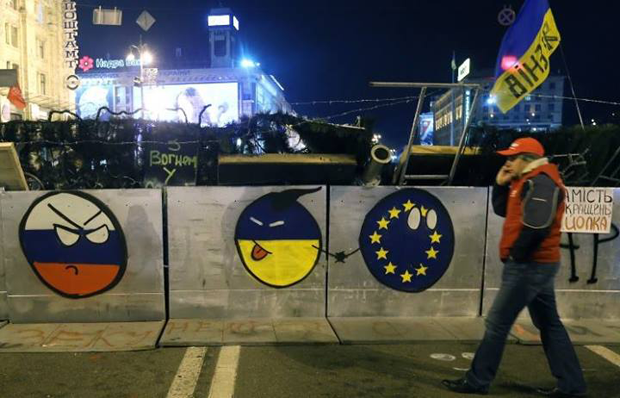
Protest posters also played an important role in boosting morale. Displayed around Kiev during the early days of the crisis, they highlighted the government’s inconsistencies and the power of the Ukrainian people. Of course, the country’s flag’s blue and yellow is the overriding color theme. Pairing graphic design with emotionally engaging political statements – “I am a drop in the ocean” – these works were incredibly empowering.
With a selection of these posters currently on display in Edmonton, Canada, it’s easy to see how imagery has the power to spread a political message. The exhibition features 50 designs which were posted around Ukraine. Each work was designed to encourage their audience to identify emotionally while keeping the message clear.
Artists use symbolism to monumentalise protesters’ efforts. With museums and galleries filled with artist’s renditions of historical events, we are programmed to link iconic moments with art. As creativity littered Kiev’s Independence Square, demonstrators were spurred on – the art around them transformed Euromaidan into a very stirring moment. Demonstrators were reminded: Here is the chance to make history.
Although they have since been annulled, anti-protest laws and restrictions on social media revealed the extent of how close Ukrainians came to losing the right to express themselves.
But on the streets, ideas would have continued to appear on walls and barricades. Street-artists cannot be tracked by algorithms. During times of crisis, they will always be on hand to support the people and spread their message.
This article was published on March 7, 2014 at indexoncensorship.org